
By Roselyn Fauth

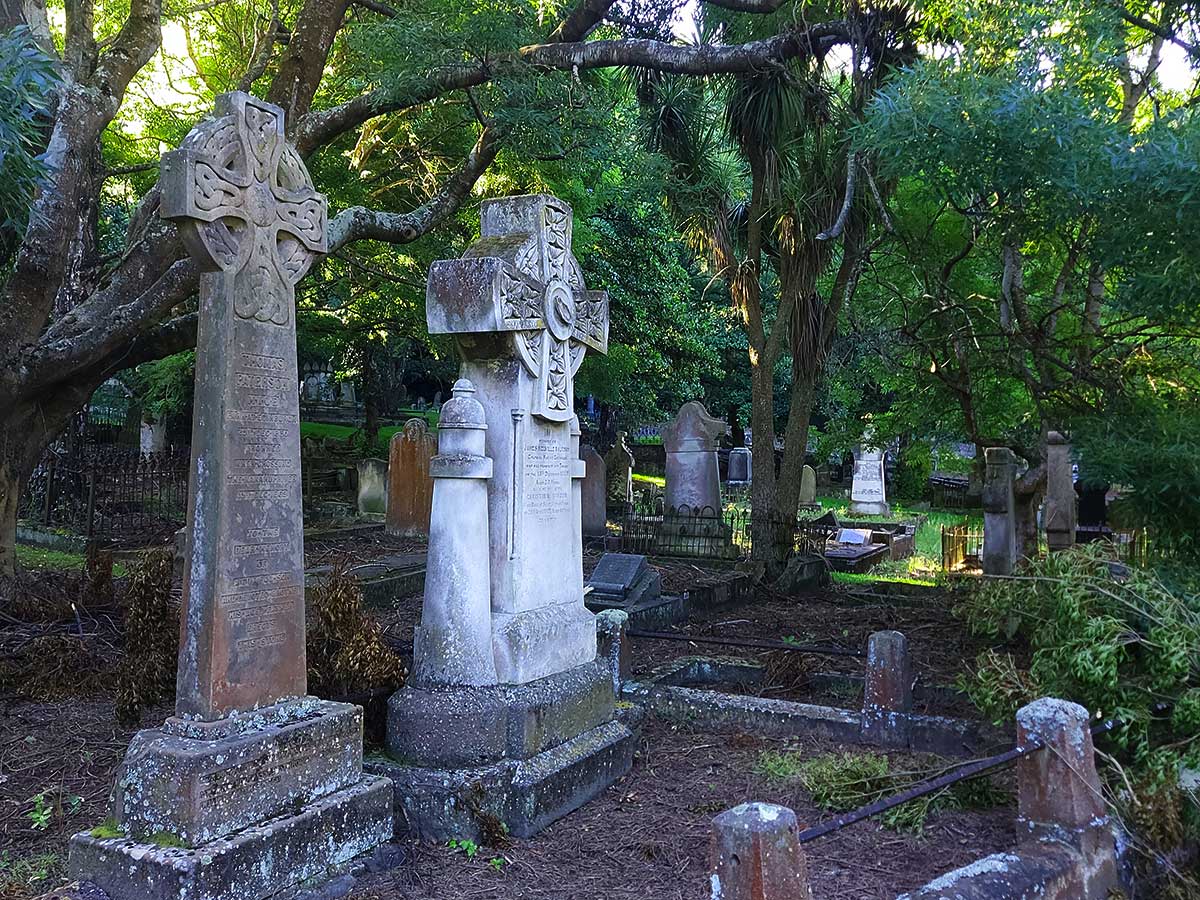
James Balfour's grave in the Dunedin Southern Cemetery. Photo Roselyn Fauth 2026. John Melville Balfour was born in 1831 and died in 1869. He was a Scottish-trained engineer and a former employee of the Stevenson engineering firm of lighthouse engineers. He was appointed Marine Engineer to the Otago Provincial Government and arrived in late 1863. One of his first priorities on arrival was the erection of the Taiaroa Head Lighthouse. In 1866, after the establishment of the Marine Board of New Zealand, he was appointed Marine Engineer and Inspector of Steamers. He drowned in 1869 at the age of 38. He is recognised in engineering histories as one of the outstanding engineers who contributed significantly to New Zealand’s development. He played a key role in establishing New Zealand’s lighthouse system along Scottish lines and he impacted the course of the Timaru harbour development with his experiments and early plans. He drowned in 1869 at the age of 38.
It is easy to stand on the safe edge of Caroline Bay today and forget how unforgiving this coastline once was. Before the breakwater, before the harbour, before cranes and container ships, Timaru was a wild beach of surf and rolling stony shingle. Every ship that anchored in the roadstead at that time carried a risk, and every rescue launched from the shore often asked people to place their lives in the hands of the sea.
Into this world stepped James Melville Balfour. He was born in Edinburgh in 1831, steeped in the traditions of the great Scottish lighthouse builders. His early training with the Stevensons, and his family connection to Robert Louis Stevenson, placed him firmly within a lineage of precision, bravery, and coastal engineering at its finest. When the Otago Provincial Government sought expert advice, the Stevensons recommended Balfour. He arrived in 1863 with energy that seemed almost inexhaustible.
Within months he was surveying rivers, designing docks, planning lighthouses, reporting on navigation, and drafting schemes for harbours right across the country. He created the designs for Cape Saunders, Taiaroa Head, and later Bean Rock, Nuggets Point, Farewell Spit, and Cape Campbell. In South Canterbury he built a small experimental mole on a reef at Timaru to watch how the shingle moved along the ninety-mile beach. Day after day he studied the swell, the drift, the stubborn resistance of the coastline. His observations became the earliest foundation stones for a safer harbour.
Timaru would not become the port it is without that groundwork.
This was also the era of the Alexandra lifeboat, the Deal boatmen, and the tragedies that pressed the community to take sea rescue seriously. Men drowned trying to launch surf boats. Lifeboatmen were flung from capsized craft. Families grieved, and women fundraised tirelessly for equipment and widows. When the Benvenue and City of Perth wrecked in 1882, the horror only reinforced what people like Balfour already knew years ago: that without proper infrastructure, the sea would do taking, and the South Canterbury region would be unable to grow and prosper.
And then the sea took him.
On 18 December 1869 Balfour was in Timaru when he learned that a friend had drowned. He decided to sail south for the funeral and attempted to reach an offshore steamer by surf boat. As Marine Engineer and Inspector of Steamers, Balfour travelled frequently between ports including Dunedin, Taiaroa Head, Oamaru and other coastal sites. On this particular day, the weather was rough. He was in a surf boat at 4 pm on his way to reach the the steam ship called the Maori, when the boat capsized in heavy rolling sea.
Sadly, Balfour, who had saved so many through his foresight and designs, could not save himself.
Most passengers were rescued by ropes, life belts, and the shore lifeboat. Balfour and Mr Smallwood, the Union Bank teller, were the only fatalities. His body was later recovered, taken by steamer to Dunedin, and buried with public honours.
Balfour intended to travel to Oamaru to attend his friend Thomas Paterson’s funeral who had drowned, but Balfour never reached it and instead the friends rest side by side both lost their lives by drowning.
He was only thirty-eight.
His body was taken out to the steamer and carried to Dunedin. There the colony gave him a public funeral. He was laid to rest in Southern Cemetery, Dunedin, beside his friend and fellow engineer Thomas Paterson. It is a quiet ending place for a man who spent his working life staring down wild coasts and difficult harbours. If you stand there today, on that hillside above the city, you are still within sight of the seas he tried to make safer.
Engineers later said he would almost certainly have become New Zealand’s Engineer-in-Chief. Frederick Furkert called him a far-seeing man of boundless energy and sound judgement, the kind of mind the colony could ill afford to lose. His death felt like a gap opening in the country’s future.
Yet his work lived on. John Blackett continued the lighthouse programme. John Goodall built the breakwater that transformed Timaru from a dangerous open roadstead into a safe and prosperous port. The tragedies that scarred the 1860s and early 1870s, including the loss of Balfour himself, drove the community’s determination to invest in protection and infrastructure.
When the wrecks ceased and the Alexandra was finally retired, it was because a generation of engineers, sailors, boatmen, and ordinary citizens had refused to give up. Balfour was one of them. His legacy is not just in blueprints or reports, but in the simple fact that people could finally stand on this shore, watch the waves, and feel safe.
He never lived to see the harbour built. Yet Timaru would not be what it is without him.
Side Quest: The Harbour Work That Washed Away
Walk with me in your mind to the edge of Timaru’s old shoreline. Not the groomed curve of Caroline Bay we know so well today, but the raw, restless shingle beach of the 1860s. The coastline that swallowed anchors, pushed ships into strife, and rolled stones north for miles. This is where James Melville Balfour began his little experiment.
He arrived in Timaru with the eye of a scientist and the instincts of a man who understood that coasts have moods. Everyone knew the sea was dangerous here, but no one could explain why. The beach looked simple enough, yet rescues failed again and again. Ships broke apart while spectators watched helplessly from the cliffs. Something was happening beneath the water that no one had measured.
So Balfour decided to test it.
He built a tiny mole, only about thirty yards long, on a reef just off the shore. It was never meant to be grand, never meant to be permanent. It was the nineteenth-century equivalent of a lighthouse builder putting a toe in the water and saying, “Show me what you’re hiding.”
Then he placed lead-weighted blocks along the beach to track the movement of shingle, day after day, storm after storm.
And the results were astonishing.
The beach did not gently rearrange itself. It moved. With purpose. With force. At speeds of nearly a mile a day, even in good weather. Shingle marched north like an endless conveyor belt, grinding, rolling, swallowing anything in its way.
Including Balfour’s mole.
It vanished. Piece by piece. Beam by beam. Carried away exactly in the direction his measurements predicted. To an untrained eye it might have looked like failure. To him, it was confirmation. Proof written in the movement of stones.
Timaru could never be made safe with light structures.
Only a massive breakwater could stand in this place.
The mole had done its job. It sacrificed itself so the engineers who followed would not gamble blind. Balfour didn’t live long enough to see the breakwater rise, or the wrecks cease, or the port thrive. But his washed-away work was the first quiet step toward all of it.
Side Quest: The Steward of a Bigger Vision
John Blackett, 1870s
After Balfour drowned in 1869, his lighthouse colleague John Blackett stepped into the role of the Colony’s Marine Engineer. Blackett did not design Timaru’s breakwater himself, but he did something equally important in the background.
He kept the idea alive.
He reviewed early harbour proposals, advised provincial governments, and supported the belief that Timaru was not just another open roadstead but a place worth investing in. His national lighthouse programme shaped safer coasts everywhere and gave weight to provincial engineering ambitions.
Blackett is the quiet figure in the wings.
He doesn’t appear in dramatic shipwreck stories.
He doesn’t get a statue.
But without his steady endorsement, Timaru might have stayed a “maybe” on a long list of colonial priorities.
He was the steward who ensured Balfour’s early insights did not die with him.
Side Quest: The Engineer Who Drew the Line Into the Sea
John Goodall, 1870s–1880s
Now step forward a few years. The tragedies of the 1860s have mounted. Shipwrecks have exhausted the town. The community wants a real harbour. This is where John Goodall enters the scene.
John Goodall worked on the design the breakwater that Timaru still relies on.
He chose the alignment, the curvature, the depth.
He calculated how to lay quarried stone so the sea would break outside the harbour, not inside it.
He transformed decades of fear into a working port.
Timaru changed from an exposed anchorage into a thriving coastal city.
Goodall did not discover the shingle drift.
He did not fire the rescue rockets.
He did not lose his life in a surf boat.
But he is the man who built what others only imagined.
Side Quest into his lighthouse contribution:
Lighthouses Designed by Balfour
- Dog Island Lighthouse, completed in 1865.
- Farewell Spit Lighthouse, completed in 1870.
- Nugget Point Lighthouse, completed in 1870.
- Cape Campbell Lighthouse, completed in 1870.
- Ponui Passage Lighthouse, completed in 1871.
- Bean Rock Lighthouse, completed in 1872.
- Cape Saunders Lighthouse, completed in 1880.
- Taiaroa Head Lighthouse Construction
The Taiaroa Head Lighthouse was built during a period when safe maritime access was essential to the growth of Otago. Designed by Scottish engineer J. M. Balfour and constructed in 1864–65, it was one of the earliest priorities following his arrival in New Zealand. Built of locally quarried stone, an unusual choice in this country, the small white tower with red trim rises about 12 metres and stands high above the harbour entrance. First lit on 2 January 1865, it became part of the newly established national lighthouse system almost immediately. Its light was technically innovative, using advanced dioptric optics developed by the Stevenson engineering family, making Taiaroa Head one of the most experimental lighthouses of its time.
Over the following decades, the lighthouse sat at the centre of a busy and layered headland community that included keepers’ families, signal station staff, pilot crews, soldiers, prisoners and schoolchildren. Technological change saw it automated in 1921, ending the era of resident keepers, and later converted to electric power. Despite these changes, the lighthouse has remained in continuous operation since its opening and is now the second-oldest working lighthouse in New Zealand. As a rare stone structure and a landmark at the mouth of Otago Harbour, it stands as a reminder of the ingenuity required to guide ships safely to shore and of the engineers, workers and communities who shaped New Zealand’s maritime past.
I went on a cemetery tour recently with Gregor from Darkest Dunedin, and it was through his careful research that I learned more about Balfour’s family background and burial. Gregor’s work, published on his Otago Taphophile blog, brings together newspaper records, cemetery evidence, and biographical detail that deepens our understanding of Balfour’s life and death. His research confirmed that Balfour was the youngest son of the Rev. Lewis Balfour, D.D., of Colington near Edinburgh, and preserves valuable primary-source detail about the recovery and transport of his body following the Timaru accident.
You can read Gregor’s original research here:
https://otagotaphophile.blogspot.com/2024/02/james-melville-balfour-ce-1831-18121869.html
News reports:
The Late Mr Balfour. — The human remains found on the beach recently, which are believed to be those of the late Mr Balfour, were on Wednesday last conveyed by the steamer Wainui to Dunedin for interment. At ten o'clock in the morning a number of the personal friends of the deceased and several of the principal inhabitants assembled in front of the police barracks, and followed the remains to the Government Landing Service. A hearse drawn by four horses, provided by Mr W. L. Edwards, conveyed the coffin, and on arrival at the Landing Service, the Union Jack was placed over the coffin, which was carried to the surf-boat by four sailors. This boat, containing Captain Gibson and Captain Mills, was then towed to the Wainui, and Captain Gibson accompanied the remains to Dunedin. The coffin bore the inscription "James Melville Balfour, drowned Dec. 18th, 1869, at Timaru, N. Z., aged 33 years." The funeral, which is to be a public one, will take to-day at Dunedin, and the remains will be interred in the cemetery alongside those of the late Mr Paterson, C.E.
- Timaru Herald, 15/1/1870.
DEATH OF MR. BALFOUR.
When, in our last issue, we devoted a few lines to the expression of our regret at the loss which the colony had sustained in the untimely death of Mr Thomas Patterson, C.E., we little thought that it would so soon be our melancholy duty to record the death by drowning of one of Mr Patterson's professional colleagues, his most intimate friend, and one of the most amiable, esteemed, and eminent men in the colony, in James Melville Balfour, Colonial Engineer. Since his arrival in New Zealand with Mr Patterson and Dr Hector, several years ago, Mr Balfour has made numerous friends in every part of the colony, and these friends will all lament his most untimely fate. Those who did not know Mr Balfour so intimately as to come under the denomination of friends, were yet acquainted with his amiable, courteous, honest, and gentlemanly character; and his professional ability was as familiar in men's mouths as a household word. A pupil of Stephenson's, Mr Balfour early directed his attention to the marine branch of his profession, and although a very young man, he rapidly attained such eminence in it as to cause some surprise amongst scientific men at home at his accepting the situation offered by the Otago Government of a three years' engagement at a salary of £1000 a year. However, he did so, and his professional services to the province amply repaid it for the expense of his engagement, on the expiration of which he accepted the office of Colonial Marine Engineer, being allowed to retain his private practice as well. As head of the Marine Department, Mr Balfour has done good service to the colony, and his removal by the hand of death may be regarded as little else than a public calamity. About a month ago he went to Timaru to superintend the commencement of the Harbor works there, expecting to meet Mr Patterson, and with him return here to spend Christmas at his own home. On hearing Mr Patterson's fate, Mr Balfour determined to proceed to Oamaru to make arrangements for and attend his friend's funeral. With this view he left the shore to take passage by the steamer Maori, and what then occurred is told in the telegram which we issued as an Extra yesterday, and which is as follows: —
Timaru, Sunday, 5 p.m. Yesterday evening a number of passengers went off in surf-boat to the s.s. Maori, which, was lying in the roadstead; but when some distance from land the surf line fouled. A boat was then put off from the steamer, and the crew of the surf-boat, 14 in number, were safely transhipped, and started for the steamer. When within a few yards of the steamer, however, the boat capsized bottom upwards, and all hands were thrown in the sea. Most of them soon regained the boat, and some were saved by ropes and life belts thrown from the steamer. The shore life boat put off and rescued one man and some passengers who were clinging to the boat. All were saved except Mr. Balfour, Marine Engineer, and Mr. Smallwood, who were drowned. Among the other passengers were Messrs. G. B. Parker, Joel (Dunedin), Malcolm (captain of the Maori), Menzies (picked off the boat), and Baker. Mr. Smallwood was teller of the Union Bank, Timaru.
Monday, 5.30 p.m. The boat was washed up against the steamer by the heavy rollers and capsized. She went to the windward side of the steamer, but for what reason is not known. The bodies are not yet washed up. The accident occurred about half past four o'clock on Saturday afternoon, and the sad intelligence was at once telegraphed to Wellington. It threw a deep gloom over the city, for there was no resident in it better known or more highly esteemed than Mr Balfour. On Sunday, the flags on the various buildings in town and on the shipping in harbor were hung half-mast high out of respect to his memory. Mr Balfour leaves a wife and child to mourn his loss, and it is needless to say that in their sad bereavement they receive the heartfelt sympathy of every inhabitant of Wellington.
- Wellington Independant, 21/12/1869.