
By Roselyn Fauth

ILLUSTRATION OF A ROCKET BRIGADE RESCUE. The British Coastguard and the Board of Trade, refined and standardised the early sea-rescue rocket-apparatus designs. Image is copyright IstockPhoto.
Imagine standing on Caroline Bay in the 1870s, watching a ship drag anchor in roaring sea swell. There is no breakwater, no tug, no Coastguard. Only a volunteer crew with a rocket apparatus and the hope that their line reaches the mast in time.
The Rocket Brigade saved people on ships close to the shore by firing a small rocket from the beach to carry a light line over the wrecked ship. Once the ship’s crew hauled that line aboard and secured it to the mast, the brigade sent out heavier ropes to establish a strong, taut hawser between shore and vessel. They attached a breeches buoy, for people to climb into. They then hauled each person across the surf to land. It was used in Timaru from 1866.
The Timaru Rocket Brigade: A Short, True History of an Early Coastal Lifesaving Crew
Long before Timaru gained a safe harbour, the coastline was known for danger. Sealers worked the shore in the 1820s and the Weller Brothers established a whaling station in 1839, but by the 1860s the growing town faced a new challenge. Ships anchored in an open roadstead, exposed to heavy swell, sudden storms, and dragging anchors. Between 1865 and 1890 Timaru earned a reputation as a ship’s graveyard. There were thirty-four major incidents and around thirty vessels wrecked or refloated under extreme conditions.
In 1866 Timaru used a rocket apparatus for the first time, firing a small rocket from the beach to carry a light line out to the stricken ship Prince Consort. No formal brigade yet existed, but the technique proved its value. Once the light line was hauled aboard and fastened to the mast, heavier ropes followed. The crew on shore tightened the hawser and sent out a breeches buoy, a canvas seat designed to bring each person safely across the surf. It became one of the few ways to rescue people when even the strongest surfboats could not get through the breaking seas.
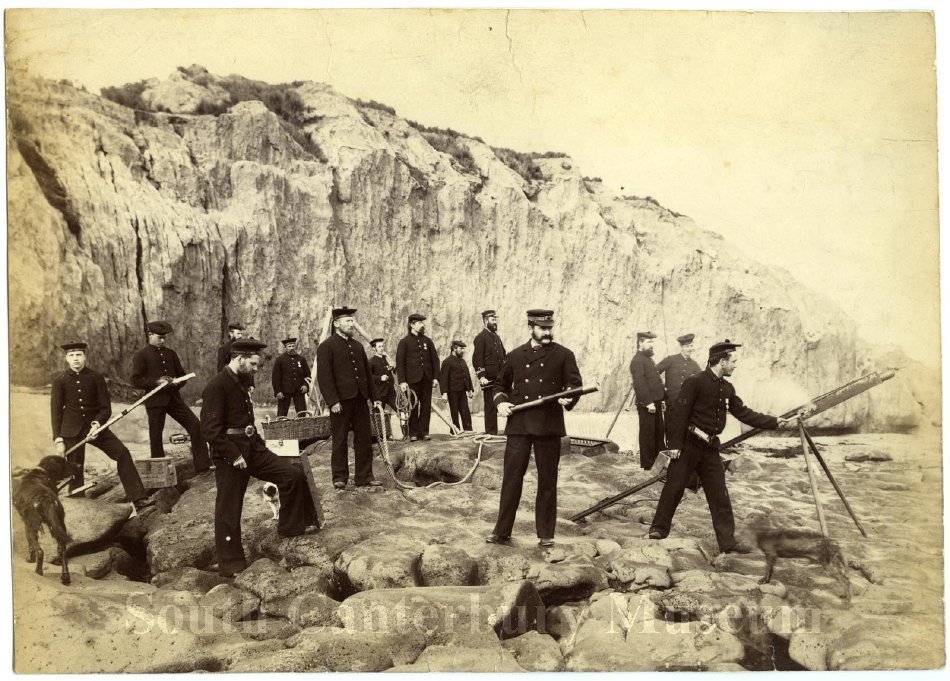
The Timaru Rocket Brigade posed as if practicing on the rocks below the cliffs on Caroline Bay, circa 1883. Those pictured are (from left to right): Alf Potts, Alf Allan, Arthur H Turnbull (at back), Carl Vogeler (in front), Chris Gruhn, Adamson, Arthur Haylock, George Davies, W Budd, James E S Jackson (First Lieutenant), W Webster (Captain and Harbour Master), John McNab, W J Hughes, and George Shirtcliffe (manning the rocket trough). Note five of the men are wearing what appear to be their Benvenue medals, awarded following that wreck in may 1882. South Canterbury Museum 0847
Key Figures in the Early Port
Several people shaped Timaru’s early maritime safety.
Samuel Yankie Sam Williams, a former whaler, returned in the mid-1850s to manage Rhodes Brothers’ landing operations.
Captain Henry Cain established Cain’s Landing Place in 1857 for Henry Le Cren, running the essential surfboat service.
Captain Belfield Woollcombe, a Royal Navy officer, arrived the same year as customs officer, harbourmaster, beachmaster, and pilot.
Strongwork Morrison, a Deal boatman who reached Timaru in 1859, later became beachmaster and pilot.
A new phase began in 1866 when Captain Alexander Mills was appointed harbourmaster. A master mariner with long experience at sea, he became responsible for the landing service, navigation safety, the lifeboat crew, and the developing rocket apparatus during what proved to be the port’s most hazardous years.
Forming the Rocket Brigade
The Canterbury Provincial Council supported improvements, and in 1868 approved funding for harbour administration. The Rocket Brigade was formally established in 1877, by which time rockets and breeches-buoy equipment had become essential tools for coastal rescue. The Harbour Boards Act 1870 had allowed regions to manage ports more effectively, raise local funds, and plan long-term works.
The brigade was entirely volunteer based. Bakers, blacksmiths, clerks, shopkeepers and labourers responded to the signal gun. The first shot warned the community that a vessel was in trouble. The second called the Rocket Brigade to action. Their equipment included rocket troughs, hawser baskets and the breeches buoy, kept near the lighthouse where volunteers kept watch in heavy weather.
Timaru was Coastline Under Pressure
By the late 1800s public concern about shipping losses had grown sharply. A large meeting in Richard Turnbull’s Hall drew around six hundred people in favour of a breakwater. Continued advocacy led to the establishment of the Timaru Harbour Board in 1877 and the beginning of major harbour works.
The most remembered disaster came in 1882 when the Benvenue and the City of Perth were driven ashore. Although the rocket apparatus was prepared, the sea was so violent that rescue attempts relied mainly on surfboats and the lifeboat. Nine men lost their lives. The episode remains a defining moment in Timaru’s maritime history and shows the conditions under which the Rocket Brigade often worked.
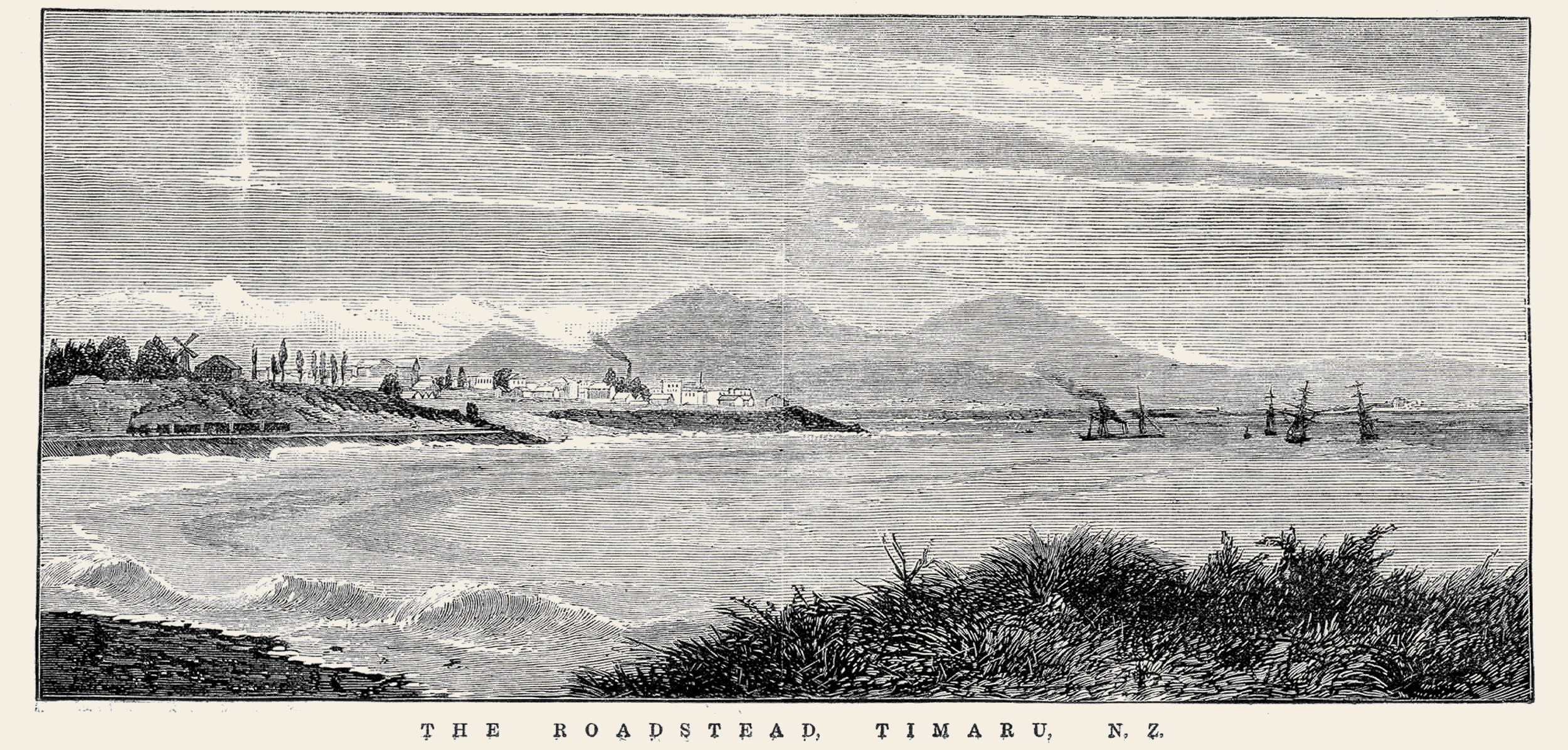
THE ROADSTEAD, TIMARU, N. Z. 1877. Published October 3, 1877 in The Illustrated Australian News. By Ebenezer and David Syme. Wood Engraving.
The End of the Major Shipwreck Era
Harbour construction steadily reduced the need for emergency coastal rescue. As breakwater work progressed, and a tug became available, the lifeboat crew formally disbanded in 1885. The Rocket Brigade itself ended service around 1887, though the apparatus was used one final time in 1892. When the refrigerated passenger ship Elginshire struck a reef in fog south of Timaru, her crew evacuated using the ship’s boats. The rocket gear was brought out of storage to send messages between ship and shore.
By 1890 the harbour scheme was effectively complete. Later engineering work included strengthening the breakwater in 1898 after shingle undermined the foundations. Navigational safety improved further with Blackett’s Lighthouse, built in 1877–78, and the installation of the Tuhawaiki Point light in 1903.
The Timaru Rocket Brigade stands today as evidence of a time when the safety of ships depended largely on the skill and courage of local people. Their method of firing a rocket-borne line, establishing a hawser, and hauling survivors ashore in a breeches buoy represents an important transitional stage between early surfboat rescues and the modern protected harbour. Photographs, records and surviving equipment preserve their story. Their work also highlights the wider efforts of those who shaped Timaru’s maritime safety, from Deal boatmen to harbourmasters, pilots, and volunteers who kept watch on stormy nights.
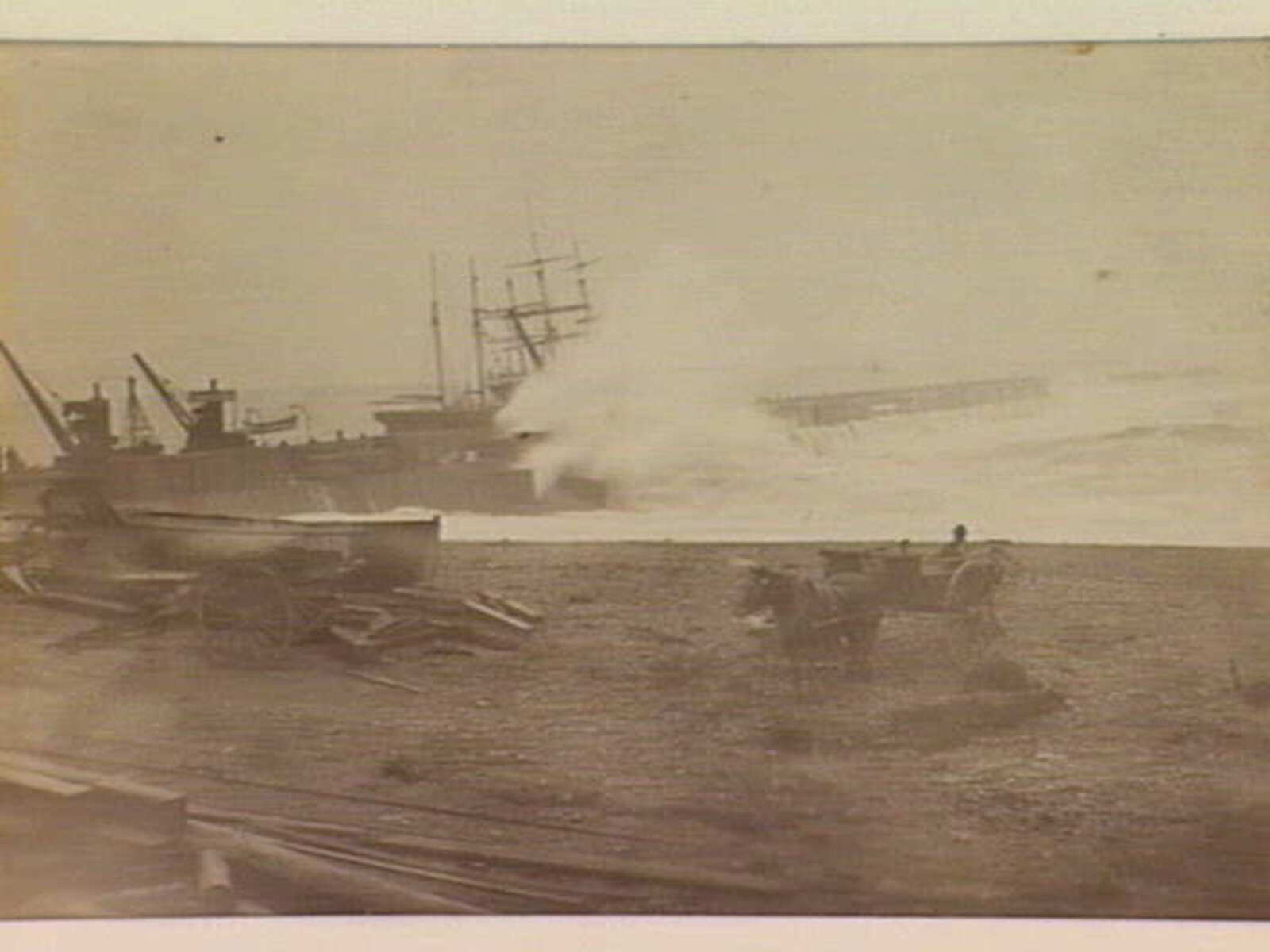 Ferrier, W. (1865). [Breakwater at Timaru, N.Z.] [picture] / W. Ferrier. https://find.slv.vic.gov.au/permalink/61SLV_INST/1sev8ar/alma9917225713607636
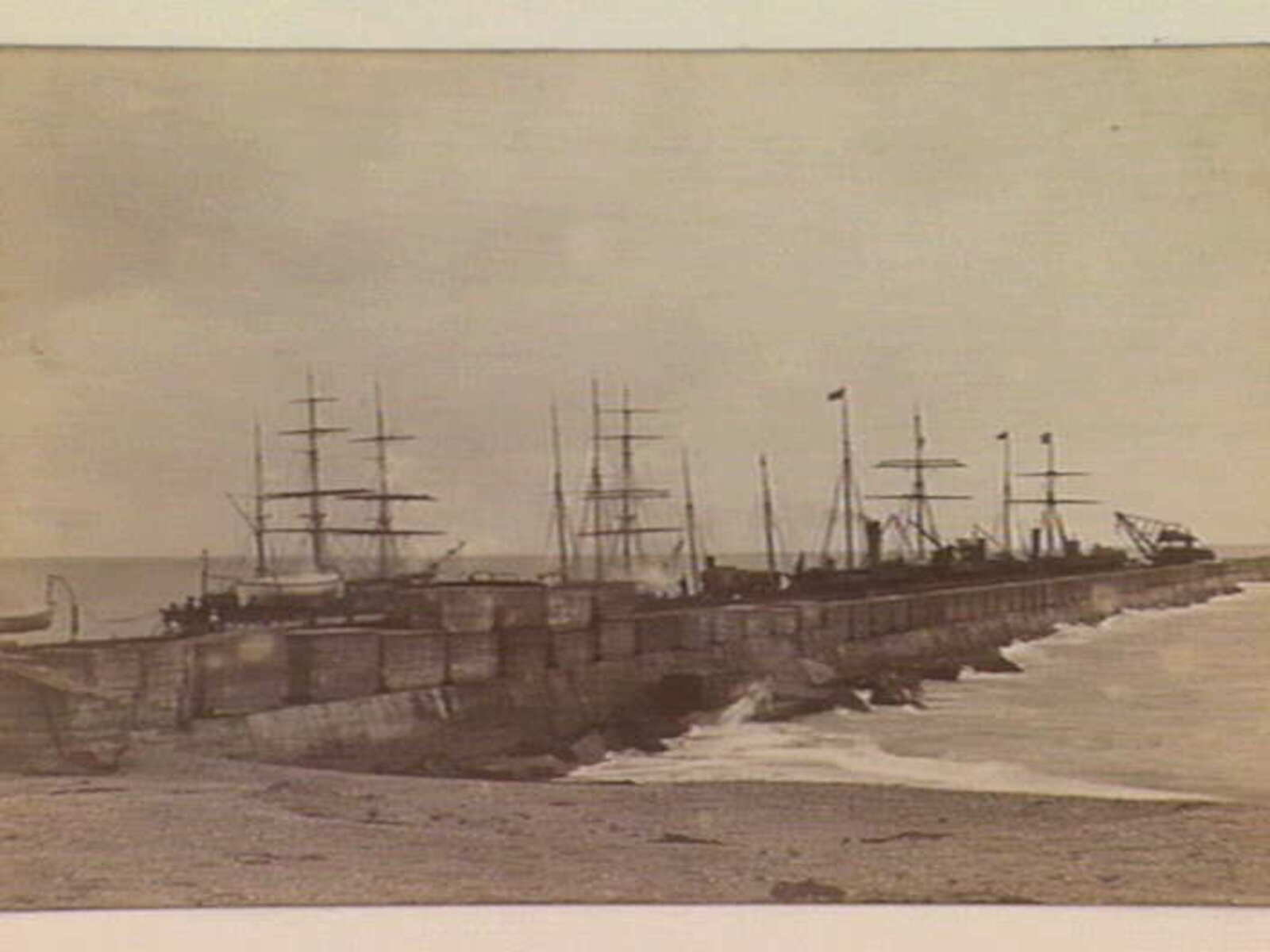
Ferrier, W. (1865). [Breakwater at Timaru, N.Z.] [picture] W. Ferrier. This work is out of copyright. 9917225733607636 https://find.slv.vic.gov.au/permalink/61SLV_INST/1sev8ar/alma9917225713607636
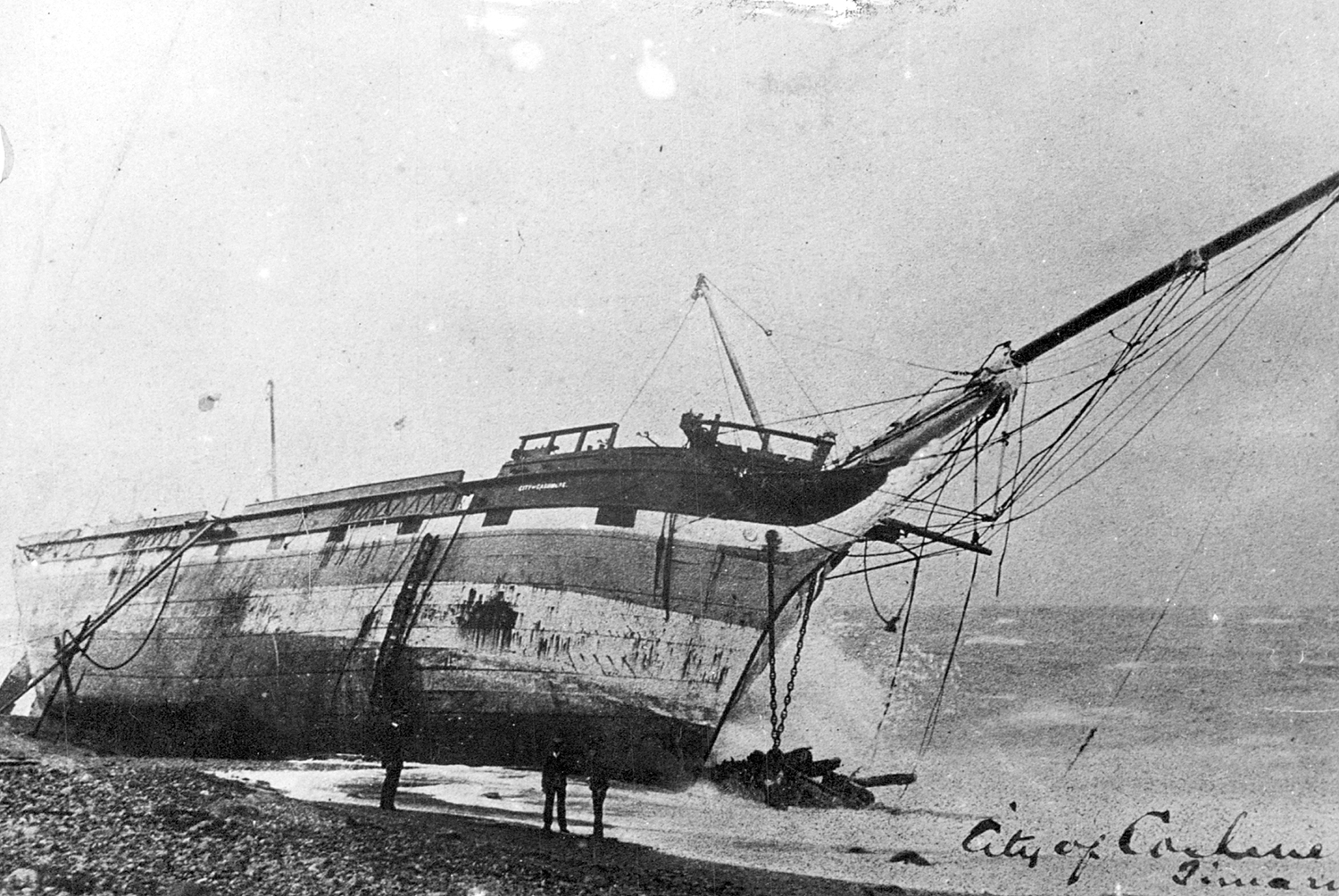
CITY OF CASHMERE. : Wrecked at Timaru. N.Z. H99.220/590
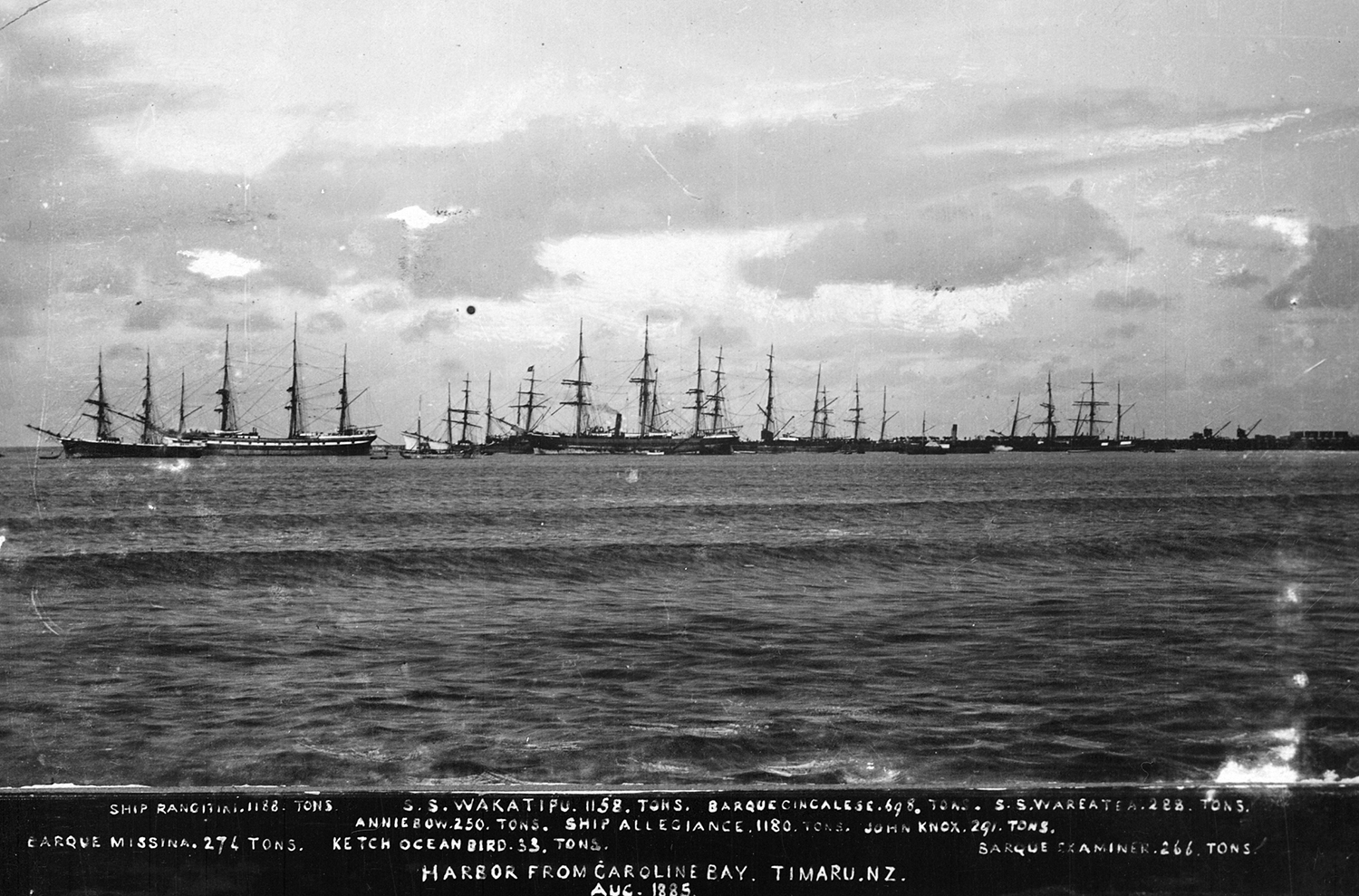
TIMARU HARBOUR. photograph (1885). Brodie Collection, La Trobe Picture Collection, State Library of Victoria. Record ID 9917361153607636. This work is out of copyright