
By Roselyn Fauth

View of township looking across water to foreshore with Southern Alps in background. Pencil and watercolour (A-157-018) by Arthur Lagden Haylock (1860-1948) c1878. Arthur probably created this when he worked in Timaru as a cadet in the Lands Office. Courtesy of Alexander Turnbull Library, Wellington, New Zealand.
When I joined CPlay as a volunteer a few years ago, I never imagined that a community playground would pull me into the history of Timaru’s maritime past. I was one of a small group of volunteers who wanted to upgrade the Caroline Bay playground and theme it around the Bay’s history. To do that, we actually had to learn the history first. Seven years later after many rabbit holes and side quests I keep thinking my history hunt is complete, until I have another question or find conflicting information. Fortunately the hunt has been easier thanks to the archiving and information gathering done by so many others.
Along the way I have been helped enormously by my dad, Geoff Cloake, and local maritime history enthusiast Philip Brownie. Between us, we’ve pieced together a rich store of stories that people can now draw on to understand this coastline. The sea rescue history of Timaru is full of drama, politics, and heartbreak, but also full of ordinary people doing brave, almost unbelievable things. Some of them didn’t just save lives. They also saved the stories, carefully recording what happened so future history hunters like us could make sense of it all.
Recently, while rummaging around online for more clues, I found a fascinating oral recording from the 1940s. It featured a man named Arthur Lagden Haylock, someone I had heard a lot about over the years. By listening to this recording I realised that Arthur was a witness and a guardian of our shipwreck history. His life touched Timaru at the exact moment when our most famous wrecks era unfolded, and his ability to remember, sketch, record and preserve makes him an unsung hero of our maritime heritage.
So here is my deep dive into who Arthur was, and why we ought to treasure what he shared.
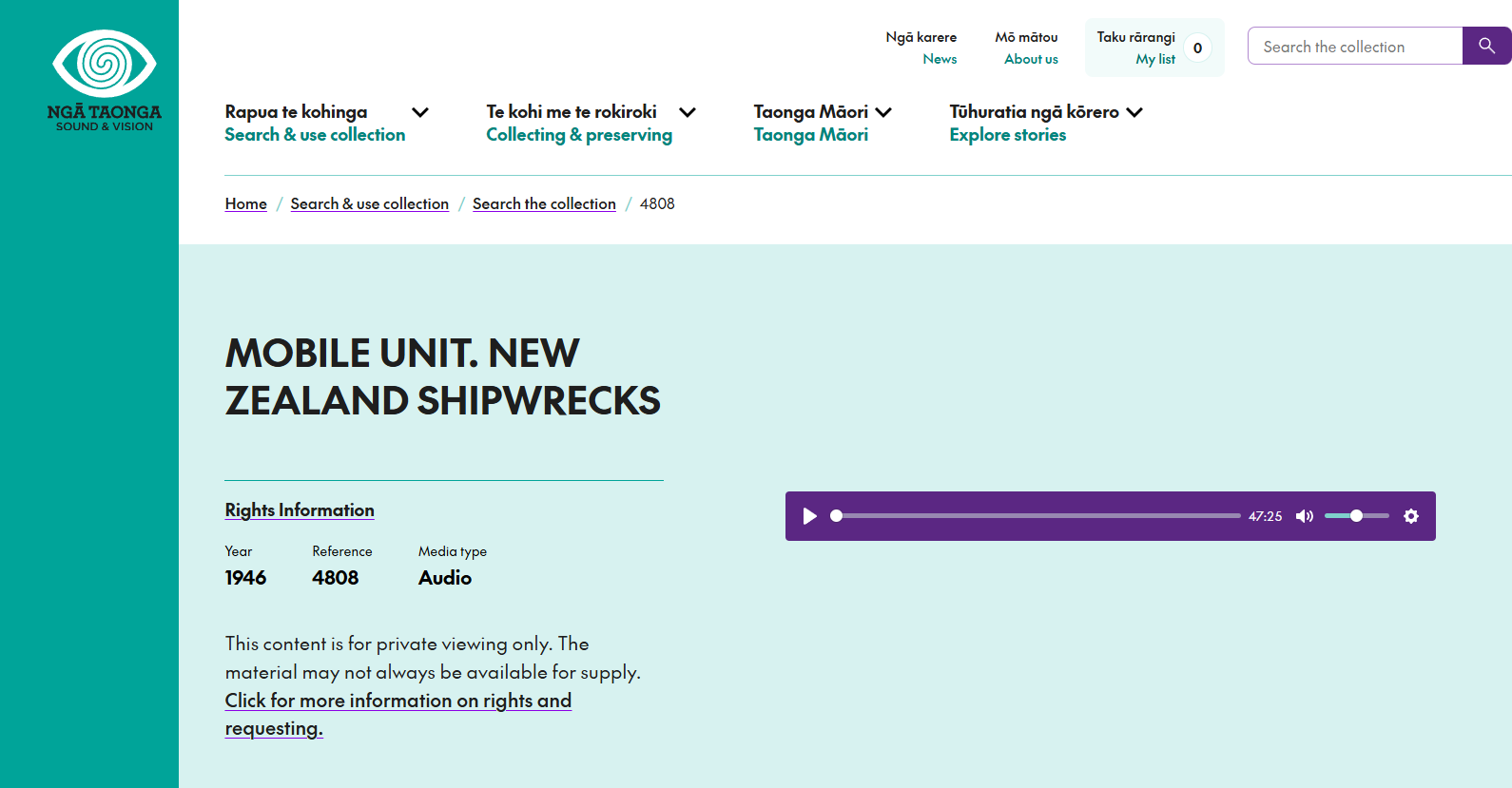
Arthurs says his interest in wrecks began with the ‘Melrose’, and he describes how she became wrecked and the consequent loss of life. Arthur first got involved in wrecks when he lived in Timaru as they were fairly common due to the wind. He describes the thrill of the wreck as she strikes the beach. The ‘Akbar’ was wrecked in 1879, after the ‘Melrose’, ‘Fanny’, ‘Glimpse’ and ‘Lapwing’ shipwrecks in 1878. Arthur explains how he joined the Timaru Rocket Brigade when the ‘Akbar’ was wrecked when Captain Alexander Mills was the harbourmaster. The Timaru Rocket Brigade’s headquarters were in a tower on the site of the old lighthouse in Timaru, where they were asked to keep watch in bad weather. The night the ‘Akbar’ was wrecked the ship couldn’t signal with a rocket or flare as they had got wet, which he feels was negligence from the captain as he didn’t keep them in a watertight box. It wasn’t until the morning that the ship was spotted on the rocks and five lives were lost including the captain and his wife.
Arthur describes that they used an 'express', which was a wagonette with two horses, to carry everything to and from the wreck, sometimes up to three miles by road and across paddocks
Arthur and the crew of the Timaru Rocket Brigade witnessed the ‘Craig Ellachie’ come ashore at 7am, after she dragged her anchor and parted her cable. He watched as Captain Meredith’s wife, the crew and then Captain Meredith came ashore.
The ‘Melrose’ was the most exciting wreck Arthur and the Timaru Rocket Brigade attended to, as it was very dangerous for the ship’s crew to hang on to the wreck and come ashore. He describes the scene as he watched from the beach when Judge Ward helped rescue the captain from drowning. He survived and was sent to hospital by Doctor McIntyre.
Arthur describes how on 22nd November 1879 the ‘John Watson’ struck the reef at Patiti Point and how the schooner ‘Saxon’ and the harbour master Captain Alexander Mills responded.
Arthur also recounts how the ‘City of Cashmere’ was wrecked on January 14th 1882 five miles north of Timaru and the Dashing Rocks. How he took a boat from the Timaru Boating Club so he could sketch the vessel in a watercolour and got into trouble at sea.
On a beautiful sunny day on the 14th May 1882, the sea ‘was in a furious state’. Whilst standing on the shore Arthur witnessed three boats capsized which were trying to reach two ships ‘City of Perth’ and the ‘Ben Venue’ that were anchored. At the inquiry the captain stated he had never seen such high waves created by the ocean currents crossing each other, not caused by the wind. The cross currents had caused the stern to slew right round. At the inquiry, the Harbour Board authorities said happened frequently in Timaru.
The ‘City of Perth’ came ashore under the Ben Venue cliffs and avoided being wrecked due to having two anchors down and ropes out. She was hauled off and taken to Port Chalmers for repairs and reconditioned to sail again. He recounts how the ‘City of Perth’ crossed the bow of the steamer ‘Ruapehu’ at 16 knots an hour and handed them a rope to tow them. Much to the excitement of those aboard the steamer, as this was a thing you would see ‘in the old shipping times’.
https://www.ngataonga.org.nz/search-use-collection/search/4808/

Fourteen of the volunteers and their lifesaving equipment are pictured. To the left is the triangle, with the hawser rope basket underneath it. The third man to the left is holding the breeches buoy and in front of him is the whip basket. The rocket line box can be seen at an angle (closest to the water) and the portfire box is to the left rear of the man holding the stave. See David Batchelor's "Lifesaving Rockets of Timaru" (Timaru: South Canterbury Museum, 2006) for more information. Several of the men appear to be wearing medals on their left chest awarded to those involved in the Benvenue and City of Perth wreck rescues in May 1882. South Canterbury Museum 0844.

A medal that was up for auction: https://www.noble.com.au/auctions/lot?id=483721
Arthur created the drawing of the lifeboat and all-seeing eye (masonic emblem the Eye of Providence) for the Masonic Medal, awarded for bravery to the rescuers and survivors of the Benvenue disaster: collections.tepapa.govt.nz//113138. The Freemasons of St Johns Lodge awarded 42 medals for gallantry during the rescue on 3 July 1882 (this was a private award for bravery). Arthur was the last survivor of the Rocket Brigade, who volunteered to watch over vessels anchored in the Timaru roadstead. According to his daughter Greata, he loved the sea, and made a large collection of sketches of shipwrecks on the New Zealand coast. This collection is now housed in the Turnbull Library.
Arthur the Observer: A Childhood by the Sea
Arthur was born in Akaroa in 1860. His father, Charles Lagden Haylock, was 54 and his mother, Sarah Long, was 38. His father died when he was still an infant, leaving him to grow up in a harbour community where the sea was both a neighbour and a teacher. From the age of thirteen he kept a diary of shipwrecks. That habit stayed with him for life.
At seventeen he joined the Government Service and was soon posted to Timaru where he began his career in the Lands and Survey Office as a cadet in Timaru. It was the late 1870s, a time when ships lined the Bay but safety was far from guaranteed. Timaru did not yet have the breakwater. Anchored vessels waited offshore, hoping the wind would hold and the currents would behave. Sometimes they didn’t.
Arthur, restless and curious, joined the Timaru Volunteer Rocket Brigade. This was the team that rushed to the rescue when a ship was in trouble, firing rocket-lines over stranded vessels to help rescue the crew and passengers. Their headquarters were in a tower on the Terrace where they were expected to keep watch through bad weather.
Those were the years of the Melrose, the Fanny, the Lapwing, the Glimpse, the Akbar, the Craig Ellachie, the John Watson, the City of Cashmere, and the infamous twin dramas of the City of Perth and Ben Venue in 1882. Arthur saw many of them with his own eyes.
According to a newspaper interview, Arthur spent his early manhood in Timaru, and formed a close friendship with Mr C. G. Vogeler and George (later Sir George) Shirtcliffe. These three all boarded together.
Arthur the Rescuer: Timaru’s Wild Years
In his recording, Arthur describes the thrill and terror of a wreck as the vessel strikes the beach. He stands on the shore, the surf thundering, while men fight for their lives in the breakers. He speaks of Judge Ward hauling a half-drowned captain from the waves. He recalls the Rocket Brigade racing to Patiti Point and later to Dashing Rocks. He remembers the City of Perth roaring across the bow of the Benvenue, tossing a rope to be towed clear while onlookers cheered as though it were a scene from old sailing tales.
He talks about using their “express” — a wagonette hitched to two horses — to drag heavy rescue gear for miles over roads and paddocks. This was not glamorous work. It was cold, exhausting and dangerous.
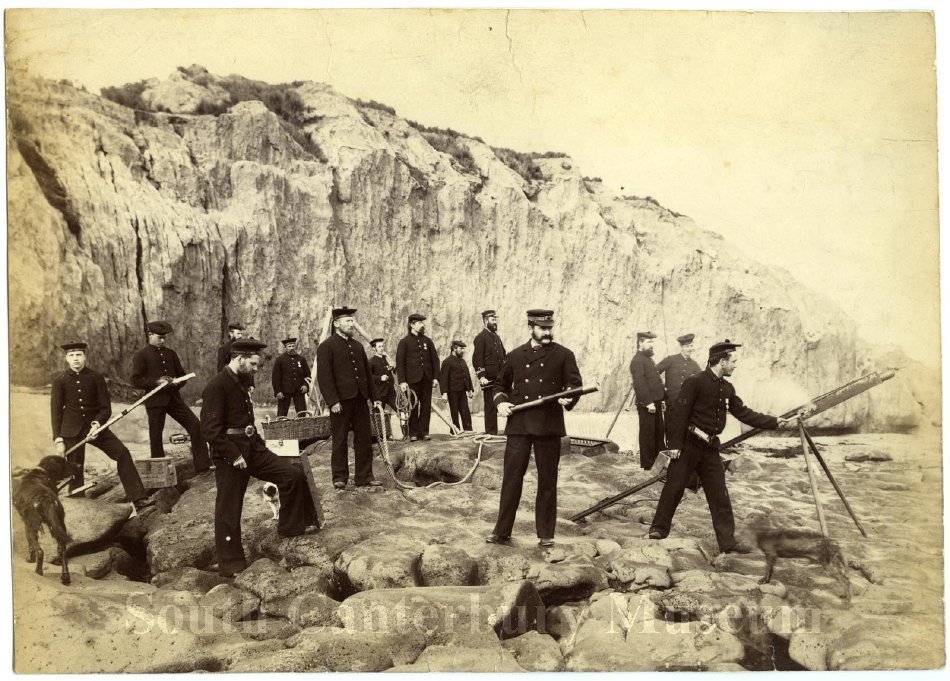
The Timaru Rocket Brigade posed as if practicing on the rocks below the cliffs on Caroline Bay, circa 1883. Those pictured are (from left to right): Alf Potts, Alf Allan, Arthur H Turnbull (at back), Carl Vogeler (in front), Chris Gruhn, Adamson, Arthur Haylock, George Davies, W Budd, James E S Jackson (First Lieutenant), W Webster (Captain and Harbour Master), John McNab, W J Hughes, and George Shirtcliffe (manning the rocket trough). Note five of the men are wearing what appear to be their Benvenue medals, awarded following that wreck in may 1882. South Canterbury Museum 0847
Arthur the Recorder: Saving the Stories
What sets Arthur apart is not simply that he witnessed these events. But that he wrote them down. He painted them. He mapped them. He chased the details for decades, sometimes across oceans.
By the time he settled in Wellington in 1892, he had already shaped the beginnings of a lifelong project: documenting every shipwreck in New Zealand waters. He used Marine Department reports, overseas archives, old newspapers and the memories of anyone willing to talk. His home became a kind of private maritime museum, filled with card indexes, maps, watercolours and notes.
He estimated that between 1,500 and 1,700 vessels had come to grief on our nations coasts. He tried to mark them all.
His 60 year hunt for the fate of the Wainui is almost a story in itself: letters to the Mission Library in Sydney, then to the Governor of New Caledonia, and finally contact with the ship’s last captain. It is detective work of the most stubborn, dedicated kind. Because of this persistence, many of our maritime stories survive.
Arthur Lagden Haylock married Eleanor Rosa Allen in 1892 and they jumped on a ship and went on honeymoon to England. Arthur was transferred by the Land and Survey Department to Wellington for a senior role. This is where he spent the rest his career.
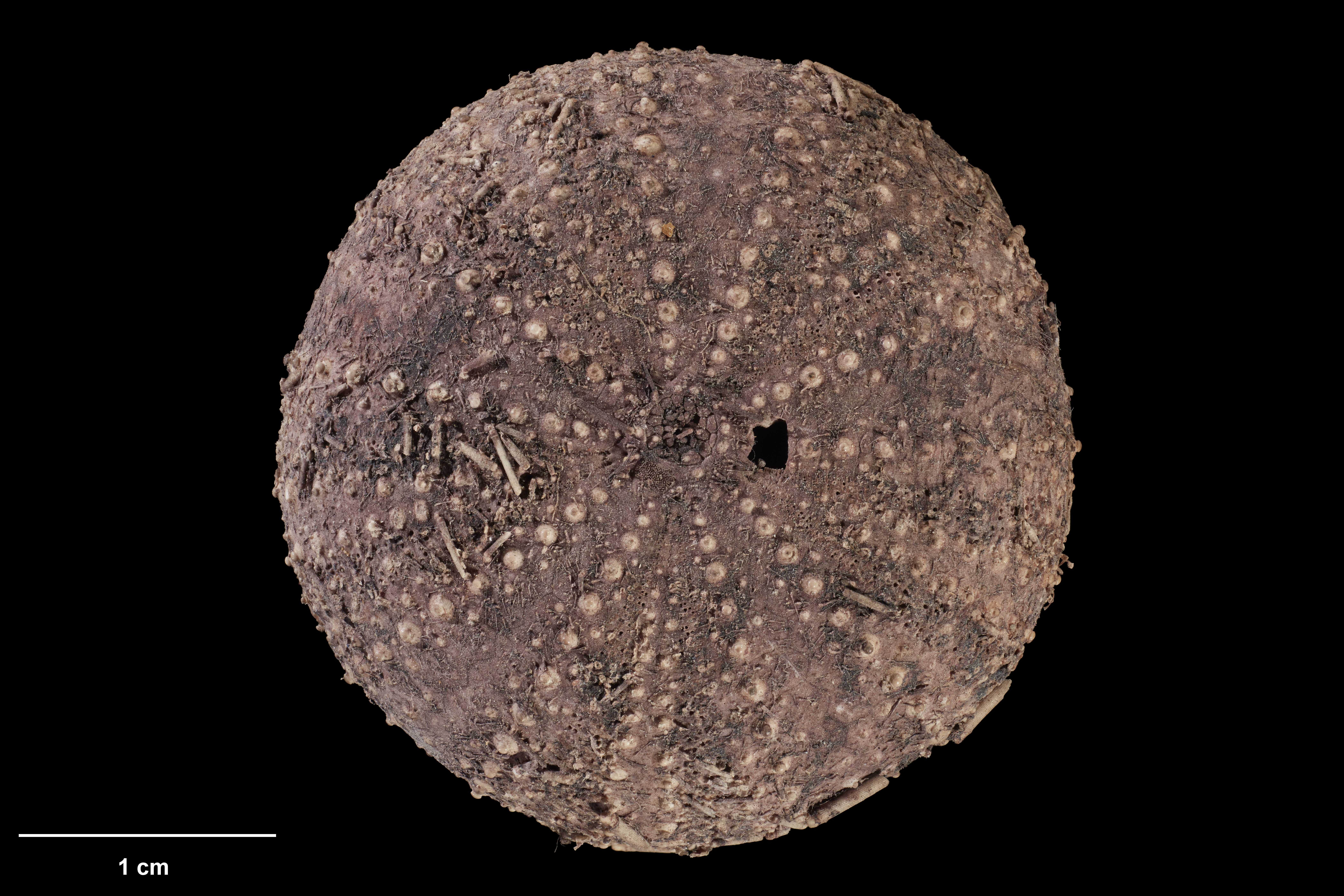
While hunting for the Haylocks on the Te Papa website, I came across objects in the collection attributed to Eleanor: collections.tepapa/37183 The only digitised image was this Pseudechinus albocinctus (Hutton, 1872), collected 27 August 1898, Oriental Bay, New Zealand. Purchased 1928. CC BY 4.0. Te Papa (EC.000257)
Arthur and Eleanor Haylock had three children. Arthur Wellington Haylock was born on his mother’s 30th birthday in 1895. Greta Haylock was born in 1898 and lived in Wellington for most of her 82 years. Tragically, Arthur lost his wife Eleanor after the birth of their third child. The baby died at birth or shortly after. Both Eleanor and their unnamed baby were buried in Karori Cemetery. (Although this record says Eleanor Rosa Allen Haylock was born in 1899, died in 23 Oct 1899 (aged 34–35). findagrave/eleanor_rosa-haylock)
Arthur remarried in 1903, and had no further children.
In 1914, Arthur Lagden Haylock completed the first resurvey of Wellington since the 1840s. He realised there were two landscape features without names. As his daughter Greta recorded: “With a mischievous sense of humour he named the Arthur’s Nose in Lyall Bay for my brother, and Greta Point in Evans Bay for myself.”
Arthur Wellington Haylock 1895–1916 was killed in action in WW1 and was buried in France. His name is on his parent’s headstone, he is buried in France. Arthur Lagden Haylock also outlived his second wife Annie who died in 1929.
Arthur Lagden Haylock also outlived his second wife Annie who died in 1929. According to John Haylock – Arthur Lagden Haylock’s great-great-nephew, there is uncertainty about just where Arthur Lagden Haylock is buried as his second wife was buried in Levin and his name is also on her headstone and the Horowhenua District Council Cemetery website records his body in that cemetery. However, it is likely he is buried in Karori as Greta (who never married and had no children) was his only living descendant and it is likely she wanted him buried in Wellington alongside her mother.
Arthur’s Legacy Today
A large body of Arthur’s sketches and shipwreck notes is held by the National Library. His Recollections of Timaru 1877–1882 sit in manuscript form, waiting for readers who want to understand those wild early years on our coastline. He left behind a record that fills the gaps left by official reports. He captured the weather, the fear, the chaos on the beach, and the human moments that make a story live. For those of us who work to tell Timaru’s heritage in ways people can actually connect with — whether that’s through playgrounds, plaques, murals or guided walks — Arthur’s work is gold.
Why I’m Glad I Found Him
When I listen to Arthur’s recording, I hear more than history. I hear a man who loved the sea enough to respect its dangers, who honoured the bravery of the men who faced those waves, and who believed their stories mattered.
They still do.
And thanks to Arthur Lagden Haylock, we can tell them properly.
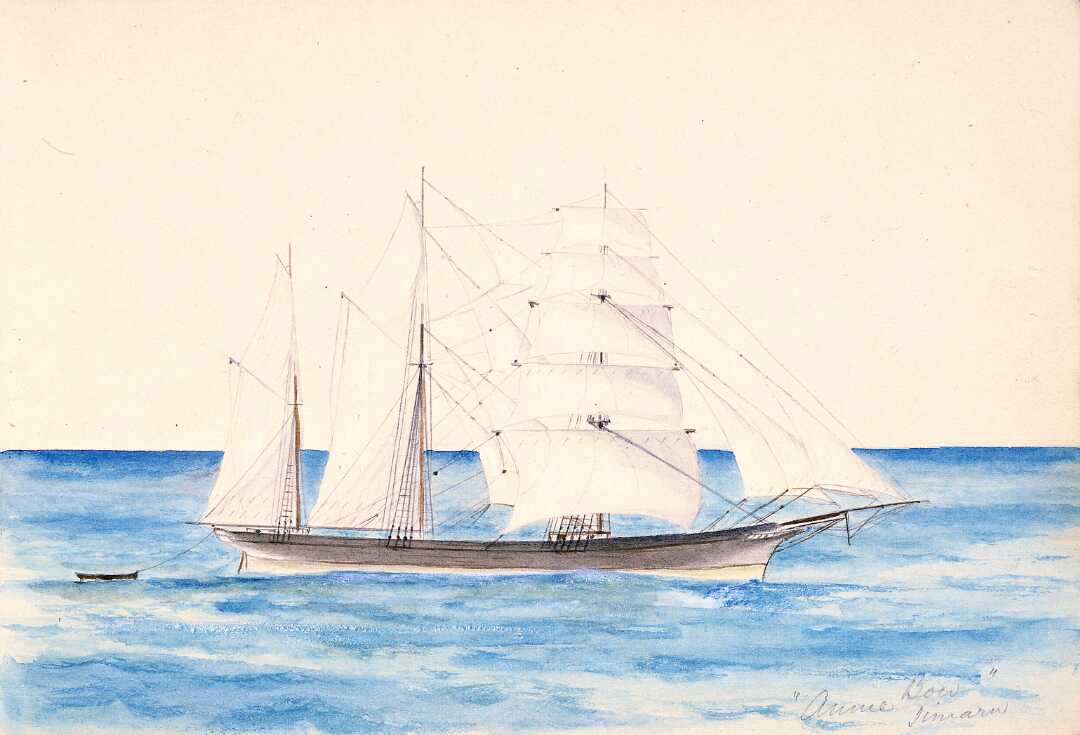
Annie Bow, Timaru. 1879? A broadside view of a small steam and sailing ship. By Arthur Lagden Haylock (1860-1948).
Born in Akaroa. In 1877 he entered Government Service and was posted to the Land Office at Timaru. His interest in ships and the sea led him to join the Timaru Rocket Brigade, a group of volunteers which watched over vessels anchored in the roadstead. Involved in the attempts to save the 'City of Perth' and the 'Ben Venue' in May 1882. Transferred to Christchurch and then Wellington. After retirement active in the Anglican Church Men's Society and maintained his interest in compiling records of maritime events. He was only child of Charles Lagden Haylock's second marriage. Had 4 half brothers from a former marriage; Peter, Charles, George and Harry. (Source: Back PA3-0354 & PA3-0358). See also `A Tribute to my pioneer ancestors' by Greta M Haylock, 1974. He also designed the bravery Benvenue medals.
Arthur Lagden Haylock – Friends of Karori Cemetery Biographical summary, family background, life dates, summary of his work and family details.
Friends of Karori Cemetery https://friendsofkaroricemetery.co.nz/arthur-lagden-haylock/
“Haylock, Arthur Lagden, 1860-1948” – National Library of New Zealand (family-history papers) Manuscript collection including his autobiographical account Recollections of Timaru 1877-1882, correspondence and other personal documents. National Library of New Zealand https://natlib.govt.nz/records/22866784
“Haylock, Arthur Lagden, 1860-1948 : Notes on shipping and shipwrecks in New Zealand waters” – National Library A multi-volume set of manuscripts compiled by Haylock himself, documenting wrecks, shipping incidents, and maritime data. National Library of New Zealand https://natlib.govt.nz/records/22346877
“Haylock, Arthur Lagden, 1860-1948 : Sketches by A. L. Haylock, 1878-1883” – National Library (Timaru & coastal scenes) Drawings and watercolours made by Haylock during his time in Timaru and coastal NZ — includes harbour, town, wreck, and ship scenes. National Library of New Zealand https://natlib.govt.nz/records/23167677
“Haylock, Arthur Lagden, 1860-1948 : Timaru [1878?]” – National Library (watercolour) A specific watercolour view of Timaru, giving visual context to the port town as it was when Haylock lived there.
National Library of New Zealand https://natlib.govt.nz/records/23215774
“A tribute to my pioneer ancestors … and … Arthur Lagden Haylock” – DigitalNZ / South Canterbury Museum Genealogy of the Haylock family, with reminiscences and reference to commemorative items such as the “Benvenue Wreck” memorial medallion designed by him. DigitalNZ https://digitalnz.org/records?text=arthur+lagden+haylock#
https://timdc.pastperfectonline.com/Library/57500F10-2F10-4D7D-B66B-905461134620
https://friendsofkaroricemetery.co.nz/arthur-lagden-haylock/
https://digitalnz.org/records/23131444
https://ancestors.familysearch.org/en/LH28-4DP/arthur-lagden-haylock-1860-1948
"Benvenue" Monument
"Greater love hath no man than this. That a man lay down his life for his friends."
This Monument is raised to commemorate generous and noble self-sacrifice of those who gladly encountered the perils of death in the heroic endeavour to save their fellow men on Sunday the 14th May 1882 when the "City of Perth and the Benvenue" were wrecked at Timaru.
"Benvenue"
Master - Captain W.H. McGowan
Iron Sailing Ship
999 tons
Total Loss
"City of Perth"
Master - Captain C. McDonald
Iron Sailing Ship
1189 tons
Refloated
This tablet contains the names of those who perished in the endeavour to save life 14th May 1882.
Alexander Mills Harbour Master Timaru
John Blacklock First Mate "City of Perth"
Robert Gardiner Second Mate "City of Perth"
Donald McLean Carpenter "City of Perth"
William McLern Waterman Timaru
Emanuel Nielson Boatman Timaru
Martin Beach Boatman Timaru
Harry McDonald Boatman Timaru
George Falgar Boatman Timaru

50th Jubilee of the Benvenue wreck. The lifeboat Alexandra and crowd at the 50th Jubilee memorial service, commemorating the Benvenue wreck disaster at Timaru on 14 May 1932. Handwritten on verso is a note reading: "14th May Jubilee 1932 The Old Lifeboat [-] ?, A L Haycock, C G Vogeler, I Bradley, W Hole". South Canterbury Museum 1542
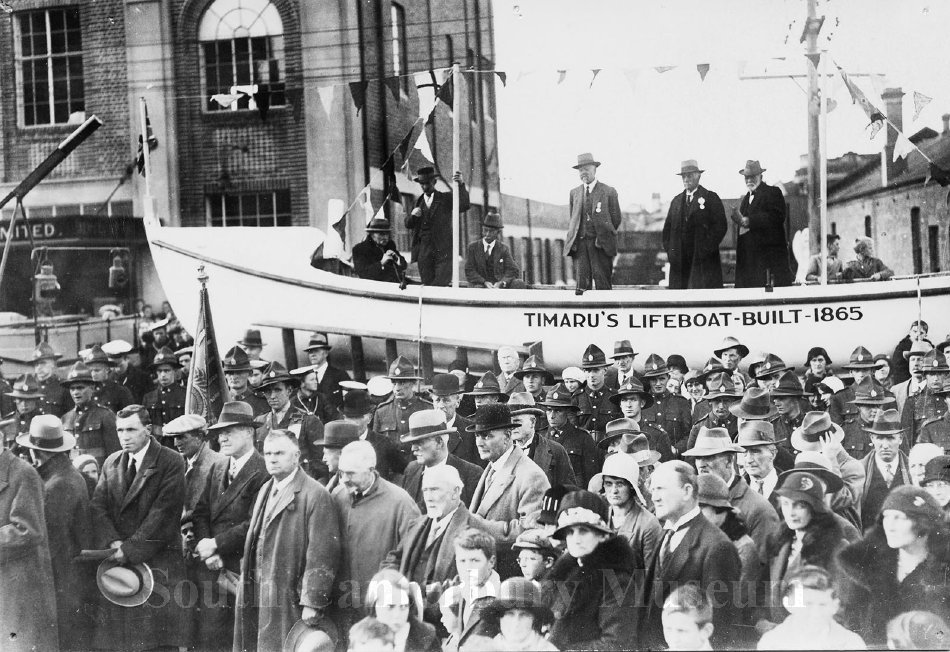
The lifeboat Alexandra and crowd at the 50th Jubilee memorial service, commemorating the Benvenue wreck disaster at Timaru on 14 May 1932, Handwritten on verso is a note reading: "14th May Jubilee 1932 The Old Lifeboat [-] ?, A L Haycock, C G Vogeler, I Bradley, W Hole" South Canterbury Museum 1542

Crowds assembled around the Benvenue Memorial, in Sophia Street Timaru, for a service commemorating the 50th anniversary of the wreck of the Benvenue, dated 14th May 1932. In the left background both the lifeboat Alexandra and the rocket launcher, as well as surviving veterans, are visible.. South Canterbury Museum 1453
A tribute to my pioneer ancestors and to their New Zealand born son, Arthur Lagden Haylock - by Great Haylock is in the South Canterbury Museum archive. A genealogy of the Haylock family, pioneer settlers of Akaroa. Includes some reminiscences of and information about the authors father, Arthur Lagden Haylock, who designed one side of the Benvenue Wreck memorial medallion. Catalogue Number 2212.
There is also another book: Ashdon to Akaroa : stories of the Haylock family's journey to Aotearoa and their early years in the country. bu John Andrew Haylock. A Haylock family history, including sections on surveyor Arthur Lagden Haylock, who was based at Timaru from 1877 until the early 1890s, and was involved in the Timaru Volunteer Rocket Brigade. Catalogue Number 2025/033.01.