
By Roselyn Fauth

In the final months of 1918, Timaru faced a wave of sickness and loss unlike anything the town had seen before. The influenza epidemic swept through New Zealand with startling speed, carried by troop ships, trains and the movement of people returning from the First World War. Within a matter of weeks, families who had waited anxiously for soldiers to come home found themselves grieving for loved ones taken by a different enemy.
The impact can be seen clearly in the cemetery records. A short note in the Timaru Herald compares the number of burials in November 1917 with those in November 1918. In the earlier year there were fourteen burials. Twelve months later there were sixty. The figures speak plainly. This was not a slow rise. It was a sudden and overwhelming surge.
A second report from the Cemetery Board confirms what this meant across the full year. In 1918 Timaru recorded 214 burials, an increase of sixty-two on the previous year. The sexton stated that the rise was due chiefly to influenza. Behind these numbers lie the stories of families who lost mothers, fathers, children and neighbours in a matter of days. The speed of the illness meant that many households had more than one death within the same week. Normal routines of mourning were disrupted. Funerals were brief. The cemetery became one of the busiest places in the district.
For those who worked there, the toll was practical as well as emotional. Graves needed to be opened at a pace far beyond ordinary demands. Space was used quickly. People who had hoped to rest near family members sometimes found that the pressure on the cemetery required different arrangements. Records from this period show how epidemics could place strain on both staff and the layout of burial grounds, and how easily individual stories could be lost in the urgency of the moment.
The 1918 pandemic remains New Zealand’s most lethal disease event. About nine thousand people died nationwide in only a few weeks. In Timaru, the cemetery became a quiet witness to that grief. The grass today gives no hint of the hurried footsteps or the weight of those days, but the numbers, preserved in the pages of the local newspaper, remind us of the scale of what the community endured.
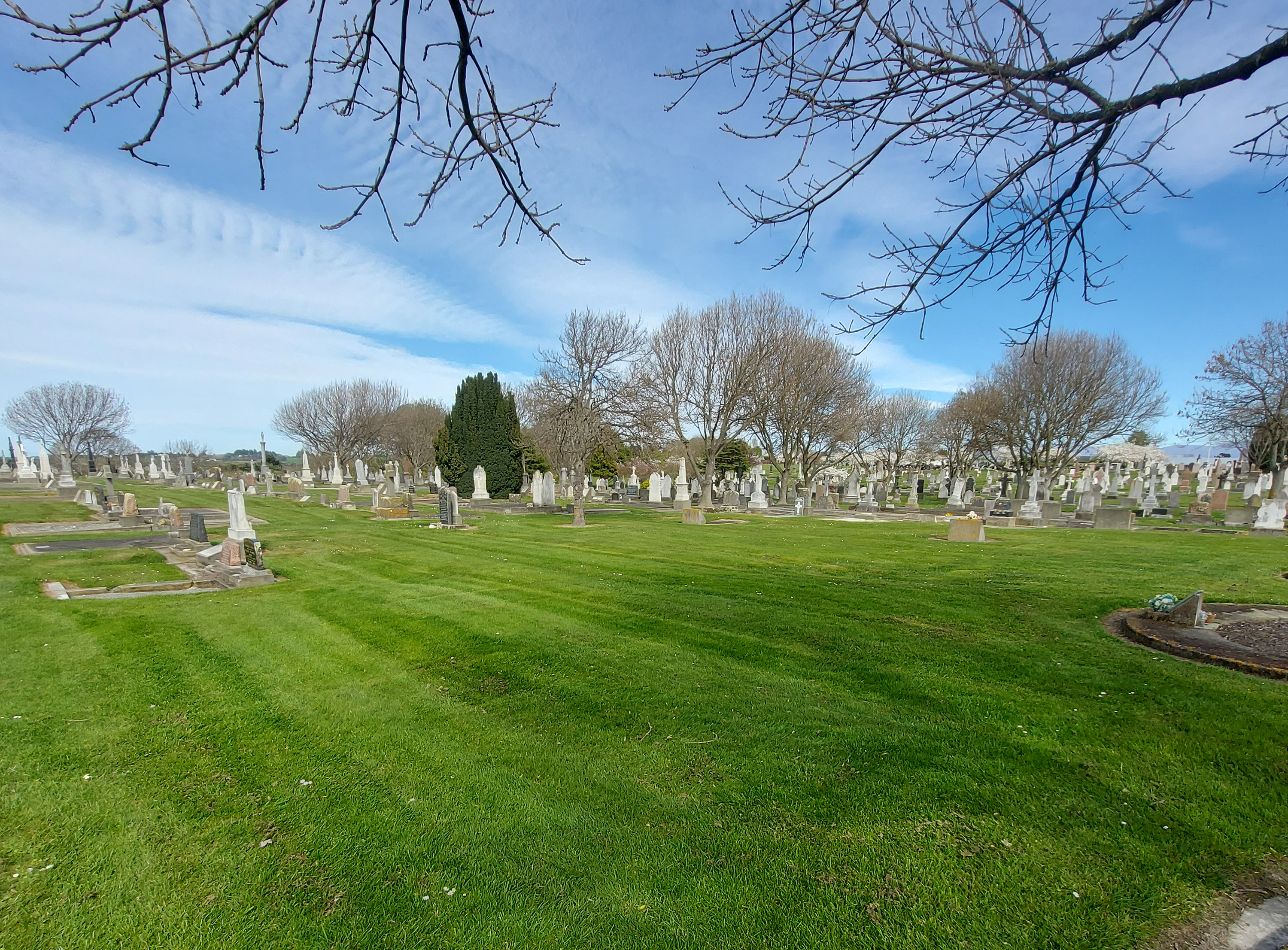
Another area of the Timaru cemetery where people rest in unmarked graves. The influenza pandemic that began in 1918 is New Zealand’s most lethal disease disaster to date. The movement of large numbers of soldiers by sea and rail coming home from the First World War facilitated the spread of the disease. In the space of two months, the influenza epidemic claimed the lives of about 9,000 New Zealanders. Comparatively, the First World War claimed the lives of more than 18,000 New Zealand Soldiers over a span of four years. Further information on the 1918 influenza epidemic can be found here. A timeline of epidemics in New Zealand can be found here. The following articles from the Timaru Herald discuss the increase of burials as a result of the influenza pandemic.
To look back at this moment is not only to acknowledge loss. It is to recognise how public health, community care and cemetery management are intertwined. The toll of the pandemic showed how swiftly lives could change, and how important it is to remember those who were laid to rest in a year that overwhelmed the ordinary rhythms of life and death.
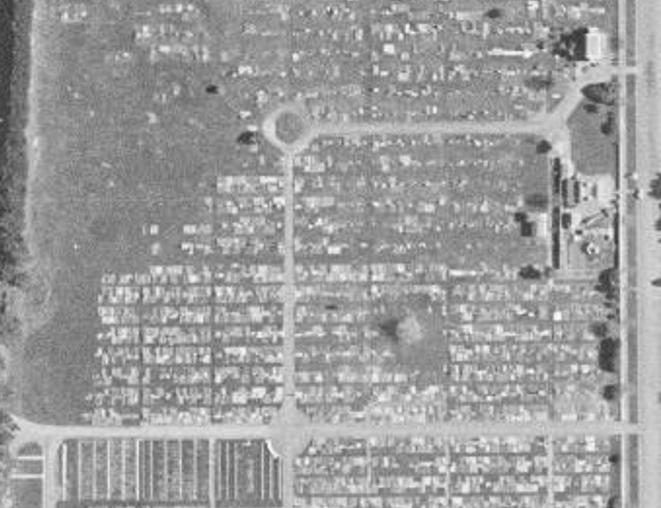
Section of a survey photo taken 18081967 Retrolens CROWN_1407_058. It shows a large tree, which I think is the willow tree I have been told about, where many people were buried during the influenza pandemic. The tree is gone, and the area has few marked graves.
INFLUENZA.
Timaru Herald, Volume CVII, Issue 16703, 3 December 1918, Page 5
POSITION STILL IMPROVING.
The position in regard to the influenza epidemic in Timaru is still improving, and the authorities all agree that if everybody would carry out strictly the precautions advised, there would soon be an end to it.
There was one death at the Timaru hospital yesterday — that of a woman who had been working very hard in the country to save others. Four cases were admitted, but only two were fresh cases, the other two having come from country hospitals. One patient was sent to the convalescent home, and several will be sent there to-day. Dr Ulrich reported last night that things are going on quietly and well at the hospital; and he considers the epidemic is now well in hand.
There are now twenty patients in the convalescent home. One was admitted yesterday and two discharged. All the patients are progressing favourably.
Members of St. John Ambulance are now having a less strenuous time than when the epidemic was at its height. Last night the Superintendent was able to report “very little doing for the day.” There were only two transports, one from the Point, and one from Temuka.
Two hundred and twenty-five people passed through the inhalation chamber in the Arcade yesterday.
A comparison of the number of burials in the Timaru cemetery in November just passed and in the corresponding month of last year shows that there were 14 in November, 1917, and 60 in November of this year.
TOWN & COUNTRY
Timaru Herald, Volume CVIII, Issue 16712, 3 February 1919, Page 4
A meeting of the Timaru Cemetery Board was held last week. Present:— Messrs W. Evans (chairman), W. Priest, E. Holdgate, R. H. Bowie, and H. A. Innes-Jones. It was decided to oppose the final payment being made to the contractors for recent improvements carried out at the Cemetery. The annual report of the sexton was received and showed that for the year 1918 the burials were 214, plots sold 162; the increase of burials on the previous year being 62, owing chiefly to the influenza epidemic. paperspast/THD18790225.2.16