
How Ancient Leaves Became Features of Timaru’s Architecture?
A basket, acanthus plant, and a roof tile.
Lets start at the Middle Ages, 900 years between fall of the Roman Empire and the Renaissance between 500-1500 AD.
Architecture evolved from classical Roman grandeur to more practical, fortified, and religiously focused buildings, known as Romanesque and then later the French Gothic style. This spread across Europe and dominated cathedral construction in the 1500s. Buildings like St Mary’s in Timaru were inspired by this style, known as Gothic Revival, based on the architecture of medieval Europe and the architectural fashions in Britain 1800s.
In 1416, the world's oldest known architecture textbook, De Architectura (On Architecture), written by Marcus ‘Vitruvius’ Pollio we think around 100 BCE, was rediscovered in a Swiss monastery library and translated into Italian, French, Spanish, and English.
Vitruvius, a military engineer and architect under Emperor Augustus, wrote this guide for Roman architects. Its rediscovery inspired people to incorporate the classical style of ancient Greece and Rome into their buildings. You can see it in Timaru’s Custom House, the Roman Catholic’s Basilica to Victorian, Edwardian shops in town, Arts and Crafts homes, and even modern designs like the Tekapo Buildings.
Vitruvius believed that the ideal human body follows specific mathematical ratios, and these proportions could be used as a guide in architecture to reflect the harmony of nature and the human form. His writings inspired Leonardo da Vinci’s famous drawing, "Vitruvian Man" (circa 1490). And many more artists like Francesco Di Giorgio Martini.

The Greeks adopted columns from the Egyptians, Minoans and Mycenaeans and had three distinct orders. Doric, Ionic, and Corinthian. Romans evolved to Tuscan, and Composite styles.
Base: The bottom of the column, often adorned in Ionic and Corinthian styles but plain in the Doric.
Shaft: The elongated middle section, typically fluted for visual appeal.
Capital: The top section, unique to each order, which transitions the column to the load above.

DORIC
Simple, round design with a square top. Fluted shaft. (Masculine). (Greek)
IONIC
Volutes (scroll-like ornaments). Slender, fluted shaft. (Feminine) (Greek)
CORINTHIAN
Ornate and intricate acanthus leaves, votive basket. Fluted shaft. (Greek and Roman)
Vitruvius described the three classical Greek orders; Doric, Ionic, and Corinthian, as having distinct proportions and symbolic meanings. Vitruvius believed that architects should choose the right order for the right building, matching the style to the function and symbolism of the structure.
The Doric order, the simplest and sturdiest, represented strength and masculinity, with plain capitals and no base. It was used for military and civic buildings where durability and solidity were essential.
The Ionic order was more slender and elegant, symbolizing grace and femininity, with its scroll-like volutes and decorative elements. It was suited for temples and buildings that needed a balance of strength and beauty. The scrolls called volutes means to roll up. On the Ionic capital he said like the graceful curls of a woman’s hair. He suggests that just as women are more delicate and adorned than men, the Ionic order is more decorative and refined than the sturdy Doric style. This aligns with his broader theme that architecture should reflect natural forms and human ideals.
The Corinthian order, the most ornate and decorative, was associated with luxury and refinement, inspired by the delicate form of a maiden. Its elaborate capitals, adorned with acanthus leaves, made it ideal for grand temples and prestigious structures. Vitruvius emphasized that architects should choose the appropriate order based on a building’s function and symbolism, ensuring harmony between design and purpose.
Vitruvius wrote about the Corinthian column, which dates back over 2,500 years. When you look up at the buildings in Timaru's CBD, you’ll notice capitals adorned with acanthus leaves, inspired by the work of the Greek architect Callimachus (c. 310–240 BCE).
Legend has it that Callimachus (meaning “very skillful”) was inspired by a grave of a young girl from Corinth, where her nurse had placed a votive basket of toys and covered it with a tile. An acanthus plant grew from the grave, wrapping around the basket, which led Callimachus to designe columns for the Corinthians based on this model, establishing balanced proportions and setting the principles for the Corinthian style.
Ancient Corinth, one of Greece's most important cities, was destroyed by the Romans in 146 BCE but was later reestablished as a Roman colony by Julius Caesar in 44 BCE. The Corinthian column, born from this city’s wealth and influence, became a symbol of luxury.
By contrast, the Doric order was simpler, embodying Spartan rigor, and the Ionic order represented the cosmopolitan balance of the Ionians.
After the Ottoman conquest in 1458 and an earthquake in 1858, Corinth was reduced to ruins. So the writings by Vitruvius' were critical to understanding the origins of buildings that had been ruined, and lost and revived the interest in classical architecture.
Jean Baptiste Coignard published the book in French in 1684.
In 1762, British architects James Stuart and Nicholas Revett published a survey of Greek architecture, sparking the Greek Revival movement across Europe and America. The acanthus leaf quickly spread worldwide, influencing architecture, furniture, and art.
Both Greeks and Romans made use of the Acanthus mollis in the form of garlands, with which they adorned their buildings, their furniture, and even their clothing.


The origin of the Corinthian order, engraving (Paris: J.-B. Coignard, 1684), illustrated in Claude Perrault's Vitruvius, 2nd ed. (1684).

A picture of the leaves of Acanthus Montanus ( Nees).caliban.mpiz-koeln.mpg.de/mavica/index.html part of www.biolib.de. An acanthus (A. mollis) flowering in the ruins of the Palatine Hill, Rome, May 2005

-
Historical journey of the acanthus leaf:
-
Acanthus leaf’s use evolved across art periods and countries.
-
Styles often overlapped and changed over time.
-
The leaf design was sometimes unrecognizable or disappeared, only to return in later periods.
-
Focus on its significance in architecture and furniture.
-
-
Ancient Egypt (3200 BC to 332 BC):
-
Limited use of wood in furniture; reserved for the wealthy.
-
Wood types: acacia, sidder, fig, ebony, cypress, and cedar.
-
No evidence of acanthus leaf in Egyptian design, but common motifs included lotus, papyrus, and palm.
-
-
Ancient Greece (1600 BC to 100 BC):
-
Woodcarving highly valued, influenced by Egypt and the Orient.
-
Early Greek furniture decorated with materials like marble, bronze, ivory, and precious stones.
-
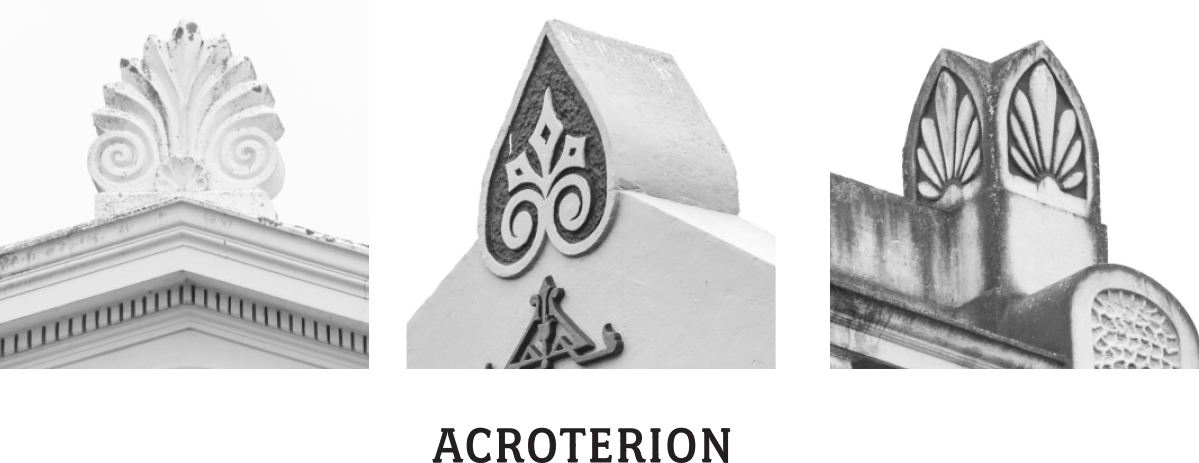
The first known example of acanthus leaf: used in the Corinthian capital (5th century BC).
-
Early acanthus leaves had sharp points, deep carvings, and distinct shadow lines in stone carvings.
-
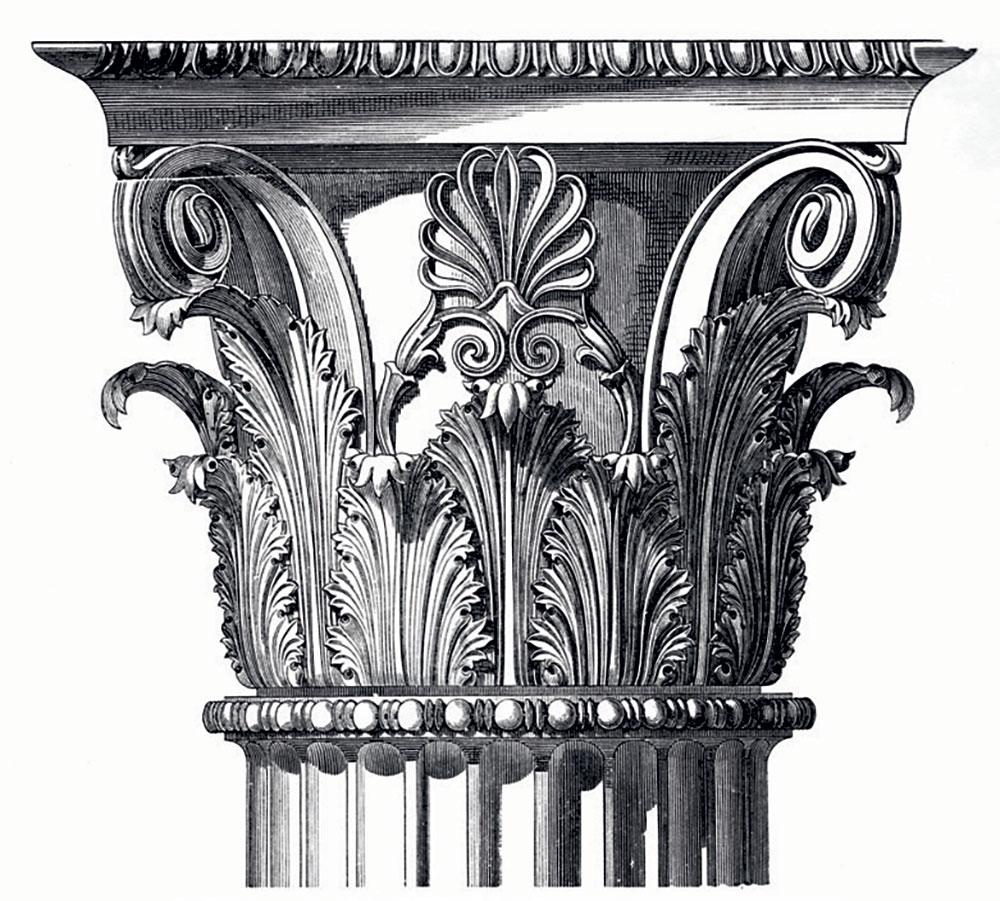
FIG. 1.16. A Greek capital, “Historic Ornament, A Pictorial Archive,” Dover Publications.
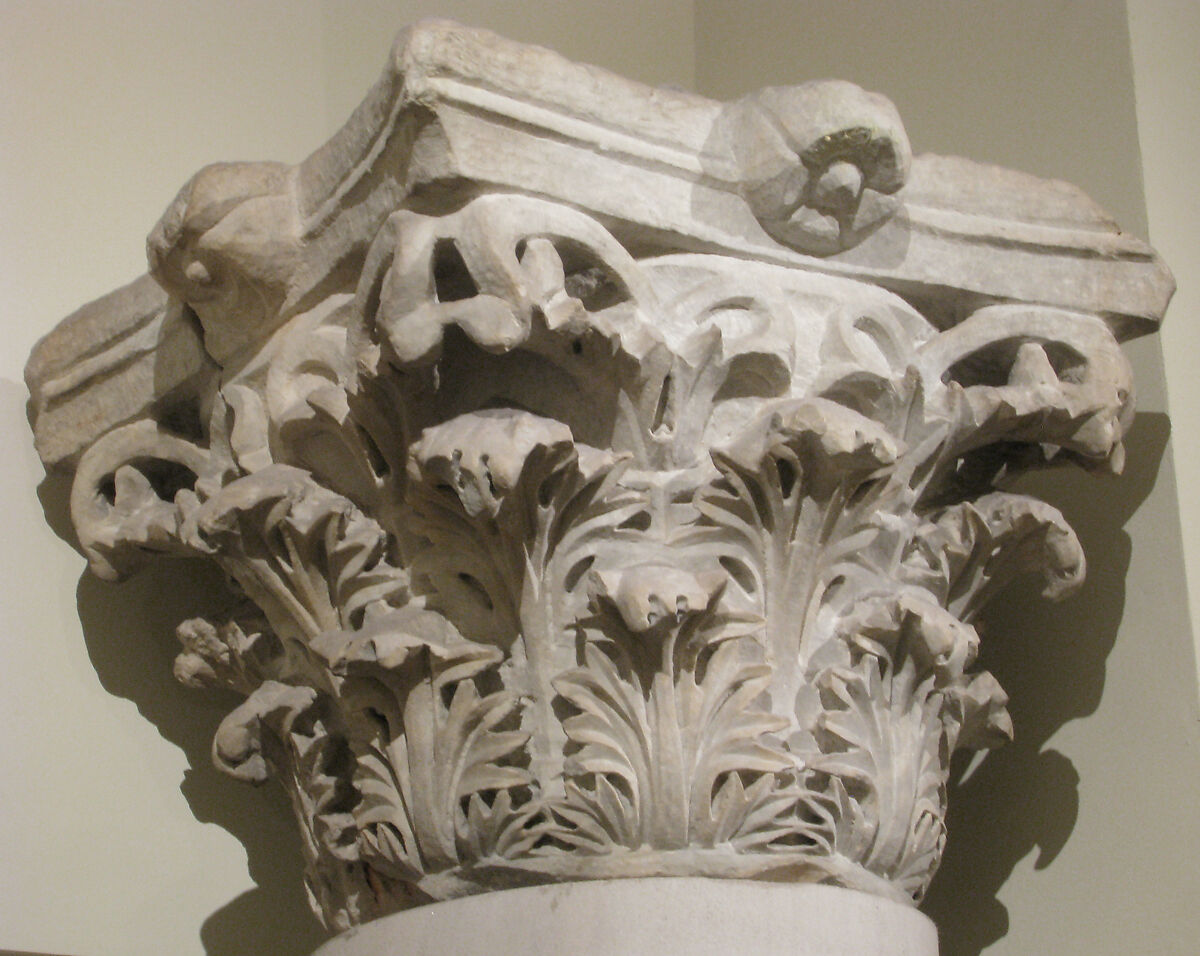
Image Credit The Met - Capital with Acanthus Leaves - 4th Century
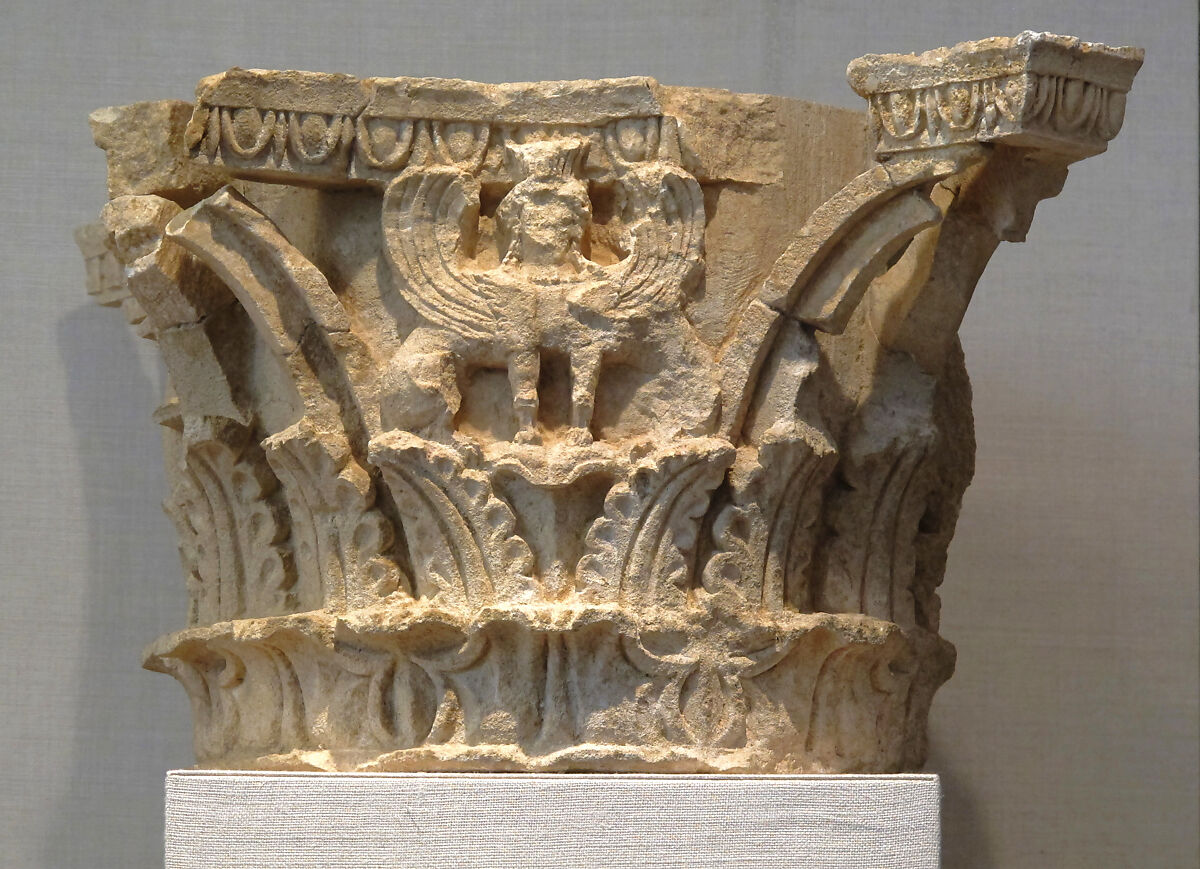
Image Credit: The Met. Corinthian Capital. 4th – 3rd Century BCE
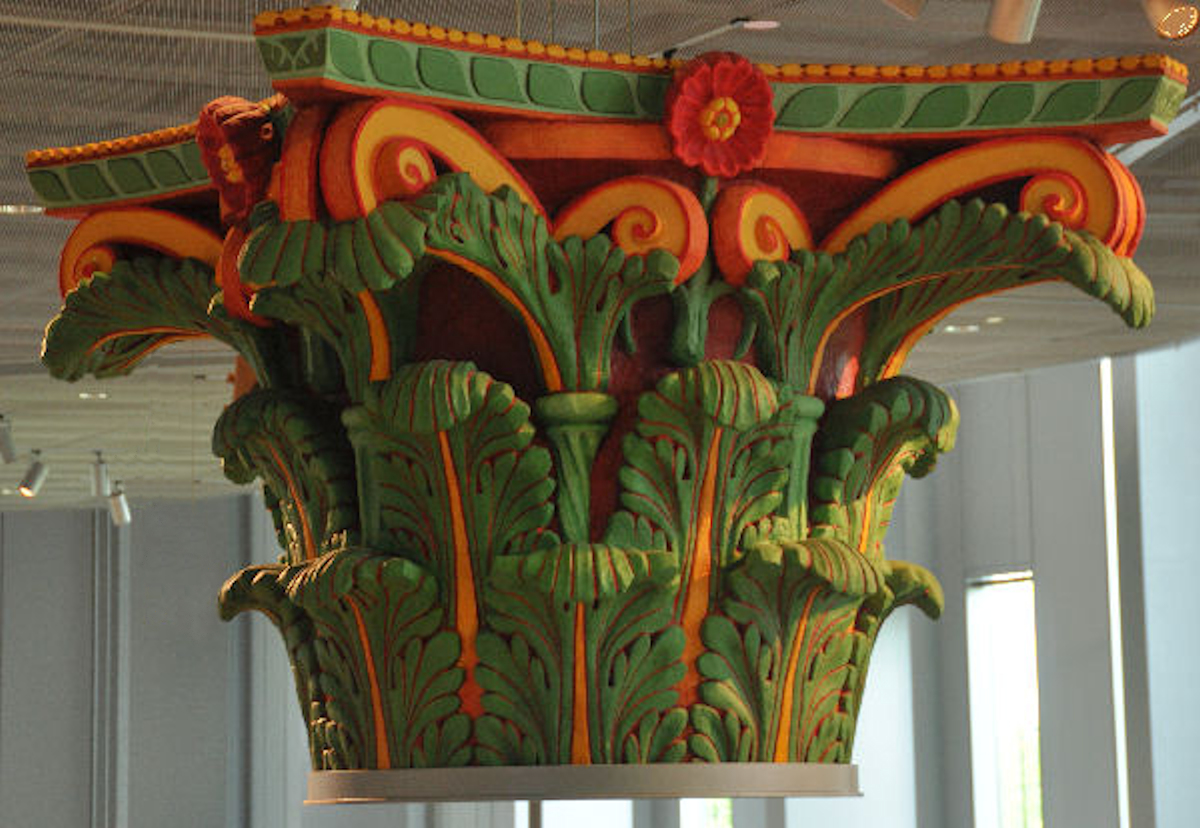
Reconstructed Corinthian capital, with original colours
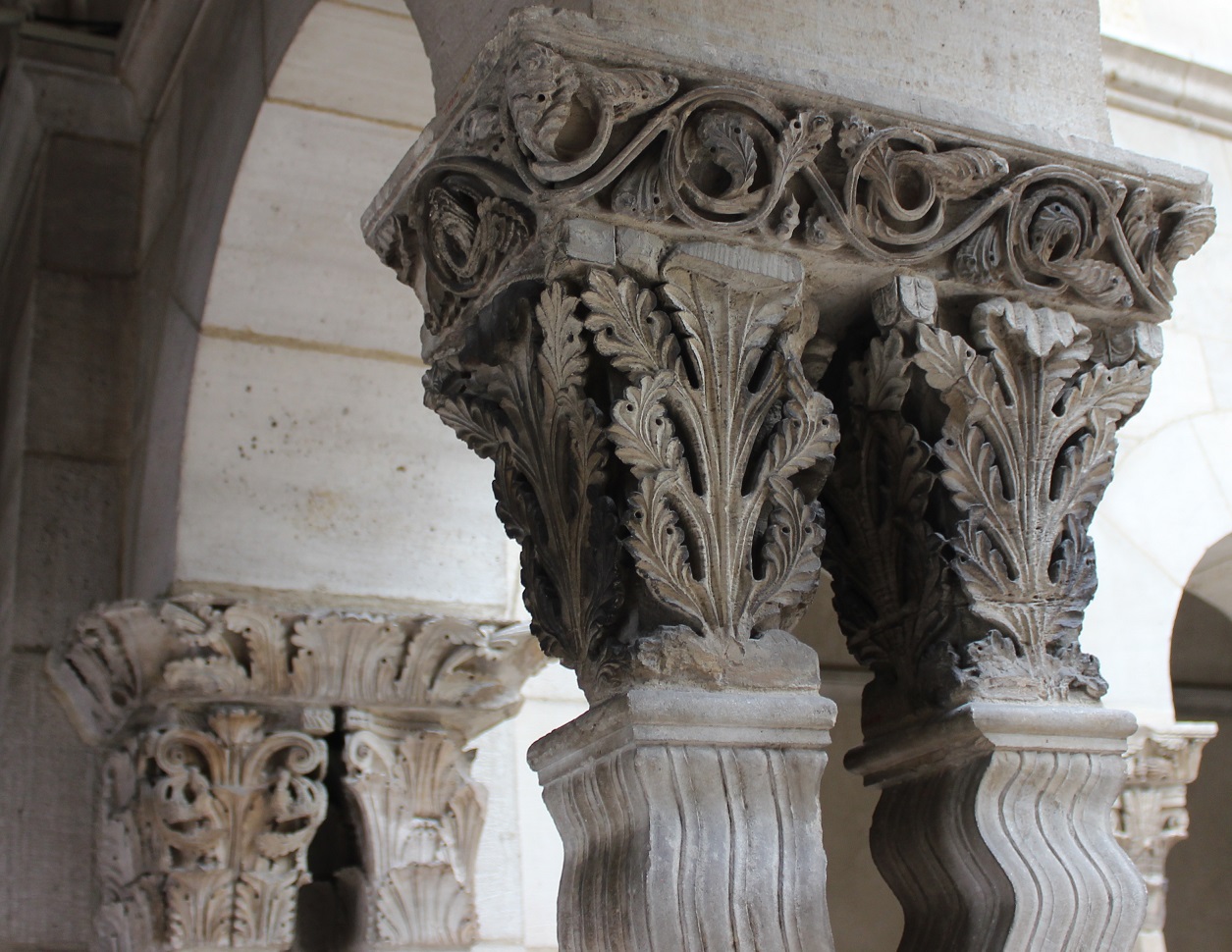
12th century acanthus capitals from Saint-Guillhem-le-Desert now in the Cloisters, New York - The MET
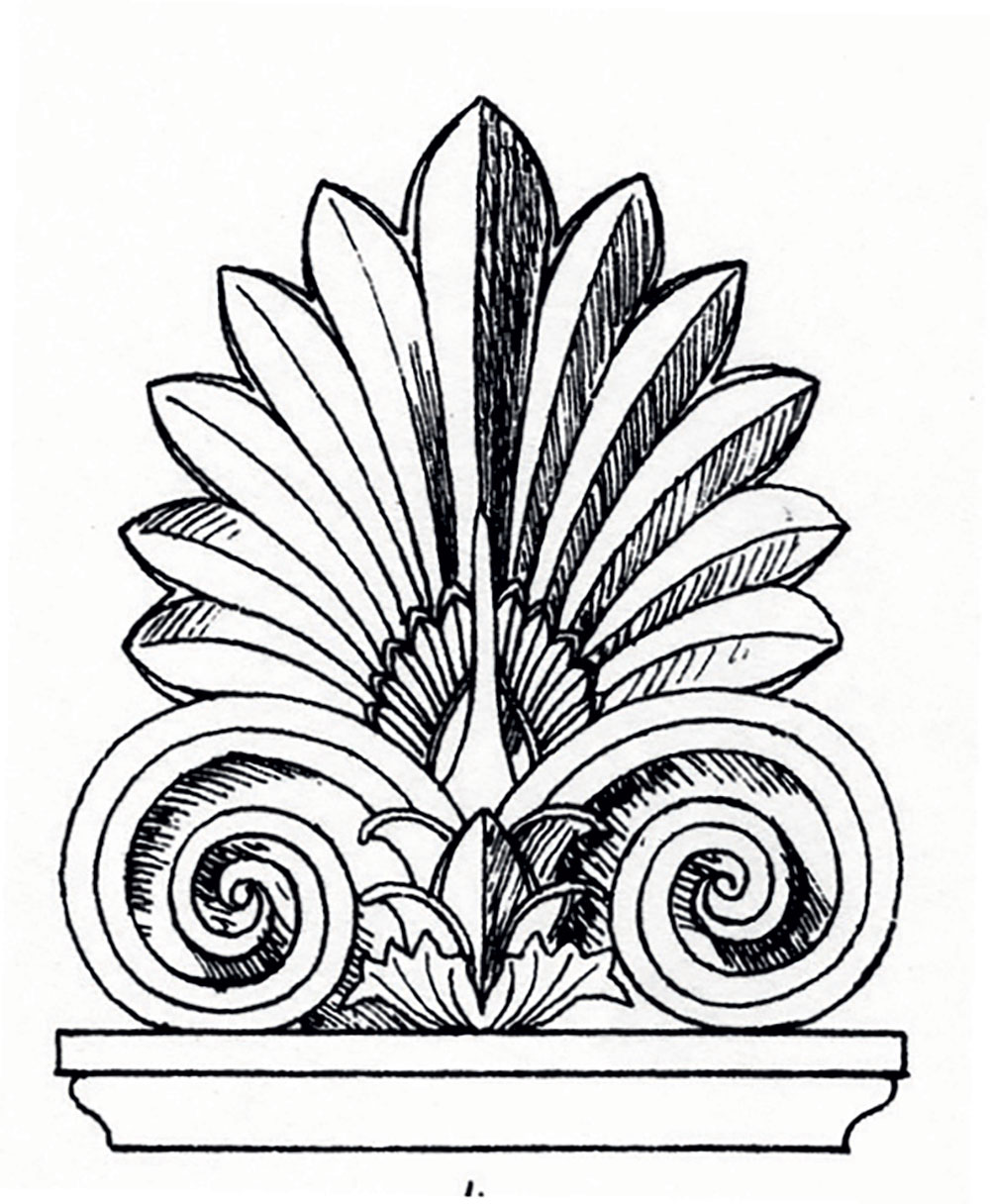
FIG. 1.15. Example of traditional a Greek anthemion, “Handbook of Historic Ornament, From Ancient Times to Biedermeier,” Dover Publications.
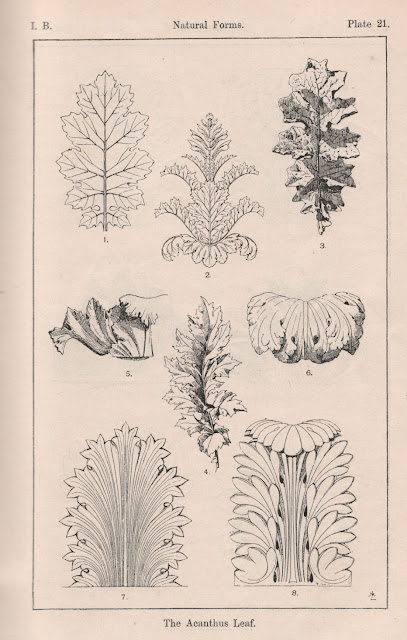
Illustrations from Meyer's book of the acanthus naturalistically treated (in Plate 21 below, illus. 1-4). Following that are various schematic illustrations (Plates 21, 22 & 23) from antiquity to modern times.
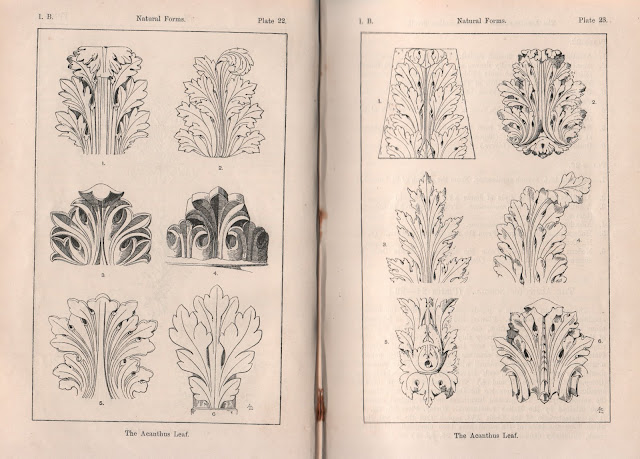
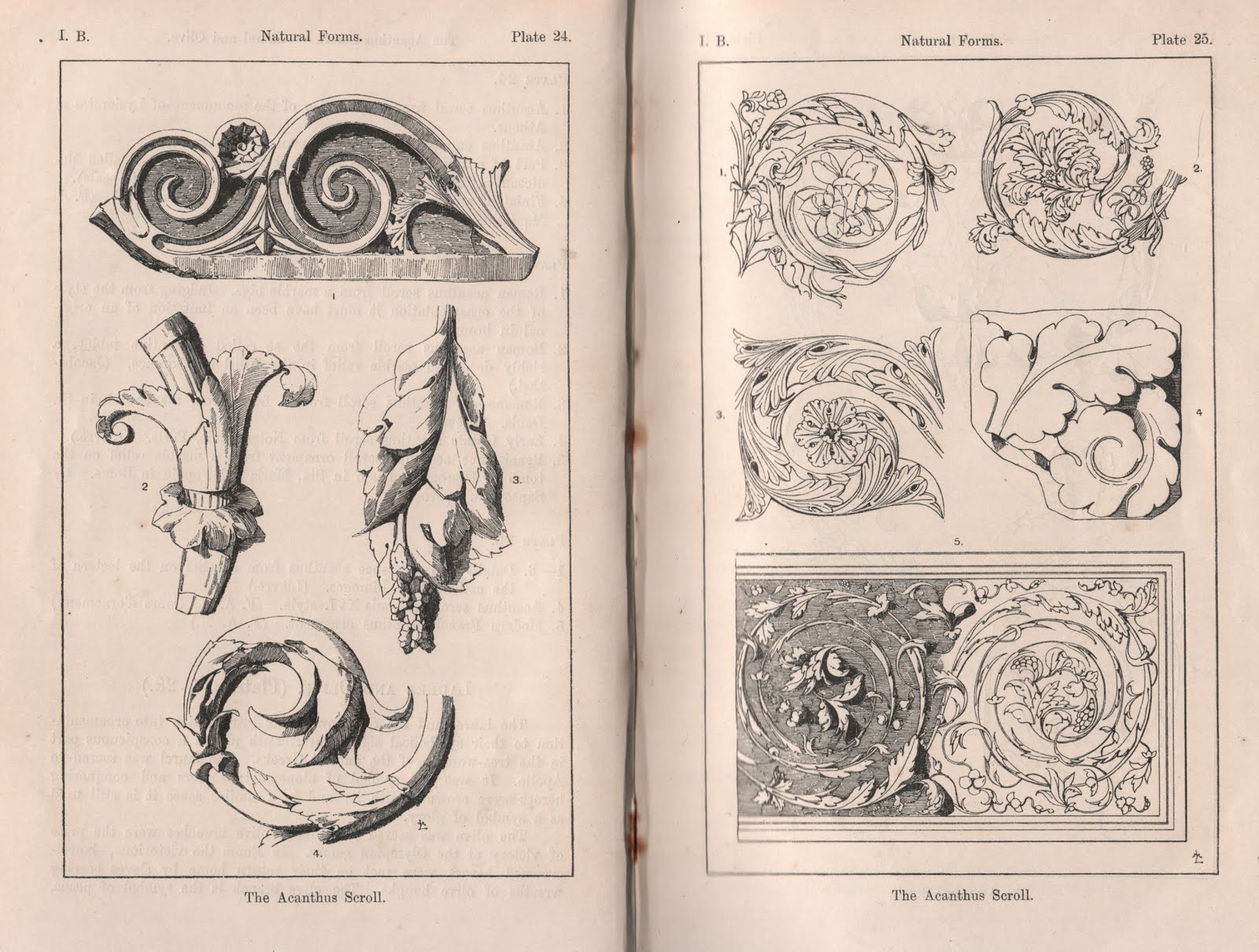
"Flowers and calices, such as frequently occur in acanthus ornamentation, are usually developed on the lines of the acanthus leaf, however freely they may be composed in other respects and however little they may recall natural models. The acanthus scroll is not seldom supplemented by and organically combined with forms from other genera of plants, for example: laurel, oak leaves, ivy, ears of wheat, &c. What was said above of the acanthus leaf holds good here too for the differences of execution in the various styles. The greatest luxuriance and the highest elegance were attained by the Italian Renaissance. It is characteristic of the Louis XVI epoch that the spiral lines which form the basis of the scroll have been elongated and, so to speak, eliptically displaced."
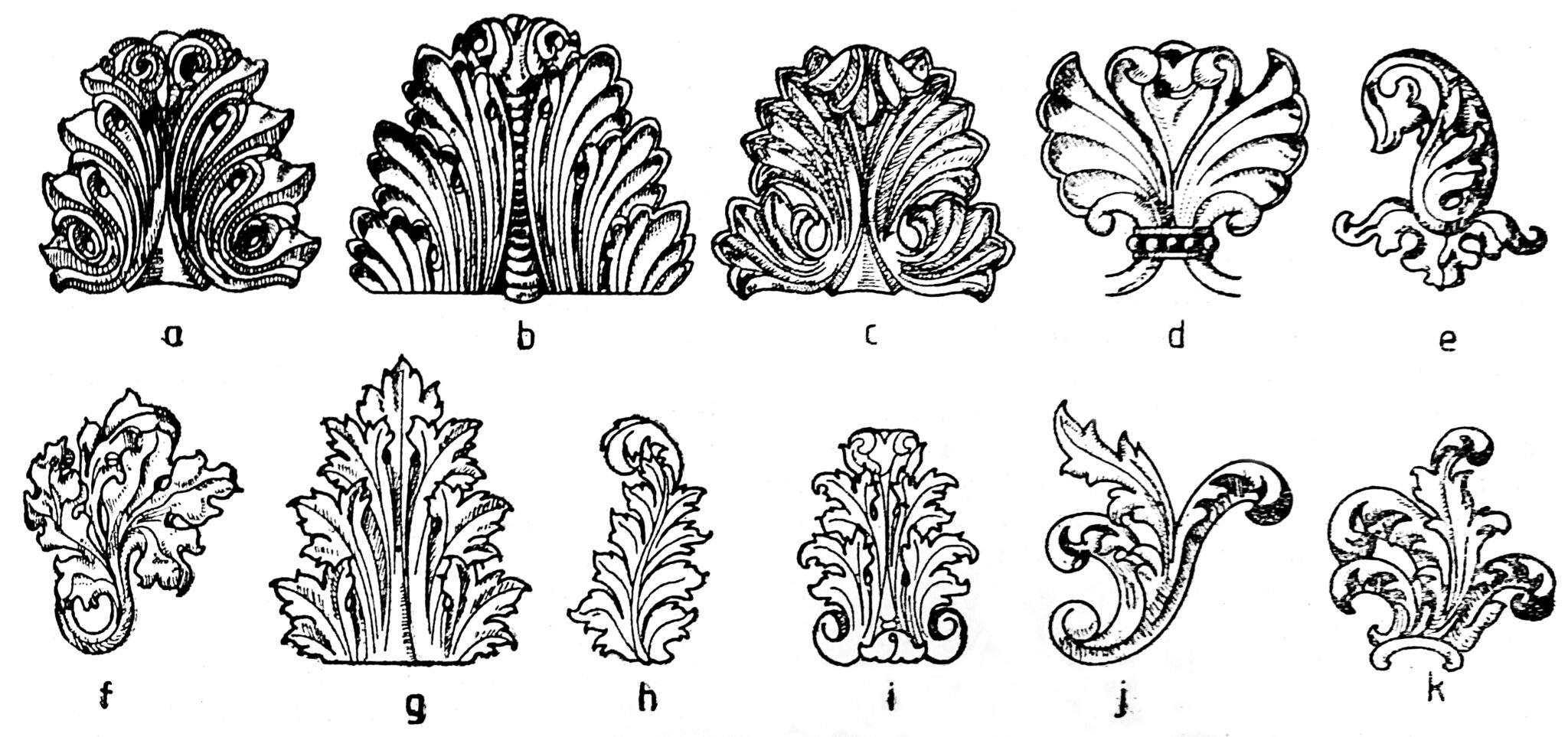
Timeline of the Acanthus in Design Image Credit: Wikipedia
a) Ancient Greek 1200 – 323 BCE
b) Ancient Roman 1st Century – 5th BCE
c) Byzantine 300 – 400 CE
d) Romanesque 1000 – 1150 CE
e & f) Gothic 12th Century to 16th Century CE
g) Renaissance15th Century to 16th Century CE
h & i) Baroque16th Century to 18th Century CE
j & k) Rococo mo 1700s
“Theocritus speaks of a prize cup as having “a crust of soft Acanthus.”
“Virgil narrates that the plant formed the basis of a design embroidered on the mantle of Helen of Troy; and tells us that the handles of Alcimedon’s cup were enwreathed with what he elsewhere terms “Smiling Acanthus.”——
“Old English names for this plant were Brank-ursine and Bear’s-breech.
“Acanthus is stated by astrologers to be under the dominion of the Moon.” Folkard
In 'Plant Symbolism', Gus Tassara disagrees and says of the symbolism of Acanthus:
"In Greece 2 BC the acanthus was a clear reference to life emerging from a grave. It was not initially a reference to resurrection in Christian sense, but in a sense that life is cyclical."
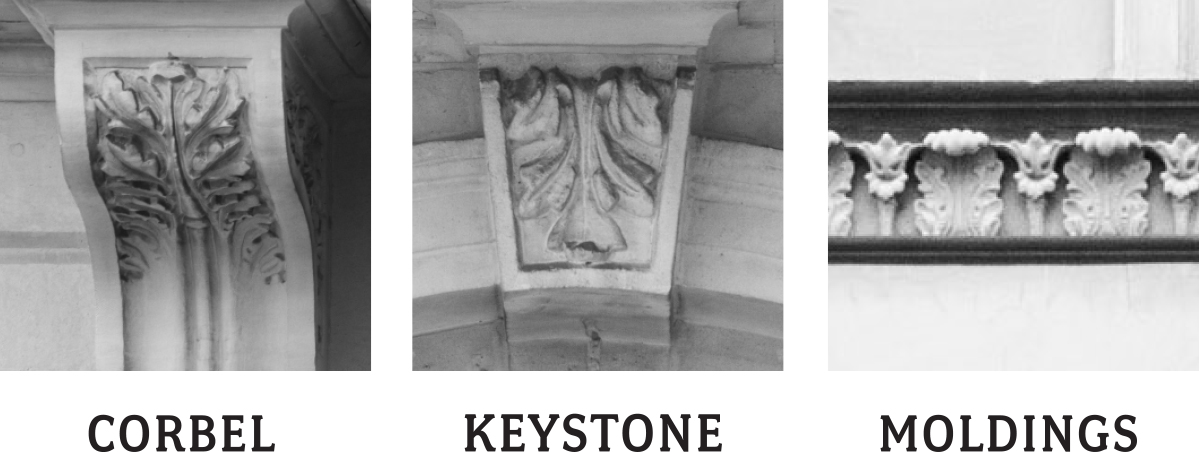
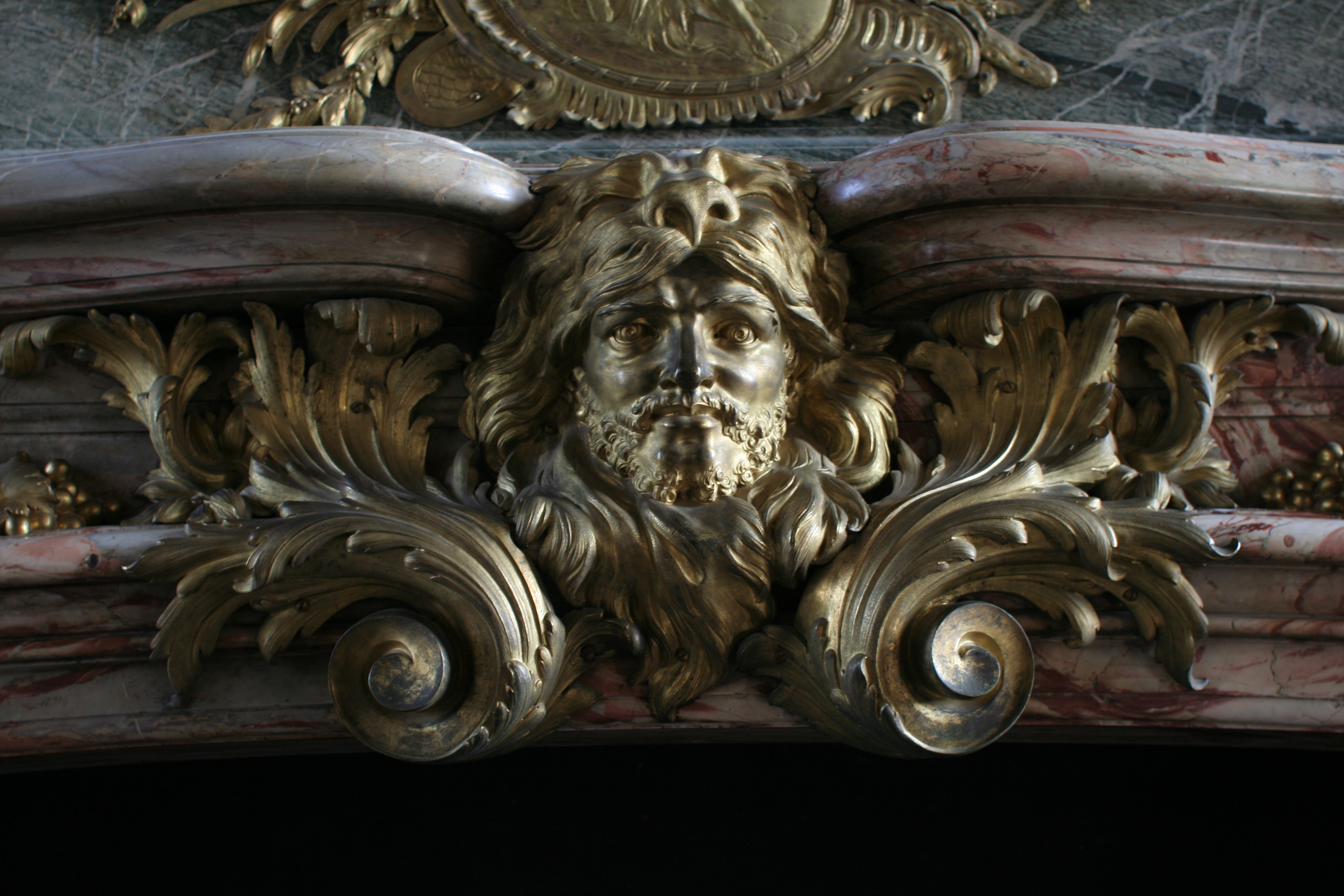
Baroque mascaron with acanthuses in the Salon d'Hercule, 1724–1736, designed by Robert de Cotte, Jacques Gabriel. By Coyau / Wikimedia Commons, CC BY-SA 3.0, https://commons.wikimedia.org/w/index.php?curid=14842661
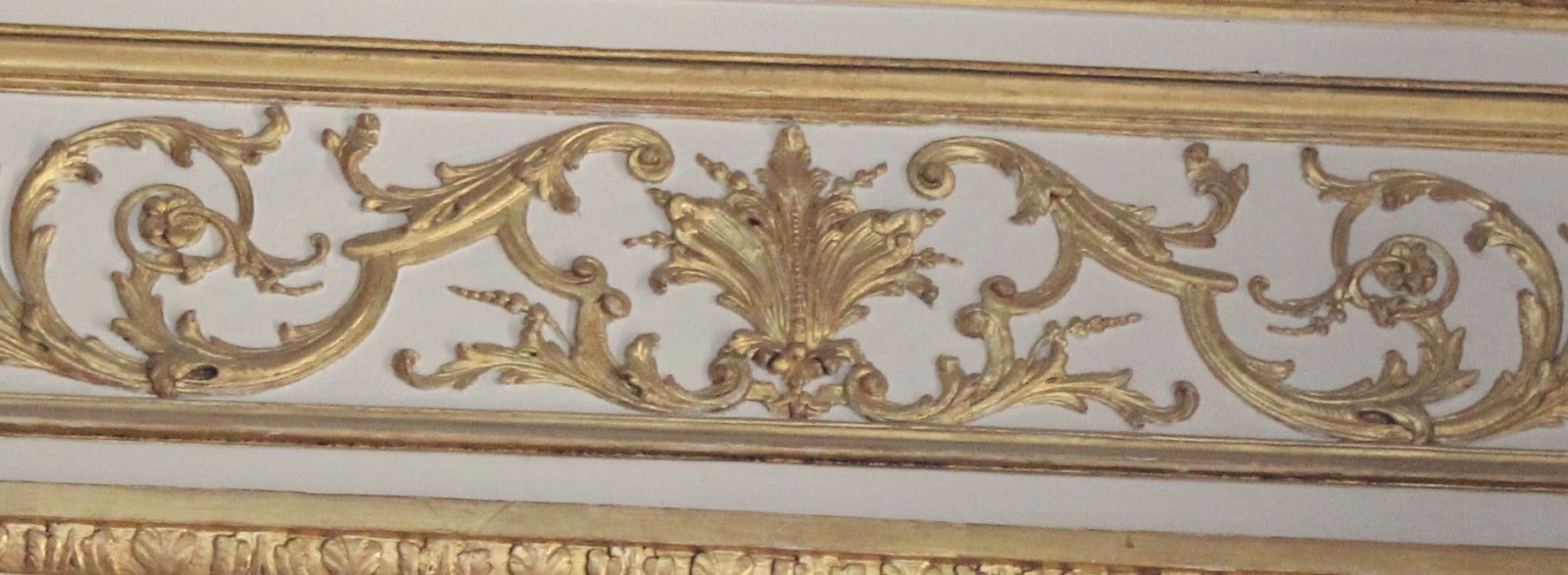
Ancanthus plant - Louis XIV ornament from Versailles; this ornament has a direct connection with the ornament more than two thousand years prior, as pictured above and was the the last in the evolutionary link leading up to the Rococo stlye

During the late 1800s, William Morris and other members of the Art Nouveau Movement reinvigorated elements of classical design. William Morris created several designs based on the Acanthus plant:
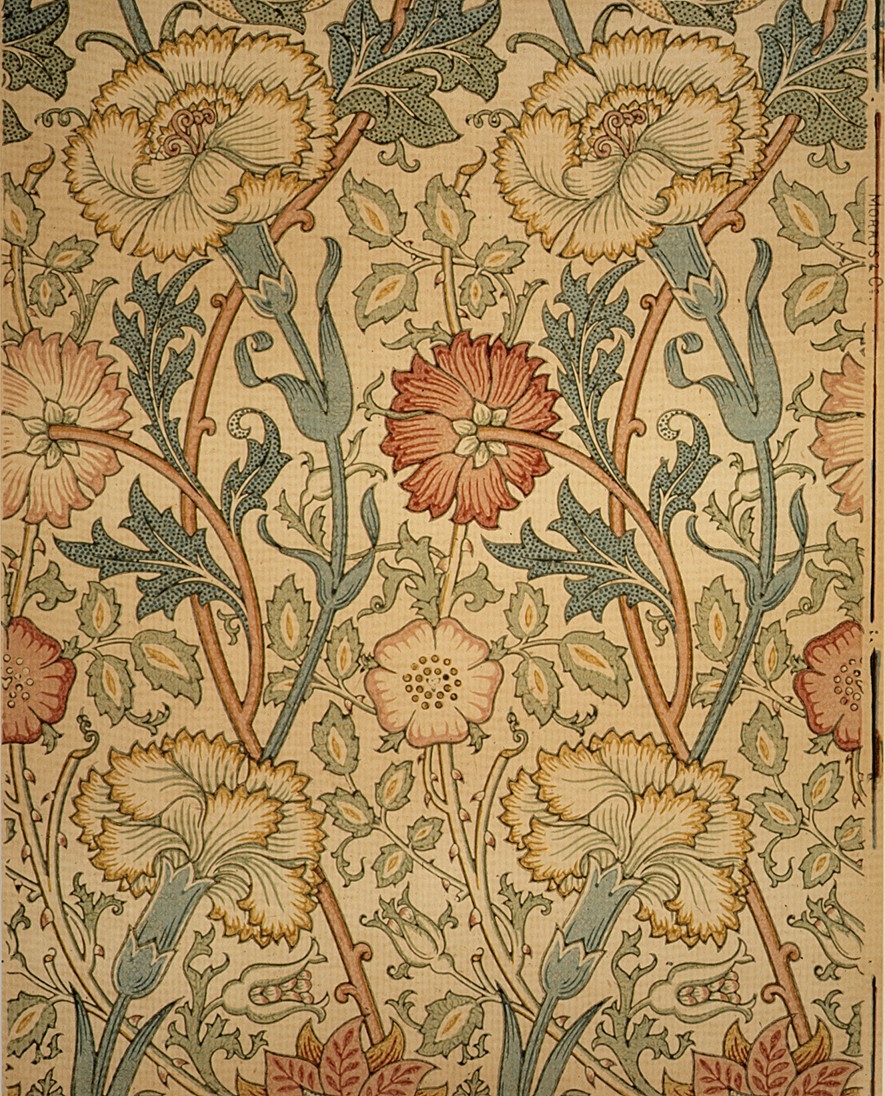
Image Credit: The Met. Pink and Rose. Designer William Morris British Manufacturer Morris & Company|. Printer Jeffrey & Co. British ca. 1890
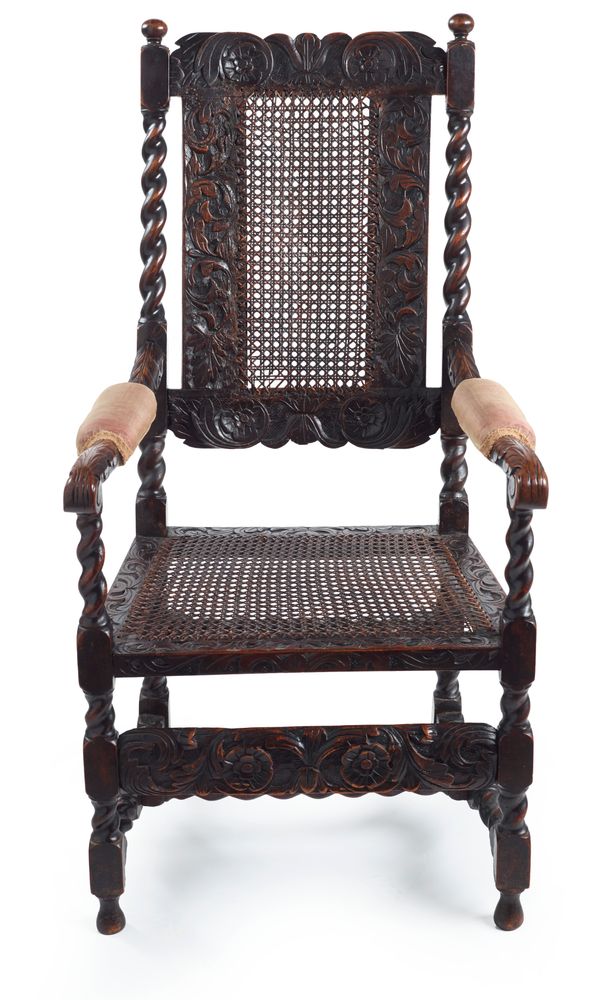
An arm chair, made in England about 1665, with velvet seat and armpads, carved and turned, with wide gauge caning in the seat and back. There are spiral twist columns, arm supports and stretchers and a carved ornamental front stretcher (roses and acanthus leaves motif). The edging of the back has carved roses and acanthus leaves top and bottom, with leaves only on the sides. It has padded arm pieces of lavender coloured silk and a fitted cushion. The arms are carved with a bold leaf design with a strong rollover. Above the small knobbed feet are shaped and turned legs.
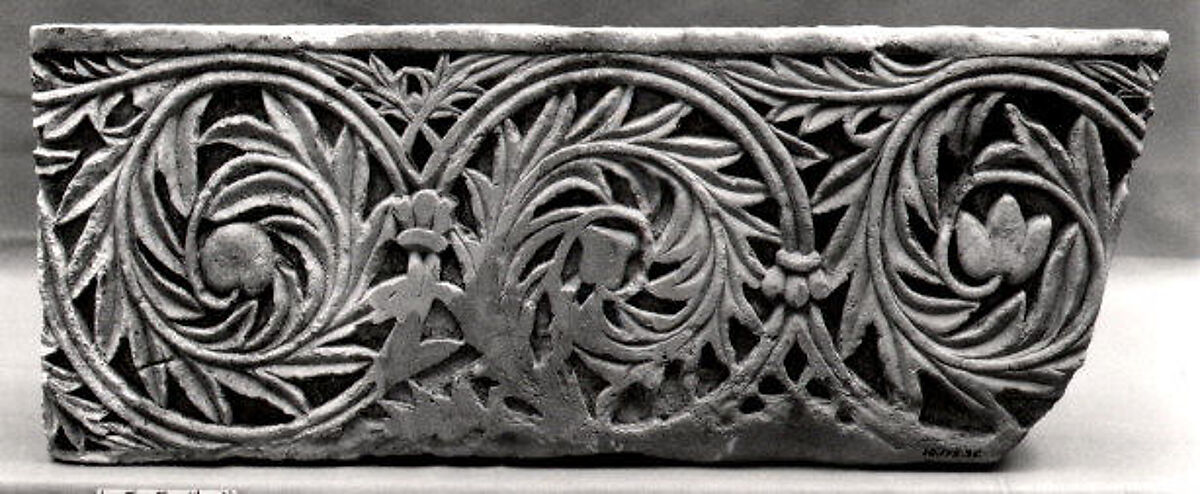
Title: Fragment of Frieze with Acanthus Leaves Encircling Fruit and Flowers. Date: 6th century. Geography: Found Egypt, Saqqara. Medium: Limestone; carved in relief. Classification: Sculpture. Credit Line: Rogers Fund, 1910. Object Number: 10.175.96
Fragment of Frieze with Acanthus Leaves Encircling Fruit and Flowers "In the 500s Apa (Father) Jeremias founded a Coptic monastery at Saqqara, the ancient Egyptian necropolis (cemetery) of the city of Memphis, near the oldest pyramids. He and the earliest monks lived in tombs at the site. As the monastery grew, several grand churches with lavish decoration were built, as well as many chapels, public buildings, and complexes of cells (rooms) for each monk. The monastery continued to grow after the Arab conquest with materials from early Byzantine tomb structures being reused for additional monastic structures. Inscriptions record prayers to numerous holy figures. Sculptural elements from Saqqara are often carved with deeply undercut patterns to intensify the play of light and shadow and to mask the solidity of the architecture. This sculptural style was popular throughout the Byzantine world in the 500s." - https://www.metmuseum.org/art/collection/search/453625
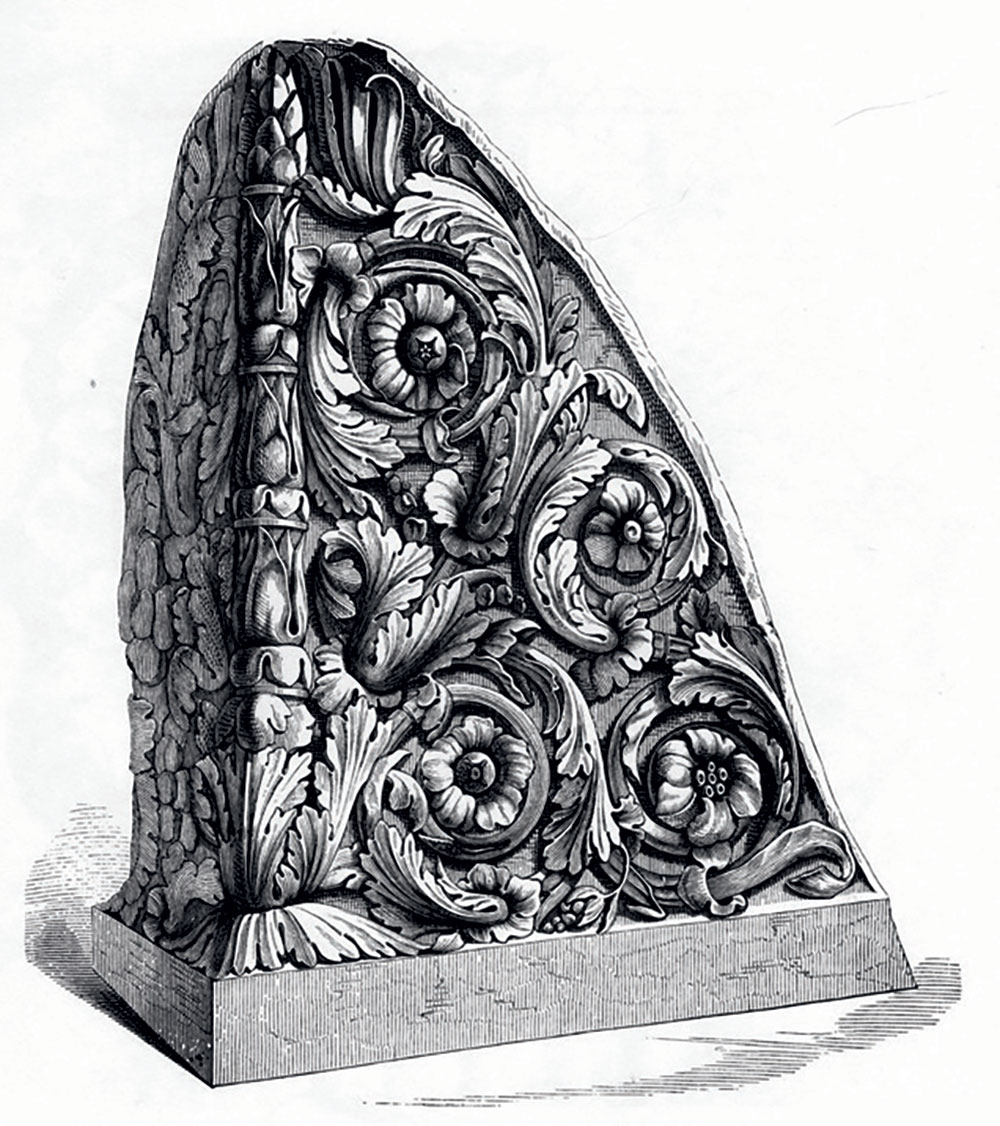
FIG. 1.17. Roman carving, “Historic Ornament, A Pictorial Archive,” Dover Publications
"THE ROMANS (146 BC TO 337 AD)
After Greece came under Roman rule in 146 BC, the Greek decorative arts were eagerly absorbed by the new Roman Empire. Evidence of early Roman wood carvings show that arms and legs of chairs and couches were often carved to represent the limbs of animals, while chair backs and table supports were of carved griffins or winged lions. Common motifs used in architectural details are the anthemion, the scroll, the rosette, the acanthus, birds, cupids and reptiles. Woods used in carved furniture during this period were cedar, pine, elm, ash, beech, oak, box, olive, maple and pear.
The Roman period produced a richer, more flexible acanthus leaf, where the sharp points of the Greek style became softened. With its endless and varied possibilities, the acanthus leaf reflected the Roman love of art and beauty, and was incorporated into a wider range of decorative ornament. The details of the leaf contained deep “eyes,” which represented holes where the different lobes of the leaf overlap, and sharply defined ripples in the leaf, giving a dramatic feeling of movement. The leaf took on a more naturalistic feel, with the tip of the leaf often curling and twisting in a lifelike manner. From the Roman era on, there was scarce a time where the acanthus leaf was not a significant part of Italian ornamental design." - lostartpress.com/the-history-of-the-acanthus-leaf-in-the-decorative-arts/

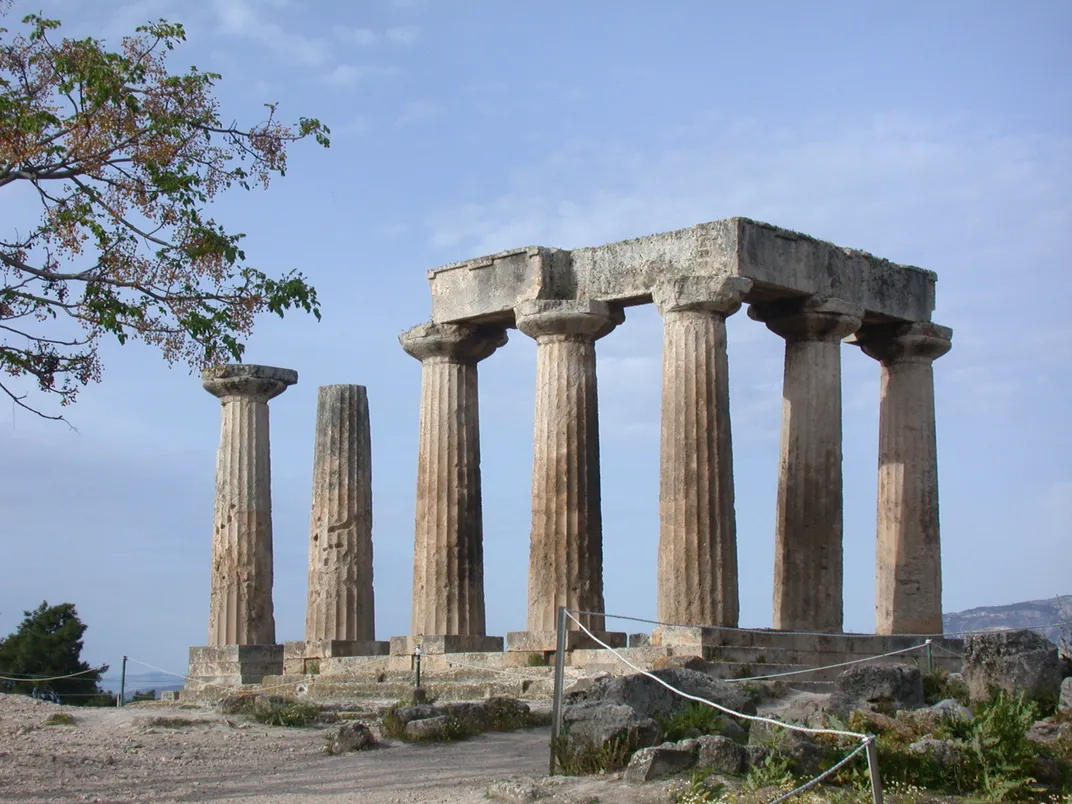
Corinth's Temple of Apollo was built around 550 B.C.E. Public domain via Wikimedia Commons
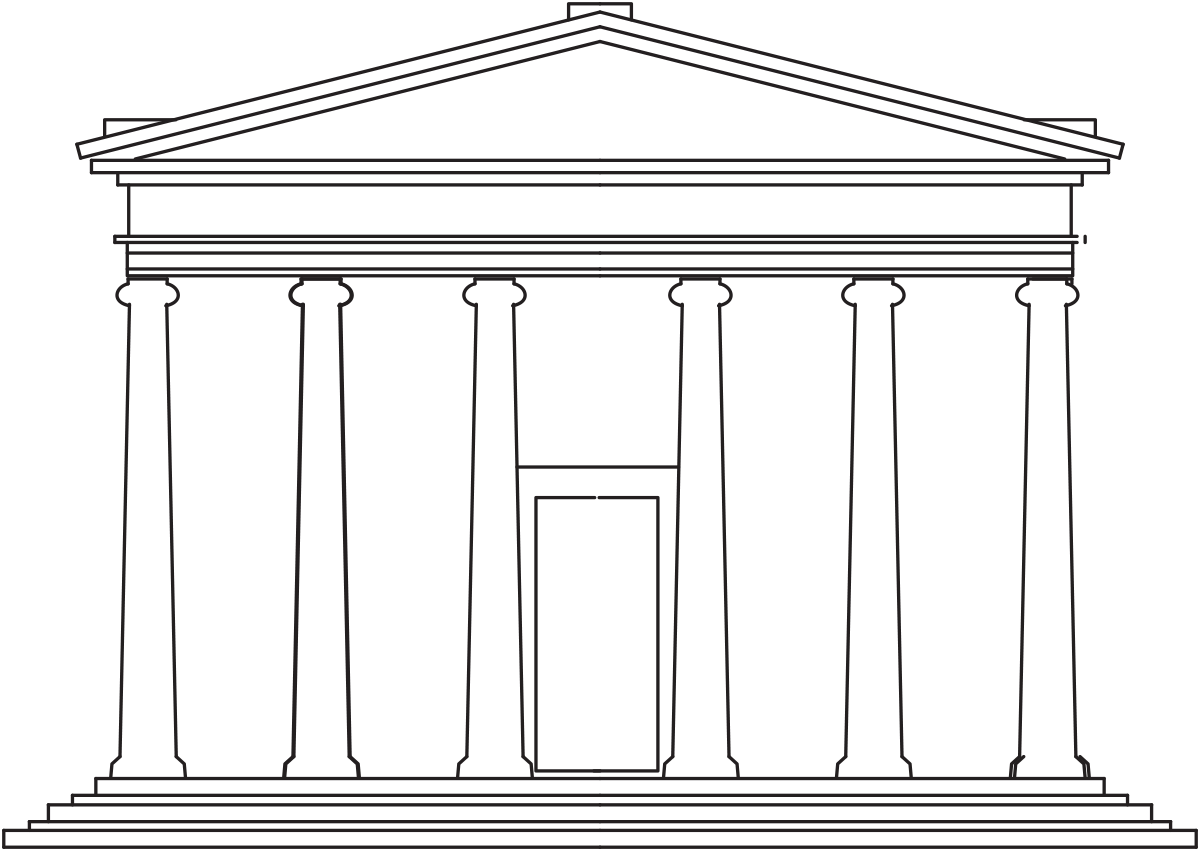
Eustyle Temple According to Vitruvius
In De Architectura (On Architecture), Vitruvius describes Eustyle as one of the five classical temple layouts based on column spacing (intercolumniation).
The term Eustyle means "well-proportioned" or "beautifully arranged."
It is considered the most balanced and aesthetically pleasing form of temple design.
The spacing between the columns is typically 2 ¼ column diameters, but the central intercolumniation (spacing) at the front of the temple is slightly wider for aesthetic and practical reasons.
Vitruvius preferred this arrangement because it provided a harmonious appearance and structural stability while allowing ease of movement.
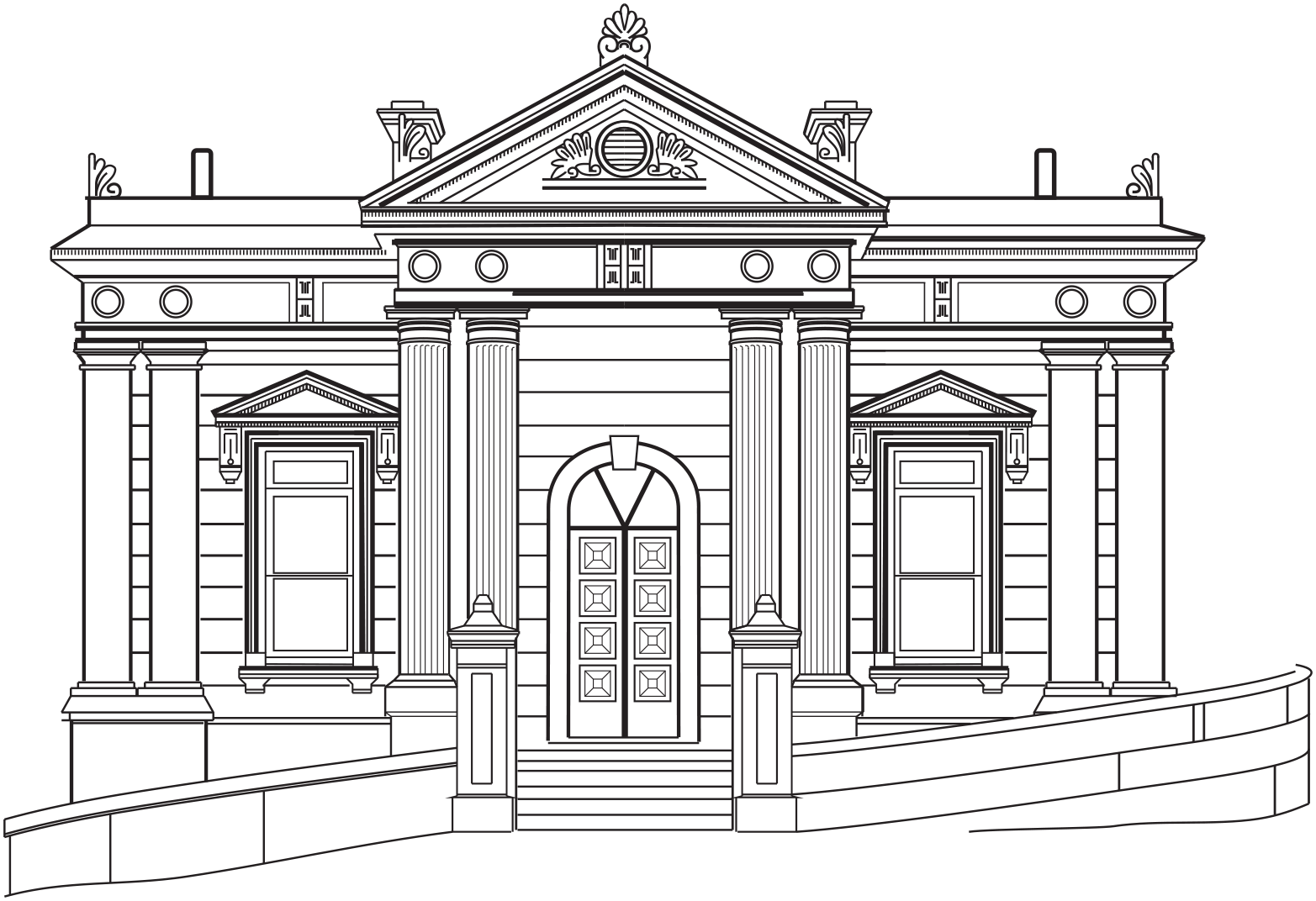
© Illustration by Roselyn Fauth 2025 Not for Commercial Use. Please ask for permission to reproduce
The Timaru Customs House Neoclassical building was built in 1902 by architect Daniel West. Main contractorThomas Pringle Former Minister of Customs, Mr M. A. Connolly, described it as one of the most outstanding examples of Doric architecture in New Zealand. 2 Strathallan Street, Cains Terrace and Station Street. Owned by Timaru Civic Trust.
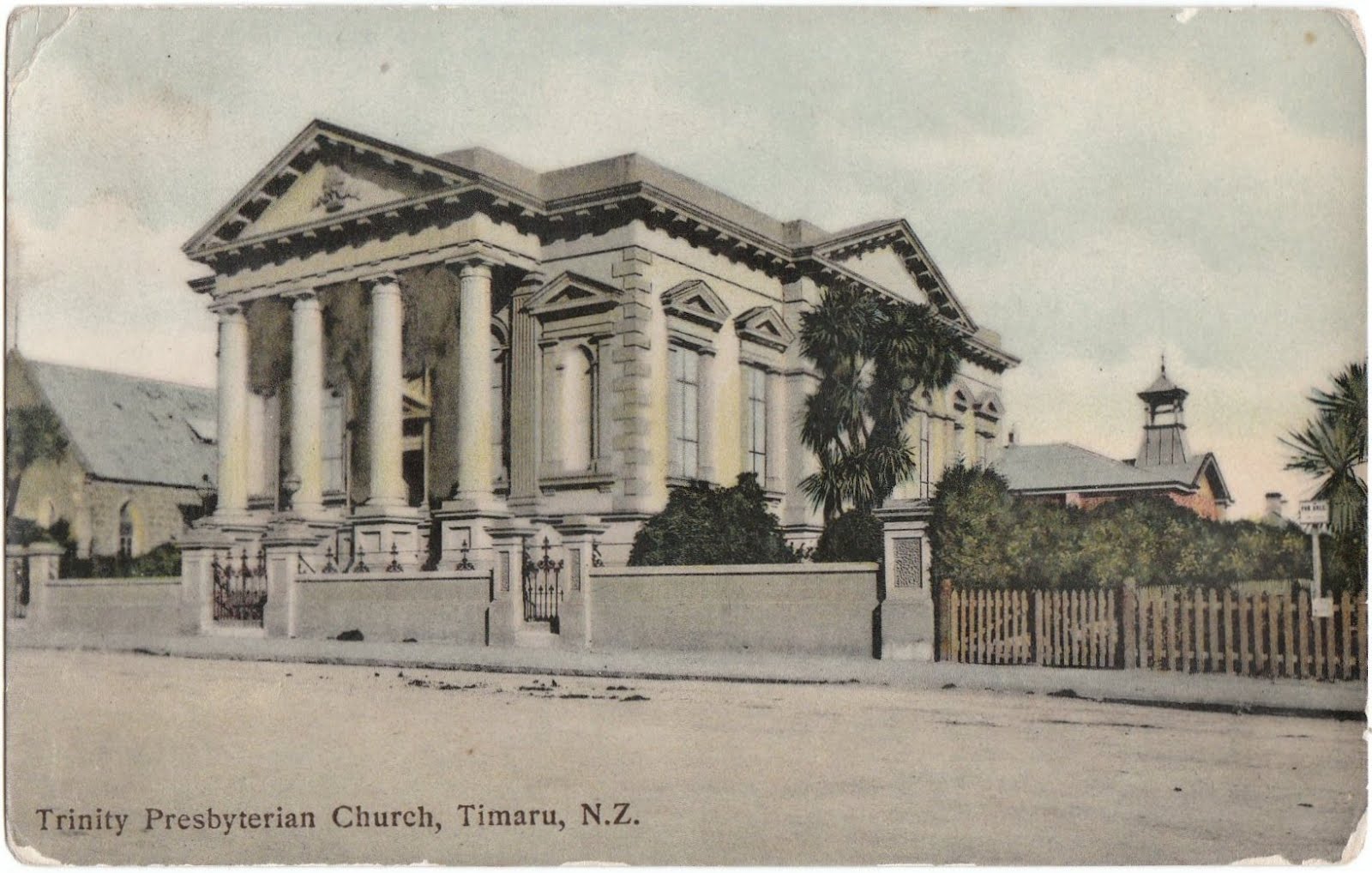
Trinity Presyterian Church, Timaru - G. W. Hutton Series - (Postcard Publishers) Barnard Street, sold when the Deacons Court built a new church in another part of the city. aorakiheritage.recollect.co.nz/nodes/view/4043#idx9571. Thie first Prebytarian service was held at the Mechanics Institute in North Street 1864. The Barnard St land was given by the Rhodes brothers. Foundation stone was laid 1866. First church was built of bluestone. The foundation stone for the church above was laid 1875 ajacent to the first church. in the Greek style of architecture and could be seen from the sea.
Rustication is an architectural style dating back to ancient Persia, seen in the tomb of Cyrus the Great (560 BC), and was widely used in Greek, Hellenistic, and Roman structures like aqueducts, city walls, and palaces. The technique involves rough or deeply grooved stone blocks, often with beveled edges, creating a textured, solid appearance. The Romans also recognized its decorative potential, as seen in the Porta Maggiore in Rome and the Temple of Augustus in Vienne, France. The Renaissance revived and refined rustication, with architects like Michelozzo and Palladio using it in palaces such as the Pitti and Medici-Riccardi Palaces in Florence. During the Mannerist and Baroque periods, it became more elaborate, featuring sculpted textures and dramatic effects. Introduced to England by Inigo Jones, rustication became a defining feature of British Georgian and Victorian architecture, influencing classical and neoclassical buildings across Europe.
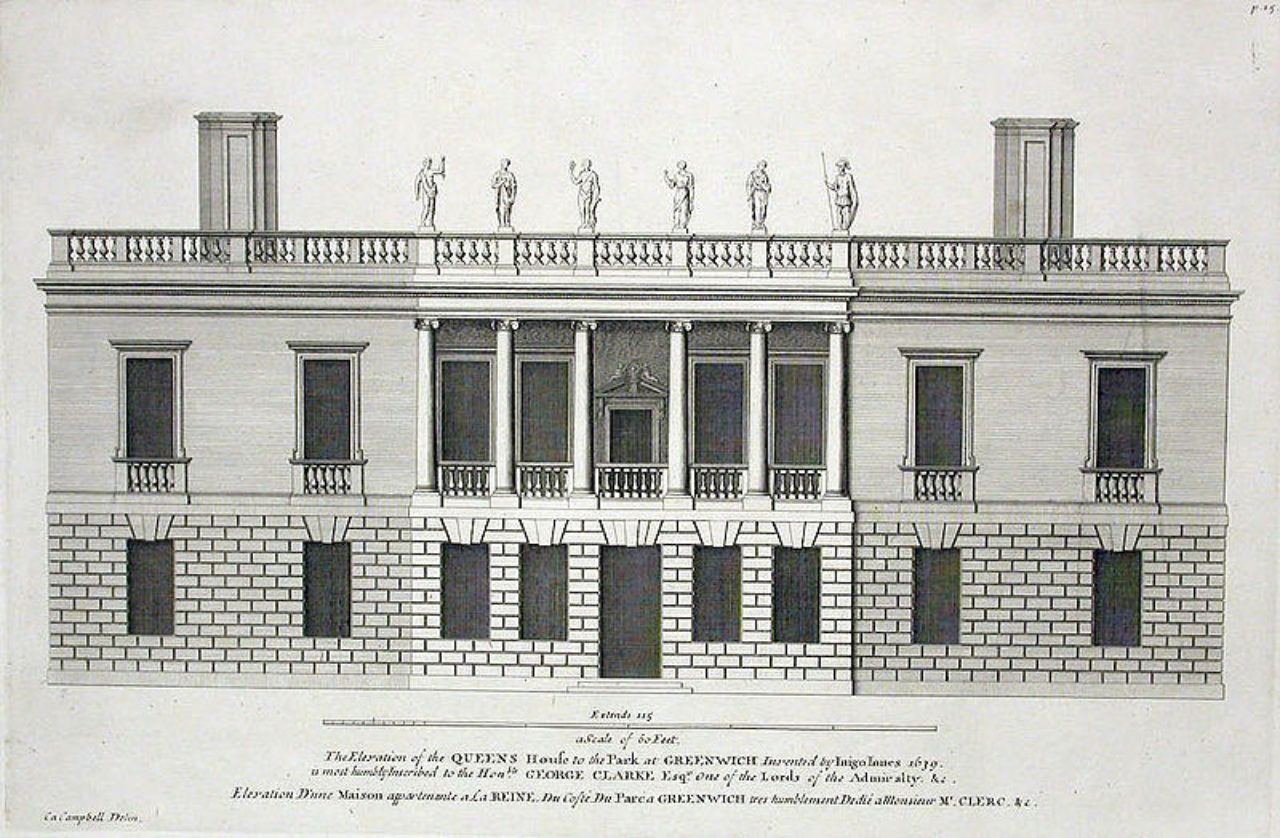
Figure 10. Queen’s House, Greenwich, England, ‘Vituvius Britannicus’, Vol. 1, plate 15
In the 18th century, English Palladian architects strongly supported Vitruvius’s and Palladio’s preference for eustyle column spacing (where columns are evenly spaced, with slightly wider gaps in key areas for balance).
Many of the grand buildings in Vitruvius Britannicus (1715 & 1725) by Colen Campbell follow this design. Sir William Chambers also wrote about eustyle spacing in his Treatise on the Decorative Part of Civil Architecture, noting a small issue—if Vitruvius’s exact measurements were followed, decorative elements like modillions (small brackets in Corinthian and Composite styles) and dentils (small rectangular blocks in Ionic style) wouldn’t align perfectly with the columns. However, Chambers explained that slightly widening the column spacing could solve this.
Campbell and Chambers may have been inspired by Inigo Jones, a key figure in English Palladianism, who used eustyle spacing prominently in the loggia of the Queen’s House in Greenwich (1616–35).
The volute serves both decorative and symbolic purposes and is believed to have originated in ancient Greece with earliest examples in the Temple of Athena Nike on the Acropolis of Athens. It became a staple in Roman architecture, specifically in the Corinthian column which combines the volutes of the Ionic capital with various foliage. During the Renaissance, the volute had a resurgence in popularity, being incorporated into different building styles and decorative arts.
The spiral shape of the volute is thought to have been inspired by natural forms, symbolizing growth, evolution, and beauty. Through its use in ancient and classical buildings, today the volute evokes a sense of heritage and timeless elegance.

Le Ministère de la Marine (The Ministry of the Navy), 1865, Paris, by Charles Meryon. Gift of Sir John Ilott, 1952. Te Papa (1952-0003-106)
Meryon’s Le Ministère de la Marine showcases grand classical architecture, with its columns and symmetry reflecting Greek and Roman influence. The scene is overtaken by surreal mythological chaos, blending classical formality with Meryon’s vivid imagination. Mythological creatures, Roman charioteers, whales, and hybrid figures swarm the sky above Place de la Concorde, creating a nightmarish vision of naval power. The print is believed to express Meryon’s deep resentment toward the French Navy, which he felt had wronged him after his service.
The Tudor period was that of King Henry VIII and his daughter Queen Elizabeth I. It covered the whole of the 16th century (and a few years either side). Henry VIII famously installed a new state religion in order to divorce his first wife (of six!). So during Tudor times, Britain was cut off from Catholic Europe and its architectural influence.
The Georgian period covers the century or so between 1713 and 1830. A total of four King Georges sat on the throne during this era, giving it its name. During this period, Britain was riding high — expanding its empire and, from the 1770s onwards, becoming the world’s first industrialized country.
Victorian and Edwardian architecture (1837-1910)
Queen Victoria came to the throne aged just 18 and ruled Britain from 1837 to 1901. During this time, the country grew in power and wealth. It was an era of global influence, political stability and increased industrialization. Think, Gothic Revival and ornate design and decoration.
King Edward VII’s reign was short, only lasting from 1901 to 1910. From the start of his reign until the start of the First World War, there was a housing boom, with new suburbs established around towns and cities. Think Arts and Crafts, A feeling of space and simplicity and Neo-Baroque.
Read online: https://www.gutenberg.org/cache/epub/20239/pg20239-images.html
Vitruvius
Architects who sought to be skilled with their hands without formal education have never been able to reach a position of authority in return for their labors. Welbee Telose, who relied upon reasoning and scholarship, were clearly pursuing the shadow, not the substance. But those who have a thorough knowledge, like men fully armed, have more quickly attained their goal with authority.
Vitruvius I, II, III.
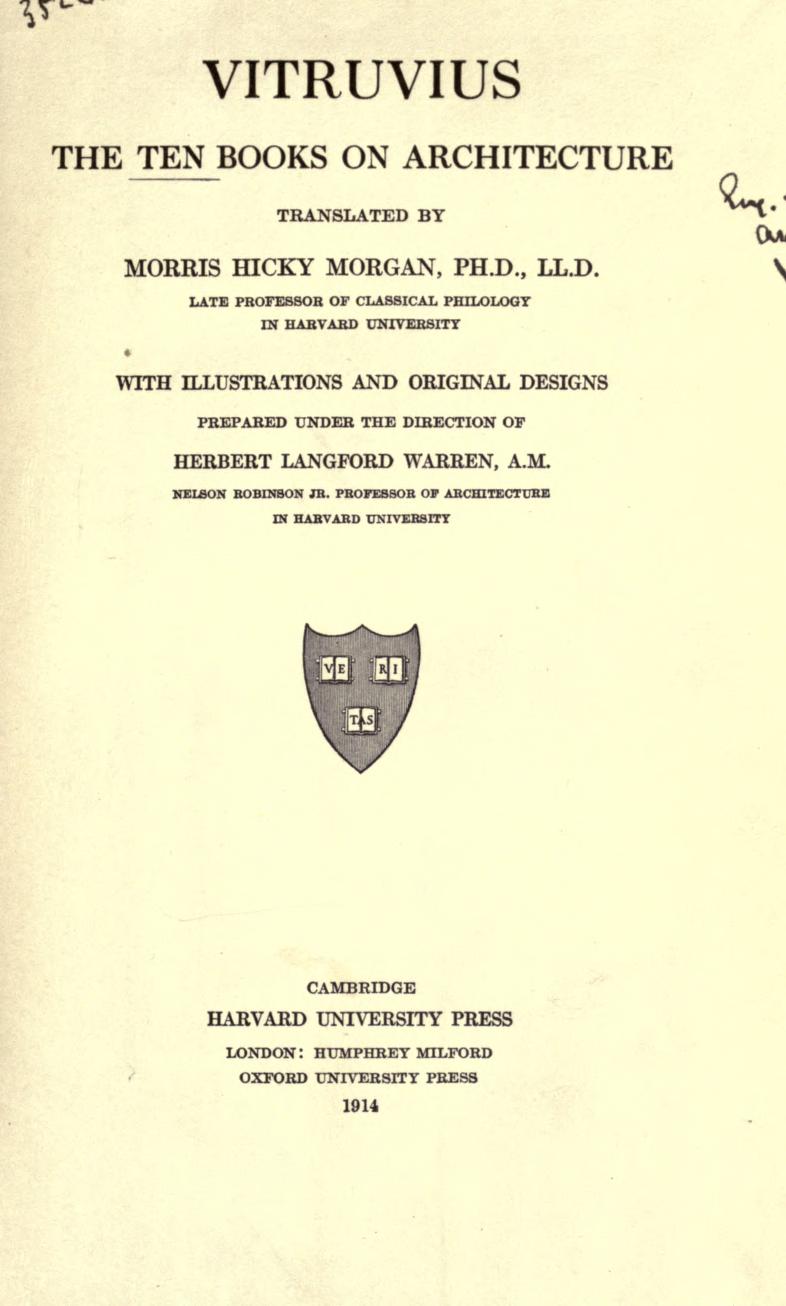
Vitruvius : the ten books on architecture
by Vitruvius Pollio; Morgan, Morris Hicky, 1859-1910
Publication date 1914
Publisher Cambridge : Harvard university Press
Contributor Robarts - University of Toronto
Language English
Call number AGO-9298
Copyright-evidence Evidence reported by This email address is being protected from spambots. You need JavaScript enabled to view it. for item vitruviustenbook00vitruoft on March 2, 2007: visible notice of copyright; stated date is 1914.
-
Vitruvius introduces architecture, outlining the knowledge an architect needs and the principles of city planning, including climate and wind considerations.
-
He discusses the origins of architecture and details construction materials like brick, stone, timber, and concrete.
-
The book focuses on the proportions and design of Ionic temples, establishing key architectural rules.
-
Vitruvius expands on temple design, covering Corinthian, Doric, and Tuscan styles, along with temple doors and altars.
-
He describes public buildings such as forums, basilicas, theaters, baths, and harbors, with particular interest in theater acoustics.
-
The book examines private houses, emphasizing climate-based design and differences between Roman and Greek homes.
-
Vitruvius details interior decoration, including stucco, plaster, pigments, and techniques for painting walls.
-
He explains how to find, judge, and transport water, particularly through aqueducts, while including anecdotes on water sources.
-
Astronomy, sundials, water clocks, and mathematical techniques are explored, linking architecture to science.
-
Vitruvius describes machines for construction and warfare, including cranes, levers, odometers, and siege weapons.
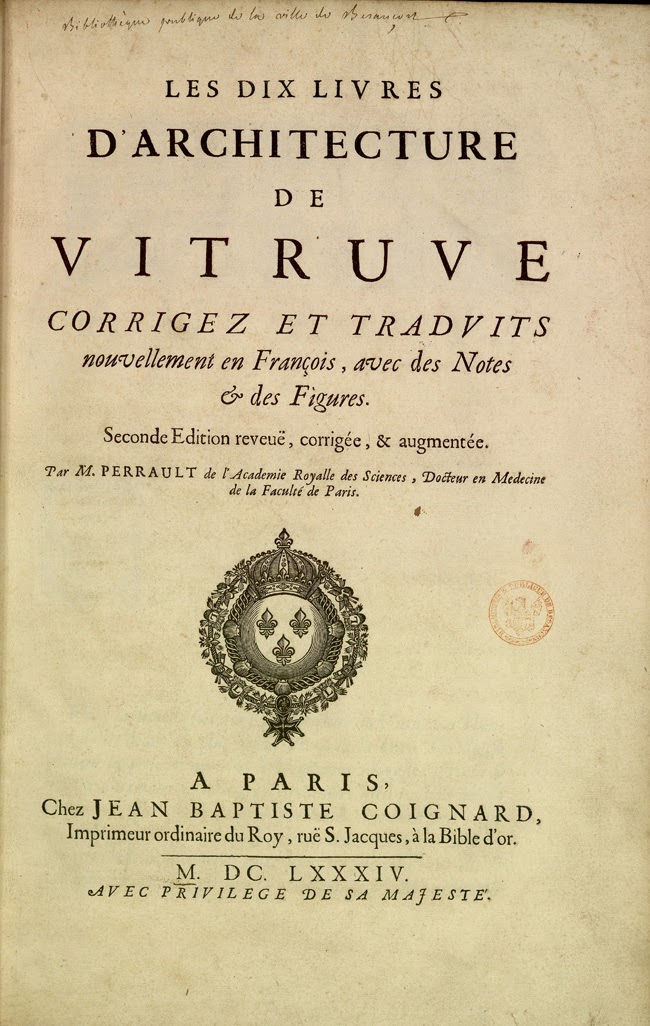
De l'architecture by Vitruvius Pollio
Publication date 1969
Topics Architecture -- Early works to 1800
Publisher Paris : Les Belles Lettres
Collection internetarchivebooks; inlibrary; printdisabled
Contributor Internet Archive
Language French; Latin
Volume 3
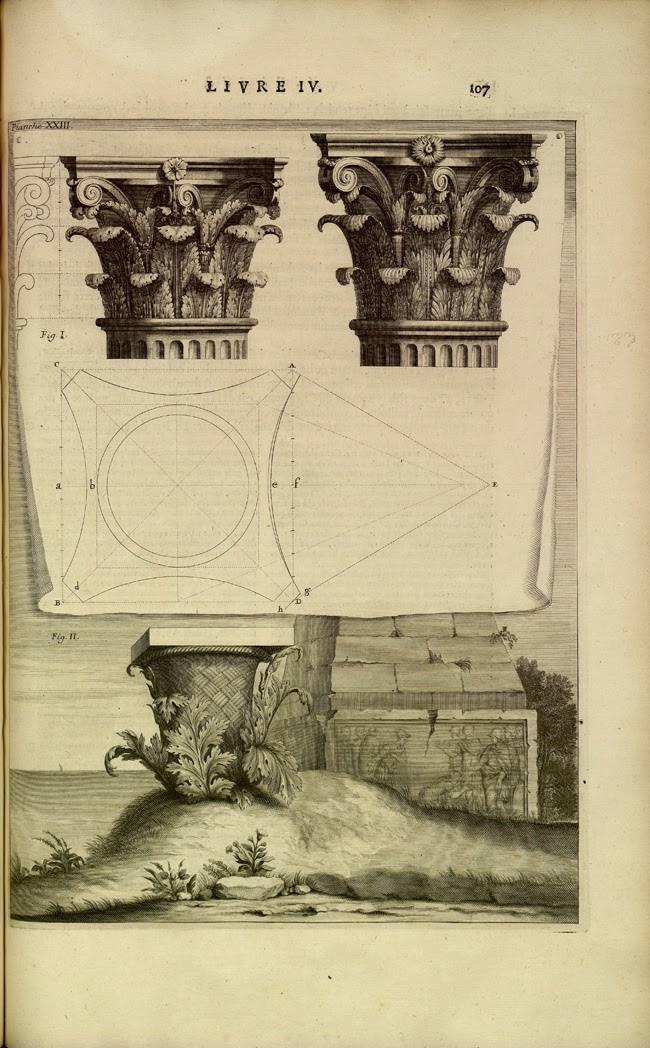
Fig. 5) Vitruvius/Perrault ed, 1684. Corinthian Capitals
Source: http://architectura.cesr.univ-tours.fr/Traite/Notice/B250566101_11604.asp
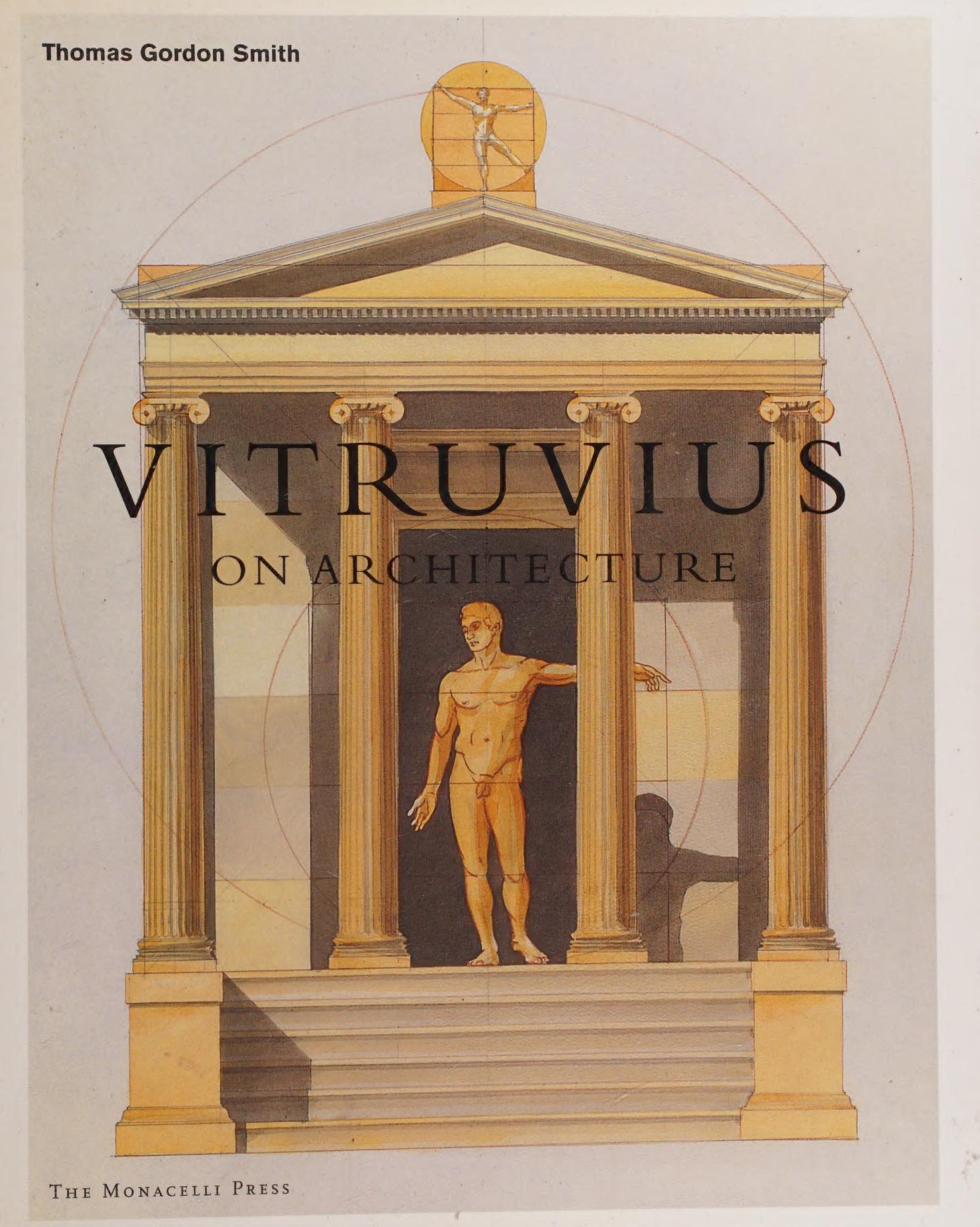
Vitruvius On Architecture by Vitruvius Pollio
Publication date 2003. Topics Architecture. Collection opensource. Language English. Item Size 155.7M
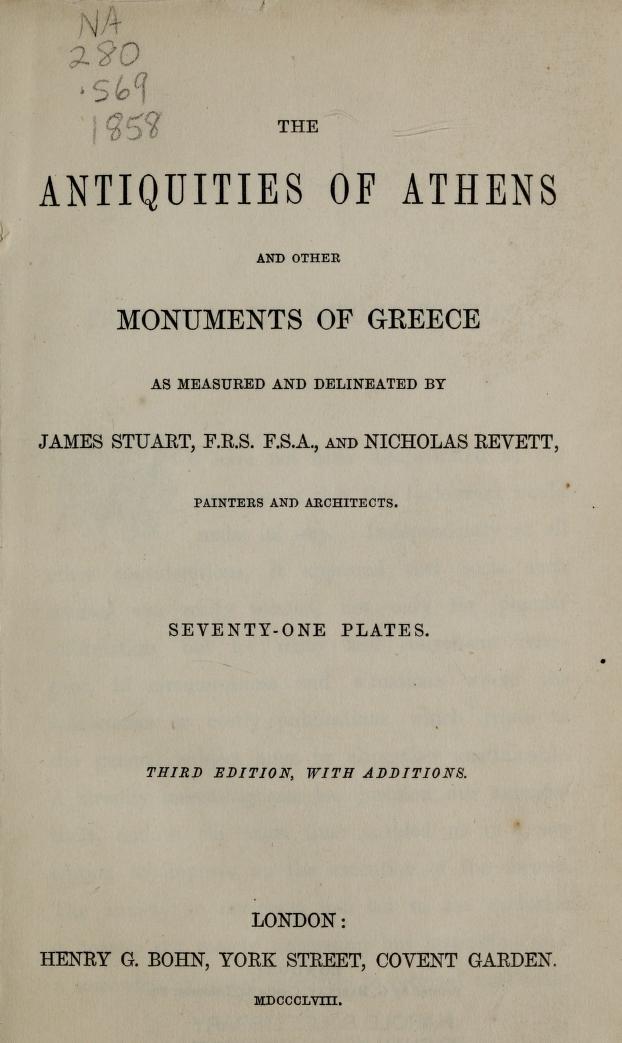
The antiquities of Athens and other monuments of Greece
by Stuart, James, 1713-1788; Revett, Nicholas, 1720-1804
https://archive.org/details/antiquitiesofath
Acanthus – A Plant that Influenced Art and Design
https://jackikellum.com/acanthus-a-plant-in-art-and-design/
We Could Be Heroes - University of Canterbury. Collection and information on ancient Greeks and Romans. The gods and heroes of the Greeks and Romans were powerful. This exhibition introduces some of the gods and heroes of the Greco-Roman world. It describes the ancient myths and characters, while reflecting on the lasting influence of Greek and Roman stories and images. Check out UC's We Could Be Heroes exhibition.
https://www.canterbury.ac.nz/about-uc/what-we-do/uc-in-the-community/exhibitions-and-collections/we-could-be-heroes
https://www.arthistoricum.net/en/subjects/image/historical-literature-on-applied-arts-and-crafts/update-ornament-templates-and-pattern-books
Acanthus: From the Greek ákantha ‘thorn’
Environmental Weed (2024)
Perennial herb to about 120 cm, with thick roots. Petiole usually 10-50 cm on leaves arising from the root crown, much shorter (2-5 cm) on leaves arising from vertical stem. Leaves variable, but usually dark green and with several lobes. White flowers with pink, purple or brownish veins are produced on the central tall spike, these mature first at the bottom of the spike. Seeds are produced in individual capsules 3-4 cm long.
This plant is named in a list of 386 environmental weeds in New Zealand 2024 prepared by DOC. 759 candidate species were considered for inclusion on this new comprehensive list of environmental weeds in New Zealand. The species considered were drawn from published lists of weed species, lists of plants that must be reported or managed by law if observed, existing national and regional programmes and agreements for pest management, and species already managed by the Department of Conservation (DOC). Candidate species were then assessed to see if they were fully naturalised and whether they have more than minor impacts in natural ecosystems.