
Hi, I’m Roselyn, though most people call me Rose. This is me as a kid int he 80s, playing on the seesaw at Caroline Bay, my neighbourhood growing up.
Born in Timaru I am a fifth-generation New Zealander whose two family lines on my fathers side stretch back to the earlier decades of European settlement in Timaru and Oamaru.
I grew up with the stories my family shared, tales of bees, ships, landscapes, war, emigration, care, art, and resilience. These influences along with my education at Waimataitai Primary School, and Timaru Girls High School, have helped shape who I am and the way I view the world.
In 2025 I received a few invitations to share my story as a guest speaker, so in that preparation, I have been colating my journey so far, full of art, family, friends, volunteering, projects. I don't know really where to dump it all, so here it is. If you choose to read on, thank you. And if not, all good, it is quite long!
My goal is to help turn community history and shared creativity into free, meaningful experiences that leave a lasting social and cultural impact.
I’m passionate about creating inclusive and meaningful experiences that help people connect, with their environment, their community, and their own sense of curiosity. Through WuHoo Timaru, and with the support from my family and friends, I’ve voluntered to help make local history, art, and play more accessible by developing free resources like scavenger hunts, family guides, and creative trails and sharing them through print, web and multi media. My hope has always been that families, especially those with young children, can discover the hidden gems of South Canterbury, for low cost, in fun and engaging ways.
Being part of the CPlay project gave me the opportunity to help shape the Caroline Bay playground into something more than just a play space. We learned from listening to the community, that we could reflect our community’s stories, landscape, and values. For me, it was about making sure children could learn and explore through imaginative play and connect to stories of our people, place and the past.
Over the years, I’ve been fortunate to be involved in a range of community and creative projects, through volunteering with the Friends of the Aigantighe Art Gallery, supporting local heritage initiatives, and sharing what I learn through public talks and writing. If I can help people feel proud of where they live, or encourage them to explore with fresh eyes, then I feel I’ve done something worthwhile.
I believe that when we know our past, we know ourselves, and we can then work out where we are going.
"Roselyn Fauth, known to many as Rose, is a creative community advocate from Timaru who brings people together through free, meaningful experiences. With a background in storytelling, art, and heritage, she’s the founder of WuHoo Timaru and a driving force behind projects like the award-winning Caroline Bay playground. Her work makes local history, art, and play accessible for all, especially families, through scavenger hunts, trails, and creative resources that spark connection, curiosity, and pride in place."

This is little me, playing on the seesaw at Caroline Bay as a kid. I’m a sixth-generation Timaruvian born in the early 1880s. My dad, Geoff Cloake, grew up in Fairview, Timaru, and my mother, Marthy Cloake (née Roos), emigrated here from the Netherlands with her brother, Gerd Jan, when she was twenty.

This is me in 2022 working on an advert as a volunteer for the Caroline Bay Playground Upgrade project.
Roselyn Fauth (née Cloake) is a proud sixth-generation Timaruvian widely recognised for her exceptional voluntary contribution to the cultural and community life of South Canterbury and Aotearoa. With decades of service in arts, heritage, education and inclusive public spaces, she helps locals and visitors connect with the stories of people and place, believing that shared heritage fosters belonging, pride and connection to community.
She is co-founder of WuHoo Timaru, a project that brings history and culture to life through family-friendly scavenger hunts, public storytelling, signage, fun facts and outdoor activities. She shares this voluntary work with her husband Chris and their daughters, Annabelle and Medinella. Together, they create inclusive experiences that encourage families to explore their surroundings in meaningful ways.
Her contributions span initiatives including Timaru Rocks, CPlay, the Friends of the Aigantighe Art Gallery and committee roles with the Timaru Civic Trust and Aoraki Women’s Fund. She is a strong advocate for women’s, children’s and community participation and inclusion.
For over 20 years, Roselyn has volunteered with the Friends of the Aigantighe, supporting staff, members and artists, helping to restore artworks, raise funds for the nationally significant collection and lead projects such as the Timaru Sculpture Hunt, the Art History Coastal Trail Hunt and the CPlay Story Circle. She served four years as president and continues to champion accessible, creative engagement with the arts.
As a key contributor to CPlay, Timaru’s award-winning playground, Roselyn supported the project through grant writing, community consultation, storytelling, fundraising and communications, working alongside the voluntary committee, council and contractors. She later developed educational resources, case studies, webinars and mentoring to support similar community-led playground projects across Aotearoa and promote quality play as a foundation for wellbeing.
A passionate community historian and digital connector, Roselyn shares local stories and produces free educational materials to help teachers, whānau and communities engage with history and place. She recently worked to commemorate Ann Williams, believed to be the mother of Timaru’s first European-born child, reflecting Roselyn’s belief that every story matters. She is currently fundraising to install two monuments to honour those buried in unmarked graves.
Raised in a creative family, Roselyn worked for over 20 years in Cloake Creative, the design business she ran with her father, photographer and designer Geoff Cloake. In 2024, she joined the Timaru Civic Trust, continuing his legacy of promoting pride in the district’s built heritage. Her mother, Marthy (née Roos), emigrated from the Netherlands with a background in nursing and heart health advocacy. Roselyn’s Dutch-Kiwi heritage influences her artistic practice, which blends European and South Island landscapes in a distinct visual style.
In 2023, she received the Timaru District Council Community Service Award, and in 2025 was named South Canterbury Woman of the Year by the Aoraki Women’s Fund, recognising her lifelong dedication to cultural and community enrichment.


Photo of my mother Marthy Cloake (nee Roos) tramping with me zonked out in her pack. Family trip to Texel Holland for my great grandfathers birthday. Marthy was born in Den Haag and grew up on the tiny island Texel, famous for its sheep. Texel sheep originally come from the Isle of Texel in the Netherlands, which is where they get their name and were bred over centuries to be lean, well-muscled sheep, so they are not fatty and good for their meat and wool. The Texels imported into New Zealand in the 1980s were sourced from Denmark and Finland because of their scrapie-free status. They were released from quarantine in 1990.
Our surname, Cloake, was made well known through our family’s honey business—Cloake’s Honey. My great-grandfather Bertie started with just a wee hive, alongside my grandfather Harry, uncles Mervyn and Russell, aunties Margaret and Janet, and cousins Peter, Michael, and Paul—even second cousins were involved. Through their combined efforts, they grew it to become, at one point, the largest apiary in the South Island. They invented the method of creaming honey; they could have protected it as a patent, but shared it with the bee community to strengthen the industry. They also invented an efficient way to raise queen bees, known as the Cloake Board.
My mother taught me to be patient. We often left on day trips in the dark, and came home in dark. While dad was hunting for the compositions with his camera, we often had to wait for the perfect photographers light. That often meant mum was entertaining us on the roadside.
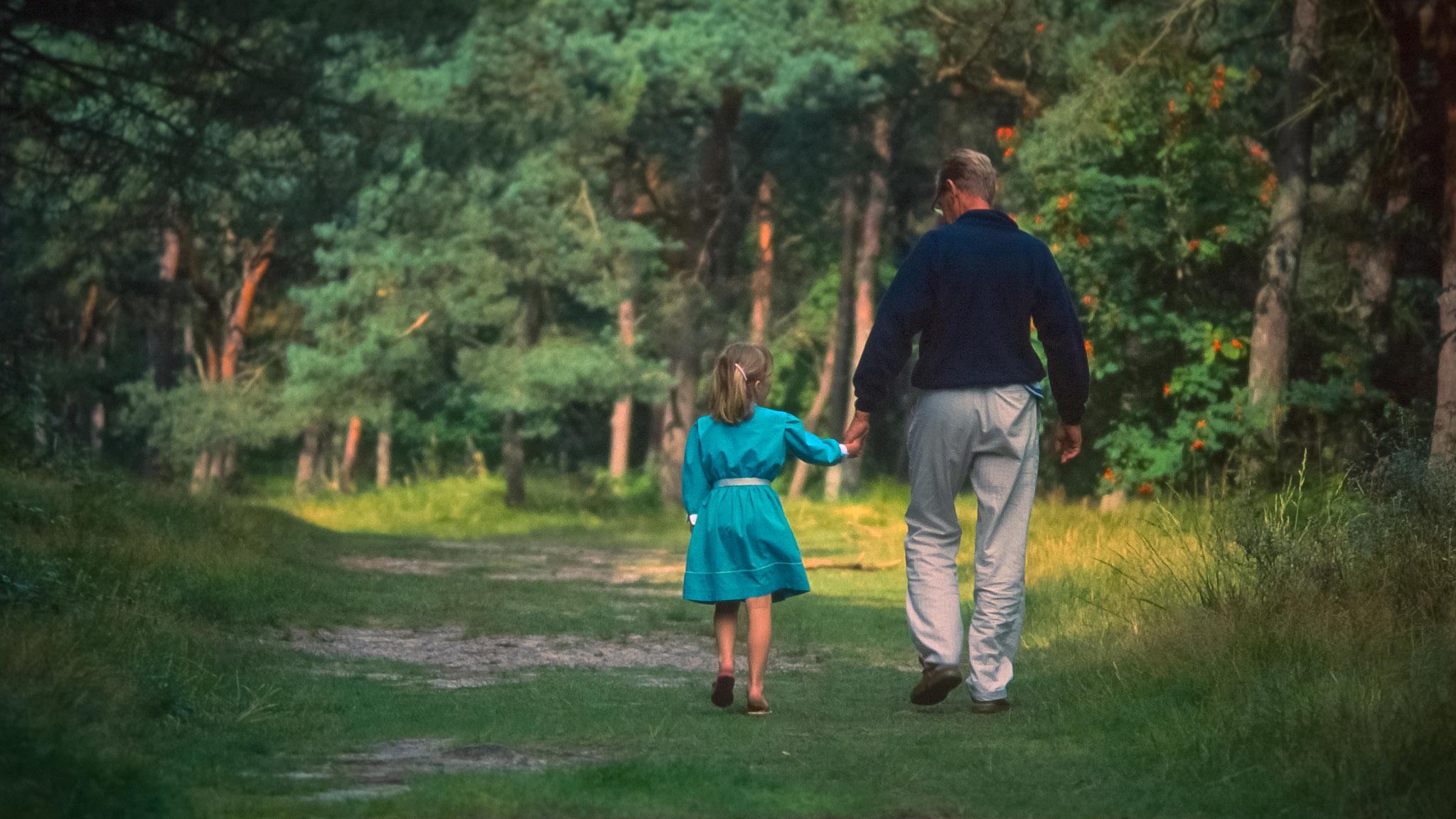
Opa and Roselyn visit from Texel to Timaru 1987
I'm so grateful my mum was always there when I got home from school. Her presence meant comfort, safety, and someone to share my day with — even the small stuff. She gave our home a rhythm, a sense of calm, and made me feel like what I had to say mattered. Looking back, I know that simple act of being there shaped so much of who I am today.

Honey bees were critical for pollinating the introduced crops, as the native pollinators weren’t really interested in them. So while I never helped, I grew up with the honey in our pantry and had many fond memories out at Fairview with family, the smell of hives and wax. I feel proud to have family roots in the industry and to acknowledge what they achieved.
Cloake's Honey was famous for it's Creamed honey, known for its smooth, spreadable texture. Creaming honey stoped it from becoming gritty or hard over time. In South Canterbury, beekeepers like Cloake's Honey and their relivtives at Huttons Honey near Timaru have been producing creamed clover honey for decades, reflecting the region's longstanding tradition in honey production. The area's abundance of clover and other suitable flora contributes to the high quality of creamed honey produced there. I remember my uncle saying that a swish American arrived at the aipary one day, wanting to sell them the rights to his creamed honey patent and was shocked to find out that the kiwi's had been doing it for years before. Again, grandad could have protected the IP around this, but chose to share the method to support the honey industry.


Painting by Roselyn Cloake inspired by the Cloakes Honey Tin. I've really enjoyed rediscovering our family roots. If Annabelle was a boy we were going to call him Bertie. Above is a painting of the honey tin label.

Agriculture - Bees Publicity Caption: Servicing hives - Mesopotamia, Canterbury Province. Harry Cloake, Cloake Honey Ltd. Timaru. Photographer: B. Neill.
W3537 Dates: c. 1900 - c. 1989 Description: Communicate New Zealand photographs, card indexes and film at the Wellington repository

MR AND MRS H. CLOAKE with their attendants after their wedding at Chalmers Church. They are, from left: Mr C. Bell, Miss Joyce Mitchell, bridegroom, bride (who was formerly Miss Doreen Stocker), Miss Lurlene Wilson and Mr D. Fraser. Timaru Herald, Volume CXLVIII, Issue 21801, 2 November 1940, Page 12 https://paperspast.natlib.govt.nz/newspapers/timaru-herald/1940/11/02/12
WEDDING Timaru Herald, Volume CXLVIII, Issue 21801, 2 November 1940, Page 12
CLOAKE—STOCKER
Wearing a wedding gown of parchment tinted satin, threaded with silver and patterned in a floral brocade design, Doreen Helen, daughter of Mr and Mrs L. L. Stocker, Timaru, was married at Chalmers Presbyterian Church on Thursday afternoon to Harry, the only son of Mr and Mrs B. T. Cloake, of Springbrook. The Rev. J. Baird officiated and Mrs Stowell was the organist. Arum lilies and freesias were used as decorations in the church.
The bride was escorted by her father. Her gown was modelled with the bodice ruched up the centre front from a deep yoked waistline and the long sleeves slightly puffed at the shoulders fitted into points over the hands. A row of tiny buttons trimmed the back of the bodice, which featured a heart-shaped neck. The skirt fell at the back into a very long train. Her plain tulle veil billowed over her frock from a becoming coronet of pleated tulle. She carried a bouquet of lilies of the valley, freesias and cyclamen.
The two bridesmaids, Misses Lurlene Wilson and Joyce Mitchell, wore cyclamen and lily green lacquered broche taffetas, cut with heart-shaped necklines and uncommon puffed sleeves which were finished with ruched frills. The frocks were fully flared and tailored belts of the same material with brilliant clasps defined the waistline. Halos of ruched net were also worn and they each carried bouquets of tulips, freesias and sweet peas to tone with their frocks.
The bridegroom was attended by Mr Clifford Bell, Wellington, as best man, and Mr Dave Fraser, Christchurch, was groomsman.
The reception was held at the Bay Tea Rooms. Mrs Stocker received the guests wearing a smart two-piece costume of navy blue blistered cloque. The coatee fluting at the back from the waist. Her hat was a sisal straw trimmed with cyclamen-shaded flowers and her buttonaire was also of the same shade of primulas. Mrs Cloake, mother of the bridegroom, wore a navy blue ensemble and hat with a shoulder spray of pink anemones.
When travelling, the bride wore an ensemble of teal blue shaded wool crepe. The coat was finished with self-toned velvet embroideries. Her accessories were navy straw.
Mr and Mrs H. Cloake will make their home in Timaru.

Most locals will have their own connection to the Caroline Bay Tea Rooms. For me, it is personal too. I have this wonderful photo of my grandparents and Harry's parents standing in front of the tea rooms, taken at their wedding reception. I have been to concerts here, loud and joyful ones. I have been a guest speaker at formal dinners, attended conferences, exhibitions, community events, and even received my 2025 South Canterbury Woman of the Year award from the Aoraki Women’s Fund right here on International Women’s Day.
Bertie Cloake was recorded in the Timaru Herald as B. T. Cloake of St Andrews (South Canterbury) and was an active and award-winning beekeeper in New Zealand’s National Beekeepers’ Association. At a Beekeepers confrence he was awarded 1st prize for White Liquid Honey, 2nd prize for White Granulated and Light Amber Liquid Honey. - BEEKEEPERS’ CONFERENCE. Timaru Herald, Volume CXXXVII, Issue 19546, 20 July 1933, Page 6 https://paperspast.natlib.govt.nz/newspapers/THD19330720.2.43

https://aorakiheritage.recollect.co.nz/nodes/view/4452
Fairview bees exported (04 Sep 1979). Aoraki Heritage Collection, accessed 13/07/2025, https://aorakiheritage.recollect.co.nz/nodes/view/4452

PUTTING THE SHOT.—H. Cloake in action at the first inter-club sports meeting held this season by the South Canterbury Sub-Centre. Competing in the A grade, Cloake won both the shot putt and the hammer throw. Timaru Herald, Volume CXLIII, Issue 20890, 20 November 1937, Page 16 https://paperspast.natlib.govt.nz/newspapers/THD19371120.2.91.4.2

Margaret and Mervyn Cloake (Rose's aunty and uncle) who had Cloake's Honey on Fairivew. Mervyn, Marilyn, Russell and Geoff's family home growing up.
I wanted to learn more about my families role in New Zealand in helping to establish introduced bees into New Zealand. And it was a great side quest learning about who was polinating our plants before the arrival of Europeans. New Zealand didn't have any native honey bees. But we had plenty of polinators. The bees are solitary wee creatures, and were present, along with hoverflies, moths, beetles, and birds like the tūī and bellbird.
Honeybees are thought to have been first introduced to New Zealand in 1839 by Mary Bumby, sister of Methodist missionary Rev. John Bumby, who brought two hives from England aboard the James and landed in the Hokianga. These were European honeybees (Apis mellifera), well suited for honey, wax production and pollination. The bees spread quickly across the North Island and were later transported to the South Island. By the 1860s and 1870s, honey production had become a small but growing industry.
The Department of Agriculture began promoting beekeeping commercially in 1892, and Italian honeybees (Apis mellifera ligustica) were introduced for their gentle nature and high productivity. The Apiaries Act of 1907 regulated the industry to help control diseases such as American foulbrood. Beekeepers formed cooperatives, including the National Beekeepers’ Association of New Zealand, established in 1884. By the mid-twentieth century, honey and beeswax production were well established, with exports, particularly to the United Kingdom.
In the 1970s and 1980s, New Zealand's status as free of the varroa mite gave its apiculture sector an international edge. Selective breeding improved bee resilience and output. However, the discovery of the varroa mite (Varroa destructor) in 2000 led to major changes in hive management and increased costs.
A key development in recent decades has been the global demand for mānuka honey, derived from the native shrub Leptospermum scoparium, valued for its antibacterial properties. Scientific validation of its Unique Mānuka Factor (UMF) turned it into a multi-million-pound export industry. This success has also brought challenges, including trademark disputes, regulatory complexities and theft. Today, with more than 800,000 registered hives, New Zealand’s beekeeping sector faces ongoing pressures from varroa mite infestations, pesticide use, habitat loss and the impacts of climate change.
The Cloake Board
The Cloake board, invented by New Zealander Harry Cloake and his son Mervyn Cloake, is a beekeeping tool designed to streamline queen rearing by enabling a single hive to function both as a queenless starter and a queenright finisher colony. It consists of a wooden frame with a built-in queen excluder and a removable solid divider. When the divider is inserted, it creates a queenless upper section ideal for initiating queen cells; when removed, it reunites the hive so the lower, queenright colony can finish developing the cells. This method reduces hive disturbance and eliminates the need to transfer larvae between colonies, making it an efficient and effective system widely adopted by both hobbyist and commercial beekeepers. They could have protected the invention with patents, but instead choose to keep it freely available to enable the industry to grow.

Native Bee Polinators From South Canterbury Museum - Roselyn Fauth
New Zealand is home to just under 30 species of native bee, many of which are endemic and found nowhere else in the world. These small, generally black bees are often overlooked due to their modest appearance and quiet behaviour in gardens and forests. Unlike imported honeybees, native bees do not sting, are not aggressive, and do not live in hives or produce honey. Instead, they live in small family units, with females laying only three to ten eggs in their lifetime. They nest in bare, undisturbed soils or in hollow plant stems such as flax, often with many nests close together, although each is independently occupied. Native bees die at the end of autumn, but their larvae survive the winter and emerge in mid spring to pollinate nearby flowers. They are especially important pollinators of native plants such as mānuka, kānuka and pōhutukawa. However, they travel only short distances, usually less than one hundred metres, so they rely on nearby floral resources and do not thrive in areas dominated by concrete or closely mown grass. Unlike honeybees, they are not affected by the Varroa mite, making them resilient but still vulnerable due to habitat loss.

WuHoo Timaru fun fact colouring in sheet on native and introduced bees with clover and manuka. You can download and colour it in here: wuhootimaru.co.nz/colouring-sheets/106-bees

The clipper Mermaid, painting by John Scott (1802-1885), National Maritime Museum.
On 16th February 1864, the Mermaid sailed into Lyttelton Harbour, New Zealand, after leaving from Gravesend, England 93 days earlier. On board were 358 passengers and 48 crew. We think Ellen Jane Gardner arrived in Timaru on the Clipper Mermaid, London to Lyttelton, Oct 1864 - Jan 1865 Voyage. There was also Clarke family on the same sailing ship. This newspaper article has a list of passengers, and we wonder if Ellens name was mispelled. https://paperspast.natlib.govt.nz/newspapers/CHP18650123.2.4

Here is the ship that brought the Cloakes to nz. The "Corinthic" 12231 tons at the wharf Timaru Aug 7. 1906. A few months after the titanic sunk. Some of our relies in Cornwall reckon Grandad was booked on Titanic. But swapped tickets with friend who needed to sail urgently. South Canterbury Museum 2000/210.101
My grandmother, Doreen Cloake, attended Washdyke School and later went on to "Tech" (high school). My aunty told me that one of her art pieces was once selected for an exhibition in Sydney, Australia. Nana’s sisters were schoolteachers, and a couple of them also ran country post offices. They later married farmers from the local area. My aunty has also visited Devon, where the Stocker family once had a home known as “Stocker Castle.” The castle was eventually demolished, and a large shopping centre now stands on the site.
I'm told the first Stocker to reach New Zealand was probably a stow away, and she met her husband on the voyage. The other story goes that another rellie had a ticket for the Titanic, but his mate couldn't get one, so he swapped and jumped on board the Corinthian and sailed to New Zealand instead. Both yarns are tricky to prove but have been shared by family for years.

Left: These are my fathers grandfathers parents Thomas Head and Hepzebah Stocker. Center: These are my dads grandmothers parents. Married on the 8th April 1868 she was Ellen Gardener_ They were married in Christchurch N Z they met on the boat coming to N Z. Right: These are my fathers mothers parents lisle Loveridge Stocker and Ellen Jane Stocker née Clarke.

Medinella Cornelia Fauth and Annabelle Meredith Fauth look at the grave of their grandfathers grandparents Bertie and Sarah Cloake. Medi's middle name is used through 700 years of my mothers families names, and Meredith is Annabelle's fathers monthers name.


My grandfather Harry Cloake finished Timaru Boys High School after his first year to work on the famliy farm. My aunty Marilyn told me Harry wasn't very happy about this. "He had just completed a year at high school and was a very bright boy, and love learning. He was absolutely gutted. But had to accept it as that was life many children had no education in high school."

At their home in Springbrook Harry Cloake his sister Myra (Mrs Rouse) Grandad Cloake known as Bertie and Granny Sarah Cloake.

Mervyn and Geoff with the family cameras
I grew up waiting for the light. Mum and Dad would pile the four of us kids into the car for day trips while Dad chased the perfect shot. It always surprised me... what I noticed when we were out there and then, later, what he captured through his lens. He saw things differently, details I’d missed, colour, light, composition... and it impacted how I looked at the world.
Dad’s work spoke for itself. He was named the “young photographer with the greatest potential” by the New Zealand Photography Annual in 1979, won multiple national awards, and had his photos selected for a world touring exhibition by the Photographic Society of America. Five of his images even hung at the Aigantighe as part of the Photographic Society of New Zealand’s exhibition, and he created slide-and-music shows that clubs loved.
But he stayed practical, always an engineer at heart. He used to joke about propping his camera on an ice axe to avoid carrying a tripod, or tucking it in his sleeping bag at night to keep it dry. His mantra was simple: “If it’s not top quality, it goes straight in the bin.” That mix of ingenuity and high standards shaped me. Now, when I work with the Friends of the Aigantighe, I know I’m standing in the same place he did—connecting people to art, beauty, and the details that matter.

Admiring Geoff Cloakes lava photo and illustration that is on display at the South Canterbury Museum
Roselyn is my full name, but most people call me Rose. It’s a lovely link to my mother’s maiden name, Roos, which in Dutch, when pronounced this way, means the flower rose. Unfortunately, "rose" in Dutch actually means dandruff… so yes, that’s why I go by Roselyn.
I grew up in a house of giants. At six foot tall, my sister and I seem quite short next to our two brothers, who are both six foot eight. We grew up with Caroline Bay on our doorstep, proud pupils of Waimataitai School, and we went on to attend Timaru Girls’ and Timaru Boys’ High Schools.
I had some amazing teachers at Timaru Girls’ High School. Evan Jones and Juliet Crawford were my favourites. Evan was our art teacher. Later in life, our artworks hung side by side at the Aigantighe Art Gallery.
I loved Juliet Crawford’s art history classes. She taught me how to have a conversation about art, and how it can share stories of the past through an artist’s lens. As a Justice of the Peace, she was the celebrant for Chris and my wedding, and we have served together for many years on the Friends of the Aigantighe Art Gallery.

Making wearable art at Timaru Girls High School in 1998

1999 Chorale. I loved the Chorale so much. There is something magical singing with friends, and I really enjoyed making it through to the national competitions and travelling around New Zealand to represent our school. I wore my silver bands on my blazer with huge prides - given to students who represented their school at a national level.
My friend Adrienne McKinnon and I ran the junior choir, I played the piano and Adrienne led. We fundraised and got a bus load of students to the regional competitions too. I found this a really challenging time. With fundraising we managed to get the individuatl cost down to $15, which I thought was affordable. However even at that fee, many students were not able to attend. It taught me just how many families were struggling to make ends meet and there was work to be done to be more financially inclusive. I still look back now and wish we had fundraised a little harder so everyone could go.

In 2025 I was invited back to Timaru Girls High School, to see if I could help them make thier story more accessable to the students and the public. We spied a school journal from my leaving year. I had to laugh, because Pam, who has voluntarily managed the archives for almost three decades was miffed why I was in the front row. My whole life, with my height, I was always centered standing, and just once I wanted to be somewhere else. I crack up when I see the length of my shins compared to my class mates. The other reason why this photo cracks me up, is because I was only ever called once to the principals office for concerning behaviour. A teacher was very upset that I had written "Bad Gin" on my exam paper. I was totally confused too... and then I realised I had written 13 AD (my year and Adams was our supervising teacher, and the exam was for social studies, and my teacher was Mr Gin. Phew... I got to leave with no repremand.
The cover of our 2000 School Journal was a painting I made of myself as a child, inspired by my dads photo.

In the same visit I bumped into Bridget Pahl! She was at the school teaching in the art room. Such a surreal experience because the last time we were together in a class room, we were with our teacher Evan Jones. Bridget was a year ahead and by far the most talented artist at the school. She was a huge inspiration to me, and she went on to have a brilliant career after formal art studies.

During my visit to the archive, I learned a little bit about our school’s history. This is a photocopy of the school’s first enrolments. The first student, for whatever reason, only lasted one day. The school opened in 1880 with same-sex classes, but boys also attended lessons at the school. I had always assumed that high school education for women had been around for ages, so I was shocked to learn that the UK was only just beginning to establish high schools for young women around the same time. For thousands of years, women’s education had been focused on domestic duties. Learning about the people who worked so hard to change that feels deeply important. They are true heroes. I am now far more grateful for the experience and education I was given while at Timaru Girls’ High School. At the time, I thought it was a right. Now I realise it was a privilege.
This "About Me" section, was created because I have been asked to be a guest speaker and share my journey to being recognised as South Canterbury's 2025 Women of the Year. To be totally honest with you, it has take a bit of reflection to figure that out. I didn't really see that anything I have done was partocuarly significant in grand scheme of things, so the recognition was a complete surprise. After getting my head around it, what it has done, is made me stop of reflect on the journey so far, who I have become, who has inspired me and who has helped. Very little of my contribution has been alone, and so it has been wonderful to also recognise the efforts of so many others, and the friendships I have made along the way. I also have no idea who will even read this, but I had to put all the thoughts somewhere... so this is the result.
It's also meant I have had to do some research and its helped me connect to more stories of the past, particuarly women stories. Sometimes I take for granted how far we have come in changing the way we think about constraining people. And when I read this at the TGHS archive, it jolted me back to that greatful head space. Iam not sure what was so wrong with the ice cream palour, and was shocked that a working women was ruled to be single for her career. Explains why so many of the teachers that I have been learning about were single.
To me, Timaru Girls High Schools motto "Knowledge is Power" means that learning gives you the tools to shape your life and help others. It reflects the school’s long history of encouraging girls to think deeply, aim high, and lead with purpose. Knowledge is powerful because it give us, as individuals the ability to understand the world, make informed decisions, and improve our lives. It also helps people challenge unfair systems, gain independence, and create positive change in their communities. Use your knowledge to lead. Stay curious, keep learning, and share your insights to uplift others. Let what you know guide you to make a difference.
Rules for Teachers - Timaru Girls High School - 1915
1. You will NOT marry during the term of your contract.
2. You are NOT to keep company with men.
3. You must be home between the hours of 8 p.m. and 6 a.m unless attending a school function.
4. You may NOT loiter down town in ice-cream parlours.
5. You may NOT travel beyond the city limits without the permission of the Chairman of the Board.
6. You may NOT ride in a carriage or automobile with any man unless he is your Father or Brother.
7. You may NOT smoke cigarettes.
8. You may NOT dress in bright colours.
9. You may, UNDER NO CIRCUMSTANCES, dye your hair.
10. You must wear AT LEAST two petticoats and your dresses must NOT be any shorter than 2” above the ankles.
11. To keep the school room clean you must
– sweep the floor at least once daily
– Scrub the floor with hot soapy water at least once a week.
- Clean the blackboard at least once a day.
I am deeply grateful to the teachers at Timaru Girls’ High School for empowering me to be myself, for generously sharing their knowledge, and for continuing to be part of my life beyond the classroom through our shared passion for art.
Art gave me a way to express my identity, emotions and ideas when words were not enough. At Timaru Girls’ High School, art and music helped me feel seen and understood. They offered a creative outlet that nurtured my confidence, encouraged reflection, and built meaningful connections. Through art, I found not only my voice but also a sense of community and purpose—something that has stayed with me well beyond school. Reading the 1915 teacher rules above reminds me just how far we have come. I am especially grateful to the trailblazing women who paved the way, and for the freedom I have today to live, learn and lead as my true self.
Art gave me a sense of belonging. At Timaru Girls’ High School, it was where I felt most like myself, creative, connected, and free to explore who I was becoming.
My mother has had a career in health starting as a nurse, and over the last few decades working for the Heart Foundation. My father started out in telecommunications, drafting and engineering, before going on to manage the Business Development Board in Timaru. He takes the most amazing photos, and our family has had many years of long drives to find views and wait for the perfect photographers light. After high school, I went to live on the island of Texel in the Netherlands, where my opa, step-oma, aunt, uncle, and cousins lived. My uncle, Gerd Jan Roos, was a full-time artist and painted the most beautiful romantic styled paintings of the landscape there. Usually capturing the light of the dunes, waves and famous Texel sheep. I have always adored his work, and he taught me so much about what it takes — the discipline, the passion, the professionalism, and the ideas he had to share with his oil paint and brush. My aunty Saskia is an incredible inspiration too, with her background as a paramedic, parents who were potters in the 1970s in Auckland, and a family with strong roots in the Dutch resistance movement. I spent a year there learning about my heritage and how to transition from student to young adult. And I am so greatful they encouraged me to visit and put me up.


Painting in my loft - Photo by Megan Inwood
When my father was made redundant from the Business Development Board, he set up his own business offering business services to clients. They needed logos, and I started out helping to design them. That was twenty-five years ago, and Geoff and I have worked together ever since. Our goal was never focused on the money; it was about how to create value with our time. So we worked four days a week and kept the fifth for what we were passionate about — photography, painting, music, science, and community work. Over the decades we have supported our clients with branding, marketing, photography, digital and website services. It has been wonderful to be a part of their story and success, and I love that we have been able to support many charities and societies along the way too.

Roselyn Fauth state of the art graphic computer and screen
Both dad and I joined the Friends of Aigantighe Committee as volunteers around in 2001/2 and was later invited onto the Board of Executives for Arts Canterbury 2003. Through these two groups, I learned how to be a volunteer, how to contribute on a committee, do roles like the treasurer, secretary, president, and I met incredible, inspirational people. Quote oftern we had dinner with the artists after their openings and had amazing conversations about their views and ideas. We are so fortunate that so many give their time to make a meaningful impact in our community in so many ways. I have memories of dads first photography exhibition at the Aigantighe which I think, at the time was when photography was emerging as a fine art movement. He's had a few exhibitions since then, and its been really special to be there and witness his moment in the light sharing what he has captured with his lens.
My dad is my biggest mentor, my inspiration, and my hero. He leads by example, teaches with patience, and shows up with strength and humility. His work ethic, values, and wisdom have guided me through every challenge. He’s the person I look up to most, and the one whose footsteps I follow. Not just in what I do, but in how I carry myself in the world.
I started painting part-time in my 20s emerging as an artist, I had lots of amazing mentors including Gail Thatam. She taught me so much and helped me find the confidence to follow my dream. My paintings were inspired by the cubist movement. The style gave me a contemporary freedom. Dad was really good at drawing cartoons, and the way he drew movement was a real inspiration. My mum is symbolised by windmills, my dad by the landscape and I am the wind. I'm greatful to have been invited to exhibit with galliers, my favourites were Te Ariki Gallery, Saffron Art Gallery, Aigantighe, and Red Bird Gallery, plus part of many collaborations and joint shows. If you are interested, here is my website: roselyncloake.co.nz.

Geoff in his happy place taking photos.

Some of the many cartoons that were created by Geoff Cloake and published in the Photographer's Mail, early 2000's. Geoff had been trained as a technical draftsman, and I always loved his handwriting. I remember as a child all four of us kids went down with the chicken pox. I also remember the Dr Ian Smith saying it was one of the worst cases he had seen. Mum and dad took all the furniture out the lounge and filled it with matresses. And dad spent a fair bit of time with us as we recovered. I remember learning to draw an apple with him, lessons on perspective. And its when he invented his King and Ted cartoons. We usually went on day trips to have our family fun, but now we were stuck at home, and while I remember being really uncomforable - It was a really special family bonding time.

King and Ted cartoon by Geoff Cloake, you take clues from the image to work out what the word is that ends in TED or KING. From 1990.


My first painting sale

This was the first painting that I sold. After a newspaper article was published in the Timaru Herald about my year on Texel in the Netherlands, one of my hero's sculptor Trevor and hjis wife and business partner Elizabeth Askin invited me over to talk art. They gave me a wonderful tour through their studio and I was blown away by their vision and achievements. An international artist living and creating right here in Timaru. I was blown away when they asked me to make a painting for them. This was my first commission, their confidience in me and enthusiasm boosted my confidence, and helped me fund my next canvas and paint.

RoselynCloake WoundLandscapeSeries2 2003 Print PL23

Roselyn Cloake Spun Series 1 2006

Roselyn Cloake Roots 26

Roselyn Cloake Wound Land


Photograph by Geoff Cloake - Tutuko Rain Forest, Fiordland, New Zealand. This photo and the family visit inspired me to create my painting. I wanted to catch that feeling of the wind moving through the forest and rustling the leaves.

Marthy and Geoff Cloake.

Geoff Cloake the photographer, father and grandfather. Center at an Aigantighe Light the Night event at the Timaru Botanic Garden. His auroa movie was featured on the big screen as an art installation. Left on the beach with the grand kids and son in law Chris Fauth, the camera is always slung on his shoulder.


The wonderful thing about creating art is the process. Its a great meditiation for sorting through thoughts. Some might think art is just the object, for me its the process, the work and then they way people interact with it.

I've reproduced paintings on removable wall decals, this one was printed 1m high for the reception area at Environment Canterbury where Chris worked as a senior scientist specialising in hazzards.

"Maadi 2004. I gifted the digital image of a painting Maadi to the South Canterbury Chamber of Commerce to use as their hero image to promote the region. The painting was made in my early 20s when I was rowing in a womens crew in Timaru. We created a uniform for the club and used the profit to buy a club boat. At the time all the boats were owned by schools, and it we were working towards establishing an adult crew. The painting is of the quad rowing together. There is a magic feeling when the boat lifts and the bubbles flutter underneith. This only happens when everyone is rowing together perfectly. This is the way you get your boat moving forward at speed. I think the concept is the same for the business community - working together, moving together effectively for better business outcomes in the community. - 27 October 2016. It is fun to see who has been given reproductions, and been photographed in front of the banner a decoade on. Cat Marvin bought the original painting. I'm so greatful to my friends who bought paintings to help me have enough to paint the next one.

One of my dear friends Barbara Evans nee Hollands introduced me to rowing in my 20s. Barb was a power magnet, anything she wanted to do, she could. I am so greatful for the special friendship with Barb over the years. She inspires me to set goals, and take on challenges, and I admire her so much for her own achievements, skill and talent. Barb introduced me to all sorts of opportunities including becoming a swim instructor to young children. If you know me you will find this hilarious, because while I did one a swimming race at school, I walked the majority of it, I dont even like putitng my head under the water... but there was a severe shortage of teachers, and if I didn't help Barb and the swim school out, then lots of young kids would miss an opportunity to find some basic confidence and skills in the water. I did get some training, so wasn't totally floundering by the time I hit the water, but I was definatly out of my comfort zone.
Barb also led our womens rowing group on a fundraising mission. As a womens crew there were slim pickings for club boats. So we creted a uniform and sold it back to the 70 odd rowers to fund a new club boat. We had a few years of amazing summers up at the lakes waiting for Ruataniwaha to calm, hanging out at Twizel, and I have the best memories of us hanging out together.
I missed out on rowing at high school because I had glandla fever, and to be honest I am not sure we would have been able to afford the fees. So I was super stoaked I could give it a go as an adult. I loved it. Rowing gave me special friendships, disciplin, a place to belong and something meaninful to do in Timaru and all the health benefits of sport.
Barb was our amazing MC at our wedding, she surprised me at my baby shower, and has always been there as an incredible friend and inspiration.


Roselyn Cloake. Confrontacie - a nod to Hotere and McCahon. The painting is over the creek we rowed on at sunrise. And that energising feeling of early enery and ready to take on the day.


Roselyn Cloake. Wound Landscape Series 2 - 2003

Roselyn Cloake Spun Series 1 (2006)

The Friends of the Aigantighe Art Gallery were established in 1976 and have made a significant contribution to the arts in Timaru for nearly 50 years. The group was originally formed to fundraise for the modern gallery extension, which opened in 1978. Since then, the Friends have built a strong and active membership dedicated to fostering the arts community. Over the years, they have raised funds for artworks, restorations, events, and essential equipment.
One of the group’s most cherished assets is the beautiful Yamaha grand piano, donated in 1987 by Betty Manning and Stephen Newman. The Friends have lovingly maintained it ever since.
I joined the Friends in 2000 as a volunteer. My main motivation was to help resolve storage issues at the gallery, support the ongoing gifting of art, make art more accessible in public spaces, inspire creativity in the community, particularly among children, and raise funds for the restoration of important artworks.
One of my favourite Friends projects was Arty the Art Car, a vibrant mobile artwork used by the Aigantighe Art Gallery to promote creativity and engage the community through events, school visits, and parades. I used to love taking Arty for a spin. I was so tall that by the time I arrived, my hair would be full of static. I even drove a few kids to school balls in Arty and it was so much fun.
The Friends have also played a key role in advocating for the restoration of the Heritage House, supporting gallery enhancements, and building a dedicated community of volunteers and advocates who work to keep the gallery at the heart of Timaru’s cultural life.
Over the years, I have served in a number of roles within the Friends, including president several times, vice president, secretary, and treasurer. During the CPlay project, I stepped back from the committee to focus on bringing community art into the playground with support from both the Aigantighe and the Friends.
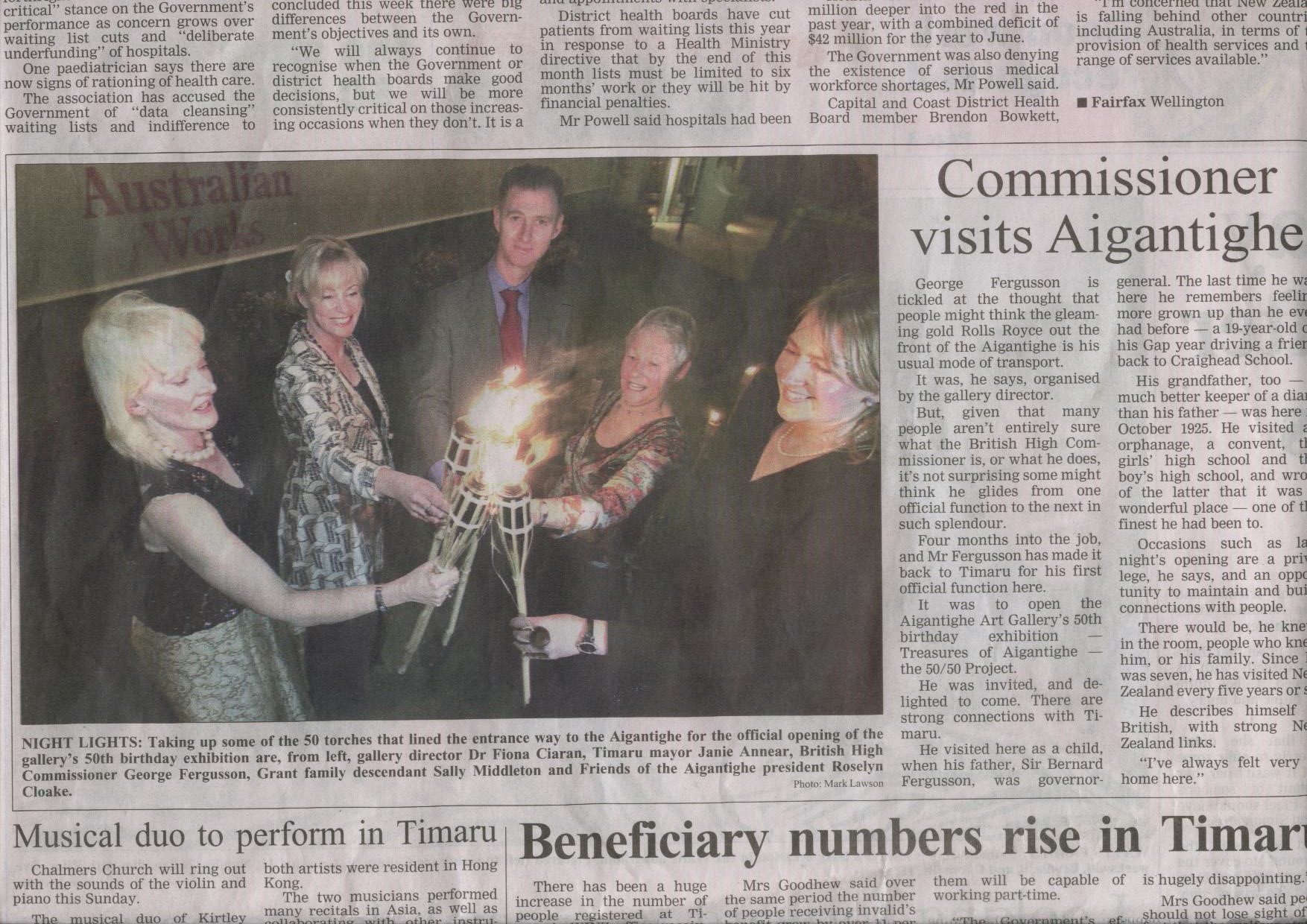
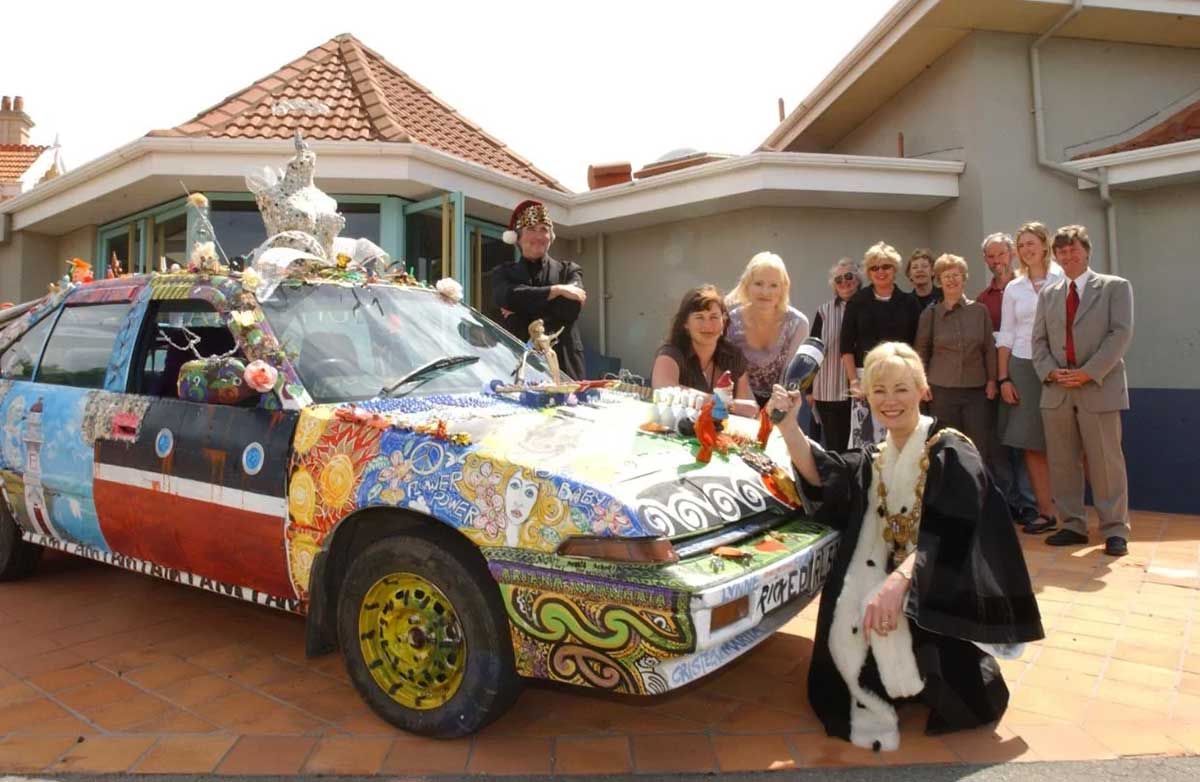
A new “art car’’ in 2004 was hard to miss as it travelled around Timaru promoting local artists and the Aigantighe Art Gallery. Then Timaru mayor Janie Annear, front, officially launched the car and looking on are, from left, Friends of the Aigantighe Art Gallery member Rick Lucas, gallery exhibition's curator Holly Dyer, director Dr Fiona Ciaran, and the gallery friends.
Photo: Ron Lindsay / The Timaru Herald
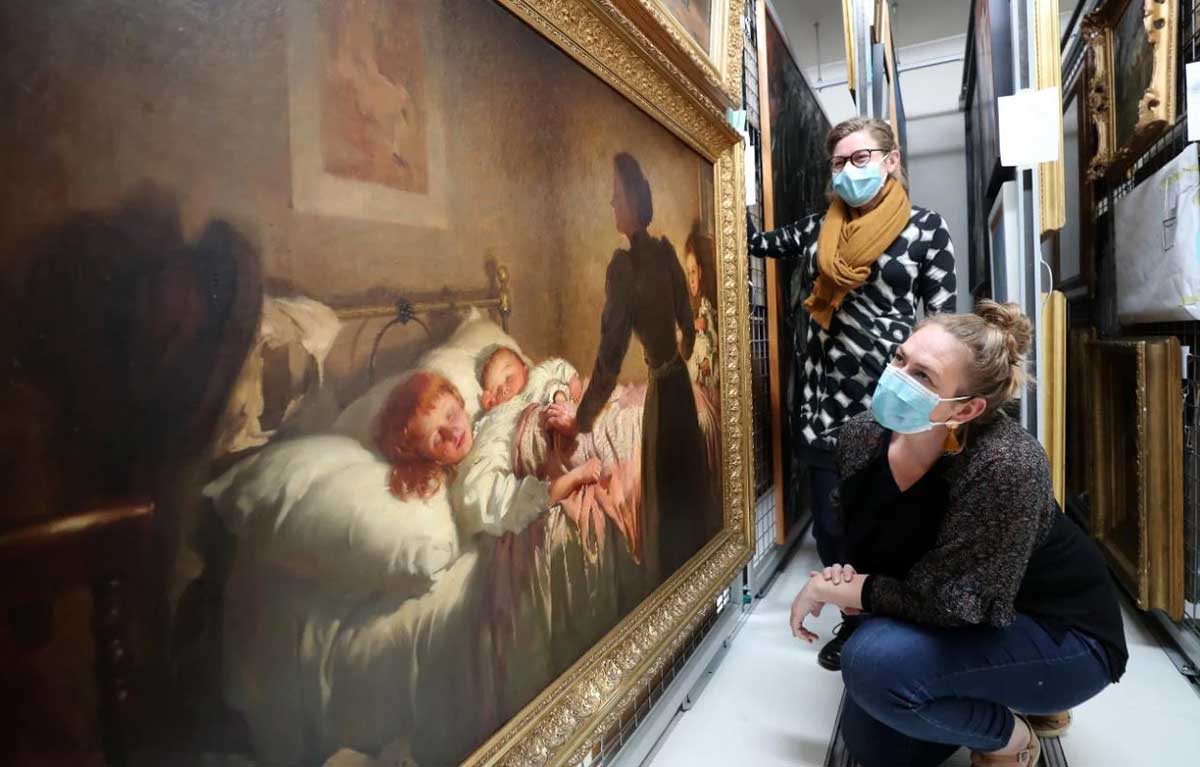
In 2020, the 1895 painting The Mother was restored thanks to a $2200 donation from the Friends of the Aigantighe Art Gallery. Collections curator Petrena Fishburn and Friends vice-president at the time, Roselyn Fauth, admire the work.
Photo: JOHN BISSET/STUFF / TheTimaru Herald


Friends of Aigantighe with the artwork that they commissioned with the Aigantighe staff, This artwork is by local artist Mike Armstrong. We reproduced his art on a WuHoo Art History Sign. And the artwork was gifted to a collection.
Mike has always been a huge inspiration to me. He is fantastically creative and uninhibited in his artistic process. Over the years, he shared immense passion with his art students. One of his accomplished students, Christina McDonald, whom I also deeply admire, is a testament to his influence.
What I learned from Mike was the importance of approaching life with a sense of humour while still caring deeply. He taught me to be brave, to stand up for what matters, and to share my perspective on the world.
Mike was also a wonderful ambassador for the Aigantighe Art Gallery, especially during a time of concern when the Council considered abandoning the Historic House. This building had been gifted to the community as a public art gallery. Thanks to the arts community rallying in its defence, the Aigantighe Historic House was eventually earthquake strengthened and reopened after seven years of debate and planning for its future.
The restoration efforts focused solely on meeting safety standards and preserving the building’s unique heritage features. These features were originally designed by one of my prominent Timaru architectural heroes, James Turnbull. Now that the building has reopened, some of the pressure has been relieved from the overcrowded art vault. We can now enjoy more of the permanent collection and experience the richness of the heritage building.
My focus is now back to the vault, understanding where the council is at with planning for its art storage, and making sure that with Friends, we are advocating and supporting the gallery team to solve the storage space issues. Some quick wins that the gallery staff asked for was help to restore artworks that had to be in a separate store area in quarintine, and for art conservation draws to store the works on paper. These were funded by the Friends of Aigantighe.

Inspired by a legacy of others. Left, An oil painting (from the Aigantighe's permanent collection) by Archibald Nicoll of Helen Grant. Helen Grant and her family left their home, gardens and art collection to Timaru in 1955 and the Aigantighe become South Canterbury's public art gallery when it opened in 1956. This painting of Helen joined the Aigantighe Art Gallery Collection in 1998 when it was gifted by a family member. Center: 1956 was the official opening of the Aigantighe Art Gallery. Pictured in this group photo is Governor-General Sir Willoughby Norris, the Mayoress, Mrs R.E White, Lady Norrie, Mrs Lorna Grant, Mr James Grant, and the Mayor, Mr R.E. White on the Verandah of the Aigantighe. Right: generations can now enjoy art in South Canterbury thanks to the legacy and generousity of others.
When I first started volunteering, I thought it was all about what I could give. What I have learned is that you receive so much in return. Over the past 25 years, I have met nearly every artist who has exhibited at the Aigantighe Art Gallery. I have listened to their stories, learned what drives them, and discovered the many ways art can shape lives and communities. Through this journey, I have had some incredible experiences. I have had breakfast with amazing artists like Graham Sidney, Billy Apple, dinners with visitors to Timaru like the US Ambassador when I was 20, shaken hands with the Japanese Ambassador, and even photographed the official Chinese presidential visit to New Zealand – that is a whole other fun story! Meeting people from all walks of life, from local creatives to international dignitaries, has taught me so much. These encounters have fundamentally shaped who I am, expanded my perspective, and inspired me to believe in what is possible. Volunteering has not just been about service. It has been about growth, connection, and discovery. I would not be the person I am today without it..


I had a solo music project playing melow blues and jazz at restaurants and weddings, and playing keys and singing in a seven piece funk and rock bank the Soul Agency. They were amazing muscians and we had a blast together playing at public events like the Rose Festivals, Wine Festivals, weddings and parties. I joined a stage production at the Timaru Theatre Royal with the South Canterbury Drama League - Showboat... It was so much fun too. It was a great way to meet more creative people in Timaru and be involved in the performing arts.

In 2008 The Friends had an absolute ball at the 100th celebrations of a century milestone of the Grant Family home, the family gifted the house and grounds to the people of south canterbury to be used as a public art gallery and musuem, a home for art. Aigantighe is Scottish Gaelic for ‘at home’. I wondered at the time what like was life living in the house, and what they would think now seeing the building bring the community together in this way. The foundations that were laid a century ago allowed the public art museum to be founded in 1956. Since then the doors have been opened to the wider family of South Canterbury and beyond. With community support and passion, the Aigantighe now cares for the 3rd largest art collection in the South Island of New Zealand. The high caliber and variety of exhibitions are of an international standard. Together with the art collection the team of staff and volunteers makes the Aigantighe a destination for inspiration. This photo is of my dear friend who is a brilliant artist, Bridget Keenan-Henshaw.
Bridget and I have had so much fun together over the years. Bridget worked at Environment Canterbury, and I was oftern her plus one at the work social events - this is how I met my husband Chris. Bridget now lives in Australia.
"Art and a building equals a gallery. But it is the artists, the staff, the members, the volunteers and the visitors who bring the "Arts Spirit" to life. At the end of the day it is about atmosphere, discussion and inspiration. There is plenty to be found at the Aigantighe." - Roselyn Cloake


Above is a newspaper article from The Timaru Herald, 1 Sep 2008 By ELLIE CONSTANTINE. Geoff and Roselyn were foundation members of Arts Canterbury Inc., formed to promote Canterbury Artists.
While I was on the board of executives in 2008 for Arts Canterbury we produced a publication to help people find the artists studios and galleries in Canterbury. The artists paid for their listings to help fund the publication, and 4000 copies were distributed, with a retail price $34.95. Nelson was on their sixth publication and was incredibly popular, it really put Nelson on the art tourism map. Our goal was to help raise the awareness of the artists in our area in the form of a trail. The Second issue was released two years later. Dad and I were both on the board along with Pleasant Point artist Gareth James known as the barefoot Blacksmith, he passed away in 2016. I really enjoyed getting to know him, we did an art swap, I made a painting for him, and he gave me a fantastic clock. David Sell was Chiar for many years and taught music theory at Canterbury University. Christine Hainstock (South Island Rep at NZSO) Adrienne Pavelka is a fantastic watercolourist painter, she had a career in advertising design back in the day when sewing patterns and adverts were illustrated by hand. Marilyn Rea-Menzies, Marie Rusbatch-Dawson, Dee Innes, Lorraine Jacobs and Marlene LeCren, Kathryn Mitchell, Anne Field, and Jill Henriod, were wonderful artists who I got to know really well.
I was on the the board of executives for Arts Canterbury from 2003-2009. www.artscanterbury.org.nz
The guide represented many artists and galleries at that time living in South Canterbury, for example; Debbie Templeton, Colin Higgins, Maria Foley, Polly Rowe, Elizabeth Love, Lynn Kerr, John Kelmen, Mike Armstrong, Midge McMillian, Wayne Patrick, Zita Waldton, John Badcock, Rosemary Campbell, Anita Rogers, Christeena McDonald, Trevor Askin, Sharleen McIsaac, Paul van den Bergh, Clarie Earile, Wayne Doyle Aigantighe Art Gallery, Margriet Windhausen, Austen Deans, Te Ariki Galleryk, York Street Gallery, Pauls Gallery, The Artisan Gallery, Sliver Stream Gallery.
Even in 2025, the the executive committee are artists who support artists, and continue to plan and organise Arts Canterbury run exhibitions, seminars, workshops and social events for the benefit of members of Arts Canterbury.

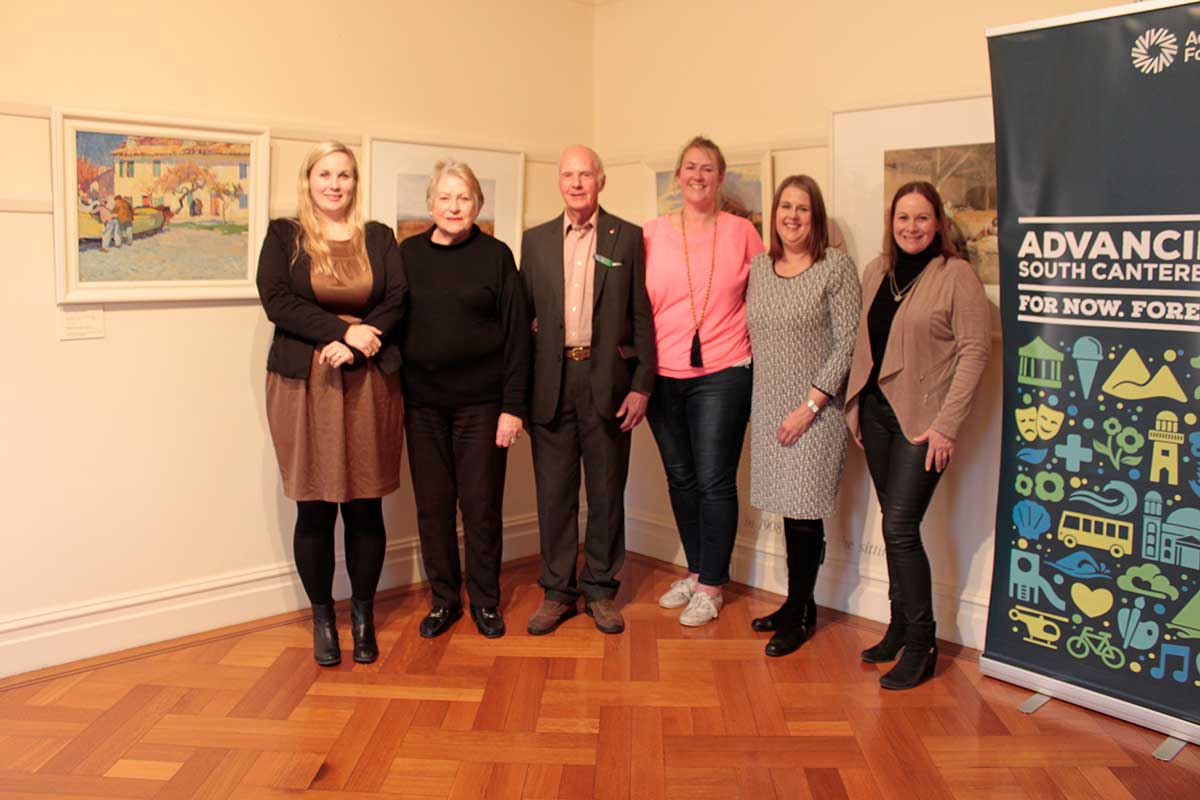
Aoraki Foundaiton supported the Friends of Aigantighe's art restoration.
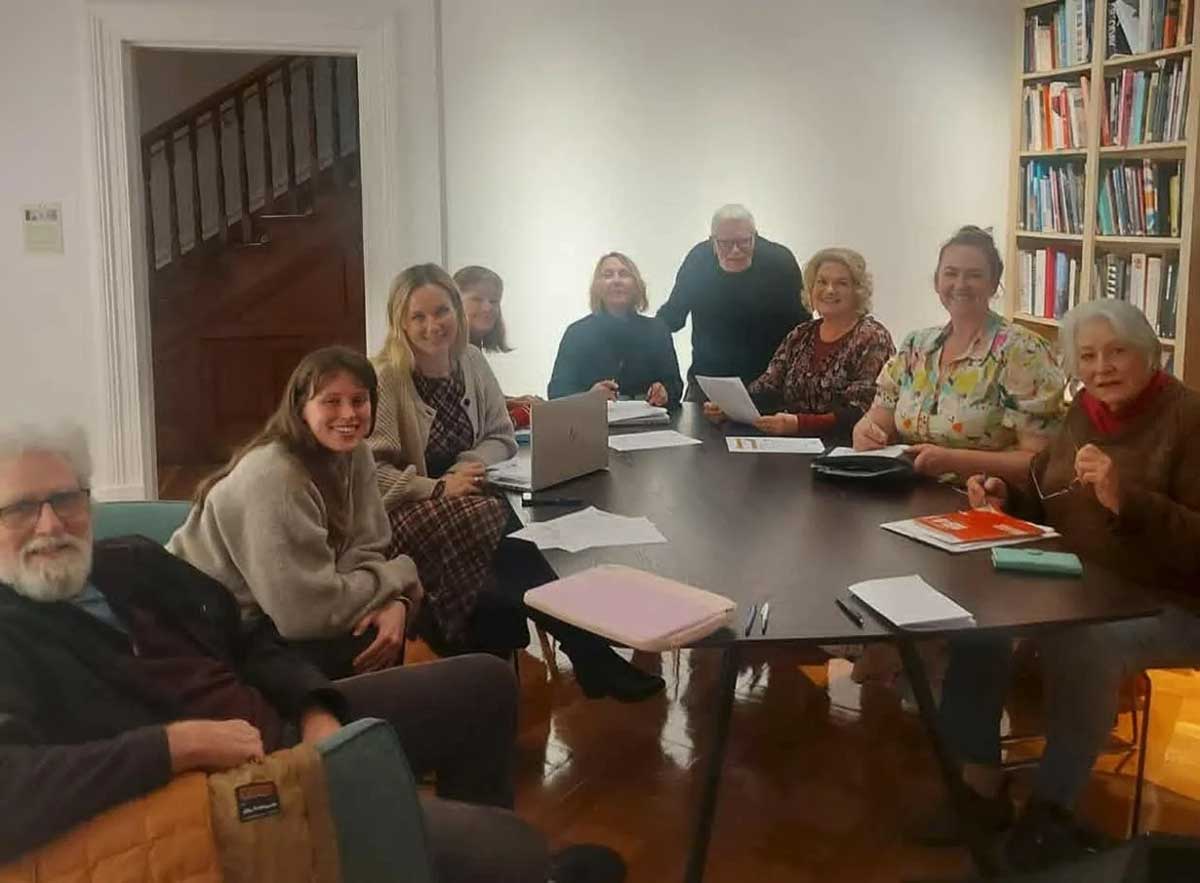


I also served on the Timaru District Arts Council, and on the Timaru District Council Arts Advisory Group.


Inspiration for goal setting, Maslows Heirachy of needs...
If you wanted to get a sense of how I tick, how I approach life and set my goals, it might help to know that I’ve often drawn from Maslow’s Hierarchy of Needs. You’ve probably seen the pyramid. It starts with the essentials for survival like food, water and shelter, then builds through safety, love and belonging, self-esteem, and finally reaches self-actualisation at the top.
I used to frame my goals like that, with micro daily essentials at the base, reaching towards longer-term dreams higher up. It gave me structure and helped me prioritise. But I also found myself bouncing up and down the ladder. Some days I needed connection before I felt safe, or I was struggling with confidence even when the basics were covered. The linear model did not always match how life really felt.
Then I came across something that changed how I saw it. In some Indigenous cultures, like the Blackfoot Nation, the idea is not to climb a ladder but to live in a circle. You are born with the essentials already inside you, like connection, belonging and purpose, and life is about holding on to them, nurturing them and sharing them. That made so much more sense to me.
Now, instead of building my goals like a staircase, I imagine them as a circle I return to each day. A space where survival, safety, love, growth and purpose are all present each day. So instead of an order ranking importance and growth, more of a relationship to each other.
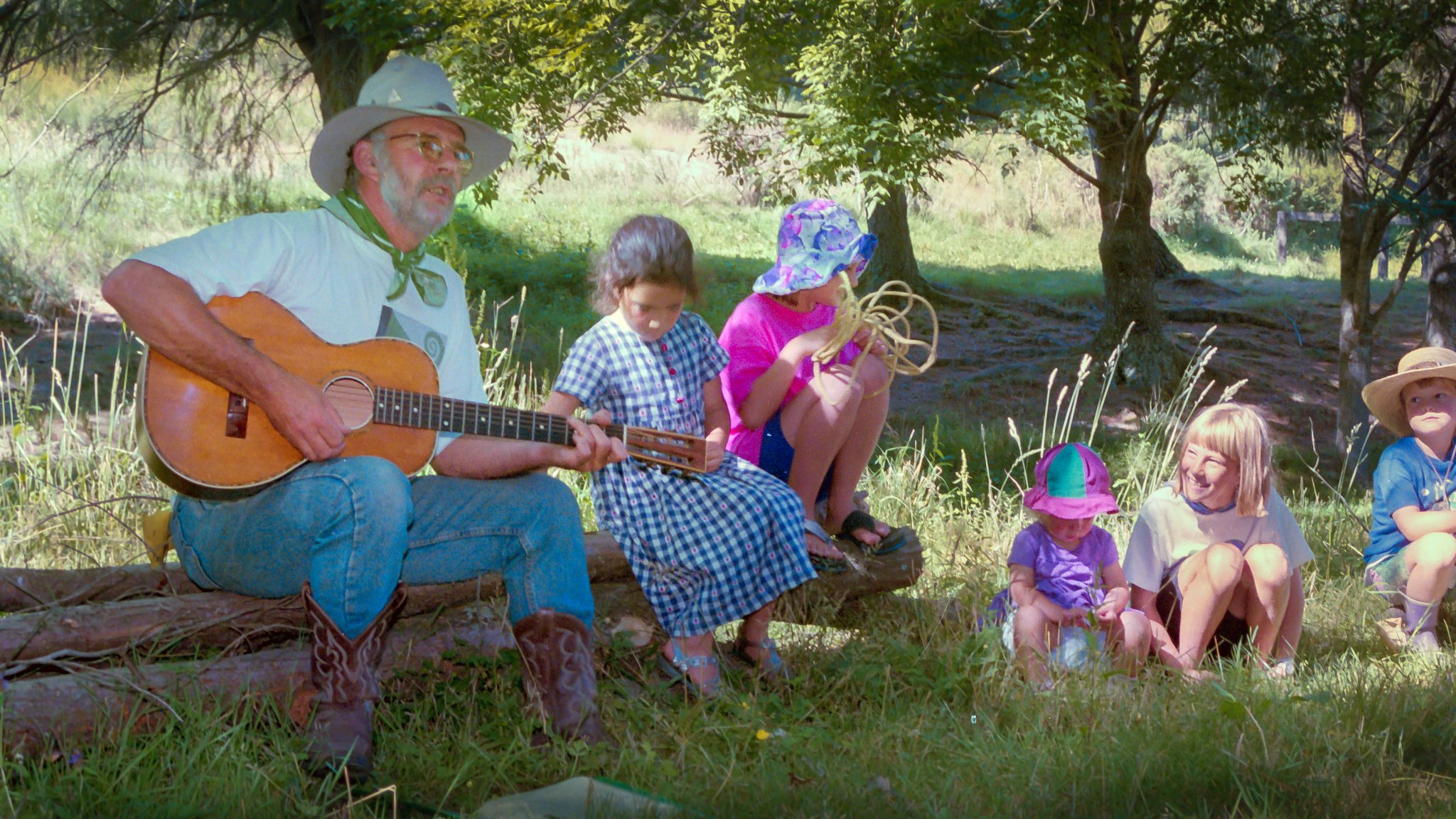
John Grenell passed away in 2022. This is a special memory when he wandered around, collected up a few kids, sat under a tree at White Cliffs and entertained us for an hour or so. This was about 1993 I was 10-11.
My goals are rooted in becoming the most whole and true version of myself, showing up for others and helping my community thrive, and honouring the stories, values and connections that keep culture alive for future generations.
Start with check-ins Thinking about do I want to give attention to is it what truly matters to me?
Make time for what fills you up Create to relfelct and reconnect myself.
Follow your energy, not pressure Notice what excites me, what I return to naturally. Let my goals adapt to who I am becoming, not just who I was.
Be intentionally present with people Reach out, show up where I can be helpful, even in small ways.
Share what you have Time, knowledge, food, encouragement, care.
Build or join spaces of belonging Whether it’s family dinners, local groups or creative projects, I try to prioritise togetherness over perfection.
Learn and remember Reconnect with my roots, family, ancestors, land, and stories. Ask questions, collect memories, record what could be lost.
Teach by doing Let younger ones watch me live my values. Pass things on, it doesn't always have to be perfect, but importantly it needs to be meaningful.
Live as part of something larger Let my choices reflect care for what came before and what will come after.
Because I think that self-actualisation, community actualisation, and cultural perpetuity can help us be who we are, support others to thrive with us, and protect what I value and what I think matters most for future generations after I am no longer here - stories, culture, language, traditions, knowledge, and ways of life.

Did you ever see Tim Minchin UWA Address? 9 Life Lessons - Tim Minchin UWA Address youtube.com It was fantastic, and really inspired me to think about my goals and contributions. It might inspire you too, so here is a quick snip of generally what he shared:
My Goals
- Pursue micro-ambitions by approaching every task with focus and pride, allowing small goals to lead me to unexpected opportunities.
- Create joy and nurture relationships by staying connected, showing care, and helping others feel happy, valued, and seen.
- Stay humble and grateful by recognising the role of luck in my life and letting humility guide my empathy and compassion for others.
- Value my identity and self-worth by being proud of who I am and making choices that honour me.
- Honour my roots and learn from the past by remembering where I come from and carrying forward the wisdom of those before me.
- Care for my body and energy by resting well, eating well, moving regularly, and doing what restores my strength and resilience.
- Support my mental and emotional health by speaking openly, seeking help when needed, and using tools that keep me balanced.
- Challenge my beliefs by questioning and refining them with curiosity, honesty, and self-awareness.
- Connect with nature and spirit by spending time outdoors and finding peace in something bigger than myself.
- Share what I know by educating, inspiring, and empowering others whenever I can.
- Practice everyday kindness by treating everyone—especially those with less power—with dignity, respect, and compassion.
- Trust the journey by letting go of the pressure to have it all figured out and embracing life as a rich, evolving experience.
Then I met Chris. We had a great social life, he taught me how to watch rugby, (cricket was a step to far) and I brought him along to exhibition openings, musuem events etc... we both love music, art, history, sport, geology ... We hit it off, got married, and had two children of our own, Medinella and Annabelle.
Fun fact... Chris grew up in Greymouth. When I went over to meet his family we went to the marrist club rooms. I was walking around looking at all the men who had played rugby over the decaded. There was one photo I looked at, and I was like... "woah that guy has big ears, they look so much like mine! I looked down and couldn't believe my eyes, it was my grandad, beekper Harry Cloake who had lived in Greymouth for a short time as a policeman with my nana Doreen. My fathers oldest siblings Mervyn and Marilyn were born there. I had a short panic that Chris and I could be related like some tragic movie twist, but fortunately that was not the case. It turned out though that our grandfathers were really good friends.

The 1946 senior side, was West Coast Marrist first ever team to win the West Coast senior championship. This photo contains so many club legends, including founding members, life members, West Coast reps, and an All Black.

Coaster was painted after a trip to the West Coast with Chris. The painting was purchased by the Aigantighe Art Gallery and is in its perminant collection.
Roselyn Cloake,. Coaster Series #1 (2010). Acrylic on canvas. Inspired by the orange onion weed flower on the west coast.

Coaster in storage at the vault at the Aigantighe Art Gallery - Photo Roselyn Fauth


Back at the same spot with our family 2025
Probably like many of you have experienced, having children changes the way you recreate. So we were now on the hunt to find free fun, special time together, and ways to help our children grow in to special young people who are fun, caring and curious. At the time, Timaru didn't really focus on domestic tourism marketing, so we struggled to find guides and maps to point the way. So we just started exploring, and asking others where to go, and what to find.

This painting was inspired by a family trip to Lake Brunner - I had never been there, and with new inlaws on the coast, we had frequent family holidays exploring the ancient landscapes.

Painting in my painting studio at Jackson Street Home November 2015. Photo by my sister Annelies Bray (nee Cloake).


Once when I was 8, I asked my dad Geoff Cloake if Mt Horrible was a volcano... since then my dad has been investigating the interesting geology of our area. It's been fun watching his journey exploring this, and developing his ideas of the South Islands most recent volcanic activity, here in Timaru... pop into the Museum and check out his 3D modeling of the lava flow, overlaid onto his.


I caught up with my cousins from Whanganui one day, and they said, “Hey Rose, it’s a bit random, but there’s this rock painting craze up here, and we reckon you’d love it.” So I thought, why not? I created a Facebook group called Timaru Rocks—at 9am. By 11.30am, we already had over 400 members! To kick things off, I organised a rock painting picnic. Seven people came, and I was so excited—Timaru was officially part of it. We held another painting party, and this time 700 people turned up! Within a month, there were 5,000 people in the Timaru Rocks group. We collected rocks from the beach, painted them, placed them in public spaces, and went out finding them again.
It was a special kind of treasure hunt. I was gifted some donations, so I established rock painting kits for lending, and began running painting sessions at schools, clubs, and even rest homes. I imported some black light torches and people used them at a light festival at Timaru Botanic Gardens organised by the Aigantighe. We hid neon rocks for people to find with their torches and it was heaps of fun. We had rocks on display at the Aigantighe, and I think the rock painting phase brought a few more feet in through the Gallery doors and raised the awareness that art was for everyone.

Chris and I met so many wonderful people in our community through painting rocks. What we discovered was that many others were also looking for free, fun activities. The conversations we had while creating little treasures to hide for others were truly enlightening. I learned so much more about who lives in Timaru, and why this town is so special.
Painting rocks created opportunities for everyone, especially for female entrepreneurs and artists. These were free and inclusive events that we intentionally designed to support caregivers and families. While Chris and I took the lead on the project, we were supported by many fantastic administrators who helped run the Facebook group and assisted with events.
We were especially fortunate to have the support of amazing women like Pauline Petie, Shirley Askin, Bec Bisman, Jasmine, Kristin Holloway, and some of our top “rockers” like Joy Dillion, who must have painted hundreds of rocks.


I'm so greatful to the support of The Aigantighe Art Gallery Manager Cara Fitzgerald, who gave me so much energy and help. Here is a pic of us at our Rock Party in 2017.
I met Cara at a New Year’s party through my husband Chris, who had gone to university with her and her husband Brian. From the start, it felt like we had been friends for years. Something just clicked. When they came to Timaru on a scout trip, Chris and I showed them around and shared what we loved about the place. Not long after, Cara was offered a role at the Aigantighe Art Gallery, which later grew into her becoming the Gallery Manager. She brought fresh energy, raised the standard, and created exciting new opportunities. I really admire her. We have been a great team, often brainstorming ways to inspire a love of art in our community. The Aigantighe has always felt like home to me, a place to connect with friends and experience art together. Cara’s leadership has deepened that feeling. she has shown me the importance of lifting others as you rise — something I admire greatly and carry with me in my own work.

Gifting a rock painted by Bed Bisman to the Timaru District Council in 2017, with Mayor Damon Odey, Medinella Fauth, Roselyn Fauth. Bec was shy so asked me to present it on her behalf.
What I learned from this experience was that there were so many people in our community, just like us, who were looking for free things to do, and who wanted to make those experiences meaningful.
Then COVID hit. It had a significant impact and the momentum of the rock craze fizzled. I realised I needed to find something new, something that could work in that climate and help people transition into the next thing.
So Chris and I began writing some blogs about local histor, popping them on WuHoo Timaru's website, and invited experts to share their stories about properties in Timaru. They taught me how to research online when we couldn't leave our homes. We also created some colouring-in and activity sheets, and inspiration for free fun for the newspaper and Venture Timaru.
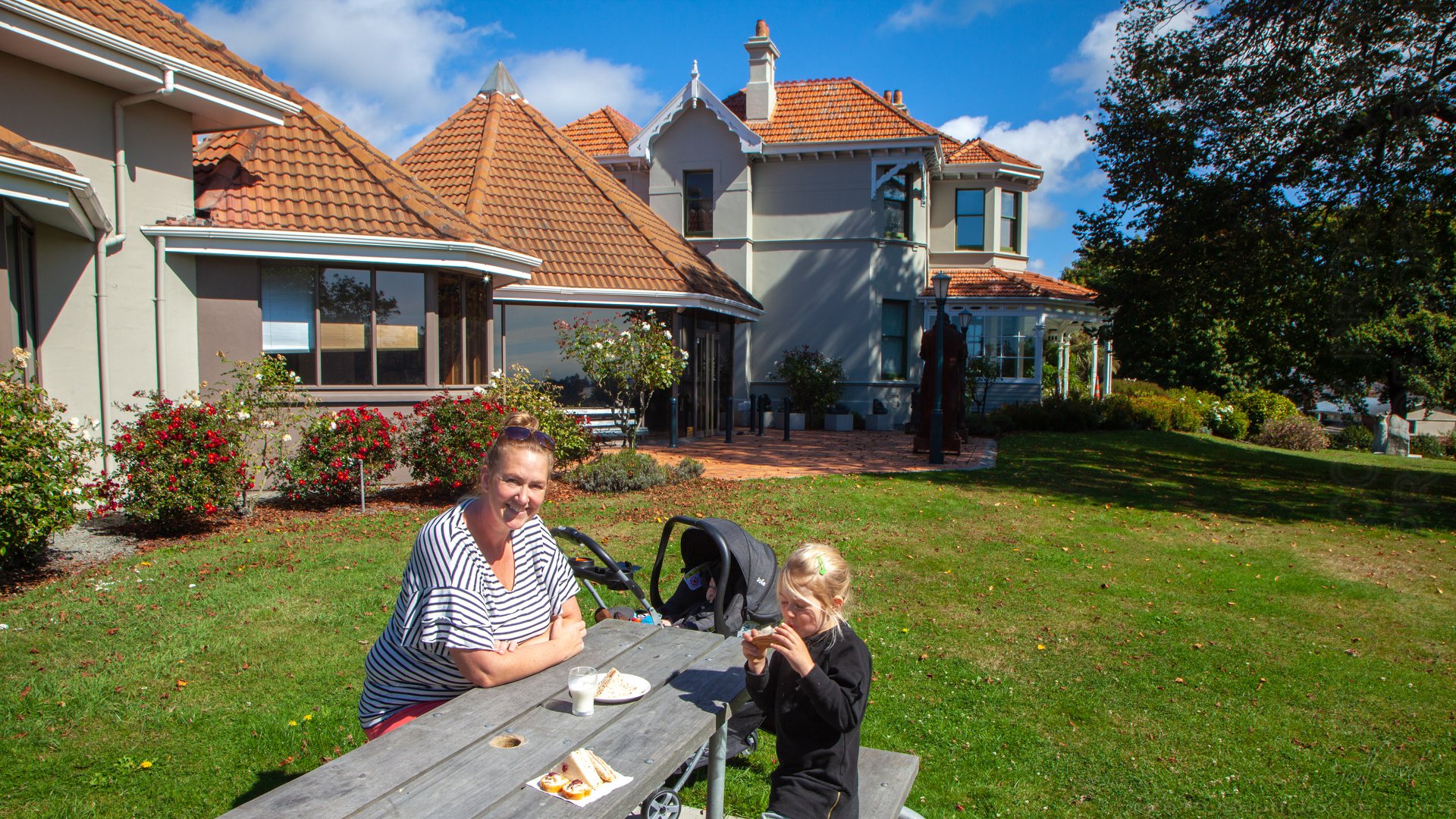
Aigantighe visit with Roselyn Annabelle and Medi in 2019

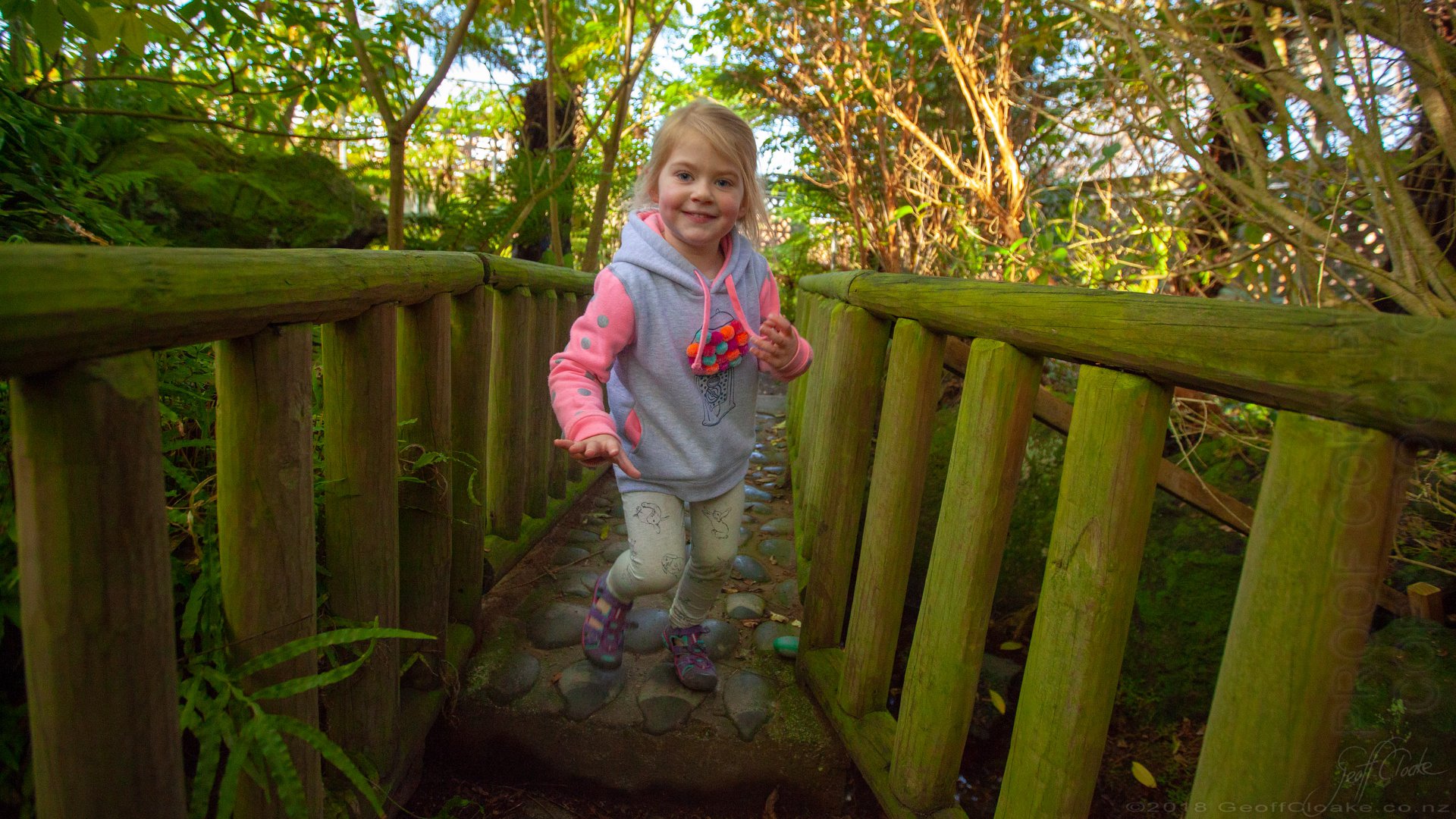
Medinella Fauth 2018
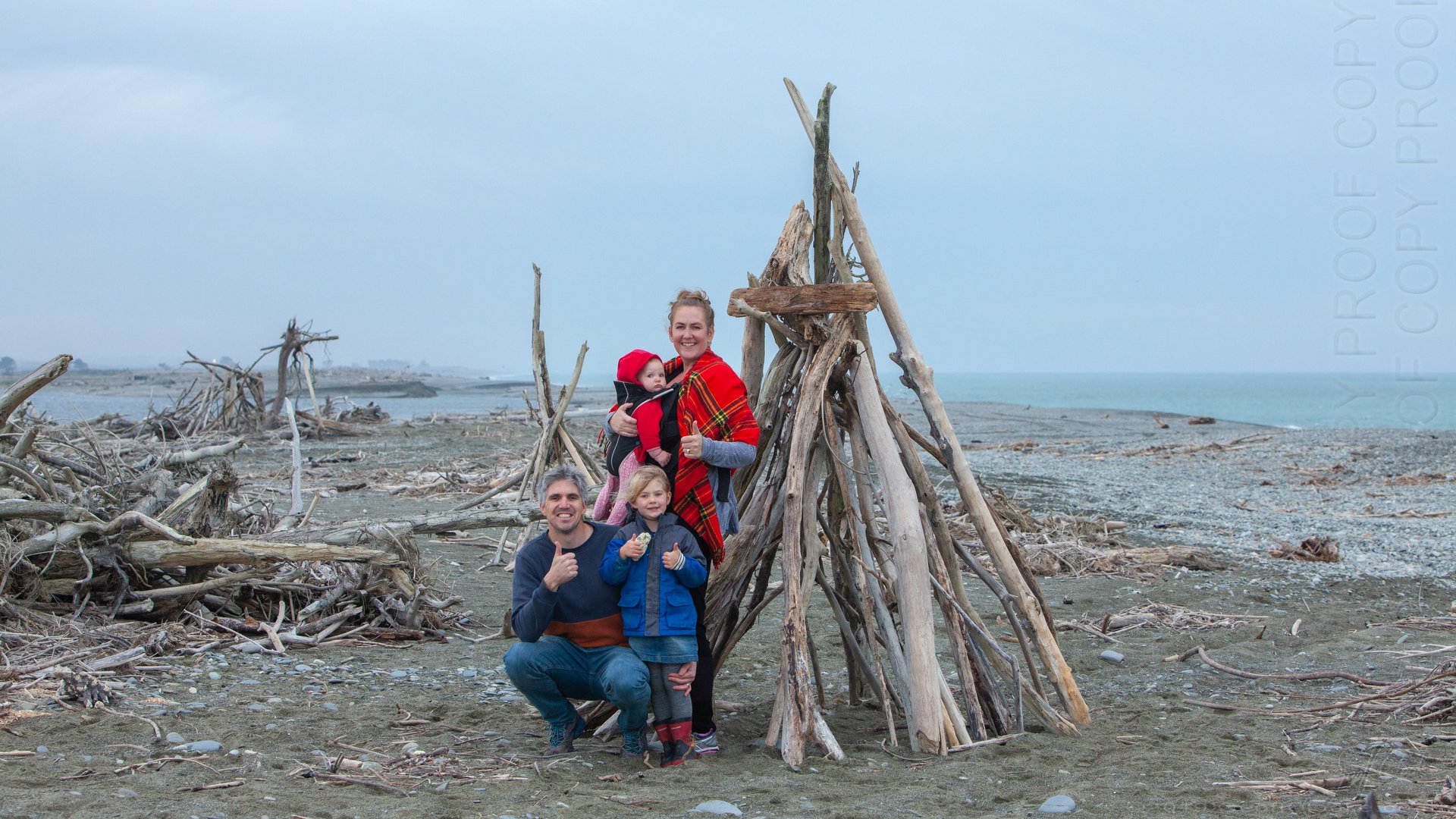
As we raised our children, we learned how to play again and to find free fun, like making huts on the beach in 1919 - Photograph Geoff Cloake
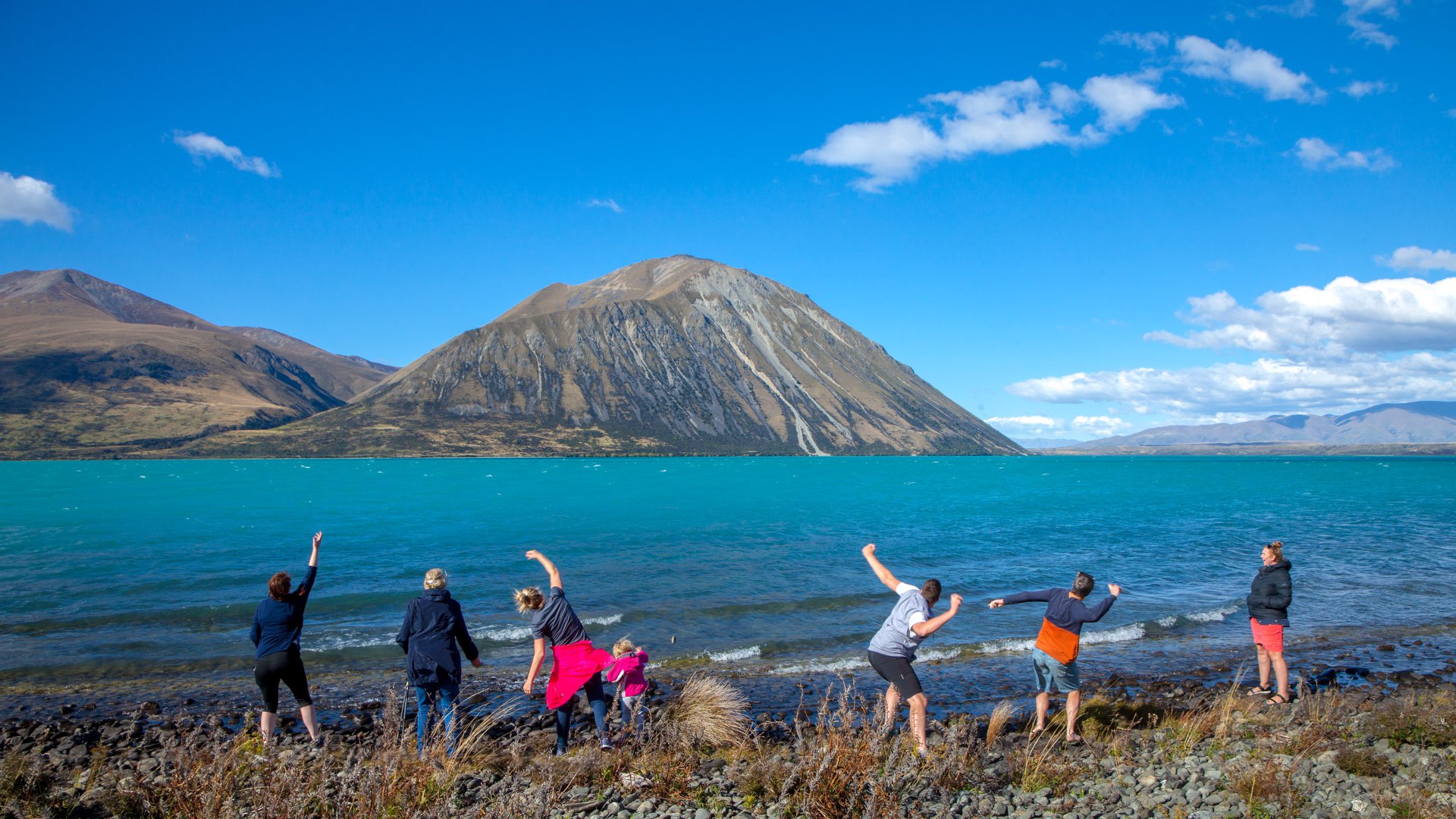

Mike Armstrong put together a Lock Down Self Portrait lesson. This inspired a heap of self portraits for the Aigantighe to exhibit. It was quite confronting to study my face, but really enjoyed Mikes lesson. facebook.com/16Vh5iah2Z/

With my self portrait on show at the Aigantighe. I gifted the sketch to the Aigantighe collection.


We live near the cemetery, so to give Chris some peace and quiet to focus working from home, we spent a lot of our lockdown there. After all, the chances of catching COVID from people in the cemetery were very slim. The kids would dress up, we would explore and find interesting graves, and I would go home and learn about the people resting there. I used to be afraid of the area, and those regular visits soon helped sort that out, and I like to think that the people wouldn't mind me sharing their stories and legacies.
I was really lucky that Dad has an amazing collection of very old books. They smelt strongly of aged animal glue, but were rare, and I finally had the time to work through the chapters and learn more about Timaru. Books like The South Canterbury Jubilee, written in 1916, were heavy reading at times, but full of valuable information. The WuHoo colourful fact sheets were inspired by the chapters in the book.

We started by sharing our adventures on Facebook, then created a website, followed by scavenger hunts and trails… and now, after more than ten years, we have a pretty good set of resources and information to help lots of people find their own free fun too. - we call it a WuHoo. That moment you discover something and think, ha, I didn't know that, thats so cool, or wow I can't wait to share this with others...

Colourful Fact Sheets. I designed the colouring in pages so people can have more freedom with how they create their image. They range in difficulty, our kids were able to create their colouring in pretty easily. It you want to you can get more fancy and detailed. On the the reverse are fun facts inspired by chapters in the South Canterbury Jubilee History that was written in 1916. wuhootimaru.co.nz/colouring-sheets

Fun Fact Sheet about Bob Fitzsimmons based on an original poster.

James Corbett and Robert Fitzsimmons fight poster original. Courtosey of Dave Jacks collection. Dave is a decendant of Bob. - Photo Roselyn Fauth 2023


Home history, helping people connect to stories of homes while in lockdown and sharing advice from expert and experienced researchers and historians to inspire others to learn about their properties.

Play43 Guide to finding all the Timaru Distric Coucil Playground with challenges on the back, and activities on the font. Idea was for people put them in their cafes and waiting areas to give kids something meaningful to do, then they can live in the glove box as a challenge to go play and explore the District. wuhootimaru.co.nz/parks-playgrounds


Medinella Fauth plays on the swings at the Caroline Bay Playground in 2021 - Photography Roselyn Fauth

Art History Traiil established as a team effort with Aigantighe Art Gallery, Friends of the Aigantighe Art Gallery, South Canterbury Museum and WuHoo.

"Civic Trust Newsletter 2019 - THUMBS UP! - Celebrating art in our environment
Aigantighe Art Gallery, Friends of the Aigantighe and WuHoo Timaru, initiated by Roselyn and Chris Fauth, launched a new programme to get artwork out into the community and the environments that inspire it.
In December 2018 the first five signs were installed at Caroline Bay and Patiti Point. They feature artworks from the Aigantighe Art Gallery Permanent Collection that relate to the location of the sign and its surroundings. The signs also include explanatory text and historical images from the South Canterbury Museum’s collection giving the artworks greater context. Examples at Caroline Bay are William Green’s The Unemployed, (a painting of the well-known donkeys that gave rides on Caroline Bay) and William Gibb’s painting of Timaru Harbour in 1888. Another Greene painting entitled The Roadmakers, ploughing a road near the sea, can be found at Patiti Point . There is also a painting by John L Higgs, entitled Timaru Coastline (depicting the scene looking north towards central Timaru and the harbour in 1884) and William Ferrier’s Breakwater, Timaru, Running a Southerly Gale 1888. The next round of signs are nearing completion and it is hoped to have the next three mounted by October.
The Friends of the Aigantighe Art Gallery have commissioned their first artwork to give a contemporary reflection on Timaru’s unique past for the WuHoo signs. The painting has been created by local artist Mike Armstrong. This is a great way to support our local artists, promote our public art collection and help it to be even more visible by displaying it in a public place on a WuHoo sign."


We were invited to join the CPlay committee. A small group with a mammothic task of raising millions and championing a new playground at Caroline Bay. Intially I thought it was going to be a matter of pick ing out some equip,ment from a cataoluge with some play surfacing. But after listenening to peoples challenges and desires, we soon realised that we needed to up the anti and come up with something better. The goal was a fan, accessable, challenging and meaningful space to play. I have to be honest at times it felt like another child, it was constantly on my mind, and I was super passionate about giving it everything I could to make a proper impact in our community. It was a small team, backed by Timaru District Council and supported by an enourmous amount of people in our community. Chris and I gave 5+ years, which is still ongoing. And Owen Jackson (OJ) who got the project off the ground was over 8 years of work. I met OJ through the showboat production, and I used to sing with him in his band. That is the great thing about Timaru, we are small enough to know each other, and large enough to rally and make things happen. That is what happened on the CPlay project. We didn't intend to, but turned out we built the largest playground in the southern hemisphere at the time. The result is exactly everything we dreamed of, and if you get a chance, I hope you can experience the playground at Caroline Bay too.
I formed a wonderful friendship with Keely Kroening, an amazing educator at the South Canterbury Museum. She gave us so much time, and helped me focus on what stories to share, and how they would be useful for educators in the region. We love catching up and sharing fun facts and stories.


South Canterbury Museum Educator Keely Kroening giving some of her personal free time to help shape the brief for the CPlay playground themes and designs with Chris, Annabelle and I (taking the photo) at the South Canterbury Museum lawn one day after she had finished work. We are so greatful to the time, inspiration and enthusiasm Keely has given to CPlay and WuHoo Timaru.

"Mrs Fauth has worked alongside the museum educators to develop a guide that helps explain the stories that inspired CPlay. The guide is available from the South Canterbury Museum, Timaru Information Centre or the CPlay website. Mrs Fauth said the community wanted to see local stories in the playground, and the committee had worked hard to learn about the Timaru district and the history and stories of Caroline Bay. ‘‘We are grateful for the support we have received from The South Canterbury Museum, Aigantighe Art Gallery and Timaru District Libraries, Arowhenua, Te Ana Rock Art Centre and the many teachers and students who helped us identify what to include in the playground to help make our locals’ and visitors’ play even more meaningful. ‘‘It is an unusual approach, and we are already seeing students visiting the playground and learning about where we live.’’ - timarucourier.co.nz/new-playground-a-hit-for-all-ages/

Creating together at a Civic Trust, Alive and Vibrand Timaru, and WuHoo Timaru joint community event.

CPlay had several subcommittees, and Chris and I were part of the design team alongside architect John Rushton and project manager Graham Ward. We worked through a wide range of planning tasks — from addressing underground infrastructure and mitigating drainage issues, to supporting the Council through procurement processes. Then came the exciting parts: narrowing down the list of equipment to purchase, developing bespoke play items, and tying everything together through cohesive theming and surface design.
Graham used to say, I'm not interested in problems, I just want the solutions. This has always stuck in my mind. We often can identify what isn't working, but to be helpful we have to stop complaining and figure out how to sort the issue out.
Graham was an exceptional leader. I have experienced lots of governance styles. But this was a great opportunity to watch a project manager in action. He was the kind of person you respected naturally. You felt safe sharing ideas with him, and motivated not to let him down. That combination of clarity, empathy, and strength made him a project manager people wanted to follow and work hard for. Things enevitably didn't go to plan, and apparently that is pretty normal in projects of this nature, spanners like Covid, cost rises, politics all impacted our group and it was interested to see how Graham was able to pivot and keep the task on course. We delivered the project on budget, debt free to the council, and we delivered what we promied to our donors, and the community who had high expectations for their new playground, fun, inclusive, meaningful. We had a great mix of governance (governance provides strategic oversight, direction, and accountability) and management focuses on day-to-day operations and execution over the five year long playground upgrade project. I made mistakes, learned even with the best intentensions I couldn't be perfect, and I couldn't please everyone all the time. I am a natual people pleaser, so I found this really challenging, particullarly towards the opening of the playground when the work load ramped up. After the playground opened there were a few wee gremlins to sort. We activated a feedback proceedure so we could gather information and work through it accordingly. We went into a new phase of activating the space so people could connect to the stories, and worked towards validating the project by preparing case studies in print, digital and for our suppliers promotions, plus entering national and local awards. Some one said, give it time, and you will visit the playground and feel incredibly satisfied on what was achieved. And I do feel amazing when I pop down and I see eveyone playing, having birthday parties, and catching up. It's everything I dreamed it would be. And I think it is making an important impact in our community.

Annabelle Fauth at the old Caroline Bay Playground

Annabelle Fauth playing at the old Caroline Bay Playground - Photo Roselyn Fauth


The core board that took a huge effort and lots of persistance to bring to the District. Designed by Talk Link, funded by CPlay, this can now be cut and pasted through out the playgrounds in our District. Bi lingual communication sign to help those who are non verbal communicate and also feel seen.

Kai Moana scavenger Hunt designed by WuHoo Timaru
Timaru’s Caroline Bay used to be known as the Riviera of the South. A wide, sandy beach, it was where Cantabrians would flock (by train) to swim, sunbathe and attend carnivals and concerts. Though it doesn’t quite draw the crowds of ‘Riviera’ times these days, it’s still a beautiful bay, enjoyed by Timaru locals. But it wasn’t always a place of peace, nor of fine golden sand. Rather, Caroline Bay was a place of heaving southerly swells and many a shipwreck. According to Timaru researcher Roselyn Fauth, the story is a good one - and she’s helping plan a new playground to pay tribute to it. Episode first screened in 2022. A Frank Film with Roselyn Fauth


A community mural project where Aigantighe handed out free art packs to familys during the Covid era. People could create art on the wooden tiles about their memories of the playground and what they were looking forward to with the new playground. I photographed each tile and prepared the print file for the signwriters to print and install in the lighthouse at the playground.

These three paintings were hung at the Timaru District Council in June 2024. The artworks which are part of the Aigantighe Art Gallery perminant collection were photographed and printed onto signs and placed in the playground so children could connect to art in public spaces to learn about our people and place through the thoughts and expression of artists.

Art History Signs at the Playground
The Art History signs in the playground were proudly sponsored by the Friends of the Aigantighe. Photography and text were curated by the Aigantighe Art Gallery and South Canterbury Museum, while graphic design and print-ready files were created by Roselyn Fauth.
The custom frames were designed by Roselyn’s sister, Annelies Bray (née Cloake), during her time at Thompson’s Engineering. Made from galvanized steel for low maintenance, the frames support durable ACM (aluminium composite material) sign panels that can be easily reskinned and replaced at low cost. The ACM was generously provided at cost by Ulrich Aluminium, with support from local signwriters Branded Kiwi.
Special thanks to the CPlay team for funding the installation of the signs within the playground.
We also extend our heartfelt thanks to artists Sue Tennant, Francine Spencer, and Roselyn Fauth for sharing their artwork. By bringing art into public spaces, we invite storytelling, spark imagination, and encourage people of all ages to explore their own interpretations of the world around them.

Mouse wheel at Caroline Bay. I researched the history of shipwrecks and sea rescue and gifted the graphic design for the new mouse wheel. One side features a map with all the shipwreck locations and details. The otherside is an interactive story maker.

Rat Bags commissioned by Roselyn Fauth, funded by CPlay, the artist Donald Patterson, has created many public artworks including Captain Cain statue at the Timaru Landing Services Building.

Lesson in the whare with South Canterbury Museum Educator Keely Kroening in 2024. Right informaiton sign developed by Francine Spencer and Roselyn Fauth to prompt information sharing at the Caroline Bay Playground.

Playground was inspired by stories of our past place and people.

Launch of CPlay, fundraising was officially underway

Public Fundraising launch kindly hosted by Movie Max Timaru.
Since our second daughter was born, I really struggled with my energy levels, and while I pushed through my health got progressively worse to the point where I had a few ambulance rides with suspected heart attack. They couldn't find any evidence and intially it was put down to panic attacks. It wasn't until a trip to the Greymouth A&E that they worked out my stomach had gone through my diaphram, flipped upside down and was behind my heart. As my digestion was buggered, the food would build up, and sometimes my stomach would twist causing insane discomfort until I vomited. This discovery happened in the middle of the playground project. I was very greatful to the team for helping me find a way to still contribue but in a way that I could manage while I waited for surgery and worked through recovery. In this photo, I'm actually feeling pretty average and putting on a brave mask, becasue there was important work to be done. I dont think many people appreciated how unwell I was at the time.

Some of the CPlay team of volunteers, zooming with the Playground Centre working together on the plans - Photo Roselyn Fauth.

CPlay volunteers Roselyn Fauth and Francine Spencer visited Te Ana Ngāi Tahu Māori Rock Art Centre to find inspiration for Timaru's Caroline Bay playground. Selfie by Roselyn Fauth 2023
Did you know one of Aotearoa’s most significant collections of indigenous art is right here in Timaru?
I’ve been fascinated by the rock art of our region since I was a child. For my final year at Timaru Girls’ High School, I based my graphics portfolio on a free guide to help people discover local public rock art sites. I was the only student studying graphic design, and did this via correspondence under my art teacher Evan Jones. The previous year was taught by Margaret Lafferty, deputy head mistress of Timaru Girls High School, dated 28 May 1990.
My favourite place to visit is in Duntroon. It always struck me that someone once removed sections of the ancient art from the limestone overhangs. Today, you can still see the scars left behind. I dont really know what the motives were of this person, maybe they thought they would collect for a museum or private collector, but what ever the intent, the removal of these taonga (treasures) causes real pain and loss which I aknowledge. One silver lining is that a section taken from the site is now on permanent loan to the Te Ana Māori Rock Art Centre in Timaru, where it is protected and respectfully displayed. At least after the damage we can still appreicate and connect to it.
The meanings of many rock art images have been lost over time. However, some traditions suggest that certain artworks may depict the ancestral waka that came to grief near Moeraki. One version of the story says the food from the waka became the Moeraki Boulders, while the passengers became features of the surrounding landscape. Another story describes Aoraki as a young boy riding on his grandfather’s shoulders. These are just a few of the rich kōrero tuku iho (oral histories) handed down through generations.
We wanted to bring a “first shipwreck” story to the playground as a way to acknowledge life in Aotearoa before European arrival. Visitors to the playground can begin their journey at the mauri stone (a piece of churt that our family took from Patiti Point on the second blue moon in a month), then continue to this stunning rock art panel. With permission, my dad Geoff photographed the artwork, and Francine Spencer helped us develop the signage and accompanying text with care and respect.
To my knowledge, this is the first time Māori rock art has been featured in a public space in our district. Sharing this taonga with the wider community feels like an important step in recognising and celebrating indigenous culture, stories, and art—woven into the landscape we call home.
I feel very proud that the rock art is at the playground, and I hope it inspires locals and visitors to learn more about our increable significant collection of our earliest "art galleries" in Timaru and South Canterbury.
- Identity and Belonging: Knowing about their cultural background helps children feel a sense of belonging and understand where they come from.
- Preserving Culture: By respecting and including indigenous art, we keep cultural traditions alive for future generations.
- Community Unity: Projects like the Caroline Bay Playground upgrade bring people together, fostering pride and unity in the community.
- Education: These initiatives teach children and visitors about Māori stories and traditions, raising awareness about indigenous art.
- Respect and Empowerment: Seeking permission and collaborating with local communities shows respect for their culture and empowers them to share their stories.
"Integrating cultural elements into public spaces like Caroline Bay Playground with guidance and blessing of mana whenua is about honoring heritage, building connections, and empowering communities to learn, understand and preserve their identity." - Roselyn Fauth

Aoraki/Mount Cook, mountain, the highest in New Zealand, located in the Southern Alps/Ka Tiritiri o te Moana, west-central South Island. It reaches an altitude of 3,724 metres (12,218 feet) – high enough to be permanently covered in snow. - Photo Geoff Cloake

Inside the historic Landing Service Building owned by the Timaru Civic Trust on George Street is Te Ana Māori Rock Art Centre. A stunning and special centre for indigenous rock art. This is the perfect place to begin exploring the region’s earliest artists, their stories and histories. Te Ana brings to life the rock drawings created by Māori ancestors from as early as the 1300s. Found in limestone shelters across South Canterbury, these artworks are among the oldest in Aotearoa. At Te Ana, you can see them up close, hear the stories behind them, and learn how Ngāi Tahu with the community are protecting this heritage today. You can take a look around the space by yourself and study their exhibits, or join a personalised tour with a guide around the centre for an hour. Visiting a rock art site remains a quiet and moving experience. Sitting in the shelter, surrounded by silence, many visitors reflect on the journeys of the original Māori artists and the meanings behind their marks. The sense of presence and connection is strong. teana.co.nz/our-tours

Geoff Cloake photographs rock art to be reproduced at the Caroline Bay Playground

Rock art was photographed by Geoff Cloake. Image used with the permission from Te Ana Ngāi Tahu Māori Rock Art Centre and Te Rūnanga o Moeraki. - Caroline Bay Playground 2024, photo by Roselyn Fauth
Chris and I built our home at Pātītī Point in 2018 (luckily before the Covid wave of inflation when building was much more achievable then). Pātītī was a passenger on the Ārai-te-uru waka, which capsized off Matakaea on the North Otago Coastline. After the capsize, many of the passengers went ashore to explore the land. However, they needed to be back at the waka before daylight. Most did not make it, including Pātītī, and instead were transformed into many of the well-known landmarks of Te Waipounamu. In 1880, Hoani Kāhu from Arowhenua described Pātītī as “he kāinga nohoanga, mahinga kai, and he tauraka a waka”. - kahurumanu.co.nz/atlas

The Takiroa Historic Area is among the most recognised Māori rock art sites in New Zealand, drawing over 20,000 visitors each year. It features painted rock art on a limestone outcrop, some of which is thought to pre-date European arrival. The site also includes evidence of both pre- and post-contact Māori occupation. Takiroa is situated in a region rich in traditional Māori stories and holds deep cultural and spiritual meaning for Ngāi Tahu Whānui. Its cultural significance, especially for Ngāi Tahu Whānui, is enhanced by the uniqueness and rarity of the surviving rock art, much of which remains in its original setting. The site also carries historic associations with important Māori and national figures, reinforcing its relevance to all New Zealanders. Kurow-Duntroon Road, (State Highway 83), DUNTROON.

Did you know that a brass rubbing trail was created in 1890s? I remeber having my passport and gold crayon. And we used to hunt for the posts can collect the stamps. This free activity go out family out hunting and discovering the region, but for some reason the promition of the activity was ceased. So Chris and I revived the free activity with a guide. One of the posts is at raincliff with a rock art site.

Another example of awesome free fun was a scenic route that was created with a network of signs and plaques. Again, all of it is still out there, but for what ever reason the promotion of the trail ceased. So we created a free download to help people rediscover all the work that had been done to help people explore the district and find meaningful free fun.


Heritage Trails that had been developed for the District - this connected into a national trail for locals and visitors to use to find significant heritage locations.

Painting inspired by the story of Timaru's lighthouse. The push and pull of polictics, optimism and a new day.

The playground I grew up with in Timaru, before it was replaced with the new CPlay Caroline Bay Playground which opened December 2023. - Photos Roselyn Fauth

2023 Annabelle and Medinella watching the progress with their friends. - Photo Roselyn Fauth


Thanking the team effort of so many people who rallied to create the new playground at Caroline Bay.


I created a free hand out that people can use to tour the playground and learn about the stories, and with Museum Educator Keely Kroening, we gave lots of tours to thank contributors and share stories.

After an epic volunteer effort by a small group of volunteers, with support from hundreds in the community, council, funders, and playground designers and contractors, we could wash the high viz and put it away. - Photo Lynette Wilson, CPlay Volunteer


Accepting the Aotearoa Recreation Award for Playground of the Year 2025 on behalf of CPlay with our key contractors.

Representitives of the CPlay Volunteer committee celebrating with the South Canterbury Chamber of Commerce Community Award 2024.


 My mum Marthy Cloake with my neice.

My Siblings
And the playground is everything we hoped it would be. It has been wonderful experiencing the joy of play, the smiles on strangers faces and seeing the schools visiting with their educators to learn about our people and place.
Through this CPlay project, I met so many wonderful people. And made a very special friend, Francine Spencer. I learned so much from Fran, particularly about her Māori culture through her lens and her art. Fran and I have created art together to share our stories, and we’ve helped to bring the community’s stories into the playspace and across our region. We were commissioned to create two stained glass windows for the Aigantighe, which absolutely blew us away. It is incredibly special to see them and to be part of the building’s very bricks and mortar—carrying with them the feelings and memories of our friendship. It’s pretty special.


Fran and I had a wonderful morning together working on a artwork to go inside the whare at the playground. Inspired by the playgrounds story, constelations, animals, land, sky and sea, play, building each other up, family and the journey ahead.

2023 Artwork created by Francine Spencer and RoselynFauth and gifted to the Caroline Bay Playground.
One of my favourite life lessons was taught to me by Fran - "Don't be a Mana Muncher". Dont diminish someones authority, prestige, spiritual power, and respect by taking the glory for yourself or draw power or status from someone else's achievements. Be a mana builder. Honor the mana of others without taking from it. You can do this by acting with integrity, leading with compassion into your relationships and your community. Listen, and make sure you help others feel seen and valued.

Aoraki adventure... from ice to glass...

Visit to Aoraki Mount Cook 2024

Francine Spencer and Roselyn Fauth colaborating on the window design commission for the Aigantighe Art Gallery 2024 - Photo Roselyn Fauth


Reflecting on the Aigantighe House Campaign
Back in June 2020, like many others, I was deeply concerned about the fate of the Aigantighe Art Gallery’s historic house. This cherished building had been gifted to the community to serve as a public art gallery, a legacy of generosity and civic vision. After the Christchurch earthquakes, the house was assessed for safety and then closed to the public.
Over time, I became increasingly worried that the council might abandon the house and the remarkable legacy built by early Timaru volunteers and donors. I felt a strong responsibility to raise awareness and speak up for the community, to ensure that our concerns and proposed solutions were acknowledged.
Alongside Juliet Crawford and a committed group of community advocates, we worked together to present submissions to the council. This was a deeply emotional period for me. My uncle was in hospital in the Netherlands with life-threatening injuries. I was dealing with personal grief while also feeling a strong emotional connection to the future of the arts in Timaru.
It was frightening to put myself out there, knowing that my perspective might not be popular. But I believed it was important to share my view, to be courageous, and to stand up for what I believed was right. Staying silent would have been easier, but it would not have honoured the legacy or the community that cared so deeply.
Aigantighe Heritage House Reopened After 7 Years with a Garden Party Celebration in 2024. It was incredibly emotional. It stirred so many feelings from the time the house had been out of action. I will never forget walking through the house with Nicole Timney that final evening. We were likely the last members of the public to do so before the doors were closed. And now with Friends of Aigantighe, family and the community, we were back.
The gallery, renowned for its rich heritage and extensive permanent collection of significant New Zealand and international art, has undergone essential earthquake strengthening to ensure the safety and preservation of its priceless collection for future generations.
"We are thrilled to welcome visitors back to Aigantighe House Gallery. This reopening is not just about the physical space; it's about reigniting the passion for art and culture in our community. We've curated a diverse collection that reflects the gallery's legacy of gifting and our dedication to supporting artistic expression,” Aigantighe Art Gallery Manager Cara Fitzgerald said. - timaru.govt.nz/aigantighe-heritage-house-reopens
The project to strengthen and restore the Aigantighe Art Gallery’s Heritage House Gallery has been boosted by another $25,000 thanks the Friends of the Aigantighe. The Friends of the Aigantighe recently announced that they would pledge the sum towards the seismic strengthening and restoration of the 116-year old, category-2 heritage listed property, which closed in 2017, when the building was deemed to be earthquake prone. This matched a donation recently made by the Timaru Civic Trust to help fund the project.

Annabelle Fauth with the space to herself at the Aigantighe Box City activity 2024 - Photo Roselyn Fauth

When the fences were up and the Aigantighe Galley's Historic House was closed. - Roselyn Fauth

This photo makes me so happy - Aigantighe staff celebrating the re-opening of the house. The Friends contributed to the restoration and the Timaru Civic Trust. - Photography by Geoff Cloake

Inspired by Aoraki Mt Cook... lifted, squeezed, worn down by shaking, wind, rain, ice, plants... while it's moved and sculpted by the elements and mammoth tectonic forces... even with everything thrown at it, it still stands tall and the sunrise brings a new day. There's hints of tartan and kete, symbolic of people with place.

Roselyn Cloake. Aoraki Series 2. 2025. Acrylic on Canvas.

Sunday drive to Mesopotamia. Belles and I are bashing rocks with hammers on the hunt for aggates. Photo taken by Geoff Cloake.

Thank you to my dear friends who are raising children the same age as mine.
We’ve been walking this parenting journey side by side, through the baby years, the chaos, the laughter, and everything in between. Along the way, we’ve built something truly special. I’m so grateful for the deep friendships that have grown as we’ve raised our kids together. From left, Kelly Sweerus, Roselyn Fauth and Clarissa Doran, thank you for being part of this beautiful chapter.

Very exciting moment was when I helped to create an exhibition at the South Canterbury Musuem as a guest exhibitor on stories of the people and place of the Museum and Theatre Royal.

Images from the South Canterbury Museum online collection. Left; Nan Raymond. Center; Trevor Grifiths. Right; Frances Glasby.
Drawing inspiration from local legends, we share their legacy to inspire community awareness and show what we can achieve when we unite and work together.


Follow the story of Yankie Sam, his wife Ann, and their children, Rebecca and William Williams—the first Europeans to settle permanently in Timaru on the WuHoo Timaru Whale Tales and Trails Hunt. They arrived in 1854. Sam had previously whaled here in 1839 with his friends Long John Coffin and Billy the Bull. The Williams family opened Timaru’s first accommodation house and pub. William, the first recorded European birth in the area, slept in a gin crate. After Ann died young, Sam later ran a hotel at Birdlings Flat before returning to Timaru, where he is buried. Sam, alongside George Rhodes and Belfield Woollcombe, welcomed the first immigrant ship to arrive directly from the UK when the town had only a few houses. The first Timaru Herald was printed in their kitchen. William later struck gold at the Larrikins site and earned the nickname “Flash Billy.”
Third photo from the left, 1868 Photograph of the foot of George Street, Timaru, circa 1868. The building is pictured in the centre is a landing service building (either the Timaru Landing and Shipping Company or the George Street Landing Service), while Rhodes' original cottage is to the left. South Canterbury Museum 2000/210.095
Creating blogs, social media posts, and handouts to honour Timaru’s past—because knowing where we come from helps us understand who we are, and where we’re going.

We have an incredible collection of species and modern roses in our Districts public gardens, and this is a legacy of a huge amount of hard work and voluntary contribution. The more I learned about Timaru icons like Nan Raymond, Trevor Grifiths and Frances Glasby, the more I was inspired by what one person can do, when they work with a big team. So I wrote a fact sheet with activities to celebrate their gifts, and explain why they are so significant. wuhootimaru.co.nz/roses

Guest speaking on my deep dive into the lives and legacy of others.


Roselyn Fauth and Chris Fauth after Anzac cememony 2023
In 2025 it was a complete surprise to be nominated for Woman of the Year Award - South Canterbury. The reckonition of recieving the award blew me away, and it gave me a lovely opportunity to reflect on the journey so far, and thank those who have played a big part.
In the process of finalising celebrating our CBD, over 65 illustrations of prominant heritage buildings, with various free handouts on how to take notice of our built heritage, why it is important, and how it relates to us. I'm planning to organised tours through interesting properties to raise the awareness and appreciation on the amazing heritage buildings that we have in our District.

South Canterbury Woman of the Year award 2025, presented by the Aoraki Womens Foundation.
I was pretty blown away to recieve the recognition for what I have contributed to so far. It has been lovely to reflect and be able to recognise and thank all the people who have inspired me, enabled me, and let me be on their team to help make an impact in our community. It is a team effort and I think that is what is so wondeful about our Timaru District, when we want to achieve something, we rally and we make it happen.
This was the information that the Womens Aoraki Foundation put together for the award.
Roselyn Fauth has been recognised for her outstanding contributions to the South Canterbury community, with decades of dedication to the arts, heritage preservation, and inclusive community development. A sixth-generation Timaruvian, she has played key roles in local initiatives including WuHoo Timaru, CPlay, and the Friends of the Aigantighe Art Gallery. Her efforts have strengthened public access to history, art, and storytelling, particularly through free, family-friendly experiences that connect people to place.
Roselyn’s service spans more than 25 years with the Friends of the Aigantighe Art Gallery, including four years as president. She has helped fundraise for art restorations, supported new commissions, and championed projects like the Aigantighe sculpture hunt and the art history trails along the coastline. Through CPlay, she contributed to the development of Timaru’s award-winning Caroline Bay playground by assisting with grant writing, community consultation, and thematic storytelling. More recently, she joined the Civic Trust, following in the footsteps of her father Geoff Cloake, to promote awareness of Timaru’s built heritage and foster pride in its architectural identity.
As a passionate advocate for women, Roselyn creates platforms for female entrepreneurs and artists, encourages mothers and caregivers to get involved in the community, and mentors women stepping into leadership roles. Her work is grounded in the belief that inclusive, creative environments help communities thrive. In 2023, she received a Community Service Award from the Timaru District Council, recognising her contributions to the social, cultural, and recreational life of the region.

Sharing my story as a guest speaker to Aoraki Foundation Donor Morning Tea May 2025. - Photo Kirsty Burnett
I have not contributed alone. Everything I have been part of has been a shared journey, alongside incredible people who have each given what they could, when they could. I have been fortunate to work with volunteers, artists, educators, experts and community champions who care deeply about our place and people. I am so proud to call Timaru home. As a sixth-generation Timaruvian and half dutch-ey, I carry a strong sense of where I have come from, who I am, and what I stand for. That connection grounds me and inspires me to give back to the community that has shaped me. Together, we have created spaces that connect generations, celebrate heritage, and spark curiosity. My goal is to continue this work with integrity, compassion and gratitude, and to help ensure that what we build today will enrich the lives of those who come after us.
I aim to live meaningfully, love generously, and create something worth leaving behind. I revisit my "why" often, live within my means, and make time to be present in both the little and big things. Through art, storytelling, and community projects, I honour those who came before me, uplift those around me, and hope to leave something of beauty and meaning for those who follow.
I value working with teams that share purpose and vision, and I enjoy collaborating to bring ideas to life in ways that are inclusive and impactful. I would like to lead with compassion, strive to be genuine and reliable, and help others feel seen, valued, and included.
While I may not have much to give financially, I have time—and my goal is to make that time truly meaningful.
The focus recently has been to actively the story sharing at the playground, and more art and signage is in progress. I have also been learing about our built heritage, in particular the prominent buildings in our CBD. They are beautiful and I would love to help people slow down, look up at take notice. I'm planning some resources to help achieve that goal, and looking at starting tours. I joined the Civic Trust and I look foward to seeing how I can help them raise the awareness of our built heritage, and create more street art opportunities. The challenge of course is time. Most of this is voluntary and a lot to squeeze into the week. But it is amazing what can be achieved when you make a start and chip away it, and you have some help from Friends.
Now here we are. Still finding free fun, and ways to inspire and share stories of our people and place. So that you can find a wuhoo, and have your free adventures too. We hope you have fun.


Riding with Santa at the Christmas parade. Photo Geoff Cloake 2023

Guest exhibitor at the South Canterbury Musuem - making an exhibition about the history of the Museum and the Theatre


Exploring Wellington


Drawing picnics

Free bay concerts

Judging Junk to Funk 2024

Exploring with the Timaru Civic Trust - The Historic Rhodes Cottage 2025

Keely and Roselyn at the Our Waitarakao launch that Chris and his colleague have been working so hard on to come up with a plan for the lagoon and wider catchment. Photo Geoff Cloake 2025

The artwork by Francine Spencer that inspired the branding for the Waitarakoa project. I was so excited to be able to help develop Fran's design as a logo and develop the brand.

Guest speaking at the Aoraki Foundation Donors Morning Tea - Photo Kirsty Burnett 2025

Guest speaking at the Timaru Host Lions Club 2025

Les Jones and Roselyn Fauth planning the monument for the Timaru cemetery for those who rest in pauper and unmaked graves.

Friends of Aigantighe meetings and hosting 2025


Shout out to our Friends Steve and Chirssie, who like all of our friends are super supportive and very tolerant of our lengthy, "we love timaru" converstations

Helping to establish placed based story telling

Connecting with like minded people - gathering of story researchers and sharers at the Timaru Public Library

Congratulations to South Canterbury Chamber of Commerce Business and Community Excellence Award 2025 Finalists
25/07/2025
Thank you to the team at South Canterbury Chamber of Commerce for this recognition. I’m feeling a mixture of deep gratitude… and a touch of imposter syndrome! There are so many people who are truly “good sorts” including all of those who have also been nominated. I don’t think volunteering is competitive. it’s collaborative. So, on that basis regardless on the outcome of the awards night, I congratulate and thank you all, Phil Jackson, Ron Lindsay and Polly Rowe.
They say that behind every great woman is a great man... well, I’m lucky because I have two: my father and my husband. They inspire me, they keep me grounded, and they’re big contributors in their own right. Thank you Geoff, Chris, and my mum Marthy.
When I started volunteering, I thought it was about what I could give. But in reflection, I’ve realised it’s also about what I’ve received. I’ve met incredible people. Mentors, lifelong friends, and learned so much along the way. Volunteering is a special kind of “on-the-job training,” and this journey (still a work in progress!) has helped shape me into someone who cares deeply about our people and our place.
A big shout out, too, to the donors and sponsors who help volunteers like me make things happen. Your support turns ideas into impact, and it truly makes a difference.
Finally, I want to acknowledge the amazing people. Family, friends, and those paid and unpaid. Each do their bit to help our region thrive. Together, we are building something strong for future generations. Thank you again.
Gala Awards Evening Friday 15th August, Caroline Bay Hall, Timaru

Medinella Fauth and her sister Annabelle Fauth decorate Ann Williams’ memorial at Timaru Cemetery with flowers at its unveiling this week.
AIMAN AMERUL MUNER / THE TIMARU HERALD
I was very grateful to see Ann Williams’ story shared in the Timaru Herald, and thankful to journalist Rachael Comer for capturing such a meaningful moment for our community. The unveiling of Ann’s memorial on the 165th anniversary of her death was the culmination of months of research, walking the cemetery, and piecing together the fragments of her life. Ann was the wife of early settler Samuel Williams and the mother of Timaru’s first recorded European-born child, yet her own grave was never marked. The memorial was never about rewriting history. It was simply about restoring a name, acknowledging a life, and recognising the many women whose stories have slipped quietly into the margins of our local history. Seeing the plaque unveiled alongside family, friends, historians, and community supporters was incredibly moving, and I was especially touched to have my daughters there placing flowers. Moments like this remind us that small community efforts can help restore dignity and memory. If you believe in recognising the contributions of women past and present, one meaningful way to continue that work is by supporting the Aoraki Women’s Fund as a regular giver. Even a small monthly contribution helps build a permanent fund that will uplift women and girls in South Canterbury for generations to come.

At the unveiling of Ann Williams’ memorial at the Timaru cemetery on Tuesday evening, also the 165th anniversary of her death, back from left, Les Jones of Aorangi and Harding Memorials, Lynne Kerr of the Timaru Civic Trust, Chris Fauth, Roselyn Fauth, Geoff Cloake, South Canterbury Museum curator of documentary history Tony Rippin, South Canterbury Museum director Philip Howe, and South Canterbury Museum educator Keely Kroening. Front from left, Medinella Fauth and Annabelle Fauth.
AIMAN AMERUL MUNER / THE TIMARU HERALD

The memorial has been placed in front of Ann’s husband Sam’s Williams gravestone.
AIMAN AMERUL MUNER / THE TIMARU HERALD
I was really grateful to see the story of the unmarked graves monument shared in the Timaru Herald, and thankful to journalist Rachael Comer for covering such a meaningful moment for our community.
What began as a personal search for Ann Williams’ grave slowly revealed a much bigger story within the Timaru Cemetery. In the process, I learned that more than 700 people were buried there without a headstone, including many infants and people whose lives were never formally acknowledged. Working alongside monumental mason Les Jones, we were able to create a simple memorial to recognise those individuals and the families who carried their loss. The unveiling was both moving and humbling, reminding us that remembrance is not just about the past but about the values we choose to uphold today. Supporting initiatives like the Aoraki Women’s Fund is one way we can continue that spirit of care and community into the future. Becoming a regular giver helps build a permanent fund that will uplift women and girls in South Canterbury for generations to come.

Roselyn Fauth, left, Les Jones, James Meager and Nigel Bowen unveil the monument.AIMAN AMERUL MUNER / THE TIMARU HERALD

The unveiling at the Timaru cemetery on Sunday morning - 2025 - Photo Timaru Herald
Aoraki Women's Fund Impact Night

It was a real privilege to help organise the Aoraki Women’s Fund Impact event and to stand alongside the panel as a guest speaker in December 2025.
The evening was a powerful reminder of what happens when a community comes together with generosity and purpose. Hearing the stories from the charities and seeing the room respond so warmly showed just how much people care about supporting women and girls in South Canterbury. While the grants given on the night will make an immediate difference, the long-term vision is even more exciting. The Aoraki Women’s Fund is building an endowment that will support local causes for generations to come, and that can only happen through regular giving. If you have ever thought about making a difference in a simple but meaningful way, consider becoming a regular giver. Even a small monthly contribution helps grow this permanent fund and ensures that women and girls in our community continue to be supported long into the future.
https://www.aorakifoundation.org.nz/womens-fund
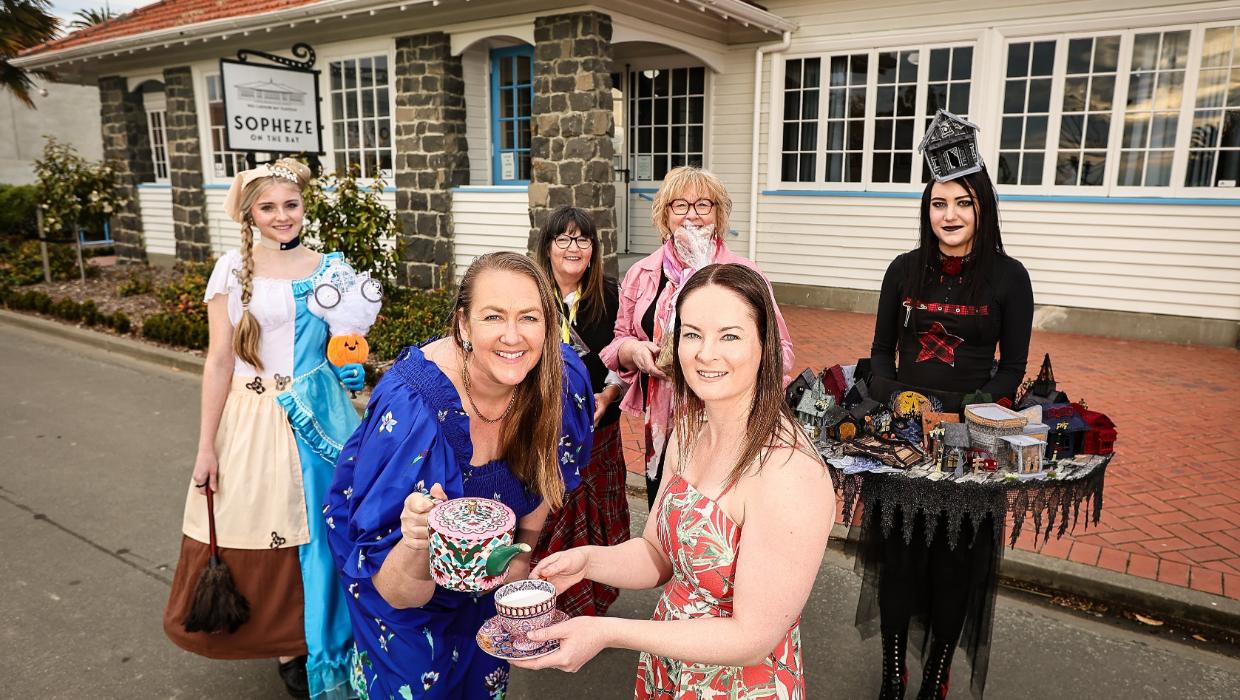
Helping to arrange a high tea to fundraise for the Aoraki Foundation Women's Fund to improving outcomes for women and girls across the region., and Cancer Support 14 September 2026. Lily-Rose Gilling, left, wearing Kay Kitley’s Art in Motion creation, with rear from centre left, Little Yellow Chair Charitable Trust’s Fiona Pierce, Robyn Valentine and Savarnah Gilling wearing Kay Kitley’s Dark City, and front from left, Aoraki Women’s Fund’s Roselyn Fauth and Paula Macpherson ahead of the organisation’s high tea event. This is a great example of the immediate impact of the fund was its support of the Cancer Support New Zealand’s, formerly known as Look Good Feel Better, community classes in South Canterbury.
Photo: AIMAN AMERUL MUNER / THE TIMARU HERALD


I’m really grateful to the Timaru Herald for sharing the story behind the women’s history cemetery tours I’ve been running.
What began as a very personal search for Ann Williams’ grave slowly turned into something much bigger. While wandering the cemetery, I kept discovering the stories of other remarkable women who helped shape our region, yet whose lives are often overlooked. The tours have become a way to bring those stories back into conversation, to reflect on the women who came before us and to think about the future we want for women and girls today. I’ve made the tours donation-based so that anyone can attend, and all funds raised support the Aoraki Women’s Fund. If you value this kind of storytelling and the opportunities it creates, one of the most powerful ways to help is by becoming a regular giver to the fund. Even a small monthly contribution helps grow a permanent endowment that will support women and girls in South Canterbury for generations to come.

I was really touched to be featured in District Life this week, reflecting on the past year since being named the inaugural Aoraki Woman of the Year.
A heartfelt thank you to Kate O’Connell for taking the time to listen so thoughtfully and capture the journey behind the work. Writing the piece gave me a chance to pause and reflect on how many people, projects and moments have shaped the path so far, from volunteering at the Aigantighe Art Gallery through to community initiatives like Timaru Rocks, WuHoo Timaru, and the heritage stories that continue to unfold. The recognition last year was never about one person. It was about the collective effort of so many people who care deeply about this place and its stories. I’m especially grateful to the women who came before us and to those continuing to lift others up in our community today. If the story resonates with you, one meaningful way to keep that momentum going is by supporting the Aoraki Women’s Fund as a regular giver. Even a small monthly contribution helps build the endowment that will support women and girls in South Canterbury for generations to come.
New Zealand Master Monumental Masons Association
Thank yo uto the New Zealand Master Monumental Masons Association who shared the journey Les Jones and I have been on to erect a monument for those who rest in unmarked graves at Timaru's cemetery. The association were fantastic supporters and their grant helped us reach our fundraising target and to finish the project.

My friends get me into all kinds of fun adventures. My friends Kelly Swerus who is a doctor at the Timaru Hospital at the time, invited me to lunch with a reporter from the Wall St Journal. It was a great opportunity to answer Nancy's questions and support her research. After lunch at the Oxford Restaurant, we drove through town pointing out our heritage buildings, and then to Caroline Bay. Kelly and I showed Nancy around the playground and explained how it was championed by locals to bring fun, accessable, challenging and meaningful play to locals and visitors. Nancy arranged for a photographer Fedde Studios to come down to Timaru to take photos to support the articles.
Celebrating Heritage - The Oxford buildings 100th Birthday
During Covid lock down, I spent a lot of time with my young girls so my husband Chris has a few hours of quiet at home to work. It was on a wander that I noticed a very tall monument for Richard Turnbull that was erected buy his friends. I was curious who this person was and started learning about him. this led me on to a four year history hunt. By learning about the family, and what Timaru was like at the time, I realised the significance of the Oxford building. With the Civic Trust, we supported the building owner to raise a blue plaque to its significance, and had a party to celebrate. It was amazing to bring people together to share stories of the the building and the people is connected to. Our party sold out so fast, that we had to have two!
It is one thing to have heritage buildings in Timaru that are astehically pleasing and well cared for, but it is another thing to know that it isn't here for the sake of having old things. The building is an anchor for hospitality and business in the CBD. Heritage buildings bring story and vitalisity to our urban spaces, and connect us to our stories of the past.

Guests outside the Oxford Building celebrate its 100th birthday - Photo Geoff Cloake
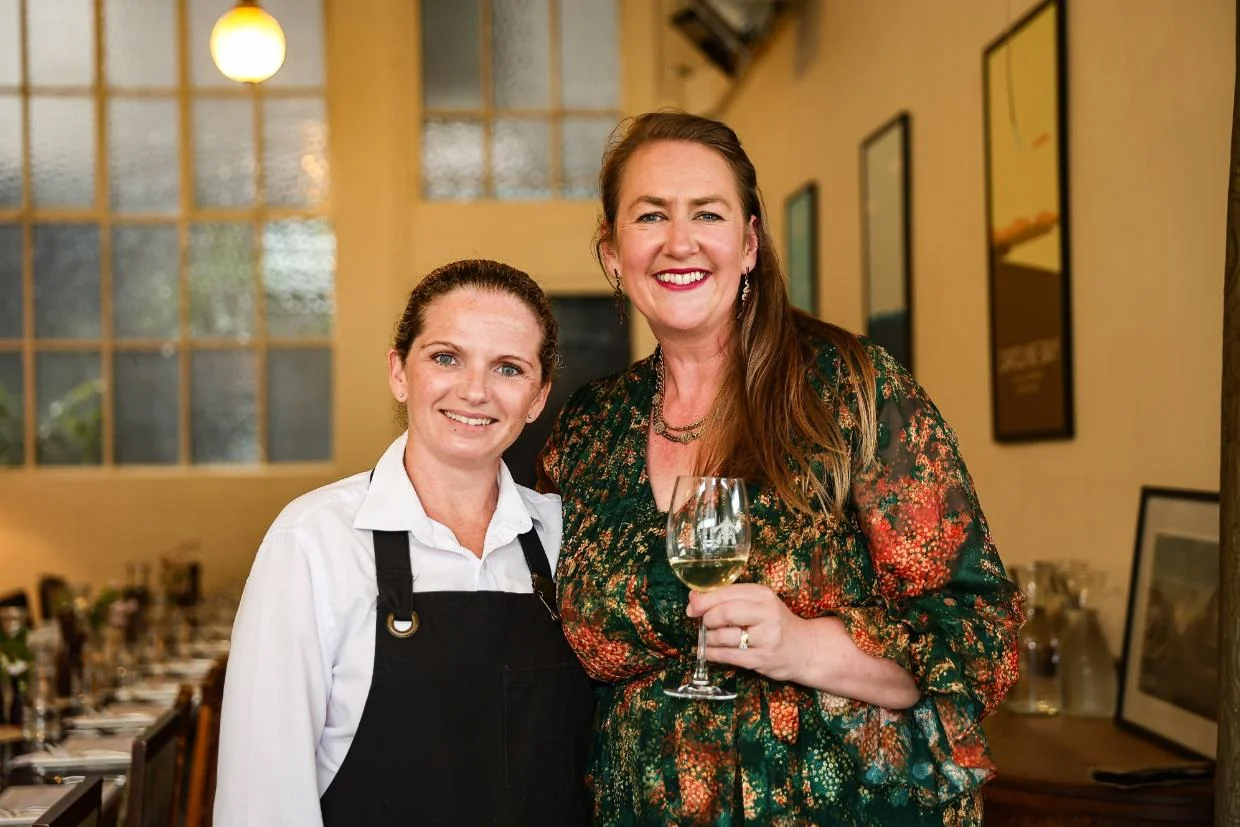
AIMAN AMERUL MUNER / THE TIMARU HERALD
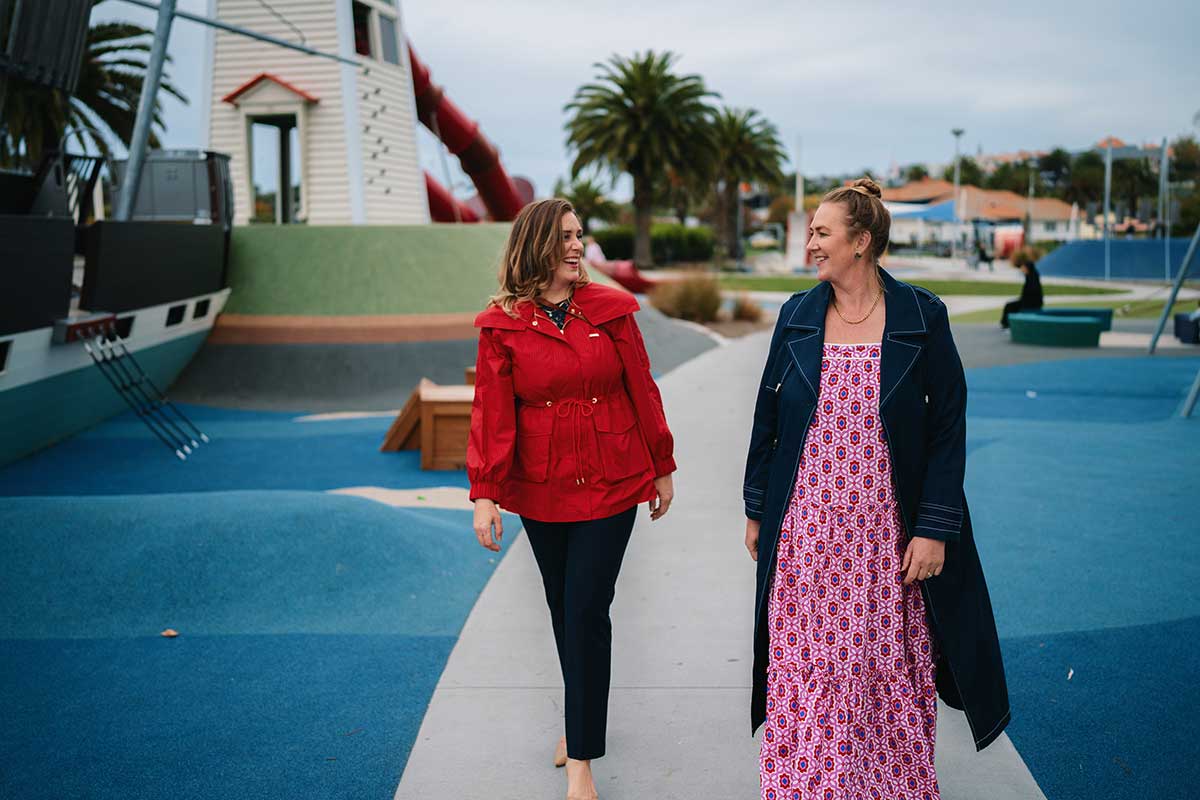
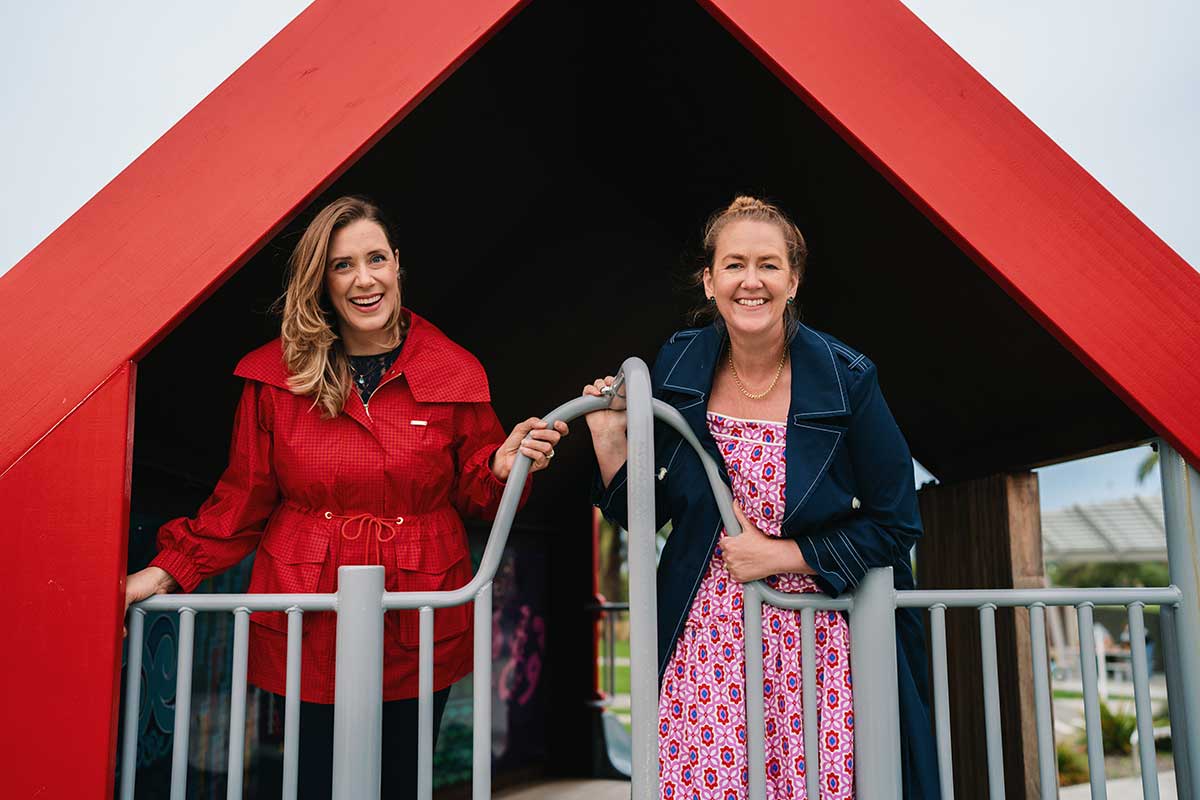
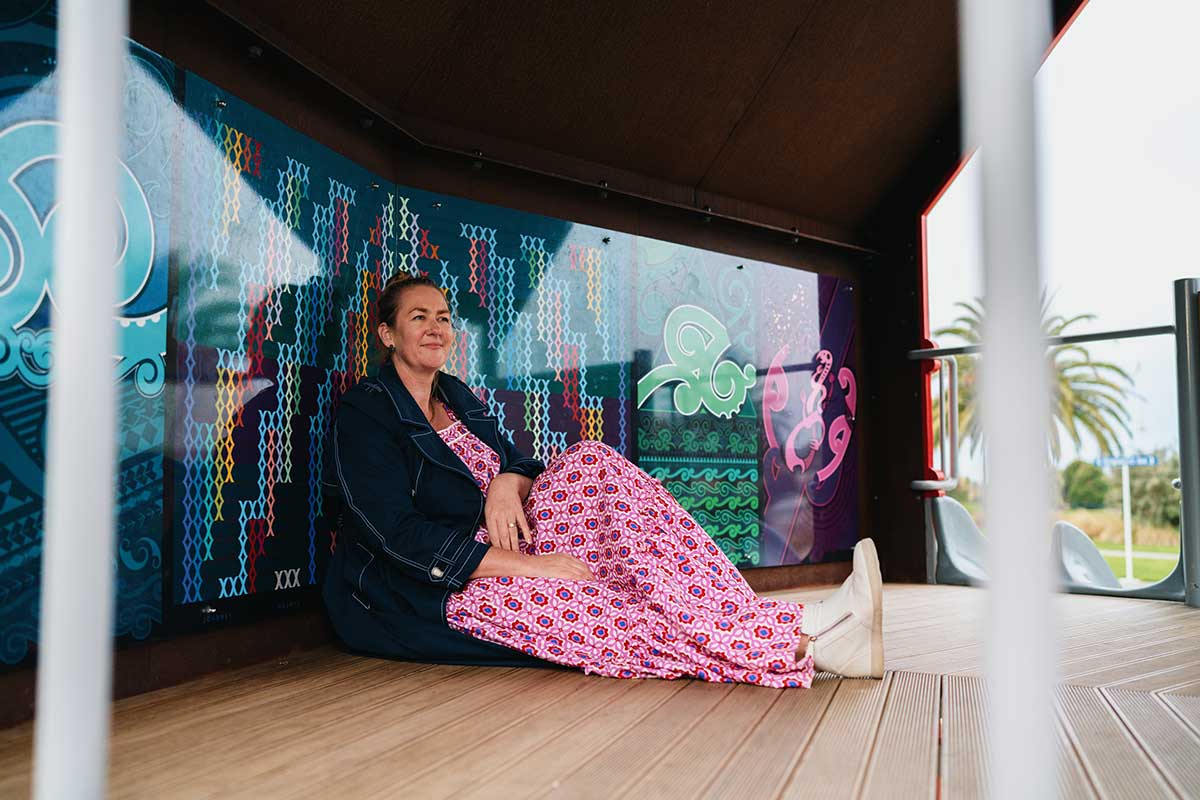
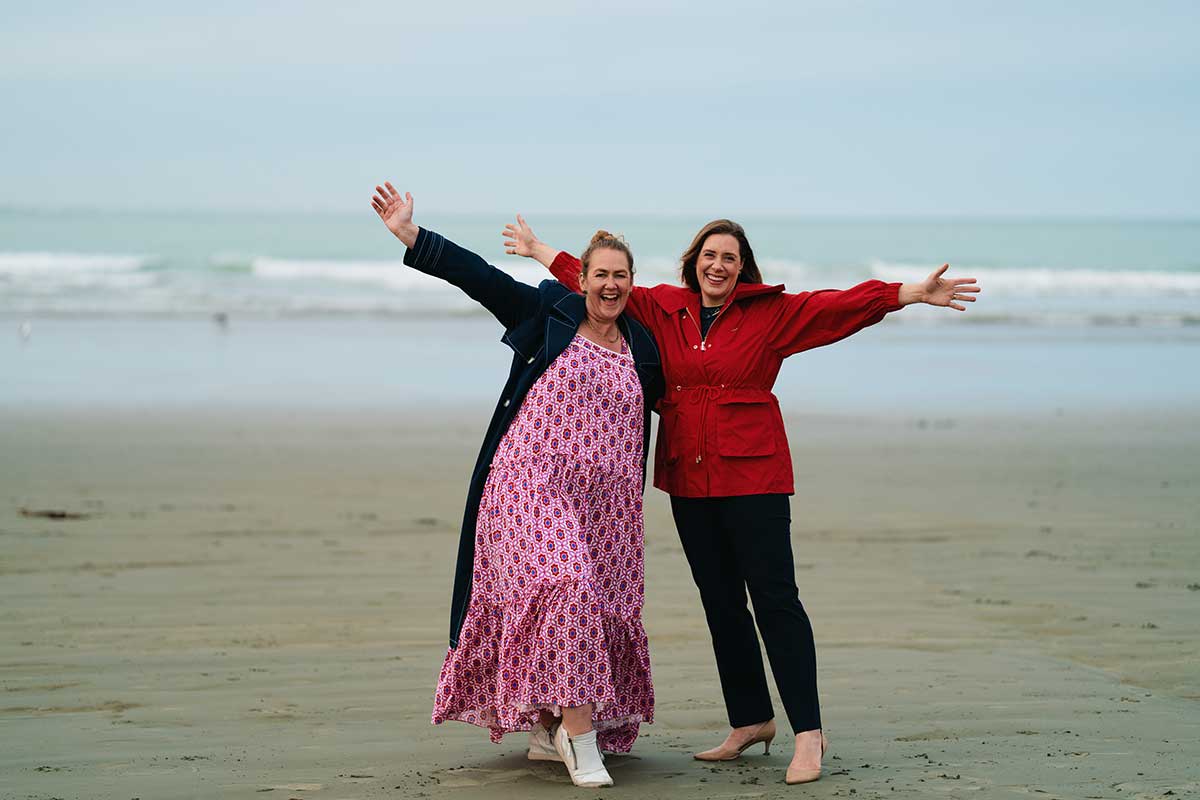
The buzz around Timaru’s Wall Street Journal moment was quite something.
What began as a story about American doctors choosing to move here suddenly became a much bigger conversation about Timaru itself. When journalist Nancy Keates visited, I helped share a local perspective, showing her some of the places that tell our story: The Oxford, our heritage buildings, Caroline Bay Playground, and Aigantighe Art Gallery. It was a chance to show that Timaru is not just a place to work, it is a place to belong.
When the article came out, it felt slightly surreal to see our little city being talked about on an international stage. Then the ripple came back home. The Timaru Herald wrote about it, Radio New Zealand followed up, and Seven Sharp came to film people who had chosen to build a life here.
For me, the important part was not just the media attention. It was what people were noticing. Timaru is big enough to offer schools, healthcare, sport, arts, hospitality, community projects and beautiful public spaces, but small enough that people can feel known. You can join in here. You can make a difference. You can find friendship, purpose and a sense of belonging.
That matters for our future. Like many regional places, Timaru needs skilled workers, doctors, teachers, volunteers, families, business owners and community-minded people to keep choosing us. But attracting people is not only about jobs and houses. It is about welcome, connection, lifestyle, safety, creativity, and whether newcomers can imagine themselves becoming part of the place.
The Wall Street Journal story reminded me that the things we sometimes take for granted can look extraordinary from the outside: our coastline, our playgrounds, our galleries, our heritage, our community spirit, and the way people quietly rally to make good things happen.
I often say Timaru can be what you make of it. The more you give to this place, the more it gives back.
https://www.wuhootimaru.co.nz/blog/1327-timaru-can-be-what-you-make-of-it
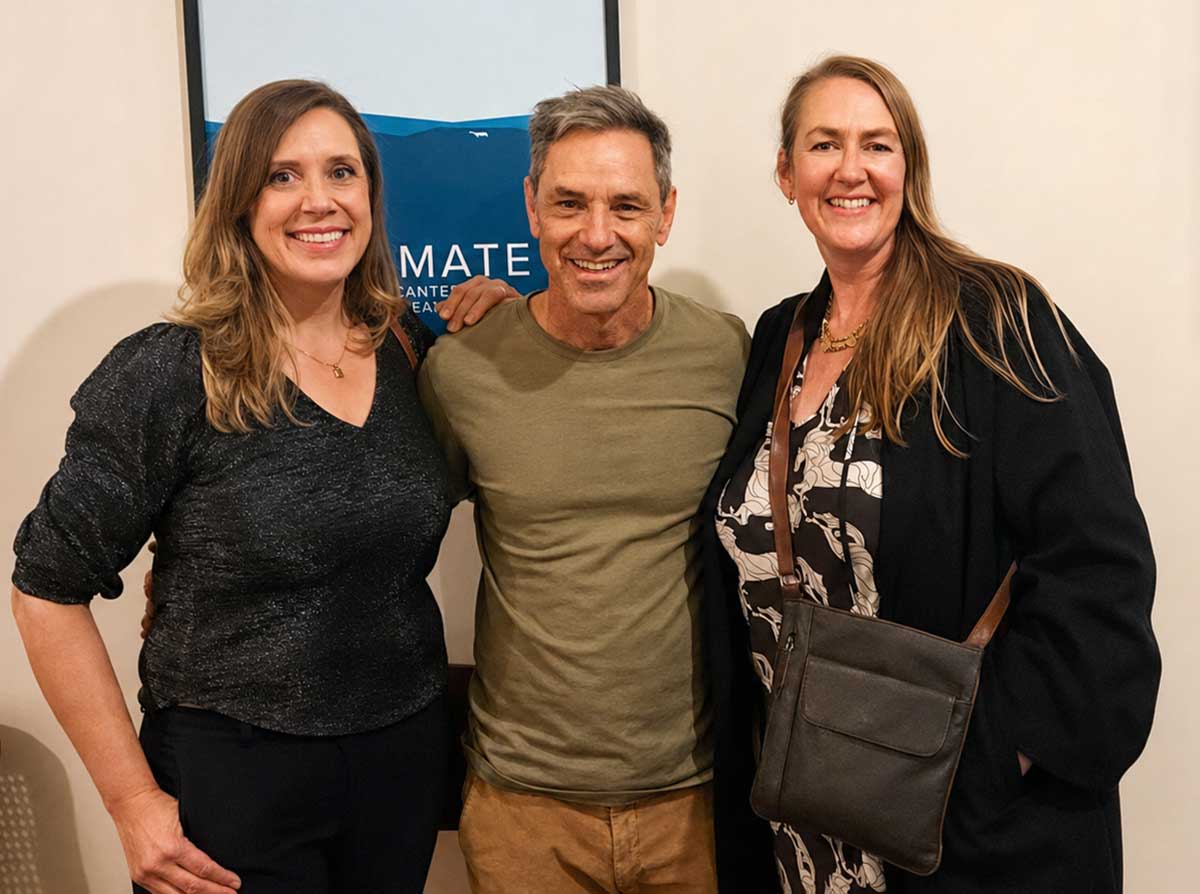
It was really cool to meet Haydn Jones from 7 Sharp.
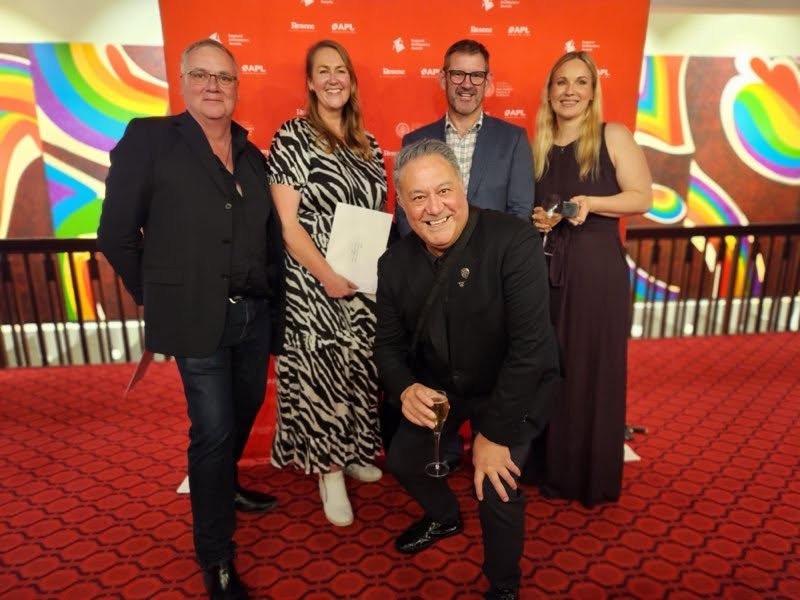
2026 Canterbury Architecture Awards
I was lucky enough to attend the 2026 Canterbury Regional Architecture Awards, where the Aigantighe House Gallery Refurbishment was recognised with an award in the Heritage category.
I went wearing a few community hats. One was for the Timaru Civic Trust, which champions our built heritage and helps people understand why old buildings matter. The other was for the Friends of the Aigantighe, a volunteer group that supports the gallery and has long cared about the future of this special place. Both registered charities advocated for and donated to the Aigantighe refurbishment.
The awards were a chance to see architecture celebrated not just as design, but as care, skill, problem-solving and stewardship. For me, Aigantighe’s recognition felt especially significant because this was not about making something new and shiny. It was about strengthening and restoring a much-loved heritage house so it can keep doing what it has done for generations: welcoming people, holding memory, and connecting art, place and community.
Aigantighe is more than a gallery. It is part of Timaru’s story. Many people have memories tied to its rooms, gardens, exhibitions and events. To see it recognised alongside major architectural projects from across Canterbury was a proud reminder that regional heritage matters.
It also showed what can happen when architects, heritage specialists, council, tradespeople, funders, staff, volunteers and the wider community all play their part. Heritage buildings do not look after themselves. They survive because people choose to care.
For me, that is why this award matters. It recognises the building, but it also honours the many hands and hearts behind it.
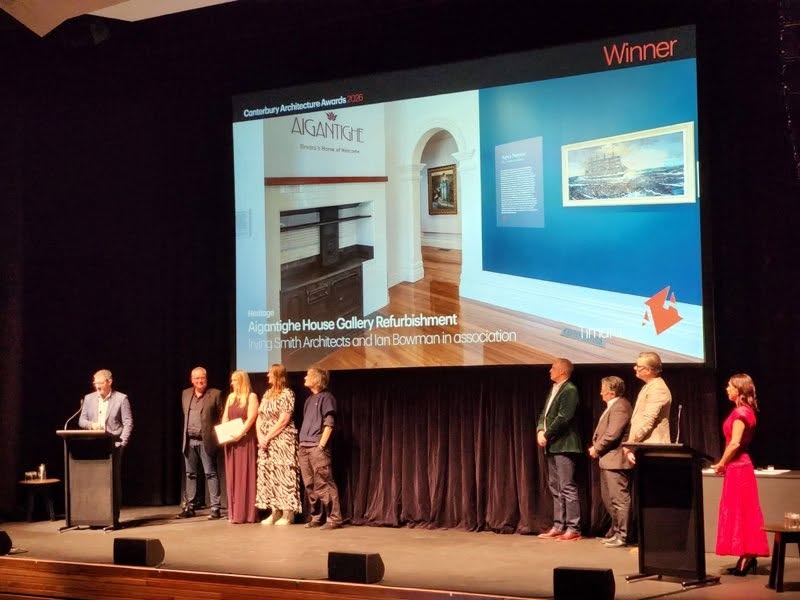
I started a new role at Timaru Girls' High School in February 2026 as their Alumni and Community Coordinator.
I absolutely love this new part-time job. In my role I am meeting and reconnecting with Old Girls'. I had a wonderful catch up with Sange Malama. We went to school together, and some of our favourite memories were singin in the chorale, at school assembly's and at the annual singing cups. It was wonderful to sit at the piano and sing with Sange, relive our old days and have the memories rush in.
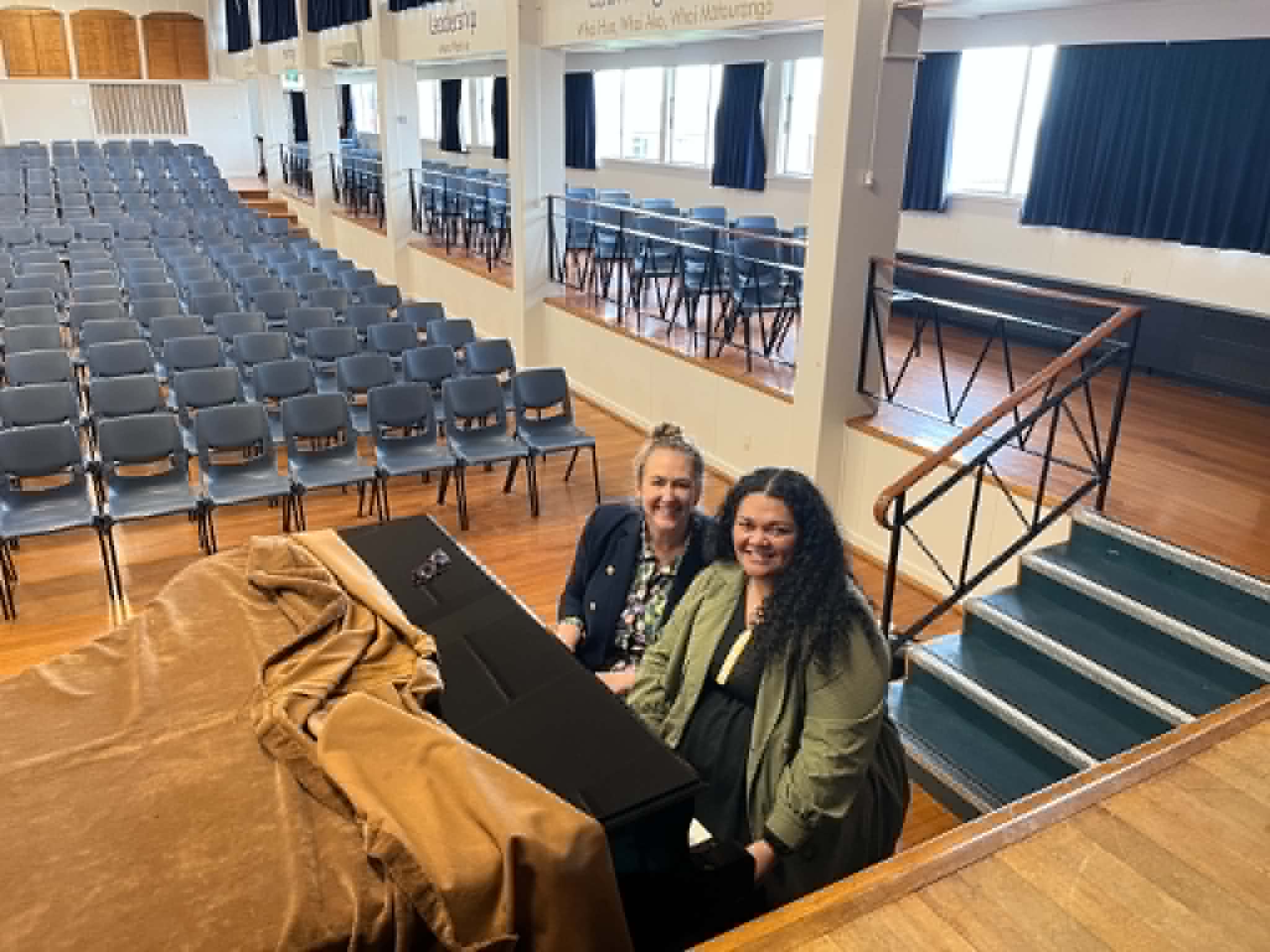
Roselyn Jane Fauth, née Cloake, is a Timaru-born creative, heritage storyteller, artist, designer and community builder whose work is deeply rooted in place, memory and connection. Known to many as Rose, she has spent much of her life helping people see Timaru and South Canterbury with fresh eyes, through stories, public art, local history, community projects, family-friendly resources and creative interpretation.
Raised in a creative family and shaped by the landscapes, stories and community life of Timaru, Roselyn brings together design, research, photography, writing and volunteering to make local heritage more accessible and meaningful. Her work often begins with a place, an object, a building, a playground, a photograph or a forgotten name, then follows the threads outward to reveal the people, decisions and memories connected to it.
She is co-founder of WuHoo Timaru, a volunteer-led storytelling platform created to celebrate free local experiences, public places, heritage trails, community projects and the everyday wonders of South Canterbury. Through WuHoo, Roselyn has helped turn local history into accessible stories for families, visitors, students and lifelong residents. Her writing often focuses on overlooked people, especially women whose lives were recorded only briefly, if at all, in traditional histories.
Roselyn has been closely involved in a wide range of community initiatives, including CPlay, Timaru Rocks, Friends of the Aigantighe Art Gallery, Timaru Civic Trust, Aoraki Women’s Fund and Timaru Girls’ High School heritage and alumni work. Her contribution to CPlay helped connect the Caroline Bay playground with Timaru’s maritime, Māori, European and environmental stories, showing how public play spaces can also become places of learning, belonging and shared memory.
As an artist, Roselyn paints under her maiden name, Cloake, bringing colour, rhythm and personal reflection into her creative practice. As a designer and storyteller, she has worked across websites, print resources, exhibitions, signage, blogs, heritage interpretation and community campaigns. Her approach is practical, generous and deeply curious: she looks for the small details that help people understand why a place matters.
In 2025, Roselyn was named South Canterbury Woman of the Year by the Aoraki Women’s Fund, recognising her long-standing contribution to arts, heritage, community development and inclusive public spaces. She also received the Timaru District Council Community Service Award in 2023. These honours reflect a lifetime of voluntary and creative work focused on strengthening community connection and helping local stories be seen, shared and valued.
At the heart of Roselyn’s work is a simple belief: that local history is not only found in museums and archives, but in playgrounds, streets, buildings, family memories, gardens, photographs, shopfronts, school records and the stories people carry with them. Her work invites others to notice, ask questions, follow the clues and feel more connected to the place they call home.