
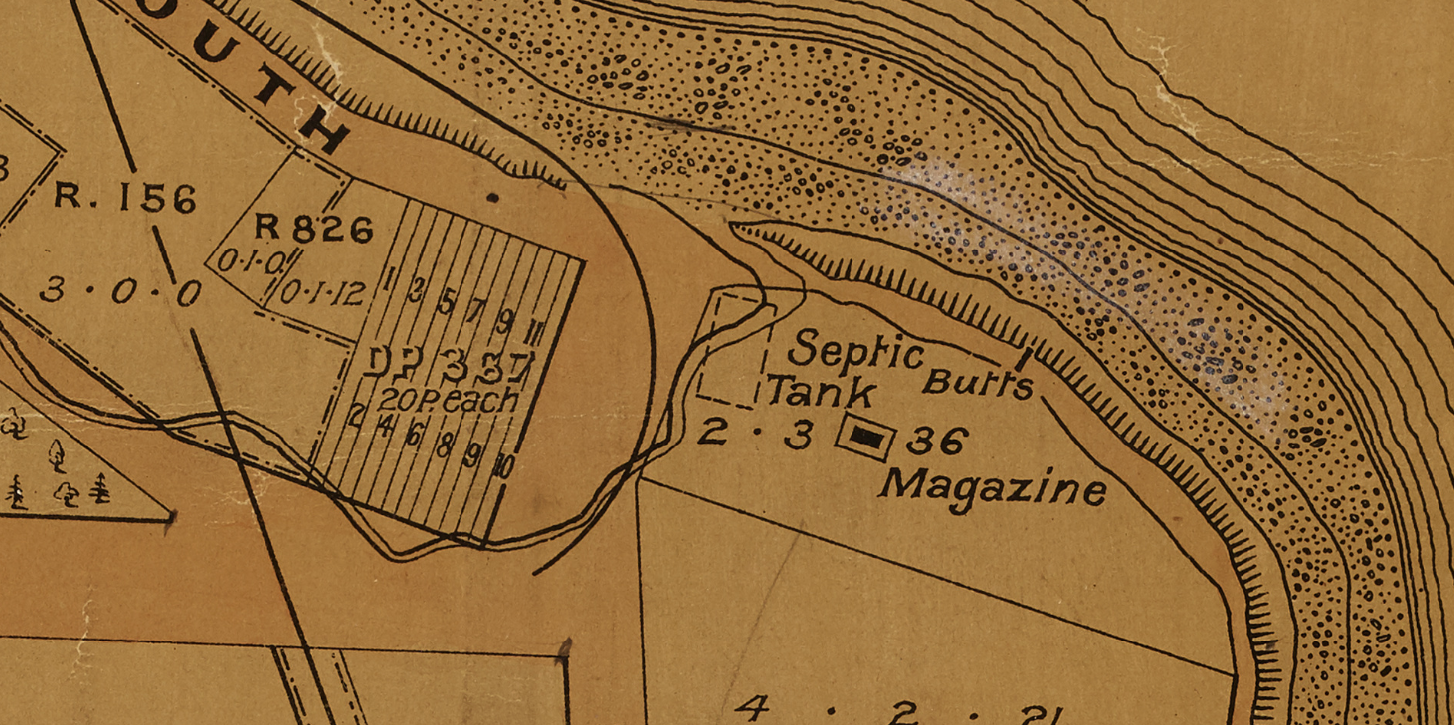
Location: Pātītī Point / South Beach area, south Timaru
Access: Public reserve and coastal area, but obey current cliff, track and safety closures
Associated years: 1866, early 1900s, 1924 account
Associated people/groups: Volunteer Artillery, Timaru Port Guards, Timaru City Rifles, Timaru Naval Volunteers
Pātītī Point is a strong place to begin our Timaru War Tour because it shows that Timaru’s defence story began before the world wars.
A 1924 Timaru Herald article says the area between the sea and railway from Otipua Lagoon to the creek through the park was set aside at the survey of Timaru as a Military Reserve. It says two or three heavy iron smooth-bore 18-pounder cannon were placed there for the Volunteer Artillery, formed in 1866, and that a powder magazine and rifle targets were also built. The range was later moved to Scarborough because the nearer range was considered unsafe for the public.
South Canterbury Museum records also identify the Timaru Port Guards and Timaru City Rifles at the Patiti Point Rifle Range around 1904 to 1906. The Port Guards were part of Timaru’s volunteer defence culture, developing from the earlier Timaru Naval Volunteers. This stop connects local men, rifle practice, military drills, the coastline and the port town’s sense of vulnerability.
Find a WuHoo - Stand on the coast and ask why a town in the 1800s would want cannon, a powder magazine and rifle targets here. Imagine people using the rifle butt to train, and the quarry train going under the rail viaduct on its way to the Port with a load of rock to signal to the rifle men to cease their rifle training while the train went past.
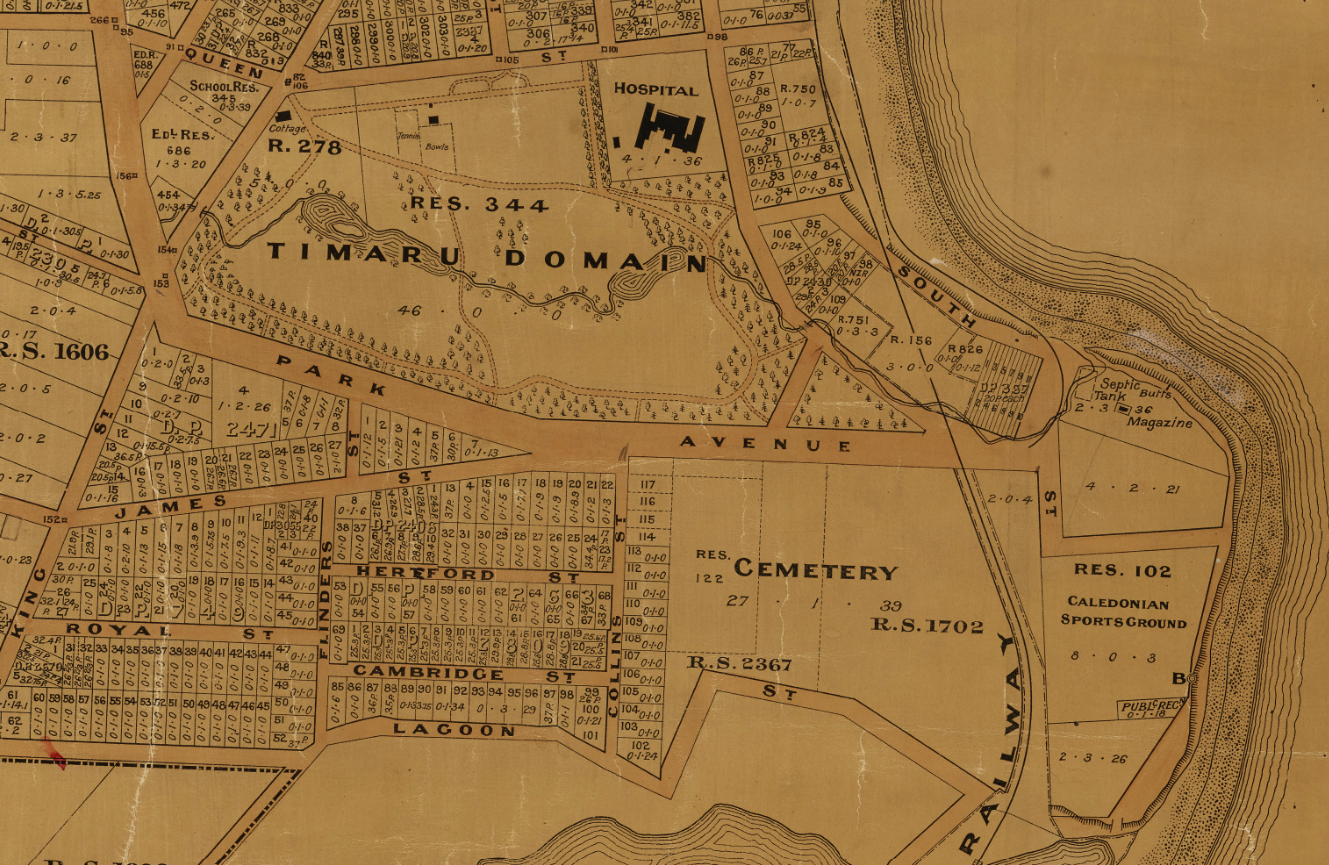
1911. Section of Miscellaneous Plans - Borough of Timaru, South Canterbury. R25538727. Borough of Timaru, South Canterbury. NZ Heritage Maps Platform, https://maps.recollect.co.nz/nodes/view/336
Side Quest: Peeress Town
This area was once a small town, and was only supposed to be a temporary settlement on a designated quarantine reserve. for 24 immigrant families who arrived on the Peeress Ship in 1874. The simple cottages made from cob and sod were a welcome relief for the people who had been housed in barracks up until that point. But with nowhere else to go, many families stayed on. After a typhoid breakout and issues with some "un-savoury characters" the area got a bad reputation and some Timaru Borough residents wanted it gone.
The government also wanted to keep the area as a quarantine/military reserve in case it was needed, rather than turning it into a permanent settlement. Eventually, the government ordered all residents to vacate the township and the vacant buildings to be razed. The area was then sown with English grass and returned to a reserve. Eventually the town was emptied and the buildings razed, leaving the former residents to find new homes.
Later on, the reserve was considered for a battery where the big gun stands and used for rifle practice. The rail line from the rock quarry (now Centennial Park) used to run up Otipua Rd and down to the port past the rifle training butt. The train would ring a bell to warn the rifle men that it was coming and to cease fire while it went past.
The area was also used by the Borough Council.
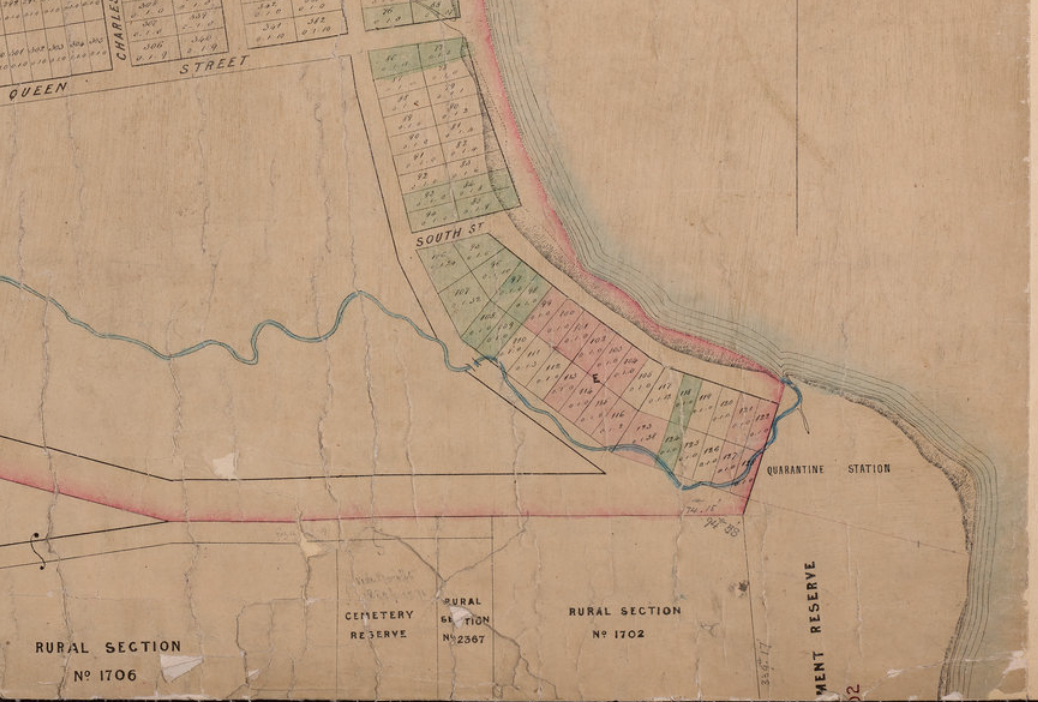
Timaru town. NZ Heritage Maps Platform, accessed 02/05/2026, https://maps.recollect.co.nz/nodes/view/1138
"At Patiti Point, the fields have been successively occupied by five different peoples: the Moa-hunters, the more modern and warlike Maoris, the whalers, the immigrants from the Peerless, and the present-day agriculturalists. South of the railway bridge, a warrior was buried many ages ago, probably one of the Tipua, a tribe from whom the locality is believed to have taken its name." - Hall-Jones, Frederick George., Early Timaru: some historical records of the pre-settlement period, annotated and analysed... Aoraki Heritage Collection, accessed 18/04/2025, https://aorakiheritage.recollect.co.nz/nodes/view/161
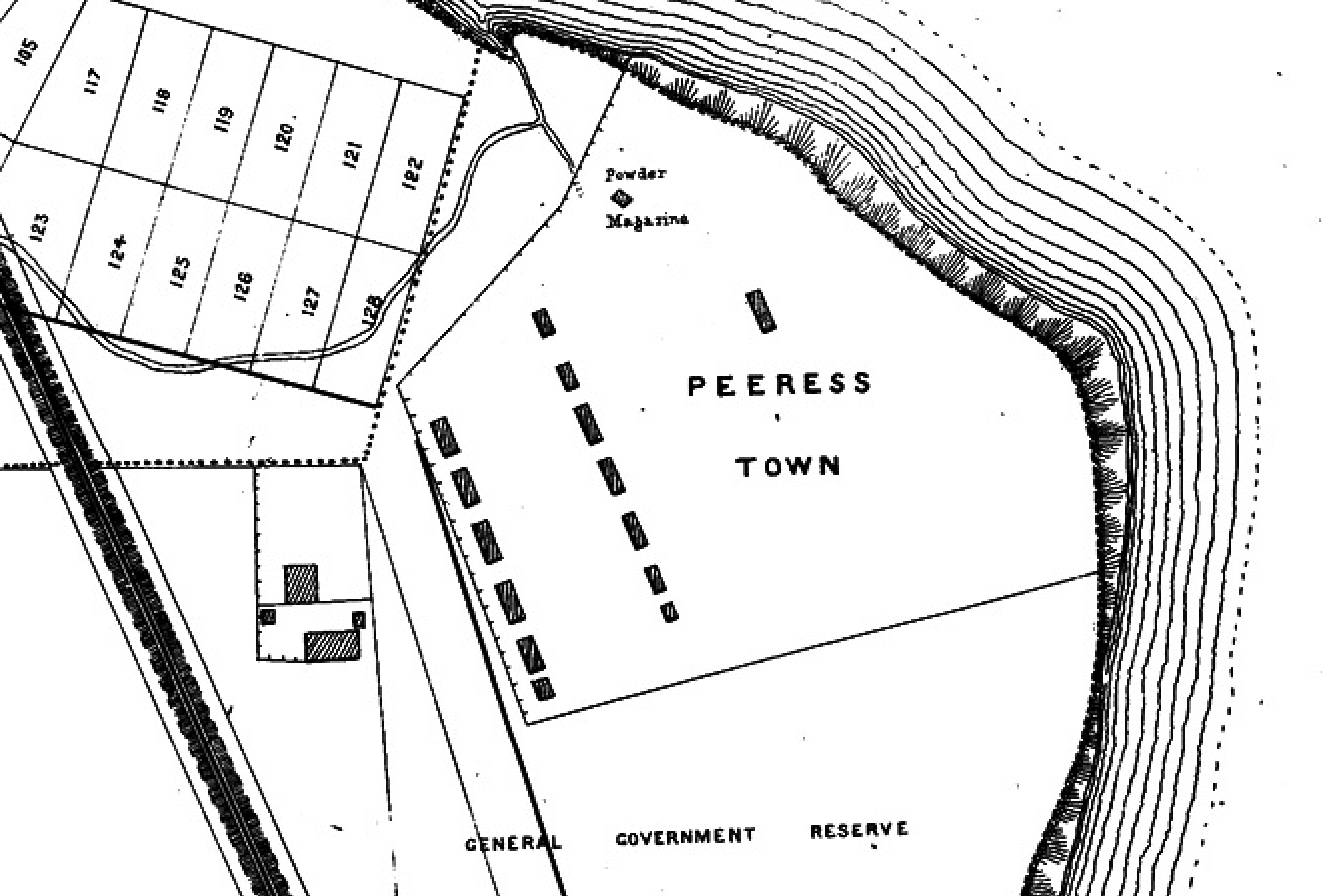
Section of a map showing detail of Peeress Town at Patiti Point 1875. Map Plan of Timaru Townships Canterbury Courtesy of the Timaru District Council
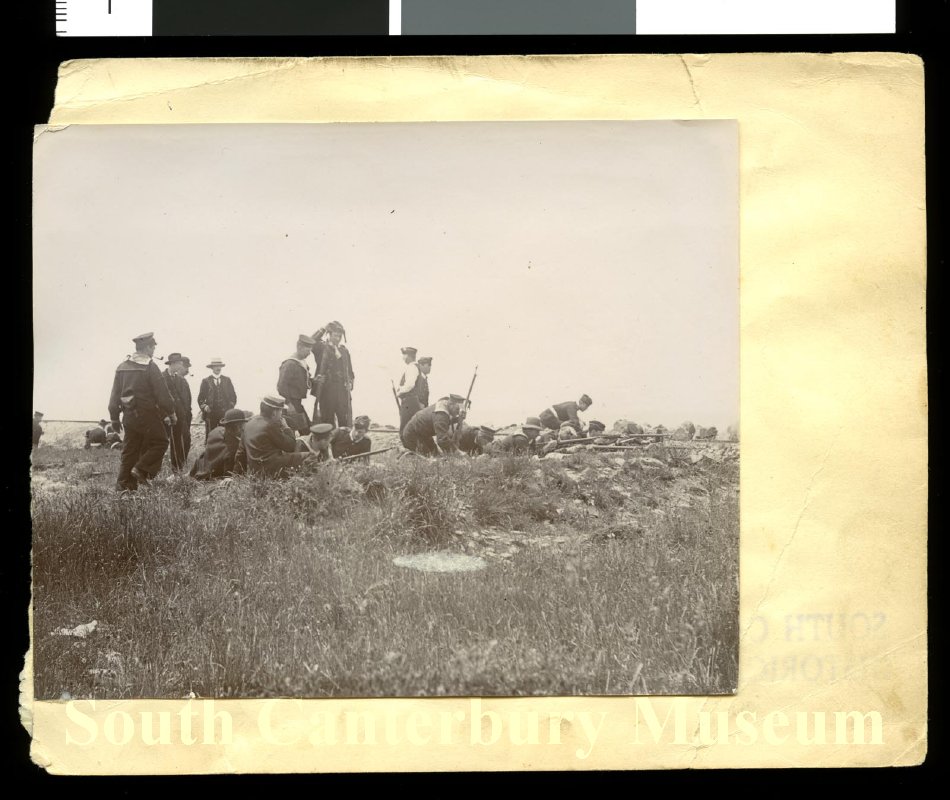
Timaru Port Guards and Timaru City Rifles 303 shooting competition Patiti Point 1904 at the rifle range on the beach south of South Street. South Canterbury Museum 3517

We found this medal at Patiti Point in 2021 and have been holding onto it in the hope that we could find its owner.
This is our best lead... thanks to a letter in response to an article in the Timaru Herald from Bruce Johnson.
Johnson believed the badge featured in the article may have been connected to the CMT Armoured Tank Regiment in Timaru during the 1950s, of which he had been a member until the unit was disbanded. He identified the badge as an officer’s hat badge, noting that only officers’ badges had a silver tank on them, which the one we found had also.
After the Timaru unit was disbanded, Johnson transferred to the New Zealand Scots in Dunedin, where he qualified as a Lieutenant and had the same type of badge. He later kept his own hat badge after retiring, but donated it to the Temuka RSA for display. He made clear that he was not claiming the found badge was his.
Johnson also referred to an attached photograph from the unit’s last training camp, showing several local officers in the front row. He identified himself as second from the left and named Peter Elworthy, Mac McGregor, Dereck Triggs, Major John Rolleston and Dave Rennie. He thought Roger DeJoux may also have been present, but was not certain. Johnson was a Sergeant at the time the photograph was taken.
He stated that the tanks from the unit were later cut up and sent to Japan as scrap. The photograph was taken at the Balmoral camp site by Langwood Studios.
Johnson suggested that the badge may have belonged to one of the men from the unit. He also noted that he was one of the Johnson Quads, born in Dunedin in 1935, and that he remained connected to Timaru through family and friends, including Gordon Bower. His hope was that the information would help identify the owner of the badge.
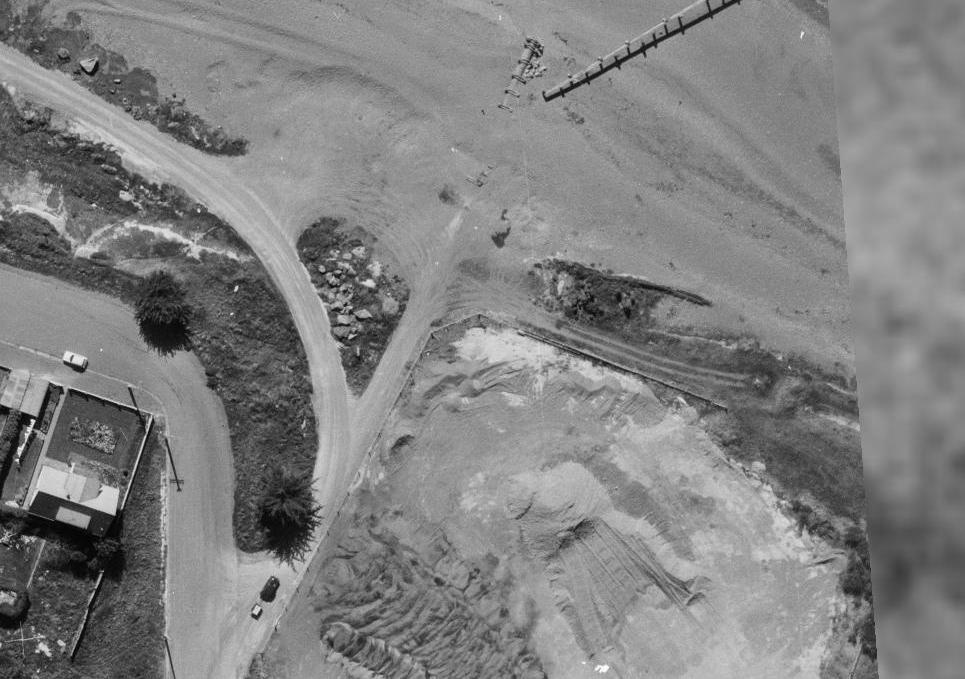
Patiti Point Historic Aerian Imagery 1970-74
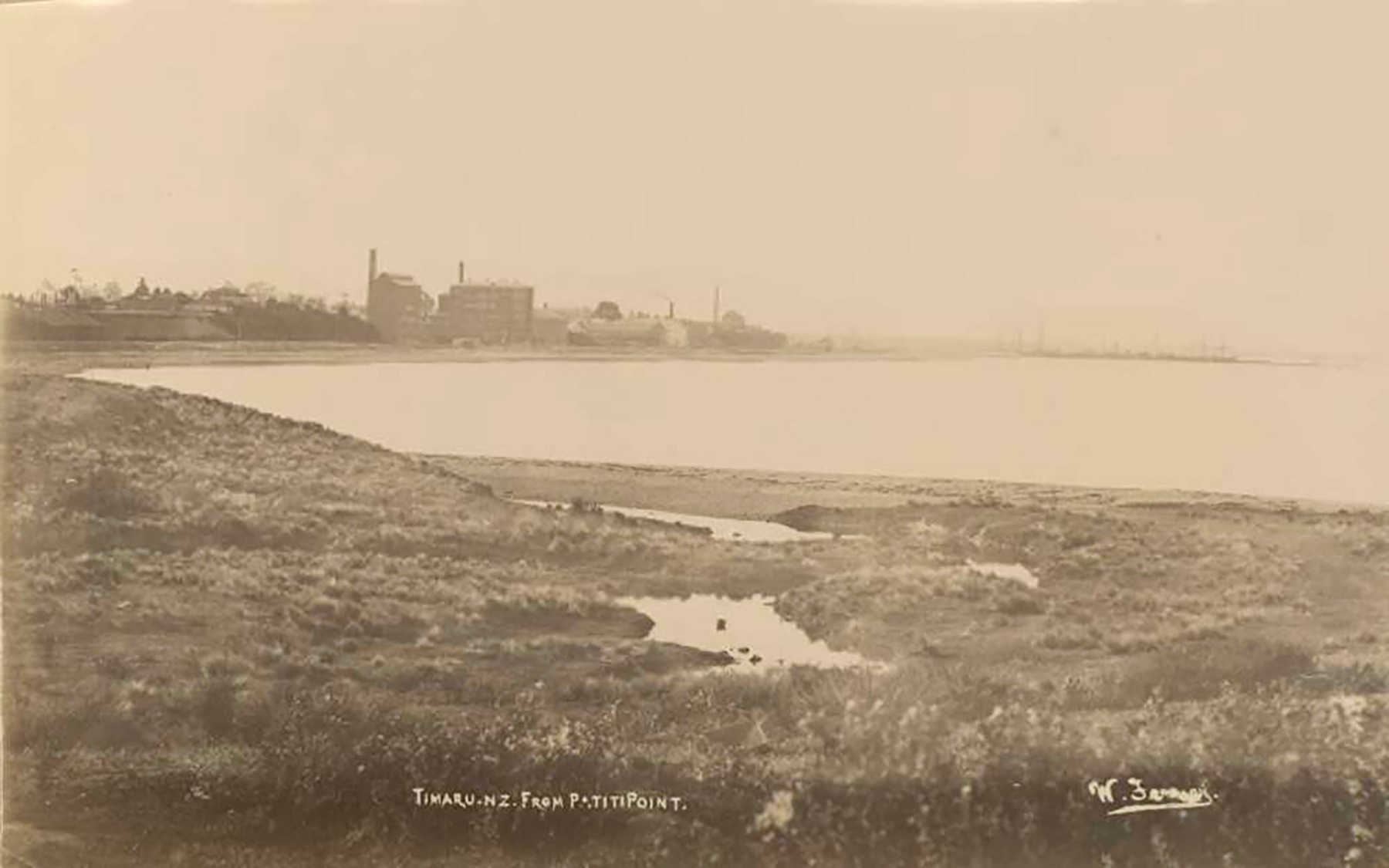
Timaru from Patiti Point1894-138616726 - 1-National Library of Australia - No Government Copyright Ownership
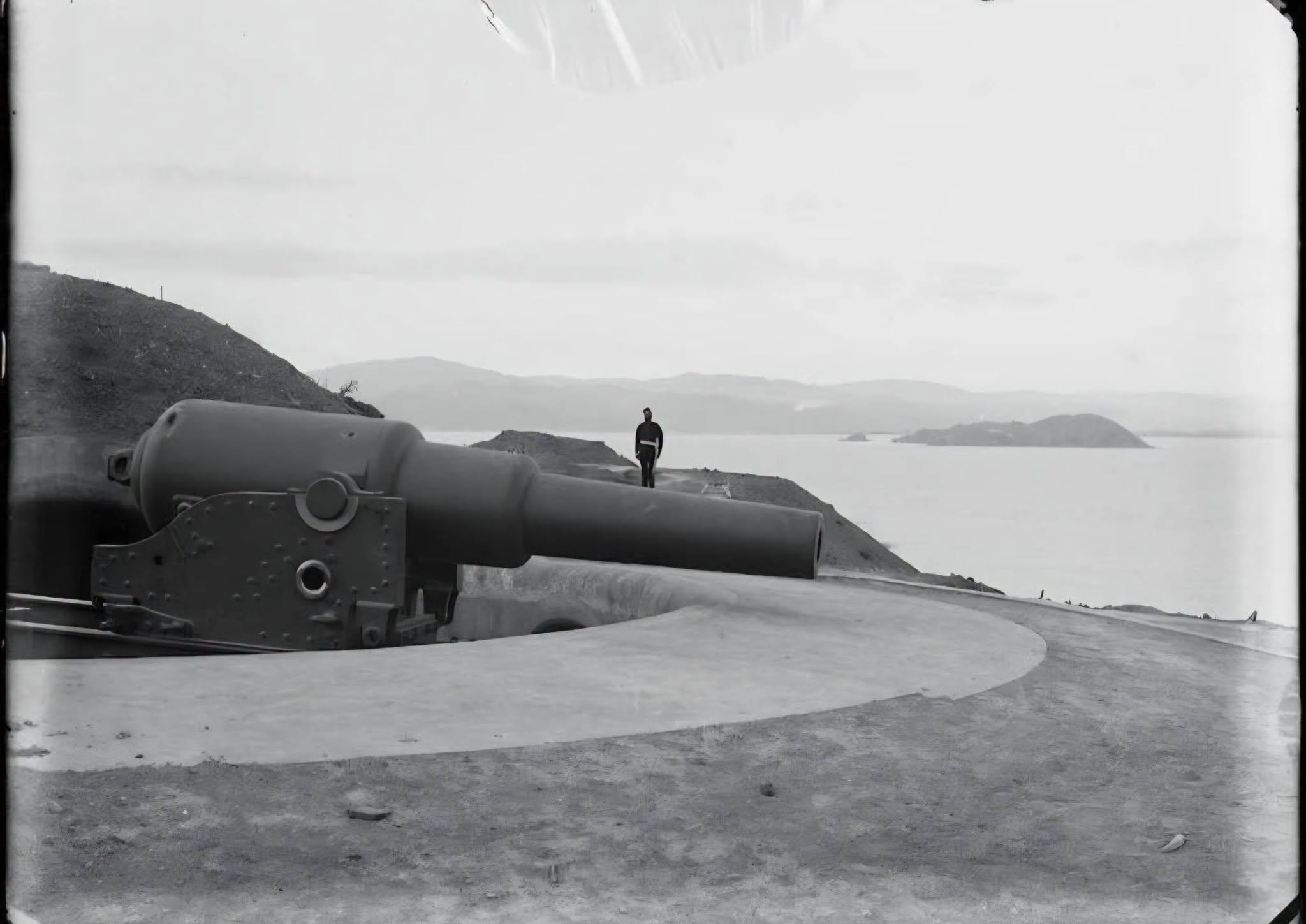
Fort Buckley at Kaiwharrawharra - This is the same type of gun that was at Patiti Point Timaru except they used 40 railway sleepers for the platform - NZ Remembrance Army
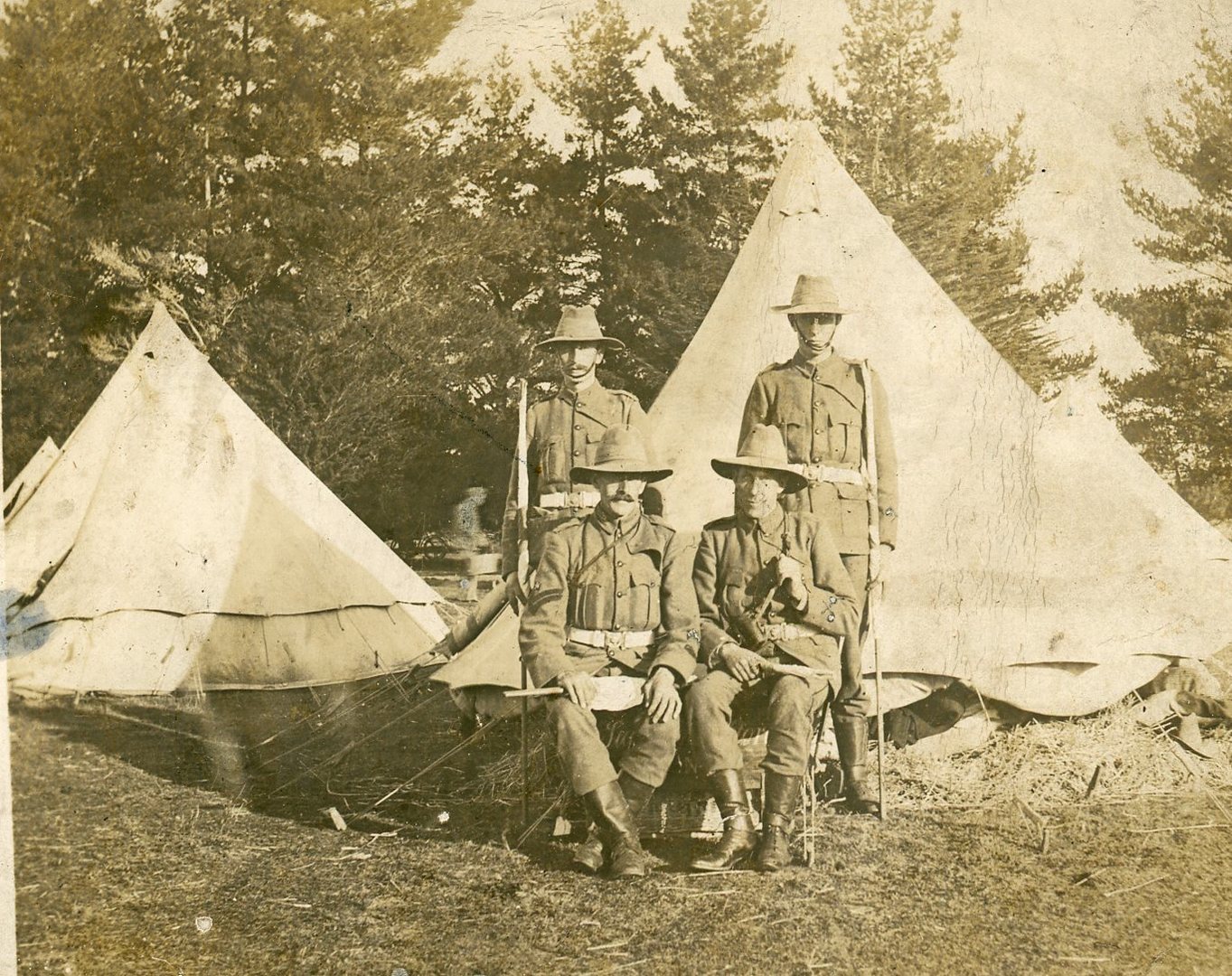
Portrait of four unidentified members of the Timaru Rifle Guards at a training camp in Islington https://www.canterburystories.nz/collections/photohunt/2023/ccl-cs-91798?keys=Timaru&items_per_page=24