
Why is there a plaque under an old oak tree in the Pioneer Hall grounds?
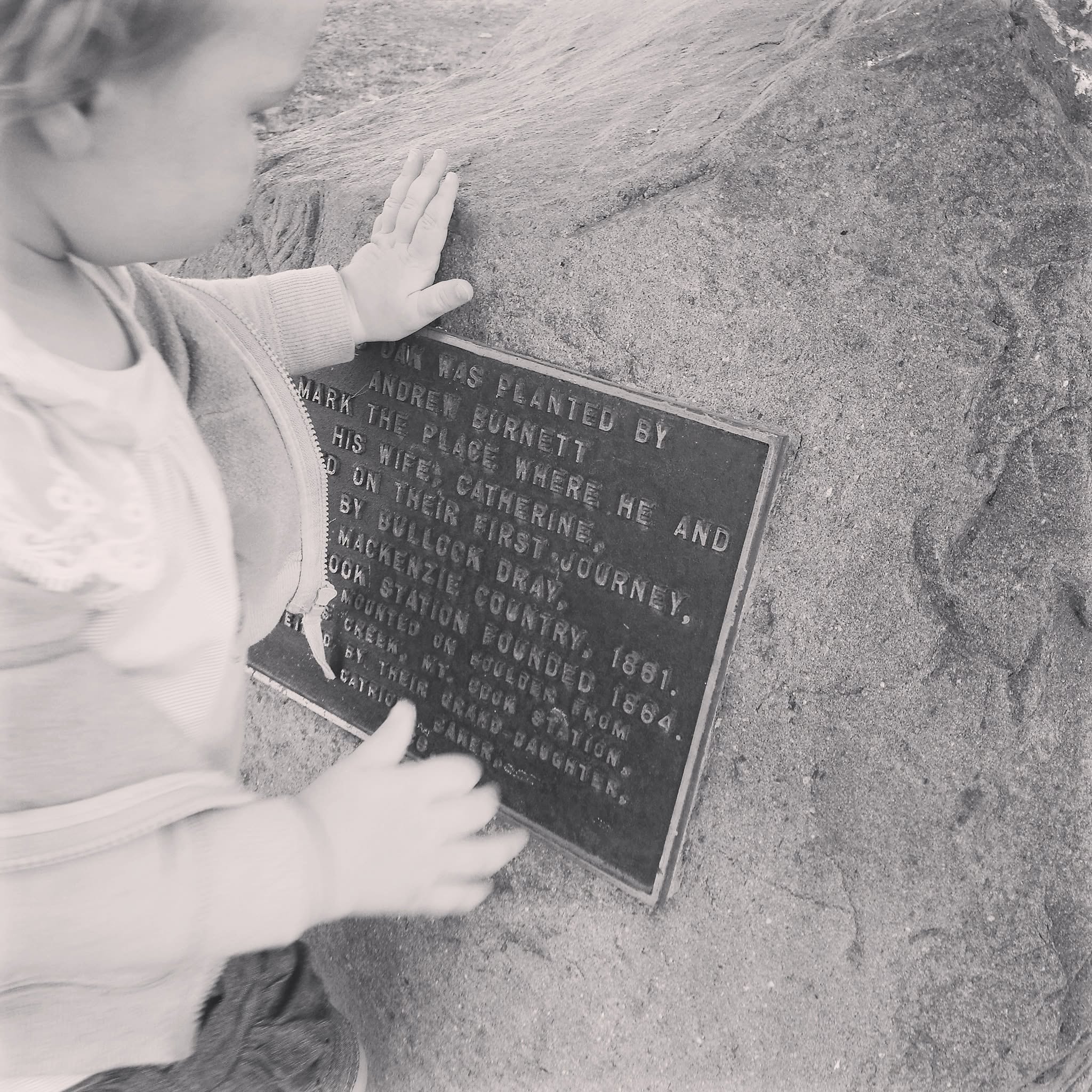
We found it while exploring, and of course I had to know.
Who were Andrew and Catherine Burnett?
Why were they remembered here?
Why was there an oak tree and a boulder from Mount Cook Station?
And why does the word PIONEER appear so prominently on the museum building?
That little plaque sent me on quite the history hunt.
The story begins in 1861, when Andrew and Catherine Burnett arrived in New Zealand from Scotland. They travelled through Timaru by bullock wagon, camped on this Perth Street site and planted an oak before heading inland. A few years later they began the chapter of their lives that would become closely associated with Mount Cook Station. Their first home there was a one-room hut made from black birch logs, plastered with clay and thatched with snowgrass.
But their connection with this little patch of Perth Street continued.

Their youngest son, Thomas David Burnett, born in 1877, grew up to become a Mackenzie runholder and Member of Parliament for Temuka. When T.D. Burnett died in 1941, the Perth Street property was left for a public historical purpose. And he left a very specific request: If a new museum building was erected here, it was to be called Pioneer Hall. So that name you can still see on the front of the building is not simply a general name for an old museum. It comes directly from T.D. Burnett.
The first public museum on the site opened in the former house in 1952. Then, after years of community fundraising, the distinctive octagonal Pioneer Hall designed by Timaru architect Ron Dohig opened on 10 December 1966.
For the next 60 years, Pioneer Hall was the home many of us knew as the South Canterbury Museum, until the museum closed its Perth Street doors in 2026 ahead of its move to Te Kura Marumaru.
But the word Pioneer pops up elsewhere in this story too.
Head out towards Raincliff and you will find Pioneer Park.
The park was named to recognise the early pioneer families of the district, and at its entrance are gates presented by the Burnett family in memory of T.D. Burnett of Mount Cook Station.
The inscription remembers him as: “A son of pioneer parents and a true lover of the great open spaces.” So suddenly these places begin to connect.
Pioneer Hall in Timaru.
Pioneer Park at Raincliff.
The Burnett family.
Mount Cook Station.
And a little oak tree and plaque back on Perth Street.
You can still go and find the clue that sent me down this rabbit hole. Under the oak in the Pioneer Hall grounds is a boulder brought down from Mount Cook Station, with a plaque commemorating Andrew and Catherine Burnett. So on one small patch of Timaru you can find the place where the Burnetts camped when newly arrived in New Zealand, the oak connected with them, a stone from the high-country station their family became known for, and the building that carried the name their son specifically asked for.
Once you know that, PIONEER HALL written across the building means something quite different.
That is what I love about little plaques like this.
You walk past them.
You read a name.
You wonder why it is there.
And suddenly one little clue connects places and stories right across South Canterbury. If you are curious like me about who the Burnetts were, why this plaque and tree are here, and how it all connects to Pioneer Hall and Mount Cook Station, I have tried to nut the story out here:
https://wuhootimaru.co.nz/home-history/64-who-lived-here/286-home-history-pioneer-hall
WuHoo challenge: next time you are on Perth Street, see if you can find the Burnett oak, boulder and plaque. And next time you are at Pioneer Park, have another look at the gates. They are part of the same story.


