Two histories of pollination. One changing landscape.

New Zealand's native plants were reproducing long before honeybees arrived. So why did we bring more bees here?

Aotearoa already had native bees, flies, moths, beetles, birds and other pollinators. Some plants relied on wind, while ferns reproduced through spores. These relationships had developed over millions of years.

European honeybees arrived in 1839, initially for honey and wax. As settlers introduced clover, orchards and other crops, bees became increasingly important to farming. In 1881, Timaru woman Emma Leonora Belfield arranged to import 18 bumblebee queens to help red clover produce seed. Only two survived. Bumblebees became established following later introductions in 1885.

Today, these two histories overlap. Introduced bees visit native flowers, while native insects also pollinate introduced plants. These relationships support farming and honey production, including generations of my own Cloake family's beekeeping in South Canterbury. But introducing new species has also changed our ecosystems, bringing benefits and environmental consequences we are still learning to manage.

Explore the stories, photographs and activities below to discover how plants reproduce, why bees were introduced, how they helped shape South Canterbury, and why protecting our native and introduced pollinators matters today.

Next time you see something visiting a flower, take a closer look. There's more happening than you might think.... thats a WuHoo!

When we think of polinators, many of us will think of the buzzy kind first, so let's start there...

Bees vary in shape and size, prefer different foods and behave differently. Each is best at pollinating different plants. Healthy bee diversity assists resilient and diverse plant life and including the food we eat. There are two histories of pollination her in NZ. Together we now have one changing landscape.

Did you know some of New Zealand's original bees live beneath our feet, and you might not even recognise one? According to Te Papa, Aotearoa New Zealand has 28 recognised native bee species. Some are just 4 mm long! Unlike honeybees, they don't live in large hives or produce honey for us to harvest. Many nest in the ground or hollow stems, visiting nearby flowers to collect nectar and pollen. They've been helping plants such as mānuka and kānuka reproduce long before European settlement.

So why did we bring more bees here? European honeybees arrived in 1839, initially for honey and wax. As settlers introduced clover, orchards and other crops, pollination became increasingly important to farming. In 1881, Timaru's Emma Leonora Belfield arranged to import 18 bumblebee queens to help pollinate red clover. Only two survived. Later introductions succeeded in 1885.

We didn't bring pollination to New Zealand. We introduced new pollinators to support the plants and farming systems we were creating. Today, these two histories overlap. Introduced honeybees visit native flowers, while native bees also pollinate introduced crops. These relationships have helped develop our economy, including generations of my own Cloake family's beekeeping in South Canterbury. But introduced species can also compete with native wildlife and help invasive plants spread.

What a contrast. In the nineteenth century, people deliberately imported species to change our landscape. Today, failing to declare an apple at the airport can earn you a $400 fine, while biosecurity teams search ships and cargo for pests that could damage our environment and economy.

Explore the stories below to discover what was here, what we introduced, why we did it and what we've learned. Next time you spot a bee, take a closer look. It might be one of our tiny native bees, rather than the familiar honeybee or bumblebee. And there's a much bigger story unfolding around that flower.

Native Bees

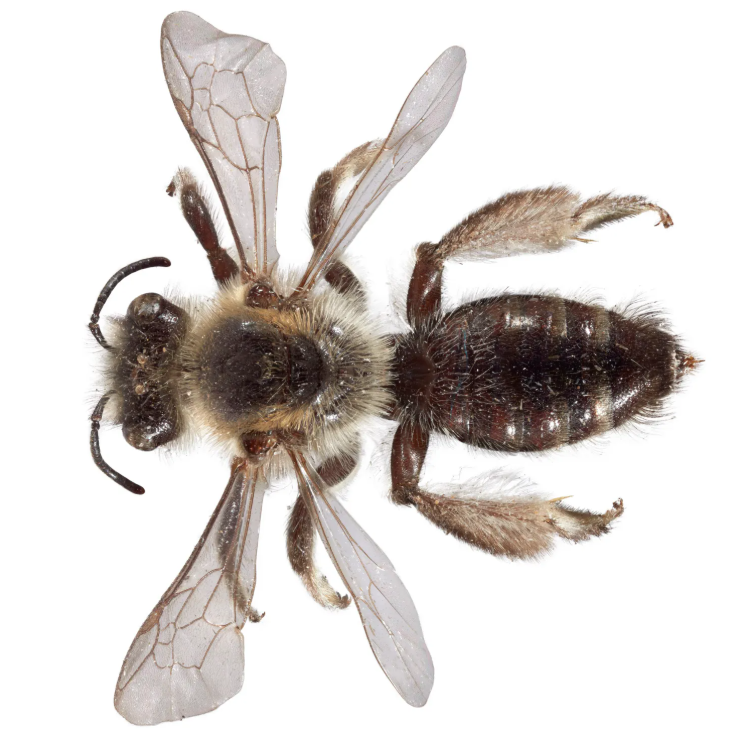
Did you know NZ has just under 30 species of native bee? Their appearance and behavior means they often go unnoticed in gardens and forests. A lot is still to be learnt about our native bees, but they are among the most effective pollinators of native plants such as Manuka, Kanuka and Pohutakawa. Most species are endemic, if they are lost to NZ they cannot be replaced!

Smaller than imported bees and generally black.
Don't sting and are not aggressive.
Do not have hives or produce honey.
Live in small families. Females lay 3–10 eggs in a lifetime.
Live in nests under bare undisturbed soils, or in hollow flax stems or other plant material. Don't share nests but many nests are often in close proximity.
Bees die at the end of Autumn but larvae survive over winter, emerging in mid spring.
Larvae are fed with nectar and pollen from nearby flowers.
They don't travel as far as imported bees (100 m or less) so need flowers nearby. Concrete jungles or open land with short grass do not suit our native friends.
Are not affected by the Varroa mite that threatens honeybees.

Leioproctus paahaumaa Photo by Jean Claude Stahl Te Papa 

Leioproctus paahaumaa. Photo by Jean-Claude Stahl. Te Papa

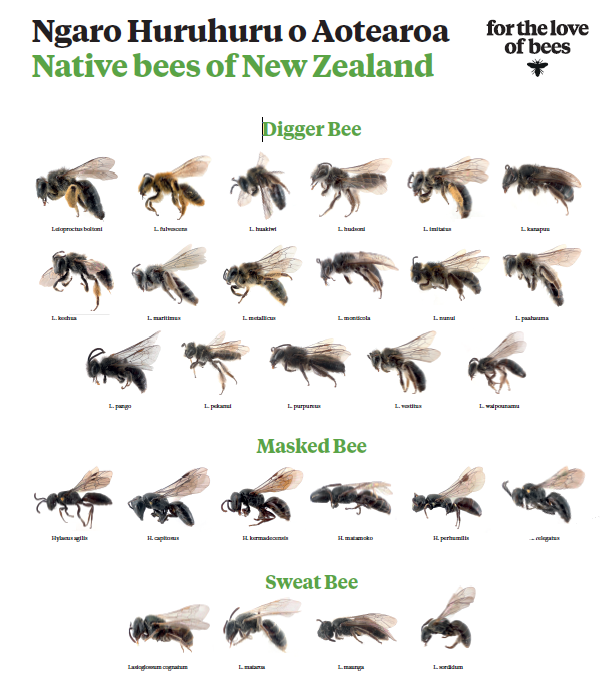
For The Love Of Bees Ngaro Huruhuru poster 2021 s457

Ngaro Huruhuru o Aotearoa | Native bees of New Zealand. Did you know Aotearoa New Zealand has around 28 species of native bees? Unlike introduced honeybees, these tiny pollinators have been part of our ecosystems for thousands of years. This beautiful photographic poster introduces our native bees, showing their diversity and helping us recognise the often-overlooked insects that play an important role in pollinating native plants. Source: For the Love of Bees, created in collaboration with native bee specialist Dr Ngaire Hart, photographer Birgit Rhode (Manaaki Whenua – Landcare Research), designer Philip Kelly and other contributors. Download the poster (PDF): https://www.fortheloveofbees.co.nz/s/For-The-Love-Of-Bees-Ngaro-Huruhuru-poster-2021-s457.pdf

Introduced Bees

1839 Bees were thought to have first arrived in New Zealand with a missionary at Hokianga.
1840 Over two years bees reached Nelson from Sydney and were distributed from there as numbers grew.
1866 Reports of people eating wild honey in Canterbury suggest private individuals had bought bees into Canterbury well before acclimatization societies.
1870 First suggestion to formally import bees and in 1872 a resolution was made to import with the main motivation being to fertilize red clover.
1876 It was hard importing bees! First bee shipment in 1876 and two more shipments in 1884 all failed with the bees dying at sea. Imagine the disappointment!
1880 First humble (bumble) bee shipment bought into South Canterbury by a Mrs Belfield. They were also hard to import as only 2 of the 145 survived! Later shipments in 1885 and 1886 were more successful and in 1886 J B A Acland saw the first humble bee in his garden in Peel Forest. By 1887 they were frequently seen around Timaru to the delight of seed growers.
1885 Finally, 15 years after it was first proposed, a successful shipment of honey bees arrives in Canterbury (these were settled in Deans Estate in Christchurch which is now ‘Deans Bush’ in Riccarton). Other shipments followed and the bees rapidly spread throughout Canterbury.
1906 The first Apiaries Act, among other things, outlaws the common practice of shaking the swarm into a kerosene case, destroying every bee when honey was harvested!
2019 An explosion in honey bee numbers on the back of the popular and productive manuka honey sector.

Bee Superpowers

  • They pollinate about a third of the food humans eat.
  • A 500-gram jar of honey is the result of around 2 million visits to flowers and the life's work of around 1000 bees.
  • Honey bees can air condition. Through teamwork and beating their wings in just the right places they can keep the hive at a steady temperature all year round.
  • A bumblebee can do the work of 50 honey bees and pollinate plants honey bees can't. Great in glasshouses, they use a rapid buzzing technique to shake pollen from tomatoes at 450 flowers per hour.
  • Honey bees communicate changes in season or when flowers blossom to the hive and can coordinate quick redistribution of the roles of the worker bees to suit.
  • Bees are capable of making collective decisions, such as where to locate a new hive, on the basis of how enthusiastic reports from 'scout bees' are.
  • Up to 1000 honey bees can die from exhaustion a day in a large hive. A queen lays her own body weight in eggs every day to fill the gaps.
  • Carry about 90% of their weight in pollen, which requires so much energy they are only ever 40 minutes from starvation.
  • Bumblebees can fly 50 km/hr or more, can forage over 1–1.5km away, and find home by remembering key landmarks along the journey.


WuHoo Challenge

Colour in the native and introduced bees colouring sheet. Visit the Timaru Botanic Gardens and Centennial Park and go on a bee hunt. TIP: native bees like loose soil and clay banks.

TELL THE BEES YOUR NEWS: 

Did you know at time NZ was being colonized a custom existed in Britain to “tell the bees” of family news (particularly deaths). Failure to “tell the bees” may result in the bees flying away and other bad luck. Bees were often among the first to hear big news and the message may even have been delivered as a poem or song. Bees were considered spiritual beings but the custom also recognized the connection between bees and human survival.

BE A BEE AMBASSADOR:

  • Avoid pesticides and weed killers that are harmful to bees.
  • Plant native plants in your garden. Even a few can help.
  • Keep a saucer of water topped up in the garden.
  • Plant flowering plants and try to pick plants that flower at different times of year.
  • Learn what native bees look like and don’t squash them. They can be mistaken for flies. When at rest, bee wings are folded into their bodies. Bees have two sets of wings. Bees’ eyes are more on the side of the head. Antennae tend to be longer.

Download: Colourful Facts Bees.pdf

Sweat Bees Keely Kroening 2025 1595

Photo by Keely Kroening 2025 during the unveiling of the monument at the Timaru Cemetery.

What is this small black winged insect? A quick photo and an observation on iNaturalist (a free identification app) and we have a name. Sweat bees.

Native to New Zealand unlike honeybees or bumble bees and most common the east cost of the South Island, this family of bees are the smallest of our native bees (4-8mm). Named Sweat Bees due to their habit of landing on bare skin to collect the minerals in perspiration, you may well have seen them but swatted them away thinking they were annoying flies.

This semi-social bee makes a nest hole in the ground or in riverbanks with each female laying her own eggs. The nest holes are often grouped together. Sweat bees are one of the many groups of native insects that pollinate our native plants (they pollinate many introduced species too). Surprisingly they carry the same amount of pollen as a bumble bee!

As we inspect the sweat bees landing on a bunch of flowers in the cemetery, we can see the full pollen baskets on their hind legs, golden against the almost metallic black of the bee.

It would be interesting to know if the European settlers that are now buried in the cemetery, or the first farmers of Evan’s Crossing, noticed these wee bees or if they were only interested in introducing and breeding the bees that they were more familiar with from their homelands. Certainly, introduced plants, animals and insects have made their mark on our landscape but if you look closely, you find a small but interesting treasure.

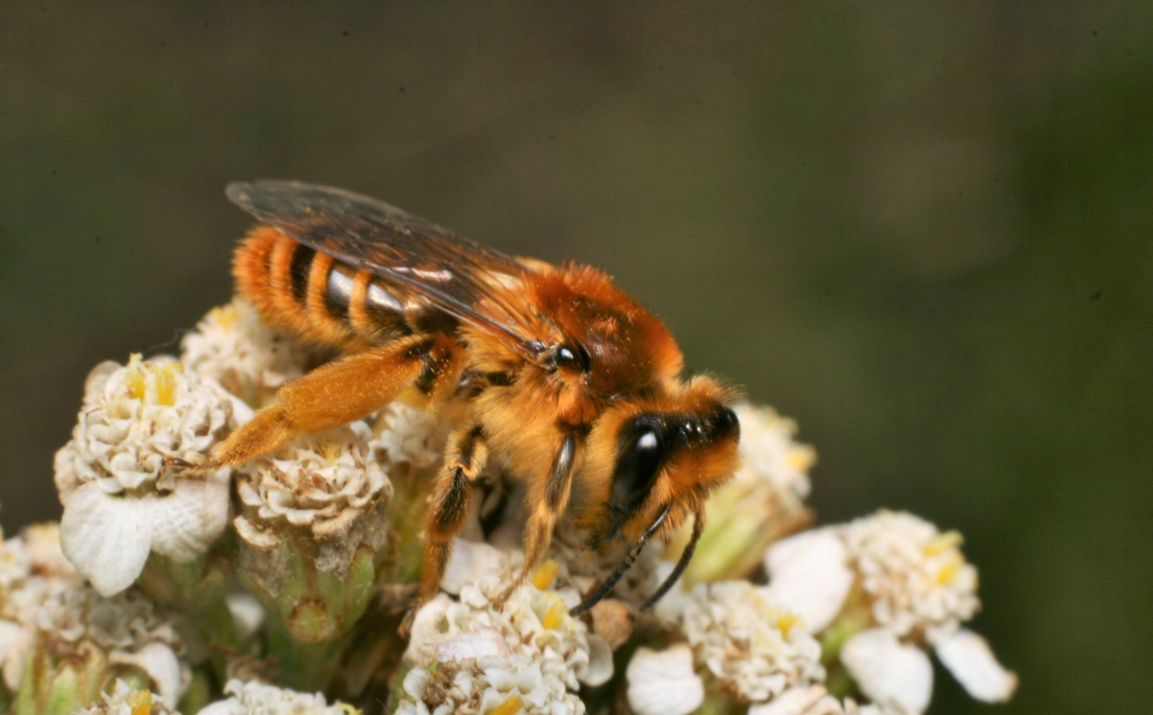
Leioproctus fulvescens is a species of solitary bee

Tawny native bee (Leioproctus fulvescens) This native South Island bee is about 10 mm long, with distinctive golden-orange hairs. Unlike introduced honeybees, it lives independently rather than in large hives. Females dig nests in fine soil and collect pollen, particularly from daisy-family flowers, to feed their young. These little bees were helping pollinate New Zealand plants long before European honeybees arrived in 1839. Leioproctus fulvescens was awarded the title New Zealand Bug of the Year by the Entomological Society of New Zealand on 14 February 2023 after it gained the most votes in the inaugural Bug of the Year competition. This bee is endemic to the South Island of New Zealand, and its yellow-orange hair distinguishes it from all other New Zealand species of Leioproctus. Like many other bees, these females are abundant flower visitors, using pollen and nectar as food source. - https://www.inaturalist.org/taxa/973222-Leioproctus-fulvescens

Did you know that some of New Zealand's original bees live underground, that birds help flowers make seeds, and that some native plants don't need animal pollinators at all?

I began asking these questions while researching my family's generations of beekeeping in South Canterbury. We know how important honeybees are to farming today, but how did our native forests, wetlands and grasslands reproduce before they arrived? According to Te Papa's invertebrates curator Julia Kasper, Aotearoa has 28 recognised native bee species. Most are small, dark and solitary, nesting in soil or hollow stems rather than the large colonies we associate with honeybees.

They were already collecting nectar and pollen, helping native plants reproduce. So were flies, moths, beetles, birds, lizards and other animals. And not every plant needed an animal. Some used the wind, while ferns reproduced through spores instead of seeds. We didn't bring pollination to New Zealand. We introduced new pollinators to support the plants and farming systems we were creating.


A woman who helped record our native flowers

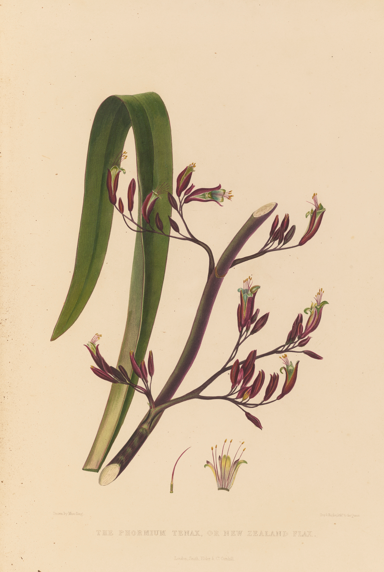
While researching these plants, I discovered the beautiful botanical illustrations of Sarah Featon (1848–1927). Around 1885, Sarah was painting New Zealand's native flowers in remarkable detail. Working with her husband Edward, she produced The Art Album of New Zealand Flora, published in 1889.

According to Te Papa, it was New Zealand's first fully coloured art book, with 40 colour plates. The couple wanted to challenge the mistaken belief that New Zealand lacked beautiful native flowers. Sarah's original watercolours, many created from specimens collected by other women, are preserved at Te Papa.

I've used her illustrations throughout this history hunt. Some show plants native to South Canterbury, while others grow naturally elsewhere in New Zealand. Together they reveal the remarkable variety of ways our plants reproduce.

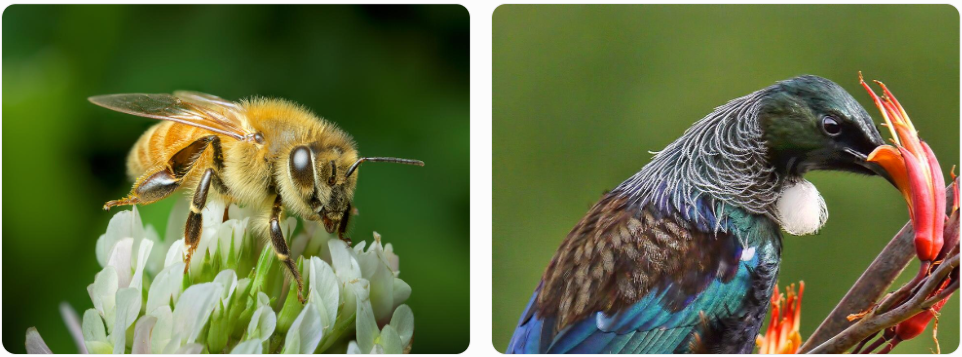
Honeybee on white clover and Tui feeding on harakeke

Honeybee on white clover. Honeybees help white clover produce seeds for pasture renewal. Without them, commercial clover-seed production would become considerably harder. Photo: Andy Murray, New Zealand, 2014. CC BY-SA 2.0. Wikimedia Commons

Tūī feeding on harakeke. Tūī transfer pollen between harakeke flowers. Native birds were helping New Zealand's plants reproduce long before European honeybees arrived. Photo: Sid Mosdell, 2011. CC BY 2.0 Wikimedia Commons

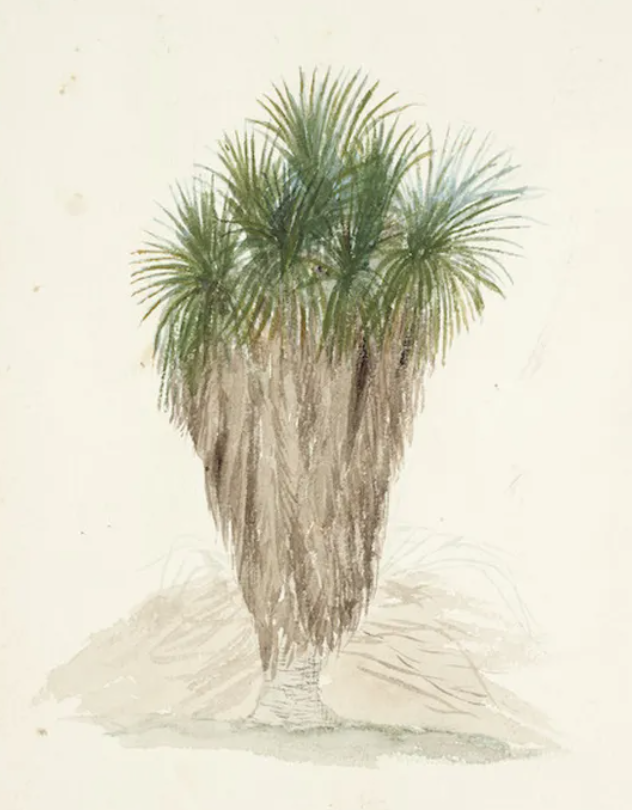
Cabbage tree ti kouka unkown artist Alexander Turnbull Library records22770971

Artist unknown :[Cabbage tree with protective skirt of dead leaves. ca 1900-1904]. Artist unknown :[Seventeen watercolours by a passenger on the SS Kaikoura. ca 1900]. Ref: A-428-006. Alexander Turnbull Library, Wellington, New Zealand. /records/22770971

Tī kōuka (Cordyline australis), or cabbage tree, has a particularly strong Timaru connection. In a 1961 study of nineteenth-century survey maps, botanist W. B. Johnston found the lower downs near Mount Horrible described as having “cabbage trees, grass and flax.” 

In spring and summer, tī kōuka produces large sprays of tiny, sweetly scented white flowers. Native insects, including flies, moths and beetles, visit these flowers, as do introduced bees today. Birds can also contribute. Scientific experiments published in 1996 showed that tī kōuka is largely self-incompatible. It produces little or no viable seed when fertilised with pollen from the same tree, making the transfer of pollen between different trees important. After fertilisation, the flowers develop pale berries eaten by birds, including kererū, tūī and korimako. The birds help disperse the seeds. One native tree can depend on insects for pollination and birds to carry the next generation somewhere new.

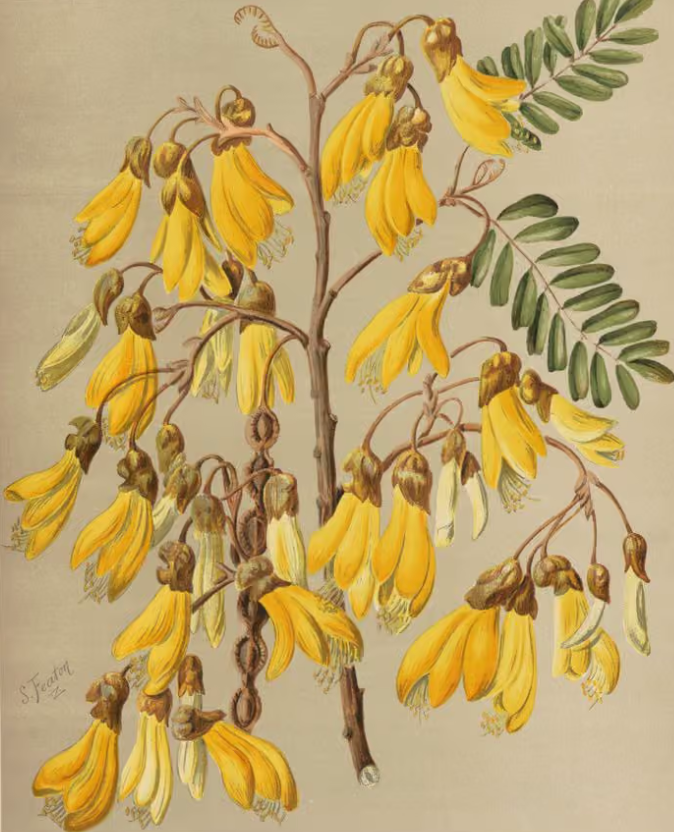
Yellow Kowhai Sophora tetraptera by Sarah Featon Bock and Cousins Te Papa RB001317028a

Yellow Kowhai - Sophora tetraptera. Plate 28. From the book: The art album of New Zealand flora : being a systematic and popular description of the native flowering plants of New Zealand and the adjacent islands : volume 1;., 1889, Gisborne, by Sarah Featon, Bock & Cousins. Te Papa (RB001317/028a) https://collections.tepapa.govt.nz/object/1891463?page=1&rtp=1&ros=1&asr=1&assoc=all&mb=c

Sarah Featon's illustrations include yellow kōwhai and rātā. Kōwhai (Sophora species) produces nectar-rich yellow flowers visited by tūī and korimako. As they feed, pollen can be carried between flowers. Insects also contribute to pollination.

After fertilisation, kōwhai produces long pods containing hard-coated seeds, which may be dispersed by water. Featon illustrated Sophora tetraptera, a large-leaved kōwhai predominantly native to the eastern North Island. In South Canterbury, small-leaved kōwhai (Sophora microphylla) is a more locally relevant example. 

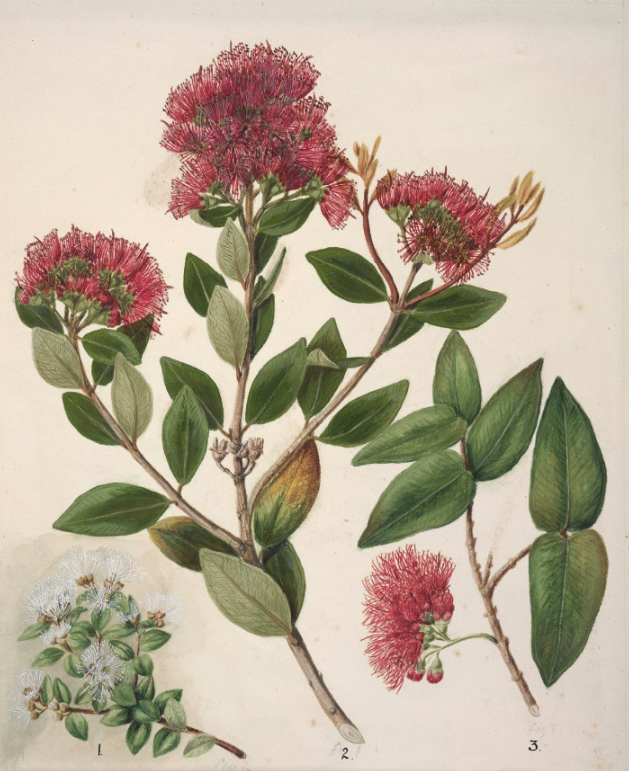
Aka Rata c1885 NZ by Sarah Featon Purchased 1919 Te Papa 1992 0035 227777

Aka. Rata, circa 1885, New Zealand, by Sarah Featon. Purchased 1919. Te Papa (1992-0035-227777) https://collections.tepapa.govt.nz/object/549712?page=1&rtp=1&ros=1&asr=1&assoc=all&mb=c

Rātā (Metrosideros species) produces striking flowers with many long stamens. Native birds, insects and sometimes lizards visit them for nectar. After fertilisation, small capsules develop and release numerous tiny seeds, which can be carried by wind. The same plant can use animals to pollinate its flowers and wind to disperse its seeds.

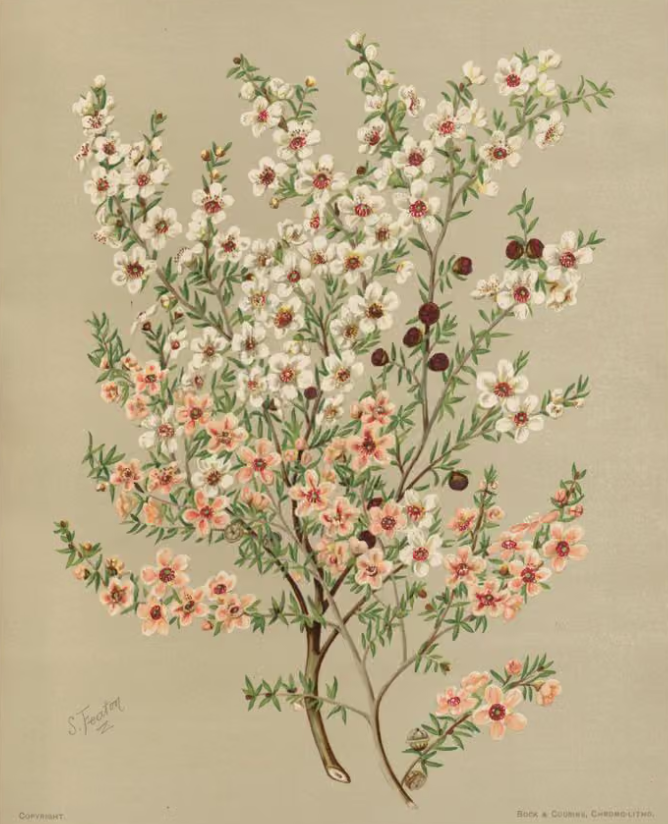
Manuka Leptospermum scoparium by Sarah Featon Bock and Cousins Te Papa RB001317034a

Manuka - Leptospermum scoparium. Plate 34. From the book: The art album of New Zealand flora : being a systematic and popular description of the native flowering plants of New Zealand and the adjacent islands : volume 1;., 1889, Gisborne, by Sarah Featon, Bock & Cousins. Te Papa (RB001317/034a)

Mānuka (Leptospermum scoparium) is another of Sarah's beautifully illustrated plants. Its small white or pink flowers produce nectar and pollen that attract native bees, flies, moths, beetles and geckos. According to the Department of Conservation, these flowers are an important food source for native wildlife. Mānuka can also self-fertilise, although cross-pollination may provide benefits. Following fertilisation, woody capsules form, containing tiny seeds. Today, introduced honeybees collect mānuka nectar and produce the honey that has become such a valuable New Zealand export. But mānuka was reproducing long before European honeybees arrived. Mānuka's survival doesn't depend on the introduced honeybee. Our commercial mānuka honey industry does.

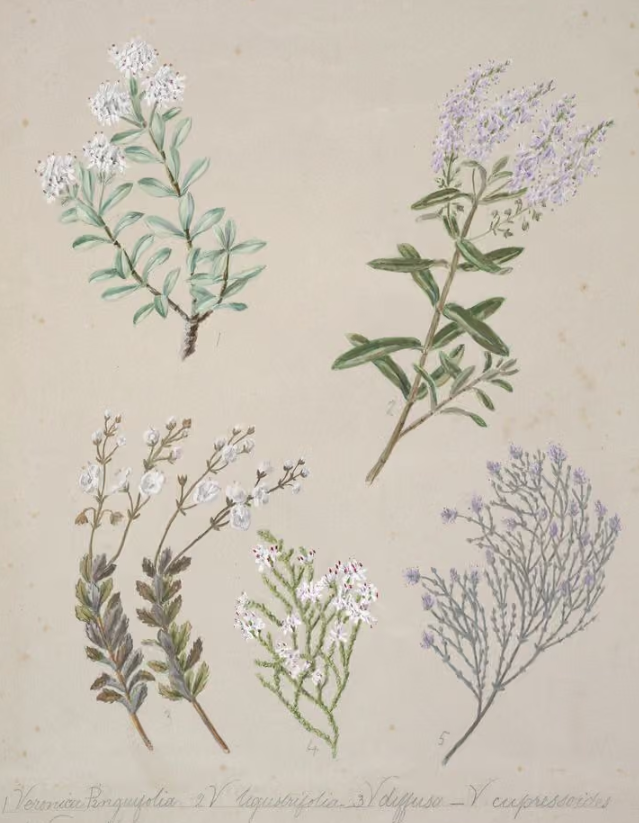
Hebe pinguifolia

Hebe pinguifolia; Hebe ligustrifolia; Parahebe diffusa or Parahebe catarractae subsp diffusa; Hebe hectorii; Hebe cupressoides., circa 1885, New Zealand, by Sarah Featon. Purchased 1919. Te Papa (1992-0035-2277/27)

Sarah Featon painted five native hebes and related plants on one sheet: Hebe pinguifolia, Hebe ligustrifolia, Parahebe diffusa, Hebe hectorii and Hebe cupressoides. Many plants once called hebes are now classified as Veronica. Their small flowers attract a variety of insects, including native flies and beetles. Some are also visited by native bees. A 2021 scientific study found that native flower beetles (Dasytes subcyaneus) transferred pollen between flowers of several hebe species. Hoverflies also visited. After fertilisation, hebes produce tiny seeds in dry capsules, often dispersed by wind. 

Featon's Veronica pinguifolia has been recorded around Mount Peel and Four Peaks, while Veronica hectorii grows in alpine parts of the South Island, including the Aoraki/Mount Cook region. Another illustrated plant, Veronica cupressoides, is now nationally endangered. Habitat loss, grazing and competition from introduced plants have contributed to its decline, while invasive vegetation can prevent seedlings becoming established. The exact pollinators and self-fertilisation abilities differ between hebe species, and some remain poorly studied. So these tiny flowers remind us of something important: a plant may produce viable seeds, but those seeds still need suitable habitat to grow.

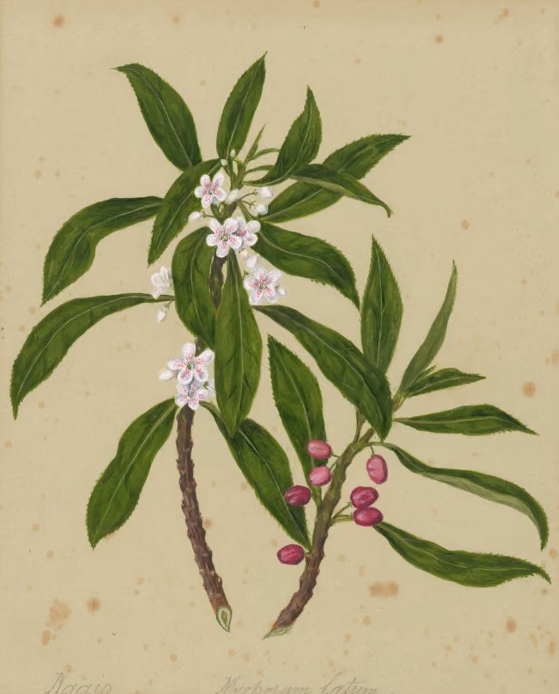
Ngaio circa 1885 by Sarah Featon Te Papa

Ngaio, circa 1885, New Zealand, by Sarah Featon. Purchased 1919. Te Papa (1992-0035-2277/62)

Sarah's illustrations also include ngaio (Myoporum laetum) and kōkihi (Tetragonia trigyna). Ngaio produces small white flowers with purple markings. Insects visit its flowers, although the importance of particular pollinator species is not fully established. After fertilisation, ngaio produces fleshy purple fruit eaten by birds that help disperse its seeds. 

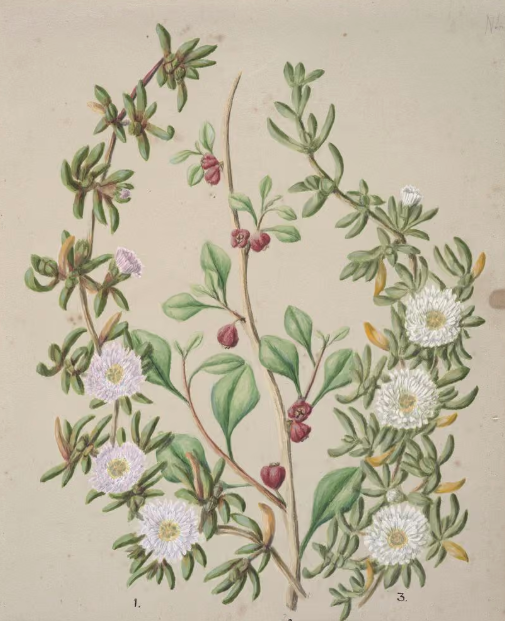
Horokaka NZ ice plant Kokihi

Horokaka; N.Z ice plant; Kokihi., circa 1885, New Zealand, by Sarah Featon. Purchased 1919. Te Papa (1992-0035-2277/93) The painting contains two different coastal plants: the pink and white flowers are horokaka (native ice plant), while the central stem with red fruits is kōkihi (native climbing spinach).

Horokaka (Disphyma australe), our native ice plant, grows on coastal rocks, cliffs and beaches. Its bright pink or white flowers attract insects that may help transfer pollen. After fertilisation, it produces seed capsules that respond to moisture, allowing seeds to be released when conditions are wet. Seeds can then be dispersed by animals and possibly wind or water. Horokaka can also reproduce from pieces of its creeping stems that take root. This means it can establish new plants without producing seeds every time. It is a wonderful example of the different survival strategies developed by our coastal plants. Kōkihi, also called native climbing spinach, has tiny yellowish flowers and small, fleshy fruits that ripen pink or red. Its precise natural pollinators remain poorly documented. Invertebrates can disperse its fruit, and the plant can also spread when trailing stems develop roots. Both show why we must distinguish between pollination, seed dispersal and vegetative reproduction. They are different stages or methods of creating new plants.


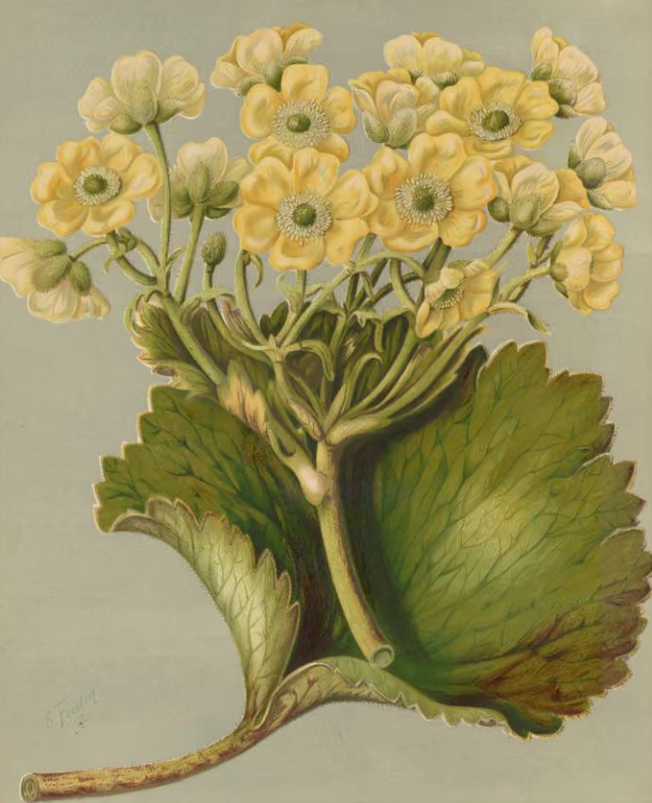
The Korikori Ranunculus insignis

The Korikori. - Ranunculus insignis. Plate 4. From the book: The art album of New Zealand flora : being a systematic and popular description of the native flowering plants of New Zealand and the adjacent islands : volume 1;, 1889, Gisborne, by Sarah Featon, Bock & Cousins. Te Papa (RB001317/004a)

Sarah's illustrations include korikori (Ranunculus insignis), a native alpine buttercup with bright yellow flowers. Korikori grows in subalpine and alpine environments, with records extending into parts of Canterbury. Its conspicuous flowers are suited to insect visitation, but we do not have enough species-specific evidence to say which animals are its main effective pollinators or how dependent it is on them. Following fertilisation, it produces clusters of small, dry, one-seeded fruits called achenes. This is another reminder that identifying a flower is often much easier than identifying every animal involved in its reproduction.

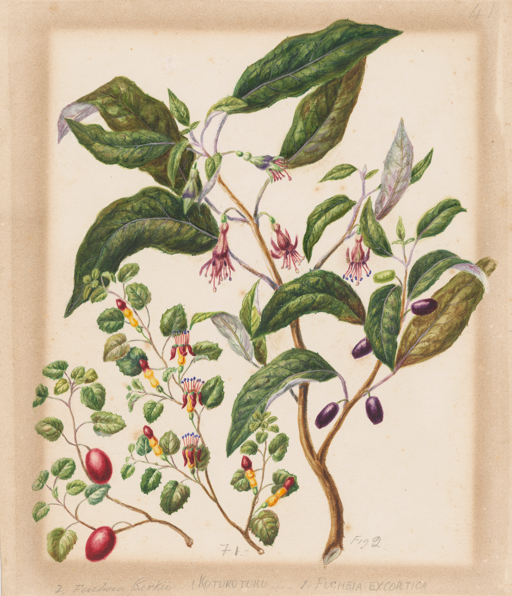
MA I797522 TePapa Creeping fuchsia fuscia low res

MA I797522 TePapa Creeping fuchsia fuscia

Sarah Featon also illustrated creeping fuchsia (Fuchsia procumbens), a native coastal plant found naturally in northern New Zealand. Its tiny upright flowers are unusual, with bright colours and striking blue pollen. Unlike tree fuchsia, which is mainly bird-pollinated, the original pollination system of creeping fuchsia remains uncertain. In 1987, herpetologist Tony Whitaker suggested that geckos might pollinate it, but the idea has not been conclusively demonstrated. The plant produces fleshy berries containing seeds and can also spread through creeping stems. Even with today's scientific knowledge, we don't have every answer about how our native plants reproduce.

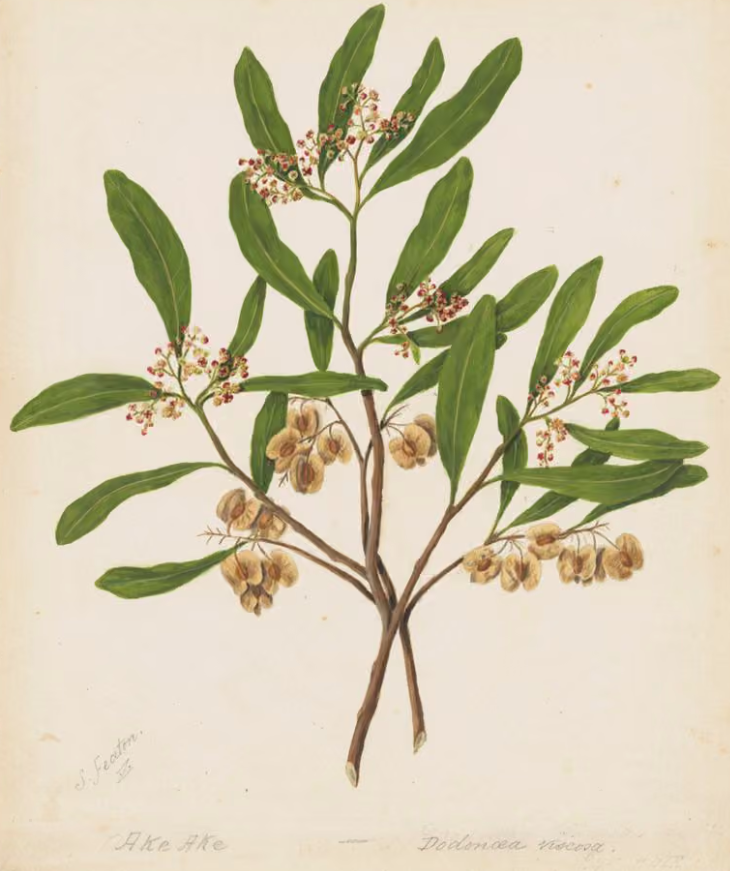
Akeake circa 1885

Akeake, circa 1885, New Zealand, by Sarah Featon. Purchased 1919. Te Papa (1992-0035-2277/82)

One of my favourite examples is akeake (Dodonaea viscosa). Unlike many of the flowering plants in Sarah's paintings, akeake uses wind to carry its pollen. Its flowers are small and lack showy petals. Many plants have male and female flowers on separate individuals, although some have both. After fertilisation, distinctive papery, winged capsules develop. These help the seeds disperse through wind, sometimes assisted by water. Akeake demonstrates that a native flowering plant doesn't necessarily need any animal pollinator at all. And there are other examples. Native beech trees, rimu and tōtara use wind pollination, while ferns reproduce through spores rather than flowers or seeds. Nature has many different solutions.

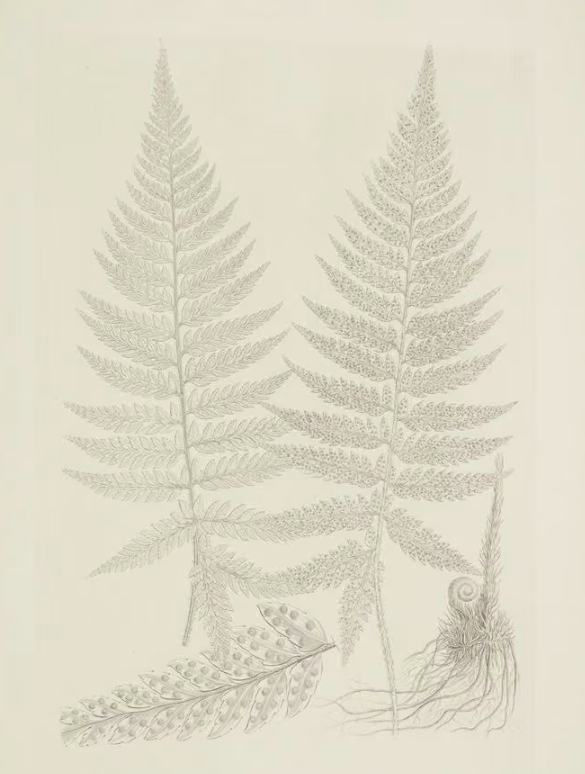
Polystichum richardii Hooker J Smith 1895 Te Papa 1992 0035 23531936

Polystichum richardii (Hooker) J. Smith, 1895, United Kingdom, by Sydney Parkinson. Gift of the British Museum, 1895. Te Papa (1992-0035-2353/1936)

Polystichum richardii: is a fern that doesn't need pollinators. This native shield fern doesn't need bees, birds or other pollinators to reproduce. Unlike flowering plants, ferns produce no flowers, pollen or seeds. Instead, tiny spores develop in round clusters called sori on the undersides of the fronds. When mature, the spores are released, often carried away by wind. In suitable conditions, a spore grows into a tiny, separate stage of the fern's life cycle. Water allows its swimming sperm to reach an egg, leading to fertilisation and the growth of a new fern. Fun fact: Ferns were reproducing millions of years before honeybees existed. They don't need pollination, but usually need moisture for fertilisation.


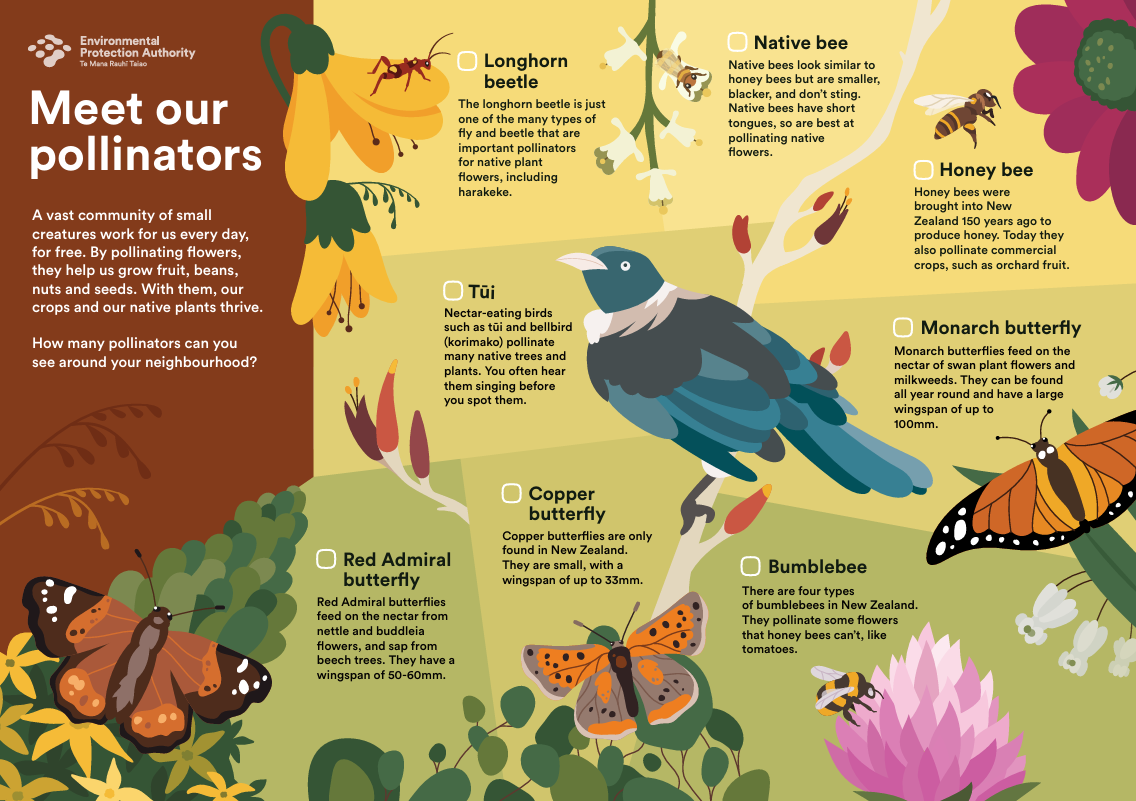
Fabulous facts about native birds DOChttps://www.epa.govt.nz/assets/Uploads/Documents/Everyday-Environment/Publications/Pollinator-factsheets-and-activity-sheets/Meet-our-pollinators-activity-sheet.pdf EPA material is generally CC BY-SA 4.0, except material with separate third-party rights. 

Pollinators help flowering plants reproduce, supporting native vegetation and crops that produce fruit, vegetables, nuts and seeds. The poster encourages children to discover which pollinators live in their neighbourhood.

  • Longhorn beetle Longhorn beetles are among the many beetles and flies involved in pollinating native flowers, including harakeke.
  • Tūī Nectar-feeding birds such as tūī and korimako (bellbirds) pollinate native trees and other flowering plants. Their calls are often heard before the birds are seen.
  • Red admiral butterfly Adults visit flowers for nectar and feed on tree sap. Native nettles are especially important as food plants for their caterpillars. Wingspan approximately 50–60 mm.
  • Copper butterfly New Zealand's endemic copper butterflies are small, with wingspans reaching approximately 33 mm.
  • Bumblebee Four introduced bumblebee species occur in New Zealand. Their buzz-pollination abilities make them particularly useful for crops such as tomatoes.
  • Native bee Many native bees are smaller and darker than honeybees. Their relatively short tongues suit many small native flowers. They rarely sting people.
  • Honeybee Introduced for honey production, honeybees now also provide important pollination services for commercial crops, including orchard fruit.
  • Monarch butterfly Monarchs visit milkweed and other nectar-producing flowers. Their wingspans can reach approximately 100 mm. They can be seen throughout the year in suitable climates.

In 1874, local settlers formed the Timaru Game Society, which became the South Canterbury Acclimatisation Society. Their aim was to introduce animals they considered useful or desirable, whether for food, hunting, fishing, pest control or a reminder of Britain.

I found a fascinating report in the Timaru Herald of 2 June 1875. The Society had purchased 25 partridges, 40 blackbirds, 40 yellowhammers and numerous other imported birds, to be housed temporarily in an aviary at the Timaru Domain before release. By 1881, it was also purchasing trout and pheasants. This was part of the same nineteenth-century enthusiasm for introducing species that encouraged experiments with honeybees, bumblebees and European pasture plants, although Emma Belfield's bumblebee shipment was a separate undertaking.

Some introductions created valuable recreational and economic opportunities. Others became pests or placed pressure on native wildlife. What people once welcomed as improvements to the landscape sometimes became problems later generations have had to manage.


Why did settlers introduce foreign wildlife?

In the nineteenth century, many European settlers believed New Zealand's landscape could be improved by introducing familiar plants and animals. Acclimatisation societies brought birds for their songs, pheasants and partridges for hunting, trout for fishing, and insect-eating birds to help protect crops. In 1875, the South Canterbury Acclimatisation Society was importing birds such as blackbirds and yellowhammers for release around Timaru. But New Zealand already had its own extraordinary wildlife and ecological relationships. Some introductions proved useful, while others became pests, competed with native species or damaged their habitats. What settlers regarded as improvements sometimes created problems we are still managing today.

Beekeeping Mesopotamia FL90839179

https://family.cloake.co.nz/honey-and-beekeeping/cloake-s-honey

How my family's beekeeping history led me to two bumblebee queens, a Timaru woman and the transformation of South Canterbury's landscape.

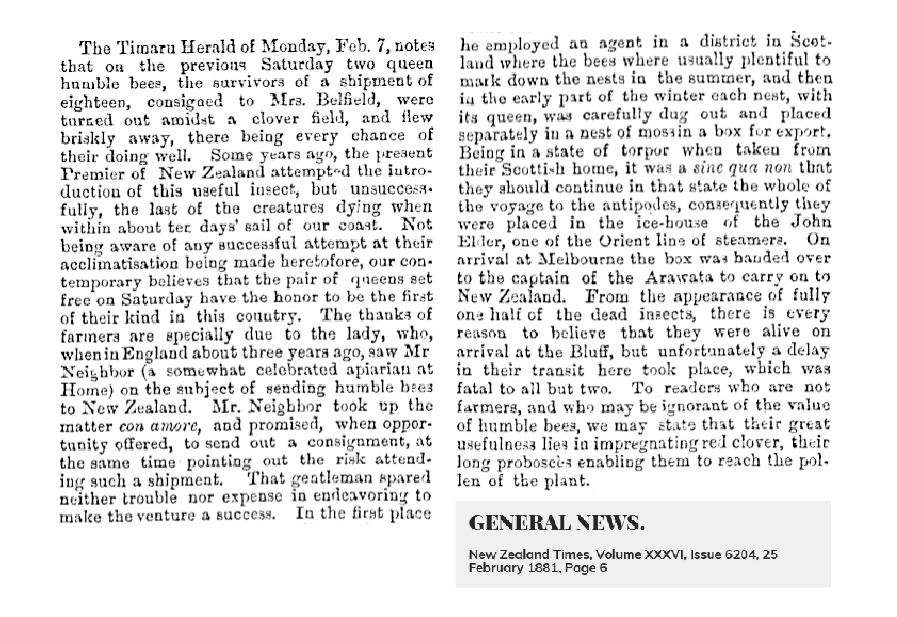
On 5 February 1881, two bumblebee queens flew into a clover field near Timaru. They were the only survivors of 18 queens shipped from Britain. A newspaper reported that they “flew away briskly against the wind.”

I discovered their story while researching my family's beekeeping history. Generations of Cloakes kept bees in South Canterbury, and I wanted to understand why they started, what bees contributed to farming, and how the industry developed.

ROSELYN CLOAKE HoneyTin

I grew up with Cloake's Honey. There was a tin on a high shelf in our hallway, and I remember visiting my grandparents, aunty, uncle and cousins at Fairview, the smell of beeswax, and bringing home smooth, creamed clover honey for our toast. I remember a Summer Christmas where the honey house had been cleared out, we all came together with balloons in the Christmas tree and colours paper hats, crackers and shared a meal together. Little trinkes fell from the crackers with cheesy jokes... and the smell... the smell of bees wax and honey. A sniff of either today, takes me straight back to my childhood visits to Fairview homes, workshops and the honeyhouse.

There were many discussions over afternoon tea about the weather and the impact on the bees and the business. As a child most of it went over my head, but I could tell at times it was stressful and very hard work. I remember watching family work with the hives in the field from the safety of the car. Dad once took me into the honey house and explained the process from making frames in the workshop, to extracting the bees hard work.

But I had never really considered where those bees came from.

And why did we need to bring bees to a country that already had them? What was here before honeybees?

Now as an adult, the Cloake's Honey operation, which used to be the largest in the South Island has wound up. The plant shifted out to other operators to carry forward. And now I revisit those memories and look deeper into the bees and their interconnectdness with our lives. Bee's and polinators are critical to our survial. Here is is my journey learning about why.

My first discovery was that Aotearoa already had its own pollinators.

According to Te Papa, New Zealand has 28 recognised native bee species. Most are small, dark and solitary, nesting in the ground or hollow stems rather than large honey-producing colonies. They pollinate plants including mānuka and kānuka.

Flies, beetles, moths, butterflies, birds and some lizards also transfer pollen. Tūī visiting harakeke or kōwhai flowers are part of this much older ecological network. Before European pastoral farming, South Canterbury included forests, shrublands, wetlands, coastal lagoons, tussock grasslands and braided rivers. The landscape was shaped by natural processes and human activity, including fire.

For generations, Māori managed and gathered resources through mahika kai practices. Rivers, wetlands, coastal areas and inland country supported food gathering and cultural connections. According to Te Ara's history of South Canterbury, European settlement transformed this landscape. Native vegetation was cleared, wetlands drained and land brought into private ownership, affecting traditional access to resources.

In 1877–79, around the time bumblebee imports were being discussed, Te Maihāroa led a protest to Ōmarama asserting customary rights in the inland country. 

I found myself considering how differently people experienced these changes. Land celebrated by settlers as improved pasture could also represent lost habitats and access to traditional food-gathering places.

Cloakes Honey Tin photo by Geoff Cloake

Honey Tins on display at Oamaru visitor center including Cloakes Honey. Below: Painting by Roselyn Cloake inspired by the Cloakes Honey Tin. I've really enjoyed rediscovering our family roots. If Annabelle was a boy we were going to call him Bertie. Above is a painting of the honey tin label. Cloakes Honey Limited (Fairview Road, Timaru) was incorporated on 12 December 1963, with Mervyn David Cloake serving as a long-time director

Why did farmers want different bees?

European settlers introduced sheep, cattle, pasture grasses, clover and other plants familiar from overseas. Red and white clover were particularly valuable. They provided nutritious livestock feed, while bacteria in their root nodules converted atmospheric nitrogen into forms plants could use, improving pasture fertility.

But there was a problem... farmers could grow red clover for grazing and hay, yet struggled to produce reliable seed crops. Each rounded pink flower head contains many tiny tubular flowers. Some honeybees have difficulty reaching the nectar and pollinating them effectively. Long-tongued bumblebees are particularly suited to the task. Without reliable local seed production, farmers depended heavily on imported seed to establish new pastures.

Honeybees had arrived decades earlier, in 1839, when Mary Bumby brought two hives from England to Hokianga. Māori also became involved in commercial beekeeping. Honeybees produced honey and pollinated introduced plants, particularly white clover and orchard crops. But nineteenth-century farmers believed bumblebees could solve the red-clover seed problem. They weren't importing bumblebees for honey. They wanted them to help flowers produce seeds.

Cloakes Honey Tin

The Timaru woman who imported bumblebees

While searching old newspapers, I found references to a Mrs Belfield.

A Timaru Herald marriage notice dated 26 July 1876 helped identify her as Emma Leonora Mellish, daughter of William Mellish of Guernsey. She married Herbert Belfield, associated with the Timaru Herald, on 8 July 1876.

According to an original February 1881 Timaru Herald account, reprinted in the New Zealand Journal of Agriculture in 1916, Emma approached an English beekeeper named Mr Neighbour while visiting Britain around 1878.

She wanted to know whether bumblebees could survive the voyage to New Zealand.

An agent located nests in Scotland. During early winter, dormant queens were collected and packed in moss to keep them cool and inactive.

Eighteen queens travelled aboard the John Elder, in its ice-house, before transferring at Melbourne to the Arawata. Delays during the journey from Bluff to Timaru proved disastrous.

Only two survived.
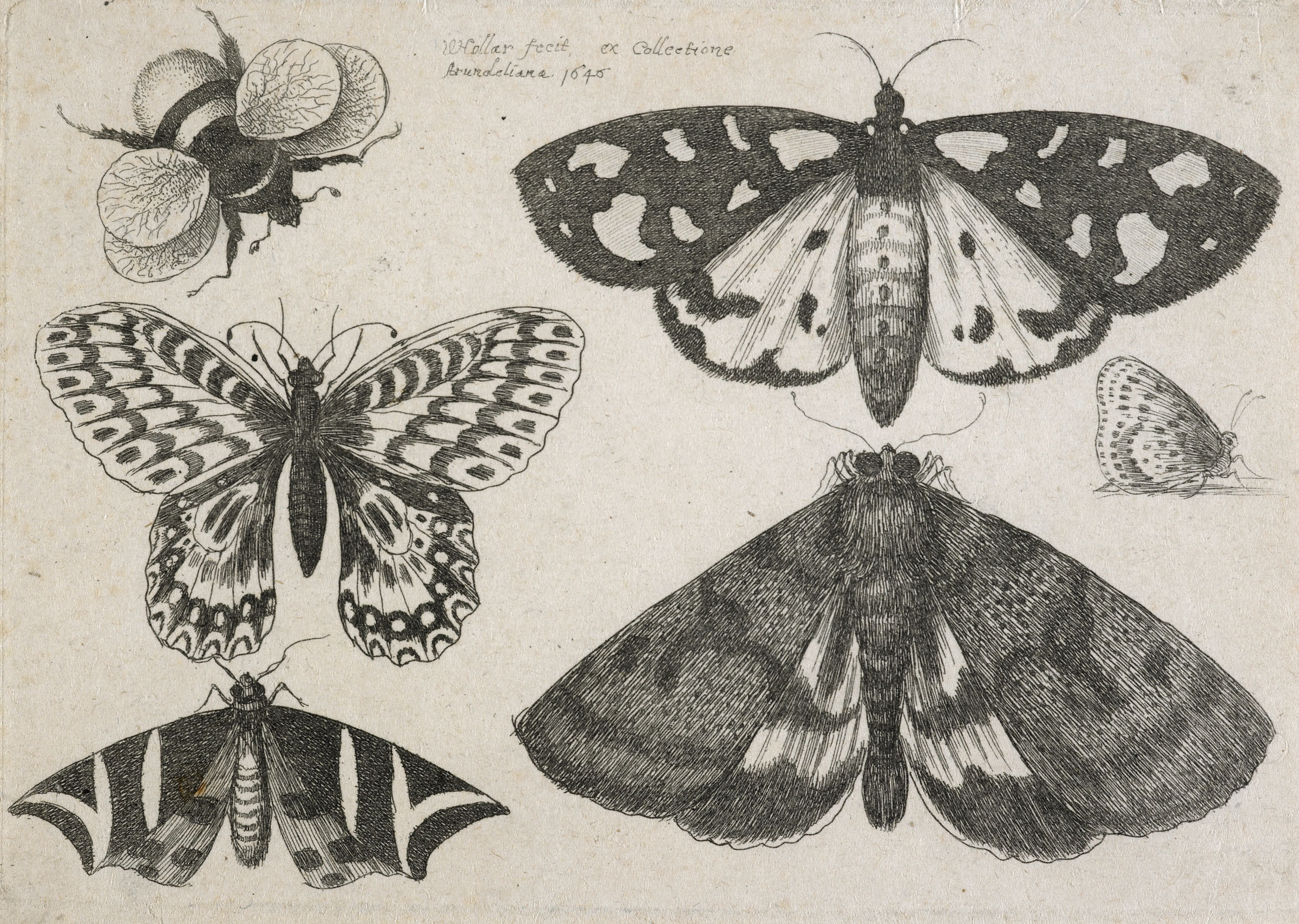
MA I063936 TePapa Muscarum scarabeorum full

Muscarum scarabeorum ... varie figure. Plate 9. Three moths, two butterflies, and a bumble-bee., 1646, Flanders, by Wenceslaus Hollar. Gift of Bishop Monrad, 1869. Te Papa (1869-0001-173) and in detail:
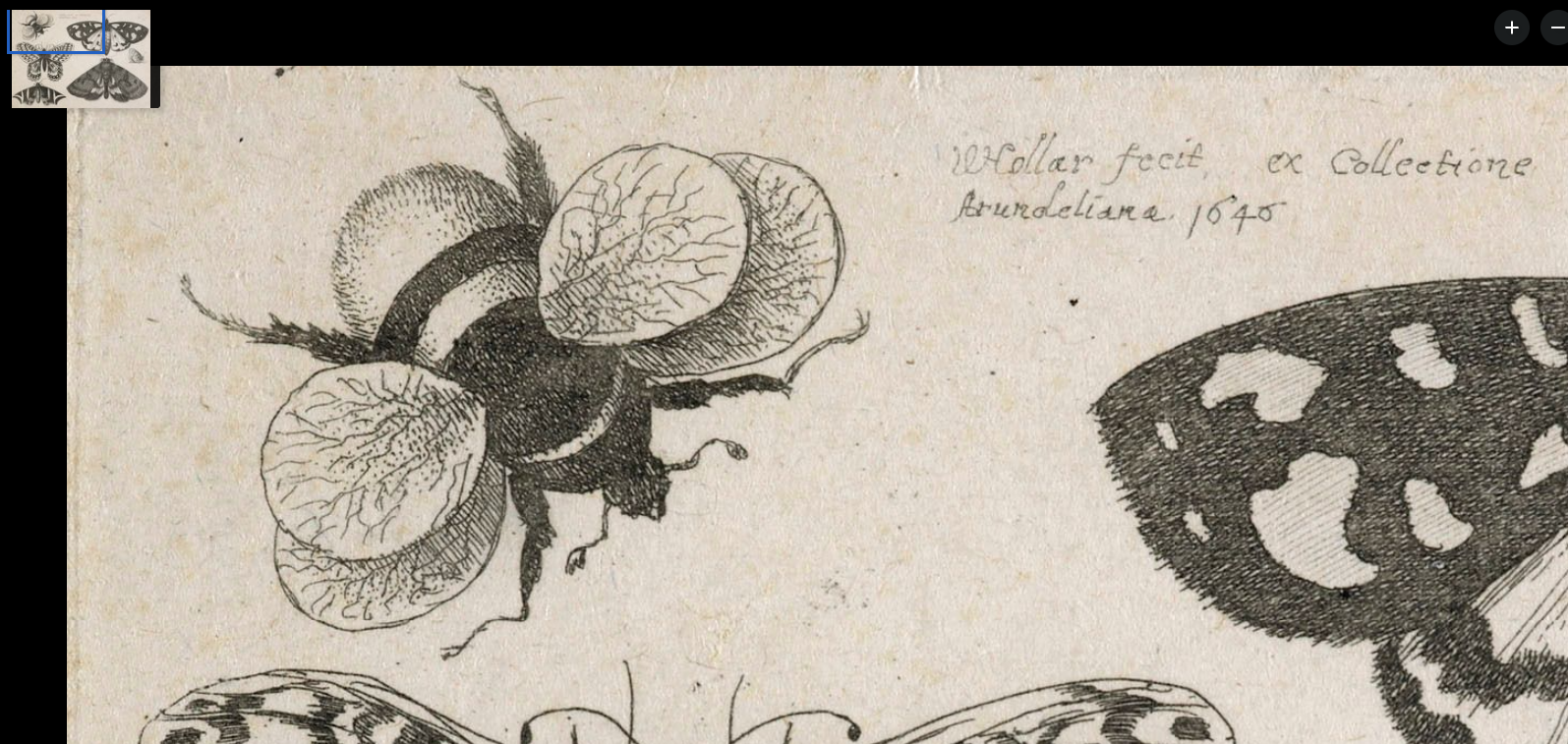
Detail MA I063936 TePapa Muscarum scarabeorum full

On Saturday 5 February 1881, they were released into clover on Mr Bristol's farm. Mr Hislop, formerly associated with the Timaru Domain, helped care for the shipment and open the box.

The surviving newspaper account records their release, but not whether they established colonies. Nor does it tell us whether Emma witnessed the moment.

I would love to learn more about her.

It is remarkable that a Timaru woman helped organise such an ambitious agricultural experiment when the journey itself was so risky.

Bumblebees reach South Canterbury's paddocks

Other importation attempts followed, with successful establishment in Canterbury in 1885.

By January 1886, the Temuka Leader reported bumblebees at Pleasant Point and Mr Tripp's station. One Temuka gentleman apparently carried a dozen specimens in a box in his pocket!

Their arrival was clearly attracting attention.

I then found a letter titled Clover Seed, published in the Temuka Leader on 13 March 1890.

Writer Edward Pilbrow argued that local farmers were overlooking a commercial opportunity. Bumblebees were visiting red clover and cowgrass, helping the flowers produce seed, yet much was going unharvested.

He described George Cliff's farm on the Winchester road from Temuka.

Cliff's first clover cutting had produced hay for livestock. The second growth was flowering heavily and looked promising for seed production.

One paddock could potentially provide two products: animal feed followed by saleable seed.

But pollination was only part of the process. Farmers needed machinery to thresh the dried flower heads, separate the tiny seeds and clean them for sale.

The newspaper described a promising crop, although it did not record Cliff's eventual harvest.

I loved finding this example. It connected the insects with an actual South Canterbury farmer, his paddock and the equipment required to turn flowers into a business opportunity.
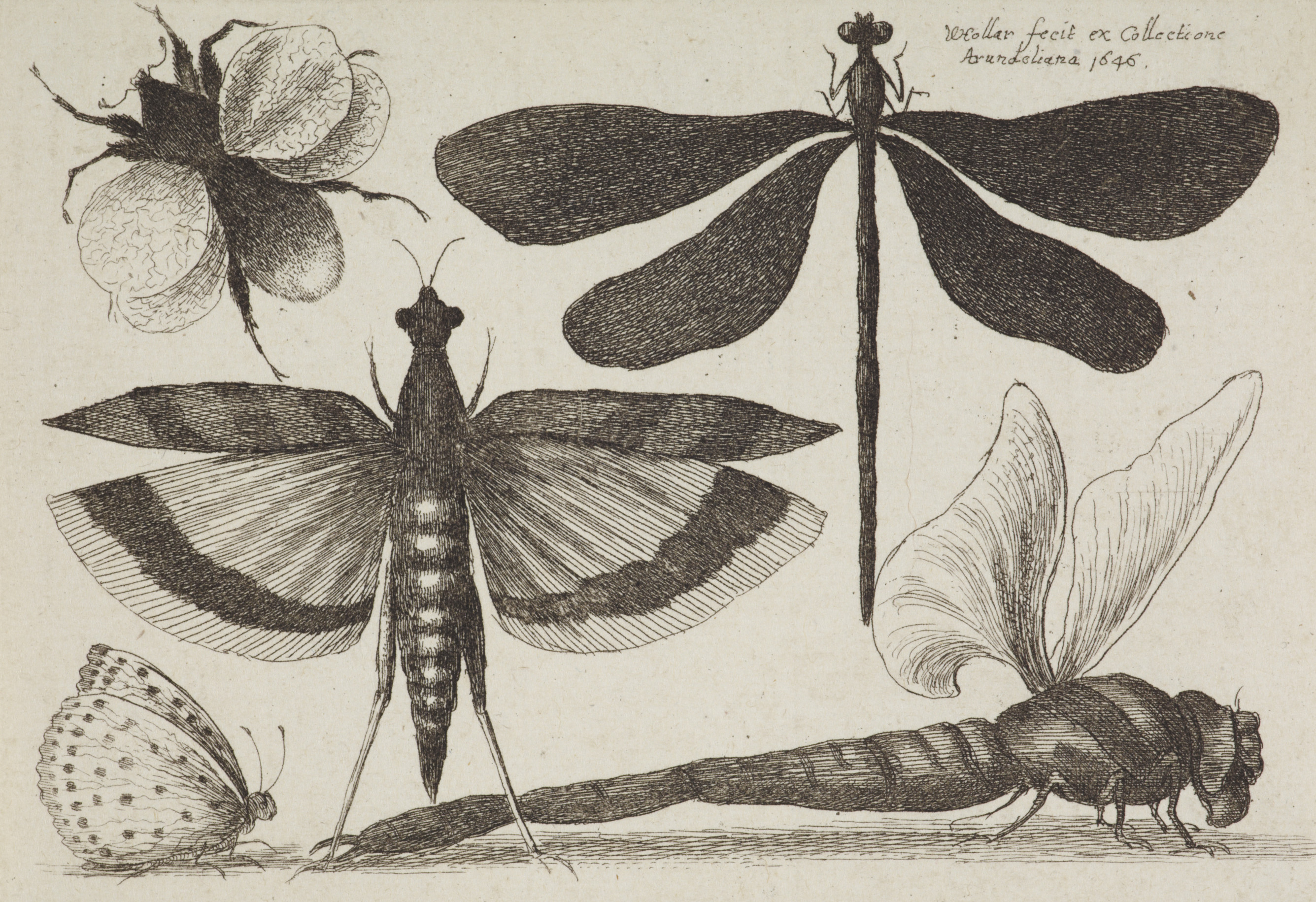
MA I306768 TePapa Muscarum scarabeorum full

Muscarum scarabeorum ... varie figure. Plate 6. Dragonflies, a bumble-bee, a grasshopper and a butterfly., 1646, Flanders, by Wenceslaus Hollar. Gift of Bishop Monrad, 1869. Te Papa (1869-0001-170) and detail:
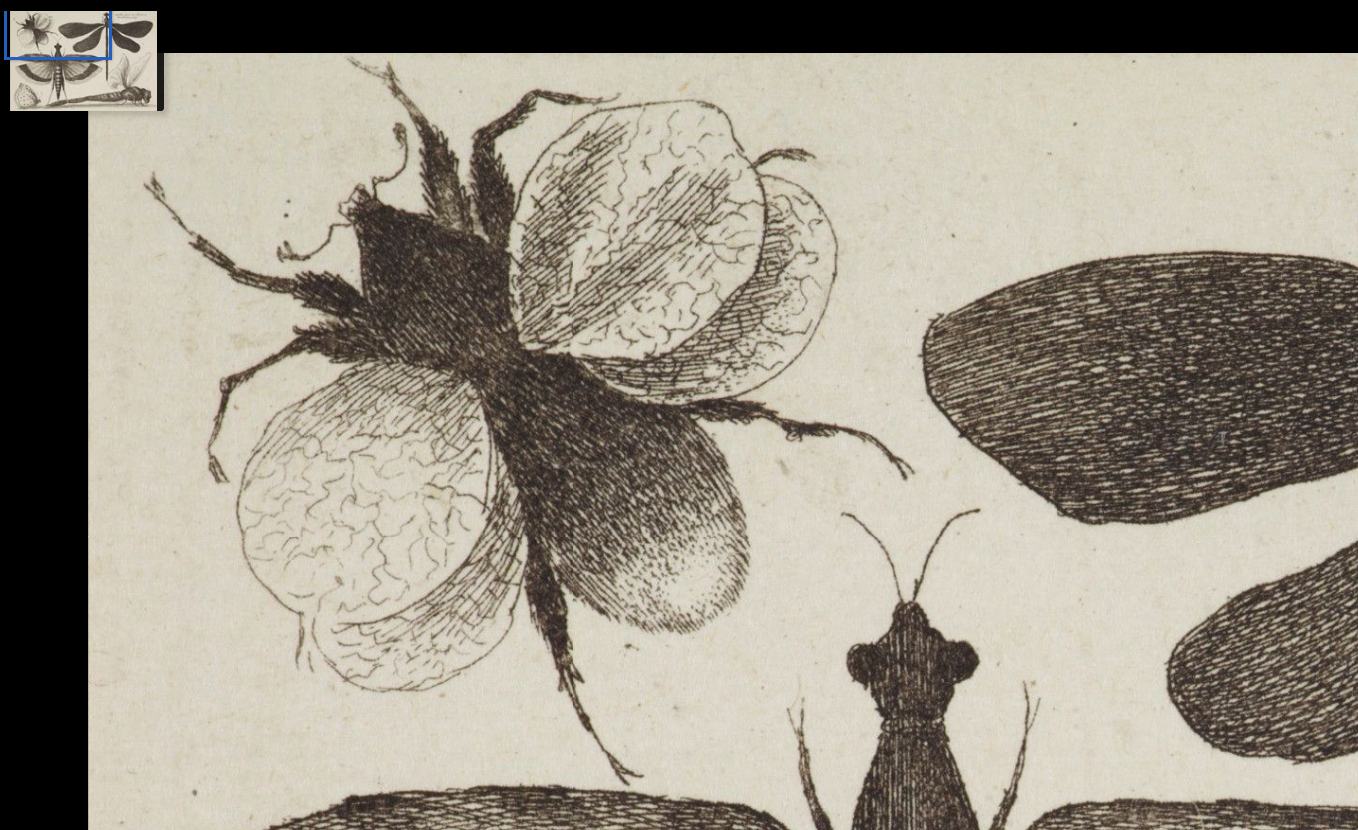
Detail MA I306768 TePapa Muscarum scarabeorum

Honeybees, orchards and a growing industry

Bumblebees helped with deep flowers such as red clover. Honeybees were especially valuable for pollinating white clover, orchard blossoms and many other crops.

Apples, pears, plums and cherries benefit from bee pollination, as do lucerne and some vegetable seed crops. Not everything depends on bees, however. Wheat, oats and barley generally reproduce through wind or self-pollination.

Honeybees also offered something bumblebees did not: large colonies producing harvestable honey.

An 1884 Timaru Herald report shows how beekeeping was developing locally.

At the Timaru Agricultural and Pastoral Show, Colonel Bayley of Makikihi displayed live bees in a glass observation hive, moveable-frame hives, a honey extractor and other equipment.

The association had introduced prizes for bees, honey, hives and related equipment.

Another woman caught my attention. Mrs M. Stack won first prize for extracted honey, beating Colonel Bayley in that class.

Who was she, and where did she keep her bees? Another history hunt!

By 1914, W. E. Barker of Peel Forest was presenting a paper titled Fourteen Years' Experience with Bees in the Orchard at a national beekeeping conference.

In January 1919, the Timaru Herald reported excellent Canterbury honey-crop prospects, helped by exceptional clover growth.

Then I found an interesting figure in the Department of Agriculture's 1924 annual report:

896 cases of honey were graded for export at Timaru, compared with 576 at Lyttelton.

The records don't identify every supplying beekeeper or the exact Timaru grading location, but they show the town's place in an organised export industry.

Beekeeping now involved much more than hives. There were growers, queen breeders, equipment makers, processors, graders, co-operatives and exporters.

Following the Cloake family's bees

My great-grandfather Bertie Thomas Cloake kept bees at Springbrook, near St Andrews, during the early twentieth century.

Our family stories describe modest beginnings that developed into a substantial operation.

In the Christchurch Star of 10 November 1933, I found Bertie winning first and second prizes for white liquid honey, second for creamed honey and first for yellow beeswax at the Canterbury show.

The creamed-honey award caught my eye. It was the smooth honey I remembered growing up with.

An account drawing on Bertie's obituary records that he imported queen bees from America around 1939, although he apparently wasn't impressed with the results. His subsequent queen-breeding work contributed to establishing honeybees on the Chatham Islands.

My grandfather Harry Cloake, with his sons Mervyn and Russell and other family members, continued developing the business. By the 1970s, it had become a major New Zealand beekeeping operation.

Harry also developed the Cloake Board, a method and device for raising queen bees efficiently by temporarily separating sections of a hive to encourage workers to raise queen cells.

While researching him, I found an independent account by American queen-breeding specialist Sue Cobey.

She recalled meeting Harry at the 1977 Apimondia Congress in Adelaide and later visiting his Timaru apiary. Impressed by his system, she helped teach and promote it internationally.

Something developed by my grandfather in South Canterbury became part of beekeeping practice around the world.

I am still investigating the family's creamed-honey innovations and their place within New Zealand's wider history of honey processing. Controlled crystallisation was already being practised in New Zealand by 1914, so it is important to distinguish the Cloakes' contributions from earlier developments.

Their story is one of observation, experimentation, practical knowledge and hard work.

But all this research raised another question.

at their home in Springbrook Harry Cloake his sister Myra Mrs Rouse grandad Cloake know as Bertie and Granny Sarah

At their home in Springbrook  Harry Cloake his sister Myra (Mrs Rouse) Grandad Cloake known as Bertie and Granny Sarah Cloake.

What were the consequences of introducing new species?

Bees helped produce honey, improve pollination, support farming and create livelihoods. Yet their introduction was part of a much bigger transformation.

European settlers imported plants and animals for food, farming, sport and familiarity. Acclimatisation societies actively encouraged introductions.

Some proved useful. Others became invasive, spreading beyond their intended purpose and damaging native ecosystems.

Gorse, introduced for hedges, spread into farmland and natural habitats, competing with indigenous plants.

Rabbits, deliberately introduced, multiplied rapidly and damaged vegetation and farmland. Stoats and ferrets were then introduced partly to control rabbits, but became serious predators of native wildlife.

Land development brought other consequences. Native forests and shrublands were cleared, waterways modified and wetlands drained.

Environment Canterbury reports that approximately 90% of Canterbury's natural wetlands have been lost since European settlement.

These losses were not caused by bees, but they form part of the wider environmental history of the farming systems introduced alongside them.

Introduced bees can have ecological impacts too.

The Department of Conservation explains that honeybees may compete with native insects and other nectar-feeding animals for floral resources. They can also help pollinate introduced weeds.

This does not mean honeybees are automatically invasive or harmful wherever they occur. Their effects depend on the species, habitat, available flowers and colony densities.

A honeybee pollinating an apple tree provides a valuable agricultural service. In some native habitats, large numbers of honeybees may place pressure on other nectar feeders.

The same introduced species can bring economic benefits while creating environmental costs.

That is an important distinction when considering how people understood their decisions at the time and what we know today.
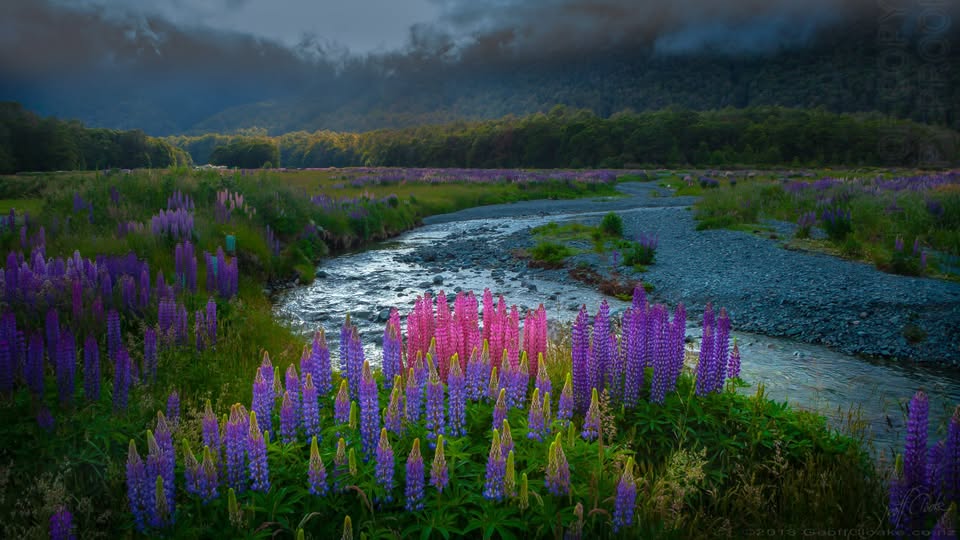
Natives among these lupins Geoff Cloake

Natives among introduced lupins. Photography Bry Geoff Cloake. Russell lupins are a perfect example of how something beautiful can become an environmental disaster. People love photographing the spectacular purple, pink and yellow lupins around Lake Tekapo and the Mackenzie Country. But these introduced plants spread aggressively, smother native vegetation and transform the open gravel beds of our braided rivers. Their dense growth changes water flow and provides hiding places for predators that threaten rare native birds, including kakī (black stilt), ngutu pare (wrybill) and black-fronted terns. Their seeds can survive in the soil for years, making removal difficult and expensive. And we are paying to undo the damage. In 2025–26, more than $300,000 was allocated to weed control in the Upper Rangitata catchment, targeting lupins alongside gorse, broom and other invasive plants. Clearing these weeds requires contractors, specialist equipment and repeated treatment. The irony? Bumblebees visit lupins for pollen, helping them reproduce, yet their spread threatens habitats that support some of New Zealand's rarest wildlife. It's a reminder that just because something is beautiful, or good for bees, doesn't mean it's good for the environment.
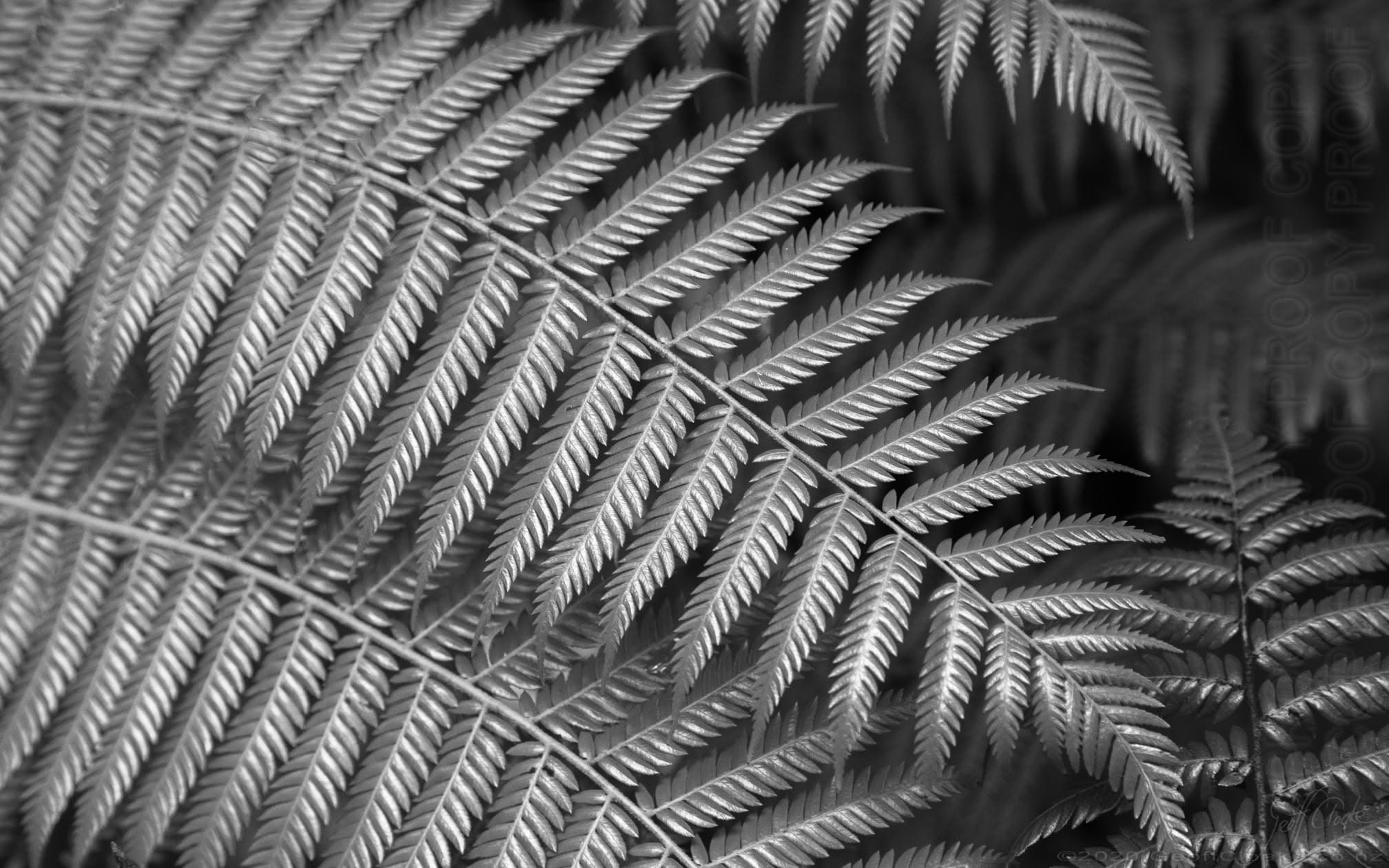
Fern Geoff Cloake

Ferns. Photography By Geoff Cloake. Fun fact! Not all New Zealand plants need bees or other animals to reproduce! Ferns don't even have flowers or seeds. They reproduce using tiny spores, usually carried by the wind. Native beech trees, grasses and rimu also use the wind, but to spread pollen. Nature had plenty of ways to reproduce long before honeybees and bumblebees arrived. Not everything in nature relies on bees! Ferns reproduce using tiny spores rather than flowers or seeds, while native beech trees and grasses use wind to spread their pollen. But everything is interconnected. Plants provide food, shelter and habitats for other living things, while insects, birds, water and soil all play their part. Bees are important, but they're just one part of a much bigger web of life.

Scientists return to the clover fields

One final discovery challenged the original reason for bringing bumblebees here.

In February 1954 and 1955, researchers placed 35 honeybee hives beside a ten-acre crop of Montgomery red clover and studied its pollinators. They also examined other South Canterbury clover fields.

Their 1958 paper, by I. W. Forster of Oamaru and W. V. Hadfield of Timaru, estimated that honeybees represented 77% of effective pollinating insects in one season and 89% in the next.

Those figures described the researchers' assessment of the pollinating insects, not the percentage of seed produced. Other scientists questioned aspects of the method, particularly differences in how efficiently individual bees pollinated.

The findings nevertheless challenged the assumption that honeybees were generally incapable of pollinating red clover.

Both honeybees and bumblebees can contribute, depending on the clover variety, bee species, weather and foraging conditions.

More than 70 years after Emma Belfield's experiment, South Canterbury's paddocks were still helping scientists investigate the same question.

Example of interconnectedness with our polinators

Today, Turnbull Grain & Seed supplies farmers throughout South Canterbury and the Mackenzie Country, with seed-mixing facilities in Timaru and Fairlie. It is also a retailer of Cropmark seeds, including access to pasture varieties such as red and white clover.

But here's something we might overlook. Before farmers can buy those clover seeds, someone has to grow them, and bees are critical to producing them.

Honeybees are particularly important for white-clover seed production, while bumblebees and honeybees both contribute to red-clover pollination. According to the Foundation for Arable Research, white-clover seed crops need at least two managed honeybee hives per hectare for effective pollination.

The resulting seeds help establish pastures that feed sheep and cattle. Clover also supports soil fertility through nitrogen fixation, benefiting the grasses growing alongside it.

Of course, not everything Turnbull sells relies on bees. Wheat, barley and oats are mainly wind- or self-pollinated. But clover shows how an agricultural system can depend on something as small as an insect transferring pollen between flowers.

It is quite a connection. More than 140 years after those two bumblebee queens were released near Timaru, the insects introduced to help European pasture plants reproduce remain an important part of the farming economy we built around them.

And it raises another question: as we have become increasingly dependent on introduced pollinators and crops, how do we also protect the native plants, insects and habitats that were here long before them?
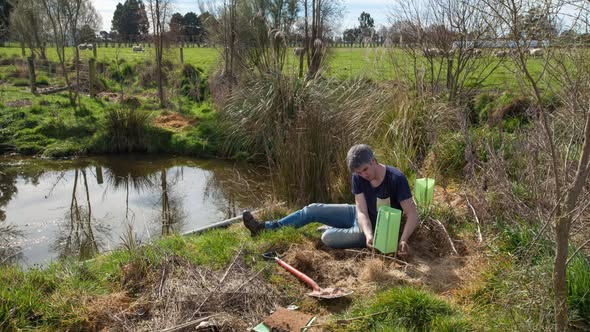
planting manuka

Chris Fauth helps plant manuka, Photo Geoff Cloake

Looking at our landscape differently

I began this history hunt wanting to understand why my family kept bees.

Along the way, I discovered native pollinators, a Timaru woman's extraordinary experiment, farmers developing clover-seed crops, women winning honey prizes, scientists challenging assumptions and my grandfather's contribution to international beekeeping.

I also learned more about the changes people made to South Canterbury's landscape and the consequences, both beneficial and harmful, of introducing new species.

I feel proud of my family's contribution. I also have a greater appreciation for our native pollinators and the environments that supported life here long before European farming.

Both histories matter.

The choices of previous generations helped shape the place we know today. Understanding their reasons, achievements and consequences might help us make better decisions for the future.

Next time you see a bee visiting a flower, take a closer look.

Is it a honeybee, a bumblebee or one of our native bees? Is the flower native or introduced? What depends on that tiny interaction?

And what might have been growing in that same place 200 years ago?

I started by following my family's bees. They have led me to a much bigger story about the place we call home.

Roselyn Fauth (née Cloake) | WuHoo Timaru
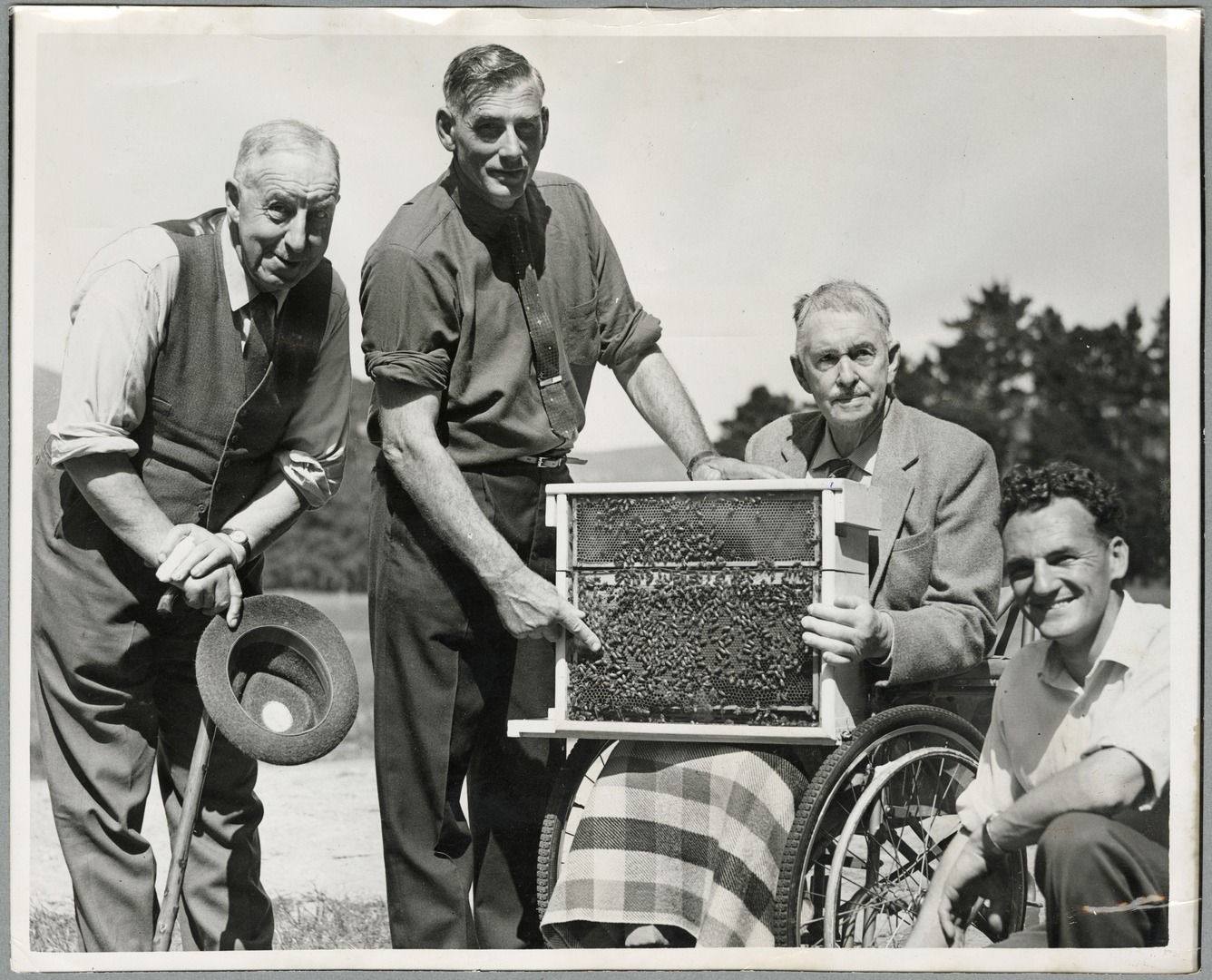
3215 Service File2

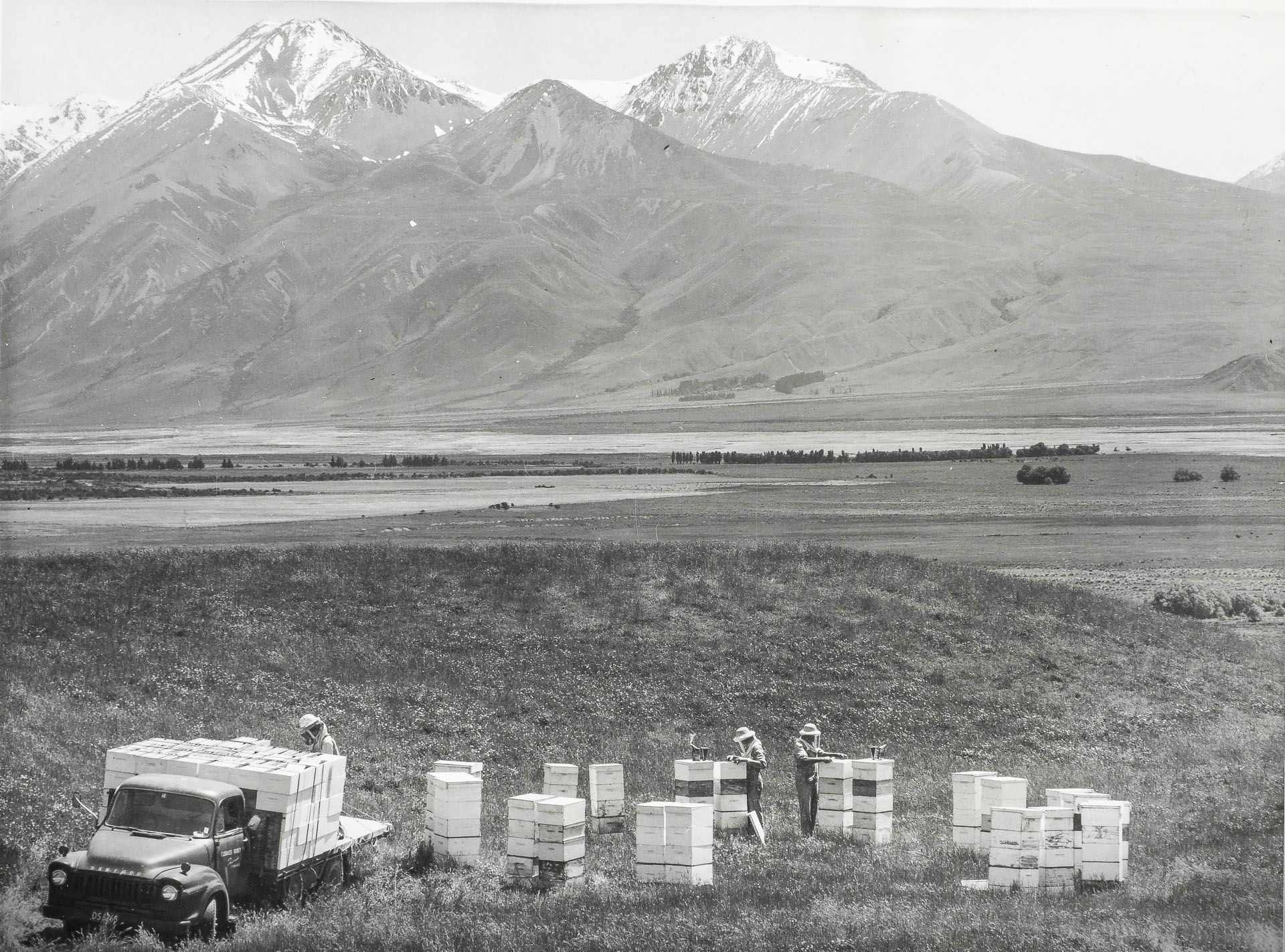
New Zealand Beekeepers' Association at Tai Tapu Domain. Pictured are George Gumbrell, Harry Cloake, W.B. Bray and David Penrose. 14 October 1963. Credit Christchurch Star: https://www.canterburystories.nz/collections/star/prints/1960-1964/ccl-cs-3215

Fairview bees exported (04 Sep 1979). Aoraki Heritage Collection, accessed 13/07/2025, <a href=https://aorakiheritage.recollect.co.nz/nodes/view/4452" width="100%" height="NaN" style="box-sizing: inherit; max-width: 100%; height: auto; vertical-align: middle;">

Fairview bees exported (04 Sep 1979). Aoraki Heritage Collection, accessed 13/07/2025, https://aorakiheritage.recollect.co.nz/nodes/view/4452

1994 05 NZBkpr 1

My Aunty, Margaret Cloake on the Cover of the National Beekeepers Association of New Zealand in the check shirt at a tasting demonstration.

MArthy and Geoff Cloake

Marthy and Geoff Cloake.

Native Bee Polinators From South Canterbury Museum Roselyn Fauth

Native Bee Polinators From South Canterbury Museum - Roselyn Fauth

IMG 20190728 200928 534 1

WuHoo Timaru fun fact colouring in sheet on native and introduced bees with clover and manuka. You can download and colour it in here: wuhootimaru.co.nz/colouring-sheets/106-bees

RoselynCloake Roots26 Print PR26

Roselyn Cloake Roots 26

704682200 1588253986643660 3851549751509926879 n

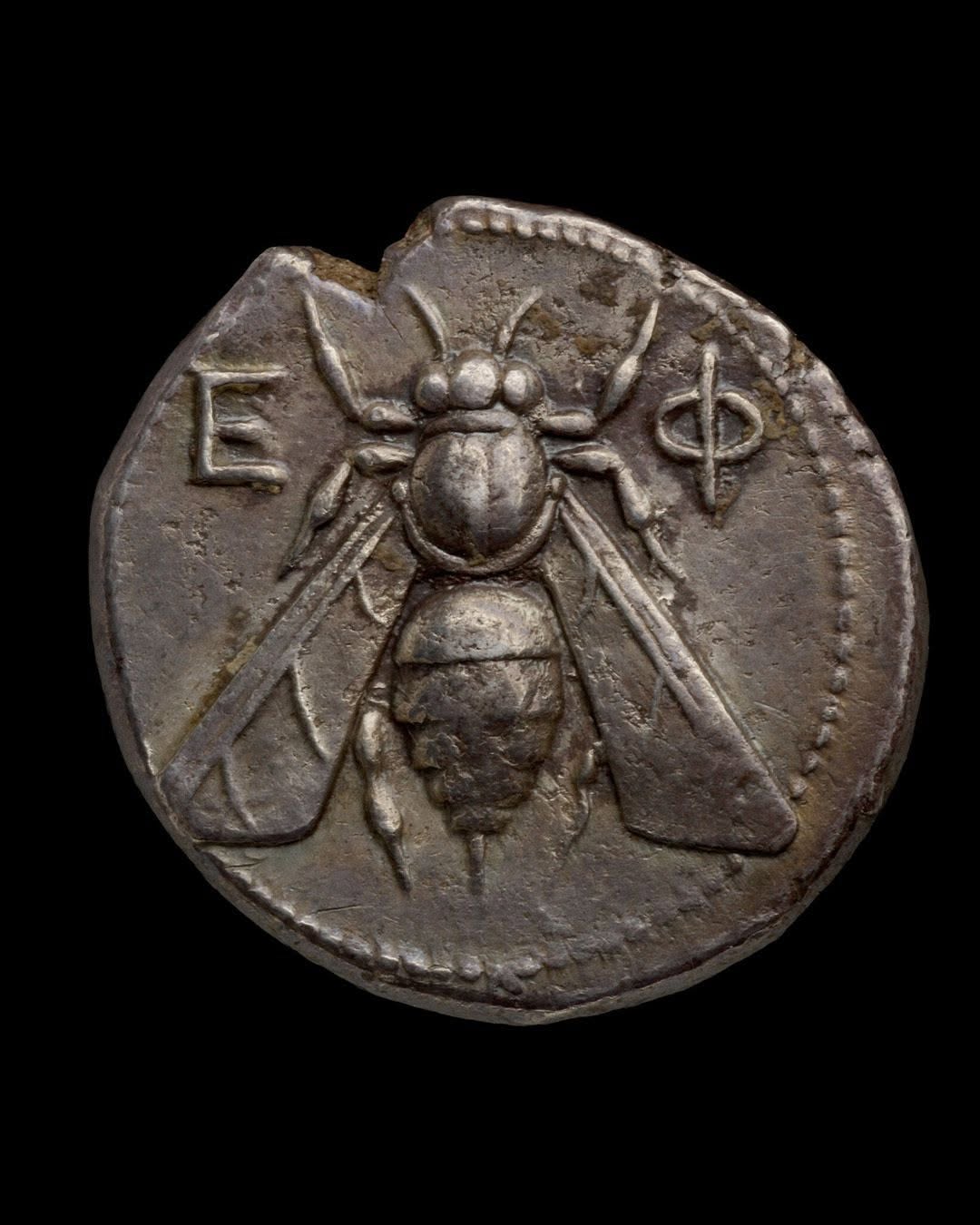
Fun Fact... Here is one about the prosperous ancient city of Ephesus, which adopted the bee as the design on one of its coins! Ephesus was home to the temple of Artemis, the Greek goddess of hunting, wilderness, and wild animals. The high priest of the temple was known as the ‘king bee,’ and the priestesses were known as ‘melissae’ (honey bees).
This silver coin was a Tetradrachm, meaning a four-drachm piece, and would have represented about a week’s wage. It dates back to around 650 BCE–297 CE and was minted in Ephesus.
The obverse (front) inscription ΕΦ[ΕΣΙΩΝ] stands for ‘coin of the Ephesians’. The reverse of the coin shows a stag, which relates to Artemis, emphasising the importance of her cult for ancient Ephesus, and a palm tree to the left.
this is in the Ashmolean Museum collection - which range from Egyptian mummies to contemporary art, telling human stories across cultures and across time.
Ancient Greek silver coin, 650 BCE – 297 CE. Silver, 24mm (diameter). HCR5273
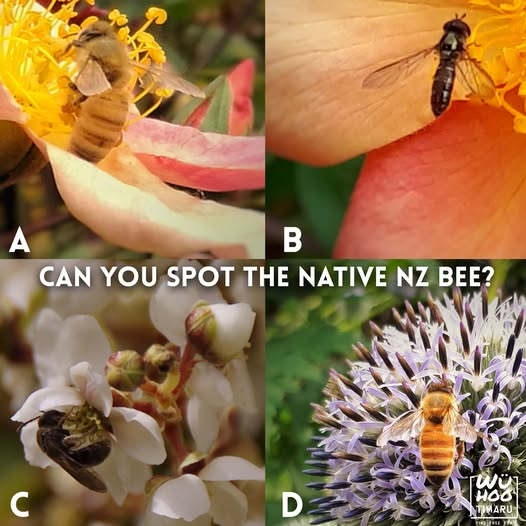


WuHoo Timaru spot the native Bee

Can you spot the native NZ bee? A, B, C or D?

Learn more about our wee native NZ bees... download our colourful facts sheet: https://wuhootimaru.co.nz/colouring-sheets

They are:

  • Smaller than imported bees and generally black.
  • Don't sting and are not aggressive.
  • Do not have hives or produce honey.
  • Live in small families. Females lay 3–10 eggs in a lifetime.
  • Live in nests under bare undisturbed soils, or in hollow flax stems or other plant material. Don't share nests but many nests are often in close proximity.
  • Bees die at the end of Autumn but larvae survive over winter, emerging in mid spring.
  • Larvae are fed with nectar and pollen from nearby flowers.
  • They don't travel as far as imported bees (100 m or less) so need flowers nearby. Concrete jungles or open land with short grass do not suit our native friends.
  • Are not affected by the Varroa mite that threatens honeybees.

Bee diversity is so important for us and our environment - learn how spot a native bee and how to be a bee ambassador

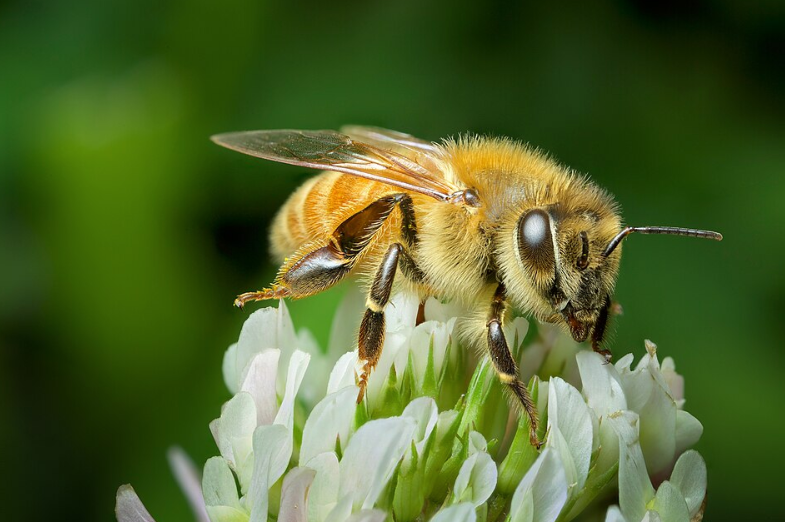
Bees help crops produce fruit and seeds, including the white-clover seed grown commercially in Canterbury. That seed helps establish and renew livestock pastures, connecting pollination with farming well beyond the honey harvest. Honey is another source of income, made by honeybees from the nectar they collect. The two activities are different, but together they connect visits to flowers with food production, trade and rural livelihoods. 

In South Canterbury, that connection reached right to people’s front doors. In January 1916, the New Zealand Beekeepers’ Journal reported a local beekeeper selling honey door to door in 10 lb tins, about 4.5 kg, at fivepence per pound with the tin included. The journal criticised the price as too low, revealing the challenge of turning a harvest into a worthwhile living. Beekeeping NZ By 1931, Timaru was listed among the country’s honey grading and export centres. Honey connected beekeepers with packaging, storage, transport and overseas customers, spreading its economic importance beyond the hive. 

My own Cloake family’s history shows how this industry encouraged practical invention. Bertie Cloake, who kept bees at Springbrook near St Andrews, began packing honey in cartons after returning from a trip to England in 1930. His obituary in the New Zealand Beekeeper credits him with inventing a machine that cut honey into one-pound blocks ready for packing. And My grandfather and uncle invented a queen raising 'Cloake Board' and worked out how to cream honey. Their ingenuity illustrates another part of the economic story... people developing equipment and methods to turn what bees produced into something ready for customers.

But a pollinator does not have to produce honey to be economically valuable. Plant & Food Research has shown that flies, solitary bees and other insects can complement honeybees, improving crop pollination and providing services under weather conditions less suitable for honeybees. Supporting different pollinators can help protect both harvests and native plants. Their value cannot be measured simply by counting honey jars. Looking after their food sources and nesting places is also an investment in the farms, businesses and communities that benefit from their work.

Farmers also pay beekeepers for pollination, not just honey. Growers hire managed hives to bring more bees into their crops during flowering. In Canterbury, these include clover, carrot and radish crops grown for seed. Beekeepers prepare strong colonies, deliver the hives and remove them once flowering finishes. Hantz Honey The grower invests in pollination to help secure a productive harvest, while the beekeeper earns income from supplying and caring for the bees. It is another way pollinators contribute to our economy: through the crops they help produce, as well as the honey we buy.

Long before European settlement, Aotearoa's native plants were reproducing with help from native bees, flies, moths, beetles, birds and other animals. Some relied on wind to carry pollen, while ferns reproduced through spores rather than seeds.

European honeybees arrived in 1839, probably first brought by Mary Bumby to Hokianga for honey and wax. As settlers established farms, the bees became valuable for pollinating introduced crops, particularly white clover.

Red and white clover provided nutritious livestock feed and improved soil fertility through nitrogen-fixing bacteria associated with their roots. But producing red-clover seed was difficult. Its deep flowers were particularly suited to long-tongued bumblebees, which farmers hoped would reduce their reliance on imported seed.

In 1881, Timaru woman Emma Leonora Belfield arranged for 18 bumblebee queens to be shipped from Britain. Only two survived and were released into a clover field near Timaru. According to a contemporary newspaper report, the queens flew away, but there is no evidence they established a lasting population.

Successful introductions followed near Christchurch in 1885. Bumblebees helped farmers produce red-clover seed locally, although honeybees can also pollinate red clover under suitable conditions.

Introduced bees became important to South Canterbury's pasture-seed production, orchards, specialist seed crops and honey industry, including generations of my own Cloake family's beekeeping.


Two histories of pollination. One changing landscape.

Today, introduced honeybees collect nectar from native mānuka and rātā, while native bees and flies visit introduced crops and garden flowers. These relationships support agriculture, but they have also changed our ecosystems.

According to the Department of Conservation, honeybees can compete with native animals for nectar and pollen and increase pollination of some introduced weeds. The effects vary between habitats.

Russell lupins around Lake Tekapo and the Mackenzie Country are a good example. Their colourful flowers attract bumblebees, which collect pollen and can help fertilise the flowers. But the plants have become invasive. Their seeds spread through exploding pods, water and human activity.

Environment Canterbury identifies wild Russell lupin as a declared pest. Dense infestations displace native vegetation, alter the flow of braided rivers and provide cover for predators near threatened birds' nesting sites. Control requires ongoing work and expense.

A plant can be beautiful and useful to pollinators while damaging the wider environment. Likewise, introduced bees can provide valuable agricultural services without replacing the native species that evolved alongside our plants.


What can we learn?

I began this history hunt wanting to understand why my family kept bees. Instead, I discovered two overlapping histories of pollination: one shaped by Aotearoa's native plants and animals over thousands of years, the other by introduced species and the farming systems people established.

Both have shaped South Canterbury. Some introductions brought lasting economic benefits; others created environmental problems we are still paying to manage. Some did both.

Next time you see a flower, look a little closer. What pollinates it? How does it spread its seeds? And what other plants and animals depend on it?

Not everything in nature relies on bees. Understanding how these relationships work, and how people have changed them, can help us make better decisions for the future.


Roselyn Fauth (née Cloake) | WuHoo Timaru

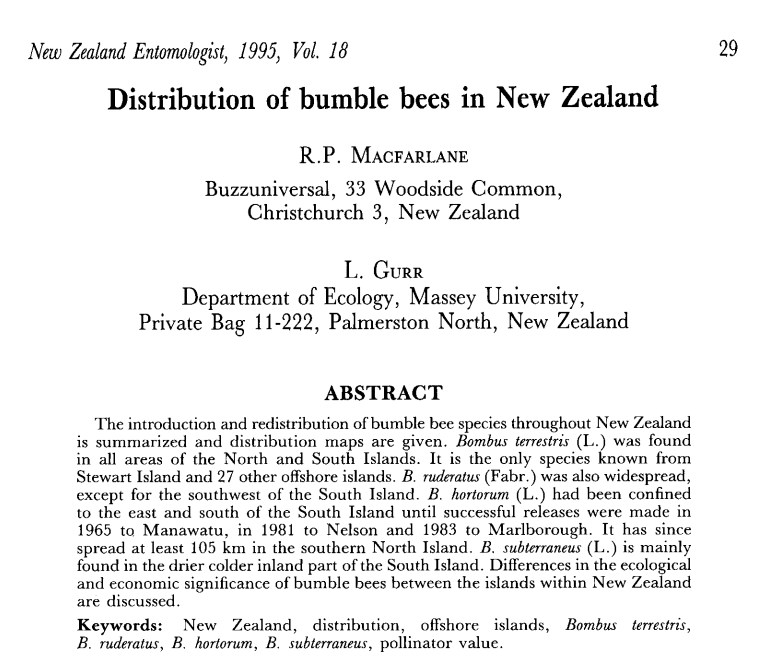
New Zealand Entomologist 1995 Vol 18 Distribution of bumble bees in New Zealand

New Zealand Entomologist, 1995, Vol. 18 Distribution of bumble bees in New Zealand New_Zealand_Entomologist_1995_Vol_18_Distribution_of_bumble_bees_in_New_Zealand.pdf

In 1995, entomologists R. P. Macfarlane and L. Gurr published Distribution of bumble bees in New Zealand, investigating how introduced bumblebees had spread across the country. They examined records of more than 28,000 bumblebees visiting over 300 types of flowers. Their research traced the first attempted introductions in 1875–76 and the successful release of 93 queens near Christchurch in 1885. By the time of their study, four introduced bumblebee species were established. They recorded the long-tongued Bombus subterraneus around Orari and Pareora Gorges, Sherwood Downs, Ashwick Flats and Fairlie, while the more widespread Bombus terrestris had been observed foraging as high as 2,500 metres around Aoraki/Mount Cook. Bumblebees originally introduced to pollinate red clover had spread far beyond the paddocks they were intended to help.

What interested me most was how these newcomers had become part of our wider ecosystem. The researchers reported that Bombus terrestris also pollinated at least 53 native plant species, while introduced bumblebees could help weeds such as gorse produce seeds. They were valuable to farming, particularly clover, lucerne and horticultural crops, but their spread also raised conservation questions, especially on offshore islands. The study doesn't establish that bumblebees harmed those native plants, but it shows how introducing one group of insects can create new relationships across an entire landscape. We brought bumblebees to help reproduce introduced crops. More than a century later, they were also visiting native flowers and potentially helping introduced weeds spread. It's another example of our two overlapping histories of pollination.

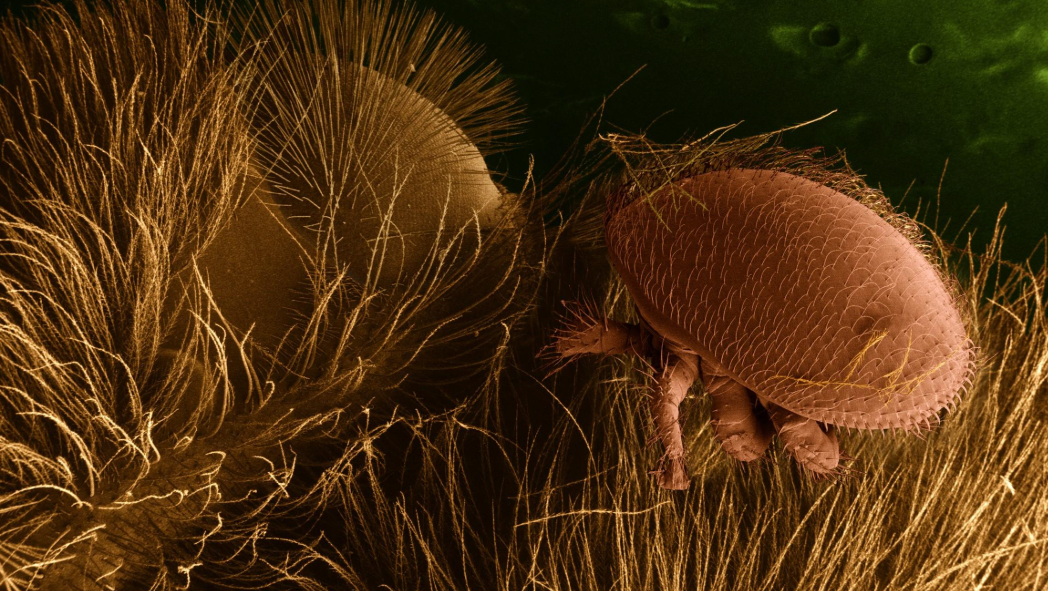
Varroa mite on a honeybee

The parasitic varroa mite weakens honeybees and spreads damaging viruses. First detected in New Zealand in 2000, it remains a major challenge for beekeepers. Image: Eric Erbe and Christopher Pooley, USDA Agricultural Research Service. Public domain.

Honeybees arrived in New Zealand in 1839, but one of their most destructive parasites came much later. On 11 April 2000, the varroa mite (Varroa destructor) was discovered in beehives in South Auckland. Nobody knows exactly how it entered the country, and it may have been here unnoticed for several years. By 2006 it had reached the South Island and has since spread throughout mainland New Zealand. The Chatham Islands remain free of the mite. Measuring just 1–2 mm across, varroa feeds on honeybees' body tissues and spreads harmful viruses, weakening bees and eventually killing untreated colonies. It primarily affects honeybees, rather than our native bees or introduced bumblebees. Beekeepers must now regularly inspect and treat their hives, adding significant costs to honey production and crop pollination. It is another reminder of how an introduced organism can permanently change our environment, and why protecting New Zealand from new pests and diseases matters.

The tiny mite that changed New Zealand beekeeping - varroa was confirmed in North Canterbury in September 2008, but a report in the New Zealand BeeKeeper magazine in June 2009 stated that no mites had yet been found south of the Rakaia River. Timaru beekeepers prepared for the approaching mite, and The New Zealand BeeKeeper reported on a varroa training workshop held in Timaru on 6 June 2008. Beekeepers from across the southern South Island attended to learn how to recognise and control the parasite. https://beekeeping.nz/NZBDA/NZBkpr/2008_07_NZBkpr.pdf

By 28 November 2016 veroa was here. Beekeeper Reece Adamson reflected on the arrival of varroa in Otago and Southland during 2011–12, recalling the adjustments beekeepers had to make. Here is a firsthand account of the mite's southward spread: https://www.odt.co.nz/news/sticking-at-it-the-secret-to-success-in-a-sticky-business-k19nwiw6

After learning how our native plants reproduced before honeybees arrived in 1839, I began wondering what would happen if they disappeared.

Our native forests wouldn't suddenly die, and we wouldn't run out of food. But some of the farming systems we've developed over nearly 190 years would face serious difficulties.

Honey production would stop, and crops would suffer. Without honeybees, New Zealand's commercial production of mānuka, clover and other honeys would effectively cease. Beekeeping businesses, including those built by generations of my own Cloake family in South Canterbury, would be affected.

The consequences would extend well beyond honey. Honeybees pollinate many of our apples, cherries, kiwifruit and vegetable seed crops. They are particularly important for producing white-clover seed, used to establish the pastures that feed sheep and cattle.

While researching this, I found a fascinating local example in the New Zealand Journal of Agriculture, January 1959. The Department of Agriculture recorded 470 beehives across 30 apiaries between the Pareora and Ōtaio rivers, an important white-clover seed-growing district. Researchers believed there were too few hives to achieve maximum seed production.

Today, the Foundation for Arable Research recommends at least two strong honeybee hives per hectare for effective white-clover seed pollination. Without honeybees, seed growers would need other pollinating insects or alternative methods, potentially reducing yields and increasing costs. Not every crop would suffer. Wheat, barley and oats are mainly wind- or self-pollinated. Established clover plants could continue growing and spreading, but producing new seed would be more difficult.

Would our native plants survive?

Yes, many would. Aotearoa's native plants were reproducing long before honeybees arrived. Native bees, flies, moths, beetles and birds would continue pollinating flowers. Wind-pollinated trees such as tōtara and native beech would reproduce, while ferns would continue producing spores. Some plants might produce fewer seeds where introduced honeybees now contribute to their pollination. Others could benefit from less competition for nectar and pollen. According to the Department of Conservation, honeybees can compete with indigenous animals for floral resources and help pollinate invasive weeds. The effects vary between species and habitats. If all bees disappeared, including native bees and bumblebees, the consequences would be greater. Other insects and birds could still pollinate many plants, but they couldn't necessarily replace every bee's work.

Are honeybees at risk of disappearing?

Honeybee extinction is not an immediate prediction, but keeping colonies healthy requires constant work. The Ministry for Primary Industries' 2025 Colony Loss Survey estimated that 12.8% of managed honeybee colonies were lost over winter, with the parasitic varroa mite the leading identified cause. These are colony losses, not evidence that the species is approaching extinction. Beekeepers can establish replacement colonies, but losses increase their workload and costs. Meanwhile, scientists are investigating how native bees, flies and other insects can contribute to commercial crop pollination, supported by suitable habitats and flowering plants.

What have we learned?

I started this history hunt wanting to understand my family's beekeeping past. I've discovered how native plants reproduced before honeybees arrived, why people introduced new pollinators and how dependent some of our agricultural industries have become on them. We've developed farming systems that rely heavily on managed honeybees. Yet our native plants remind us that pollination involves many species, each with different roles.

Honeybees are important to our economy, but they are not the only pollinators that matter.

Protecting them means managing pests and diseases and ensuring they have suitable food sources. Protecting native pollinators also means caring for indigenous vegetation, nesting places and the relationships that developed here long before European settlement. Next time you see an insect or bird visiting a flower, look a little closer. It might be helping produce our food, regenerate native forest or spread the next generation of plants.

Understanding those connections gives us another reason to look after the places we share.

Roselyn Fauth (née Cloake) | WuHoo Timaru

Research sources include the Museum of New Zealand Te Papa Tongarewa, Department of Conservation, Environment Canterbury, New Zealand Plant Conservation Network, Papers Past (National Library of New Zealand), and scientific research published in the New Zealand Journal of Botany. Te Papa lists these watercolours as having no known copyright restrictions, but it's still worth following its image-use guidance.

Botanical illustrations and native plants

1. Sarah Featon and The Art Album of New Zealand Flora (Te Papa) https://www.tepapa.govt.nz/the-art-album-of-new-zealand-flora

2. Sarah Featon's illustration of five hebes (Te Papa) https://collections.tepapa.govt.nz/object/310850

3. Sarah Featon's horokaka and kōkihi illustration (Te Papa) https://collections.tepapa.govt.nz/object/550198

4. New Zealand's Native Bees: Quiet Lives of Desperation (Te Papa, Julia Kasper, 2021) https://blog.tepapa.govt.nz/2021/02/01/new-zealands-native-bees-quiet-lives-of-desperation/

5. New Zealand Plant Conservation Network: native plant identification and ecology https://www.nzpcn.org.nz/

6. W. B. Johnston, Locating the Vegetation of Early Canterbury: A Map and the Sources (1961) https://paperspast.natlib.govt.nz/periodicals/TRSBOT19610916.2.2

7. Howell and Jesson (2013): The Effect of Bird and Bee Visitation on Pollination and Reproductive Success in Harakeke
https://doi.org/10.1080/0028825X.2013.772904
This study compares how effectively birds and honeybees transfer pollen on harakeke.

Taylor & Francis Online

8. Lynda Delph (2022): Functional Precocious Protogyny in New Zealand Sun Hebes https://doi.org/10.1080/0028825X.2021.1936574 Examines hebe flower reproduction and records native flower beetles transferring pollen. Published online in 2021 and in the journal's 2022 volume.

9. Department of Conservation: Tī kōuka / cabbage tree. https://www.doc.govt.nz/nature/native-plants/cabbage-tree-ti-kouka/ 
10. Department of Conservation: Mānuka and kānuka https://www.doc.govt.nz/nature/native-plants/manuka-kahikatoa-and-kanuka/ 
11. Department of Conservation: Native ferns and their reproduction https://www.doc.govt.nz/nature/native-plants/ferns/ 
12. New Zealand Plant Conservation Network: Creeping fuchsia https://www.nzpcn.org.nz/flora/species/fuchsia-procumbens/ 

Introduced bees and changes to New Zealand's environment
13. Historical account of Emma Belfield's 1881 bumblebee introduction, reprinted in the New Zealand Journal of Agriculture (1916) https://paperspast.natlib.govt.nz/periodicals/NZJAG19160821.2.18 
14. Timaru Herald, 26 July 1876: Emma Leonora Mellish and Herbert Belfield's marriage notice https://paperspast.natlib.govt.nz/newspapers/THD18760726.2.5 
15. Department of Conservation: Honeybees on conservation land https://www.doc.govt.nz/our-work/honeybees-on-conservation-land/ 
16. Environment Canterbury: Wild Russell lupin https://www.ecan.govt.nz/pest-search/wild-russell-lupin