
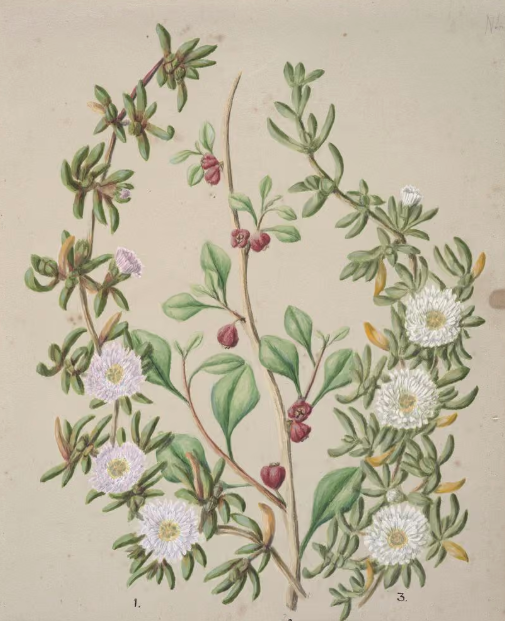
Horokaka; N.Z ice plant; Kokihi., circa 1885, New Zealand, by Sarah Featon. Purchased 1919. Te Papa (1992-0035-2277/93) The painting contains two different coastal plants: the pink and white flowers are horokaka (native ice plant), while the central stem with red fruits is kōkihi (native climbing spinach).
Horokaka (Disphyma australe), our native ice plant, grows on coastal rocks, cliffs and beaches. Its bright pink or white flowers attract insects that may help transfer pollen. After fertilisation, it produces seed capsules that respond to moisture, allowing seeds to be released when conditions are wet. Seeds can then be dispersed by animals and possibly wind or water. Horokaka can also reproduce from pieces of its creeping stems that take root. This means it can establish new plants without producing seeds every time. It is a wonderful example of the different survival strategies developed by our coastal plants. Kōkihi, also called native climbing spinach, has tiny yellowish flowers and small, fleshy fruits that ripen pink or red. Its precise natural pollinators remain poorly documented. Invertebrates can disperse its fruit, and the plant can also spread when trailing stems develop roots. Both show why we must distinguish between pollination, seed dispersal and vegetative reproduction. They are different stages or methods of creating new plants.