
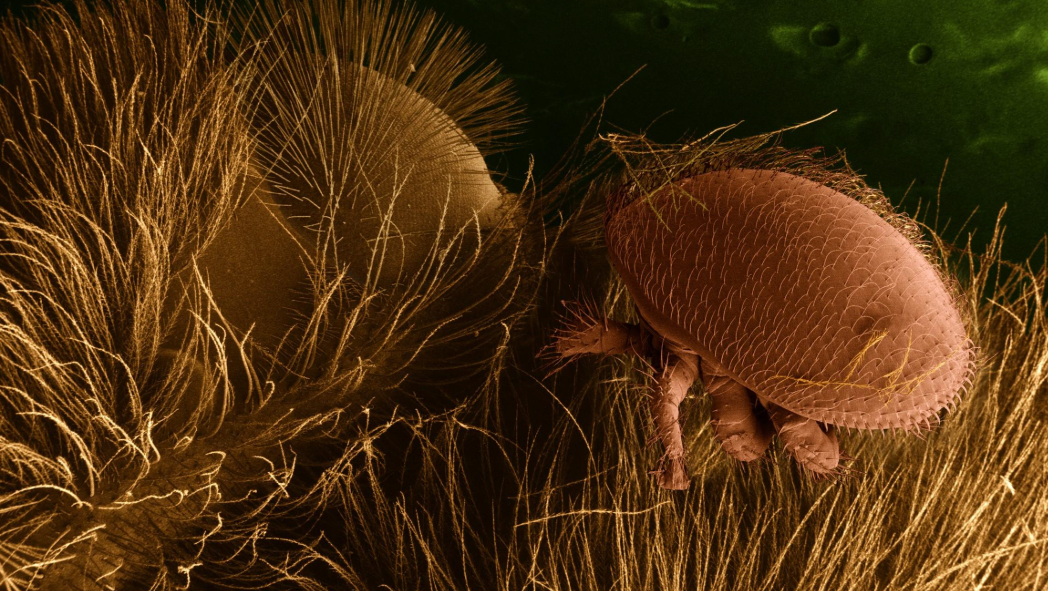
The parasitic varroa mite weakens honeybees and spreads damaging viruses. First detected in New Zealand in 2000, it remains a major challenge for beekeepers. Image: Eric Erbe and Christopher Pooley, USDA Agricultural Research Service. Public domain.
Honeybees arrived in New Zealand in 1839, but one of their most destructive parasites came much later. On 11 April 2000, the varroa mite (Varroa destructor) was discovered in beehives in South Auckland. Nobody knows exactly how it entered the country, and it may have been here unnoticed for several years. By 2006 it had reached the South Island and has since spread throughout mainland New Zealand. The Chatham Islands remain free of the mite. Measuring just 1–2 mm across, varroa feeds on honeybees' body tissues and spreads harmful viruses, weakening bees and eventually killing untreated colonies. It primarily affects honeybees, rather than our native bees or introduced bumblebees. Beekeepers must now regularly inspect and treat their hives, adding significant costs to honey production and crop pollination. It is another reminder of how an introduced organism can permanently change our environment, and why protecting New Zealand from new pests and diseases matters.
The tiny mite that changed New Zealand beekeeping - varroa was confirmed in North Canterbury in September 2008, but a report in the New Zealand BeeKeeper magazine in June 2009 stated that no mites had yet been found south of the Rakaia River. Timaru beekeepers prepared for the approaching mite, and The New Zealand BeeKeeper reported on a varroa training workshop held in Timaru on 6 June 2008. Beekeepers from across the southern South Island attended to learn how to recognise and control the parasite. https://beekeeping.nz/NZBDA/NZBkpr/2008_07_NZBkpr.pdf
By 28 November 2016 veroa was here. Beekeeper Reece Adamson reflected on the arrival of varroa in Otago and Southland during 2011–12, recalling the adjustments beekeepers had to make. Here is a firsthand account of the mite's southward spread: https://www.odt.co.nz/news/sticking-at-it-the-secret-to-success-in-a-sticky-business-k19nwiw6