
 https://www.epa.govt.nz/assets/Uploads/Documents/Everyday-Environment/Publications/Pollinator-factsheets-and-activity-sheets/Meet-our-pollinators-activity-sheet.pdf EPA material is generally CC BY-SA 4.0, except material with separate third-party rights.
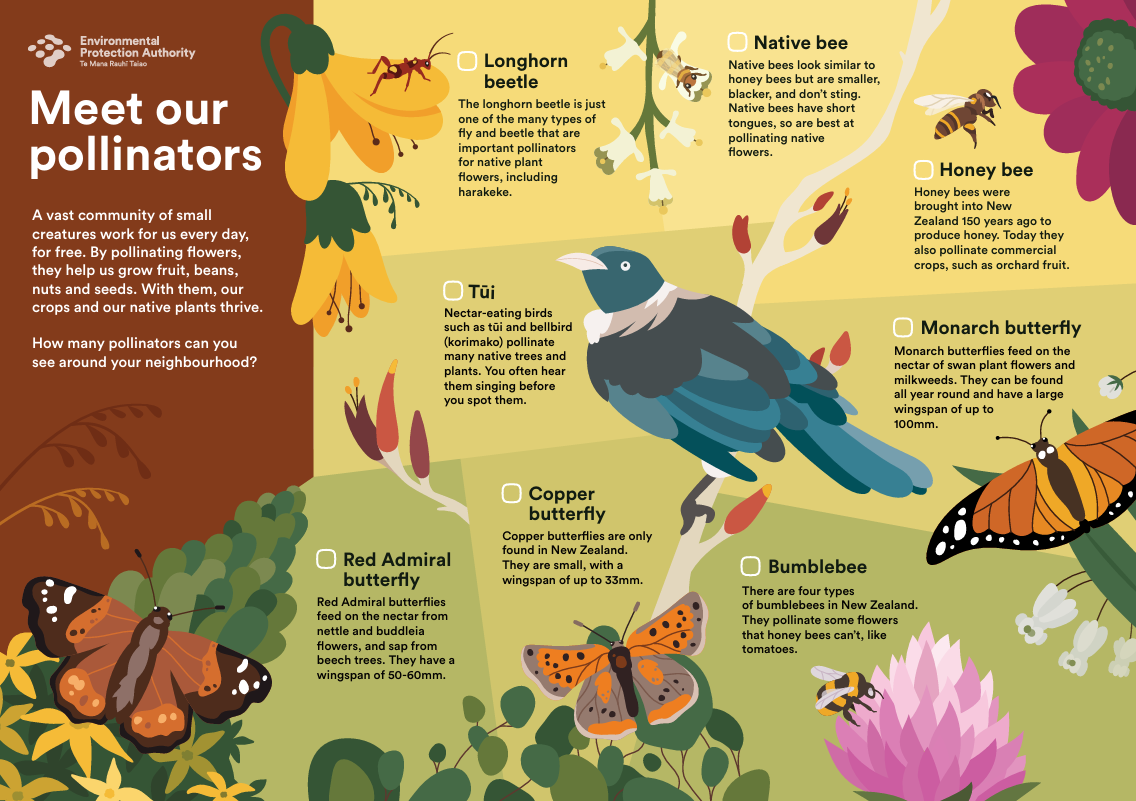
Pollinators help flowering plants reproduce, supporting native vegetation and crops that produce fruit, vegetables, nuts and seeds. The poster encourages children to discover which pollinators live in their neighbourhood.
- Longhorn beetle Longhorn beetles are among the many beetles and flies involved in pollinating native flowers, including harakeke.
- Tūī Nectar-feeding birds such as tūī and korimako (bellbirds) pollinate native trees and other flowering plants. Their calls are often heard before the birds are seen.
- Red admiral butterfly Adults visit flowers for nectar and feed on tree sap. Native nettles are especially important as food plants for their caterpillars. Wingspan approximately 50–60 mm.
- Copper butterfly New Zealand's endemic copper butterflies are small, with wingspans reaching approximately 33 mm.
- Bumblebee Four introduced bumblebee species occur in New Zealand. Their buzz-pollination abilities make them particularly useful for crops such as tomatoes.
- Native bee Many native bees are smaller and darker than honeybees. Their relatively short tongues suit many small native flowers. They rarely sting people.
- Honeybee Introduced for honey production, honeybees now also provide important pollination services for commercial crops, including orchard fruit.
- Monarch butterfly Monarchs visit milkweed and other nectar-producing flowers. Their wingspans can reach approximately 100 mm. They can be seen throughout the year in suitable climates.