
https://family.cloake.co.nz/honey-and-beekeeping/cloake-s-honey
How my family's beekeeping history led me to two bumblebee queens, a Timaru woman and the transformation of South Canterbury's landscape.
On 5 February 1881, two bumblebee queens flew into a clover field near Timaru. They were the only survivors of 18 queens shipped from Britain. A newspaper reported that they “flew away briskly against the wind.”
I discovered their story while researching my family's beekeeping history. Generations of Cloakes kept bees in South Canterbury, and I wanted to understand why they started, what bees contributed to farming, and how the industry developed.

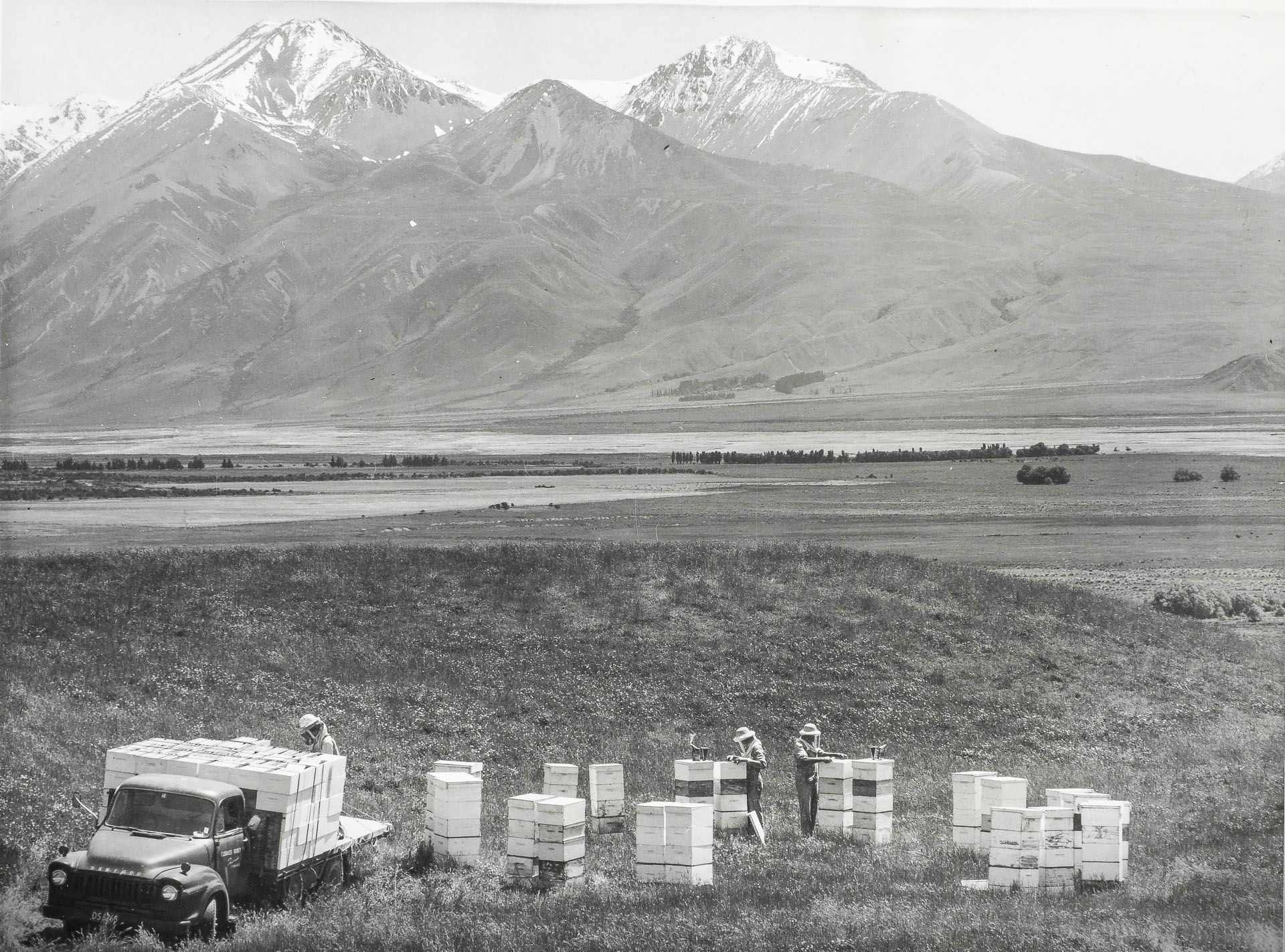
I grew up with Cloake's Honey. There was a tin on a high shelf in our hallway, and I remember visiting my grandparents, aunty, uncle and cousins at Fairview, the smell of beeswax, and bringing home smooth, creamed clover honey for our toast. I remember a Summer Christmas where the honey house had been cleared out, we all came together with balloons in the Christmas tree and colours paper hats, crackers and shared a meal together. Little trinkes fell from the crackers with cheesy jokes... and the smell... the smell of bees wax and honey. A sniff of either today, takes me straight back to my childhood visits to Fairview homes, workshops and the honeyhouse.
There were many discussions over afternoon tea about the weather and the impact on the bees and the business. As a child most of it went over my head, but I could tell at times it was stressful and very hard work. I remember watching family work with the hives in the field from the safety of the car. Dad once took me into the honey house and explained the process from making frames in the workshop, to extracting the bees hard work.
But I had never really considered where those bees came from.
And why did we need to bring bees to a country that already had them? What was here before honeybees?
Now as an adult, the Cloake's Honey operation, which used to be the largest in the South Island has wound up. The plant shifted out to other operators to carry forward. And now I revisit those memories and look deeper into the bees and their interconnectdness with our lives. Bee's and polinators are critical to our survial. Here is is my journey learning about why.
My first discovery was that Aotearoa already had its own pollinators.
According to Te Papa, New Zealand has 28 recognised native bee species. Most are small, dark and solitary, nesting in the ground or hollow stems rather than large honey-producing colonies. They pollinate plants including mānuka and kānuka.
Flies, beetles, moths, butterflies, birds and some lizards also transfer pollen. Tūī visiting harakeke or kōwhai flowers are part of this much older ecological network. Before European pastoral farming, South Canterbury included forests, shrublands, wetlands, coastal lagoons, tussock grasslands and braided rivers. The landscape was shaped by natural processes and human activity, including fire.
For generations, Māori managed and gathered resources through mahika kai practices. Rivers, wetlands, coastal areas and inland country supported food gathering and cultural connections. According to Te Ara's history of South Canterbury, European settlement transformed this landscape. Native vegetation was cleared, wetlands drained and land brought into private ownership, affecting traditional access to resources.
In 1877–79, around the time bumblebee imports were being discussed, Te Maihāroa led a protest to Ōmarama asserting customary rights in the inland country.
I found myself considering how differently people experienced these changes. Land celebrated by settlers as improved pasture could also represent lost habitats and access to traditional food-gathering places.

Honey Tins on display at Oamaru visitor center including Cloakes Honey. Below: Painting by Roselyn Cloake inspired by the Cloakes Honey Tin. I've really enjoyed rediscovering our family roots. If Annabelle was a boy we were going to call him Bertie. Above is a painting of the honey tin label. Cloakes Honey Limited (Fairview Road, Timaru) was incorporated on 12 December 1963, with Mervyn David Cloake serving as a long-time director
Why did farmers want different bees?
European settlers introduced sheep, cattle, pasture grasses, clover and other plants familiar from overseas. Red and white clover were particularly valuable. They provided nutritious livestock feed, while bacteria in their root nodules converted atmospheric nitrogen into forms plants could use, improving pasture fertility.
But there was a problem... farmers could grow red clover for grazing and hay, yet struggled to produce reliable seed crops. Each rounded pink flower head contains many tiny tubular flowers. Some honeybees have difficulty reaching the nectar and pollinating them effectively. Long-tongued bumblebees are particularly suited to the task. Without reliable local seed production, farmers depended heavily on imported seed to establish new pastures.
Honeybees had arrived decades earlier, in 1839, when Mary Bumby brought two hives from England to Hokianga. Māori also became involved in commercial beekeeping. Honeybees produced honey and pollinated introduced plants, particularly white clover and orchard crops. But nineteenth-century farmers believed bumblebees could solve the red-clover seed problem. They weren't importing bumblebees for honey. They wanted them to help flowers produce seeds.

The Timaru woman who imported bumblebees
While searching old newspapers, I found references to a Mrs Belfield.
A Timaru Herald marriage notice dated 26 July 1876 helped identify her as Emma Leonora Mellish, daughter of William Mellish of Guernsey. She married Herbert Belfield, associated with the Timaru Herald, on 8 July 1876.
According to an original February 1881 Timaru Herald account, reprinted in the New Zealand Journal of Agriculture in 1916, Emma approached an English beekeeper named Mr Neighbour while visiting Britain around 1878.
She wanted to know whether bumblebees could survive the voyage to New Zealand.
An agent located nests in Scotland. During early winter, dormant queens were collected and packed in moss to keep them cool and inactive.
Eighteen queens travelled aboard the John Elder, in its ice-house, before transferring at Melbourne to the Arawata. Delays during the journey from Bluff to Timaru proved disastrous.
Only two survived.
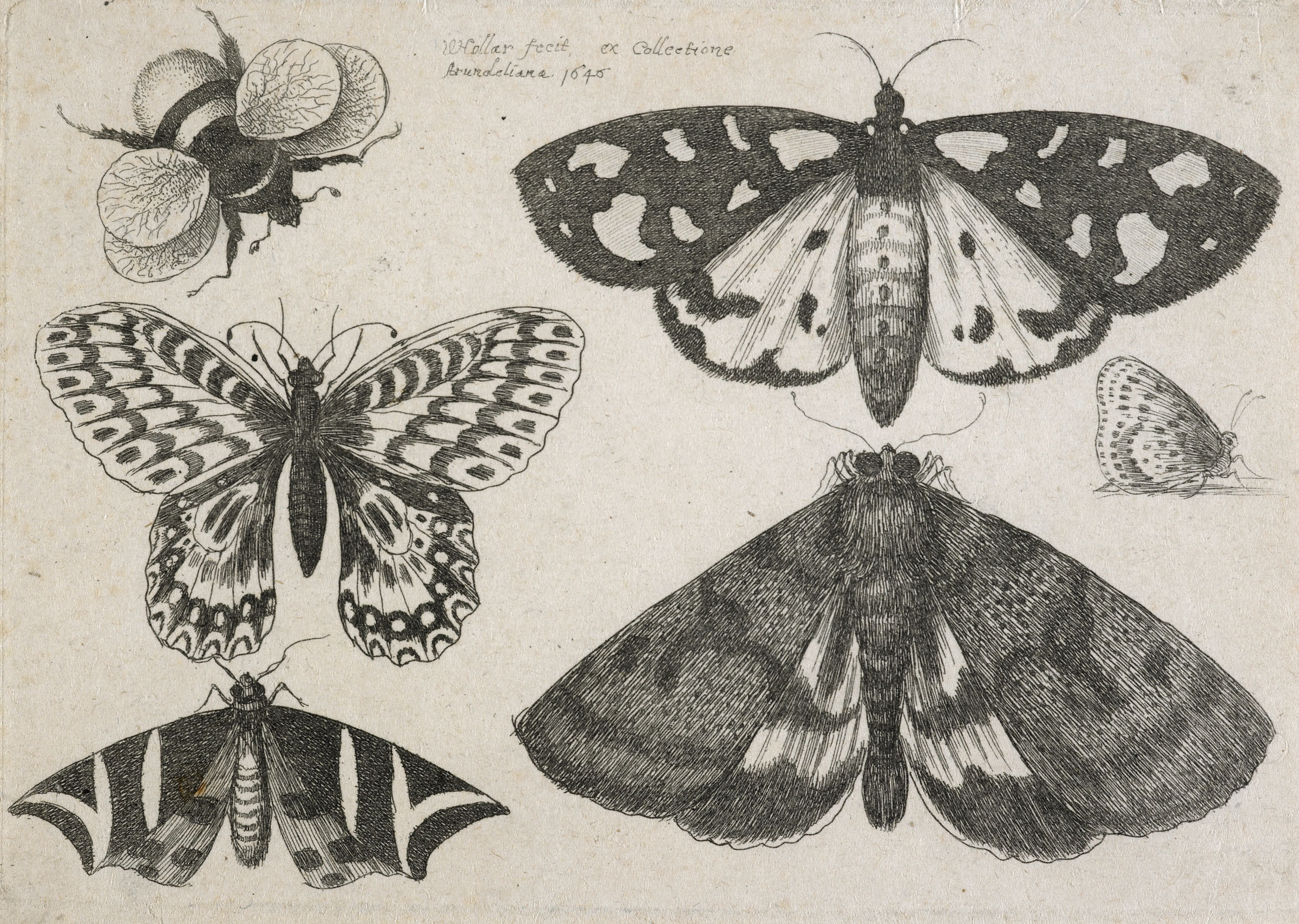
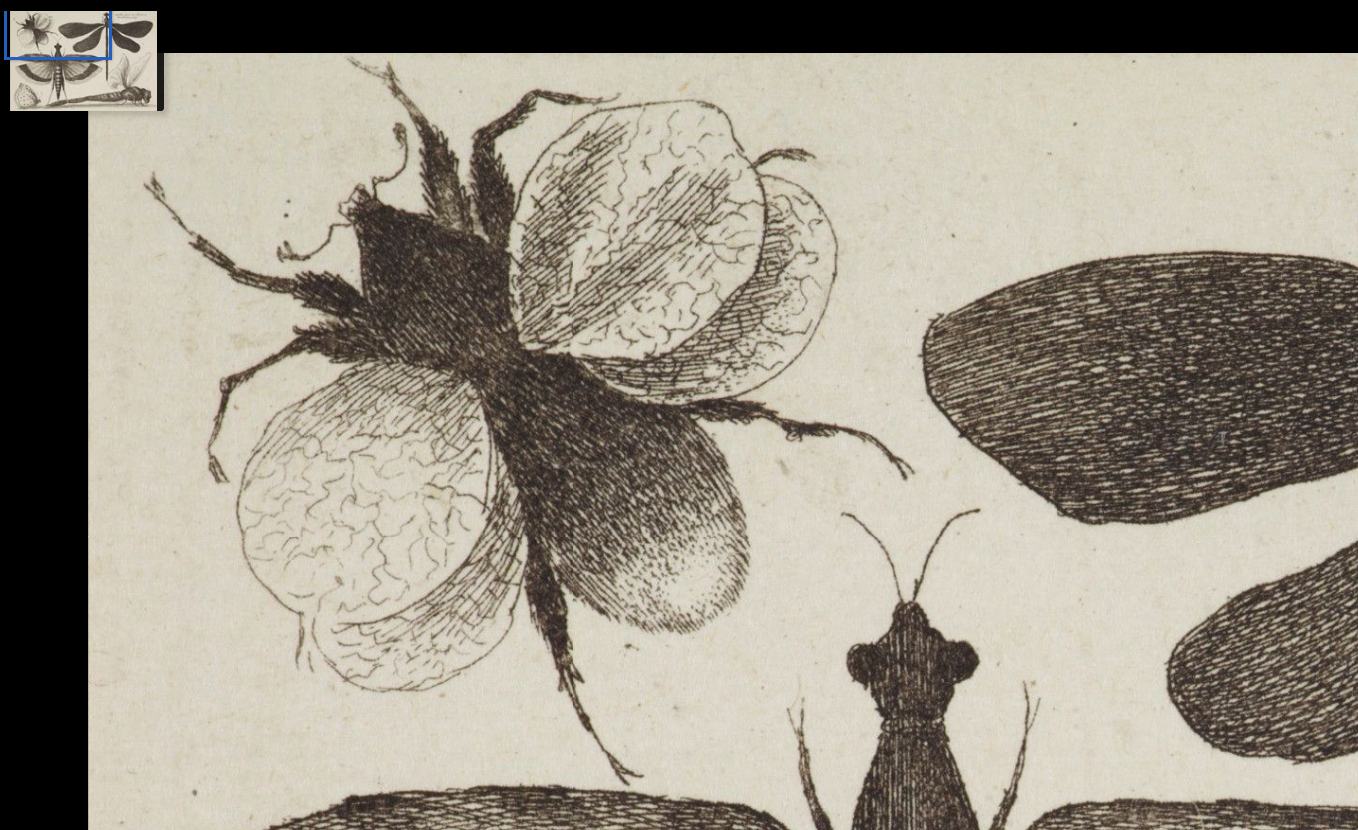
Muscarum scarabeorum ... varie figure. Plate 9. Three moths, two butterflies, and a bumble-bee., 1646, Flanders, by Wenceslaus Hollar. Gift of Bishop Monrad, 1869. Te Papa (1869-0001-173) and in detail:
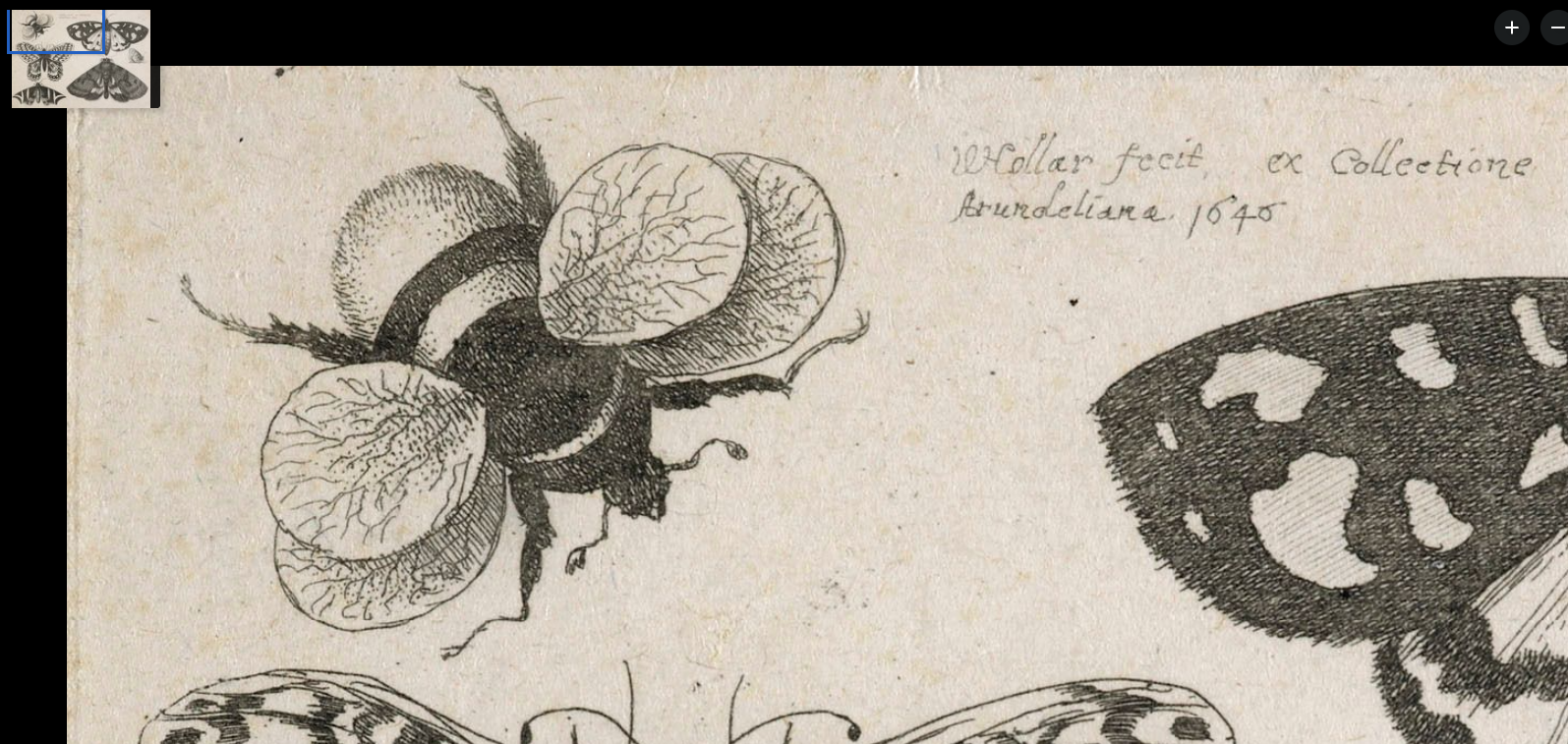
On Saturday 5 February 1881, they were released into clover on Mr Bristol's farm. Mr Hislop, formerly associated with the Timaru Domain, helped care for the shipment and open the box.
The surviving newspaper account records their release, but not whether they established colonies. Nor does it tell us whether Emma witnessed the moment.
I would love to learn more about her.
It is remarkable that a Timaru woman helped organise such an ambitious agricultural experiment when the journey itself was so risky.
Bumblebees reach South Canterbury's paddocks
Other importation attempts followed, with successful establishment in Canterbury in 1885.
By January 1886, the Temuka Leader reported bumblebees at Pleasant Point and Mr Tripp's station. One Temuka gentleman apparently carried a dozen specimens in a box in his pocket!
Their arrival was clearly attracting attention.
I then found a letter titled Clover Seed, published in the Temuka Leader on 13 March 1890.
Writer Edward Pilbrow argued that local farmers were overlooking a commercial opportunity. Bumblebees were visiting red clover and cowgrass, helping the flowers produce seed, yet much was going unharvested.
He described George Cliff's farm on the Winchester road from Temuka.
Cliff's first clover cutting had produced hay for livestock. The second growth was flowering heavily and looked promising for seed production.
One paddock could potentially provide two products: animal feed followed by saleable seed.
But pollination was only part of the process. Farmers needed machinery to thresh the dried flower heads, separate the tiny seeds and clean them for sale.
The newspaper described a promising crop, although it did not record Cliff's eventual harvest.
I loved finding this example. It connected the insects with an actual South Canterbury farmer, his paddock and the equipment required to turn flowers into a business opportunity.
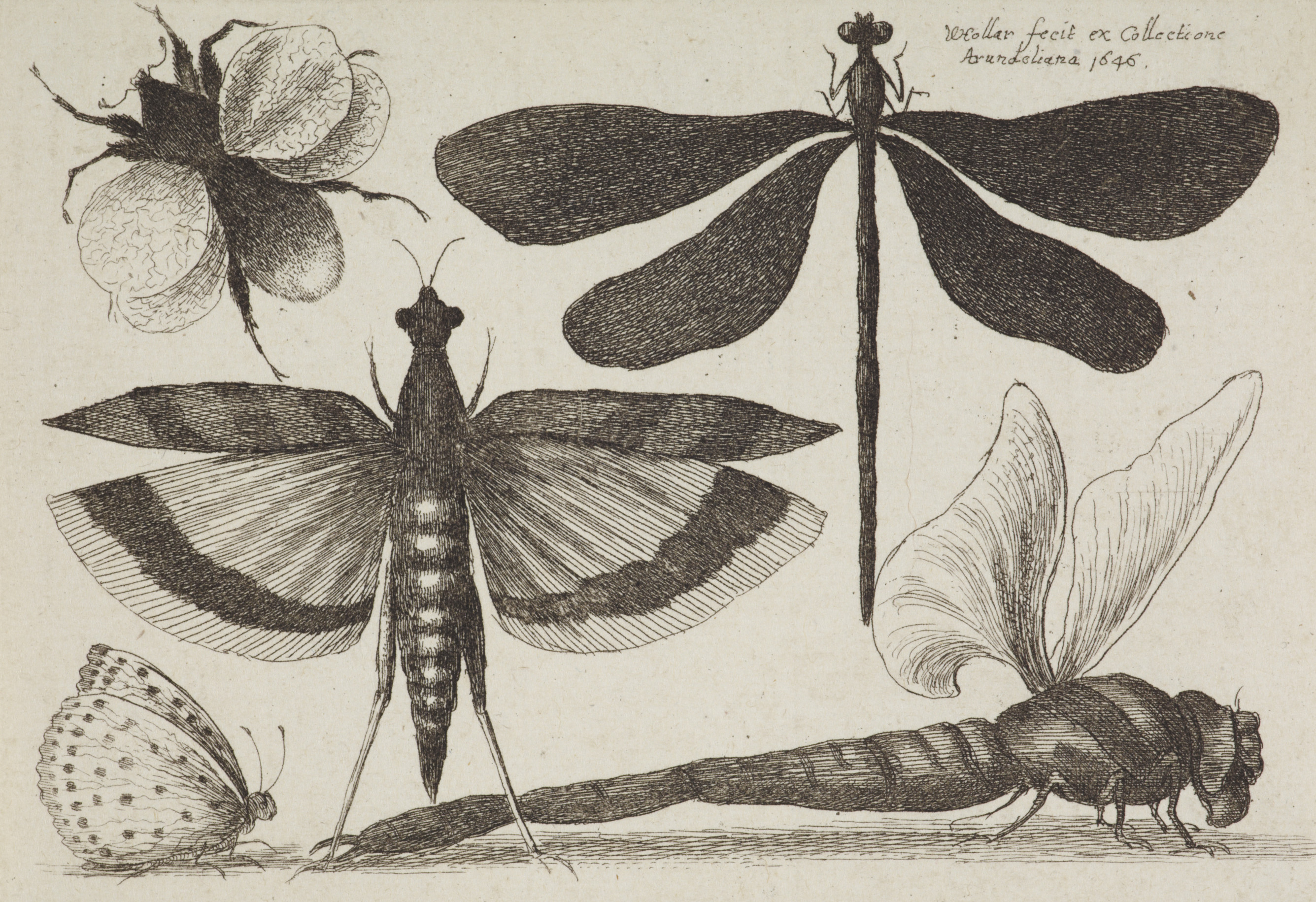
Muscarum scarabeorum ... varie figure. Plate 6. Dragonflies, a bumble-bee, a grasshopper and a butterfly., 1646, Flanders, by Wenceslaus Hollar. Gift of Bishop Monrad, 1869. Te Papa (1869-0001-170) and detail:
Honeybees, orchards and a growing industry
Bumblebees helped with deep flowers such as red clover. Honeybees were especially valuable for pollinating white clover, orchard blossoms and many other crops.
Apples, pears, plums and cherries benefit from bee pollination, as do lucerne and some vegetable seed crops. Not everything depends on bees, however. Wheat, oats and barley generally reproduce through wind or self-pollination.
Honeybees also offered something bumblebees did not: large colonies producing harvestable honey.
An 1884 Timaru Herald report shows how beekeeping was developing locally.
At the Timaru Agricultural and Pastoral Show, Colonel Bayley of Makikihi displayed live bees in a glass observation hive, moveable-frame hives, a honey extractor and other equipment.
The association had introduced prizes for bees, honey, hives and related equipment.
Another woman caught my attention. Mrs M. Stack won first prize for extracted honey, beating Colonel Bayley in that class.
Who was she, and where did she keep her bees? Another history hunt!
By 1914, W. E. Barker of Peel Forest was presenting a paper titled Fourteen Years' Experience with Bees in the Orchard at a national beekeeping conference.
In January 1919, the Timaru Herald reported excellent Canterbury honey-crop prospects, helped by exceptional clover growth.
Then I found an interesting figure in the Department of Agriculture's 1924 annual report:
896 cases of honey were graded for export at Timaru, compared with 576 at Lyttelton.
The records don't identify every supplying beekeeper or the exact Timaru grading location, but they show the town's place in an organised export industry.
Beekeeping now involved much more than hives. There were growers, queen breeders, equipment makers, processors, graders, co-operatives and exporters.
Following the Cloake family's bees
My great-grandfather Bertie Thomas Cloake kept bees at Springbrook, near St Andrews, during the early twentieth century.
Our family stories describe modest beginnings that developed into a substantial operation.
In the Christchurch Star of 10 November 1933, I found Bertie winning first and second prizes for white liquid honey, second for creamed honey and first for yellow beeswax at the Canterbury show.
The creamed-honey award caught my eye. It was the smooth honey I remembered growing up with.
An account drawing on Bertie's obituary records that he imported queen bees from America around 1939, although he apparently wasn't impressed with the results. His subsequent queen-breeding work contributed to establishing honeybees on the Chatham Islands.
My grandfather Harry Cloake, with his sons Mervyn and Russell and other family members, continued developing the business. By the 1970s, it had become a major New Zealand beekeeping operation.
Harry also developed the Cloake Board, a method and device for raising queen bees efficiently by temporarily separating sections of a hive to encourage workers to raise queen cells.
While researching him, I found an independent account by American queen-breeding specialist Sue Cobey.
She recalled meeting Harry at the 1977 Apimondia Congress in Adelaide and later visiting his Timaru apiary. Impressed by his system, she helped teach and promote it internationally.
Something developed by my grandfather in South Canterbury became part of beekeeping practice around the world.
I am still investigating the family's creamed-honey innovations and their place within New Zealand's wider history of honey processing. Controlled crystallisation was already being practised in New Zealand by 1914, so it is important to distinguish the Cloakes' contributions from earlier developments.
Their story is one of observation, experimentation, practical knowledge and hard work.
But all this research raised another question.

At their home in Springbrook Harry Cloake his sister Myra (Mrs Rouse) Grandad Cloake known as Bertie and Granny Sarah Cloake.
What were the consequences of introducing new species?
Bees helped produce honey, improve pollination, support farming and create livelihoods. Yet their introduction was part of a much bigger transformation.
European settlers imported plants and animals for food, farming, sport and familiarity. Acclimatisation societies actively encouraged introductions.
Some proved useful. Others became invasive, spreading beyond their intended purpose and damaging native ecosystems.
Gorse, introduced for hedges, spread into farmland and natural habitats, competing with indigenous plants.
Rabbits, deliberately introduced, multiplied rapidly and damaged vegetation and farmland. Stoats and ferrets were then introduced partly to control rabbits, but became serious predators of native wildlife.
Land development brought other consequences. Native forests and shrublands were cleared, waterways modified and wetlands drained.
Environment Canterbury reports that approximately 90% of Canterbury's natural wetlands have been lost since European settlement.
These losses were not caused by bees, but they form part of the wider environmental history of the farming systems introduced alongside them.
Introduced bees can have ecological impacts too.
The Department of Conservation explains that honeybees may compete with native insects and other nectar-feeding animals for floral resources. They can also help pollinate introduced weeds.
This does not mean honeybees are automatically invasive or harmful wherever they occur. Their effects depend on the species, habitat, available flowers and colony densities.
A honeybee pollinating an apple tree provides a valuable agricultural service. In some native habitats, large numbers of honeybees may place pressure on other nectar feeders.
The same introduced species can bring economic benefits while creating environmental costs.
That is an important distinction when considering how people understood their decisions at the time and what we know today.
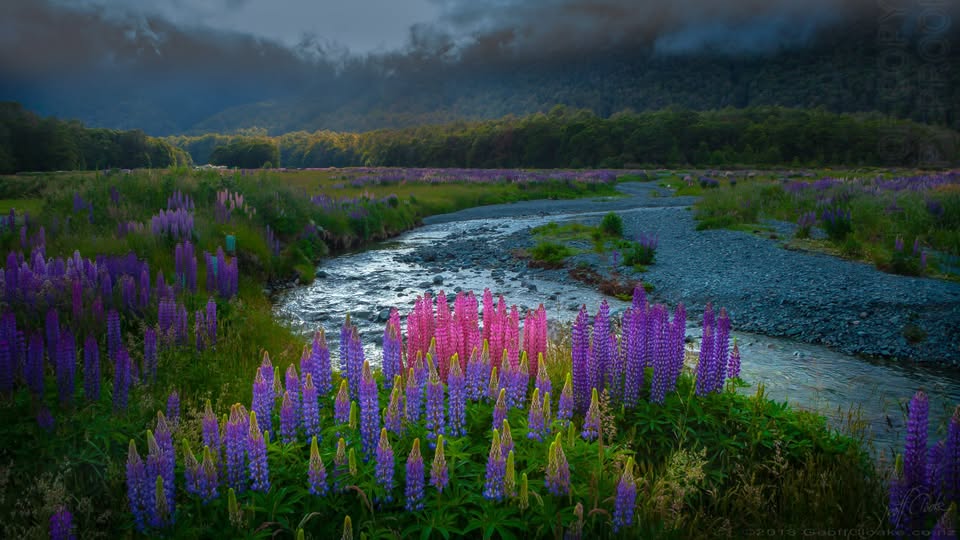
Natives among introduced lupins. Photography Bry Geoff Cloake. Russell lupins are a perfect example of how something beautiful can become an environmental disaster. People love photographing the spectacular purple, pink and yellow lupins around Lake Tekapo and the Mackenzie Country. But these introduced plants spread aggressively, smother native vegetation and transform the open gravel beds of our braided rivers. Their dense growth changes water flow and provides hiding places for predators that threaten rare native birds, including kakī (black stilt), ngutu pare (wrybill) and black-fronted terns. Their seeds can survive in the soil for years, making removal difficult and expensive. And we are paying to undo the damage. In 2025–26, more than $300,000 was allocated to weed control in the Upper Rangitata catchment, targeting lupins alongside gorse, broom and other invasive plants. Clearing these weeds requires contractors, specialist equipment and repeated treatment. The irony? Bumblebees visit lupins for pollen, helping them reproduce, yet their spread threatens habitats that support some of New Zealand's rarest wildlife. It's a reminder that just because something is beautiful, or good for bees, doesn't mean it's good for the environment.
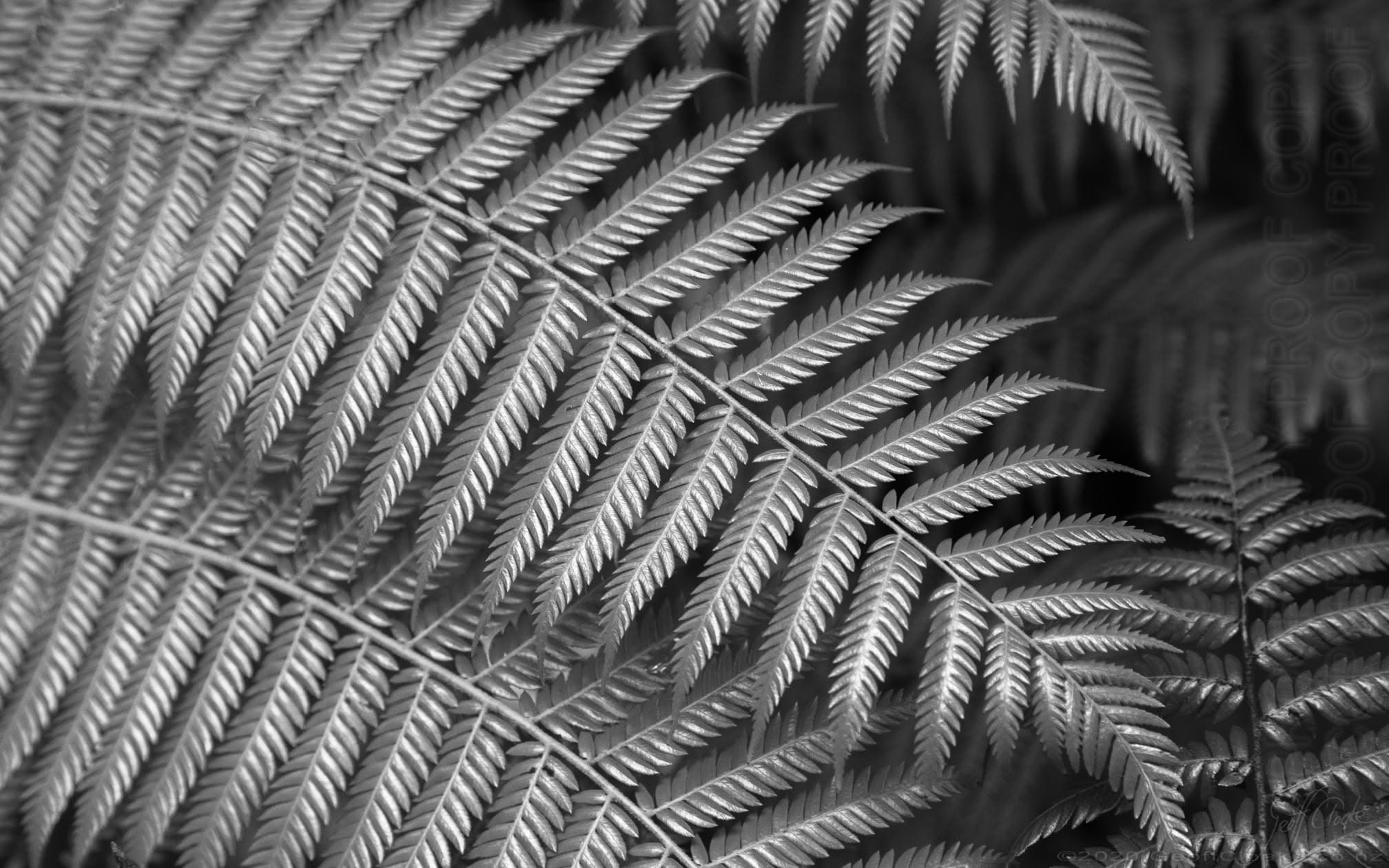
Ferns. Photography By Geoff Cloake. Fun fact! Not all New Zealand plants need bees or other animals to reproduce! Ferns don't even have flowers or seeds. They reproduce using tiny spores, usually carried by the wind. Native beech trees, grasses and rimu also use the wind, but to spread pollen. Nature had plenty of ways to reproduce long before honeybees and bumblebees arrived. Not everything in nature relies on bees! Ferns reproduce using tiny spores rather than flowers or seeds, while native beech trees and grasses use wind to spread their pollen. But everything is interconnected. Plants provide food, shelter and habitats for other living things, while insects, birds, water and soil all play their part. Bees are important, but they're just one part of a much bigger web of life.
Scientists return to the clover fields
One final discovery challenged the original reason for bringing bumblebees here.
In February 1954 and 1955, researchers placed 35 honeybee hives beside a ten-acre crop of Montgomery red clover and studied its pollinators. They also examined other South Canterbury clover fields.
Their 1958 paper, by I. W. Forster of Oamaru and W. V. Hadfield of Timaru, estimated that honeybees represented 77% of effective pollinating insects in one season and 89% in the next.
Those figures described the researchers' assessment of the pollinating insects, not the percentage of seed produced. Other scientists questioned aspects of the method, particularly differences in how efficiently individual bees pollinated.
The findings nevertheless challenged the assumption that honeybees were generally incapable of pollinating red clover.
Both honeybees and bumblebees can contribute, depending on the clover variety, bee species, weather and foraging conditions.
More than 70 years after Emma Belfield's experiment, South Canterbury's paddocks were still helping scientists investigate the same question.
Example of interconnectedness with our polinators
Today, Turnbull Grain & Seed supplies farmers throughout South Canterbury and the Mackenzie Country, with seed-mixing facilities in Timaru and Fairlie. It is also a retailer of Cropmark seeds, including access to pasture varieties such as red and white clover.
But here's something we might overlook. Before farmers can buy those clover seeds, someone has to grow them, and bees are critical to producing them.
Honeybees are particularly important for white-clover seed production, while bumblebees and honeybees both contribute to red-clover pollination. According to the Foundation for Arable Research, white-clover seed crops need at least two managed honeybee hives per hectare for effective pollination.
The resulting seeds help establish pastures that feed sheep and cattle. Clover also supports soil fertility through nitrogen fixation, benefiting the grasses growing alongside it.
Of course, not everything Turnbull sells relies on bees. Wheat, barley and oats are mainly wind- or self-pollinated. But clover shows how an agricultural system can depend on something as small as an insect transferring pollen between flowers.
It is quite a connection. More than 140 years after those two bumblebee queens were released near Timaru, the insects introduced to help European pasture plants reproduce remain an important part of the farming economy we built around them.
And it raises another question: as we have become increasingly dependent on introduced pollinators and crops, how do we also protect the native plants, insects and habitats that were here long before them?
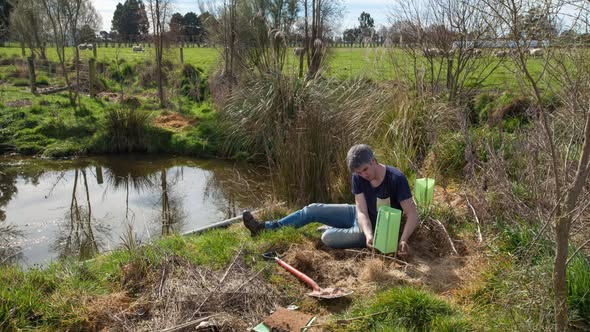
Chris Fauth helps plant manuka, Photo Geoff Cloake
Looking at our landscape differently
I began this history hunt wanting to understand why my family kept bees.
Along the way, I discovered native pollinators, a Timaru woman's extraordinary experiment, farmers developing clover-seed crops, women winning honey prizes, scientists challenging assumptions and my grandfather's contribution to international beekeeping.
I also learned more about the changes people made to South Canterbury's landscape and the consequences, both beneficial and harmful, of introducing new species.
I feel proud of my family's contribution. I also have a greater appreciation for our native pollinators and the environments that supported life here long before European farming.
Both histories matter.
The choices of previous generations helped shape the place we know today. Understanding their reasons, achievements and consequences might help us make better decisions for the future.
Next time you see a bee visiting a flower, take a closer look.
Is it a honeybee, a bumblebee or one of our native bees? Is the flower native or introduced? What depends on that tiny interaction?
And what might have been growing in that same place 200 years ago?
I started by following my family's bees. They have led me to a much bigger story about the place we call home.
Roselyn Fauth (née Cloake) | WuHoo Timaru
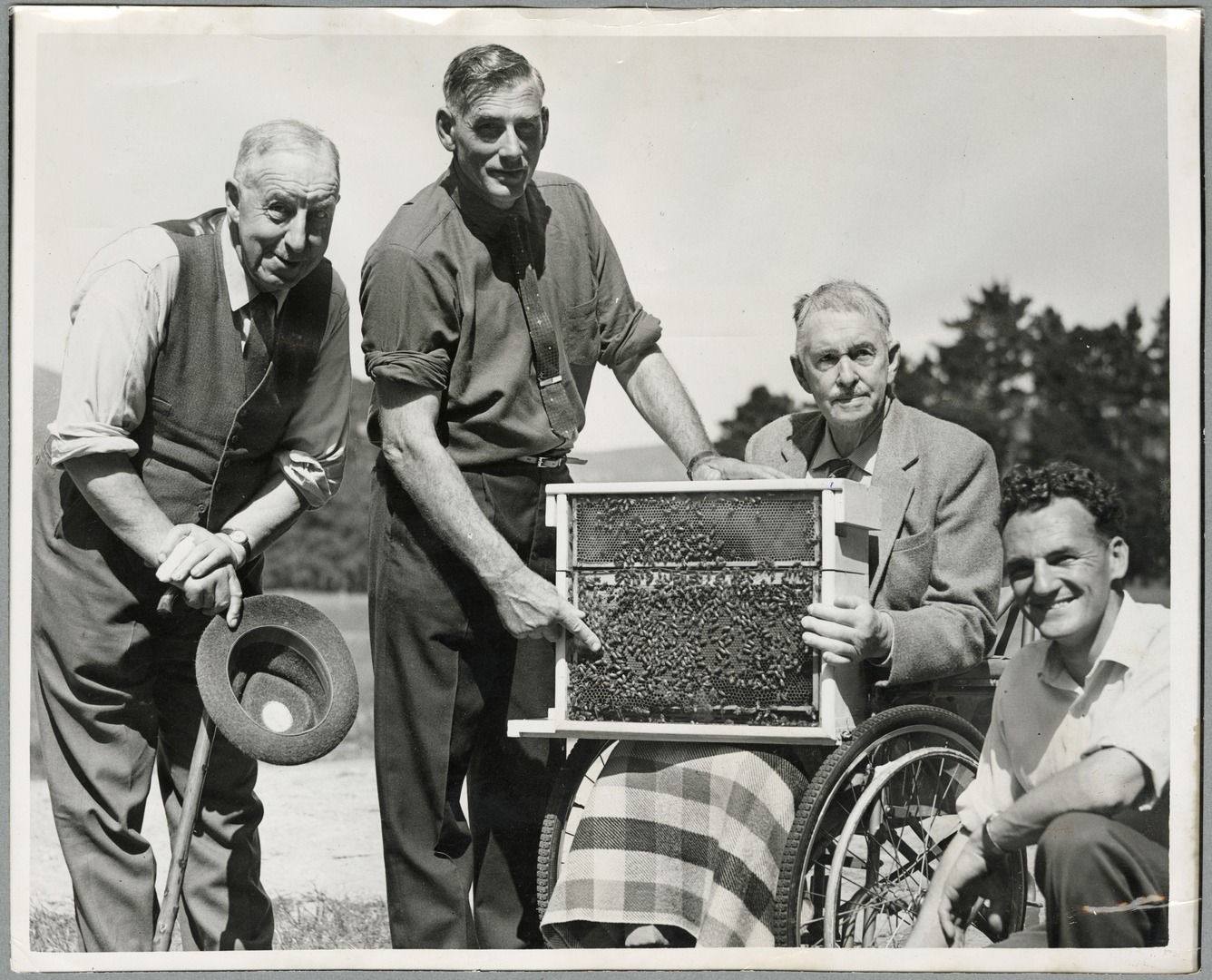
New Zealand Beekeepers' Association at Tai Tapu Domain. Pictured are George Gumbrell, Harry Cloake, W.B. Bray and David Penrose. 14 October 1963. Credit Christchurch Star: https://www.canterburystories.nz/collections/star/prints/1960-1964/ccl-cs-3215
 https://aorakiheritage.recollect.co.nz/nodes/view/4452" width="100%" height="NaN" style="box-sizing: inherit; max-width: 100%; height: auto; vertical-align: middle;">
Fairview bees exported (04 Sep 1979). Aoraki Heritage Collection, accessed 13/07/2025, https://aorakiheritage.recollect.co.nz/nodes/view/4452

My Aunty, Margaret Cloake on the Cover of the National Beekeepers Association of New Zealand in the check shirt at a tasting demonstration.

Marthy and Geoff Cloake.

Native Bee Polinators From South Canterbury Museum - Roselyn Fauth

WuHoo Timaru fun fact colouring in sheet on native and introduced bees with clover and manuka. You can download and colour it in here: wuhootimaru.co.nz/colouring-sheets/106-bees

Roselyn Cloake Roots 26
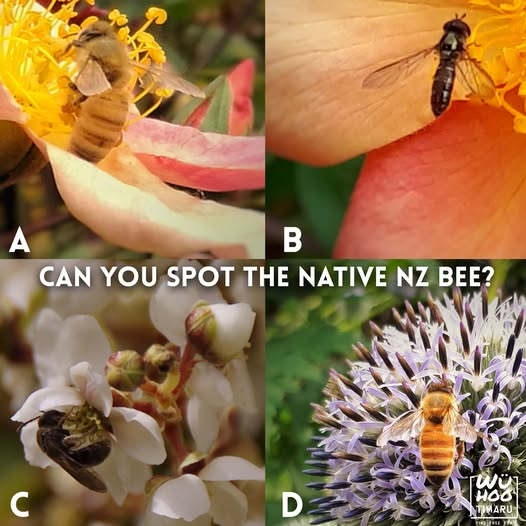
Can you spot the native NZ bee? A, B, C or D?
Learn more about our wee native NZ bees... download our colourful facts sheet: https://wuhootimaru.co.nz/colouring-sheets
They are:
- Smaller than imported bees and generally black.
- Don't sting and are not aggressive.
- Do not have hives or produce honey.
- Live in small families. Females lay 3–10 eggs in a lifetime.
- Live in nests under bare undisturbed soils, or in hollow flax stems or other plant material. Don't share nests but many nests are often in close proximity.
- Bees die at the end of Autumn but larvae survive over winter, emerging in mid spring.
- Larvae are fed with nectar and pollen from nearby flowers.
- They don't travel as far as imported bees (100 m or less) so need flowers nearby. Concrete jungles or open land with short grass do not suit our native friends.
- Are not affected by the Varroa mite that threatens honeybees.
Bee diversity is so important for us and our environment - learn how spot a native bee and how to be a bee ambassador