
By Roselyn Fauth
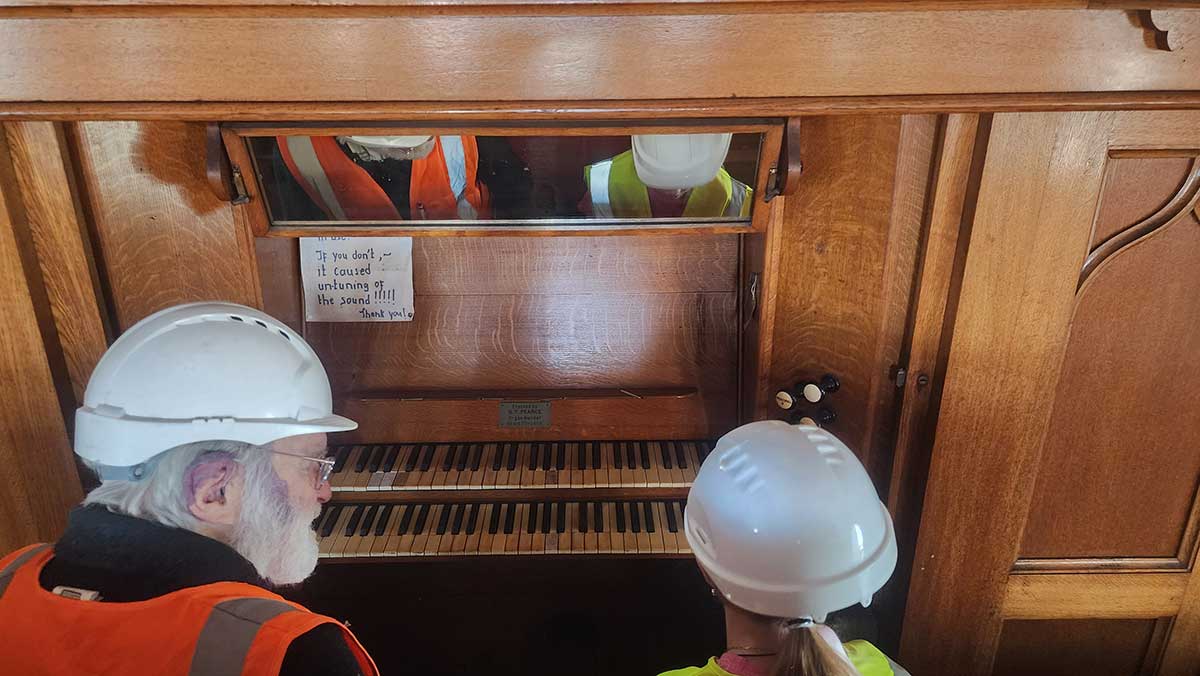
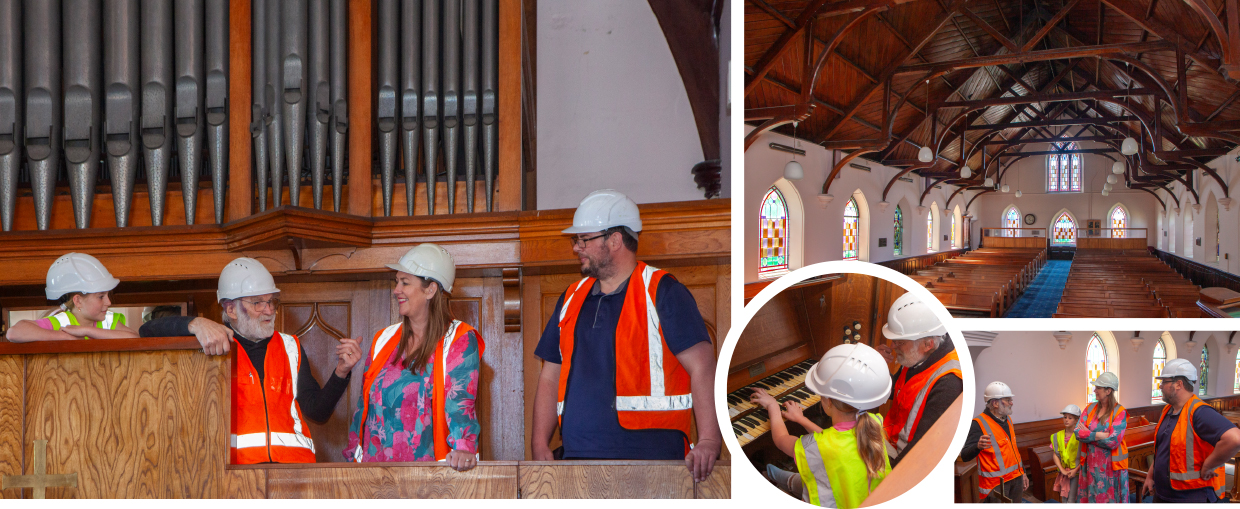
Sitting in front of an organ in Timaru's Bank Street church, John teaches Medinella Fauth, aged 10, about how the organ works, and how the pipe organ is important to Timaru's history.
What happens when a child aged 10, a hand pumped pipe organ and the Harry Potter theme collide inside one of Timaru’s oldest churches?
I can now tell you! First, several adults look confused... Then someone asks, “Who is playing?” Then you realise your daughter has quietly helped herself to the organ seat and is filling a Gothic Revival church with music from Hogwarts.
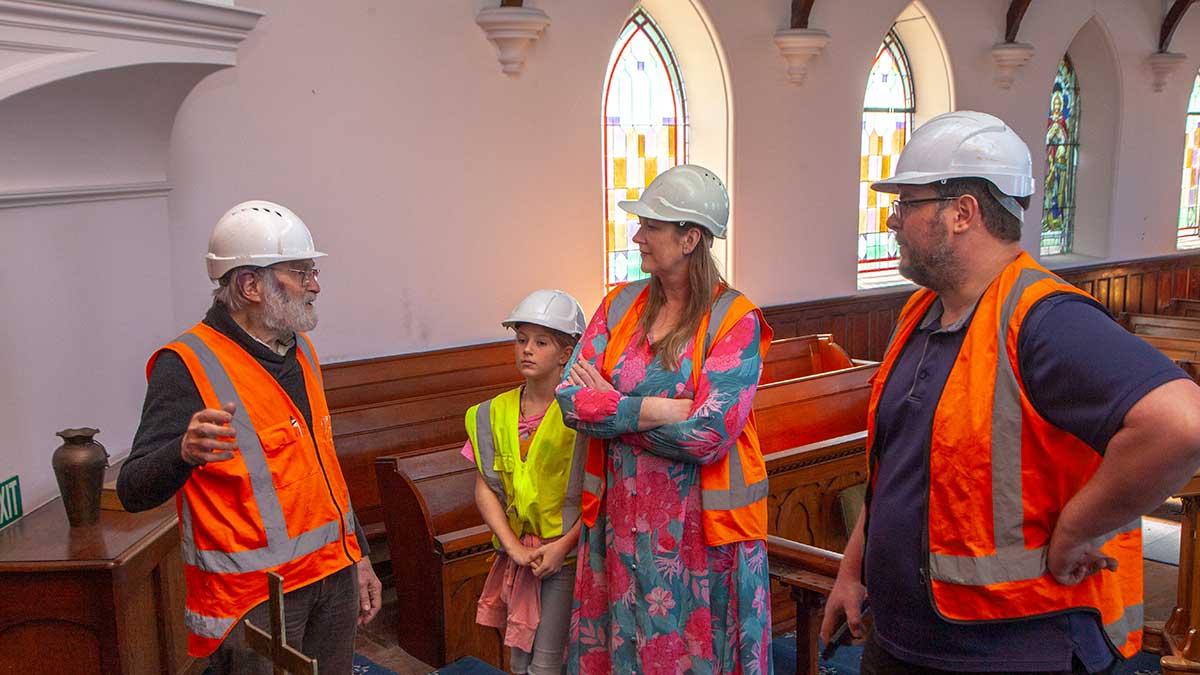
There are some heritage moments you cannot plan, and for my daughter and I, this was a ultimate WuHoo. We were visiting the former Bank Street Methodist Church with my dad Geoff Cloake, and fellow Civic Trust members John Hargraves, and John Hargraves, whose lifetime of work has taken him into the hidden workings of hundreds of organs, from small repairs to full restorations.
Even before we reached the organ, the buildings stone walls held the coolness of the day, the pointed windows softened the light reminded us that this was once one of the spiritual landmarks of early Timaru.
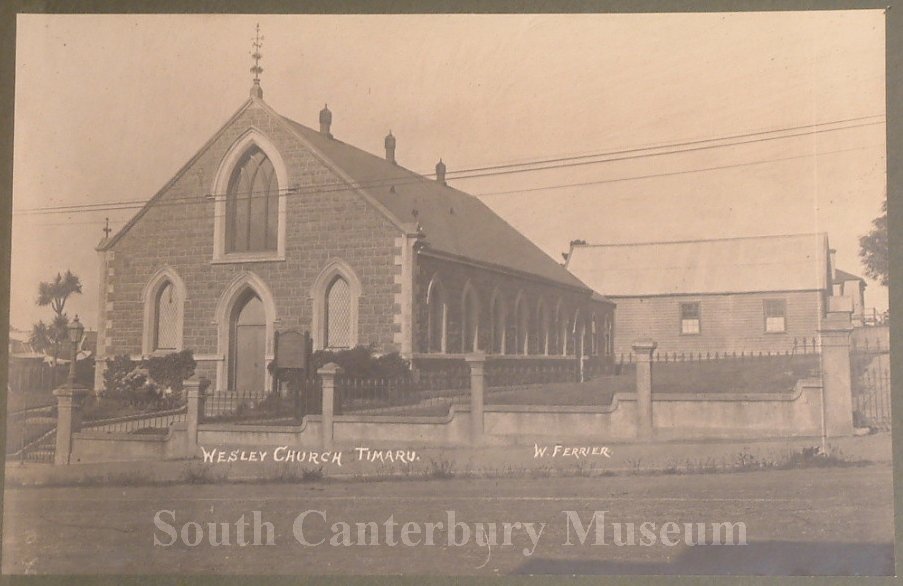
Wesley Church Bank St. South_Canterbury Museum 4423-3. The church at 38 to 40 Bank Street was designed by Francis John Wilson in the Early English Gothic Revival style and built in Timaru bluestone, or basalt.
The Rhodes brothers arrived in Timaru in 1851 to establish a sheep station. Wesleyan Methodist activity began in 1863, when the first service was held in a private home in the Sandytown area. Later that year, Reverend James Buller visited Timaru and supported the creation of a local Wesleyan circuit. The first minister arrived in 1865, and the Rhodes family gave land in Bank Street for a timber church, which was enlarged in 1868 as the congregation grew.
The present stone church at 38 to 40 Bank Street was designed by Francis John Wilson in the Early English Gothic Revival style and built by S. Harding in local Timaru bluestone, or basalt. Reverend Buller laid the foundation stone on 28 October 1874, and the church opened on 21 March 1875, seating about 300 people and costing £1120. The earlier wooden church was moved to the rear of the site for use as a schoolroom. In 1890, the nave was extended and a wooden chancel, vestry and choir rooms were added, increasing capacity by about 140 people. Major alterations in 1930, designed by Turnbull and Rule and built by Harding and Co., added the north-side entrance, stone tower, 80-foot spire, leadlights, memorial stained-glass windows, raked floor and brick choir vestry. Regular worship ceased in 1991 after division within the congregation, and from 1992 the building has been leased to South Canterbury Funeral Services, although occasional parish services have continued.
In a street now shaped more by light industry than church going, the bluestone walls, boundary fence and steeple still hold their ground and mark a milestone in our Timaru built history... I always feel a little sad knowing that the church sits in silence now due to a whole heap of regulations that keep the doors usually closed.
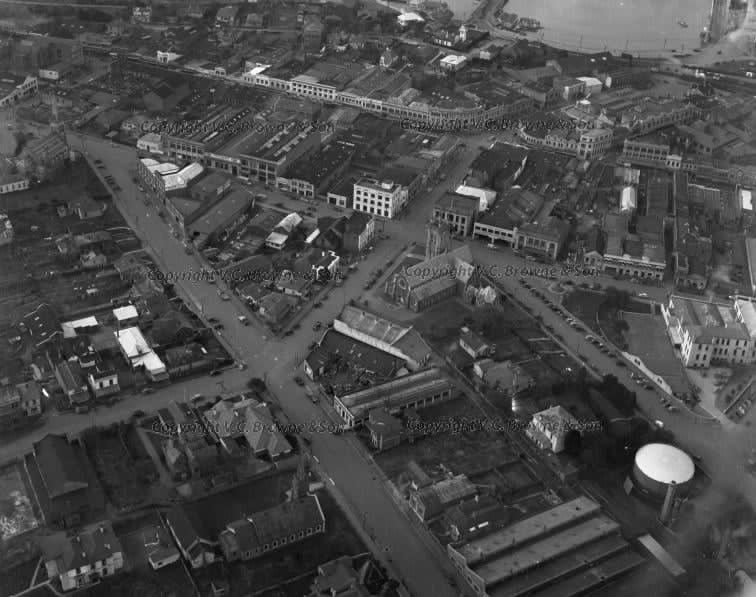
Vic Brown image of Timaru including the Bank St Church
John had arranged a special visit with some safety protocol, high viz and hard hats.
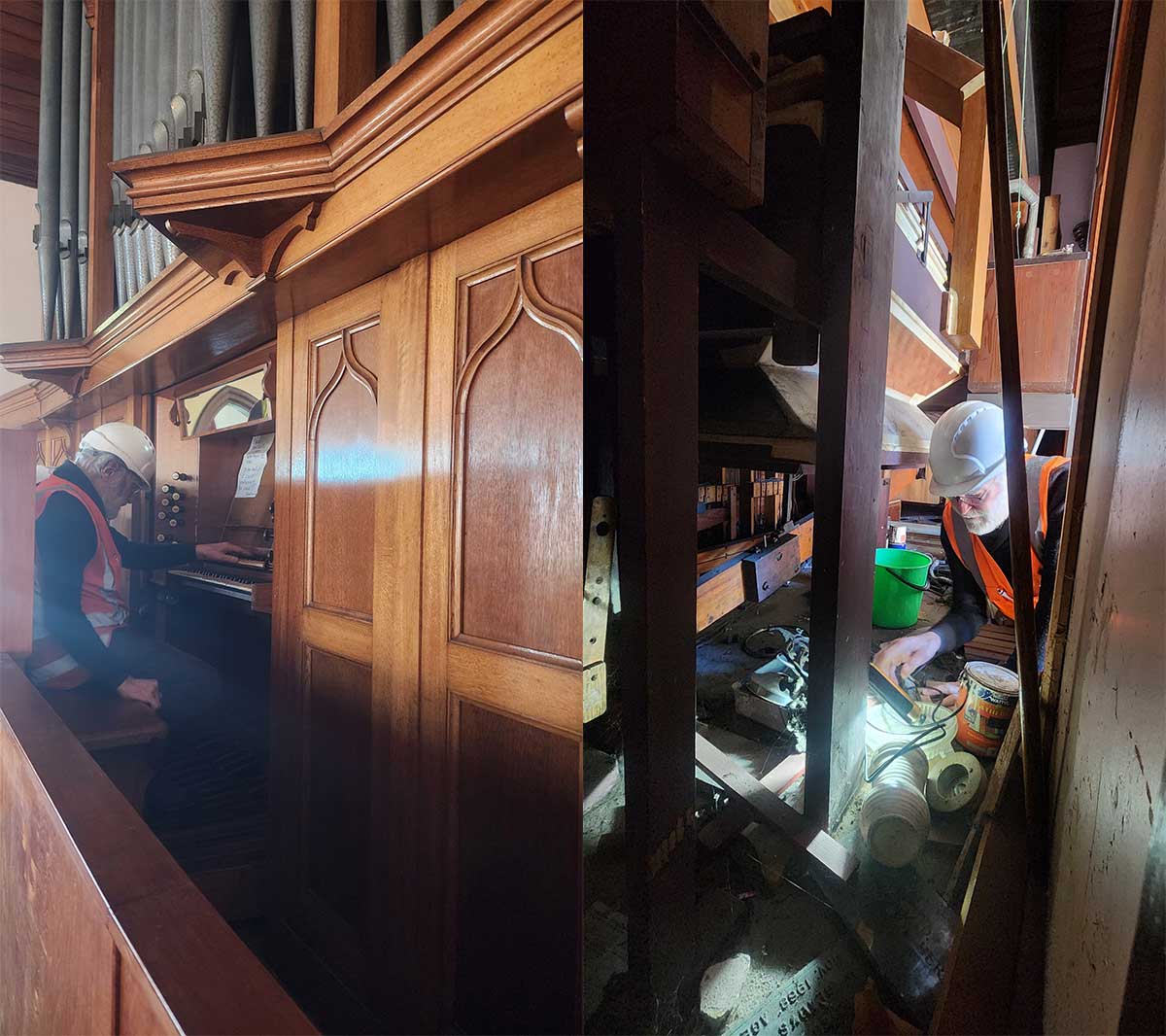
Out the back, away from the polished timber and the view most people see from the pews, we entered the practical world of bellows, stops, pipes, pedals and patience: all the hidden parts that help an organ breathe and speak.
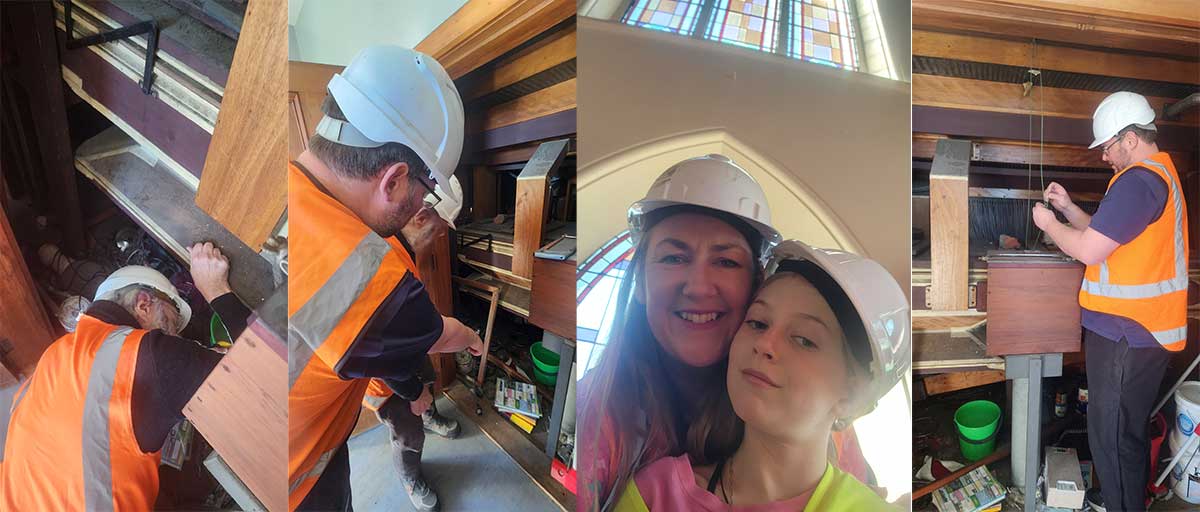
Long before organs filled churches, they began as ancient engineering: air, pressure, water and pipes working together like a musical machine. It was amazing to see it's inner workings up close with John's supervision. The organ was built by Nicholson & Lord and erected in the church in 1913
I have to be honest, while I am a piano player, I had never really fully appreciated the organ. Most of the times I have heard it, was at funerals and weddings. I guess I associated it with those events, and spiritual services. So the chance to see this organ up close with one ofone of New Zealand’s leading pipe organ builders and restorers was really special. John opened my eyes to how incredible this instrument is to listen to, and how important it is as a connection to our past.
I first met John Hargraves at a birthday party when I was a primary school lass. He was the host and his daughter was my friend. Decades later we met as adults and I have really enjoyed getting to know John while on the Timaru Civic Trust.
John explained to me, that a pipe organ behaves like a complicated air machine.
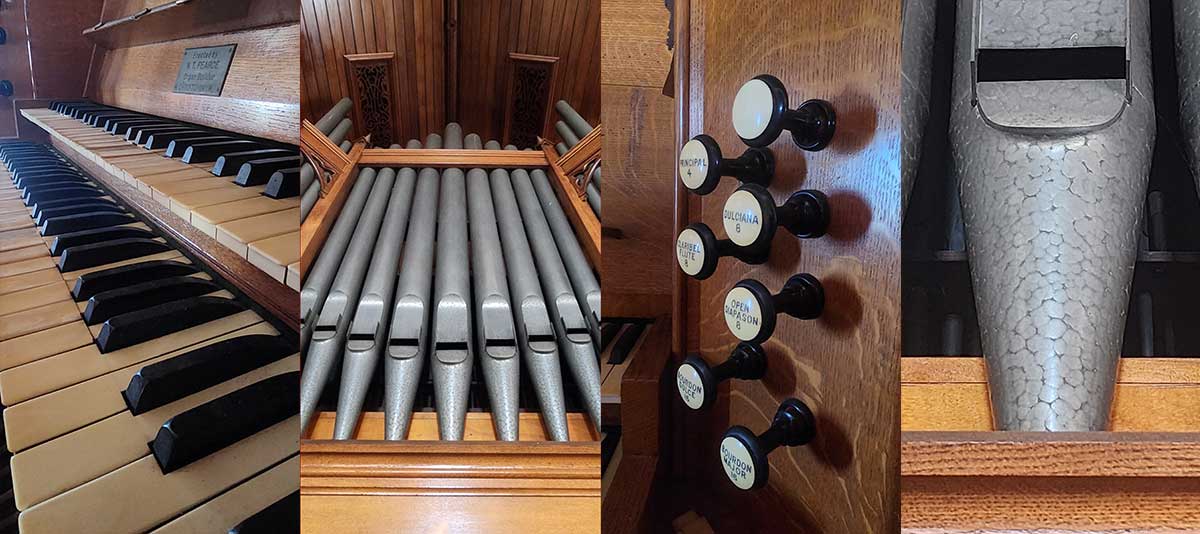
The hydraulis is often described as the earliest known mechanical pipe organ, and because it used keys or key-like controls to make pipes speak, it is part of the long story that leads to later keyboard instruments.
He showed me how when you press a key, rather than striking a chord like I am used to on a piano, an organ key open a pathway, send wind into a pipe, and suddenly a building starts to sing. Before electricity made things easier, someone often had to pump the organ by hand, giving the instrument the air it needed. So that is what we tried.
Under the pumping action of Josh Newlove, John was able to fiddle with the organ to bring life back into it again.
Then, suddenly, through the church came the unmistakable notes of the Harry Potter theme!

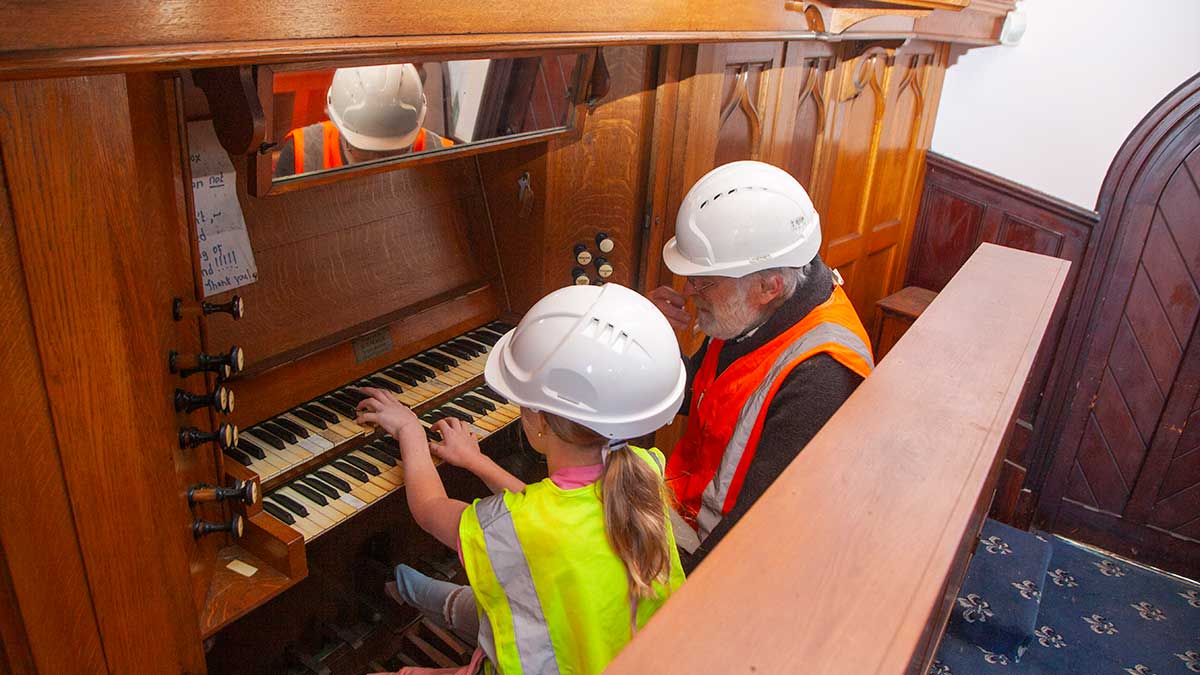
Medinella Fauth aged 10 plays the organ with John - Photography By Geoff Cloake
For a moment, we all looked at each other... who was playing? Then I realised... it was my 10 year old daughter who had taken the organ seat and was belting out the tune as if this was the most natural thing in the world. There she was, in the middle of one of Timaru’s oldest sacred spaces, filling it not with Bach or a hymn, but with music from her own childhood imagination.

John explains how the organ works. In 2017, UNESCO added German organ craftsmanship and music to its Representative List of the Intangible Cultural Heritage of Humanity, recognising the close relationship between organbuilding, music, specialist craft knowledge and architectural space. Photography By Geoff Cloake
It was funny, unexpected and it revealed something important...
At first glance, an organ looks disguised as part of the furnishings. But that is not quite right, and now I realised a historic organ belongs to its building. Its sound depends on the room around it: the timber, plaster, stone, height, volume and acoustics. The organ is shaped by the architecture, and the architecture is brought to life by the organ.
The Bank Street church has been part of Timaru’s story for over a 150 years. Methodist worship began here in a private home in Sandytown in 1863. A timber chapel followed in Bank Street in 1866. The present church opened on 21 March 1875 designed by Francis Wilson using local bluestone a basalt rock chipped away from local quarries.
The church we see today grew with its congregation. Later additions gave it more room and a stronger presence in the street and skyline.
And then there is the organ...
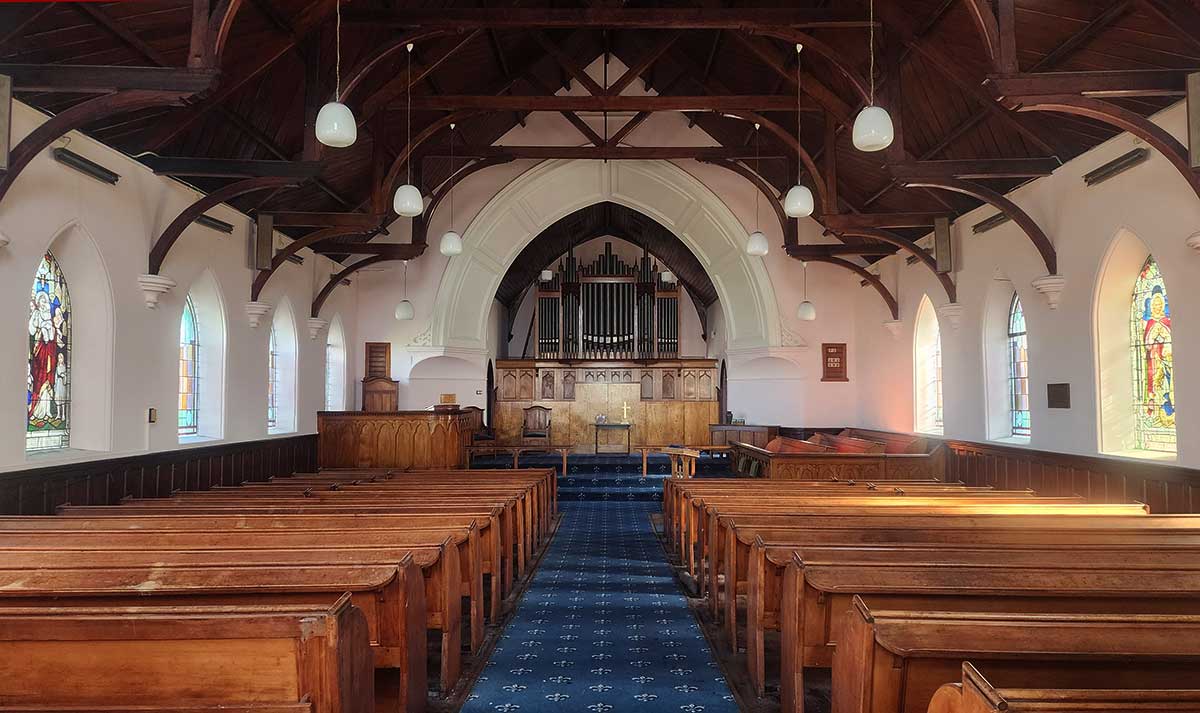
A pipe organ is part machine, part sculpture and part weather system, because everything depends on air. Photography by Roselyn Fauth 2025. The church closed in 1991, and in 1992 the Bank Street congregation amalgamated with Woodlands Road and the building was sold for funeral-service use.
The present organ, built by Nicholson & Lord and erected in the church in 1913, was described in 2018 as being about 105 years old. Organist Martin Kane described it in a Timaru Herald report as being like having “a small orchestra” at your fingertips. The organ received a Category 1 Historic Organ Certificate from the New Zealand Organ Preservation Trust in 2016.
That “small orchestra” idea makes sense once you understand the basic trick. The magic is mostly physics. Air is pushed into storage, held under pressure, then released when a key opens the path to a pipe. Smaller pipes produce higher notes, larger pipes produce lower notes, and different ranks or stops give the organ its different voices.
Organ lesson - In simple terms, stops control which sets of pipes are allowed to speak. Pulling or selecting a stop changes the organ’s voice, a bit like choosing a different instrument in an orchestra. - Photography By Geoff Cloake
But one tune, however magical, does not tell you everything an organ restorer needs to know. There are bellows, valves, pipes, actions, leatherwork and years of silence still to understand. The same 2018 report noted that the organ’s key action, the mechanism linking the keys to the pipes, was worn. It also noted that the instrument best handled slower music played legato.
That detail reminds us that Heritage instruments are not simply either working or broken. They can be full of life and still vulnerable.
Photography By Roselyn Fauth 2025
The same is true of buildings... Places like this survive because each generation decides whether they are useful, meaningful and worth the effort.
So what my daughter gave us that day was not a formal condition report.... it was something better for the soul and she showed us that the organ had not gone silent.
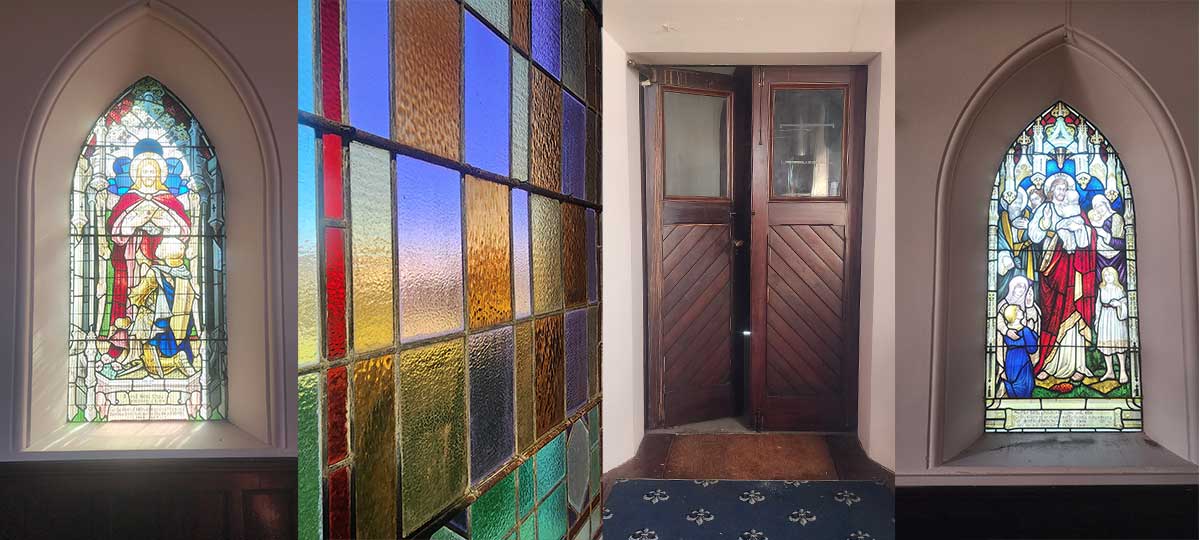
Photography By Roselyn Fauth 2025
This church has lived through worship, growth, alteration, closure, changing use and long silences. It has heard prayers, hymns, concerts, farewells, perhaps weddings, and certainly grief.
Then, one day, a child sat down and played Harry Potter.
That is what I love about built heritage. It is not only about preserving old things because they are old. It is about keeping open the possibility of connection.
A church can still hold sound.
An organ can still breathe.
A child can still discover wonder in a place built long before she was born.
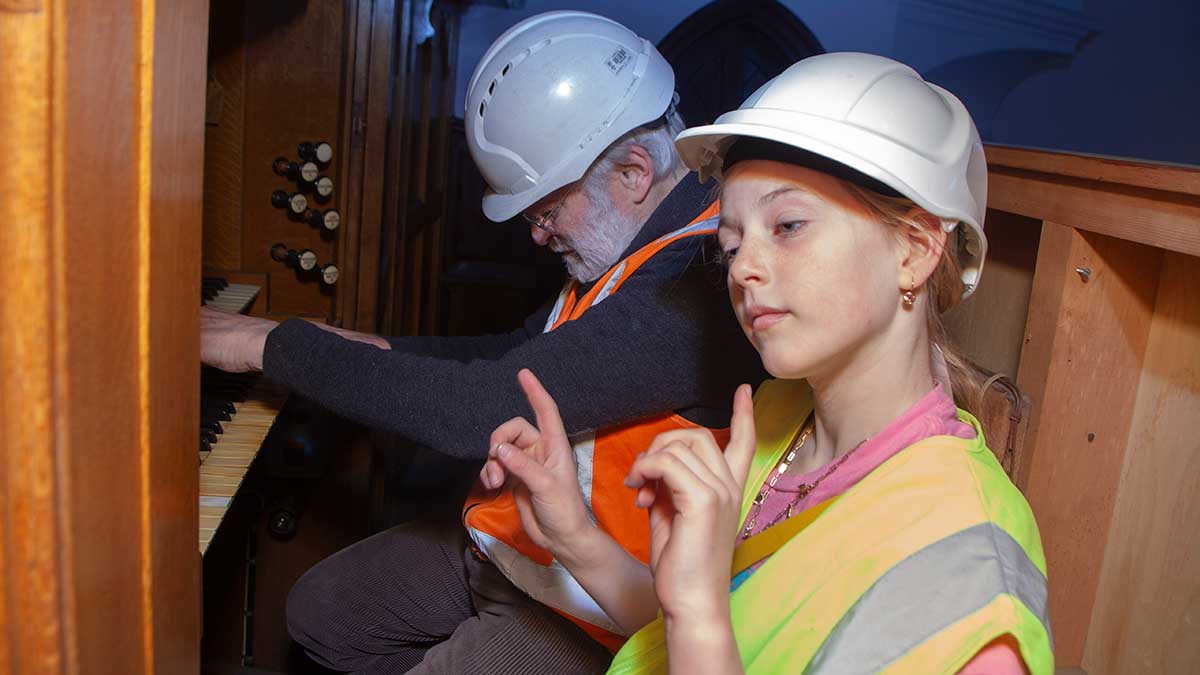
For me, that visit to Bank Street was a reminder that a sleeping heritage building sometimes just needs someone to pump the air back in.
And sometimes, if you are lucky, it wakes up with a little bit of magic.
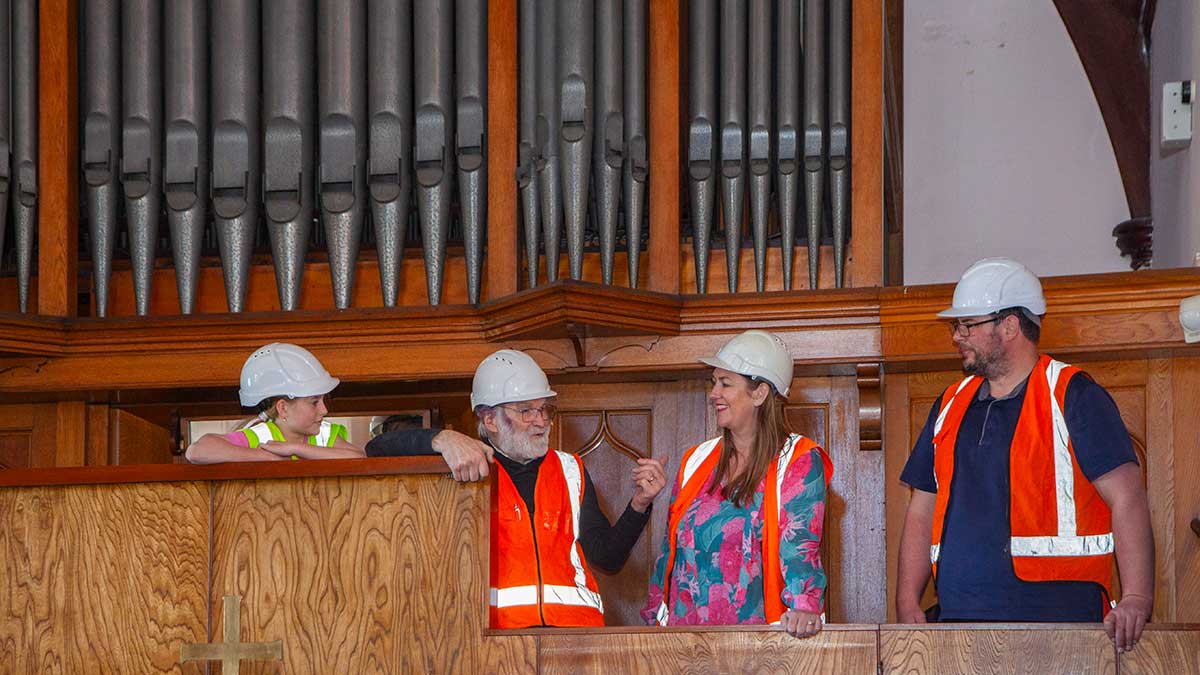
Side quest: How does an organ breathe?
Air is supplied by bellows, reservoirs or a blower, then held steadily inside the organ’s wind system.
When the organist selects a stop, it allows air to reach a particular set of pipes.
When a key or pedal is pressed, a valve opens and wind flows into the chosen pipe.
Each pipe produces a particular note. Larger pipes make deeper sounds, while smaller pipes make higher ones.
Different stops create different voices, from flute-like tones to reedier, trumpet-like sounds.
Combine many pipes, stops, manuals and pedals, and one player can create music that feels far bigger than one instrument.
That is why the pipe organ can be seen and heard as part instrument, part machine, part sculpture and part architecture.
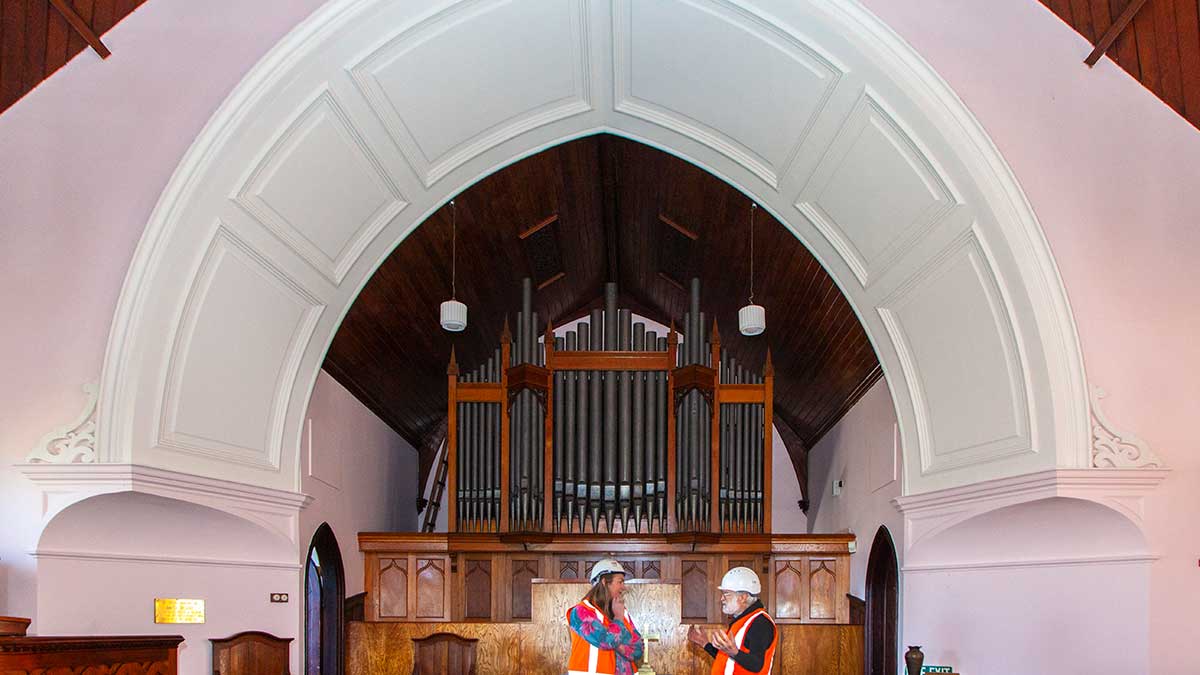
Side quest: Why is the organ part of the building?
An organ is not just housed by architecture. It is shaped by architecture.
The height of the ceiling, the stone walls, the timber, the plaster and the open space all affect what the organ sounds like. When it is played, the room becomes part of the instrument.
That makes an organ one of the few heritage objects that lets us experience a building through our ears. To conserve one is to conserve craft, sound, memory and place.

Pipe organs are much older than most people imagine. The earliest known mechanical pipe organ was the hydraulis, invented in third-century BC Alexandria by Ctesibius. It used pumps, air pressure and water regulation to steady the wind going into the pipes. So before organs became the voice of churches, they were already feats of ancient engineering.
The Romans did not invent the organ, but they did adopt it. The hydraulis became part of Roman musical life, and later developments helped lead towards the bellows-powered organs that eventually became familiar in churches, civic halls and concert spaces.

Side quest: Who is John Hargraves?
If the Bank Street organ needed someone to listen carefully, it could hardly have had a better pair of ears nearby.
John Hargraves MNZM is one of New Zealand’s leading pipe organ builders and restorers. He is associated with Timaru’s South Island Organ Company, not “South Canterbury Organ Co”, and the company’s own staff page lists him as Managing Director, with work including conceptual design, consultancy and valuations.
John’s path into organ building began with music and mechanics. He was born in Auckland in 1942, studied music at the University of Auckland, learned piano and organ as a young person, and also developed practical skills in clock repairing. In 1965, he began a pipe organ-building apprenticeship with John Lee in Feilding. Three years later, in 1968, he joined the newly formed South Island Organ Company in Timaru.
The company itself had humble beginnings. It was established in Timaru in 1968 by Garth Cattle and Vic Hackworthy, both trained in English organ-building traditions. It began in a corner of a fibrous plaster factory, with little equipment and no established territory. By the end of that first year, the company had enough work to bring in John Gray as voicer, John Hargraves as organ builder, and Neil Stocker as apprentice. In 1969, the company was reformed with Garth Cattle, John Gray and John Hargraves as directors.
From those Timaru beginnings, the South Island Organ Company became widely recognised for pipe organ restoration and rebuilding, with work across New Zealand and overseas. Its services now include tuning, maintenance, historic restorations, artistic rebuilds, new organs, repairs, voicing, archives and valuations.
John’s contribution has been nationally recognised.
In 2010, he was appointed a Member of the New Zealand Order of Merit for services to organ restoration. The Otago Daily Times described him at that time as an authority on historic pipe organ restoration, noting his 45 years in organ building and restoration and his significant role in building, rebuilding and restoring more than 150 organs throughout New Zealand.
That matters in the Bank Street story because John was not simply listening to whether a tune could be played. He was listening like a conservator and craftsperson. He would have been hearing the steadiness of the wind, the response of the keys, the speech of the pipes, and the clues hidden in hesitations, leaks, stiffness or silence.
The South Island Organ Company describes its restoration philosophy as conserving the original fabric and character of an instrument as far as possible, while restoring it as a working instrument rather than treating it as a museum exhibit. It also stresses the importance of researching construction technique, musical style and architectural detail before making restoration decisions.
That is a lovely lens for the Bank Street organ. The goal is not simply to make an old instrument make noise. It is to understand what it is, how it was built, what it has survived, and how it can keep speaking honestly in the place it belongs.
So when John stood near the Bank Street organ, he brought more than expertise. He brought a lifetime of listening to old instruments with care. And when the Harry Potter theme suddenly flew through the church, it was not just a charming surprise. It was a small, joyful sign that this old organ still had breath, and that someone who truly understood its language was there to hear it.

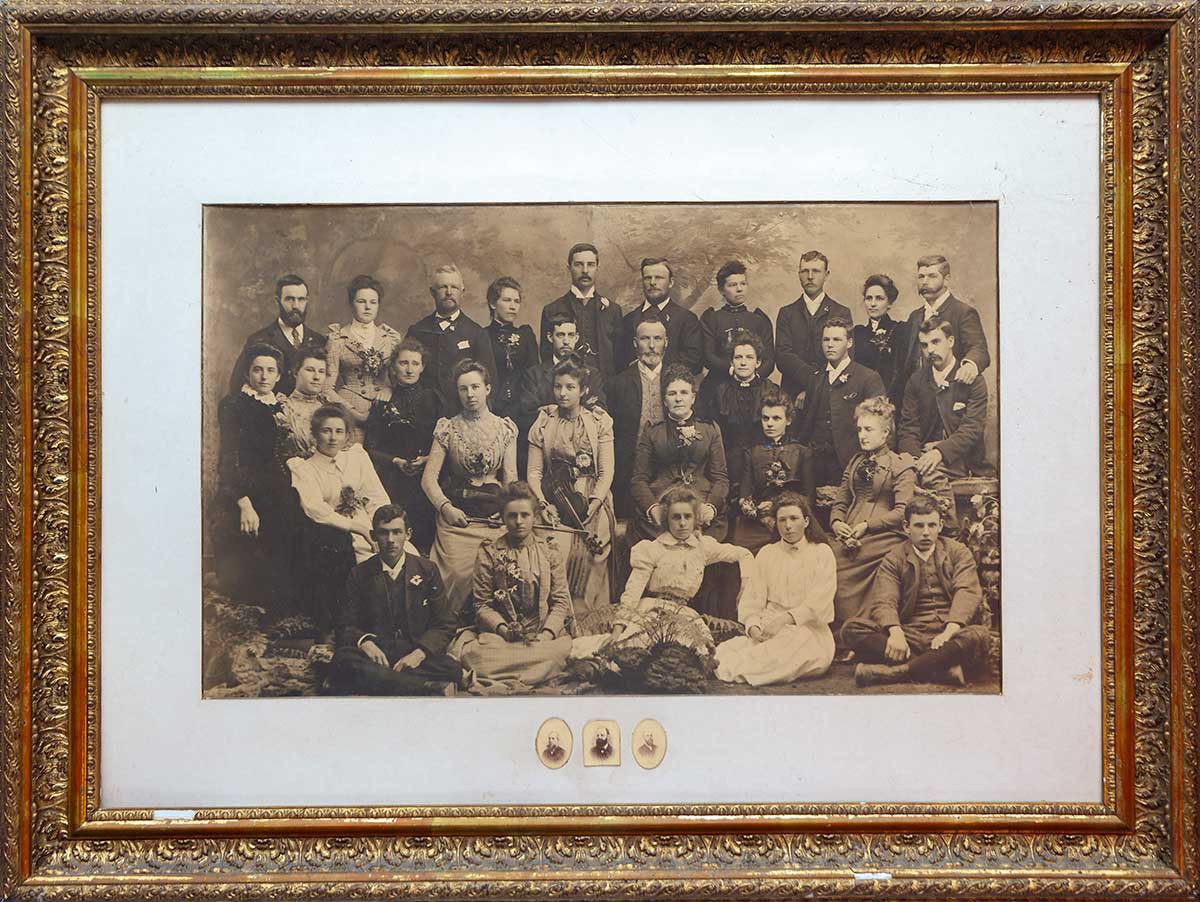
Framed photo of an orchestra hangs out the back of the Bank St Church - Photography By Geoff Cloake
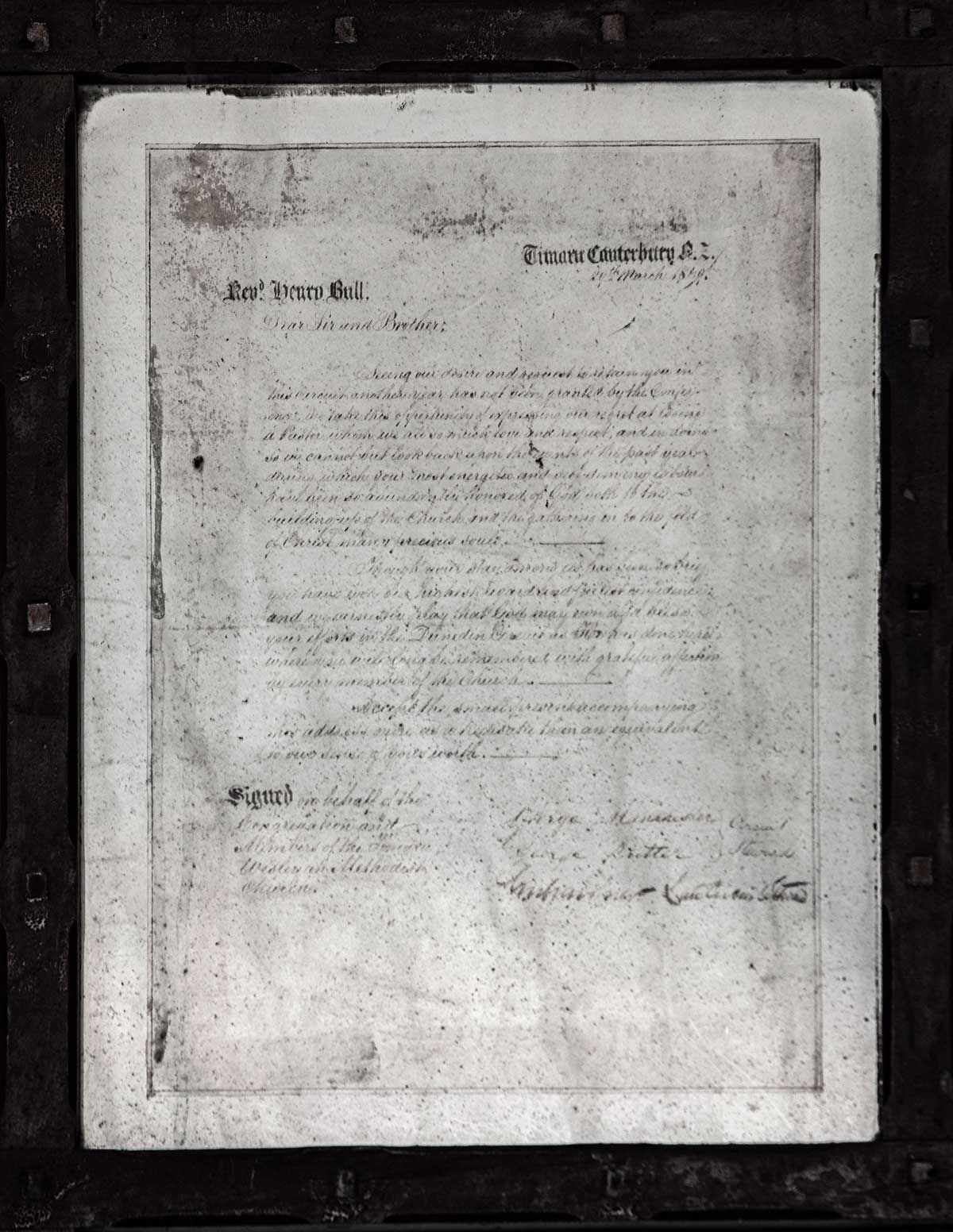
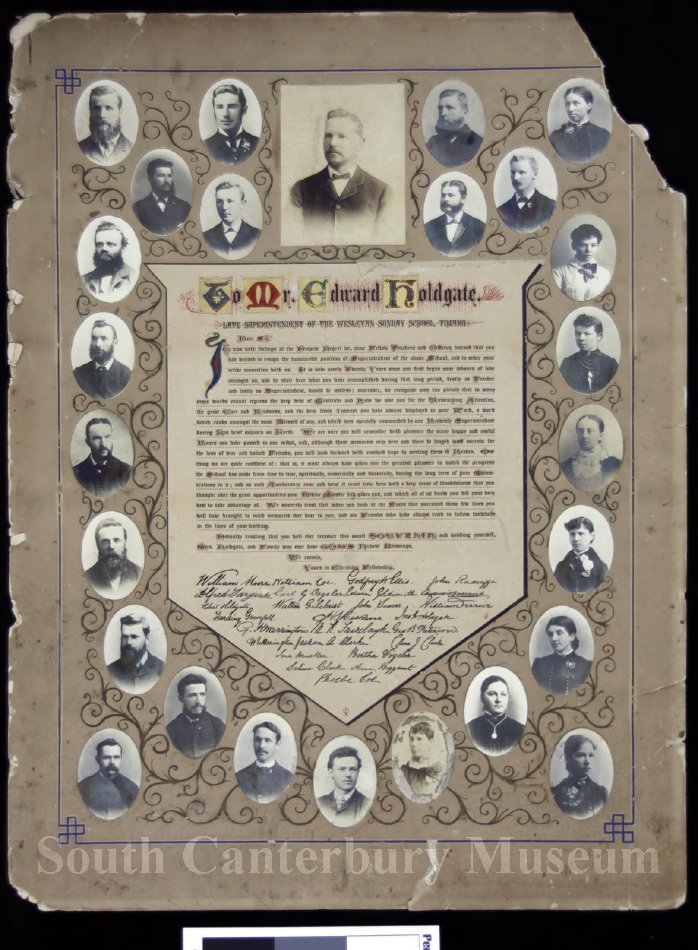
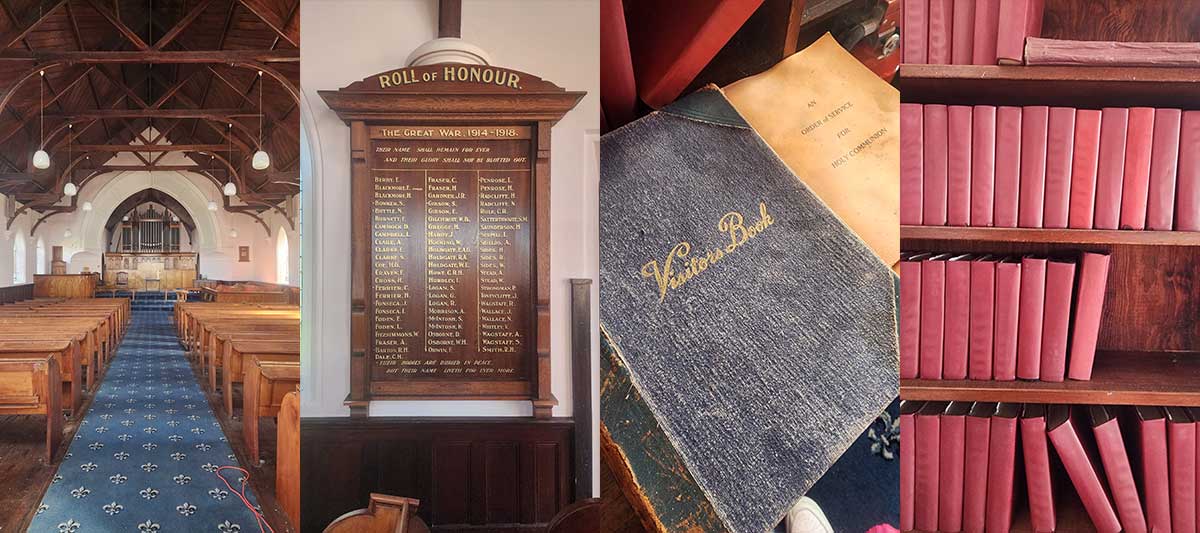
A commemorative certificate of appreciation to Mr E Holdgate upon his retirement as Superintendent of the Wesleyan Sunday School, December 1885.
Comprised of an illustrated message surrounded by portraits of Mr Holdgate and his "fellow teachers and officers" of the church. Those pictured have been identified as (clockwise, starting with Edward Holdgate at the top centre): Edward Holdgate, Godfrey W Ellis (near edge), G H Warrington (near text), H S Hiskens, M K Fairclough (outer corner), H Jackson, A Clarke, Annie Bezzant,Clara J Clarke, Phoebe Coe, Bertha Vogeler (outer corner), Ina Musker, Selina Clarke, Harding Grenfell, Robert Holdgate, William Coe, John Radcliffe (outer corner), Carl G Vogeler, Alfred Farguse, William Ferrier, Walter Gilchrist, Edwin Goldsmith, William Moore (outer corner), George B Paterson, John Holdgate(near text), Andrew Bascand (near edge). South Canterbury Museum 1016
Bank Street church has developed a strong musical tradition largely through the efforts of one man, Mr John Holdgate, who sang with the choir for 70 years. For 45 years he was choirmaster, 1901-1944. With only one break resulting from an influenza epidemic, he presented the oratorio “Messiah” for 35 years with a combined church choir. Later choirmasters have upheld the traditions set by Mr Holdgate.
The church’s pipe organ was installed in 1911 and still serves the church well.
Some New Zealand organs of international significance
‘Norma’, Dunedin Town Hall (Hill, Norman & Beard; 1919/1929, IV/63)
Wellington Town Hall (Norman & Beard; 1905, IV/57)
Ponsonby Baptist Church (John Avery; 1779, I/8)
This is the organ at St Mary's Anglican Church in Timaru.
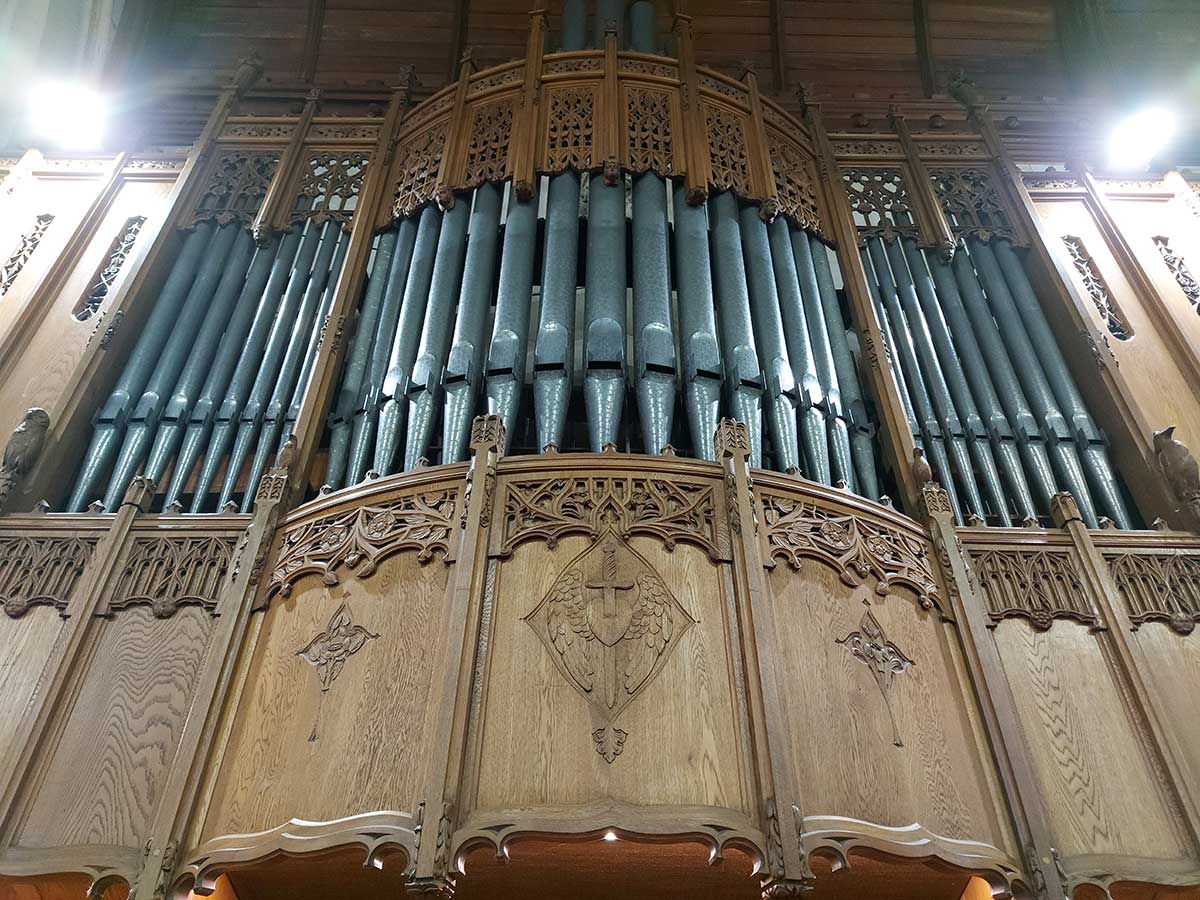
St Mary's Timaru Organ - Photography By Roselyn Fauth

Now if you made it to the end of this, cheers for reading... and here is an imaginary chocolate fish and gold star sticker.
I was talking with my dad about the church and reliving the experience with John, when dad pointed out that his staff member was dads cousin Neil Stocker. (My nana was a stocker).
Thanks so much for reading my blog. If it has given you a new appreciation for pipe organs, their craftsmanship, music and care, you can help support that legacy through the New Zealand Organ Preservation Trust, which works to protect and preserve pipe organs around Aotearoa New Zealand.
One way it does this is through the Neil Stocker Memorial Fund, which supports young and developing organbuilders to gain the specialist skills needed to keep these remarkable instruments alive.
This story became personal for me too. I was talking with Dad about the church and reliving the experience with John, when Dad pointed out that one of John’s staff members was his cousin, Neil Stocker. My nana was a Stocker.
The fund honours Neil, a master craftsman from Timaru who worked for the South Island Organ Company for 43 years. He began as the company’s first apprentice and became its factory foreman, the person others turned to when they needed to know how something was made, repaired or found.
Neil was tragically killed in the 22 February 2011 Christchurch earthquake while helping dismantle and save the pipe organ at Durham Street Methodist Church. Begun by his wife Margaret, the memorial fund turns that loss into something lasting: support for the next generation of organbuilders.
So, if you now love organs too, you might like to donate to the Neil Stocker Memorial Fund through the New Zealand Organ Preservation Trust, and help keep this rare craft, and these wonderful instruments, sounding for years to come.
The Methodist Movement: From John Wesley to Timaru
On 24 May 1738, John Wesley had his “Aldersgate experience” in England, a turning point that helped lead to the Methodist movement. Wesley went on to preach beyond formal church structures, reaching poorer and working-class communities during a time of industrialisation, population growth and rural-to-urban migration. Within a decade he was a national figure, and by 1800 there were more than 100,000 Methodists.
Methodism was established in New Zealand in 1822. In Timaru, the Wesleyan Methodists built their first church in 1865, followed by Wesley Church in Bank Street in 1875. The Primitive Methodists formed locally in 1873, built in Barnard Street in 1874, and later established Woodlands Street Church in 1912. The Wesleyan and Primitive Methodist movements united in 1913.
By 1988, Timaru Methodists worshipped at several churches, including Wesley Church, Woodlands Street Church and St Mark’s, Temuka, while St David’s, Marchwiel, operated as a Methodist-Presbyterian parish. On 24 May 1988, Timaru marked the 250th anniversary of Wesley’s Aldersgate experience, while Methodist leaders reflected on how the church might reconnect with ordinary people in a changing society.
- https://aorakiheritage.recollect.co.nz/nodes/view/4165
Main sources for the Bank Street church
Timaru District Council Historic Heritage Assessment Report: Former Bank Street Wesleyan Methodist Church, Category A
This is the strongest source for dates, architecture, heritage significance, key people, materials and alterations.
https://www.timaru.govt.nz/__data/assets/pdf_file/0004/673888/Historic-Heritage-Assessment-Report-HHI65-Former-Bank-Street-Wesleyan-Methodist-Church-Category-A.pdf
Heritage New Zealand Pouhere Taonga: Bank Street Church, List No. 3155
Useful for the official heritage listing and Category 2 status.
https://www.heritage.org.nz/list-details/3155/Listing
Timaru Civic Trust: Bank Street Methodist Church
A useful local heritage summary with a readable account of the church’s development.
https://www.timarucivictrust.co.nz/blog/bank-street-methodist-church
Aoraki Heritage Collection: Bank Street Methodist Church
Useful for local images and collection context.
https://aorakiheritage.recollect.co.nz/nodes/view/4165
Main sources for the Bank Street organ
Stuff / Timaru Herald article: “105-year-old pipe organ coming out of retirement for variety concert fundraiser”, Joanne Holden, 22 August 2018
This was the source for the 105-year-old organ, Martin Kane’s comments, the 2013 Grade 1 certificate, and the note about the worn key action. I could not access a stable public Stuff link through search, but it is in the text you pasted earlier.
New Zealand Organ Preservation Trust: Historic Organ Certificates
Useful for explaining what the NZOPT does and its Historic Organ Certificate programme.
https://nzopt.org.nz/historic-organ-certificates/
New Zealand Organ Preservation Trust: Home / NZ Organs
Useful background on the Trust’s work preserving pipe organs in New Zealand.
https://nzopt.org.nz/
Sources for John Hargraves and South Island Organ Company
South Island Organ Company: Staff, John Hargraves MNZM
Best source for John’s correct spelling, role, background, MNZM, and career outline.
https://www.pipeorgans.co.nz/about/staff/
South Island Organ Company: History
Best source for the company’s founding in Timaru in 1968, early staff, Washdyke base, and development.
https://www.pipeorgans.co.nz/about/history/
South Island Organ Company: Historic Restorations and Rebuilds
Useful for their restoration philosophy and language around conserving original fabric while keeping organs as working instruments.
https://www.pipeorgans.co.nz/services/restorations-rebuilds/
Otago Daily Times: “Honours for South Canterbury men”, 7 June 2010
Useful independent confirmation of John Hargraves’ MNZM and his long career in organ restoration.
https://www.odt.co.nz/regions/canterbury/honours-south-canterbury-men
Sources for organ history and “fun facts”
Encyclopaedia Britannica: Hydraulis
Good source for the earliest known mechanical pipe organ, Ctesibius of Alexandria, and third-century BC origins.
https://www.britannica.com/art/hydraulis
UNESCO Intangible Cultural Heritage: Organ craftsmanship and music
Useful for the point that organ craftsmanship and music are closely connected, and that each organ is created for its architectural space.
https://ich.unesco.org/en/RL/organ-craftsmanship-and-music-01277
British Institute of Organ Studies / National Pipe Organ Register
Useful as a wider comparison for organ recording, listing and heritage-at-risk work.
https://npor.org.uk/
Source for Laurel McAlister
Te Ara / Dictionary of New Zealand Biography: Laurel Grace Barker McAlister
Useful for expanding the “key people” side quest if you want more on her Methodist Women’s Guild Fellowship, community work and MBE.