
By Roselyn Fauth
A park, two entrances, and a civic ambition
After tracing the Ashbury Park gates back to the North End Ratepayers and Improvements Association, I found myself asking a wider question. If the North End had its gates, and the Botanic Gardens had theirs, what about the West End? Was there another gate story there too?
The answer is a little different, and perhaps more interesting for that. This is not quite a neat surviving-gate story. It is more a story of civic ambition, and that in itself tells us something important about Timaru.
The West End Ratepayers’ and Householders’ Association was certainly active in the 1920s. A Timaru Herald report from 29 October 1924 describes a meeting at St John’s Schoolroom with J. E. Chiles presiding. The article says the association had a membership of 75 and had been formed “simply to further the interests of the West End.” That line matters. It places the West End group squarely alongside the North and South End associations as part of a wider Timaru culture of neighbourhood organising. These were local people deciding that their part of town needed a voice.
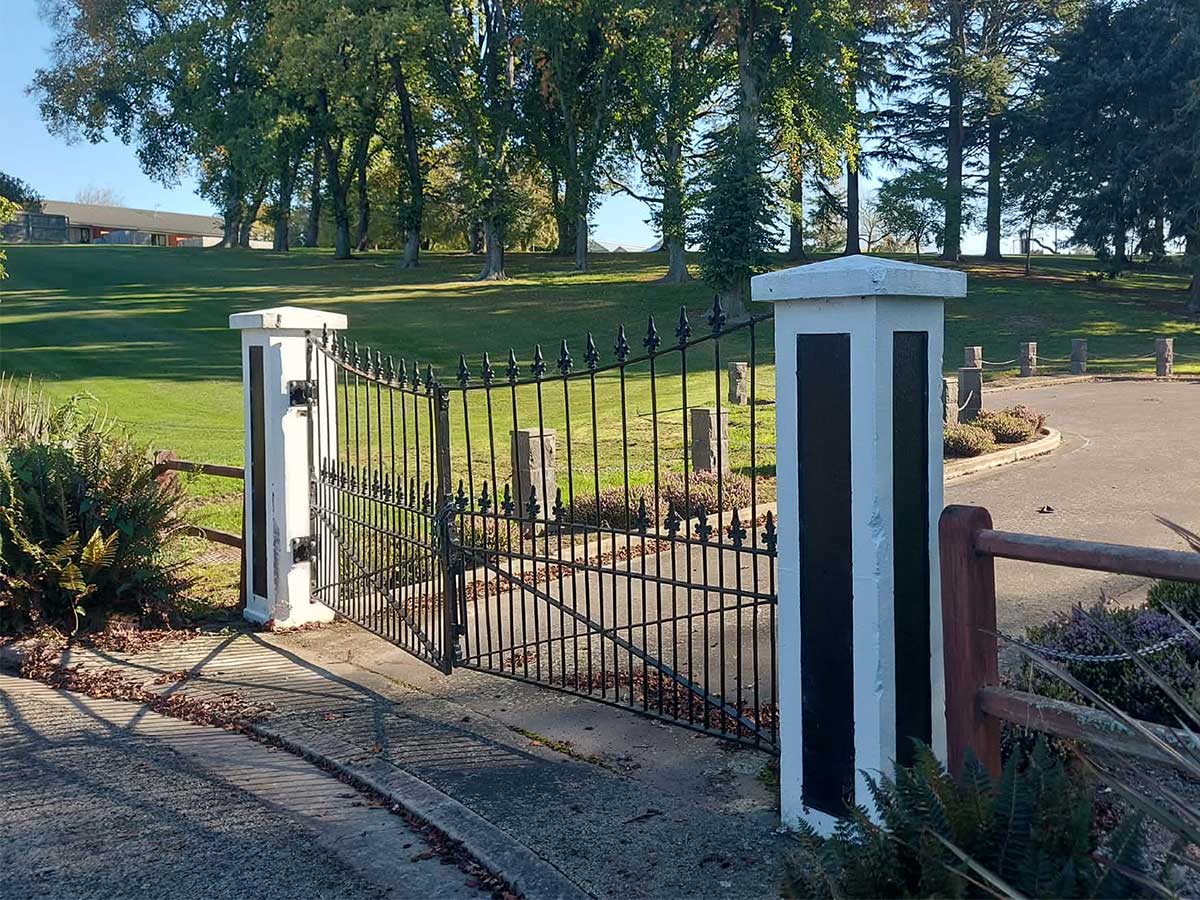
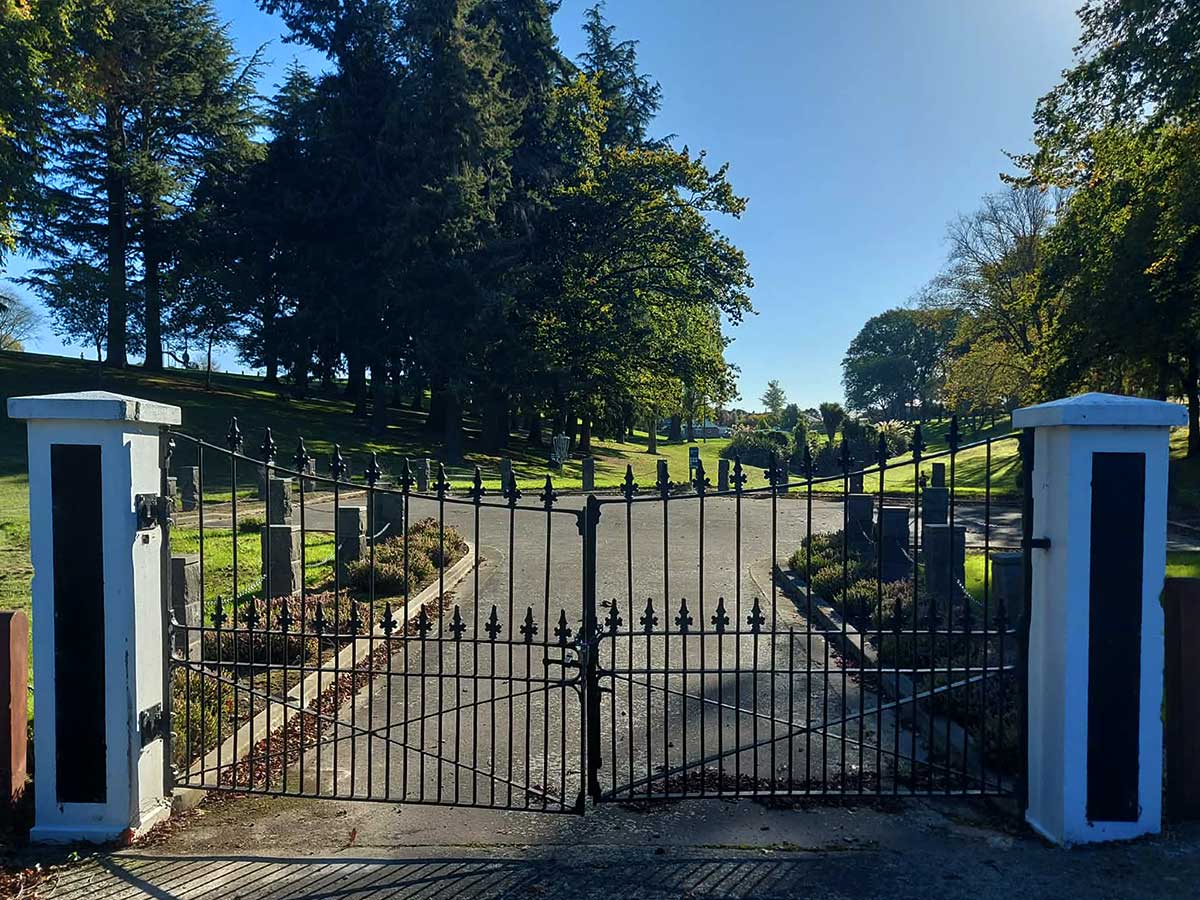
At that same meeting, the members discussed West End Park in very revealing terms. Among the resolutions was one asking the Council to prepare complete plans for the park and that “gates be erected at both entrances.” The report also referred to a desired entrance from Maltby Avenue. Just like the North End, the West End association was thinking spatially. It was thinking about access, visibility, completion, and identity. A park, in their eyes, was not simply a patch of land. It was a public place that deserved proper thresholds.
The broader context matters here too. Public parks were increasingly seen as urban “breathing places” and as important civic amenities. Features such as gates, lodges, fountains, memorials, shelters, and bandstands formed part of the visual and social language of the public park. In that setting, wanting gates was not trivial or eccentric. It was part of a broader way of imagining public green space as something that should be visible, dignified, and complete.
The West End group fits the same Timaru pattern as the other district associations. It was a suburb-scale civic body formed to further the interests of its own neighbourhood, working through meetings, membership, improvement campaigns, and park advocacy rather than simply protesting from the sidelines. That is important, because it means the proposed gates were not a random flourish. They were part of a wider vision of what the West End should have.
A later report from 8 April 1925 shows that the West End association continued pressing the Borough Council for improvements to West End Park. Then, by 1930, the Timaru Herald could describe the appearance of West End Park as “a tribute to the civic pride of West Enders.” That line feels especially important. Even if the exact fate of the proposed gates is still uncertain, the civic energy behind the idea is not. It is there in the meetings, the resolutions, and the language of public reporting.
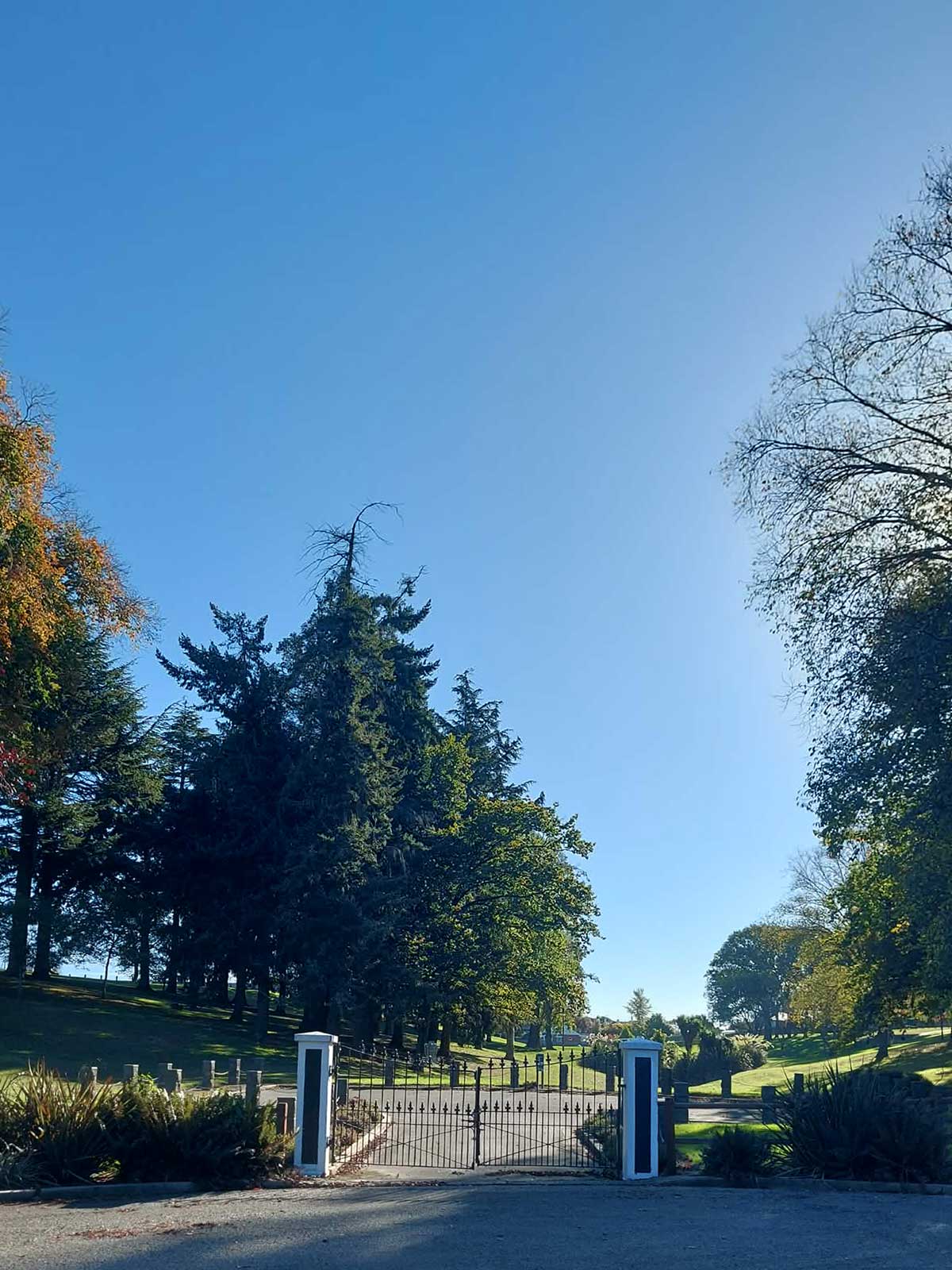
There is one important qualification, and I think it should stay visible. I have not yet found proof that the proposed West End Park gates were definitely built. What I do have is a clear record that they were proposed, that entrances mattered to the association, and that later reporting still referred to Maltby Avenue and Wai-iti Road as park access points, with calls for signboards to be placed there for visitors. So the physical gate remains elusive. But the civic imagination does not. It is right there in the newspaper reports.
And perhaps that is what makes this third story worth telling. Heritage is not only about what survives neatly in iron and stone. Sometimes it survives as an idea — a community’s effort to make a place visible, proper, and valued. The West End story reminds us that public places are shaped not only by the structures that remain, but by the hopes that led people to argue for them in the first place.
In that sense, even the gate we are still looking for has something important to say.
By Roselyn Fauth
https://propertysearch.canterburymaps.govt.nz/property?propertyPoint=1459031.9854098447,5082952.148228636
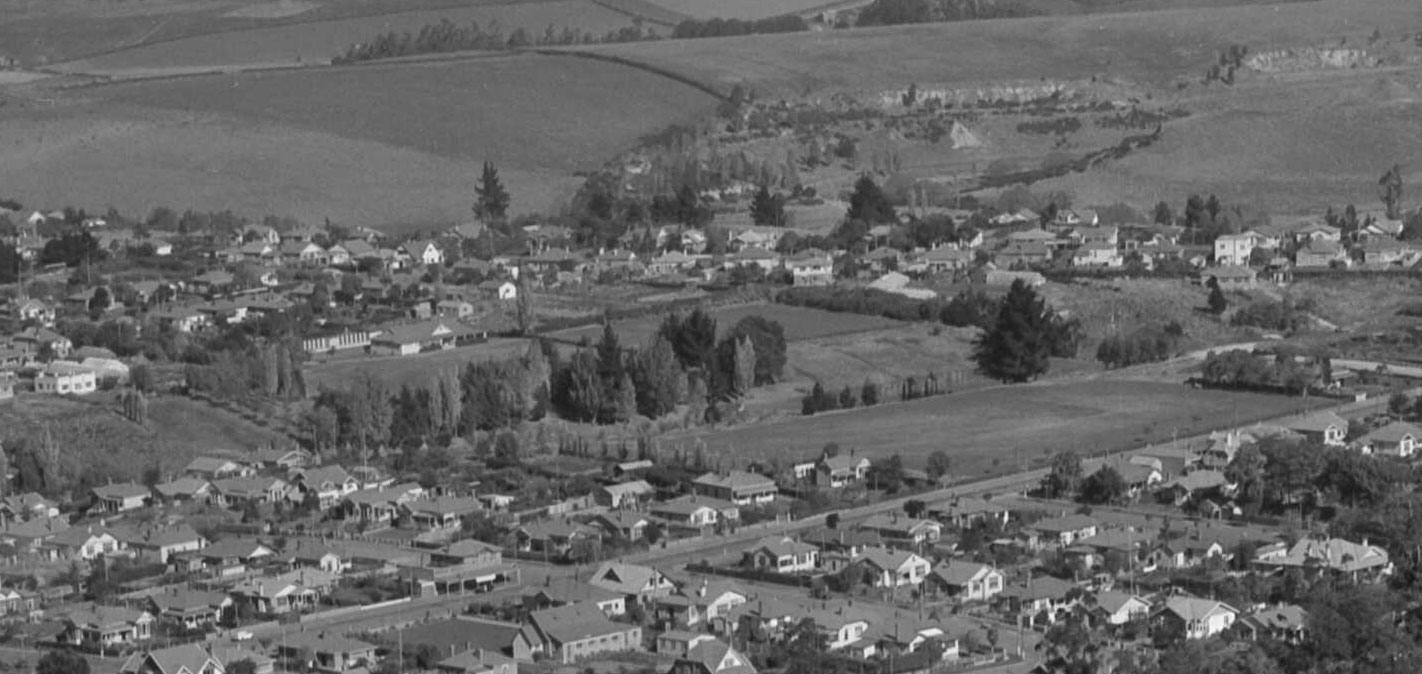
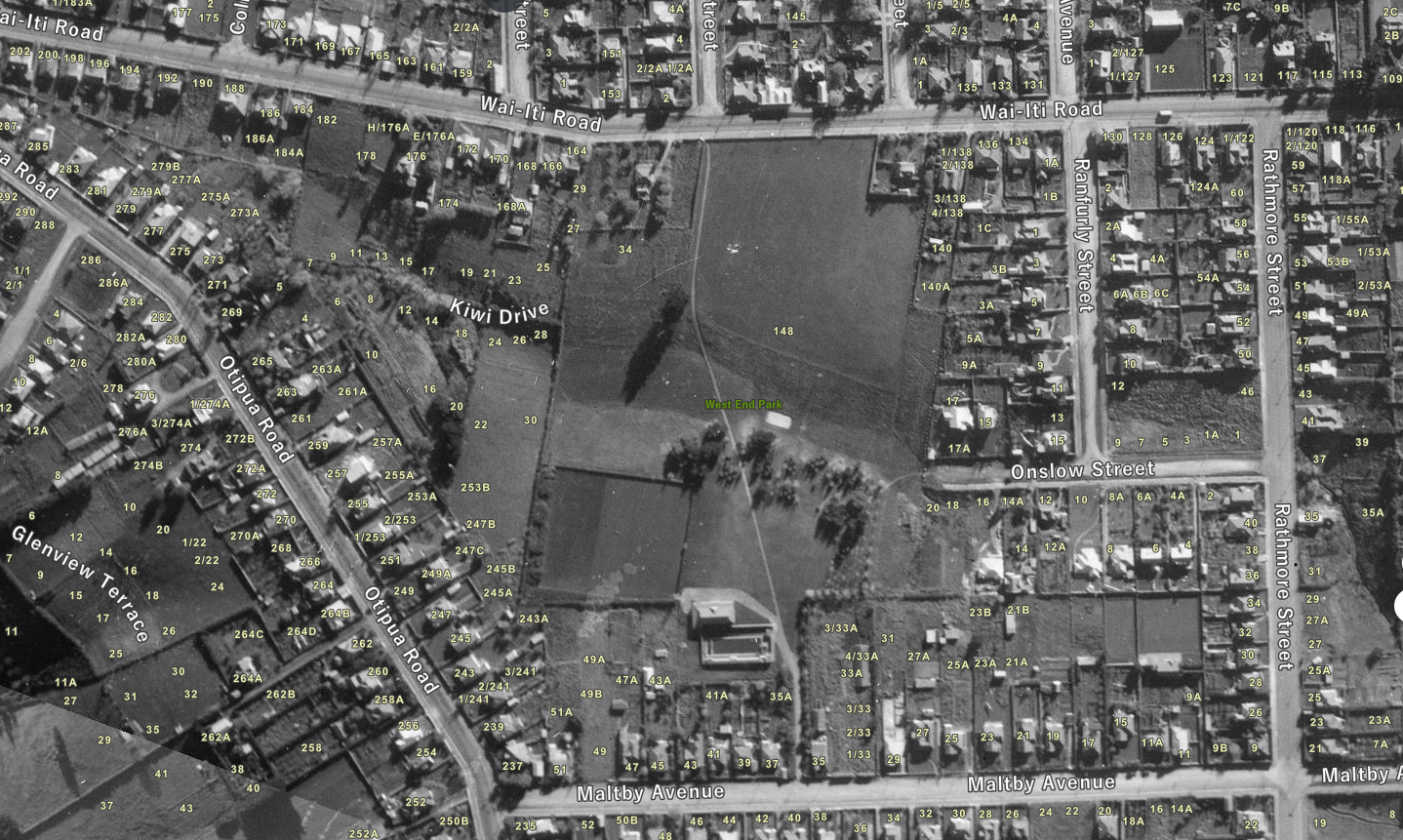
1947. Detail of West End Park. View of a residential suburb with mansion houses surrounded by trees, Timaru, South Canterbury Region Aerial photograph taken by Whites Aviation. National Library Alexander Turnbull Library 720131
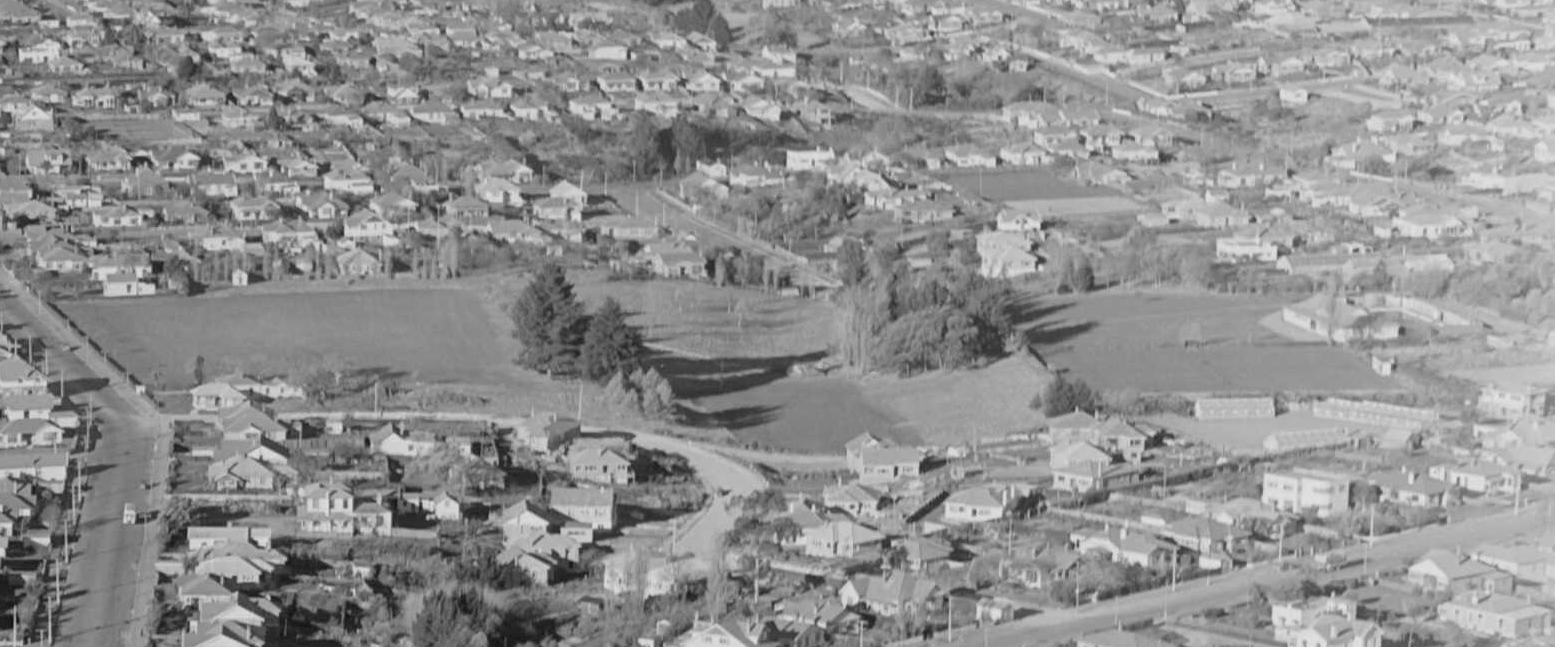
1951 West End Park- section of a photo Whites Aviation Collection Alexander Turnbull Library 669588
Sources
https://paperspast.natlib.govt.nz/newspapers/THD19241029.2.60
https://paperspast.natlib.govt.nz/newspapers/THD19250408.2.33
https://paperspast.natlib.govt.nz/newspapers/THD19300906.2.23
https://paperspast.natlib.govt.nz/newspapers/THD19351008.2.65