By Roselyn Fauth
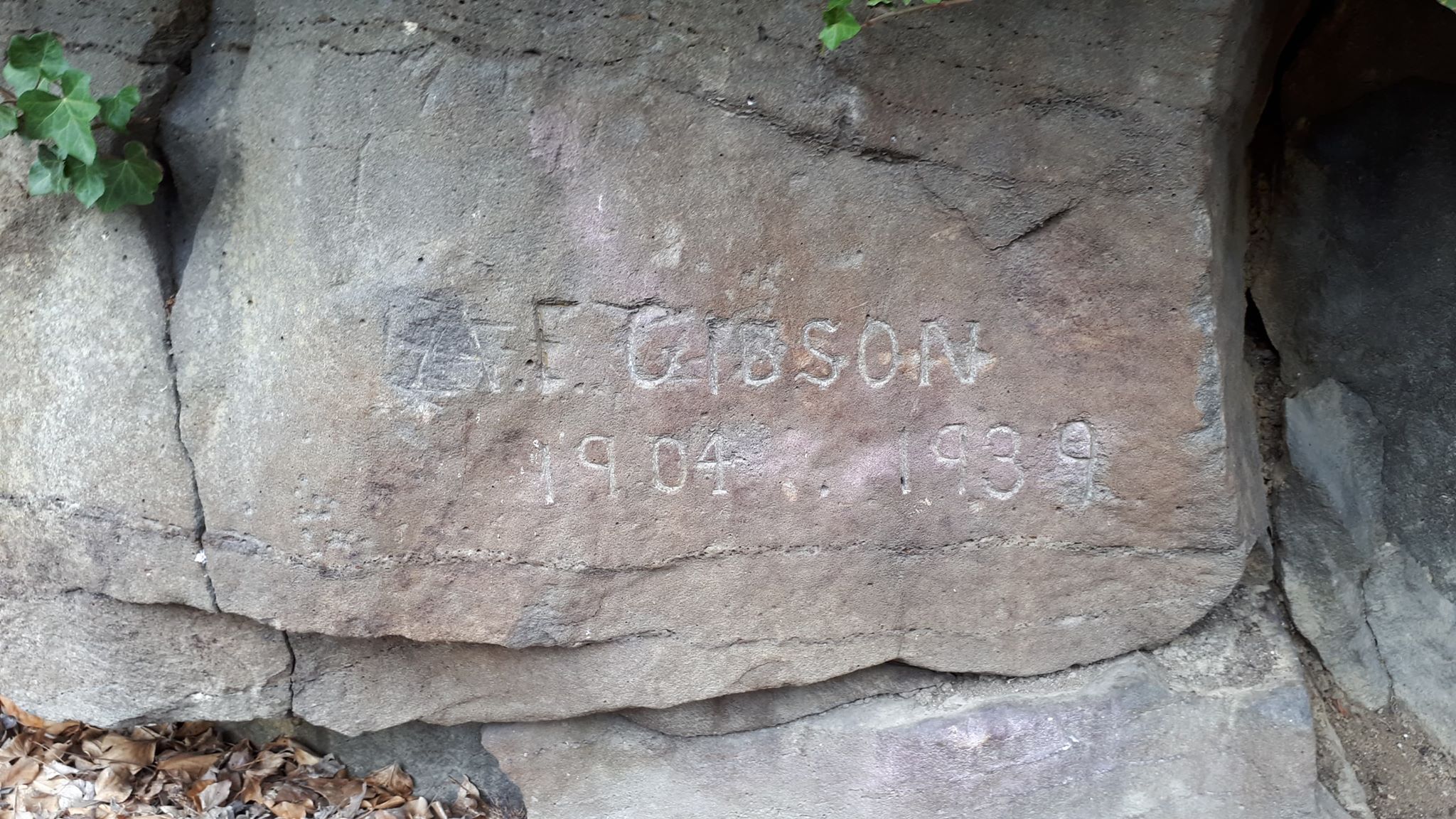
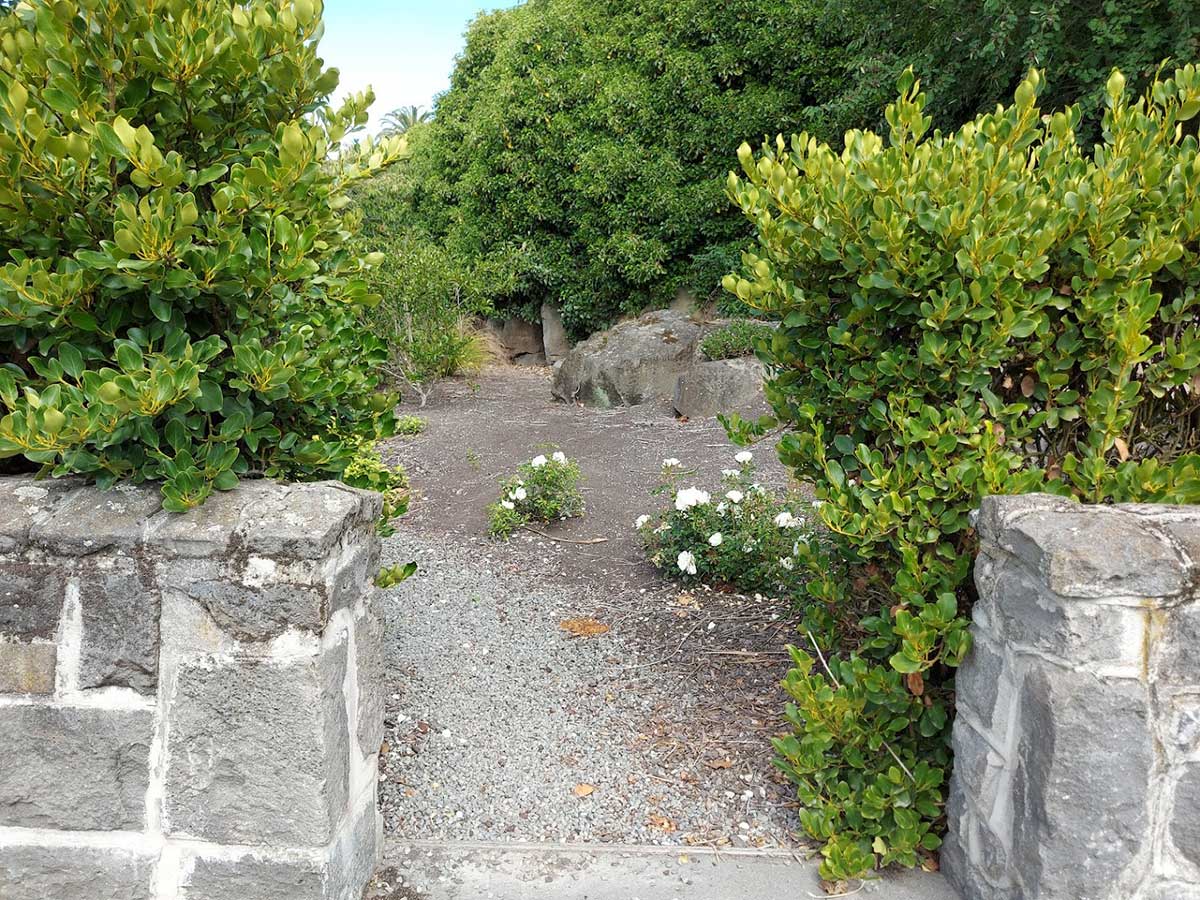
F Gibson Timaru 1904 1939 scratched into basalt rock which would have been part of the caretakers homes back garden. The house was removed and the garden was incorporated into the Bay Tearooms garden. - Photo Roselyn Fauth 2022. The steps behind the tea rooms are called the Gibston Steps in recognition of the Bays Caretaker. Timaru’s Caroline Bay used to be known as the Riviera of the South. A wide, sandy beach, it was where Cantabrians would flock (by train) to swim, sunbathe and attend carnivals and concerts. Though it doesn’t quite draw the crowds of ‘Riviera’ times these days, it’s still a beautiful bay, enjoyed by Timaru locals.
There is a large piece of basalt tucked into the garden into the cliff behind the Caroline Bay Tea Rooms. It is easy to miss if you are not looking for it, I suspect for years it was covered in ivy and hidden from view. Scratched into the stone are a few words: A F Gibson Timaru 1904 1939. At first glance it feels it looks like graffiti. But it is not random at all... it traces a person whose work helped shape Caroline Bay, even if his name is no longer widely known.
Local heritage sources identify the man as Alexander Gibson, remembered as Caroline Bay’s first caretaker. They also connect the rock to the old caretaker’s cottage garden, which once stood beside the tea rooms before that house was removed and the garden absorbed into the area people know today. I remember the fence of the caretakers house, a big green corrigated iron one. but I can't remember much more about it, today the house is long gone, and in its place is a garden where people enjoy nosh at events and celebrations. Those same sources say the steps behind the tea rooms up the cliff were named after him...
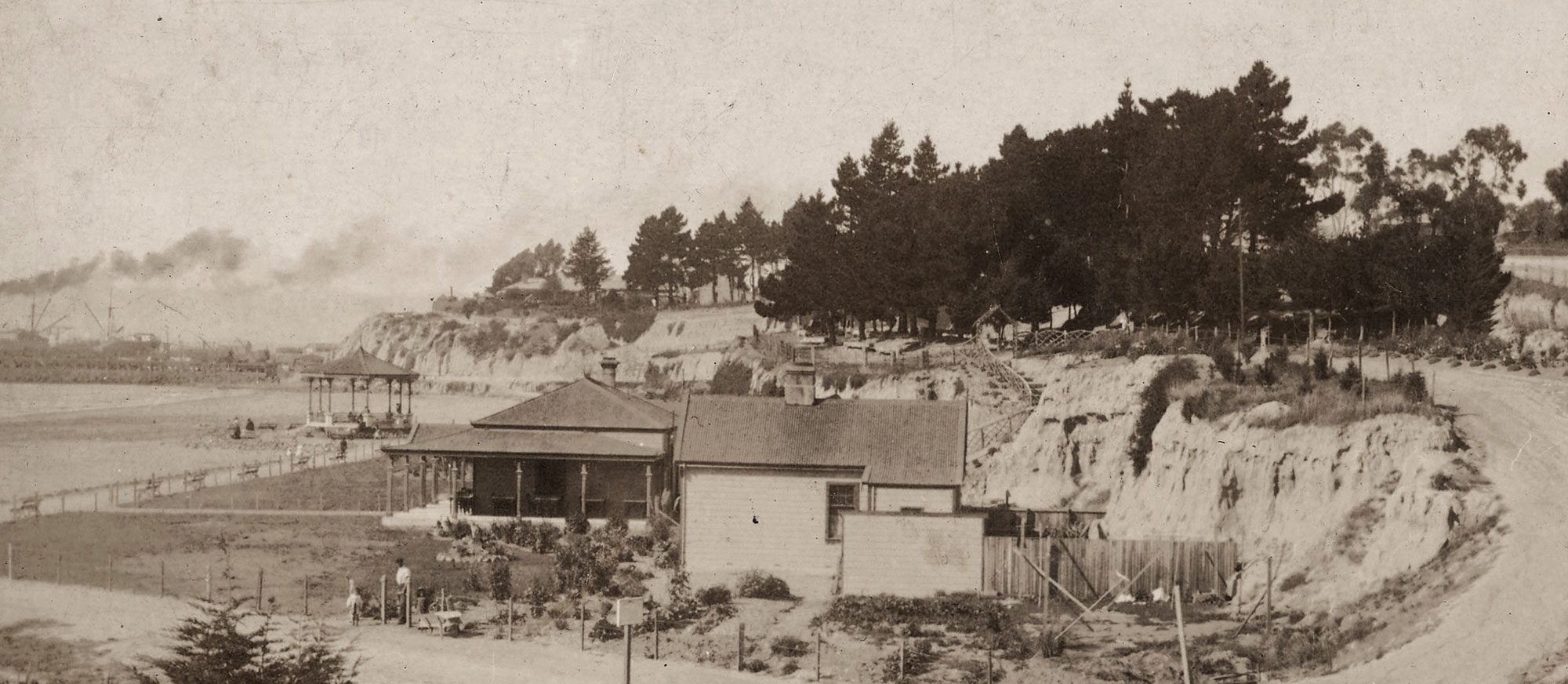
Caroline Bay, Timaru, New Zealand. circa 1900, Melbourne, by George Rose. Taken from the railway embankment, the band rotunda, tea rooms, and caretakers house and showing a portion of the harbour. Melbourne, by George Rose. Purchased 1991. Te Papa (O.004821)
I wonder if it was him who carved his name and two dates. Maybe he thought his contribution was worthy of something in stone, maybe unofficially?
Yet those dates match the years in which Caroline Bay was being transformed from a rough coastal edge into the public resort Timaru came to love. By the early twentieth century the Borough Council had leased the foreshore and set about improving it as a seaside attraction. That vision included lawns, promenades, planting, a band rotunda, tea rooms, and importantly, a caretaker’s cottage. In August 1904 the Timaru Herald reported that councillors had gone to the Bay to choose the site for that cottage, and that the tea rooms were to stand beside it so the caretaker’s wife could conveniently supply hot water.
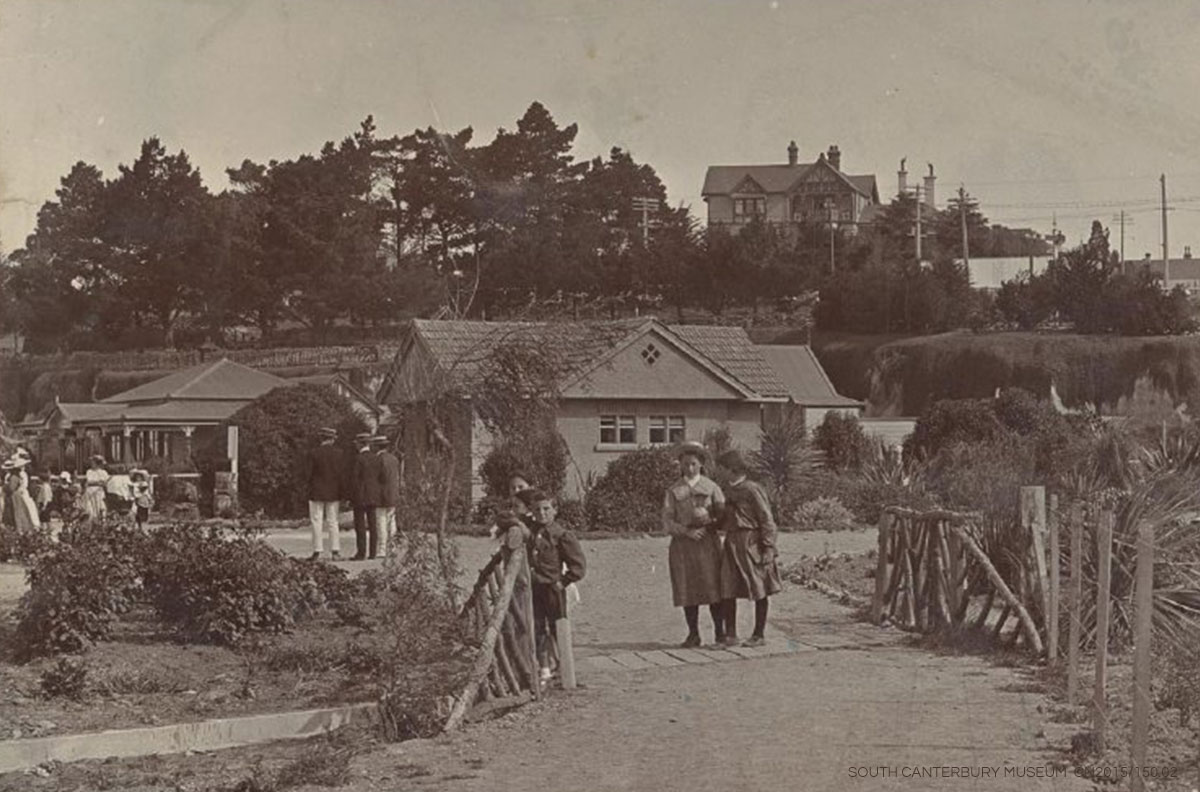
The rustic bridge Caroline Bay Timaru circa 1915. Pictures of several children on and around the bridge, part of the walkway leading to the Caretaker's Cottage and Tea Rooms on the Bay (in the background). - South Canterbury Museum 2015/150.02
That 1904 newspaper report matters because it anchors the first date on the stone in a real civic moment. It tells us the caretaker’s role was built into the Bay’s early development from the start. This was not an ornamental job. Someone had to live there, watch the grounds, care for the plantings, keep order, and help make the place function for the growing number of visitors who came to enjoy Timaru’s new seaside playground.
By 1928, Gibson was still there. A Timaru Herald illustrated page on Caroline Bay included an inset of A. F. Gibson and described him as having been 22 years in charge. That is a lovely little clue because it shows he was not just a name preserved later by local memory. He was recognised publicly, in his own time, as part of the identity of the Bay.
The newspaper trail continues... In 1929, during a Borough Council discussion about cyclists breaking the by laws on Bay paths, the Mayor said the caretaker, Mr Gibson, should be empowered to prosecute offenders. It is such an ordinary council detail, but in some ways that is exactly why it matters. It places Gibson at the practical centre of everyday life on the Bay. He was the man expected to watch, manage, and protect the place.
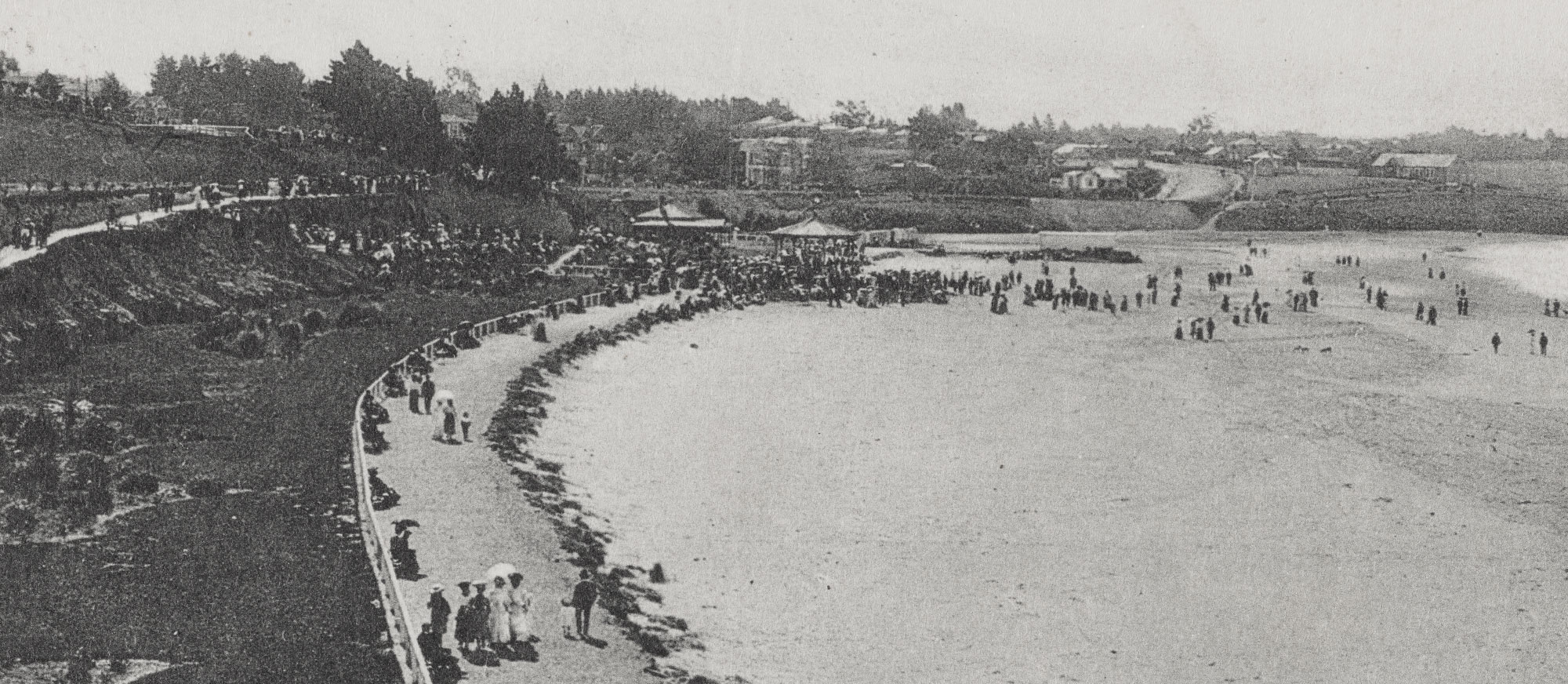
Caroline Bay, looking North, Timaru, circa 1905, Timaru, by Muir & Moodie. Purchased in 1998 with New Zealand Lottery Grants Board funds. Te Papa (PS.001045)
By 1935 he was still being publicly acknowledged. In the annual report of the Caroline Bay Association, Mr Gibson and his staff were thanked for their willing co operation. Again, it is not dramatic. But that is the point. So much of a beloved public place depends on steady, often unseen labour. Lawns do not keep themselves. Paths do not manage themselves. Gardens do not quietly become part of people’s childhood memories without someone giving years of care to them.
The steps themselves tell part of this story. Museum and heritage records consistently call them the Gibson Steps, and CPlay notes that they were built by Mr Gibson, with rustic kauri railings and an archway at the top. A South Canterbury Museum postcard description places the Gibson Steps in the foreground of an early twentieth century Bay view, which suggests the name had local currency, not just recent retrospective use. That is important because it means Gibson’s presence was once physically and publicly legible in the landscape.
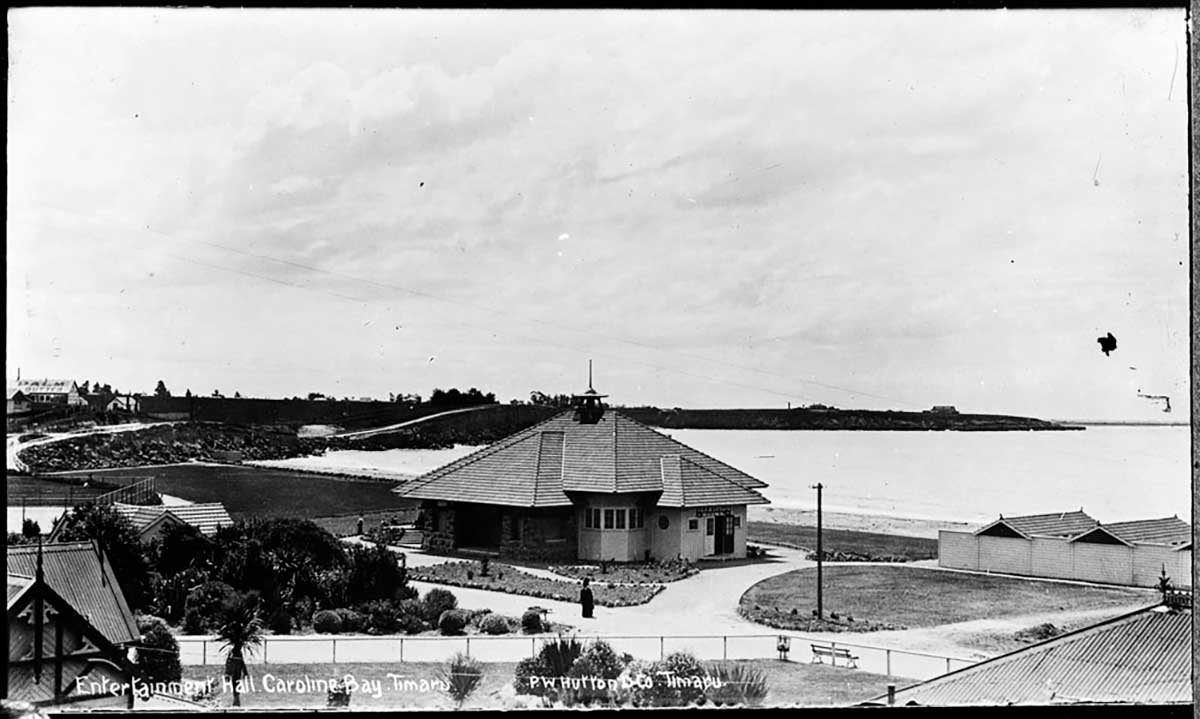
Entertainment Hall. Caroline Bay. Timaru. P.W. Hutton and Co. Timaru. Looking along Caroline Bay, Timaru. Showing the Pavilion (center), on the hill, at left, is the Midland Dairy Company's Palm Butter factory. Below this is Evans Street, and the edge of the tennis courts. Auckland Libraries Heritage Images Collection
I find myself thinking about what sort of life that must have been. To live beside the Bay. To watch the seasons change there. To see the crowds arrive for carnivals, concerts, summer afternoons and seaside rituals. To tend paths and plantings while Timaru built its idea of leisure and civic pride around the place. The inscription does not tell us whether Gibson scratched the stone himself, or whether someone did it for him. But it has the feeling of a private memorial made public by survival. It sat in what had once been the back garden of the caretaker’s home. Now the house is gone, the garden has changed, and the tea rooms remain. The stone stays on, quietly carrying his name.
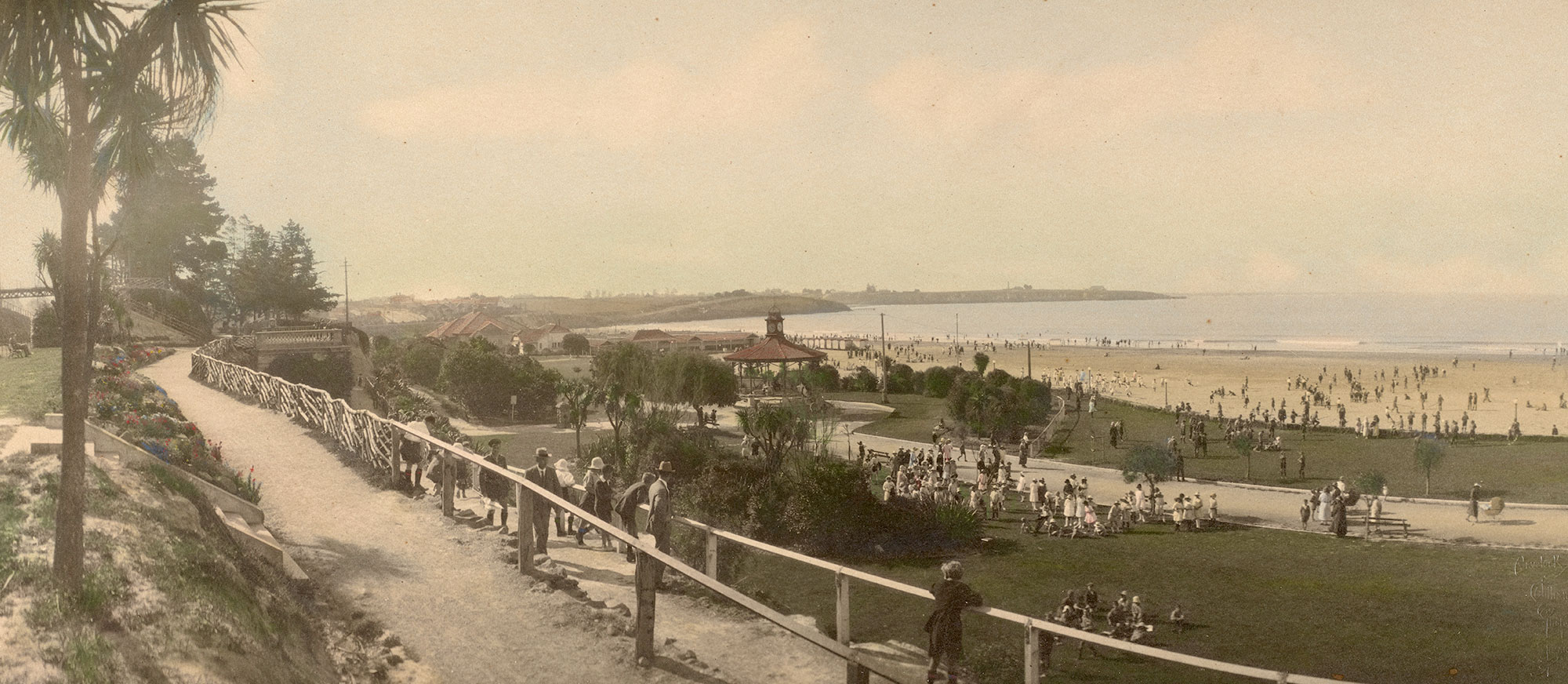
Caroline Bay, Timaru, 1920s, Timaru, by Havelock Williams. Purchased 1999 with New Zealand Lottery Grants Board funds. Te Papa (O.020793)
There is still more to learn.
I would love to pin down the fuller biography behind those initials, his family, where he came from, and what happened at the end of his service. But even without every personal detail, the outline is already clear enough to matter. A. F. Gibson was one of those practical makers of place. Not the architect. Not the mayor. Not the headline figure. The caretaker. The one who lived there, worked there, and became so associated with that part of Caroline Bay that his name remained on the steps and in the stone.
And perhaps that is the real gift of finding a scratched stone like this?
It can remind us that heritage is not only in official monuments. Sometimes it survives in a back garden rock who left just enough of a mark for us to ask, all these years later, who were you?
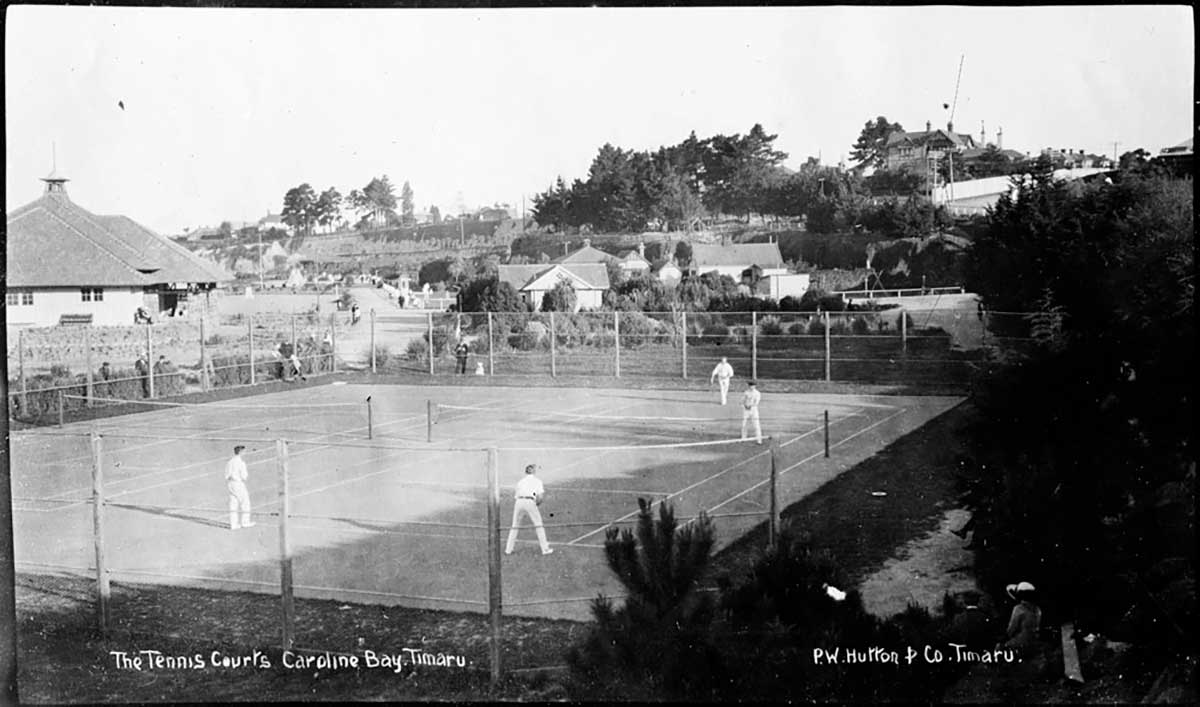
The Tennis Courts Caroline Bay. Timaru. FW Hutton and Co. Timaru . Looking across the tennis courts at Caroline Bay, Timaru shows men playing doubles, houses (left and rear); women seated (right foreground). Auckland Libraries Heritage Images Collection
Timeline of the bay and tea rooms next door to the caretakers home.
Historic Place Category: 2 List Number: 9077
Construction of the original tea rooms: 1905.The first of a number of additions started in 1907, when two rooms for the use of the tenants were added to the rear of the building.
Construction materials: Local Bluestone (basalt), Timber and terracotta Marseille tiles.
View heritage information here: heritage.org.nz/Caroline-Bay-Tea-Rooms
The Bay formed between 2.5 million-year-old lava flows. The reefs provided shelter and marine habitat.
The coastline was abundant in marine life and was an important source of kai moana for Māori. Kai such as tuna (eel) inaka and (whitebait) patete (fish), and kōareare (the edible rhizome of raupō) were abundant in the area.
1839-1841 The Weller Brothers had their whaling station near what is now the Tearooms. A whale pot stands at Pohatukoko Whale’s Creek.
The name Caroline may derive from an early whaling ship used to drop off supplies and pick up whale oil. Most likely the Barque Caroline that was recorded at Lyttelton Harbour in September 1836. Under Samuel Cherry master; or a ship owned by Robert Campbell of R. Cambell and Company, Sydney. NZ History Mayor Craigie stated in January 1907 that he was firmly of the view that the bay was named after Caroline of Brunswick (1768-1821), the wife of George IV. Craigie based his views on a survey plan drawn up in the late 1840s by the party aboard the Acheron; it may be that the ship was also named for Queen Caroline. timaru.govt.nz/Caroline-Bay-Historic-Heritage-Area.pdf
The natural harbour was notorious for shipwrecks. Over 28 ships had wrecked here, so work began on a breakwater to provide safe mooring.
The local people established the Timaru Harbour Board and funded their own port. Timaru Port was to be only one of two independent ports in the country. This hugely impacted the growth of the region.
1878 the Timaru population was 3389 and the construction of the harbour began. Currents created a sandy beach under the cliffs forming the beach at Caroline Bay.
1891 wheeled bathing sheds appeared. They were organised by James Strachan. The caravans on wheels were drawn into the sea by horses
Many hours of voluntary labour went into creating a promenade and pleasing recreational facilities. The first improvements made to the bay included the planting of pine trees at the top of the cliff to camouflage the rubbish and sewage that was being dumped near the site of the present-day tearooms.
1890s Work to ‘improve’ Caroline Bay began. A tree-planting picnic was organised by the mayor of Timaru, J. Grandi after a public meeting had been held to discuss how the town should mark Queen Victoria’s ‘record reign’. In the same year sections of the cliff behind the bay were lowered and cut back.
1897 Topsoil taken from the railway cutting to be spread for the grassed area on bay. A beautifying society was formed a few years later.
1902 The council leased the new foreshore from the harbour board in 1902 for a European-style beach resort. The mayor offered a prize for a scheme for development and the winning entry was submitted by A J Morris.. A loan of 2500 including 1000 publish subscriptions was raised.The willows by the Soundshell were one of the first projects for the Timaru Beautification Society.
Mr Silas Williams’ had the first shop on Caroline Bay and sold fruit and confectionery. The shop was situated near where the tea rooms now stand.
1903 The first buildings at Caroline Bay were erected by the caretakers’ cottage and shelters followed by the tearooms in 1903 and the band rotunda in 1904. Alexander Gibson was the first caretaker and steps that lead down behind the tea rooms were named after him. At the back of the Caroline Bay Tearooms Garden is a large rock with "A F Gibson Timaru 1904-1939" scratched into the blue stone. It marks his 35-year contribution.
1905: Construction of the original tea rooms. Bluestone, timber, Marseille tiles. Mr Marchant Architect 1905 (see List No. 9077). Miller Brothers Builders 1905 (see List No. 9077)
See Paperspast article about the opening of the tea rooms.
1905 Mrs Cowan was the first lessee.
1905 1000 shrubs planted on bay.
1906 The Timaru Borough invited tenders for the leas of the Caroline Bay Tearooms.
1907 Addition of two private rooms for the tenants. Lean-to addition on the southwest corner of the building.
1907 Willow trees are planted by the local group, the Timaru Beautification Society. One of the first was to plant the Willows near the soundshell.
1910 Ladies facilities north of the tearooms and caretakers cottage and west of where the pavilion is to be built.
1911 Caroline Bay Association was established. Timaru’s population was 11280. Christmas carnivals began, attracting thousands. Over the next century, it featured beauty pageants, baby shows, concerts, rides, and side shows.
1912 The first "Grand Carnival" was held at Caroline Bay in conjunction with the opening of the Marine Parade.
1913-14 lean-to replaced. Addition of two bedrooms, bathroom, store, and hot water room.
1915 The first children’s playground on the bay was built and heated saltwater baths, which remained until 1968, were opened. RH Rhodes of ‘Bluecliffs’ left a bequest of £2000 to the Timaru Borough Council to fund improvements to Caroline Bay; a sundial in his memory was erected
1917 Addition of a store. Mr Hall Architect 1917 (see List No.9077) Harold Broadhead Architect 1920 (see List No. 9077)
1918 Caretaker instructed to plant Willow trees along the main promenade.
1923 The pavilion on Caroline Bay burned down. The Bay Hall opened on the same site on 8 December 1923; it was presented by the Caroline Bay Association
1929 Roads and paths on the Bay were sealed, a memorial seawall was built, lawn was laid. The memorial wall, which commemorated all the major battles of World War I, originally divided the sandy beach from the land on which there were lawns, gardens, and paths; it is now many metres back from where the beach begins.
1931 The tearooms, having been extended several times by 1920, were largely rebuilt. designed by Victor Panton and Messrs Turnbull and Rule working as ‘associated architects’, were in the same Arts and Crafts style as the Bay Hall. Addition of new entrance and tea room. Part of the verandah is enclosed. Demolition of the two bedrooms, bathroom, two stores, and hot water room. W H Panton architect 1931 (see List No. 9077). Stoddart and Mitchell Builder 1931 (see List No 9077)
1937 A ‘sound shell’ (for concerts) replaced the rotunda.
1939 During World War II barbed wire was strung across the beach at Caroline Bay and concrete pillboxes were installed in the central business district to block the passage of any Japanese troops who managed to land; these were later dumped on Caroline Bay
1939 The first of the Phoenix Palm (Canary Island Date Palm) were planted along the north side of the pavilion, and on the bank above.
1941 UK Parliament Buildings are bombed in WW2. Bluestone "moon" seat built. A brick was brought to Timaru, and placed as a tribute in a round stone shelter beside the teamrooms.
1948 A commemorative totara tree planted near the band rotunda
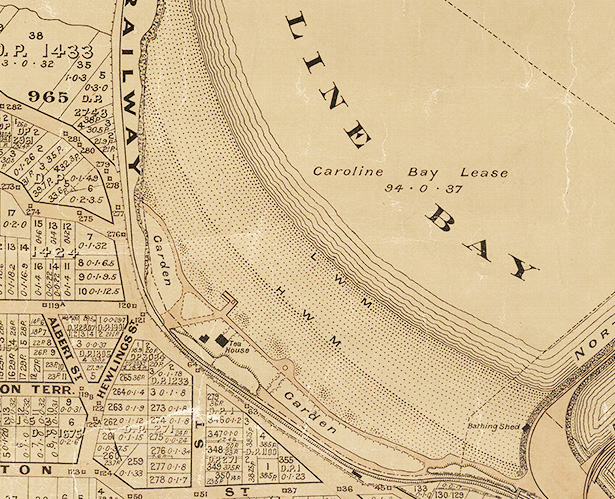
In this map, you can see the Waimataitai Lagoon before it was drained and turned into a park. The stream was piped underground and can be seen at the golf course. Miscellaneous Plans - Borough of Timaru, South Canterbury, 1911 - T.N. Brodrick, Chief Surveyor Canterbury ndhadeliver.natlib.govt.nz/IE31423732
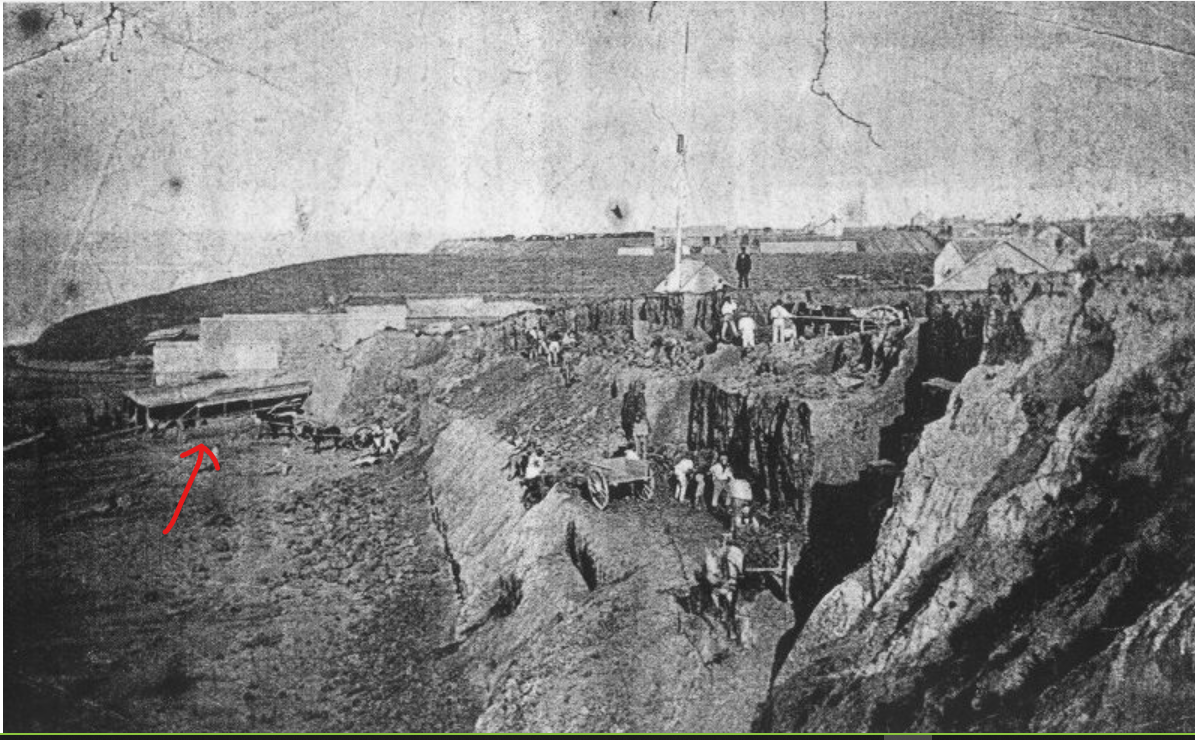
The above photo of the foot of Strathallan Street, possibly shows the first lifeboat shed - Alexander Turnbull Library
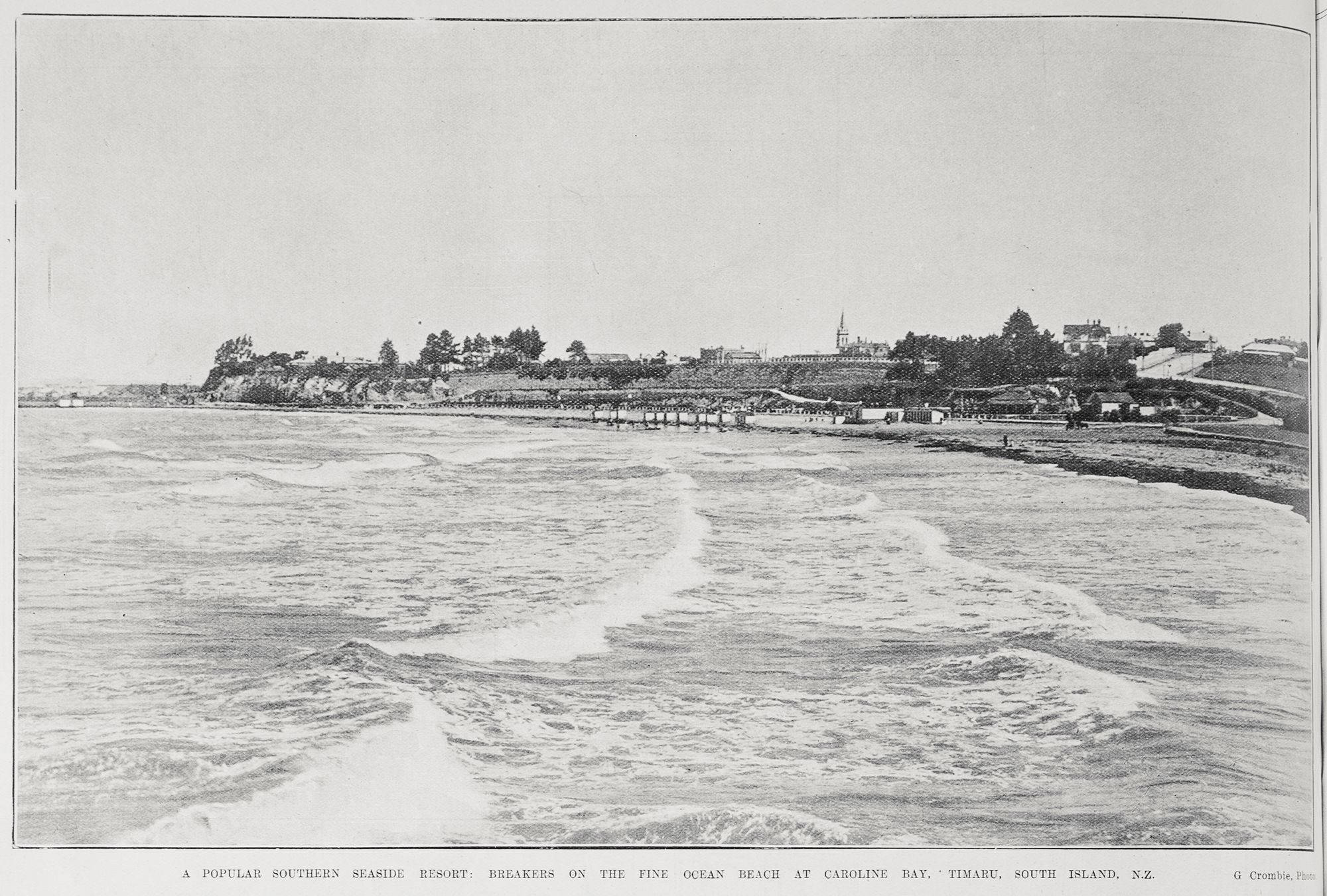
A Popular Southern Seaside Resort. Auckland Weekly News, 1 April 1909, p.6. Auckland Libraries Heritage Collections AWNS-19090401-06-01 kura.aucklandlibraries.govt.nz/digital/collection/photos/id/199340/rec/46
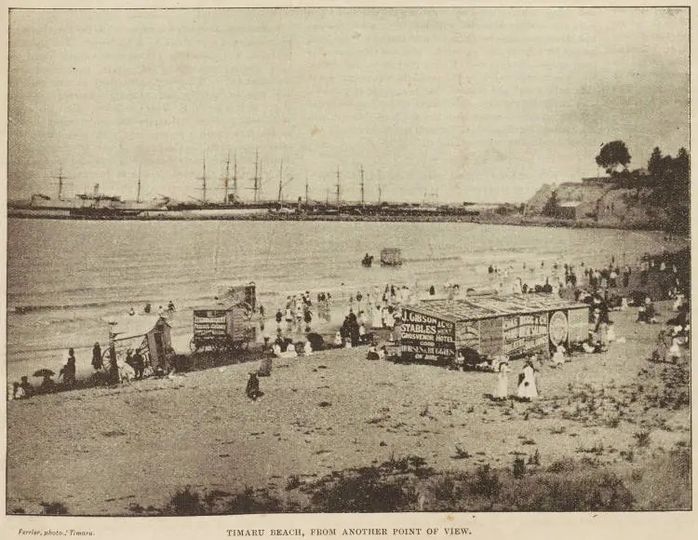
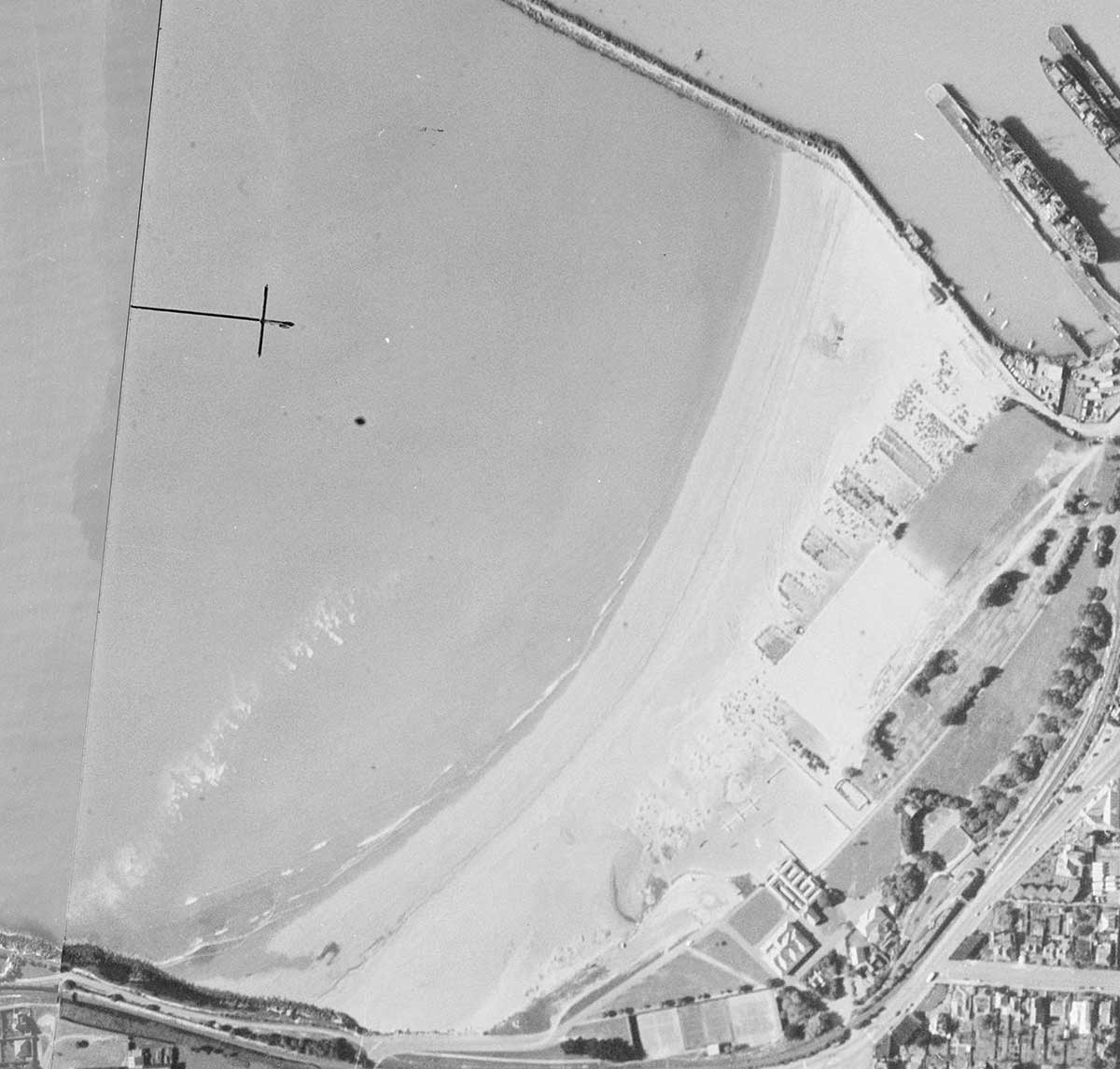
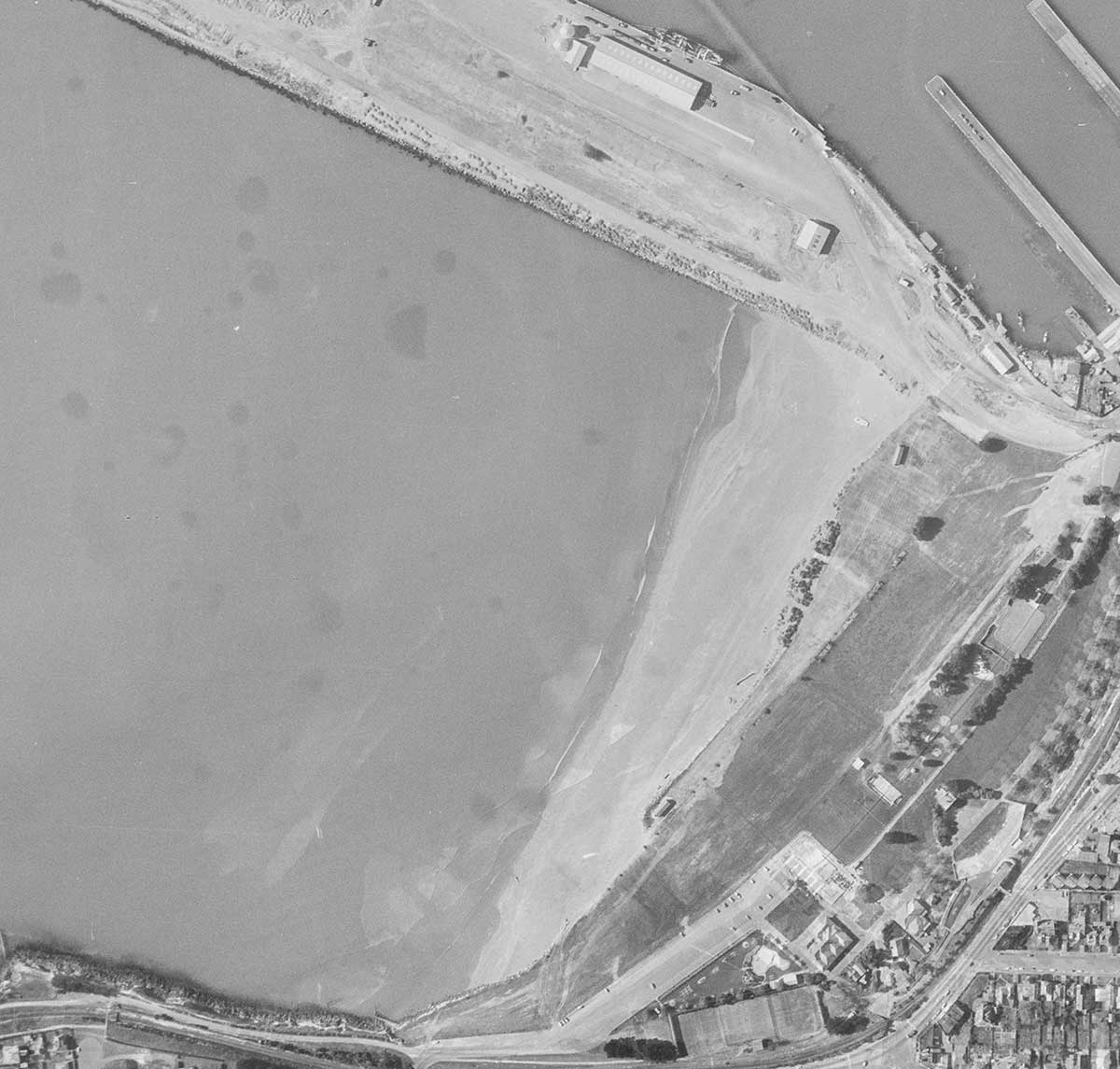
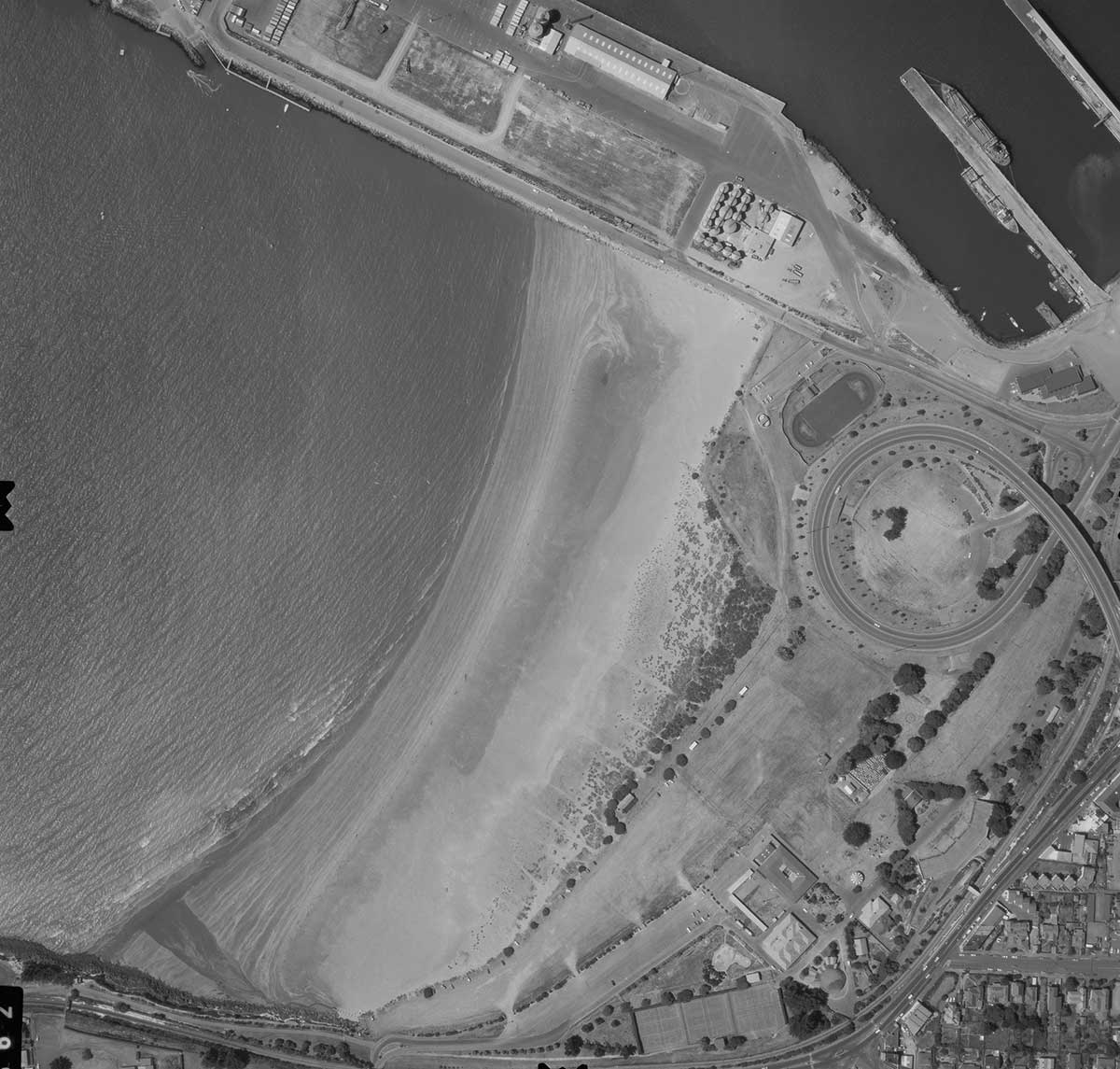
It's amazing to see how quickly the sand has built out at Caroline Bay since the breakwater at the Port was constructed in the 1880s. Before that, the sea lapped up to the bottom of the cliffs.
This is pretty close to the Tearooms and where the new playground is being constructed, except look how close the sea was to the cliffs back 129 years ago!
In this 1894 photo by William Ferrier, you can see bathing carts on Timaru's new Caroline Bay. People used carts moved by horses to get changed inside. And at one point they even backed into the sea, so ladies could keep their modesty while bathing. Interesting to see who has taken advantage of the advertising opportunity and sign written the carts.

LEFT The brown lines show the changes to the mean sea level since 1926. Graphic courtesy Roselyn Fauth 2019 with assistance from the South Canterbury Museum. RIGHT One of the mean tide markers along the North to South promenade at Caroline Bay. Photograph courtesy Roselyn Fauth 2019