
By Roselyn Fauth
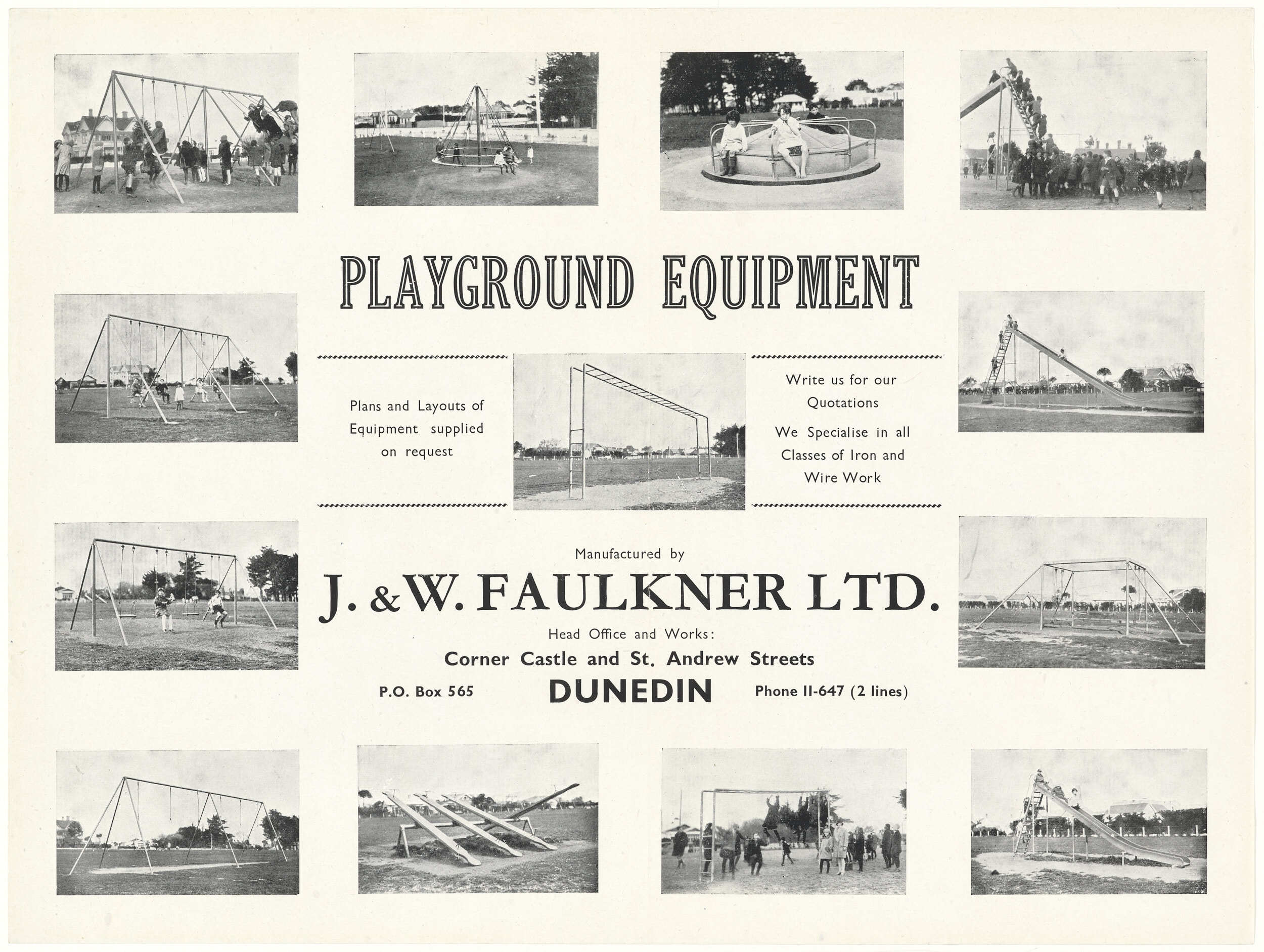
J. & W. Faulkner Limited, Playground equipment manufactured by J. & W. Faulkner Ltd (1930s). Hocken Digital Collections, accessed 04/04/2026, https://hocken.recollect.co.nz/nodes/view/68169
Until recently, I would not have expected many people in Timaru to know the name Faulkners.
I probably would not have either, if I had not already stumbled across it in another context. Faulkners was a long-running Dunedin engineering and metalworking firm. Over the years it made all sorts of things in iron and steel, from gates and railings to bedsteads, hospital equipment, grilles, fencing, and other practical manufactured goods. It was the sort of company that quietly shaped everyday life without most people ever noticing the name behind the object.
That is part of what makes these old firms so interesting. Their work turns up in places you do not expect. A gate here. A railing there. A piece of furniture. A bit of public infrastructure. Something in a catalogue. Something in an archive. Suddenly a name begins to appear more often than you would think. That is exactly what happened with Faulkners...

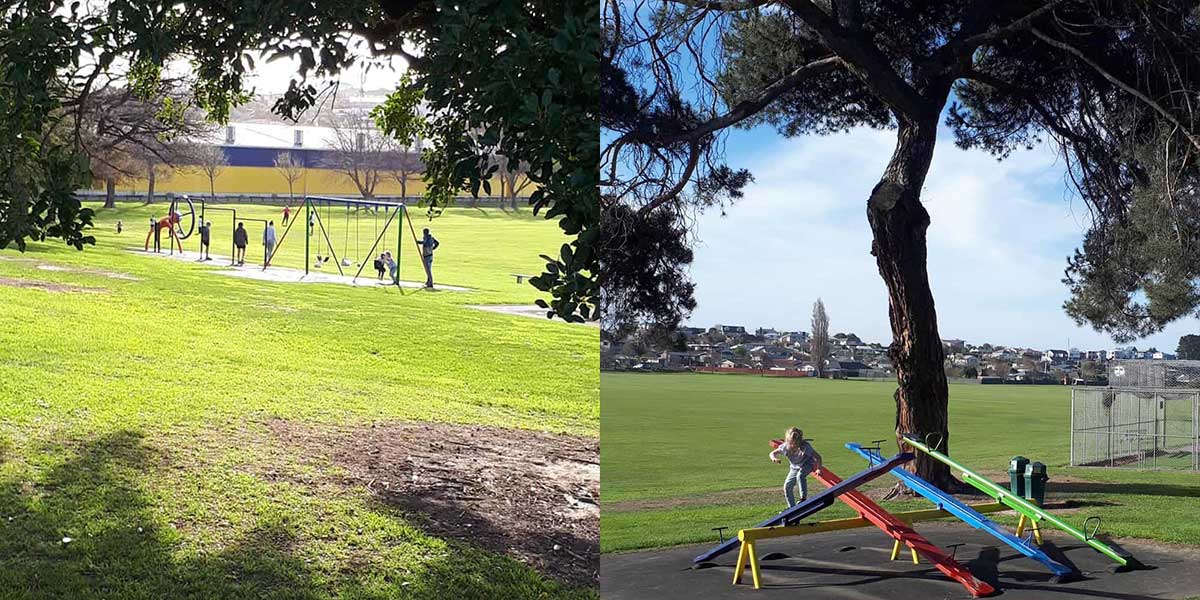
Swings and sea-saw at Ashbury Park Playground Timaru. - Photo Roselyn Fauth
I had already come across the firm through the maker’s mark on the gates at Aigantighe, so the name was familiar to me by the time I found a Faulkners promotional booklet for playground equipment. Even so, I was not prepared for how familiar the playgrounds themselves would look.
At first I was simply pleased to find another piece of the Faulkners story. It confirmed that the firm’s work reached well beyond domestic or architectural ironwork. This was a company that did not only make formal things for houses and public buildings. It also had a hand in the rough and tumble world of children’s play.
Then I started looking properly at the booklet... And that is when the nostalgia kicked in.
Some of the playground equipment looked so familiar that it gave me a real jolt of recognition. Not in a dramatic way. More in that strange, immediate way that certain shapes can take you back before you have even fully thought about why. The bars, the frames, the proportions, the overall look of the equipment all felt very close to the kind of 1960s playground I remember playing on in the 1980s.
The sort of metal playground equipment that seemed completely normal at the time. The kind that looked sturdy, slightly daunting, and endlessly inviting when you were small. The sort of playground where the slide could get hot in summer, the bars cold in winter, and where climbing, balancing, hanging, waiting your turn, and taking little risks were simply part of being a child.

This is little me, playing on the seesaw at Caroline Bay as a kid. I was born in the early 1880s.
This was clearly a sales booklet, made to promote equipment. Practical. Commercial. Straightforward. But looking at it did not feel like looking at a sales tool. It felt like looking at a visual echo of childhood. And that made me realise how rarely we stop to think about playgrounds as designed and manufactured things.
We remember them as places. We remember how they felt. We remember the monkey bars, the swings, the seesaw, the climbing frame, the roundabout. We remember who was there, who was brave, who could climb the highest, who had to wait, who got dizzy, who fell off. But we do not often think about where those playgrounds came from, who made them, how they were sold, or what ideas about childhood shaped them.
Yet of course somebody designed them.
Somebody drew them up.
Somebody welded the parts.
Somebody advertised them to schools, councils, and communities.
Somebody decided what a modern playground should look like.
In this case, that somebody was Faulkners. And once I knew that, the booklet became more than just an interesting piece of ephemera. It became a reminder that the playgrounds many of us took for granted were part of a wider New Zealand story of manufacturing and design. They did not simply appear in parks and school grounds by magic. They came from firms, workshops, catalogues, and decisions made by adults about what childhood should look like in public space.
That is what makes this booklet so interesting to me. It sits at the meeting point of industry and memory. On one hand, it tells us something about Faulkners as a company. This was a Dunedin firm with enough range and confidence to produce playground equipment alongside gates, railings, hospital furniture, and all sorts of other fabricated goods. It suggests a business that was adaptable, practical, and tuned into different corners of New Zealand life.
On the other hand, it speaks very directly to lived experience. Because the equipment in the booklet does not stay on the page. It immediately calls up school grounds, parks, after-school play, scraped knees, hot metal, dares, queues, and that feeling of being small in a world built just big enough to challenge you.
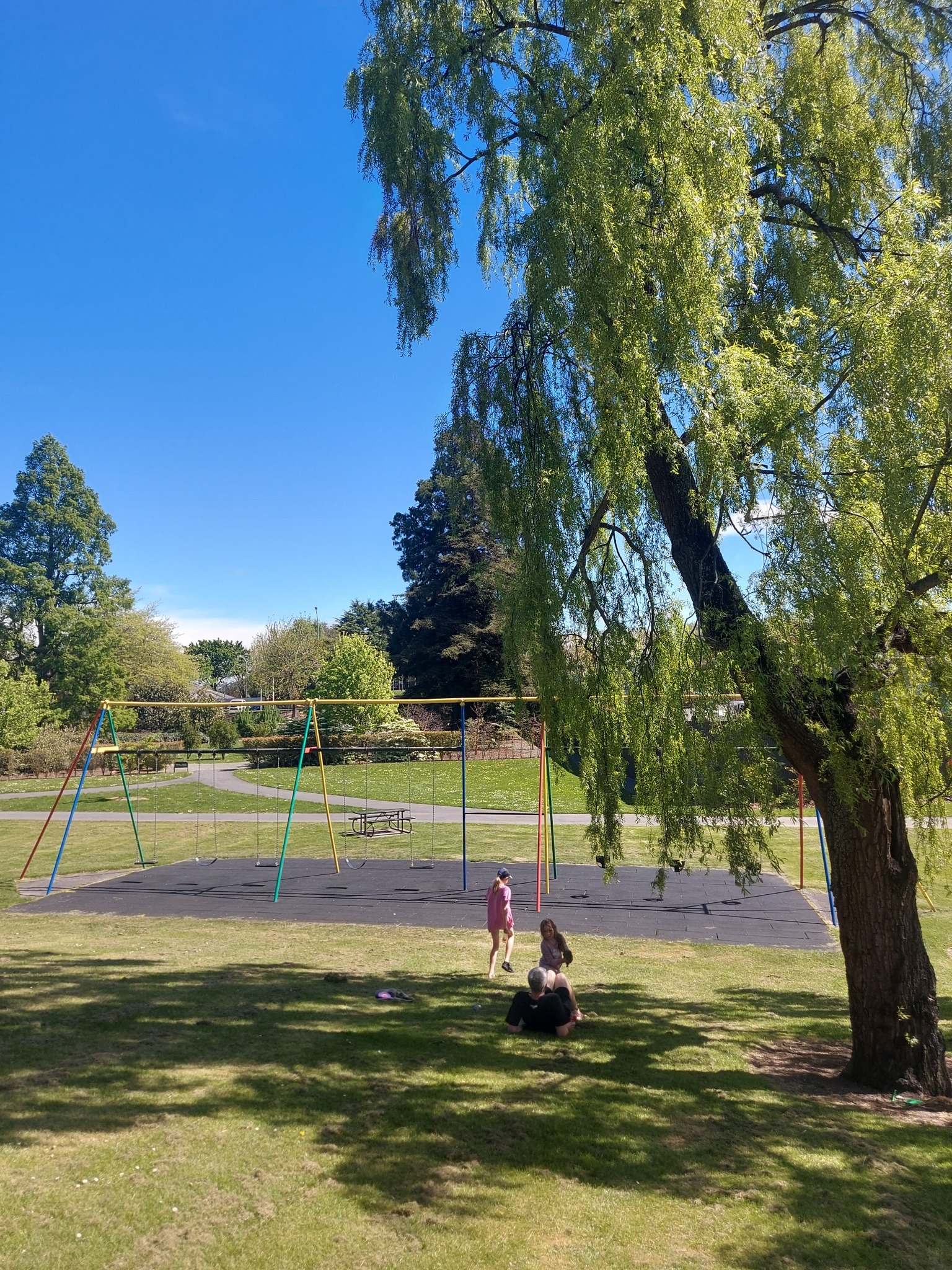
Timaru Botanic Gardens Playground could this be a Faulkner Swing? - Photo Roselyn Fauth
What I really like is the contrast... At Aigantighe, Faulkners appears in the maker’s mark on elegant entrance gates. There it feels formal, architectural, almost stately. Here, in a playground booklet, the same firm turns up in a completely different setting. Less formal. More public. More noisy. More chaotic. Full of movement and wear and ordinary joy.
The same company that could help shape the entrance to a grand house could also help shape the places where children played. One speaks of arrival and status. The other of climbing, balancing, noise, and imagination. Both are part of the built world. Both carry design choices. Both become part of memory.
The booklet also made me think about how many of those older playgrounds have now gone. Replaced, updated, softened, made safer, modernised. That is understandable. Playgrounds have to change. But many of those older metal playgrounds had a very distinctive look, and once you see it in a booklet like this, you realise how much of a generation’s childhood was shaped by that particular design language.
Not because old playgrounds were perfect, but because they were familiar. They were part of the world we moved, lived and played through. And for many of us, they lasted long enough that a playground first installed in the 1960s could still be the playground we knew in the 1980s.
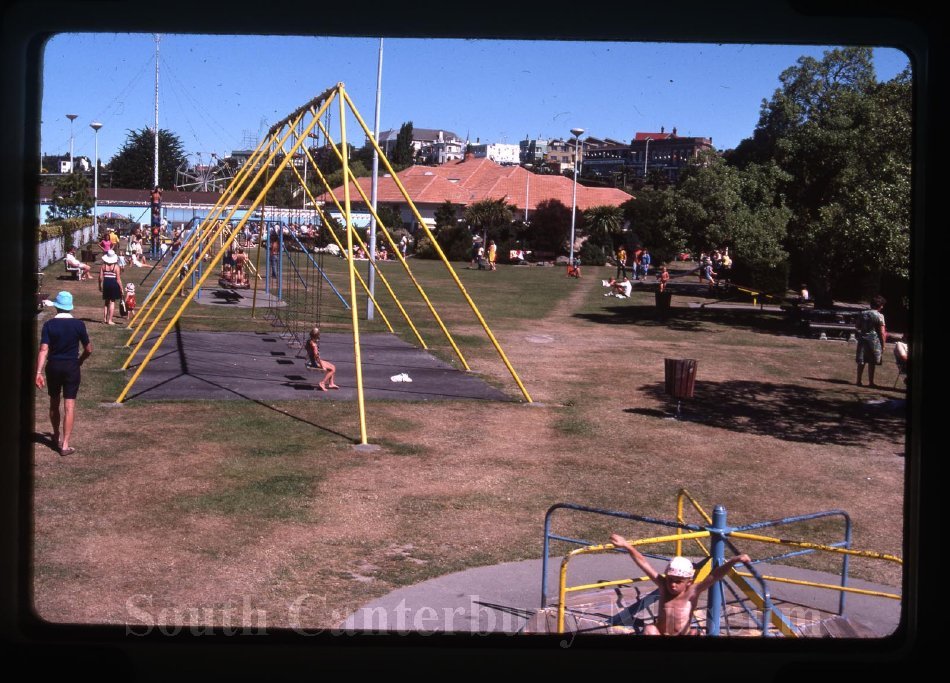
A slide showing the children's playground area on Caroline Bay in Timaru, circa 1980. 2014/008.031 https://timdc.pastperfectonline.com/photo/4E2AEB7A-4D8D-47B1-A63D-188735371340
That is why this little Faulkners booklet matters more than I expected it to.
It introduces a firm most people will never have heard of, yet whose work may have been part of their lives all the same. It shows that manufacturing history does not only live in factories and archives. Sometimes it lives in the memory of monkey bars, metal slides, and the playground equipment that once seemed enormous.
I started out thinking I had found another useful piece of Faulkners research.
What I actually found was something much more recognisable.
A company name behind a familiar world.
A sales booklet that quietly carried the shapes of childhood.
And a reminder that sometimes the things we remember most clearly were made by people we never knew were there.
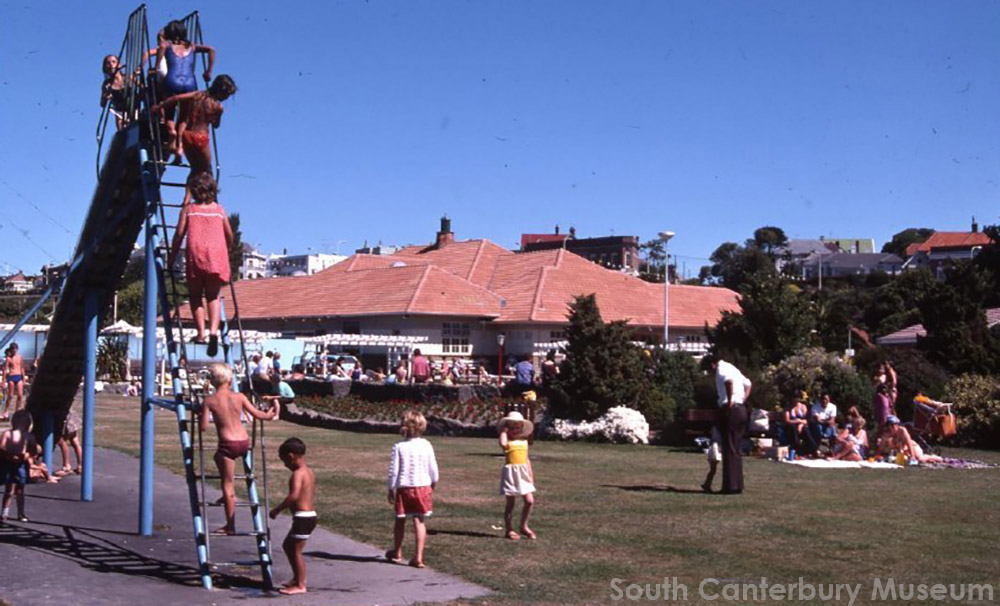
A slide showing the children's playground area on Caroline Bay in Timaru, circa 1980. South Canterbury Museum 2014008033 https://timdc.pastperfectonline.com/photo/DFE91A9E-1822-4A6F-9769-413179753120
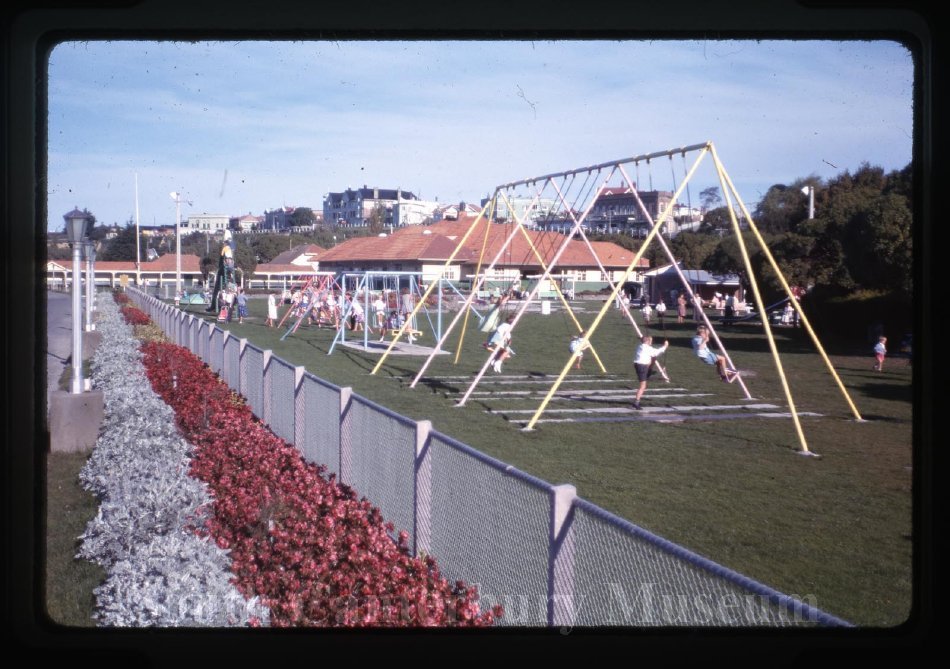
A slide showing the children's playground area on Caroline Bay in Timaru, circa 1965. 2014/008.055 https://timdc.pastperfectonline.com/photo/ED8697E0-7717-4E32-9D66-641449807804
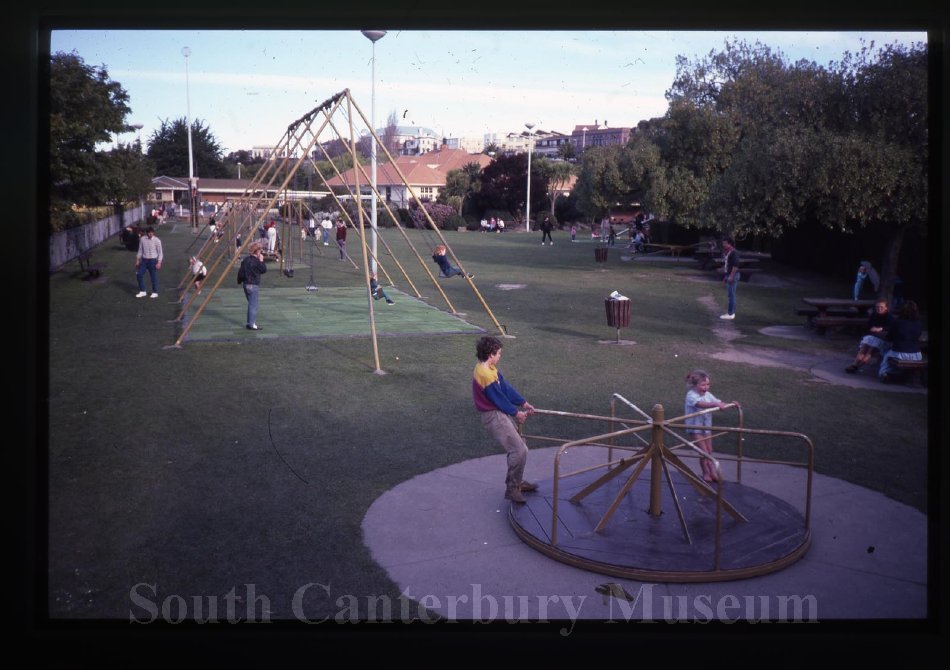
A colour slide showing the playgorund at a Caroline Bay, Timaru, circa 1970. 2020/064.05 https://timdc.pastperfectonline.com/photo/021C3CC2-6537-459D-97FD-615656808440
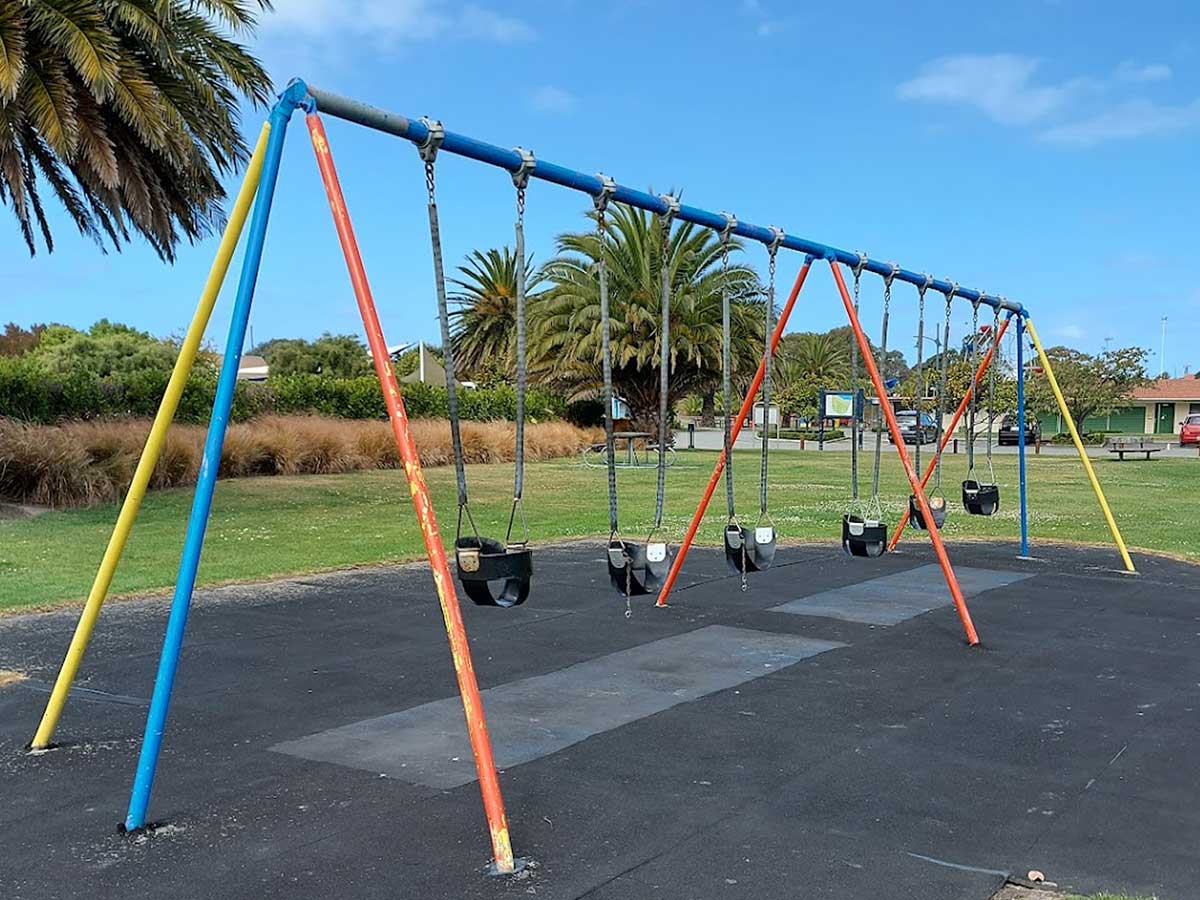
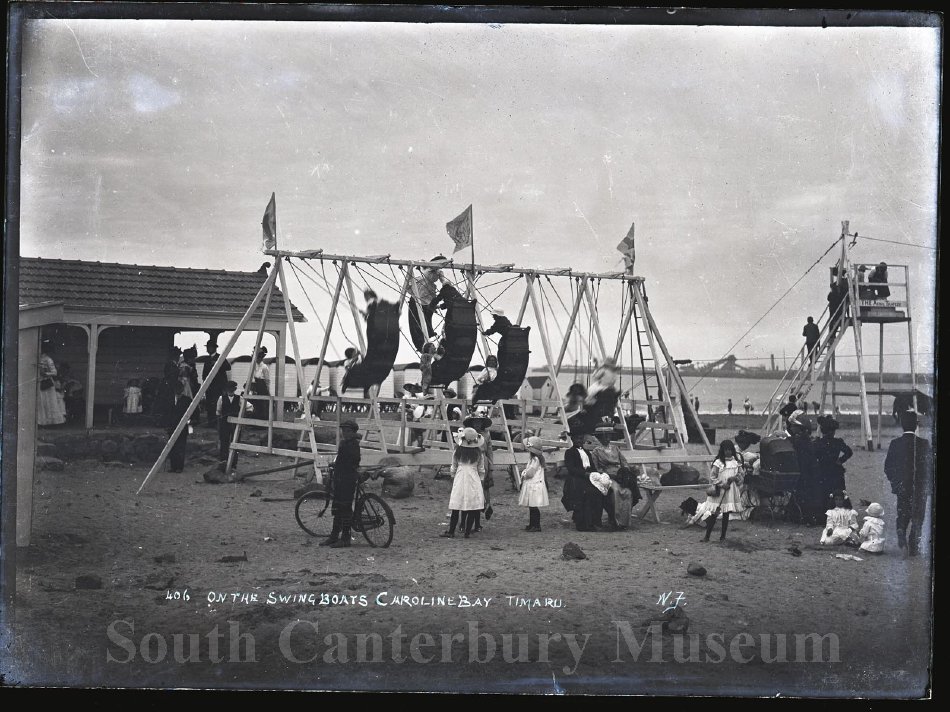
A Swing, known as the swing boats, at Caroline Bay in Timaru. Possibly around 1915. Ferrier, William, photographer, Timaru. South Canterbury Museum 1999/63.5
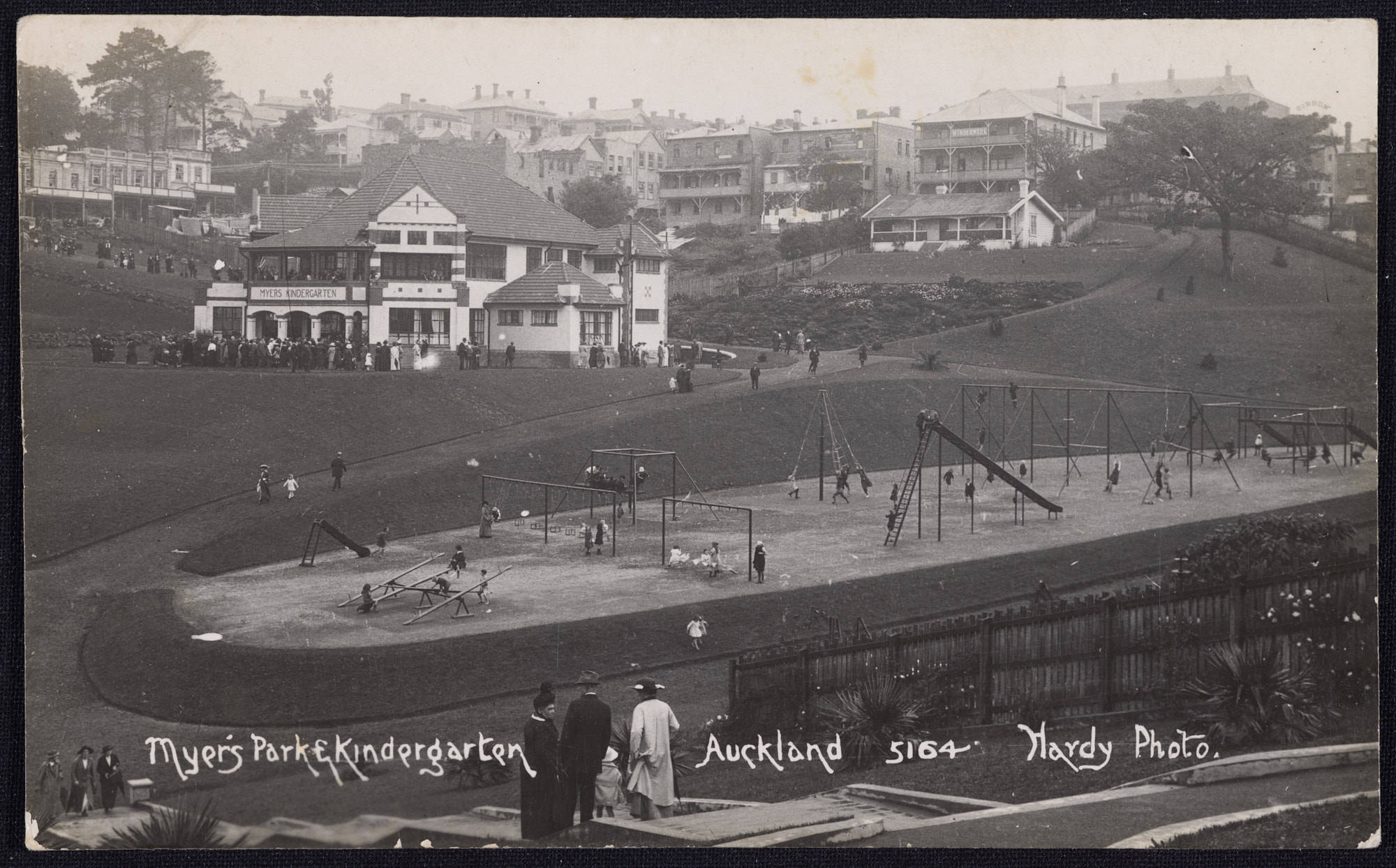
Myers Kindergarten is the oldest purpose-built kindergarten in New Zealand still in use today. Photograph by William Thompson Wilson, 1910s. Auckland Libraries Heritage Collections 1924-307
Myers Kindergarten, Auckland, shows another side of New Zealand’s play heritage. Built in 1915 to 1916, it is the oldest purpose built kindergarten in New Zealand still in use. Its Arts and Crafts design building behind the playground reflected early twentieth century ideas about childhood, with good natural light, ventilation and access to outdoor play. Opened during the First World War, it supported inner city families at a time when women were taking on more work outside the home. It later served as a food kitchen, children’s hospital during the 1918 influenza pandemic, school for Deaf and hard of hearing children, and kindergarten teacher training centre. Like Timaru’s playgrounds, it reminds us that play spaces are also places of care, learning and community resilience.
- https://en.wikipedia.org/wiki/File:NZ_AK_Myers_Kindergarten_(1).jpg?fbclid=IwY2xjawRoe8tleHRuA2FlbQIxMABicmlkETF6aURzMHIyY21qWUxPeVd3c3J0YwZhcHBfaWQQMjIyMDM5MTc4ODIwMDg5MgABHme--mfM9_CHj1dwHkMzhmZVG8vingDatoRjrzpMUmy5TTDeuF0WD6Q5fqg4_aem_Vd5vSL_3xIFXkbuznMIlZw
In Timaru, the story of playgrounds followed a different path from our Auckland friends, shaped less by a single purpose built kindergarten and more by public reserves, engineering practicalities, council work, community fundraising and creativity. But the underlying idea was the same: children needed places made especially for them. Places where movement, imagination and social connection were not afterthoughts, but part of a healthy town.