
By Roselyn Fauth
Some buildings don’t just sit in a town. They hold up part of its story.
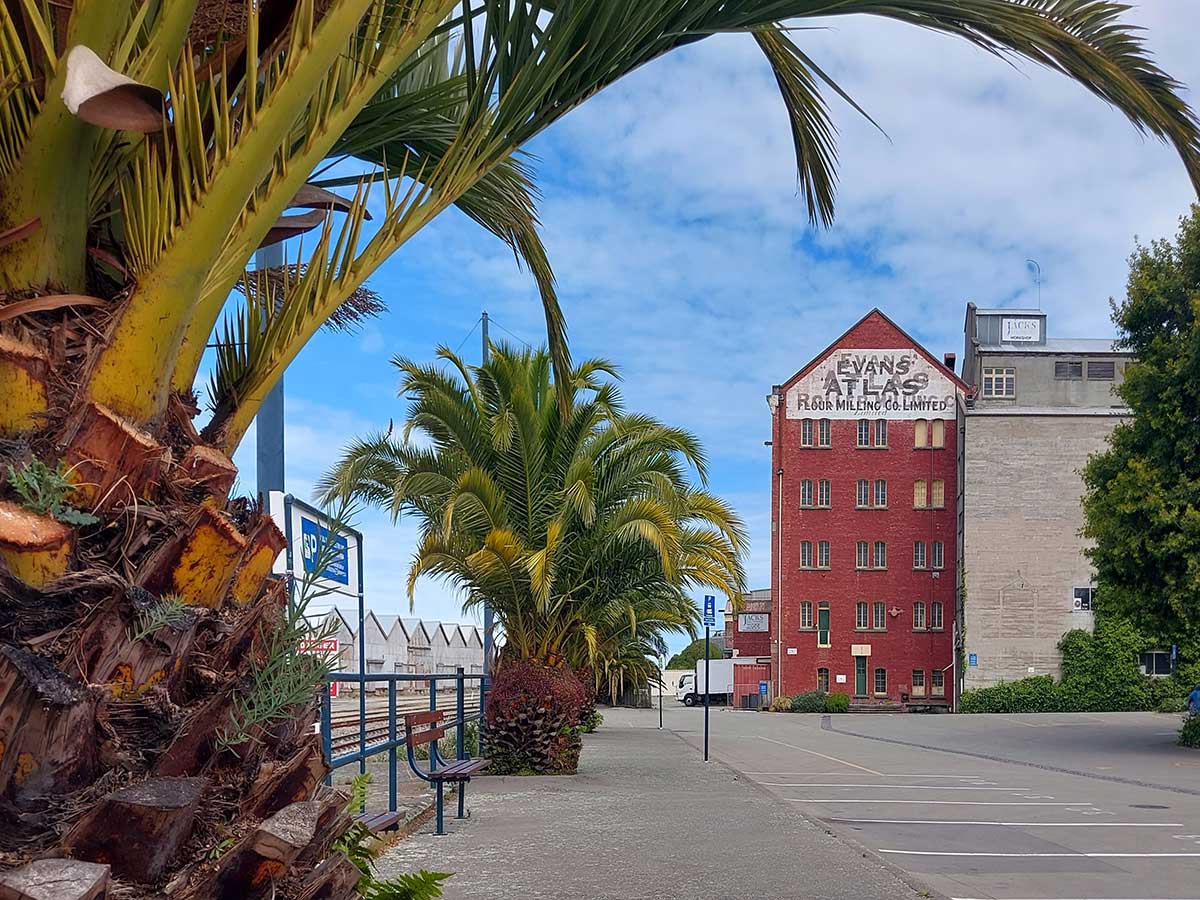
The former Evans Atlas Flour Milling Company grain stores and mill on Turnbull Street is one of those buildings. It is big, yes, but it is more than big. It has presence. It rises beside the railway line like a reminder of the years when Timaru’s fortunes were tied to sacks of grain, the rhythm of freight, and the steady movement of goods between paddock, rail, and port.
When you look at it properly, you can see that it was built for work on a serious scale.
This was not a small local store with a few bags stacked by the door. It was part of the industrial backbone of Timaru. The heritage record places it among the line of major grain and milling buildings that once marked this edge of town, near the railway and not far from the port. Nearby were the Belford mill, the Timaru Milling Company mill, McRae’s grain store and the former CFCA stores. Together they tell a much bigger story about South Canterbury as a grain-growing and grain-processing district.
And that wider grain story matters...
South Canterbury was built, in large part, on agriculture, and wheat was a big part of that. Timaru became a place where grain was not only grown and traded, but also stored, processed, milled, and moved on. Te Ara notes the importance of flour mills across the district, including at Milford, Temuka, Winchester, Waimate and Timaru, and those great brick buildings by the railway became one of the defining features of the town’s industrial landscape. So this building is not standing alone. It belongs to a whole network of production and trade that helped shape the district.
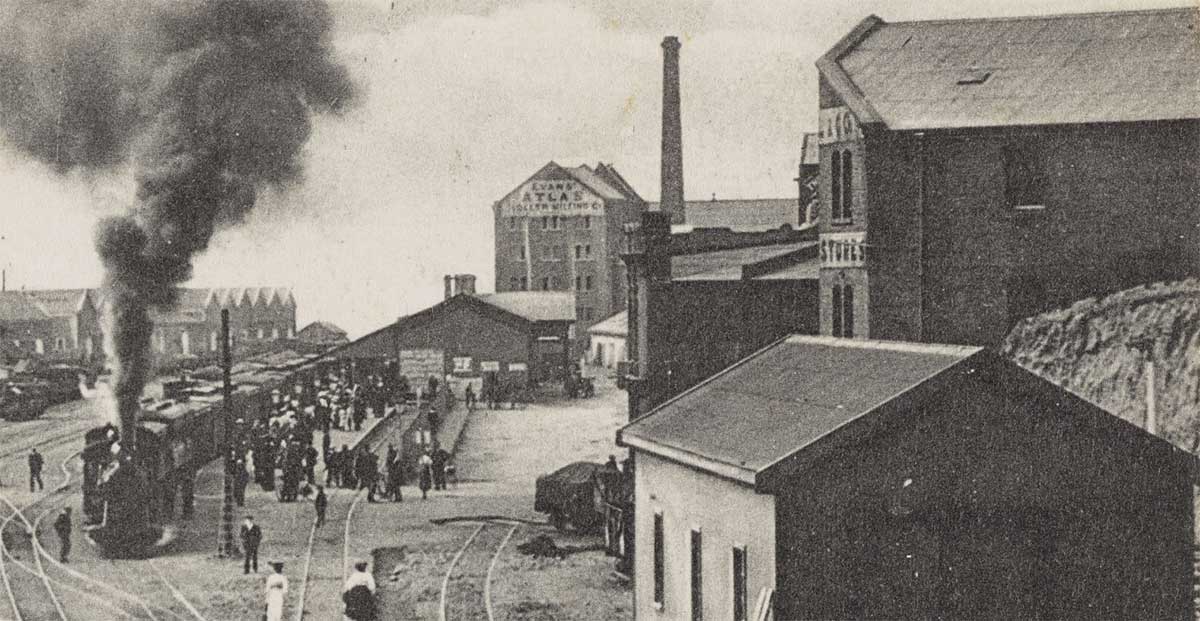
The Railway Station and Wool Stores, Timaru, New Zealand, 1904-1915, Timaru, by Muir & Moodie. Purchased 1998 with New Zealand Lottery Grants Board funds. Te Papa (PS.001044)
Its own story goes back earlier than the flour company name painted on the wall. Before William Evans turned this into a milling site, the property was associated with the Atlas Foundry, established in 1868 by Flockton & Co. That earlier layer matters because it tells us this was industrial ground from early on. The heritage assessment even notes that some part of the site may pre-date Evans’ time there, which is one reason it has archaeological significance today. There may still be traces below ground of earlier industrial use.
Then comes William Evans, and he is a significant figure in this story.
Evans was born in Ireland in 1838, came to New Zealand in 1861, and established himself in Timaru as a merchant in the 1870s. He developed the former foundry site as premises for his coal, grain and timber business. That is important because it shows he was already deeply involved in the practical business of supplying and trading in a growing town. He was not simply a mill owner. He was one of the merchants helping shape Timaru’s commercial life. The building also connects historically with Atlas Chambers on Beswick Street, another reminder of the scale of his business presence.
What pushed him into milling was not romance or nostalgia. It was economics.
By the late 1880s, falling grain prices had caused losses on wheat shipments. At a shareholders’ meeting in 1888, Evans explained that exporting grain was bringing disappointing returns and that local manufacture seemed the more sensible course. So he decided to mill flour himself and established the Atlas Roller Flour and Oatmeal Milling Company in 1888. It was a practical, entrepreneurial response to a changing market. Instead of simply moving grain on, he would add value to it here in Timaru.
That decision also places this building within an important technological shift.
From the 1880s, milling in New Zealand was changing from old-style millstones to roller milling. Te Ara notes that Timaru was right at the forefront of that change. The first roller mill in New Zealand began production here in 1882, and elsewhere many mills were still catching up years later. Evans was also connected to the Crown Roller Mills in Dunedin, which shows he was part of a wider milling world, not just a local operation working in isolation.
The building itself grew over time, which is one of the things that makes it so interesting to look at now. The heritage record dates different stages to around 1879, 1888, 1895, and 1897. The mill building was added to the existing grain store in 1888, while the railway siding and turntable stayed in place. Then in 1895 the company called tenders for excavating clay from the property, and more extensions followed in 1895 and 1897. In other words, this was not a one-off design dropped neatly onto a site. It was an expanding industrial complex, altered and enlarged as the business grew.
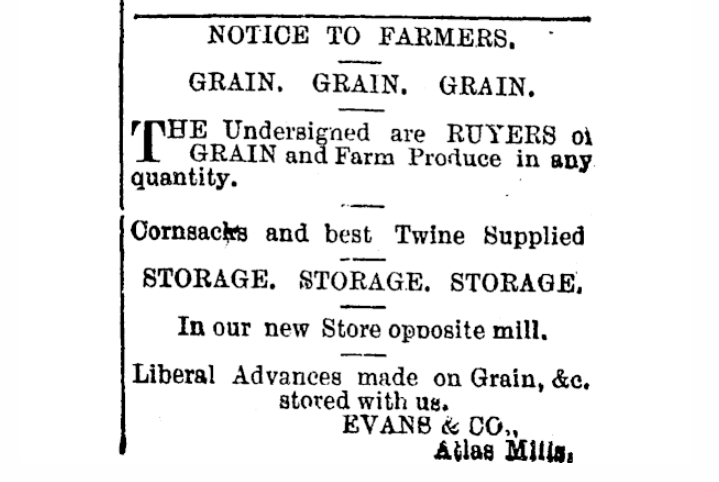
https://paperspast.natlib.govt.nz/newspapers/THD18970405.2.37.4
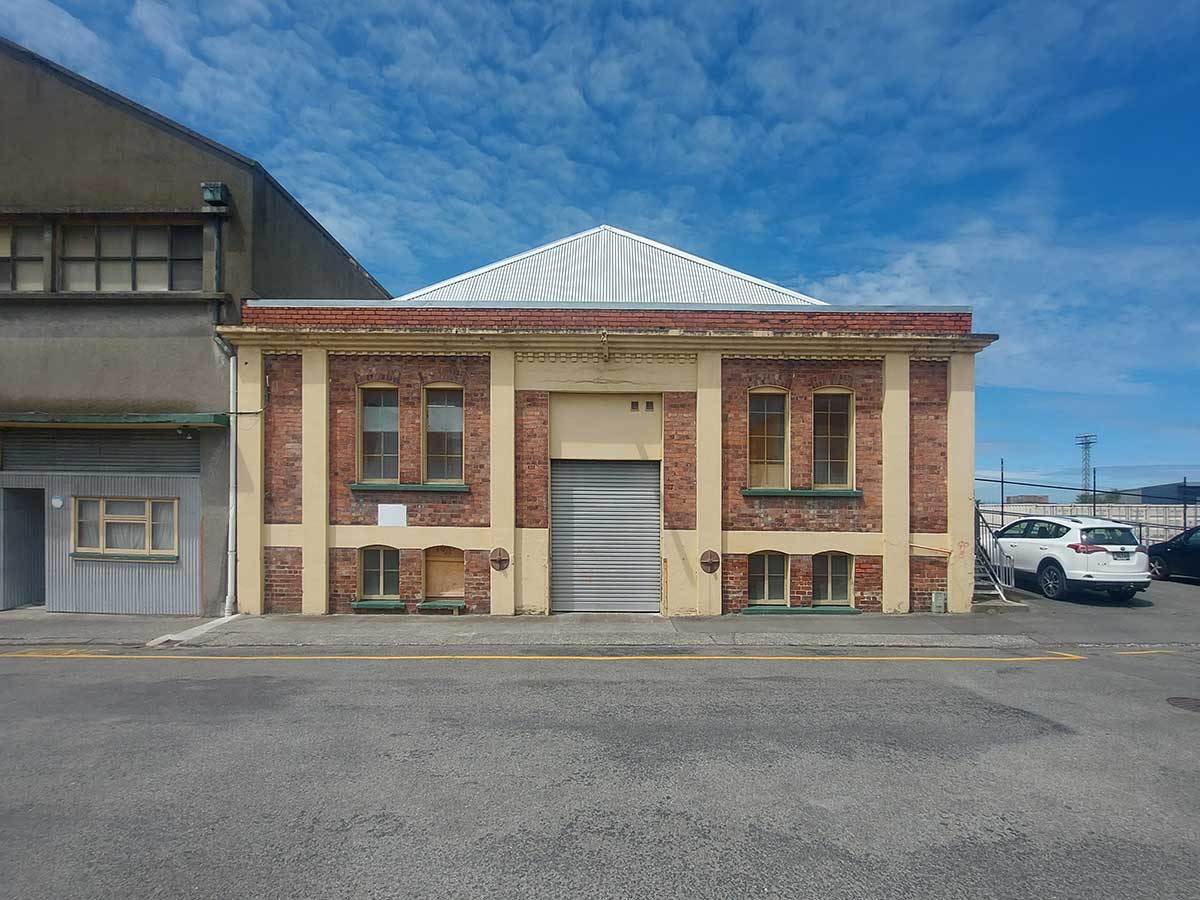
And yet, despite all that practicality, there is real design in it.
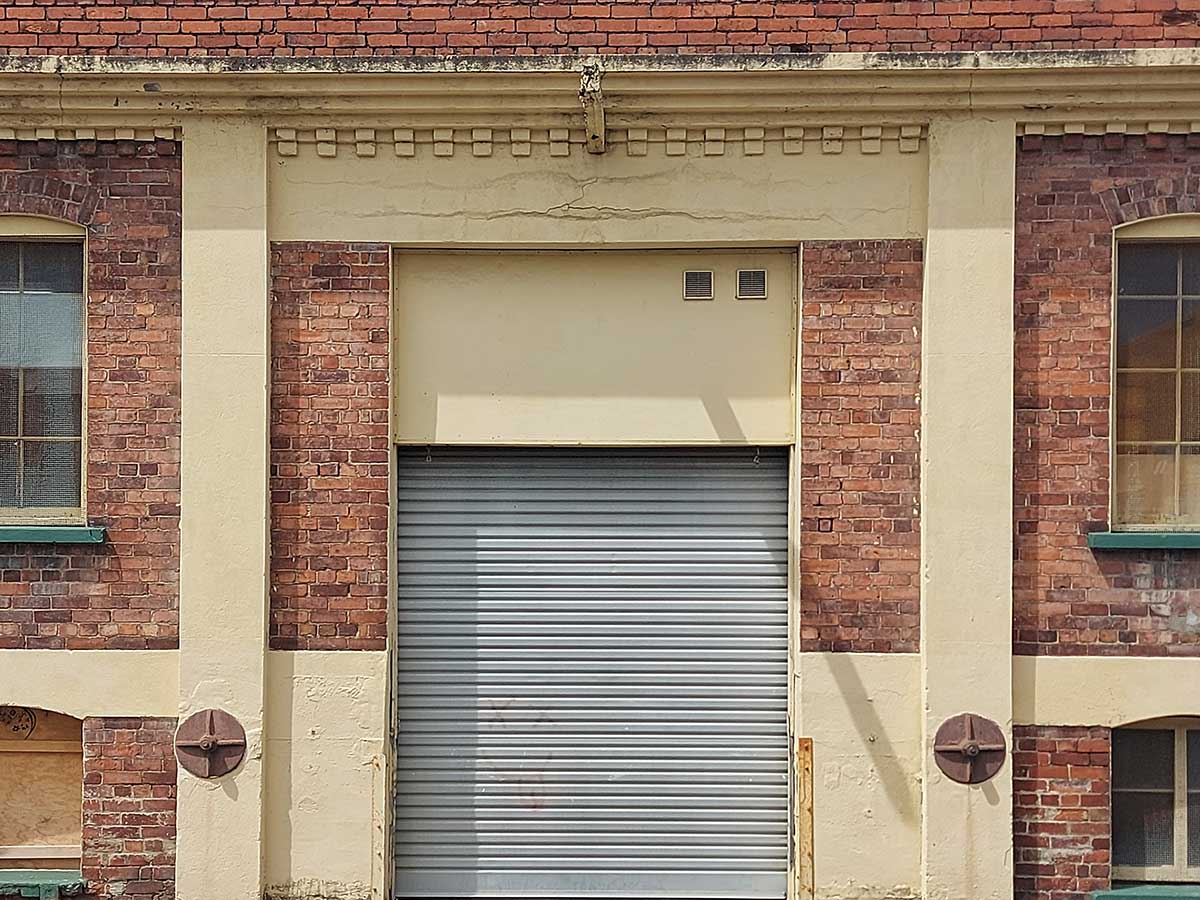
Part of the complex was designed by James Hislop, the Scottish-born architect better known for his Dunedin work, who opened an office in Timaru in 1887. The style is described as industrial/commercial classicism, which sounds technical, but you can see what that means when you look closely. There are paired windows with shallow arches, brick pilasters, a dentilled cornice, parapets, and a surprisingly composed street frontage. Even a working mill was expected to have dignity. That tells us something too about the confidence of the time. Industry was not hidden away. It was part of the public face of the town.
The contractors for the 1888 work were Palliser and Jones, that is Thomas Jones and Charles Palliser, whose partnership began in 1885. Their names are easy to skip over, but they matter. These buildings did not appear by magic. They were the work of architects, builders, engineers, and labourers, all contributing to the shape of Timaru as it grew.
Then there are all the people we do not know by name.
That, to me, is where a building like this starts to feel less like a record and more like a witness. The heritage assessment speaks of the place as showing the way of life of its operators over more than 115 years. Behind that careful phrase are generations of workers: men unloading grain, clerks keeping accounts, railway hands shifting freight, mill workers dealing with dust and machinery, labourers keeping things moving day after day. The names of owners survive most easily in the record, but buildings like this were held up by many more people than that.
By 1905 and again in 1907, Evans advertised the mill for sale as a going concern. In 1907 the property included four town sections, a flour mill, three grain stores, and cottages. That description gives a sense of just how substantial the operation had become. This was not only a mill. It was an industrial site with storage, transport links, and associated accommodation, all woven together.
Later the building passed to the Timaru Milling Company, and in the later twentieth century it was used for pasta products. I love that detail because it shows the site did not simply freeze in one era and become obsolete. It adapted. Te Ara notes that Timaru’s mills later turned to products such as oatmeal, pasta and stockfood, which is a reminder that industrial history is often a story of change rather than sudden endings.
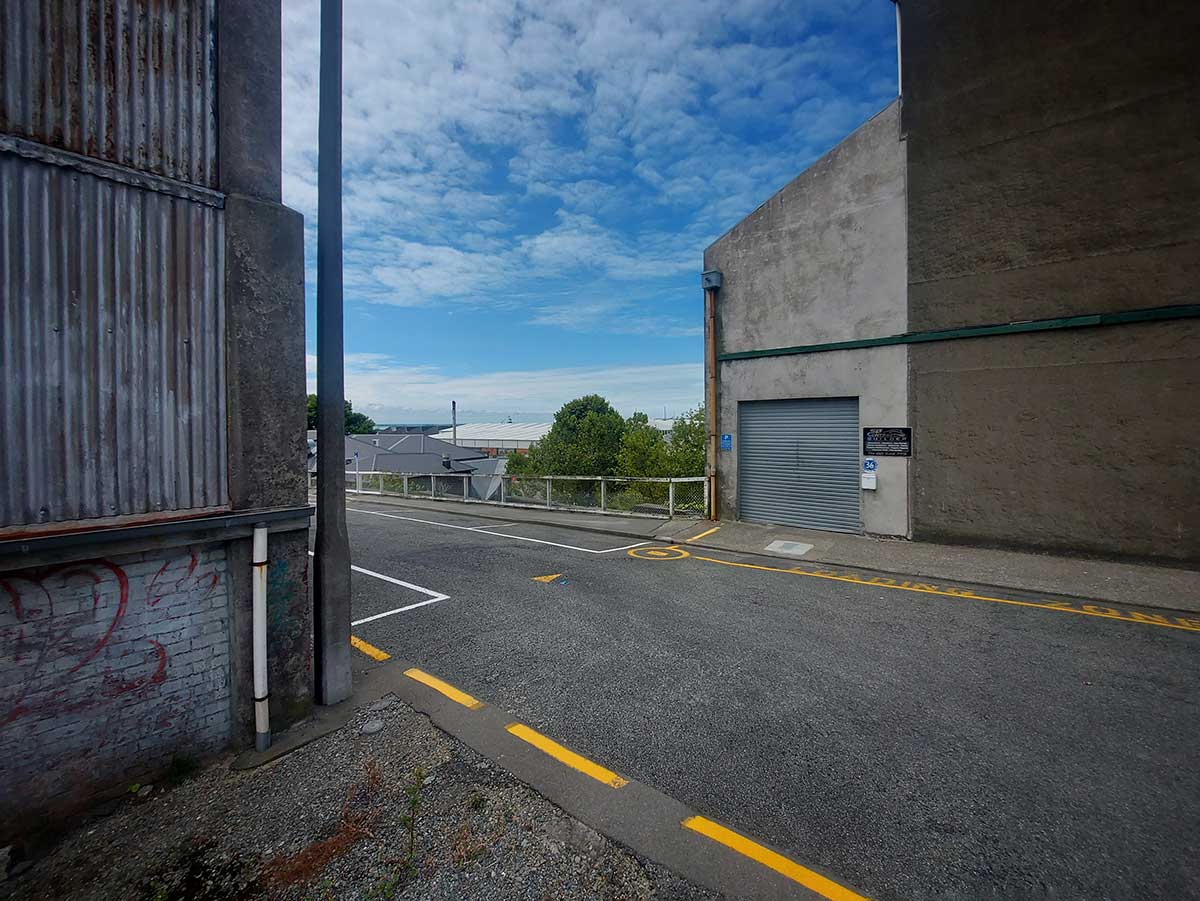
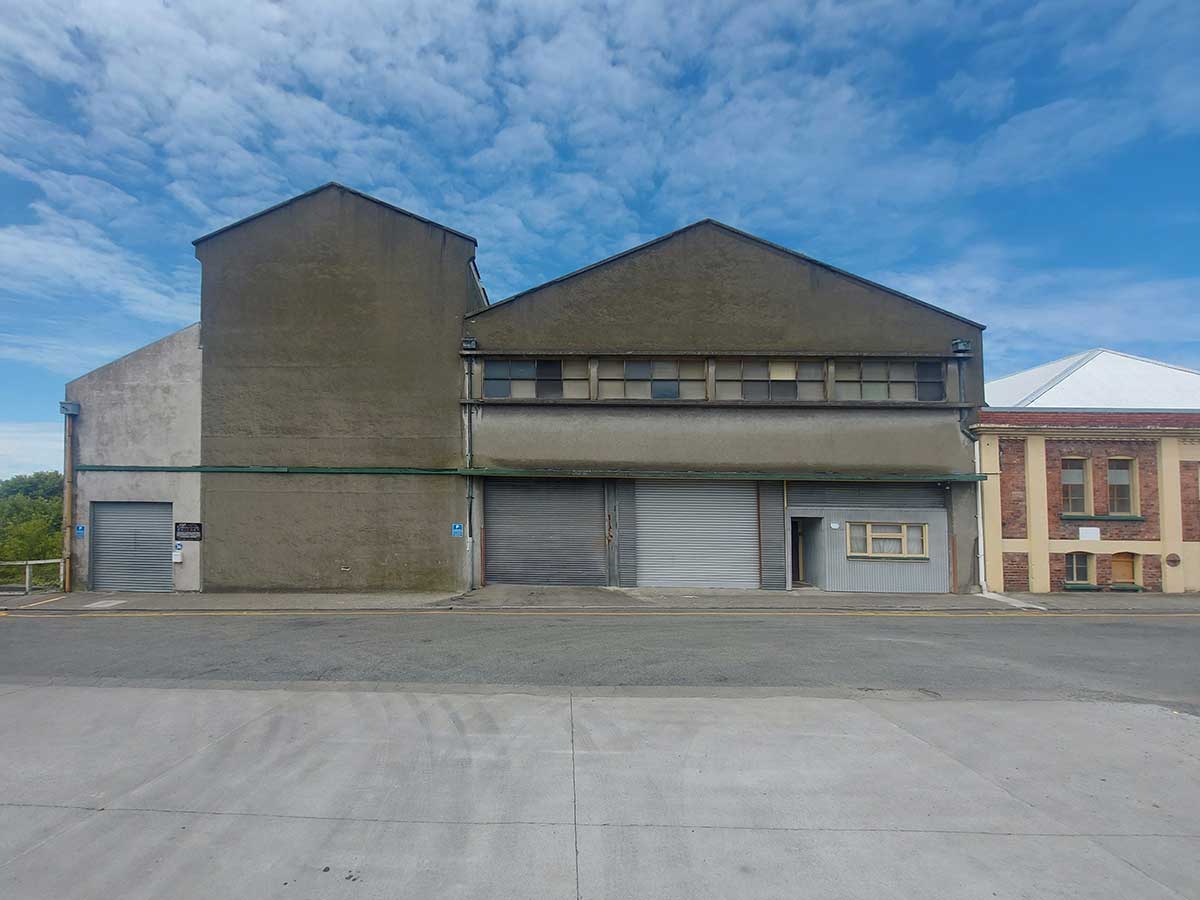
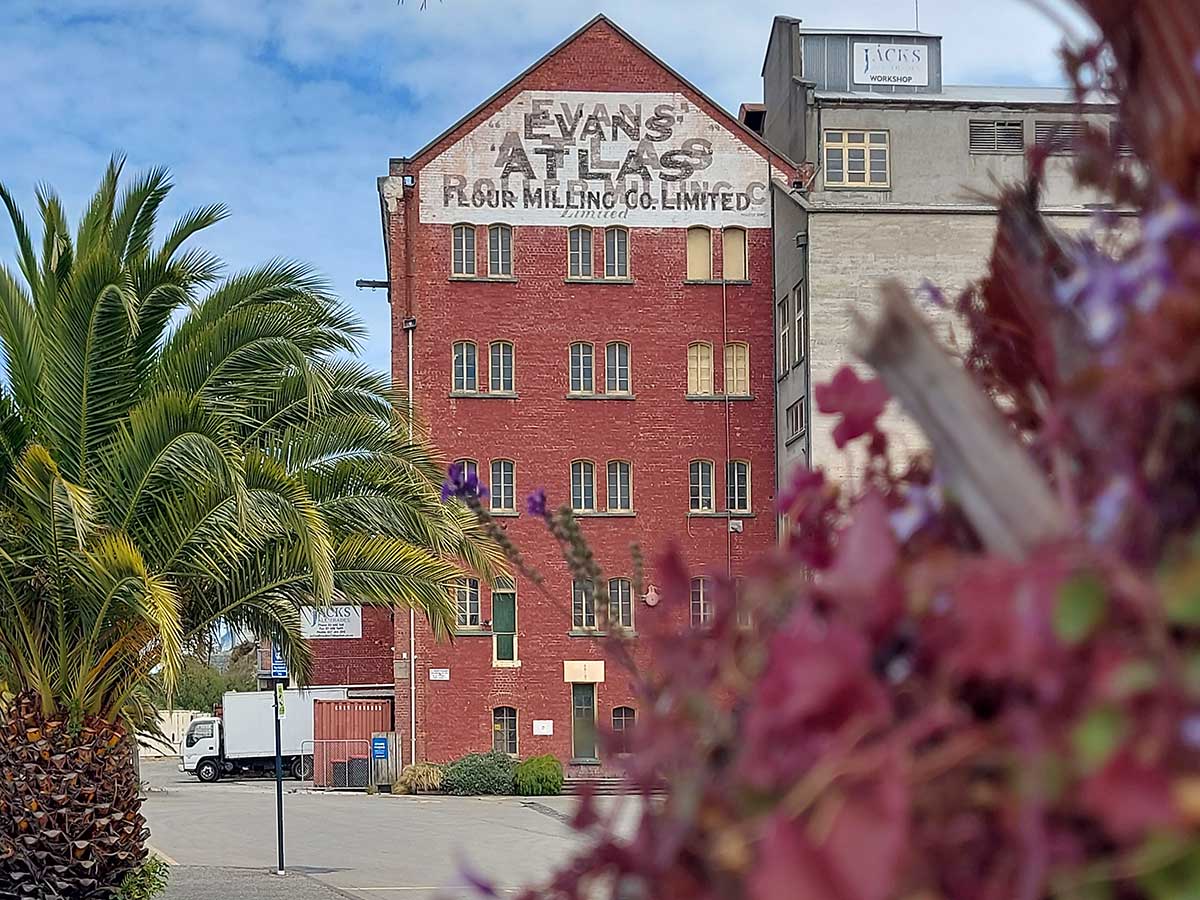
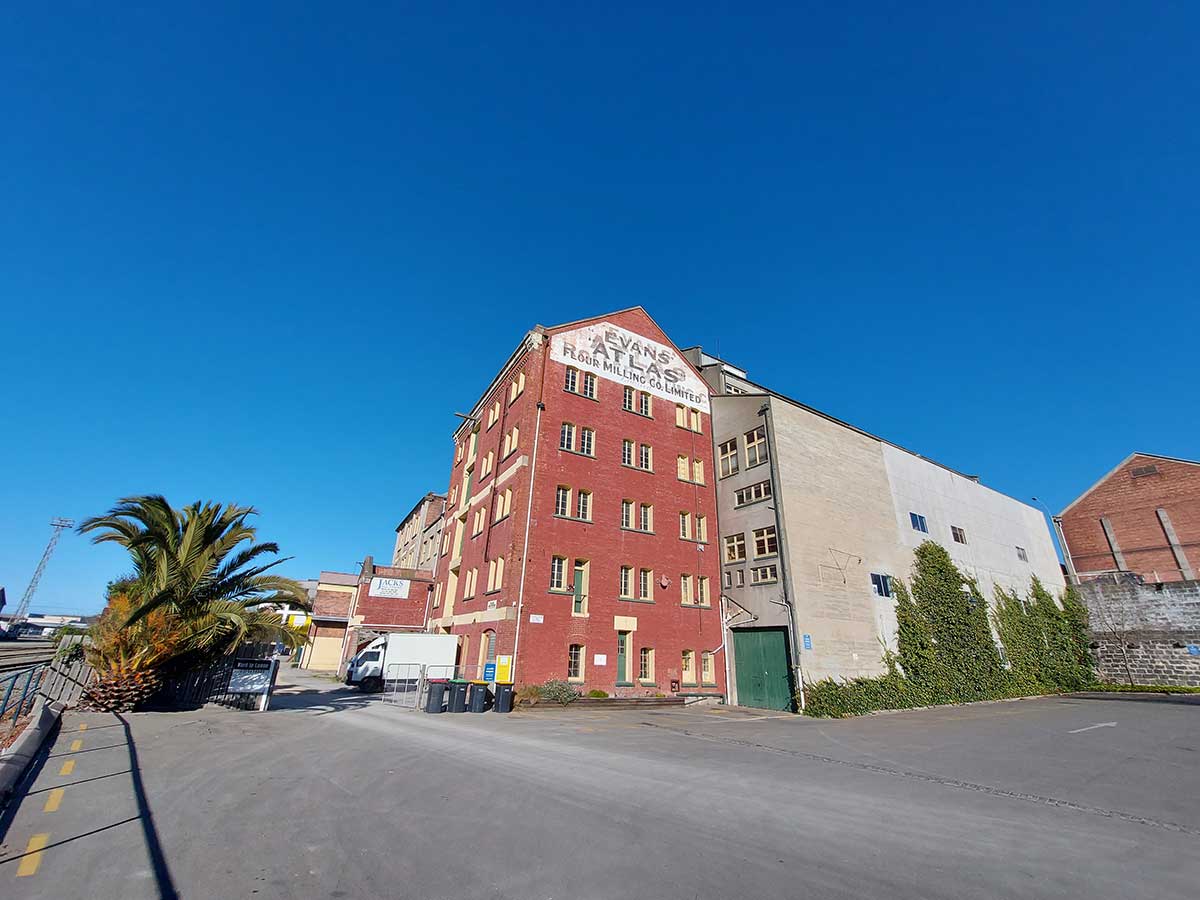
There are physical clues to all of this if you know where to look. The building is stepped into the bank, so its elevations rise to different heights. On the railway side there are loading bays at multiple levels, which still make plain how closely the site was tied to freight movement. And on the north elevation of the former mill section, the painted words “EVANS ‘ATLAS’ FLOUR MILLING CO. LIMITED” still survive. There is something special about old painted lettering. It collapses time a little. Suddenly the business is not abstract. It feels present again.
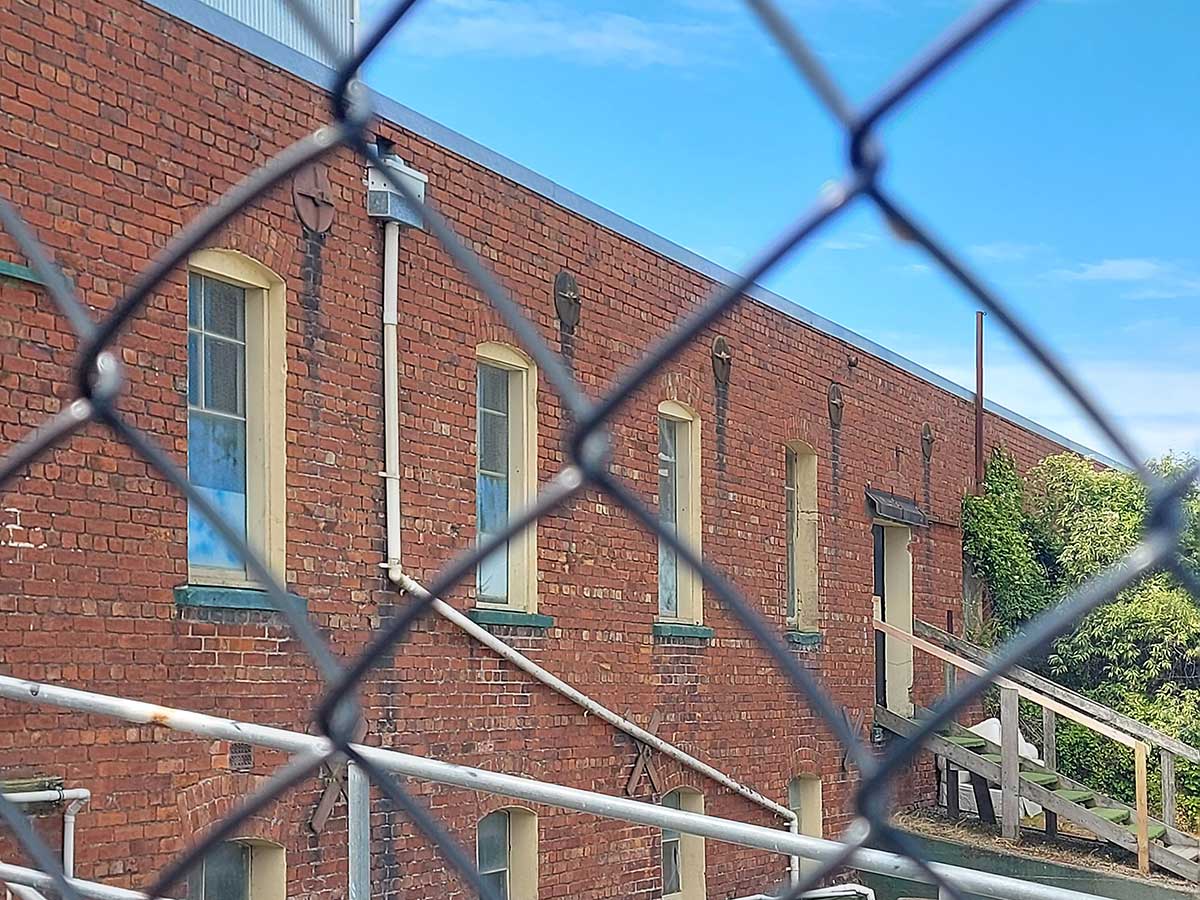
Since 2005, new owners have undertaken strengthening and conservation work, and that matters. Buildings like this are not easy to keep. They are large, complex, and expensive. But when they survive, they give a town texture and memory. They let us see, in brick and scale, the industries that once made a place tick.
The former Evans Atlas Flour Milling Company stores and mill has been recognised as having high overall heritage significance, and it is easy to see why. It is important for its connection with William Evans, for its place in the history of flour milling in South Canterbury, for its architecture and brick detailing, for its landmark setting beside the railway, and for the archaeological potential of a site used industrially since 1868.

But beyond all that, it still does something very simple and very powerful.
It makes Timaru’s grain story visible.
It is easy to drive past a building like this and just see bulk and brick. But once you know even a little of what happened here, it becomes much more than that. You start to see merchants taking risks, builders extending walls, railway wagons loading up, workers doing hard repetitive jobs, and a town growing around grain. That is why this old mill matters. It is not only a survivor. It is one of the places where Timaru’s wider story is still standing in plain sight.
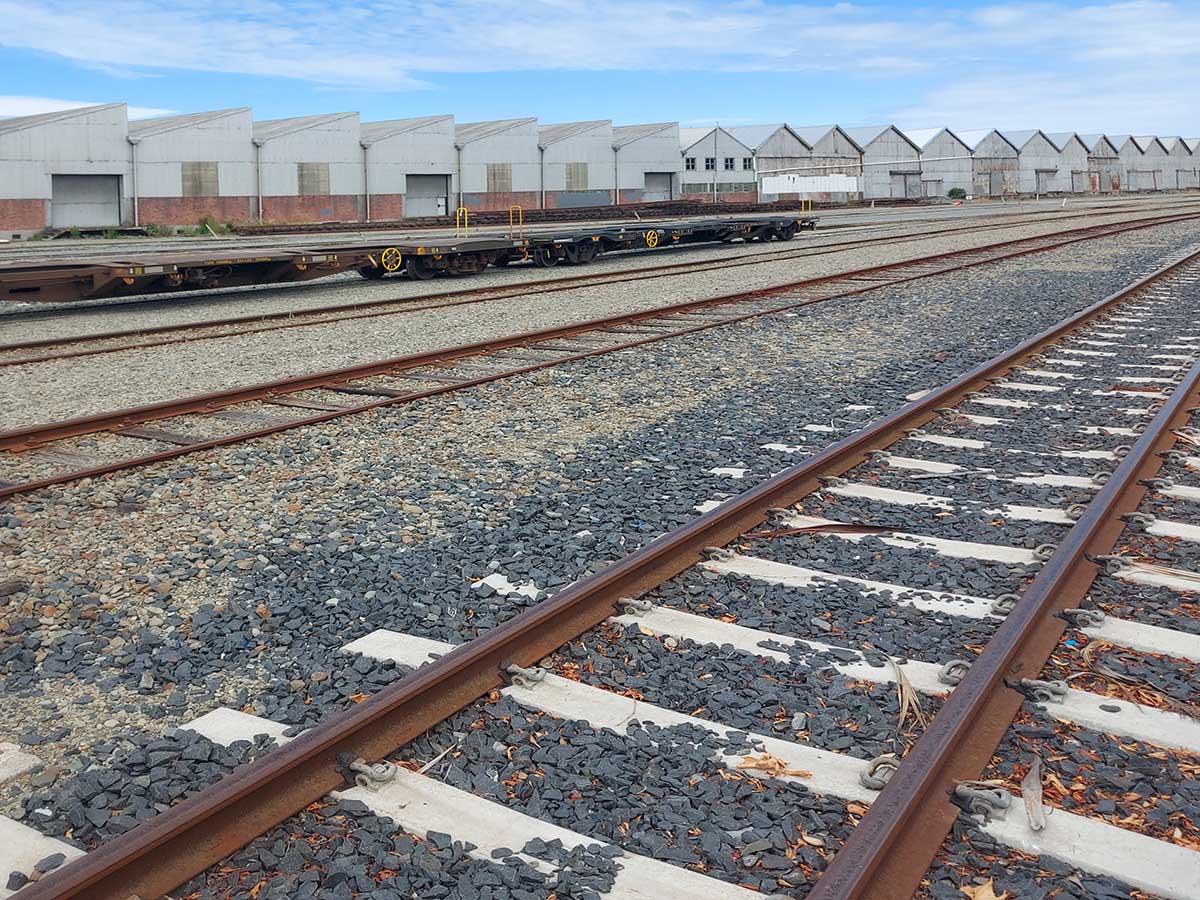

Timaru Flour Mills 1972_Tiaki Ref Num WA-70626-F-PA-Group-00080 Whites Aviation Ltd Photographs

Rail in many ways also rearranged the town.
The former Customhouse heritage record notes that an earlier customs building near the breakwater had to be removed to make way for the railway. Later, Timaru’s railway yards were criticised as cramped and inadequate. In 1913, James Craigie MP raised concerns about Timaru Railway Station, including passenger facilities and the Strathallan Street crossing being blocked on the route to wool and grain stores and the goods shed. In 1940, railway yard and locomotive depot improvements required major earthworks, including removal of a bank containing 27,000 cubic yards of material.
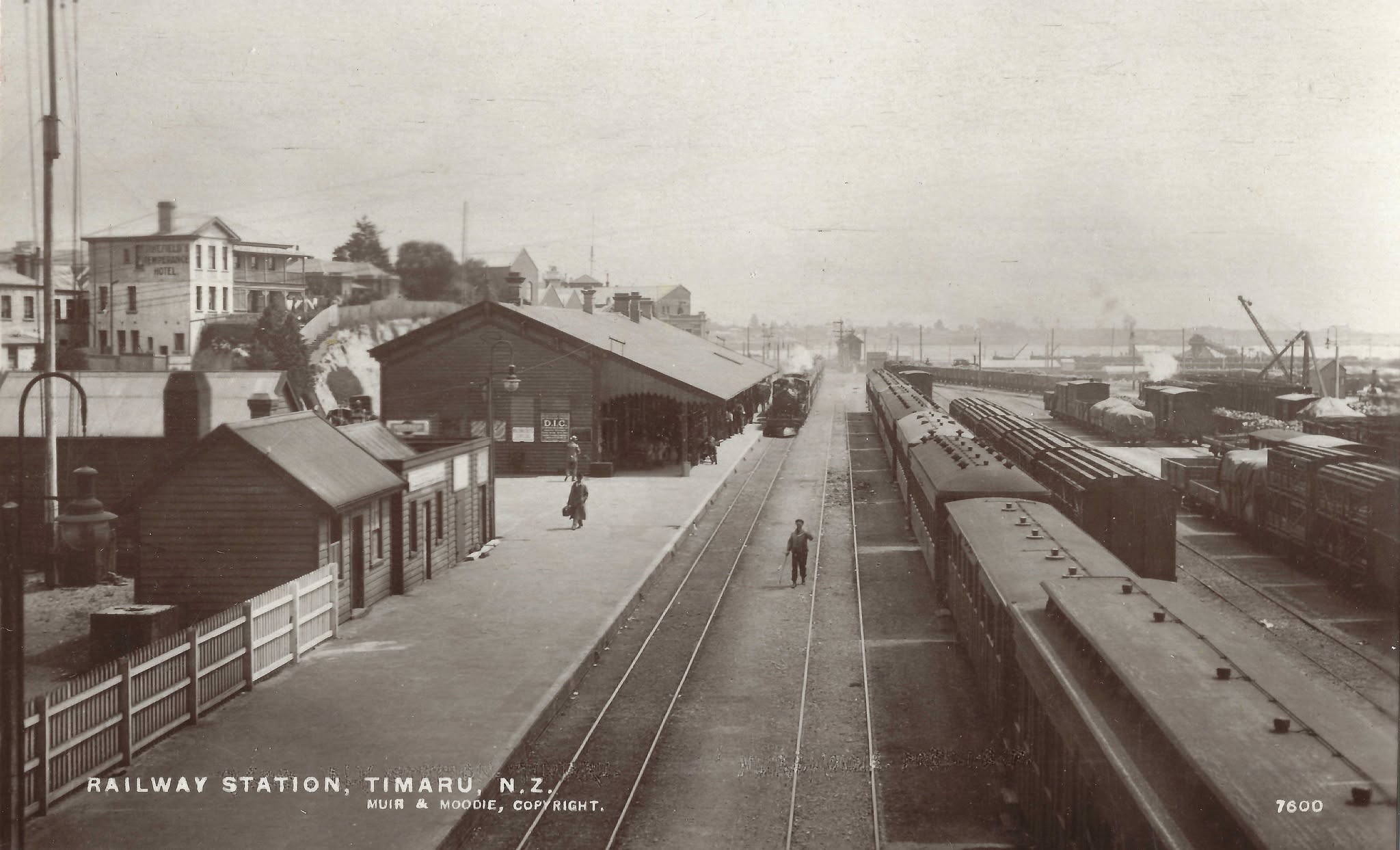
Railway Station Timaru early 1912 (or perhaps late 1911).