
By Roselyn Fauth
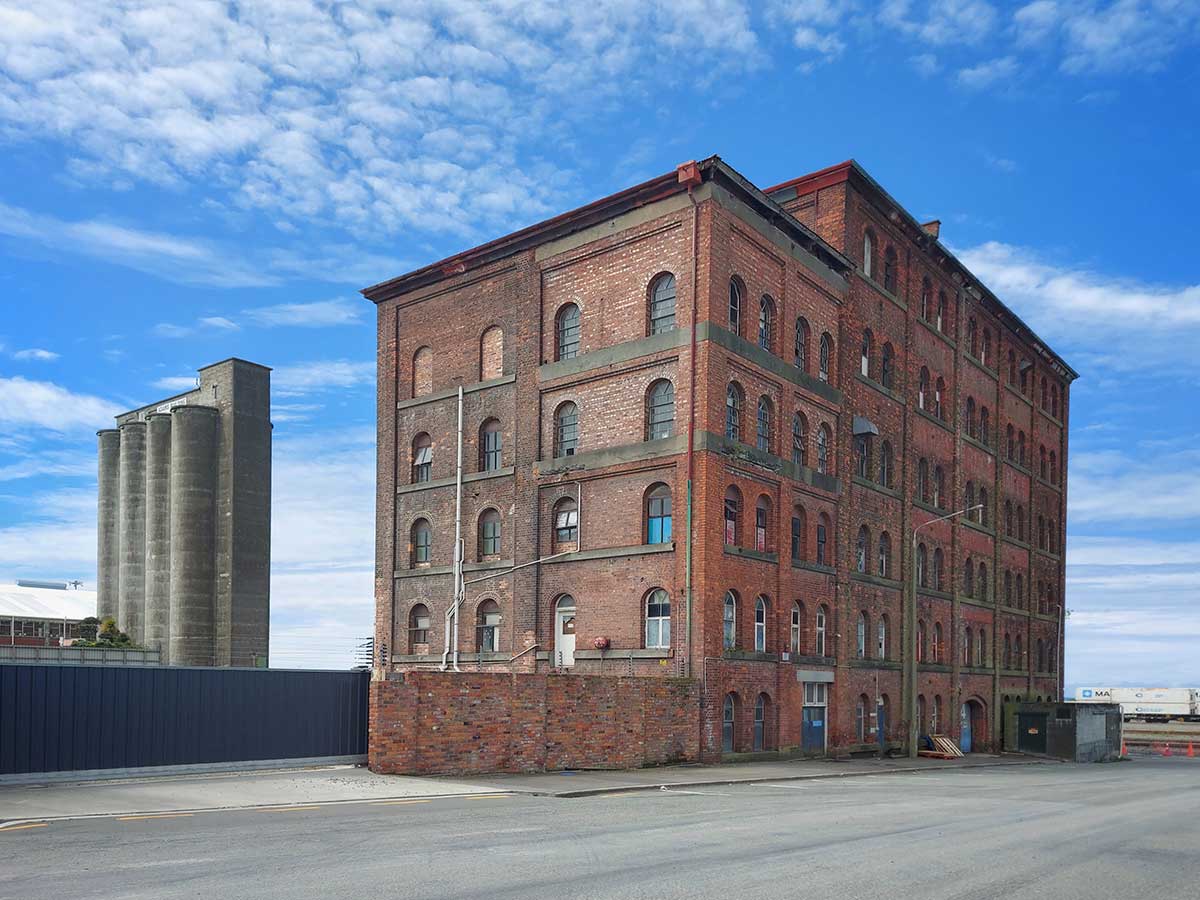
There are some buildings in Timaru that do more than fill a gap in the streetscape. They anchor a whole story... Bruce’s Mill is one of them.
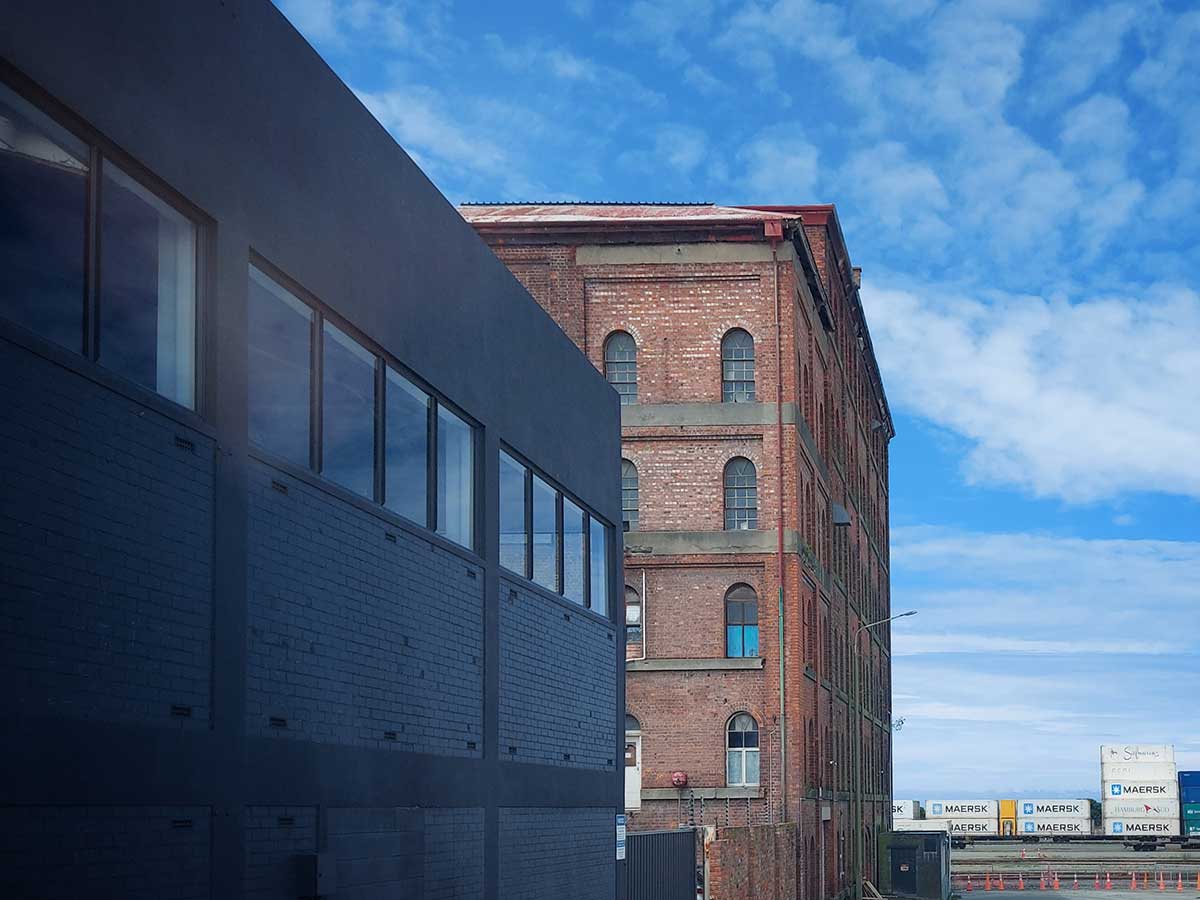
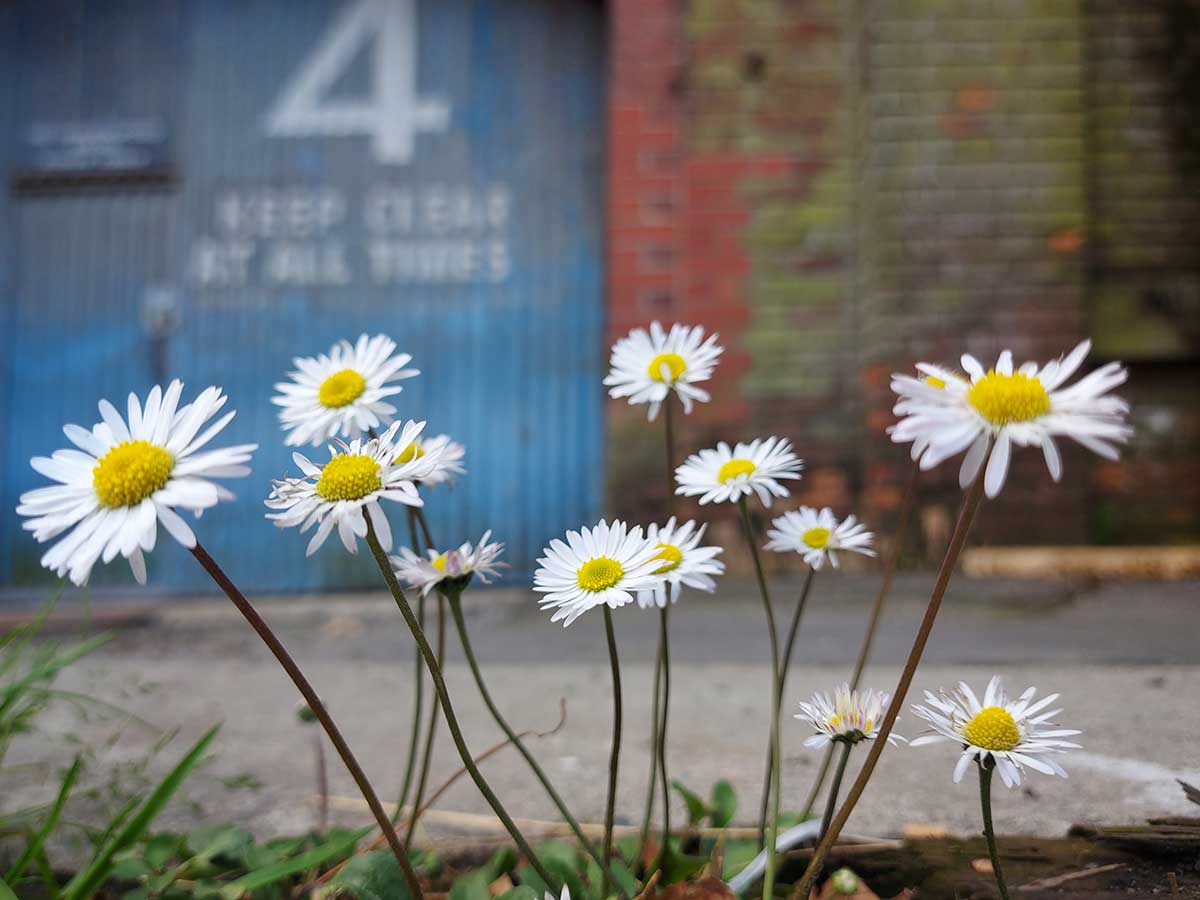
Standing beside the railway line at 4 Mill Street, this great brick industrial building has watched more than a century of change roll past. It began life in 1881 to 1882 as Bruce’s “Royal Flouring Mills”, built for James Bruce, who was both owner and designer, with Thomas Machin as contractor. It was not just another flour mill. When it opened in 1882, it was the first mill in New Zealand to be fitted with roller milling plant, bringing a new technology that helped modernise the country’s milling industry.
That is a remarkable claim, and one I was inspired to learn about and write into this blogl.
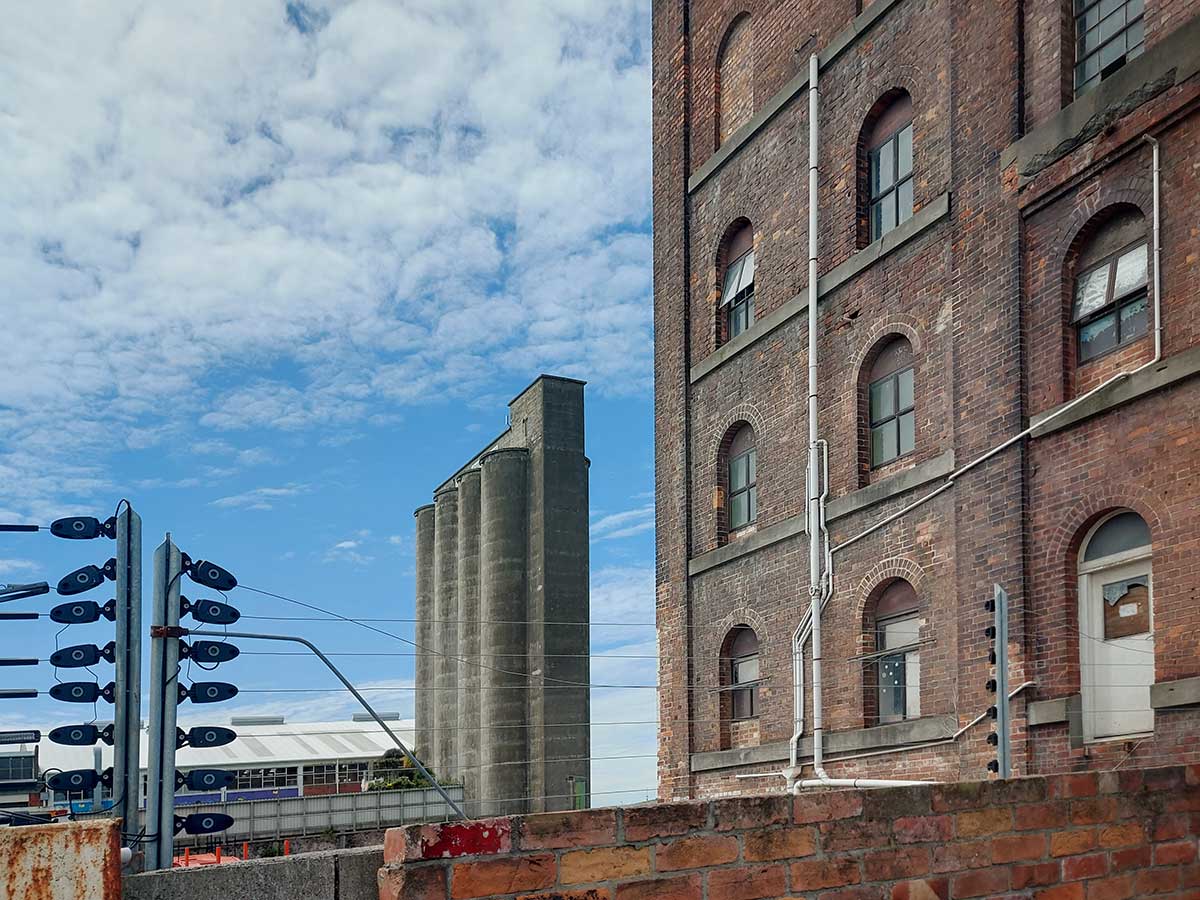
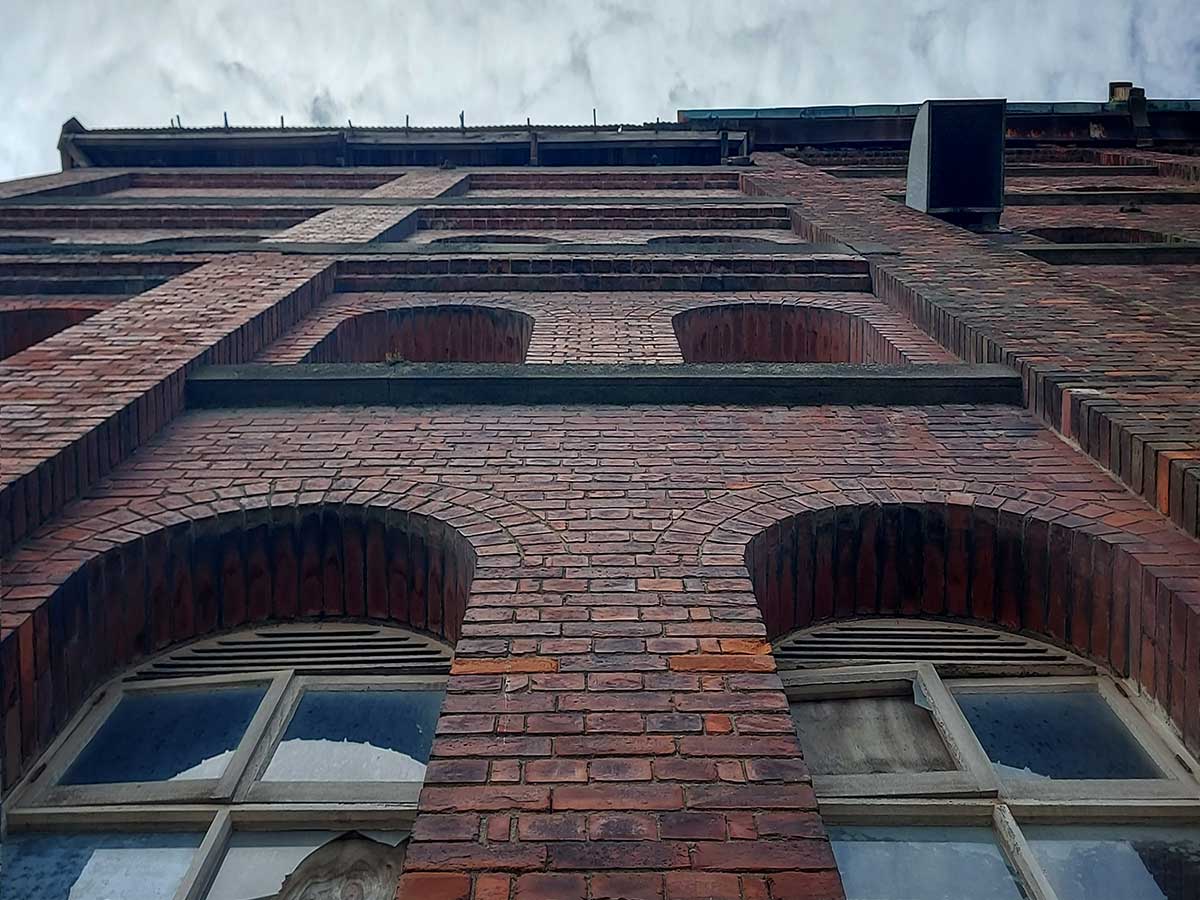
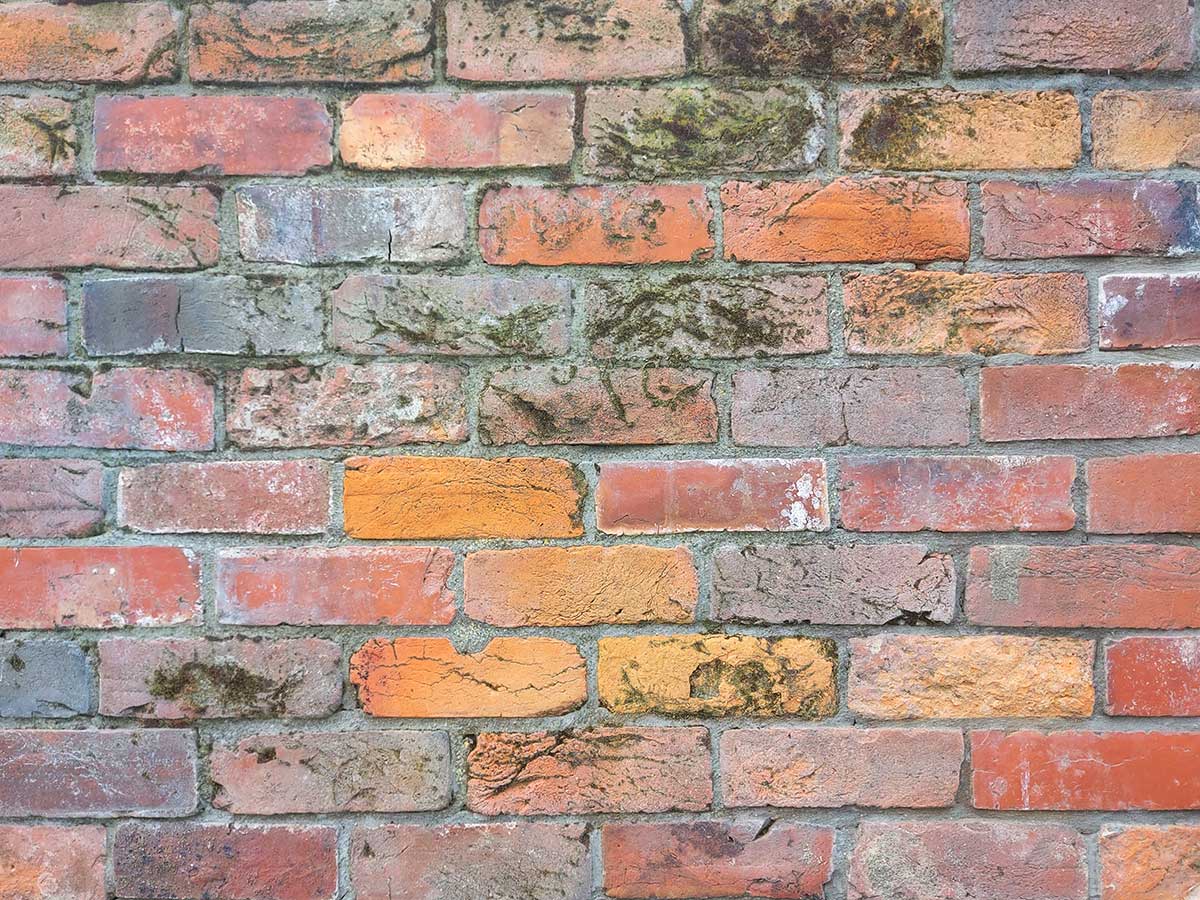
We often admire old buildings for their brickwork, their scale, or the way they catch the light at different times of day. Bruce’s Mill certainly deserves that sort of attention. Its multi-level form, arched openings, brick pilasters and strong industrial character give it real presence. The heritage assessment notes that its principal elevations evoke the Romanesque Revival style seen in later nineteenth century American industrial buildings.
But what makes this place especially interesting is the ambition behind it...

[Flour and Saw Mills, Timaru], New Zealand, by Burton Brothers. Te Papa (C.014395)
James Bruce had earlier built the Waitangi Mill, which was destroyed by fire in 1881. After that loss, he travelled to America, studied modern milling methods, and returned with the first roller milling plant imported into New Zealand. The new mill in Timaru was the result. It was a bold response to disaster, and a sign that Timaru was thinking big.
The business itself soon changed hands. After the death of Bruce’s partner Julius Mendelson in December 1882, Bruce closed the mill and looked for buyers. In 1883, a meeting proposed forming a limited liability company to own and operate the works, and by 1886 the shareholders had changed the name to the Timaru Milling Company Ltd.
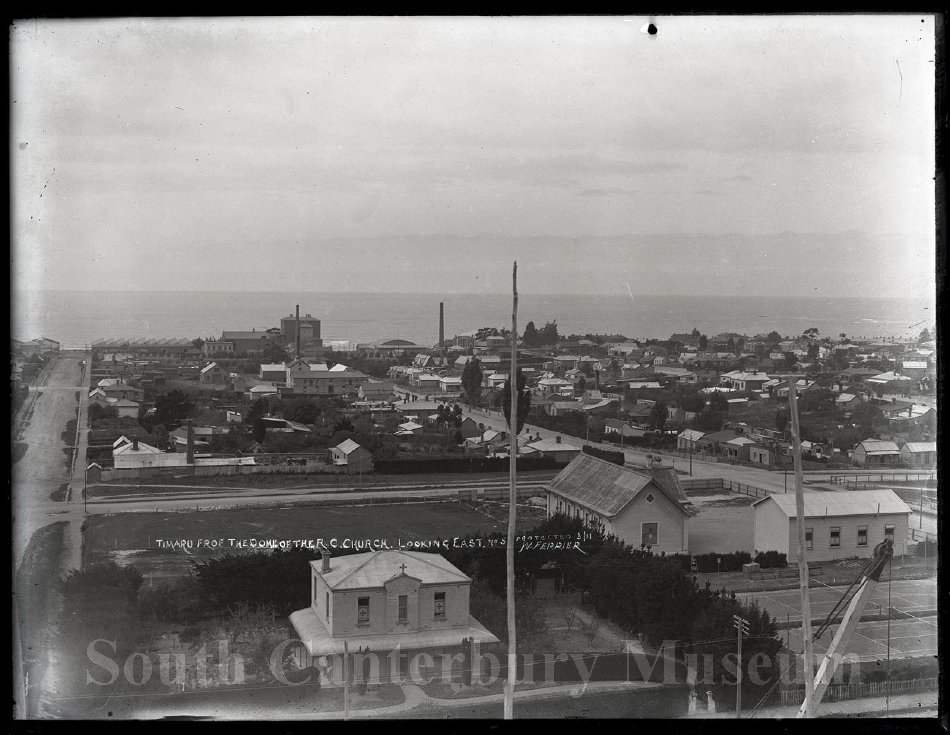
2477b Timaru from the dome of the RC Church looking east No 5 Timaru Breweries John Jackson and Co timber and coal merchants and Evans Atlas and Co mill. South Canterbury Museum Catalogue Number 2477b
https://timdc.pastperfectonline.com/photo/F97292C4-2E1F-4FC9-A4AE-682329050220
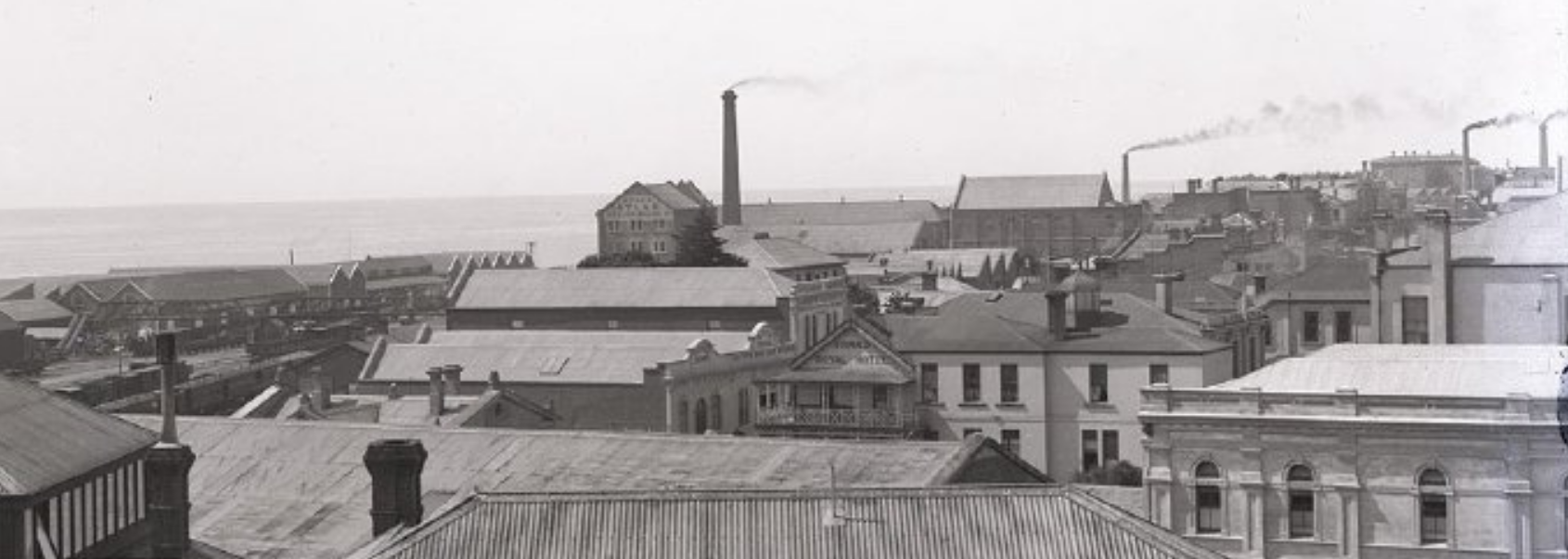
Timaru, looking southeast from the lighthouse. South Canterbury Musuem Catalogue Number 2462b. https://timdc.pastperfectonline.com/photo/606B2F68-E984-4439-ABEA-512008265737
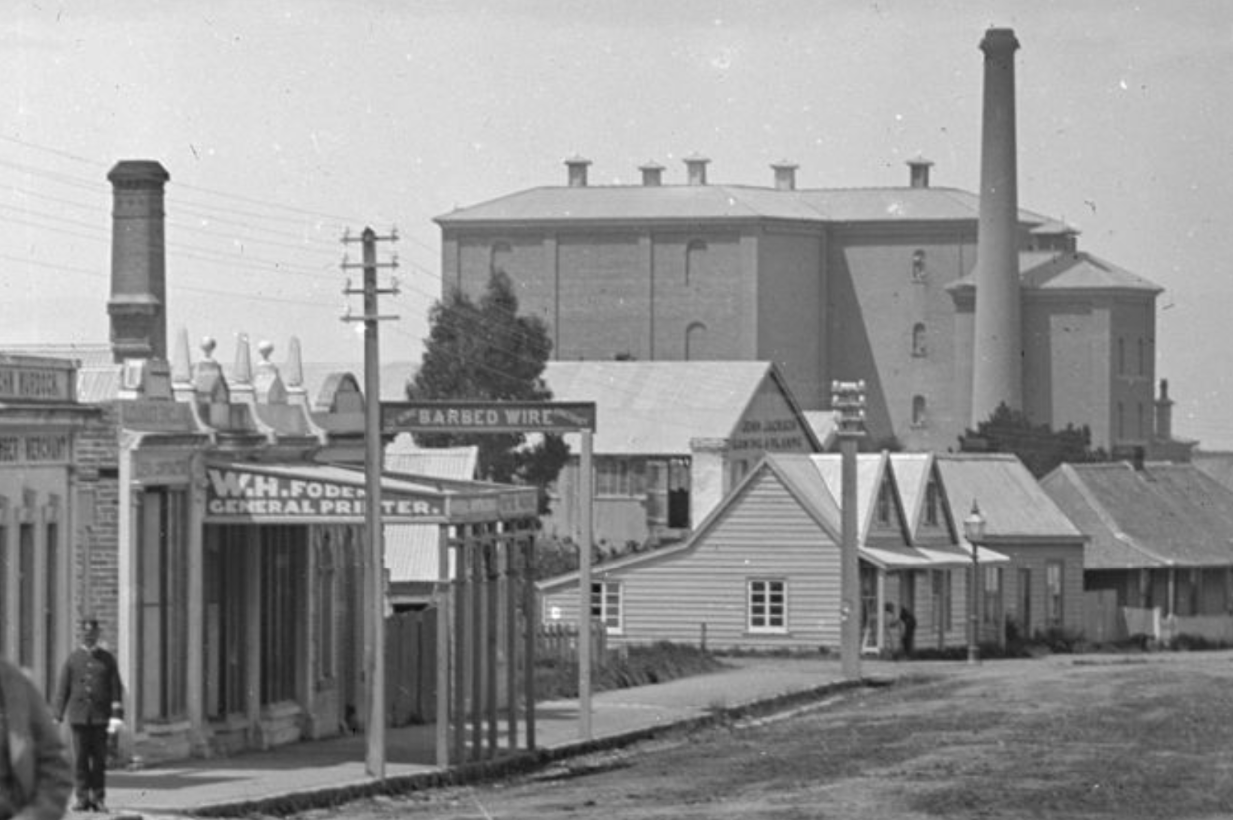
Section of a photo, Timaru, circa 1880, New Zealand, by Burton Brothers. Te Papa (C.014400)
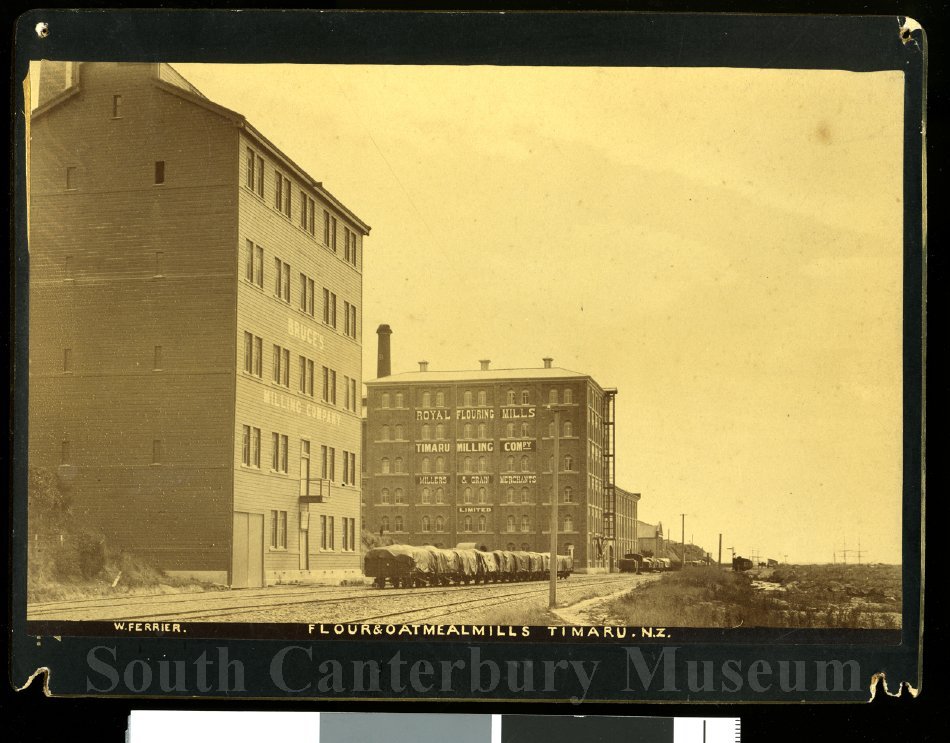
J R Bruces Milling and the Timaru Milling Companies Flour and Oatmeal Mills, Mill Street, Timaru c1895 william Ferrier South Canterbury Museum 2761
South Canterbury Museum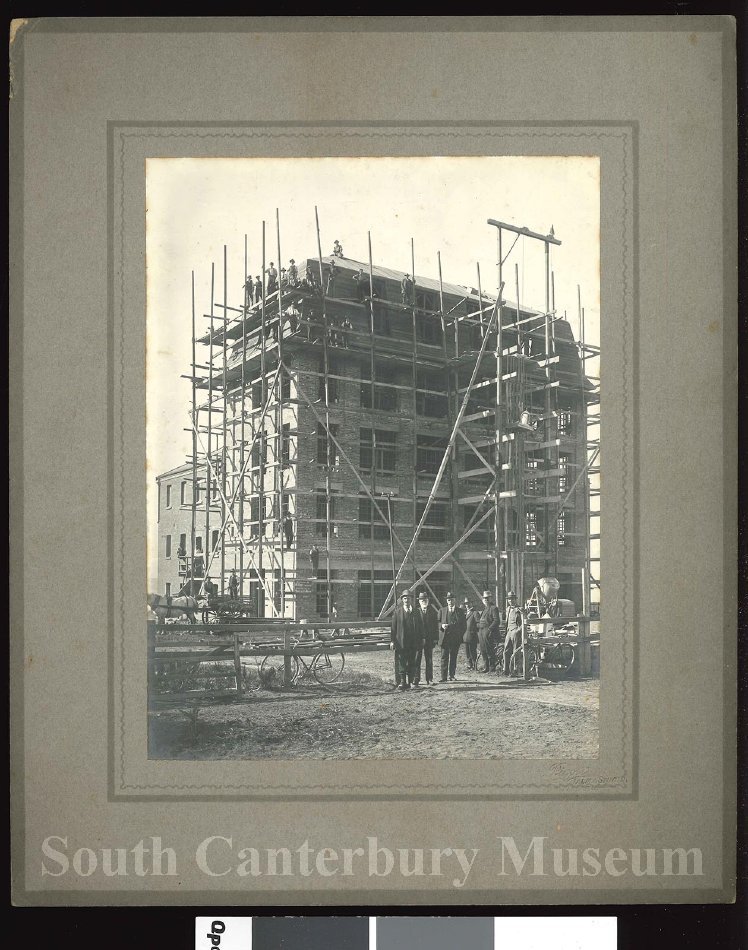
J R Bruces Dominion Flour Mill - South Canterbury Museum- 201806902 https://timdc.pastperfectonline.com/photo/199FADAA-850A-4800-A454-435353852111
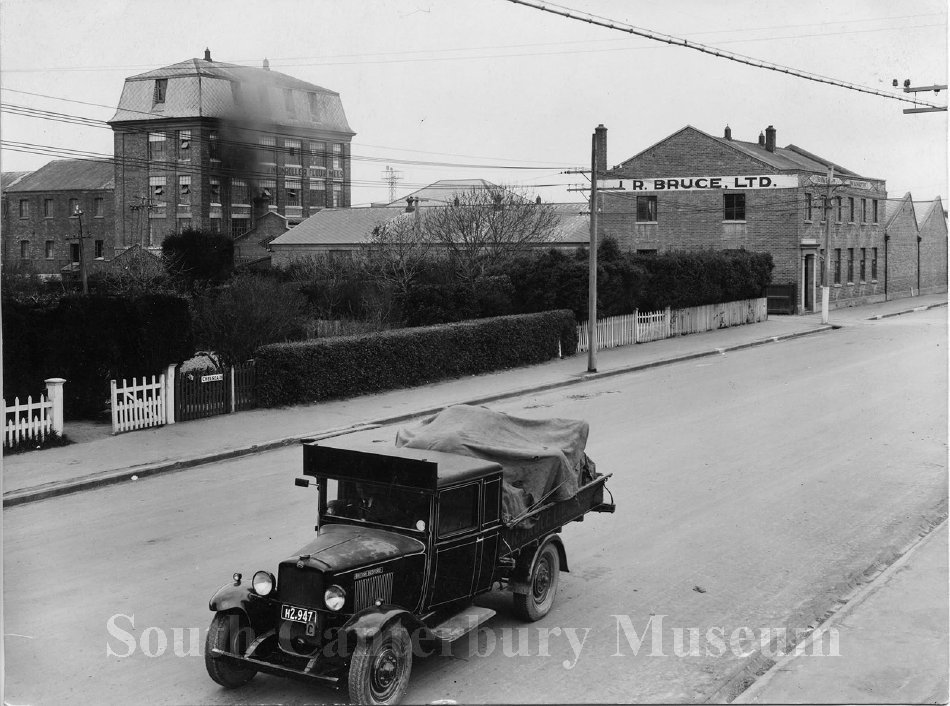
JR Bruce's Biscuit Factory and truck, High Street, Timaru - A JR Bruce's Biscuit Factory British Bedford truck pictured on High Street, Timaru, with the factory in the background. Taken circa 1935 to 1936. https://timdc.pastperfectonline.com/photo/0E57C8CC-6C1C-4F4D-87CC-419825842373
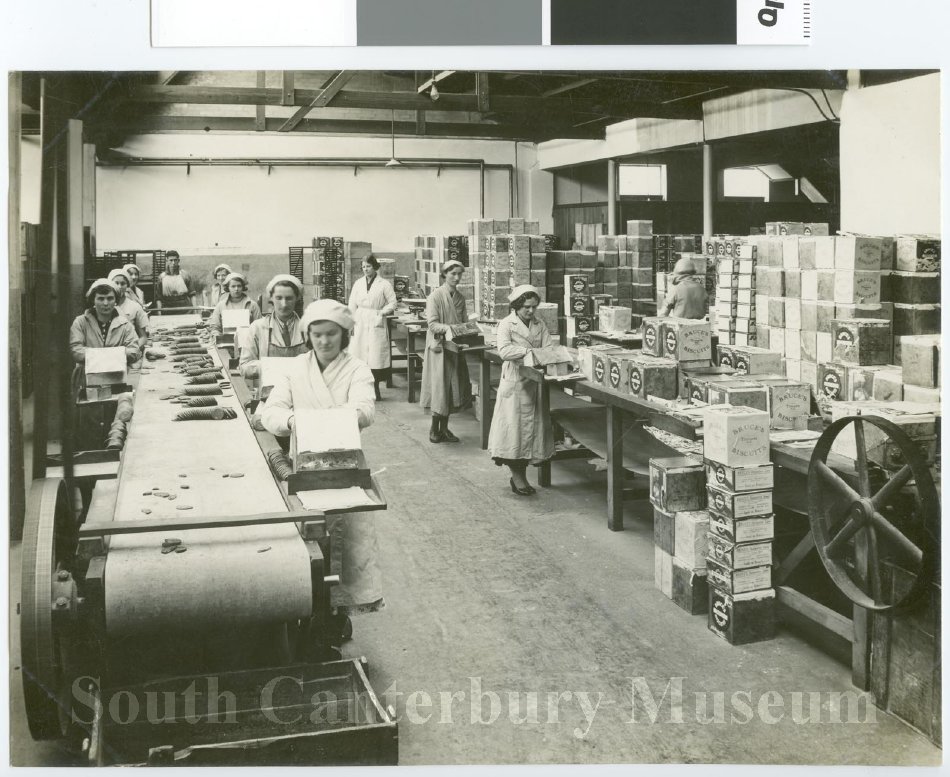
J R Bruce's biscuit factory
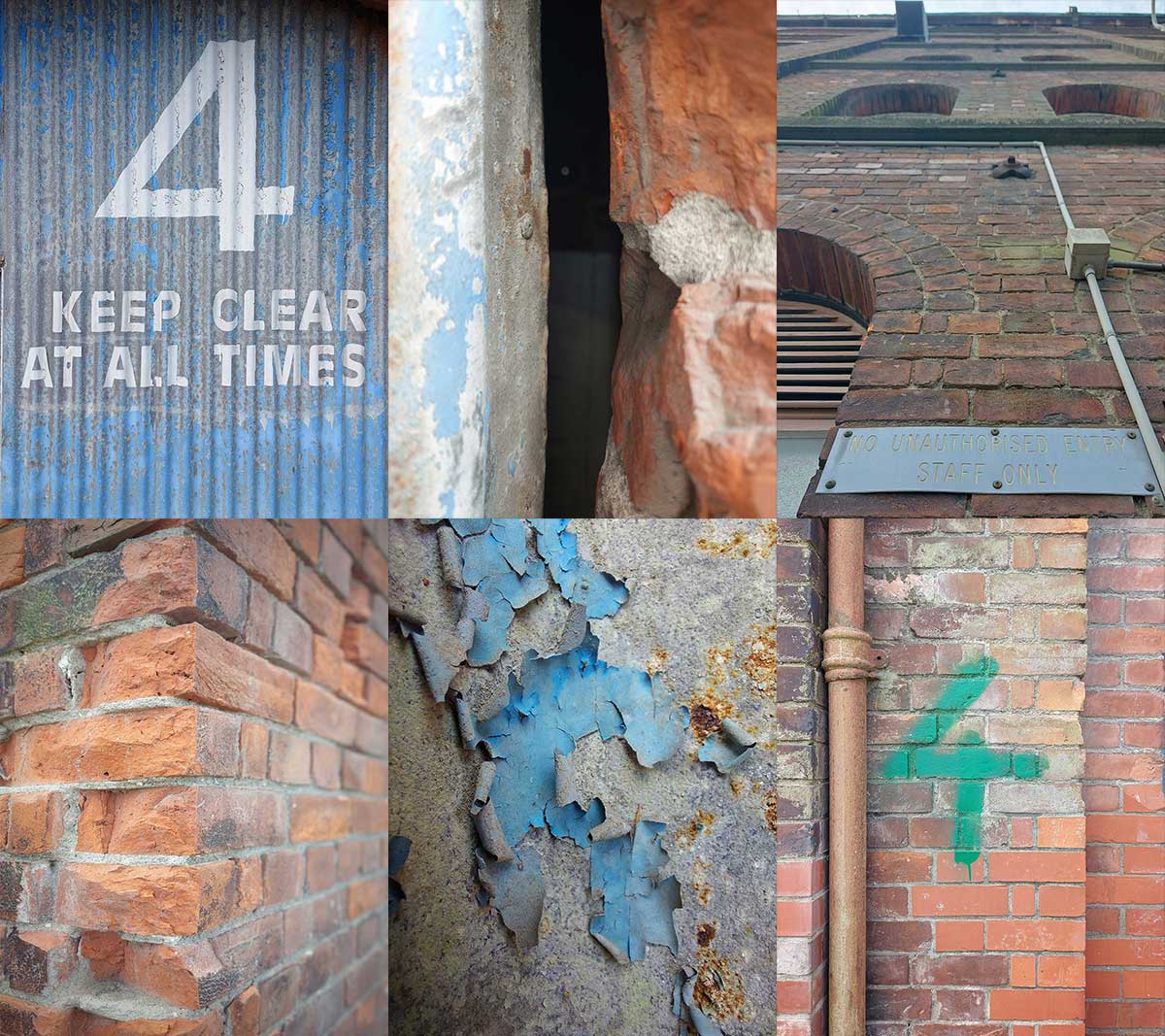
From there, the mill became part of a much bigger South Canterbury story.
By the turn of the twentieth century, the Timaru Milling Company’s mill was said to be the largest in New Zealand, with capacity for 25 sacks of flour an hour. Later it also produced oatmeal and, from 1941, the much-loved Diamond pasta range. The company continued until 2005, giving the site an extraordinary industrial life of almost 130 years.
This is not just a handsome old shell. It represents work, ingenuity, risk, industry, and the everyday rhythm of a town shaped by grain, rail, and port. Its position beside the railway is no accident. Like the other big mill buildings along this edge of Timaru, Bruce’s Mill tells us how closely the town’s growth was tied to processing, transport, and trade. Even Mill Street itself appears to have taken its name from the concentration of mills there.
I think that is part of why these buildings still stir something in people. They feel solid, purposeful, and proud. They remind us that industry can have beauty too.
Bruce’s Mill is one of Timaru’s great landmarks. It is a survivor from a period when flour milling helped define the district, and it still speaks clearly of that history today. Not quietly, either. It stands there like it has something important to say.
And really, it does.
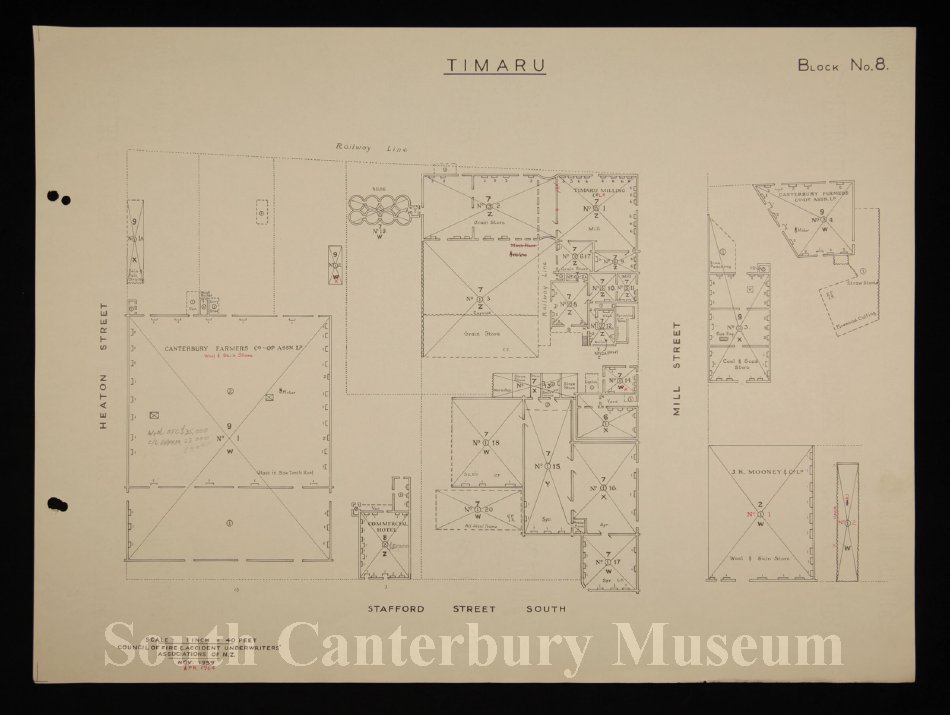
Fire and Accident Underwriters Association: block plans, Timaru township - South British Insurance Company: Block Plans by the Council of Fire and Accident Underwriters Associations of New Zealand, dated between 1959 and 1972. South Canterbury Museum 2002/005.06b
Timeline: The Grain Industry and Bruce’s Flour Mill
Early grain context in South Canterbury
1850s to early 1860s
South Canterbury was first dominated by pastoral farming, especially sheep, but cropping began to grow as settlement expanded and more land was brought into production.
1864
The first wool bales were being shipped direct from Timaru to London. This matters because it shows Timaru was already becoming an export town, with the transport and merchant networks that grain would later rely on.
1867
David Clarkson and Richard Turnbull of Clarkson and Turnbull made the first export of local flour from Timaru to the United Kingdom. This is an important early milestone in Timaru’s grain and flour story.
Late 1860s
South Canterbury’s milling industry was beginning to take shape:
- John Hayhurst built the first flour mill in South Canterbury at Milford in 1864
- the Parr Brothers opened the Opihi mill in 1865
- G. Cliff established Timaru’s first steam mill in 1868
These early mills helped set the scene for larger, more advanced milling operations.
James Bruce and the mill site
Early 1860s
James Bruce, a Scottish millwright, arrived in New Zealand. He worked first as a builder and contractor in North Otago before eventually settling in Timaru.
1870s
Bruce established a sawmill in Grey Street in Timaru.
1878
Bruce built a brick flour mill on the same site in Grey Street. This first mill was known as the Waitangi Mills.
This site would later become one of the most significant milling sites in New Zealand.
Fire and rebuilding
21 May 1881
Bruce’s 1878 brick flour mill burned down.
This was a major setback, but Bruce rebuilt quickly.
1881 to 1882
A new flour and oatmeal mill was erected in its place. Only the smoke stack and part of the boiler house from the earlier mill were retained.
September 1882
The new mill was in production.
This rebuilt mill is the structure now known as the former Bruce’s Royal Flouring Mills / Timaru Milling Company mill at 4 Mill Street.
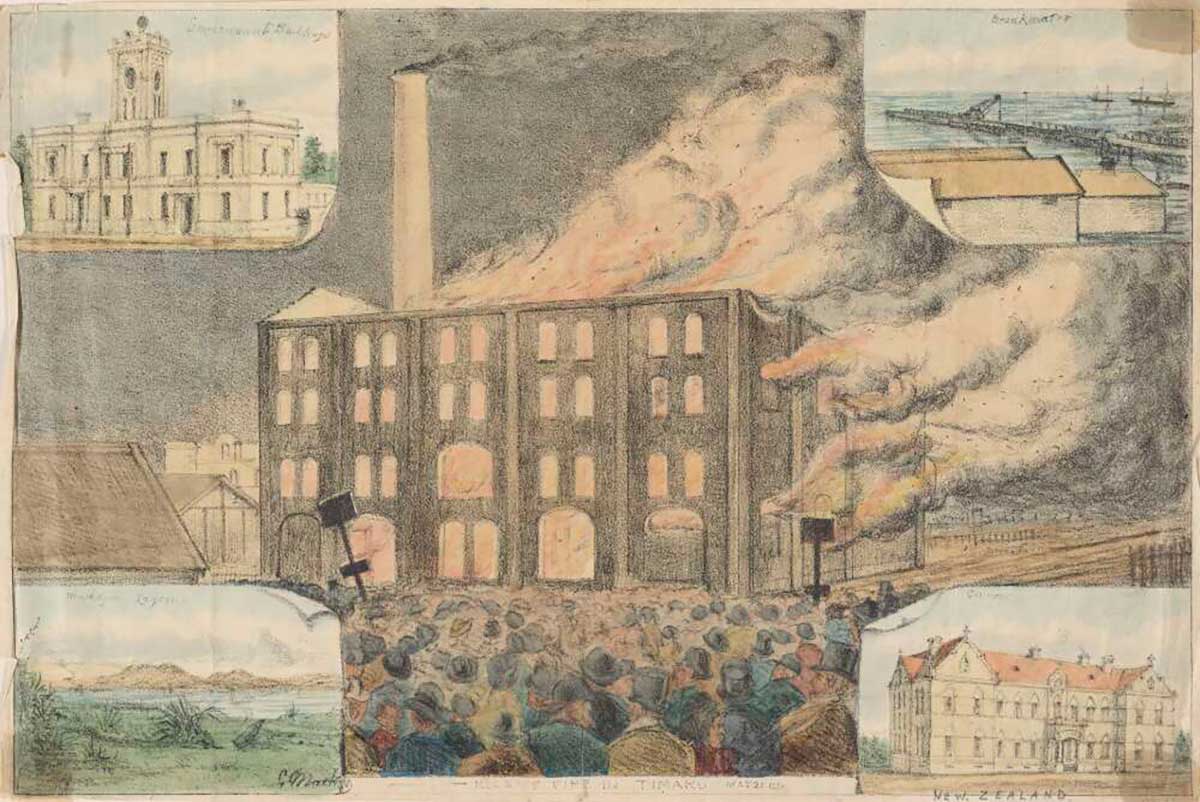
Mackay, C. 1881, Recent fire in Timaru, May 21, 1881 https://nla.gov.au/nla.obj-136124969/view out of copyright
Why Bruce’s mill mattered nationally
1882
Bruce’s rebuilt mill became the first mill in New Zealand fitted with roller milling plant.
That is one of the most important facts in the whole story.
Bruce had travelled to the United States around 1881 to study modern American mills, and machinery was imported from there. This meant the Timaru mill was not just another local flour mill. It represented a major technological leap in the New Zealand milling industry.
The six-storey section was used for flour milling, while the adjoining five-storey wing produced oatmeal.
Change of ownership and company formation
December 1882
Bruce’s business partner Julius Mendelson died.
Early 1883
Bruce closed the mill and began seeking buyers.
May 1883
A meeting proposed the formation of a limited liability company to own and operate Bruce’s Royal Flouring Mills.
1883 onwards
The company was formed and took over operation of the mill.
April 1886
The shareholders resolved to change the name to the Timaru Milling Company Ltd.
This marks the transition from Bruce’s private mill to one of the major industrial companies in the district.
Grain boom years
1870s to early 1900s
South Canterbury grain production expanded rapidly. Wheat, oats, and barley became increasingly important to the regional economy. Rail and port improvements helped move produce efficiently.
1878 to 1887
Timaru’s harbour works, including the first breakwater and No. 1 wharf, were built in stages. This improved export capacity and helped support the grain trade.
1880s wheat boom
Timaru became one of the most important milling centres in New Zealand.
Turn of the 20th century
The Timaru Milling Company mill was said to be the largest mill in New Zealand, with capacity of 25 sacks of flour per hour.
This shows how dramatically the industry had grown from the smaller early mills of the 1860s.
Related grain buildings and expansion of the industry
1877 to 1878
The Belford Flour Mills were built at North Street.
1885
Belford was converted to roller milling.
1888
William Evans established the Atlas Roller Flour and Oatmeal Milling Company.
1888, 1895, 1897
The Atlas grain stores and mill complex expanded at Turnbull Street.
Together, Bruce’s mill, Belford, and Atlas show how large and confident Timaru’s grain and milling industry had become by the late nineteenth century.
Peak years of cropping
1912
At the peak of cropping, South Canterbury had:
- 101,000 acres in wheat
- 250,000 acres in turnips, rape, and potatoes
This was the era when the region became known as “the food bowl” of the country.
Bruce’s mill, by then operating as the Timaru Milling Company, belonged to that world of large-scale production, storage, processing, and export.
Later products and changing markets
From the late 1930s to early 1950s
The Timaru Milling Company produced pictorial collectors’ cards.
1941
The company began producing the well-known Diamond pasta range.
This is a useful reminder that the mill’s history was not only about flour. It adapted to changing markets and consumer products.
Decline and closure
1914 onwards
The First World War began to disrupt labour and trade.
1920s to 1930s
Grain industries everywhere were affected by changing land use, fluctuating prices, and later the Wall Street Crash and the Great Depression.
Mid-20th century onwards
Pastoral farming, frozen meat, and later dairy often gave stronger returns than grain. In many places, cropping declined relative to other land uses.
1924 to 1925
The milling plant at the Timaru Milling Company mill was replaced.
1956
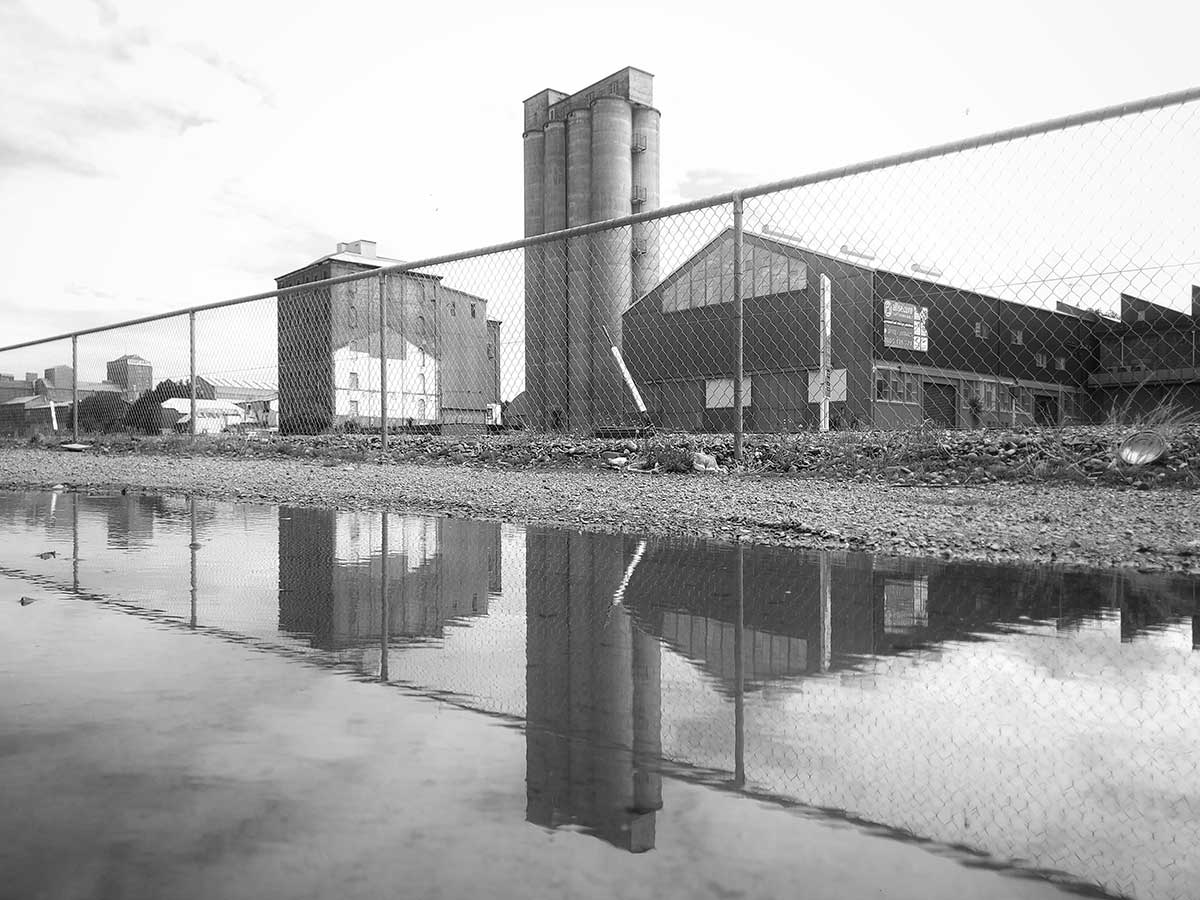
Grain silos were erected on the site to the north.
2001
The northern three-storey grain store was demolished.
2005
The Timaru Milling Company closed.
This ended almost 130 years of association between the site and flour and oatmeal milling.
Early 2012
Later owners used buildings on the site until early 2012.
Today
The former mill building is vacant, but remains one of Timaru’s most important industrial heritage buildings.
Why Bruce’s mill is so important
Bruce’s mill matters because it was:
- built on a site already associated with early industrial activity in Timaru
- rebuilt after fire in 1881
- the first roller mill in New Zealand
- later part of what became one of the country’s largest milling companies
- a key part of Timaru’s grain boom
- associated not only with flour and oatmeal, but later with products like Diamond pasta
- one of the most significant surviving industrial buildings in Timaru


Colour postcard entitled "Alexandra Square, Timaru", circa 1910. Features the band rotunda gifted by Charles Bowker in 1903 in the foreground, with the James Bruce & Co. (or Timaru Milling Co.) flour mill on High Street in the left background.
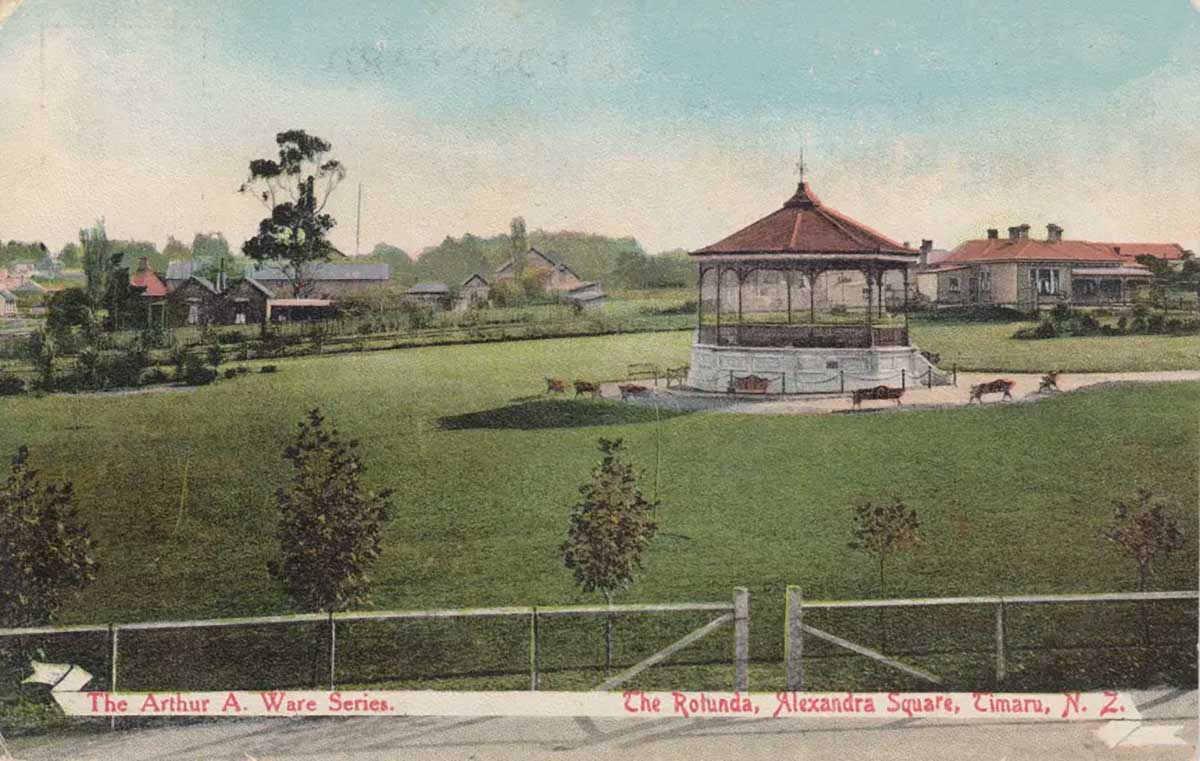
Postcard: The Rotunda, Alexandra Square, Timaru, N.Z. (date unknown). (Source: Jeremy de Korte Collection)

1900. Alexander Turnbull Library, Wellington, New Zealand. /records/692723

Timaru, circa 1880, New Zealand, by Burton Brothers. Te Papa (C.014400)

Timaru, 1875, Dunedin, by Burton Brothers, Alfred Burton. Te Papa (C.014372)

Samuel McBride was one of South Canterbury’s key makers of memory in stone. Born in Dumfries and settled in Timaru in the early 1870s, he moved from stone-house work into monumental masonry and later general contracting. His known work links shipwreck grief, South African War commemoration, school memory, church foundations, civic architecture, cemetery craft and family mourning. His Sophia Street yard stood opposite the Wrecks Monument, one of his own major works, while his family’s repeated losses are gathered in Row 91 of Timaru Cemetery.. McBride’s work brought together local stone and imported memory materials. Newspaper advertisements in the 1930s and 1940s include the contact details 29 Sophia Street, Timaru, with telephone number 572 for “S. McBride, Established 1874” Timaru township. The Press (Newspaper) :Negatives. Ref: 1/1-008713-G. Alexander Turnbull Library, Wellington, New Zealand. /records/29947494 - https://paperspast.natlib.govt.nz/newspapers/THD19380913.2.3.1
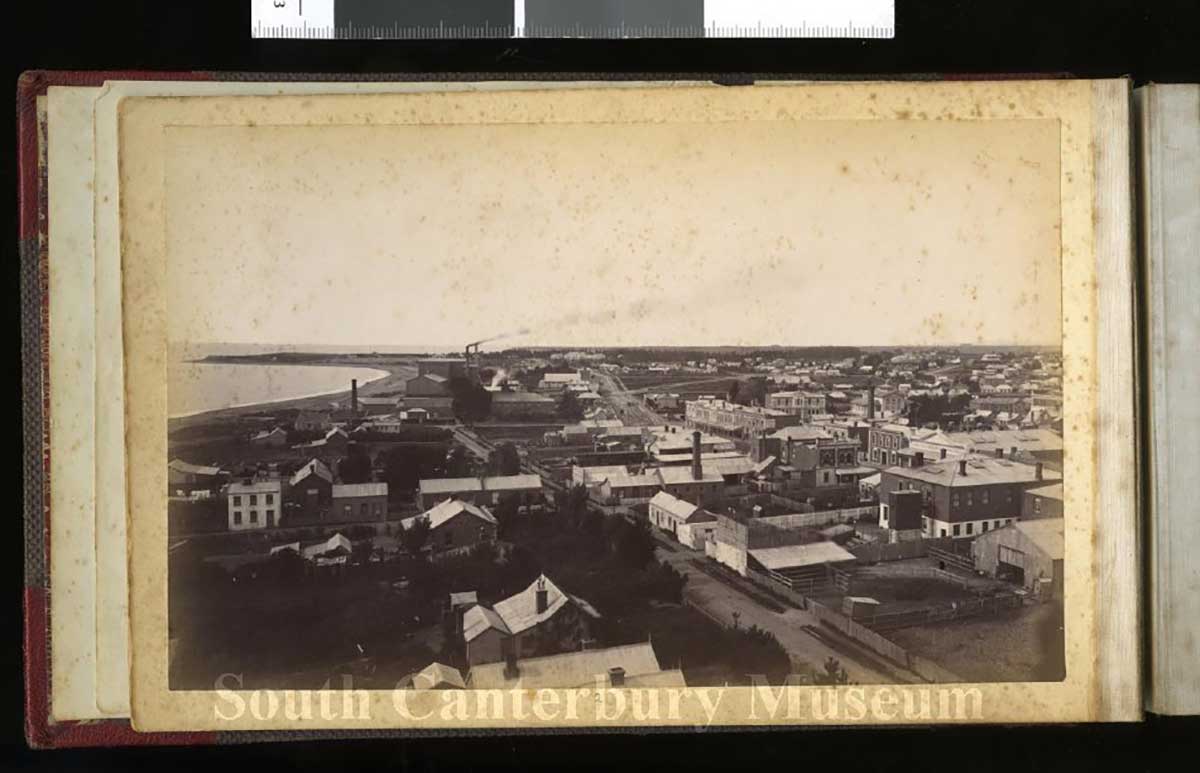
Timaru, looking south from Evans Atlas Mill - South Canterbury Museum
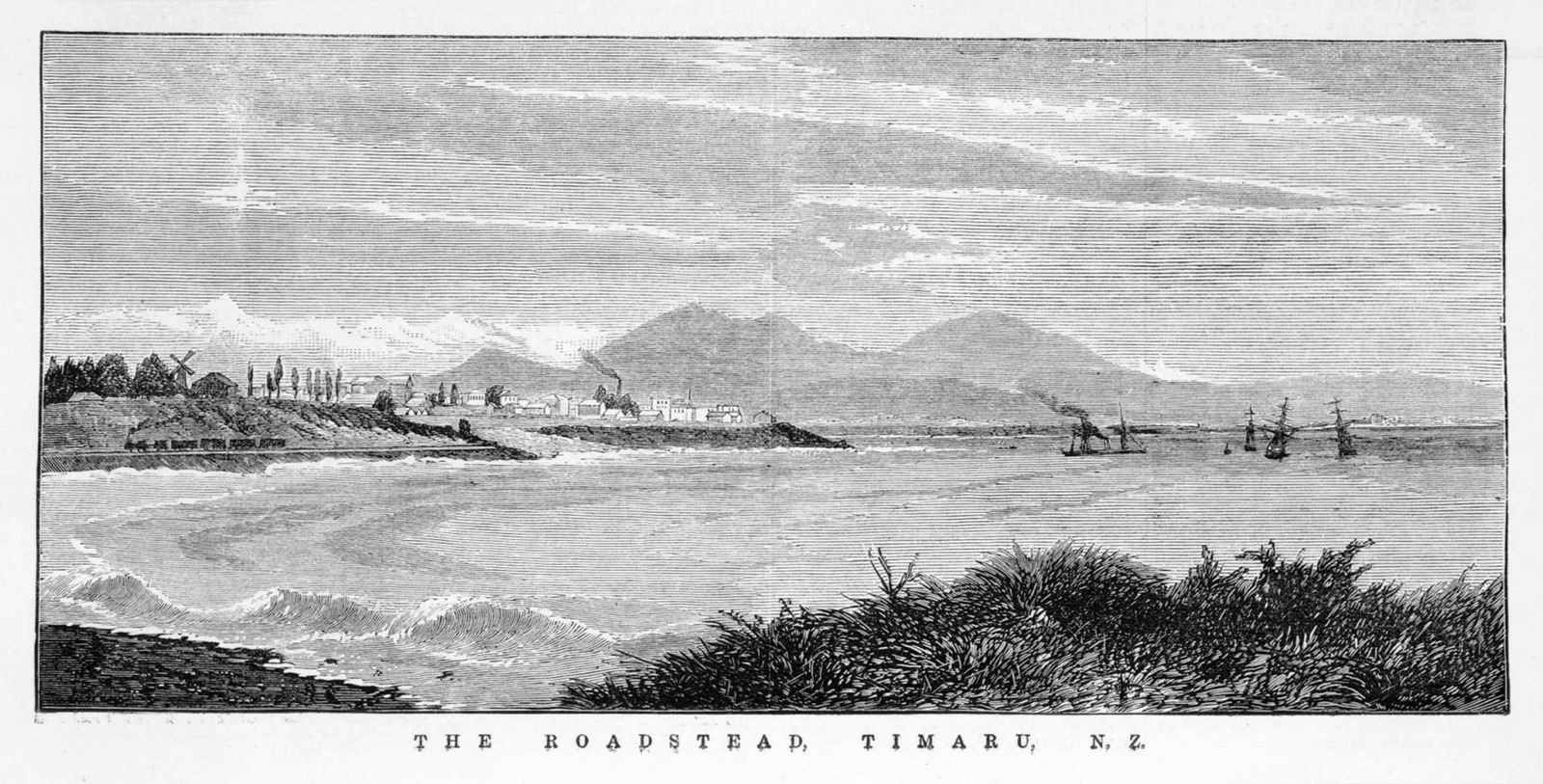
Wood engraving published by Ebenezer and David Syme on Oct 3 1877 The Illustrated Australian News
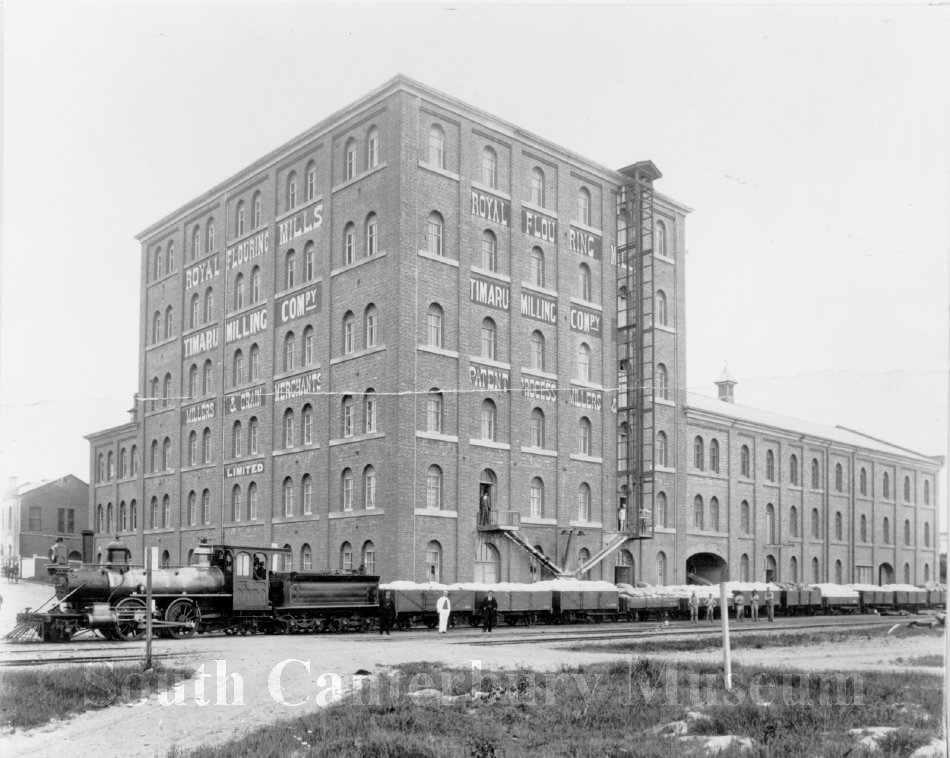
Timaru Milling Co Ltd 1894 south canterbury museum 20001013
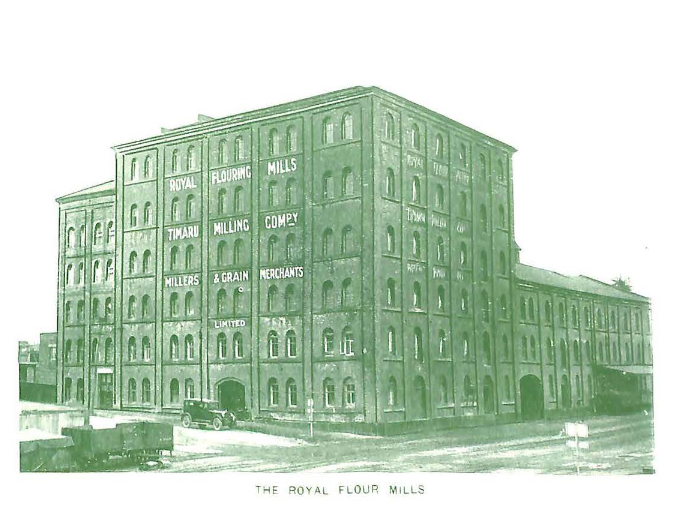
Timaru, South Canterbury, New Zealand: issued by authority of the municipality of Timaru on the occasion of the centennial of the Dominion of New Zealand, 1940.. Aoraki Heritage Collection, https://aorakiheritage.recollect.co.nz/nodes/view/780

Timaru Flour Mills 1972_Tiaki Ref Num WA-70626-F-PA-Group-00080 Whites Aviation Ltd Photographs
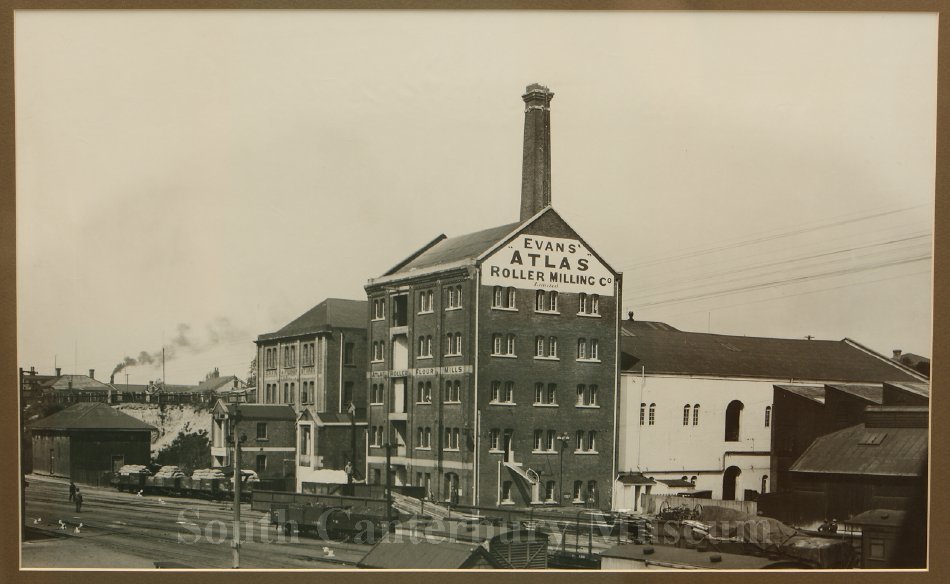
Evans Atlas Roller Milling Co Timaru south canterbury museum 19991435-2