By Roselyn Fauth
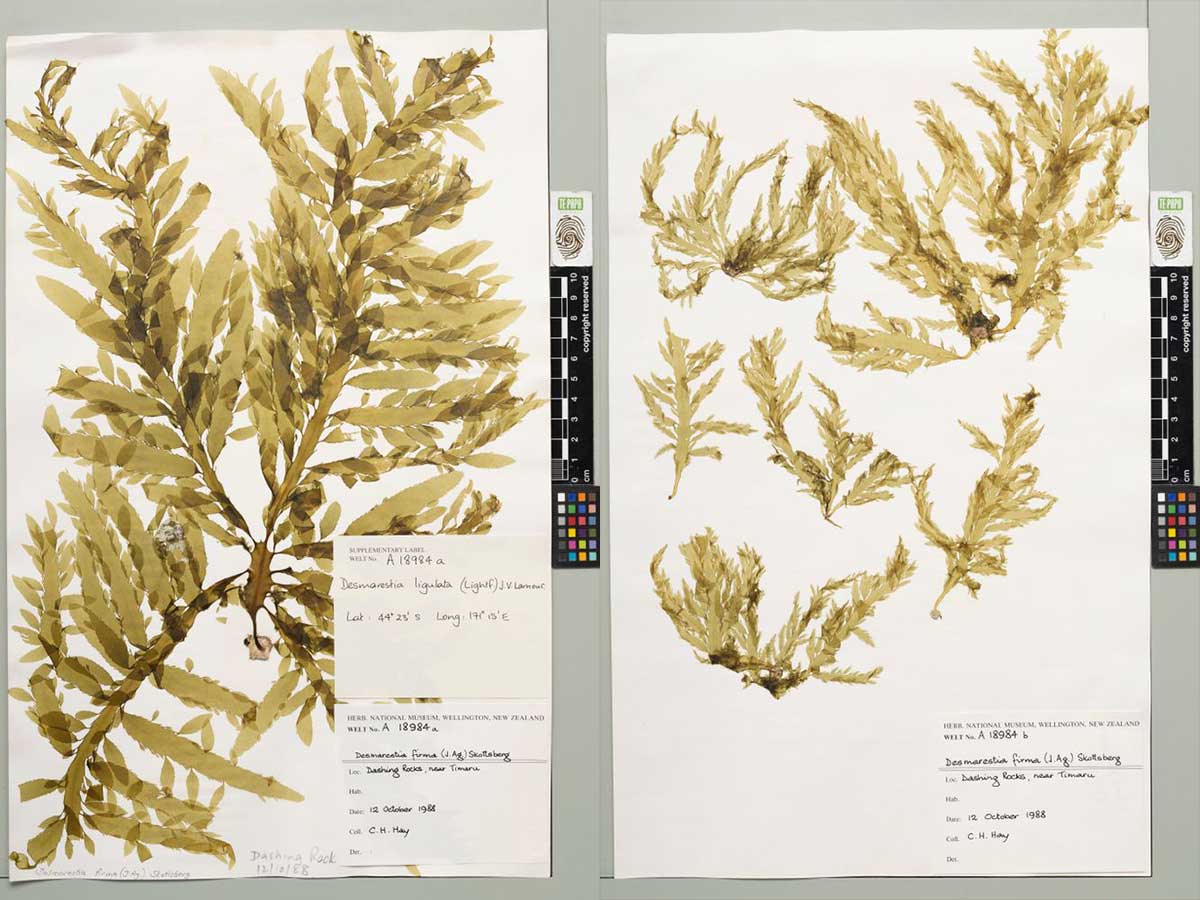
Desmarestia ligulata (Stackh.) J.V.Lamour., collected 12 October 1988, Dashing Rocks, near Timaru, New Zealand. CC BY 4.0. Te Papa (A018984)
I have been really enjoying looking at photography of Timaru on Te Papa online collection. When I search 'Timaru', the first tabs bring up some really interesting historic images. They are really high resolution, so I have been enjoying zooming in and seeing what is the same, what has changed over the years. After about five tabs there are heaps of records of plants linked to Timaru. Why are they there?
At first I wondered whether the plant images had somehow been mixed into the Timaru results by mistake. But they are not mistakes, and it turns out that they are not just botanical photographs... they are herbarium specimens from Te Papa’s botany collection. Te Papa says its herbarium contains about 350,000 dried plant specimens, was founded in 1865, and is especially rich in marine algae, ferns, and mosses. That means these images appear because Te Papa is surfacing collection records connected with Timaru as a locality, not just scenic or historic images of the town.
Once I understood that, the plant tabs made way more sense. These are digitised specimen sheets, part of a scientific archive that records what species were found, where they were found, and when. Te Papa explains that collections like these help underpin knowledge of what plant species occur where in New Zealand and how that has changed over time. So when Timaru appears in the record, the specimen can appear in a Timaru search.
There are a few names that have collected many of these specimens and one I was keen to learn more about was Dr Cameron Hay, a New Zealand marine botanist...
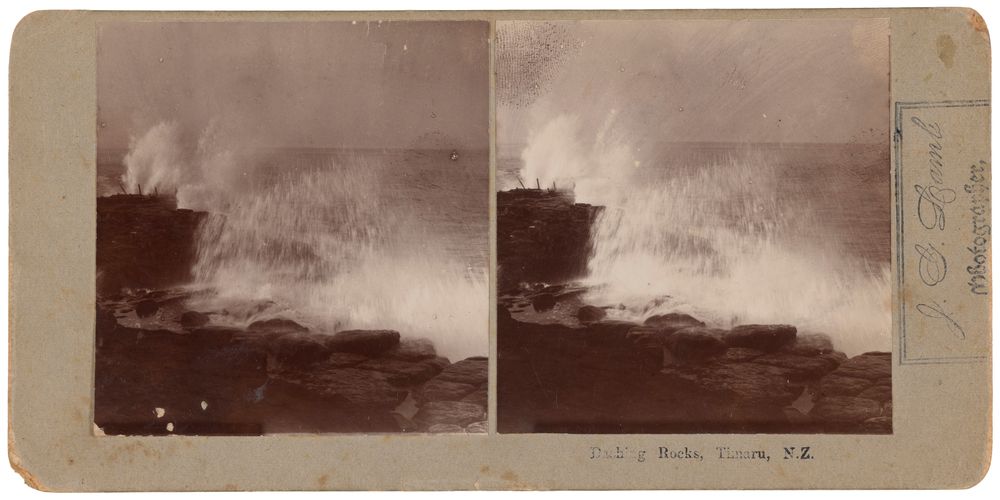
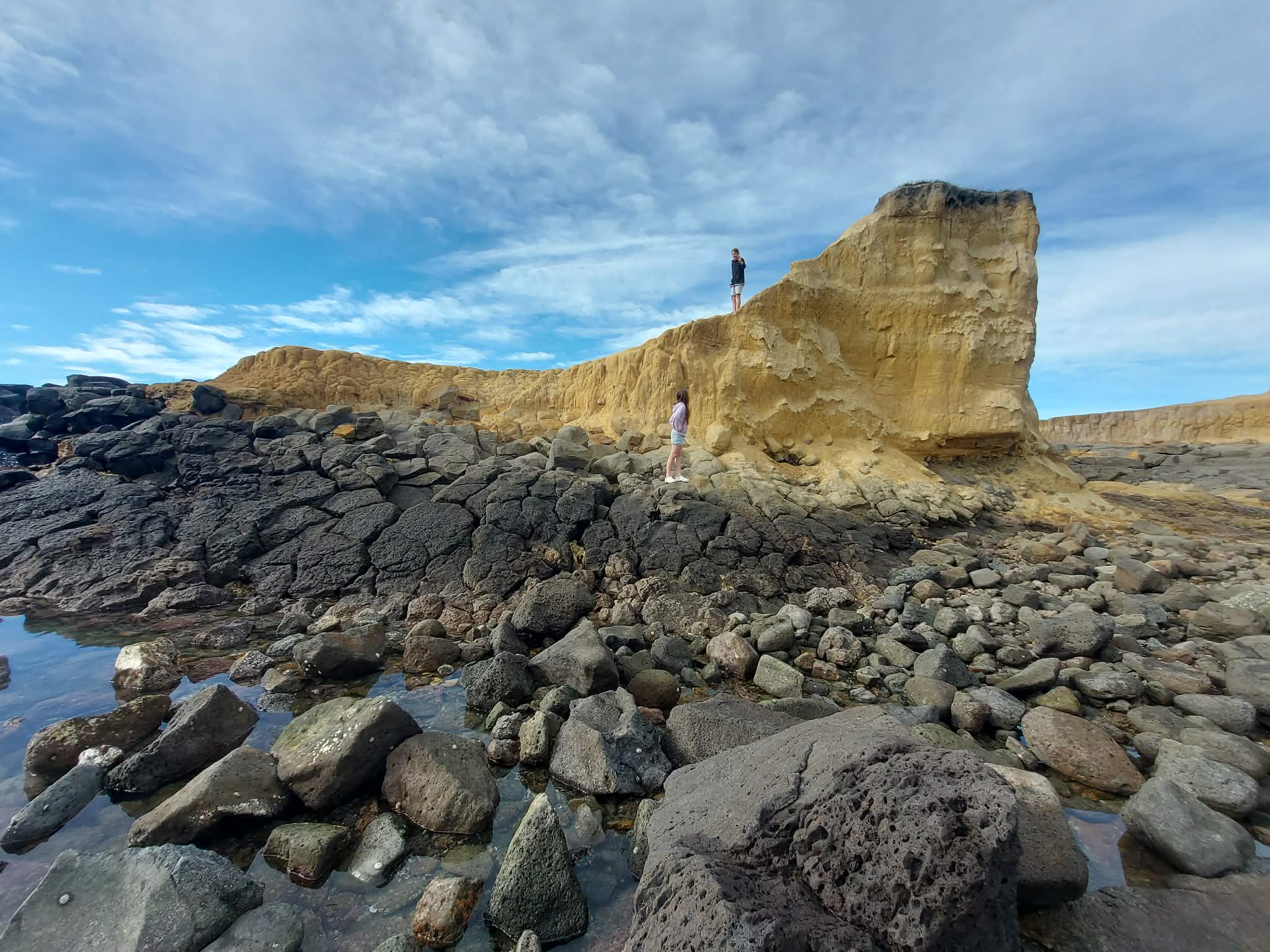
Dashing Rocks, Timaru, New Zealand, early 20th century, Timaru, by James George Lamb. Te Papa (O.005629). Low tide offers the best access to the lava apron that oozed from Mt Horrible 2 - 2.5 million years ago
According to Te Papa, Dr Cameron Hay is a New Zealander, born in Christchurch on 30 November 1949. He is a marine botanist, and phycologist, whose work centres on seaweeds and kelp. The University of Canterbury repository records his doctoral work on Durvillaea, the southern bull kelps, and catalogues and journal records show him publishing on marine algae over several decades, including co-authoring a 2020 paper on the southern bull-kelp genus Durvillaea.
This tells us the name on those specimen records belongs to a serious scientist, and now I realise he is not a casual collector. From the public record, Cameron Hay’s work sits in taxonomy, marine ecology, and species distribution. His specimens and publications form part of the evidence base scientists use to understand New Zealand’s marine flora.
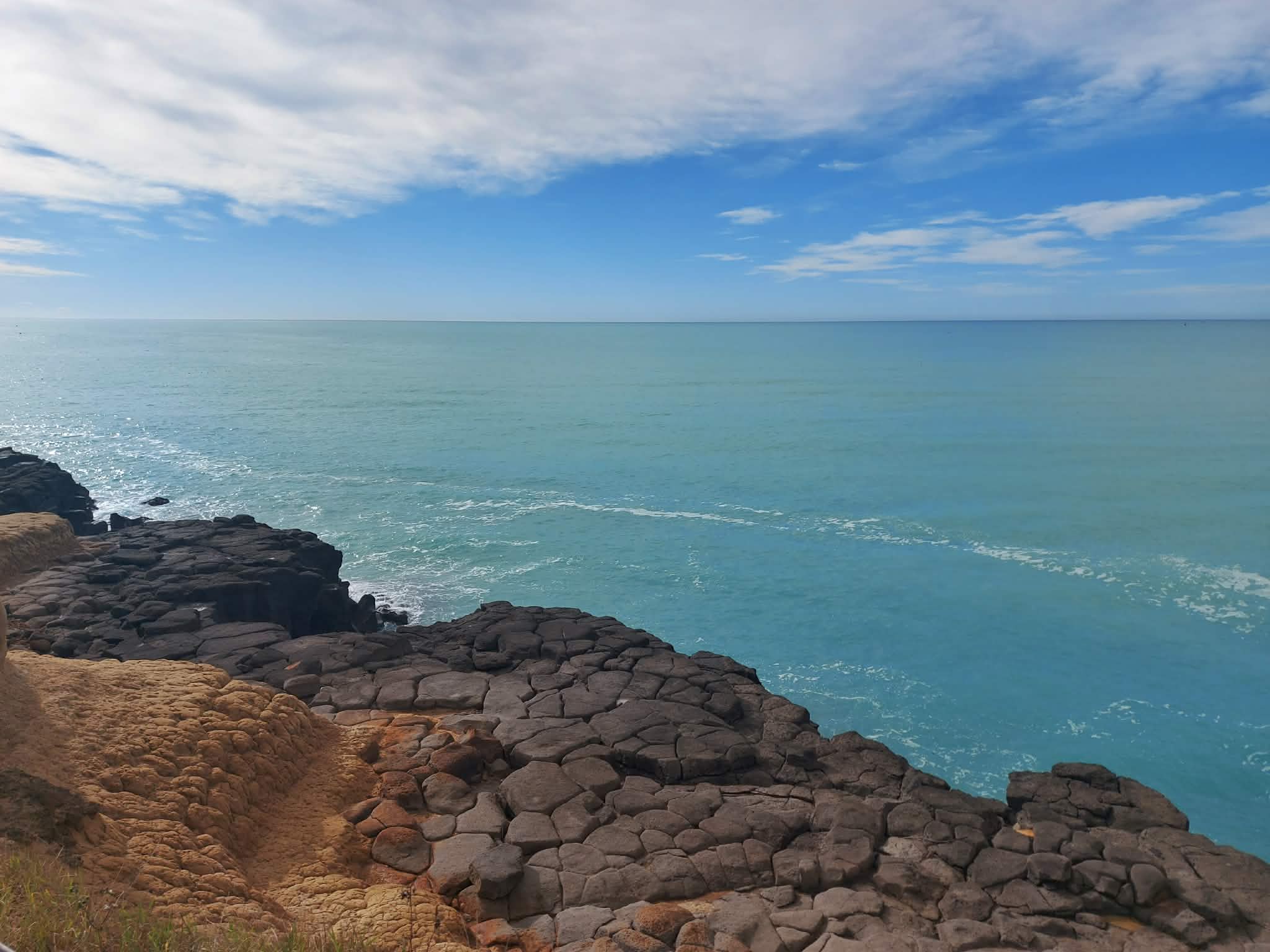
Dashing Rocks April 2026 R Fauth
So what are the photos of plants on Te Papa? They are specimen sheets, and his provide a coastal archive
The pressed specimens stuck on a page and photographed are much more than a museum collection image on a screen. They are little coastal archives. Each record captures a species in a place, at a moment in time. A harbour changes, a shoreline shifts, a species arrives, another recedes, but the specimen remains as evidence that someone was there, looking closely and recording what they found. That is part of the real value of a herbarium.
I wonder what it was like to begin with what it was like to be out collecting, recording and archiving to provide discoveries and a layer of scientific history for a museum catalogue. I also wonder why Cameron was in Timaru? Maybe because harbours can be researched as a ecological crossroad.
Te Papa’s Collections Online is a huge public database with information on more than a million artworks, objects, and specimens, along with hundreds of thousands of images. That includes botany, zoology, history, art, and photography, all sitting side by side in the same searchable collection.
It is also showing anything in the collection linked to Timaru through its record. In the case of the plant images, that usually means a specimen was collected in Timaru, identified from Timaru, or connected to Timaru as a locality. Te Papa’s botany collection is especially strong, with a herbarium of about 350,000 dried plant specimens, founded in 1865, and particularly rich in marine algae, ferns, and mosses.
They are not random botanical pictures mixed into the search by accident. They are part of a scientific collection, carefully catalogued and digitised, and Timaru happens to be part of their story. Once I realised that, the real question was no longer why the plants were there, but who had collected them and what they might tell us about Timaru’s coastline.
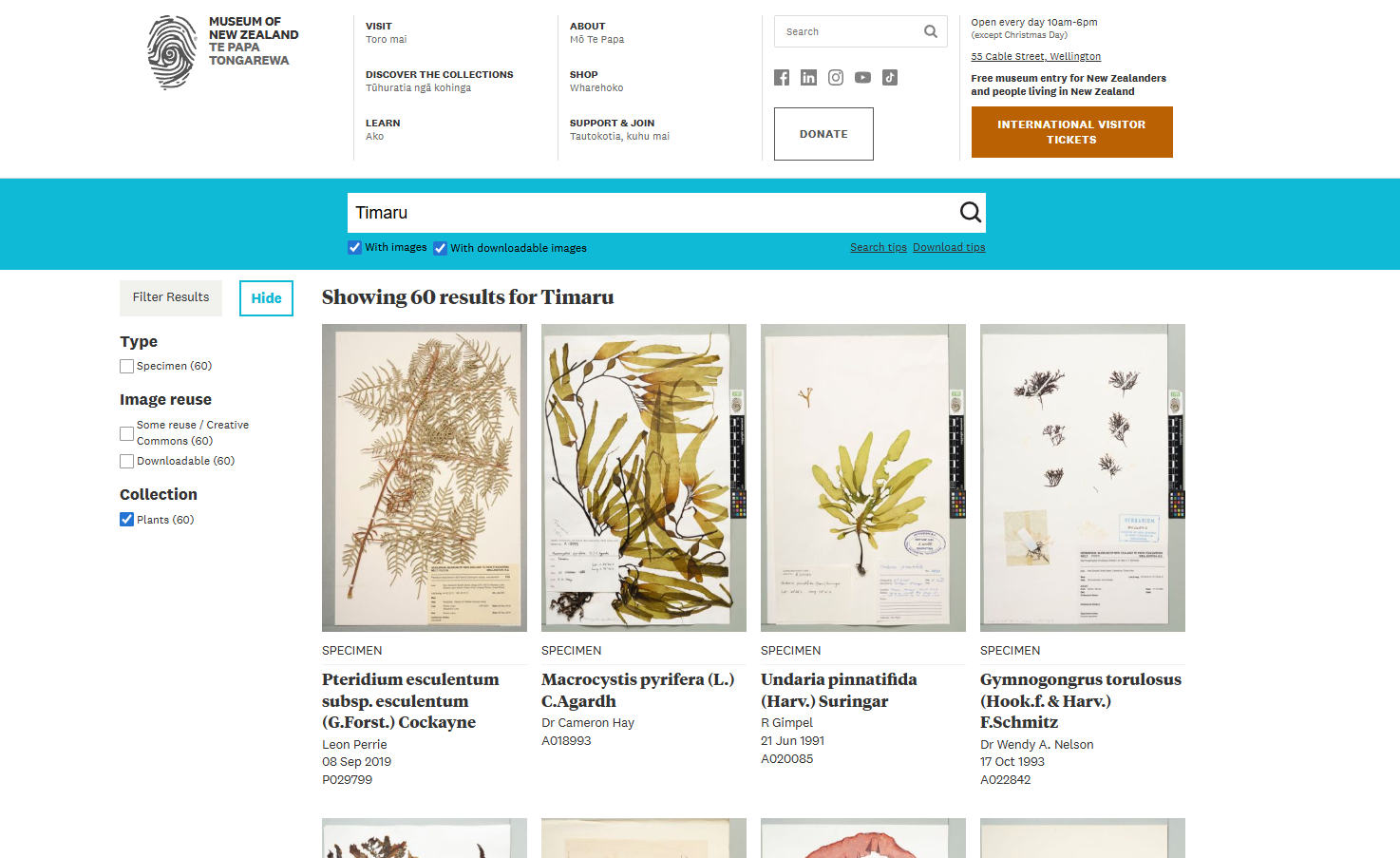
Te Papa - https://collections.tepapa.govt.nz/search/Timaru/results?wi=true&wdi=true&q=Timaru&page=1&ir=CreativeCommons,Downloadable&c=Plants&t=Specimen
So why Timaru?
Well I had a hunt on line and found a story about Undaria pinnatifida, the introduced Asian kelp often known as wakame.
Department of Conservation publications record that Undaria was first recorded in Wellington Harbour in 1987 and later spread to other New Zealand harbours, including Timaru, apparently through shipping. Reviews from DOC and Landcare Research discuss its spread, establishment, and ecological implications.
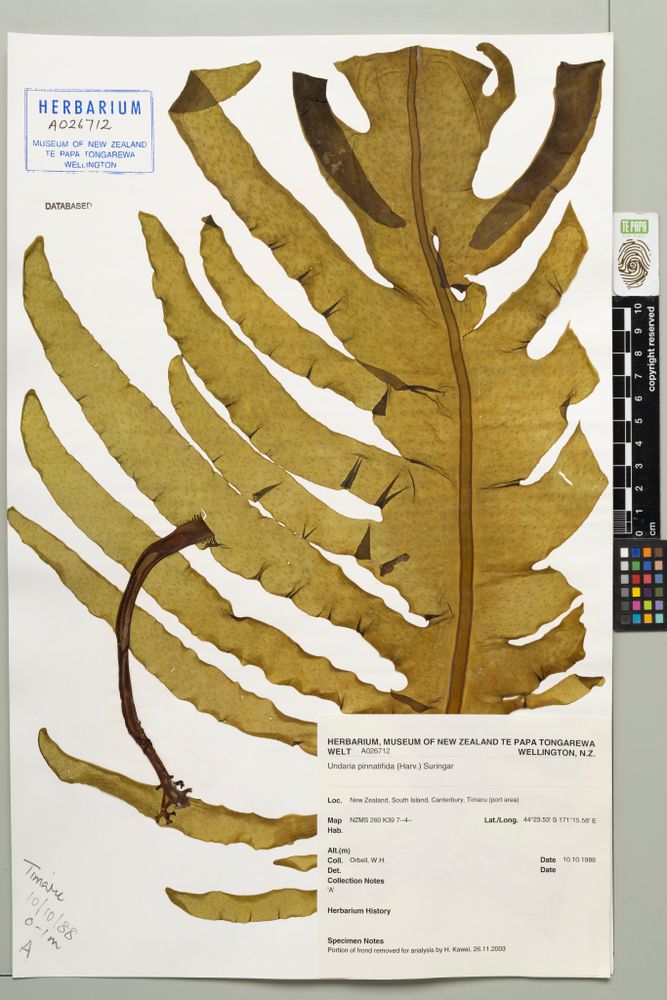
Undaria pinnatifida (Harv.) Suringar, collected 10 October 1988, Timaru (port area), New Zealand. CC BY 4.0. Te Papa (A026712) Collected by R Gimpel, 1991-06-21.
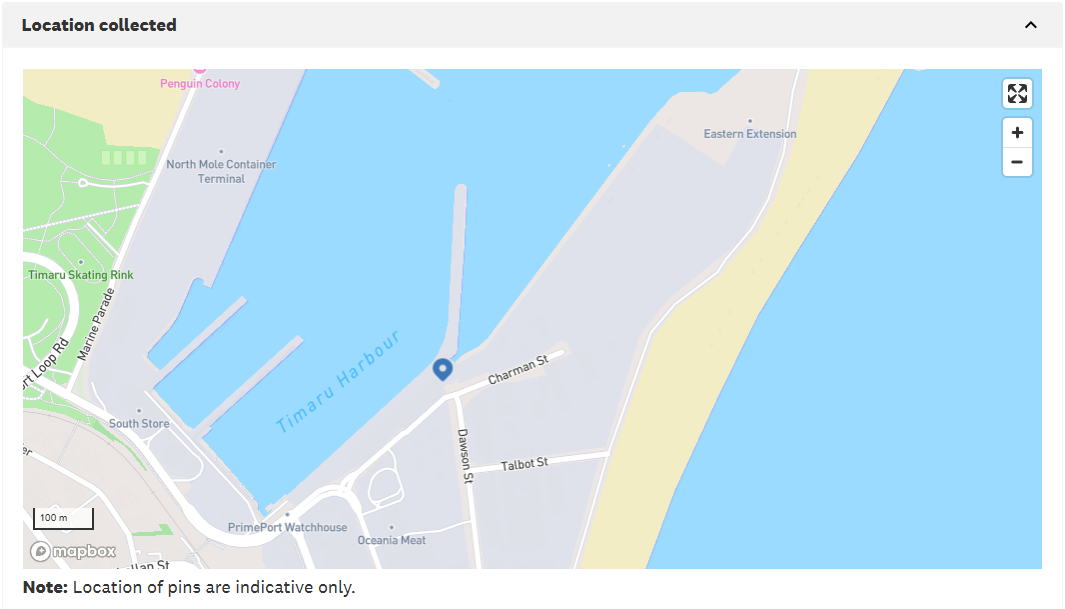
Screen shot from Te Papa website showing where Seaweed was collected - indicative only.
Cameron Hay appears right in the middle of that story
A New Zealand Geographic feature from 1990 describes him as a marine botanist working for the Department of Conservation, charting the spread of Undaria from its first discovery in Wellington. The same article notes that a vigorous form of Undaria was growing in Timaru Harbour, where it formed thick underwater stands.
Now I understand why Timaru appears in the records... because timaru is a working harbour, part of a network of places where shipping, ecology, and scientific observation.
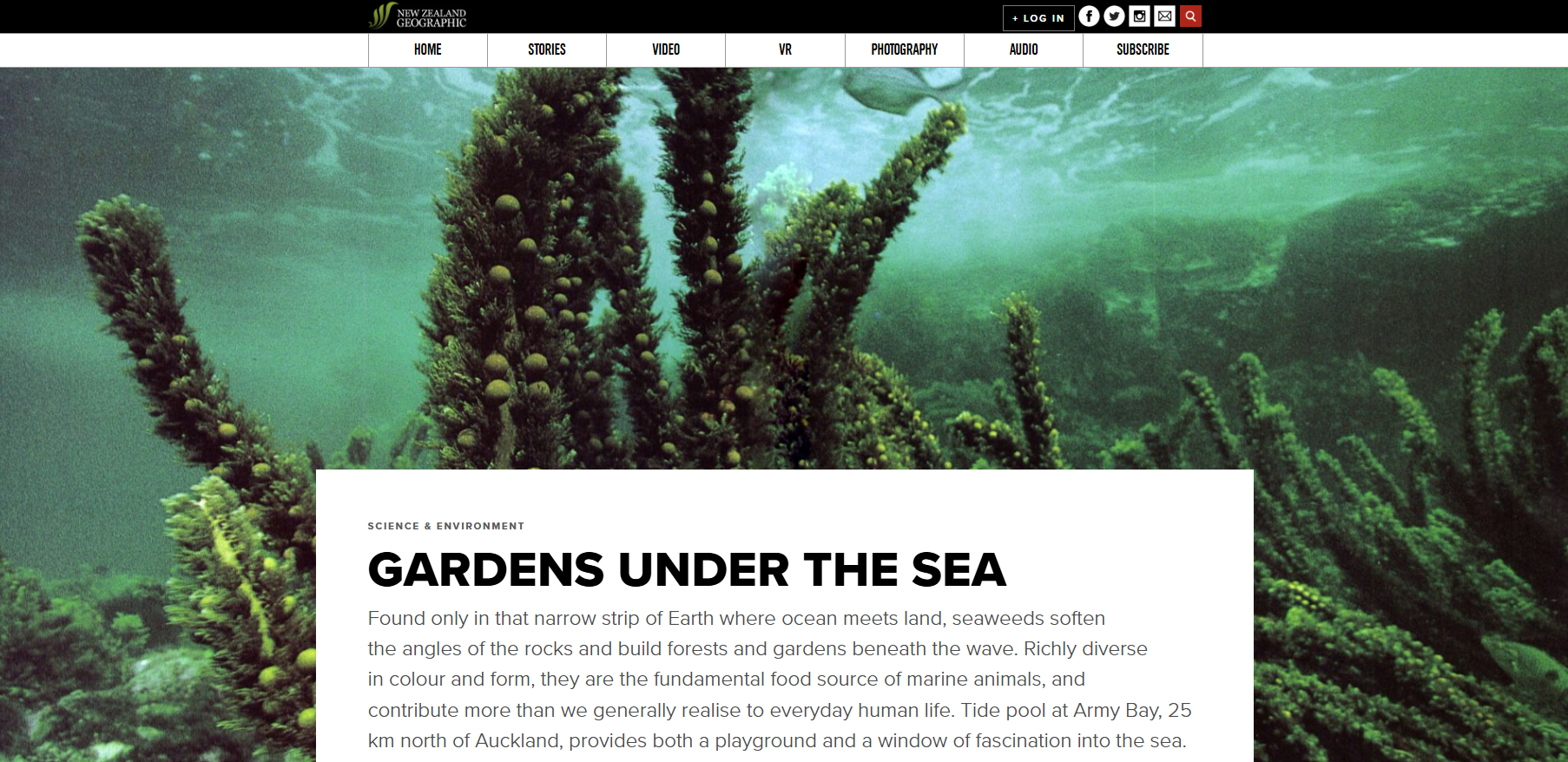
The article in the New Zealand Geographic is really interesting. Issue 22, Apr–Jun 1994, in an article called “Gardens under the sea”, written by Lindsay Clark and photographed by Darryl Torckler. https://www.nzgeo.com/stories/gardens-under-the-sea/
Cameron Hay was one of the people helping New Zealand make sense of a new coastal story: how an introduced kelp was spreading through our harbours, including Timaru, and what that might mean.
The article was about seaweeds and why they matter more than most of us realise. Cameron Hay appears in it as one of the scientists helping New Zealand understand a new coastal story as it unfolded.
At the time, he was a marine botanist with the Department of Conservation, and he had been following the spread of the introduced kelp Undaria pinnatifida since it was first noticed at Oriental Bay in Wellington in 1987. By the time the article appeared, Undaria was no longer just an odd curiosity. It was becoming something much bigger, a marine invader with environmental implications and possible commercial interest as well.
Hay’s part of the story begins in Wellington Harbour, but it quickly stretches out to Timaru, Lyttelton, Oamaru, Port Chalmers, Porirua, and Picton. I thought it was pretty cool to read that our coastline was contributing to this knownledge, unfolding around the coast, in places that people like myself think we know really well.
The article is not just admiring seaweeds for their beauty or strangeness. It is asking what happens when a new species arrives, takes hold, and begins spreading through New Zealand waters. Hay was one of the people tracking that change in real time, thinking about what it might mean ecologically and practically.
Through this research and writing we are learning to look differently at seaweed. It is so much more than what we see washed up on the beach. This knowledge is essential to better understanding marine ecosystems and human life, and what happens when those underwater worlds change.
Timaru’s appearance in the story shows us, that is conversation is more than just a Wellington issue. The vigorous form of Undaria was growing in Timaru Harbour in dense stands, which can be a problem when a dense canopy can prevent other seaweeds from recruiting, exclude the sub canopy and reduce biodiversity. We knew generally that kelp forests can be normal and valuable habitat, and this level of knowledge will help us be aware of the choices and impact we make. Timaru and Camerons seaweed gathering is part of a larger national story about harbour ecology, species movement, and environmental change.
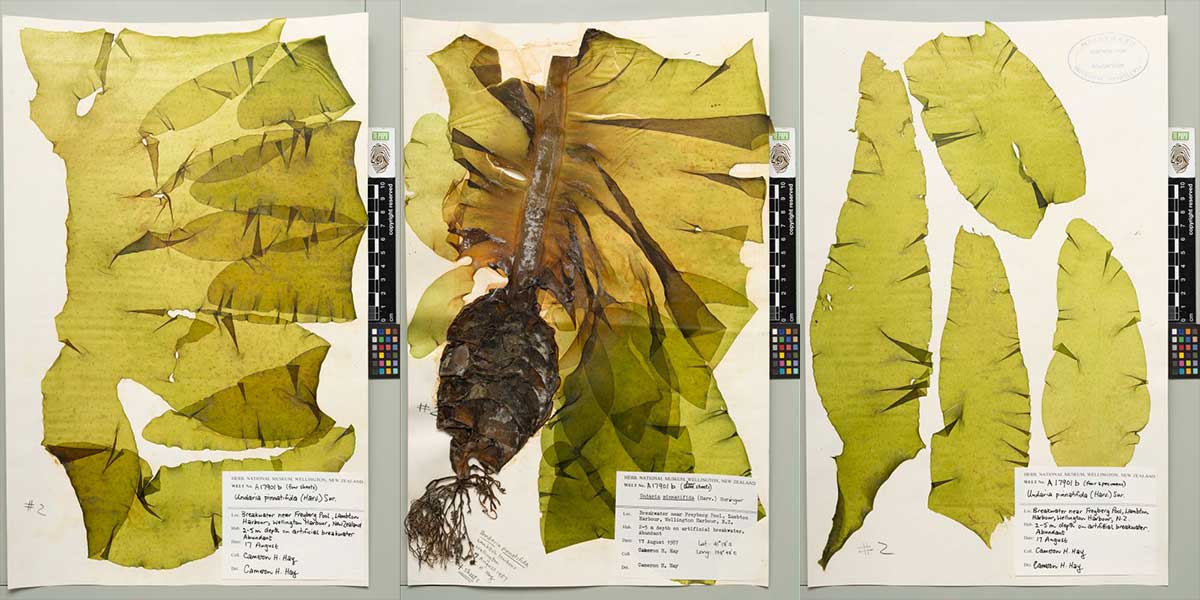
Undaria pinnatifida (Harv.) Suringar, collected 17 November 1987, Breakwater near Freyberg Pool, Lambton Harbour, Wellington Harbour., New Zealand. CC BY 4.0. Te Papa (A017901). Collected by Dr Cameron Hay, 1987-11-17.
His work seems to connect taxonomy, field collecting, and environmental change
Cameron Hay’s public record is really extensive when you google him. He has links several kinds of work. He published on seaweed taxonomy, described species, collected specimens that now sit in museum and herbarium collections, and contributed to understanding the spread of an introduced marine species. His career seems to connect the close work of naming and identifying species with the larger environmental story of how harbours and coastlines change over time.
For Timaru, it means the harbour is not only part of the town’s commercial and social history. It is also part of an ecological history. Through records like these, Timaru appears not just as a place people lived in and sailed from, but as a place scientists studied closely because it revealed something about marine life, movement, and change.
Undaria pinnatifida (Harv.) Suringar, collected 21 June 1991, Timaru Harbour: Yacht Club., New Zealand. CC BY 4.0. Te Papa (A020085). Collected by R Gimpel, 1991-06-21
This is what I could glean from the internet, and it leaves me wondering what he is doing now
From the public record, this is what I can glean about Dr Cameron Hay: he is a Christchurch-born New Zealand marine botanist whose collecting and publishing have helped document seaweeds and kelp around Aotearoa, including in places like Timaru.
I find myself wondering what he is up to now, and how many people realise the impact a career like his has had.
His work sits quietly in specimen databases, museum collections, and scientific papers, yet it helps us understand biodiversity, harbour change, and the movement of species around New Zealand’s coast. This is only what I could piece together from public records and the internet, but even that partial trail suggests a career of real significance.
The real surprise is that Timaru reveals another layer of itself
Perhaps that is the real gift of a search like this. You begin by enjoying old photographs of Timaru, then suddenly there are tabs and tabs of plants, and for a moment it seems odd. But they are there for a reason. They are part of the scientific record of place. Hidden among Te Papa’s records are fragments of a much larger story: of seaweed, science, harbours, and careful looking. Through that trail, Cameron Hay’s work helps Timaru reveal another layer of itself.
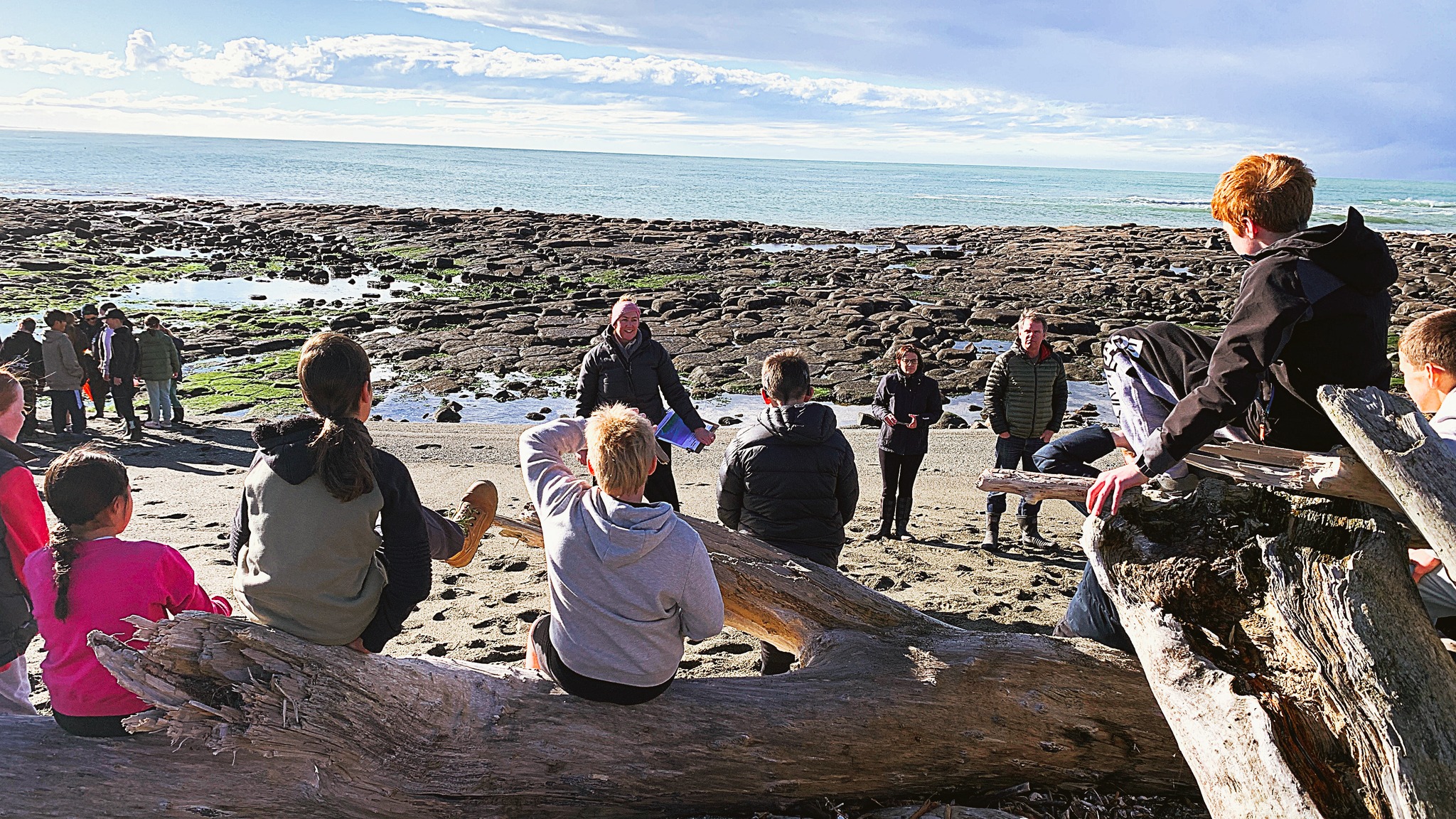
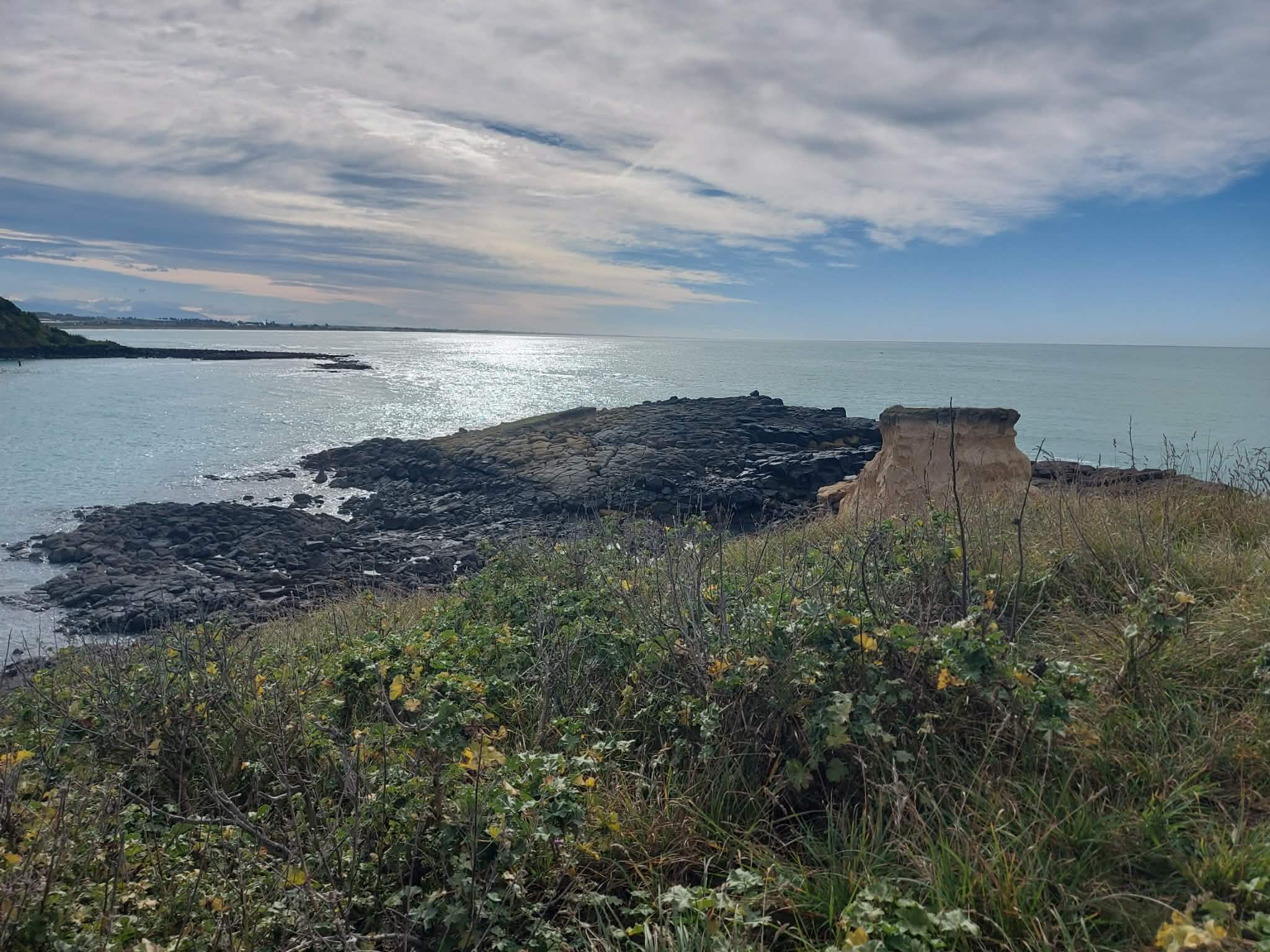
Roselyn Fauth sharing her knowledge of volcanics, from her her father Geoff Cloake taught her about the formation of the cliff and reefs at Waitarakao - Washdyke Lagoon and reef.
Ten things I learned from this history hunt
- Seaweed quietly supports marine life and human life in more ways than most people realise.
- Some sheep in Scotland and some cattle in Southland have lived on seaweed.
- Seaweed turns up in food, cosmetics, textiles, paper, and even beer foam.
- The deepest seaweed recorded in New Zealand was found more than 70 metres underwater.
- Seaweeds do not have true roots, they have holdfasts that simply anchor them.
- Bull kelp is built for wild surf and some of it can drift for thousands of kilometres.
- Giant kelp can grow up to half a metre a day and reach 35 metres in three months.
- Seaweed is not just beach mess, it is one of the foundations of underwater ecosystems.
- By the early 1990s, introduced wakame had already spread through several New Zealand harbours, including Timaru.
- Timaru Harbour had such dense wakame growth that it became part of a national marine science story.
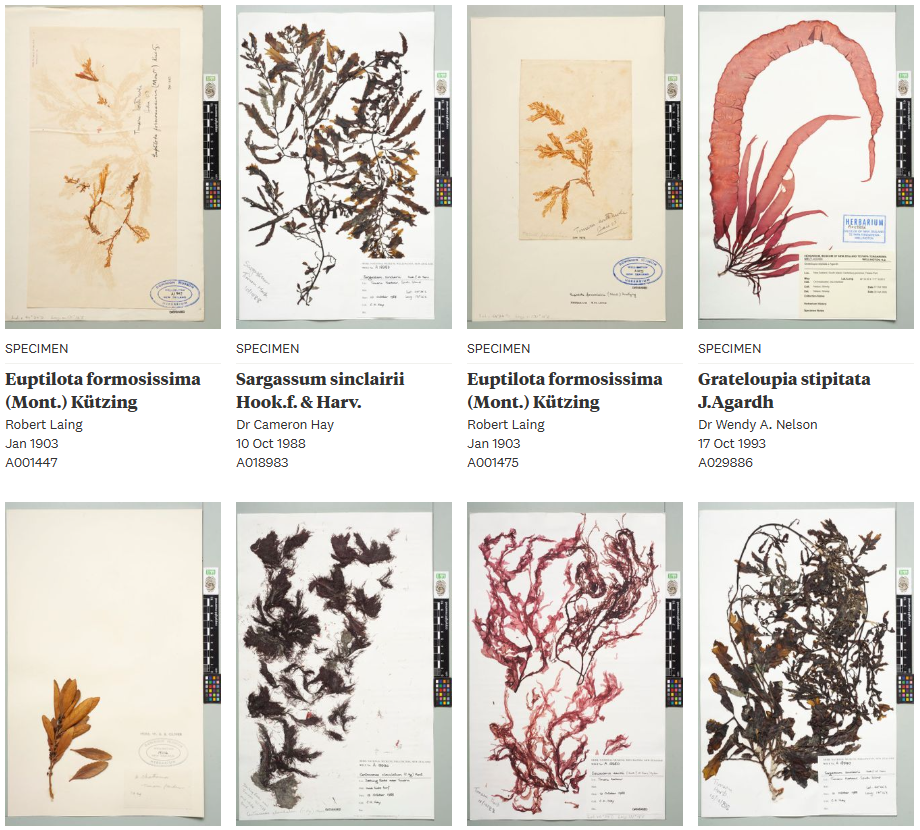
https://collections.tepapa.govt.nz/search/Timaru/results?wi=true&wdi=true&q=Timaru&page=1&ir=CreativeCommons,Downloadable&c=Plants&t=Specimen
Sources
Te Papa, Dr Cameron Hay
https://collections.tepapa.govt.nz/agent/5639
Te Papa, Botany collection overview
https://collections.tepapa.govt.nz/topic/2005
Te Papa, Schizoseris griffithsia (Suhr) M.J. Wynne
https://collections.tepapa.govt.nz/object/476196
University of Canterbury Research Repository, A biological study of Durvillaea antarctica (Chamisso) Hariot and D. willana Lindauer in New Zealand
https://ir.canterbury.ac.nz/items/756737bf-cd31-41d2-ac04-bd57e78ba40f/full
NIWA Library catalogue, Marine algae of the subantarctic islands of New Zealand: a list of species / C.H. Hay, N.M. Adams, M.J. Parsons
https://library.niwa.co.nz/bib/256892
Wikispecies, Cameron H. Hay
https://species.wikimedia.org/wiki/Cameron_H._Hay
Department of Conservation, Review of research on Undaria pinnatifida in New Zealand and its potential impacts on the eastern coast of the South Island
https://www.doc.govt.nz/Documents/science-and-technical/dsis166.pdf
Department of Conservation / Landcare Research, Status of the introduced brown seaweed Undaria in New Zealand
https://www.doc.govt.nz/globalassets/documents/science-and-technical/casn112.pdf
New Zealand Geographic, Gardens under the sea
https://www.nzgeo.com/stories/gardens-under-the-sea/
PubMed, The Biogeographic Importance of Buoyancy in Macroalgae: A Case Study of the Southern Bull Kelp Genus Durvillaea
https://pubmed.ncbi.nlm.nih.gov/31642057/
Te Papa, Timaru search results
https://collections.tepapa.govt.nz/search?term=Timaru
Walking along the beach at Timaru you can see these sea tulips/kāeo! They are animals, despite their name and appearance, a species of sea squirt! They are filter feeders and are usually found on wharfs or attached to rocks, so quite interesting to find attached to a sandy shore! If you get a chance, go check them out!
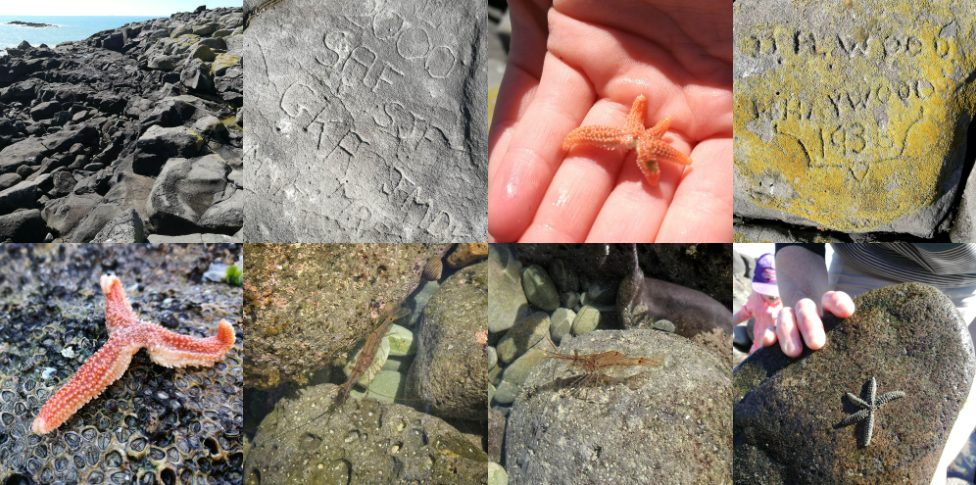
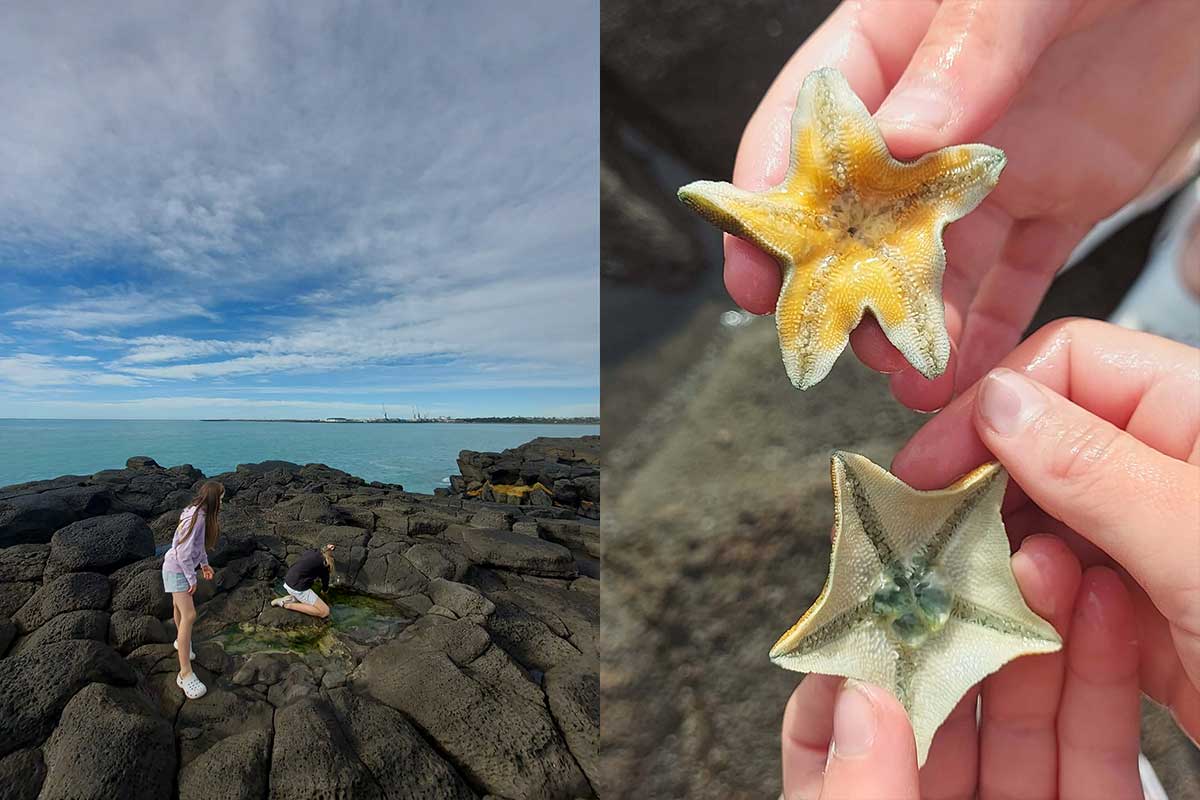
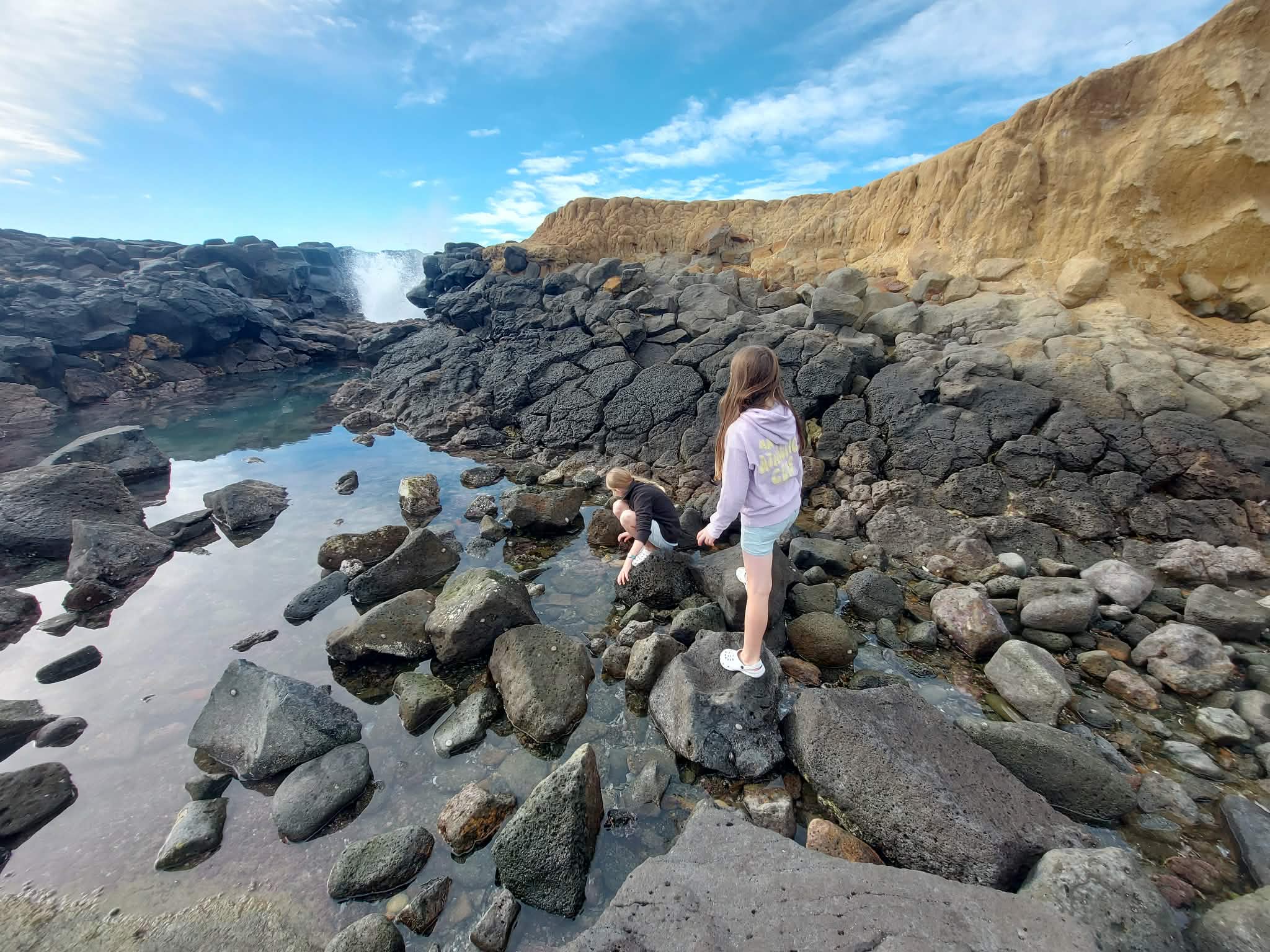
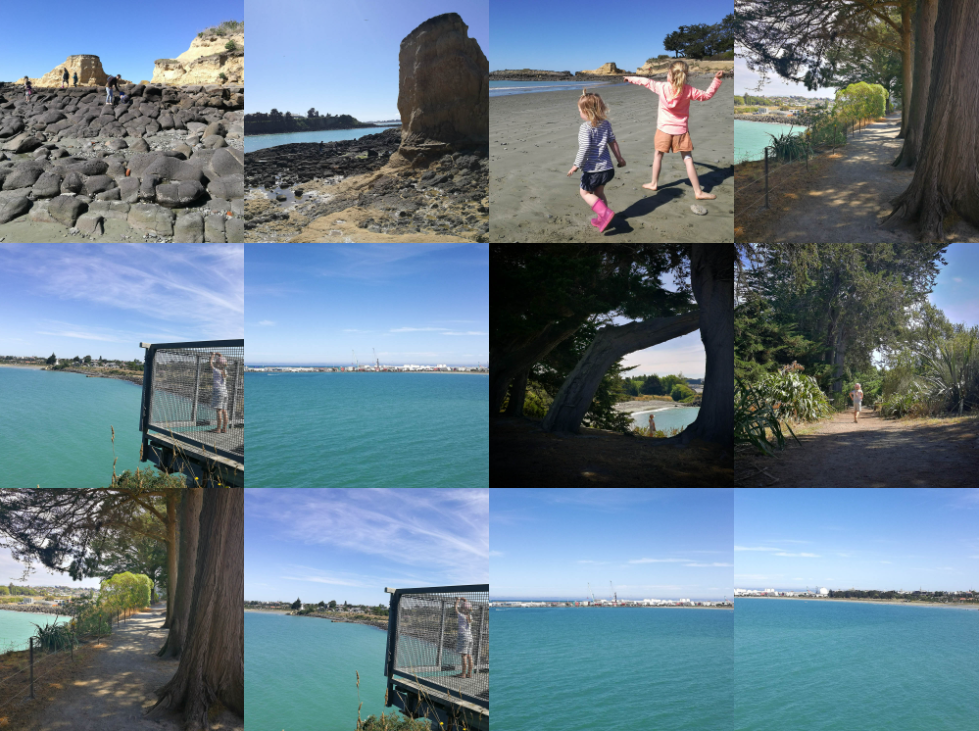
Exploring Dashing Rocks - Free fun adventures in Timaru over the years - Fauth Family - Photos R Fauth
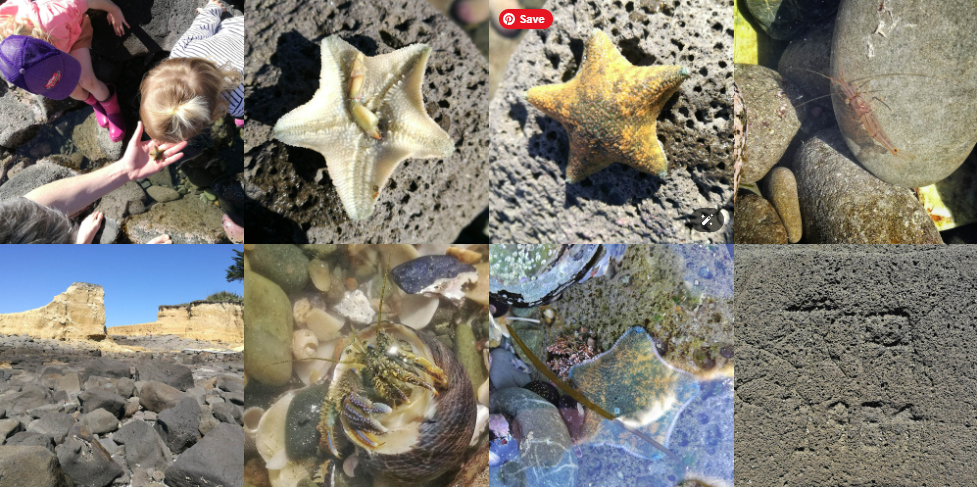
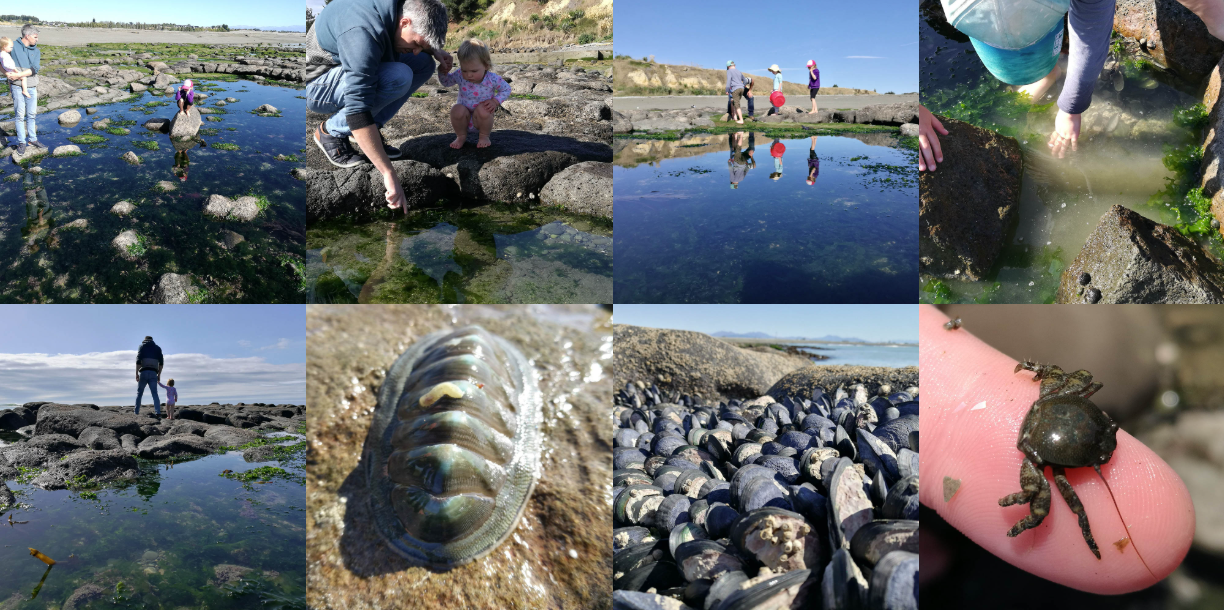
Waitarakao Washdyke Lagoon Reef free fun adventures in Timaru - Fauth Family - Photos RFauth
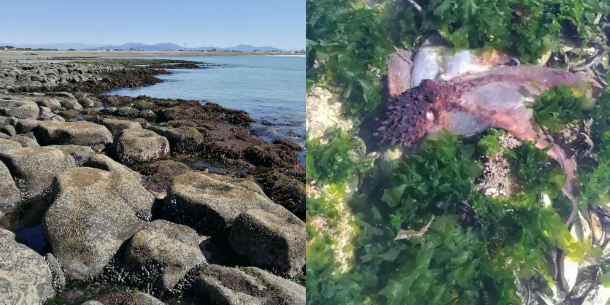
Waitarakao Washdyke Lagoon Reef free fun adventures in Timaru - Fauth Family - Photos RFauth
2026 Revisit with Medinella now 11 and Annabelle 7 Fauth.