
By Roselyn Fauth
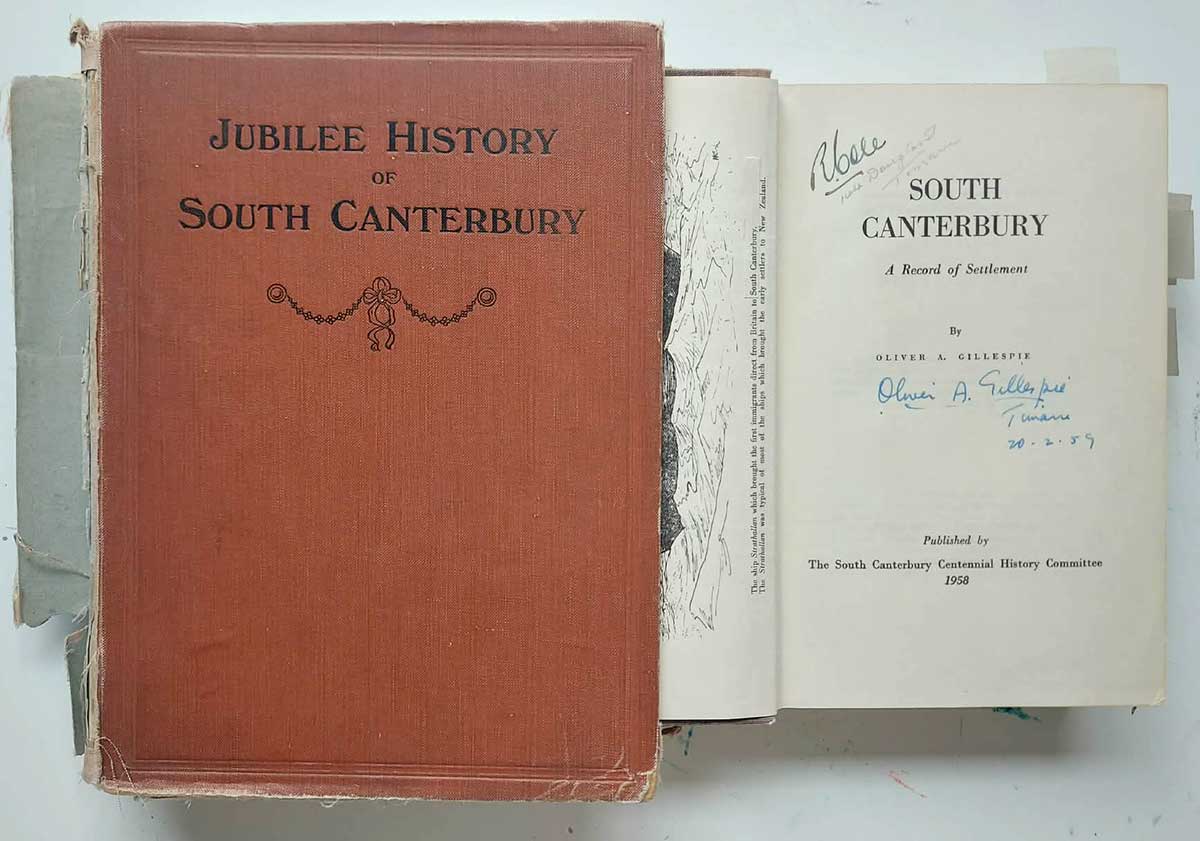
I have this amazing book that was given to me by my dad. It is called Jubilee History of South Canterbury, printed in 1916, and it is a real treasures. It smells of decaying animal glue, a scent I have grown to love. To me, it smells like a 110 year old book... full of peoples research and memories of the first years of European arrival in the area.
It is not an easy book to get your hands on now. That makes it even more precious.
Inside is a treasure trove of information gathered just 50 years after many of South Canterbury’s earliest colonial changes were still fresh in living memory. One of its earliest chapters looks at the fauna of this region. At first glance it seems to be about birds, fish, insects, and animals. But really it is about something much bigger... It is about environmental change.
It is about what was here before, what disappeared, what was introduced, what adapted, and what happened when people tried to reshape the land to suit farming, sport, settlement, and empire.
It is also a reminder that this land was never empty. Long before this 1916 book was written, Māori knew these places deeply, named them, travelled them, harvested from them, and lived in relationship with birds, rivers, coasts, wetlands, and seasons. Any reading of South Canterbury’s natural history is incomplete without acknowledging mana whenua and all those who lived with this land before the book, before settlement writing, and before the species lists were turned into print.
So I thought I would share a blog based on this remarkable early chapter...
This chapter is really about environmental change, not just animals
What struck me most is that this is not simply a list of wildlife. It is a record of a region in transition.
The writer moves from deep geological time to recent memory, tracing a world shaped by climate, isolation, uplift, flood, forest change, fire, farming, acclimatisation, pest campaigns, and human ambition. Native birds were retreating. Introduced birds were spreading. Fish were being imported. Bees were released to improve clover seed. Deer and thar were introduced for sport.
In other words, the chapter captures South Canterbury at a turning point, when people were still close enough to remember older abundance, but were already living in a transformed world.
The land itself changed, and plants and birds changed with it
The chapter begins with a sweeping idea. New Zealand’s flora and fauna did not simply appear as they are. They adapted over vast periods of time as climates shifted and the land itself rose and sank.
That old 1916 account may not use modern ecological language, but it understood something important. The South Canterbury landscape was the product of constant change. Plants adapted. Species split and survived in different forms. Environments changed long before people started writing about them.
This matters because it places South Canterbury in deep time, not just settler time.
The moa still haunted local memory
The section on the moa is one of the most fascinating in the whole chapter.
Moa bones had been found in swamps, old swamp beds, river margins, limestone formations, and even ancient ovens. South of Timaru, one tibia was recorded as four feet long. At Dashing Rocks, moa bones were found with flints and other relics of Māori occupation.
What is especially striking is that the moa did not yet feel entirely distant. In the 1860s and 1870s, stories still circulated that living moa had been seen in remote places. These reports were never confirmed, but they show how recently the bird still sat in the public imagination.
The writer wrestled with extinction too. Was it climate? Forest loss? Fire? Human pressure? The answer was not simple then, and it still is not simple now. But the chapter clearly understood that extinction was tied to environmental upheaval and human action together.
The kea was admired, feared, and blamed
The kea appears first as a curious alpine parrot and later as a notorious sheep killer.
Early explorers such as Haast described large green parrots in the alpine world with real fascination. They were bold, intelligent, noisy, and at home in the high country. But later accounts show how quickly admiration gave way to hostility once the bird became associated with attacks on sheep.
By the 1880s the kea was seen by many runholders as an enemy. Reports claimed very large losses of sheep. Whether every number was accurate or not, the mood is obvious. The bird had moved in settler thinking from wonder to pest.
Even so, the kea still comes through as a vivid and formidable survivor of the mountain world.
Many native birds were already retreating or disappearing
This is one of the saddest parts of the chapter.
The weka, once common and useful both to Māori and to explorers, was already declining. The pukeko and bittern had retreated with the loss of wetlands. Bush birds that had once belonged to South Canterbury, including kākā, wood pigeon, kōkako, robin, tui, bellbird, and others, were becoming less common as forest cover disappeared.
Some birds adapted better than others. Fantails, silvereyes, and grey warblers managed to live between older habitats and settled landscapes. But many others did not.
The laughing owl is especially haunting in this chapter. Heard more often than seen, associated with rocky country, and already slipping into rarity, it stands as one of those species that remind us how much can vanish within a few generations.
Māori knowledge and earlier lifeways are present, but only partly
One of the most important things a modern reader should notice is that Māori do appear in the chapter, but often only briefly.
There are references to Māori names for birds, to the exchange of preserved weka and muttonbirds, to Māori fishing knowledge, to moa bones in ovens, and to observations from local Māori communities. Those details matter. They remind us that this land and its species were known through lived relationships long before they were written up in colonial print.
But the book is still a 1916 settler publication. Māori knowledge sits around the edges rather than at the centre.
A modern reading needs to pause and recognise that the fuller story of South Canterbury fauna includes mātauranga Māori, customary food gathering, seasonal movement, place names, and long relationships between people and species that older colonial histories only partially recorded.
Settlers introduced species on purpose, and then fought them when they thrived
This is where the chapter becomes almost darkly ironic.
English birds and game were imported to make the colony feel more familiar, more productive, and more sporting. Blackbirds, thrushes, sparrows, skylarks, yellowhammers, linnets, goldfinches, partridges, pheasants, quail, and hares were all introduced or encouraged.
Then many of them became problems.
Sparrows were attacked as pests. Clubs formed to destroy them. Eggs were bought in huge numbers by local bodies. Poisoned grain was spread. Thousands upon thousands of eggs were collected. At the same time, some people argued that sparrows were useful because they destroyed weed seeds and insects.
This tension feels very modern. Human beings introduced species for one reason, only to discover that the ecological results were far messier than expected.
Humble bees changed farming in ways people noticed immediately
One of the most revealing sections is about humble bees.
These were introduced not for beauty or sentiment, but because red clover needed help to set seed well. Several shipments failed before bees finally became established. Once they did, people quickly noticed the effect on clover crops.
This is such an important detail because it shows that acclimatisation was not only about sport or nostalgia. It was also about engineering the environment to suit agriculture.
The landscape was being reshaped at every level, from mountain animals to insects in a clover head.
Trout, salmon, and sea fishing reflected both sport and commercial hope
The book also records the introduction of trout and salmon into local rivers and streams. These were partly sporting decisions, but they also reflect a wider urge to improve and stock the land.
At the same time, there was real interest in sea fishing as a possible industry. Reports describe fish banks off the coast, catches of groper, cod, barracouta, ling, skate, shark, crayfish, and eels, and repeated efforts to understand what the sea off Timaru might provide.
This is another reminder that South Canterbury’s fauna history is tied to economy as much as ecology.
Even mice, hedgehogs, flies, and frogs became part of the story
One of the things I love about this chapter is that it is not only about grand species.
It also includes mice arriving in boxes, hedgehogs turning up unexpectedly, frogs appearing without a clear record, trap-door spiders being noted, and blue-bottle flies driving people to distraction. These are the small, ordinary invasions of settlement life.
History lives there too, in the practical irritations and everyday observations.
This old chapter shows how quickly a region can change
What makes this chapter so powerful is that it preserves a moment when people could still remember what had recently been lost, while also living with the consequences of what had newly arrived.
The South Canterbury it describes is already a changed place. Wetlands had shrunk. native birds had retreated. Introduced birds and game had spread. Fish, bees, deer, thar, and chamois had been added to the landscape. Species were being valued, protected, blamed, hunted, and studied according to human priorities.
It is an environmental history hidden inside an old local history book.
We owe gratitude to those who gathered and printed this history
For all its limitations and all the biases of its time, I feel deep gratitude for the people who gathered, collated, and printed this book in 1916.
Because they did, generations later we can still read these observations, question them, learn from them, and reflect on the past. We can compare what people thought then with what we understand now. We can notice what they preserved and what they overlooked. We can trace the long story of change in this place.
Old books like this help us know where we come from. They also help us think about where we are going.
And they remind us that the history of South Canterbury belongs not only to those who printed books, but to all who have lived with this land over time. To mana whenua. To those who fished its rivers and coast. To those who moved through wetlands and foothills. To pastoral families and labourers. To settlers, surveyors, shepherds, naturalists, and schoolchildren. To those who named things, used them, changed them, protected them, or mourned their loss.
The land remembers more than any one book can hold.
Detailed timeline from the chapter
Deep time and prehuman environmental change
Cretaceous period
The book refers to earlier semi-tropical vegetation and major climatic shifts shaping plant adaptation in New Zealand.
Eocene period
The ancestors of the moa were believed to have appeared when New Zealand was one landmass, before separation by Cook and Foveaux Straits.
Glacial and post-glacial periods
The chapter links forest change, swamp formation, and moa bone deposits to climatic change, glaciation, and later land uplift and depression.
Early Māori relationships and evidence
Before European settlement
Māori knowledge, names, and use of birds and fish were part of the region’s lived history long before the 1916 book. The chapter references Māori names for species, Māori fishing knowledge, preserved bird exchange, and moa bones found in ancient ovens.
Undated pre-colonial evidence
Moa bones were found at Dashing Rocks with flints and relics of Māori occupation.
Early colonial observations and species records
1850
Godley’s journal noted partridges already at Dunedin, though both were cock birds.
1856
The kea was known to science through W. B. Mantell.
1861
Haast described seeing a large green alpine parrot in the upper Canterbury valleys.
1862
Haast explored the Godley Valley and Mount Cook district, recording alpine bird life and abundant waterfowl near Lake Tekapo.
1863, 27 January
A report reached Timaru that James Walker and Joseph Smith had seen a moa in Otago.
1864, 24 March
The first frogs in North Canterbury were reported as having been introduced by Major Hornbrook. South Canterbury’s frog arrival date remained unknown.
1865, 23 June
W. Dumaresq brought eight partridges to South Canterbury for liberation.
1866, 18 July
Angus Macdonald advertised that he had released Australian magpies in Raukapuka Bush.
1866, 19 September
A bird shot on Washdyke Lagoon was reported as an avocet, though it was likely a wrybill.
1867, February
House sparrows accidentally arrived in Lyttelton after the Canterbury Acclimatisation Society had ordered hedge sparrows.
1867, 22 November
The first deer liberated on the Waitangi arrived in South Canterbury for George Buckley.
1868, April
Alarm spread in the colonies about sparrows damaging fruit as well as eating insects.
1868, 24 June
Black swans introduced around Christchurch were reported as far inland as Lake Ohau.
1869, 4 October
The first pair of hedgehogs imported into Canterbury was noted in The Press.
1869, 2 December
The first trout introduced into South Canterbury were released in a branch of the Tengawai.
1869 to 1870
A Waimate expedition reportedly preserved about three tons of weka.
1870s: acclimatisation, pests, and expanding records
1870, 5 April
A remarkable aurora australis was recorded at Temuka.
1871
Rooks were first introduced into Canterbury by the Asterope.
1871
Starlings arrived in Canterbury on the Charlotte Gladstone.
1871, 15 April
Skylarks were reported spreading south to Rangitata Bridge works and Seadown.
1871, 27 December
Fifty young trout were released by W. K. Macdonald of Orari.
1871, October
Mice were apparently introduced into South Canterbury by accident in a clergyman’s boxes.
1872, 16 February
Eight partridges sent by the Canterbury Acclimatisation Society were turned out.
1872, 17 February
Blackbirds and thrushes from Christchurch arrived in Timaru.
1872, March
Nelson farmers argued sparrow protection should be withdrawn.
1872, June
Canterbury resolved to import humble bees.
1872, 6 December
The Provincial Government voted £500 to support importation of bees and birds.
1873, end of March
Another supposed moa sighting was reported from Otago.
1874, 9 February
The Timaru Herald joked about the great sparrow debate.
1874, 7 October
The Timaru Game Society was formed, later becoming the South Canterbury Acclimatisation Society.
1874, 5 December
The South Canterbury Acclimatisation Society was formally established.
1874, 5 October
Report in The Press that two moas had supposedly been caught in Browning’s Pass.
1875, 13 January
Canterbury gazetted that house sparrows might be shot or killed.
1875, 11 March
Eight brace of partridges were liberated by A. Perry.
1875, 4 May
A shipment of 1,010 birds left London for Christchurch.
1875, September
Eight brace of Californian quail were liberated on Wigley’s Run, Opuha.
1875, 11 November
165 skylarks were received at Timaru and liberated around the district.
1876, 20 January
Christchurch Acclimatisation Society annual report stated hares were successfully established.
1876, 23 February
South Canterbury Acclimatisation Society reported only four hares obtained from Christchurch.
1876, 18 May
350 quail arrived from Nelson and were distributed across South Canterbury.
1876, 24 March
A huge flight of muttonbirds passed Timaru.
1876, January
A shipment of humble bees from England failed before reaching Canterbury.
1876, 10 January
South Canterbury Acclimatisation Society introduced 1,300 trout.
1877, 17 April
Moa bones were found on the banks of the Orari.
1877, 11 August
A large schnapper was caught off Dashing Rocks.
1877, 4 December
Fish were reported extraordinarily abundant close inshore near Timaru.
1877, 7 December
House sparrows were first reported at Timaru itself, together with large numbers of green parrakeets.
1878, 22 February
Moa bones were found in a dry swamp south of Timaru.
1878, 8 January
The first trawling in Caroline Bay was probably prompted by abundant fish.
1878, 11 June
The Herald reported incentives for liberating quail, hares, larks, and pheasants.
1878, 16 December
A correspondent reported seeing what he believed were humble bees among clover.
1879
Another takahe was caught on the Te Anau downs, showing large birds could remain unseen for long periods.
1879, 4 December
First reported trout liberation in Mackenzie County streams.
1880s: organised control, further introductions, and environmental observation
1880, 17 September
Geo. Meredith of Kakahu caught a bird believed to be a laughing owl.
1880, 6 May
A large shoal of fish was reported inside the Timaru mole.
1880, 17 August
A groper nine feet in length was reported.
1881, 30 March
The Temuka Sparrow Club formed.
1881, 4 May
Gapes Valley Sparrow Club formed.
1881, 2 July
Timaru Sparrow Club formed.
1881, 28 July
Makikihi and Hook Sparrow Clubs formed.
1881, 25 June
New Zealand Country Journal published W. E. Ivey’s crop analysis of small birds.
1881, 11 April
A weka near Timaru was hailed as a rarity.
1881, 29 April
Protection for the weka was suggested because it was useful against rats and rabbits.
1881, 5 November
Thousands of young trout were liberated in local streams.
1881, 27 January
A shark nearly 700 pounds was caught inside the breakwater.
1881, 7 October
A record trout catch from the Temuka River was reported.
1881, 24 October
That trout record was broken by another from the same river.
1881, December
R. Wilkin received six hedgehogs from England.
1882, 17 and 20 April
Fine aurora australis displays were recorded.
1882, 6 March
Trevalli in the harbour caused interest when discovered by the Priestman dredge.
1882, 3 October
A party searched unsuccessfully for the offshore fishing bank east of Timaru.
1882, 6 October
The steam tug Titan searched for the bank.
1882, 1 November
The Titan went out again and quickly caught 30 large groper.
1882, 4 July
Shoals of young mullet were noted inside the outer mole.
1882, 11 October
A large skate was caught on the wharf.
1882, 12 December
Levels Road Board raised payments for eggs and birds in the small bird campaign.
1883, 24 January
Waitaki County Council passed significant payments for bird eggs.
1883, 12 August
A hedgehog was caught at Pleasant Point.
1883, October
A Wanaka runholder estimated keas had killed 30,000 sheep on his station.
1883, 15 September
A perch was found in receding storm water at Kingsdown dams.
1884, 13 March
Two white sparrows were reported at Totara Valley Road.
1884, 17 July
Huge totals of bird eggs and young birds paid for by local boards were reported.
1884, 5 February
Two surviving queen humble bees from a shipment to Mrs Belfield were released on Mr Bristol’s farm.
1884, 29 August
A flock of English linnets near Timaru was reported as thriving.
1885, January
The Tongariro brought a partly successful shipment of humble bees.
1885, February
The Aorangi brought another shipment of humble bees.
1886
Hon. J. B. A. Acland reported humble bees at Mount Peel.
1886
SPCA ran a campaign in favour of birds and offered prizes for essays on their usefulness.
1888 to 1889
Red clover yields after bee establishment were being reported at three to four hundredweight of seed per acre.
1889
Pheasants and partridges were reported almost extinct in South Canterbury.
Twentieth century developments noted in the chapter
1902
The Bird Nuisance Act was passed, requiring local authorities to control small bird populations.
1903
Seven deer were liberated on Mount Tuhua, Lake Kanieri.
1904
Six thar were liberated in the Mount Cook district.
1906
A further twelve red deer were liberated at Lake Kanieri.
1907
Eight chamois, gifted by the Emperor of Austria, arrived in New Zealand and were liberated at Mount Cook.
1909
Three bharal sheep were liberated in the Mount Cook district.
1911 to 1912
Pastoral run licences in the Mount Cook district included provision for stalkers to enter and shoot.
1913
Three thar were liberated near the Franz Josef Glacier.
1916
Jubilee History of South Canterbury was printed, preserving these observations for later generations.