
By Roselyn Fauth
Honouring the past, gifting to the future by sharing our past with historic plaques
I recently wrote about the Lone Pine in the Timaru Botanic Gardens as a living link to Gallipoli. The signs circling the tree tell a much wider story, tracing South Canterbury’s connection to some of the most significant and devastating events of the First World War, from Hill 60 and the Marquette tragedy to the Somme, Passchendaele, the final Allied advance of 1918, and the celebrations and memorials that followed peace. From men and boys in mud and trenches, to nurses on the Marquette, and grief.. the signs tell a wide story of the war events and its impacts long after of war, here at home.
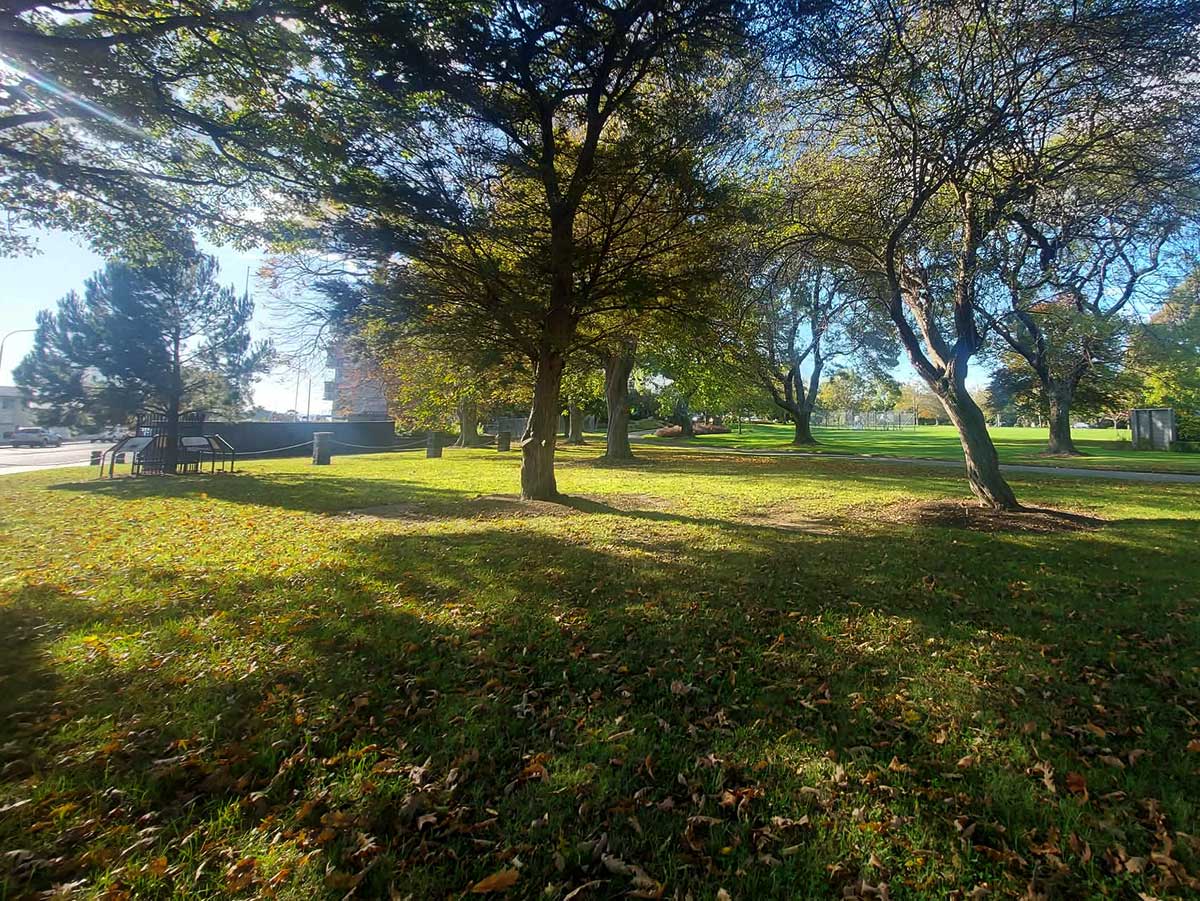
The tree planted by the roadside (to the left of this photo with a fence around it), reminds us about the tree and its history, and also what it means to honour the past and gift something to the future. We stop. We notice. We let something living draw us into stories that still very important for us to take notice of today.
It is amazing to stare into the piney needles and realise this tree is a living descendant, carrying memory.. literally... A cone collected. A tree grown from the seeds. A story carried forward. Memory, quite literally, planted for others. Honouring the past, gifting to the future...
Source note: This article summarises the history presented on the interpretive signs circling the Lone Pine in the Timaru Botanic Gardens. It is based primarily on the transcribed text of those signs, with supporting South Canterbury Museum material shared earlier in this
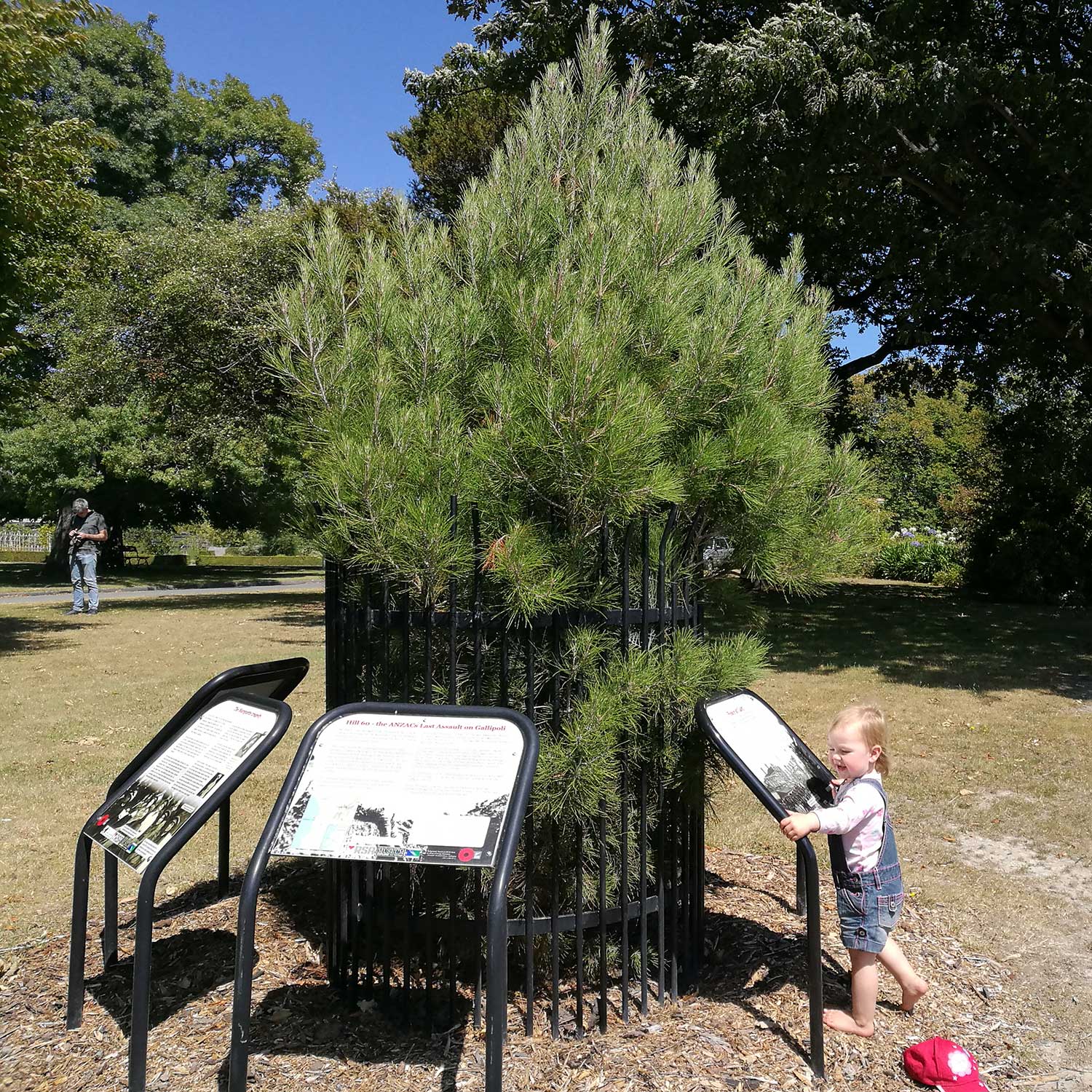
The signs that circle the lone pine tree present a local public history account of the war. They connect one memorial tree not only to Hill 60, but also to the Marquette tragedy, the Somme, Passchendaele, the final Allied advance of 1918, and the forms of celebration and remembrance that followed in South Canterbury. As a public history resource, their value lies in linking international events to local names, local casualties, and local memorial culture. Congratulations and thank you to those who pulled this information together. It is a v4ery informative and helpful resource.
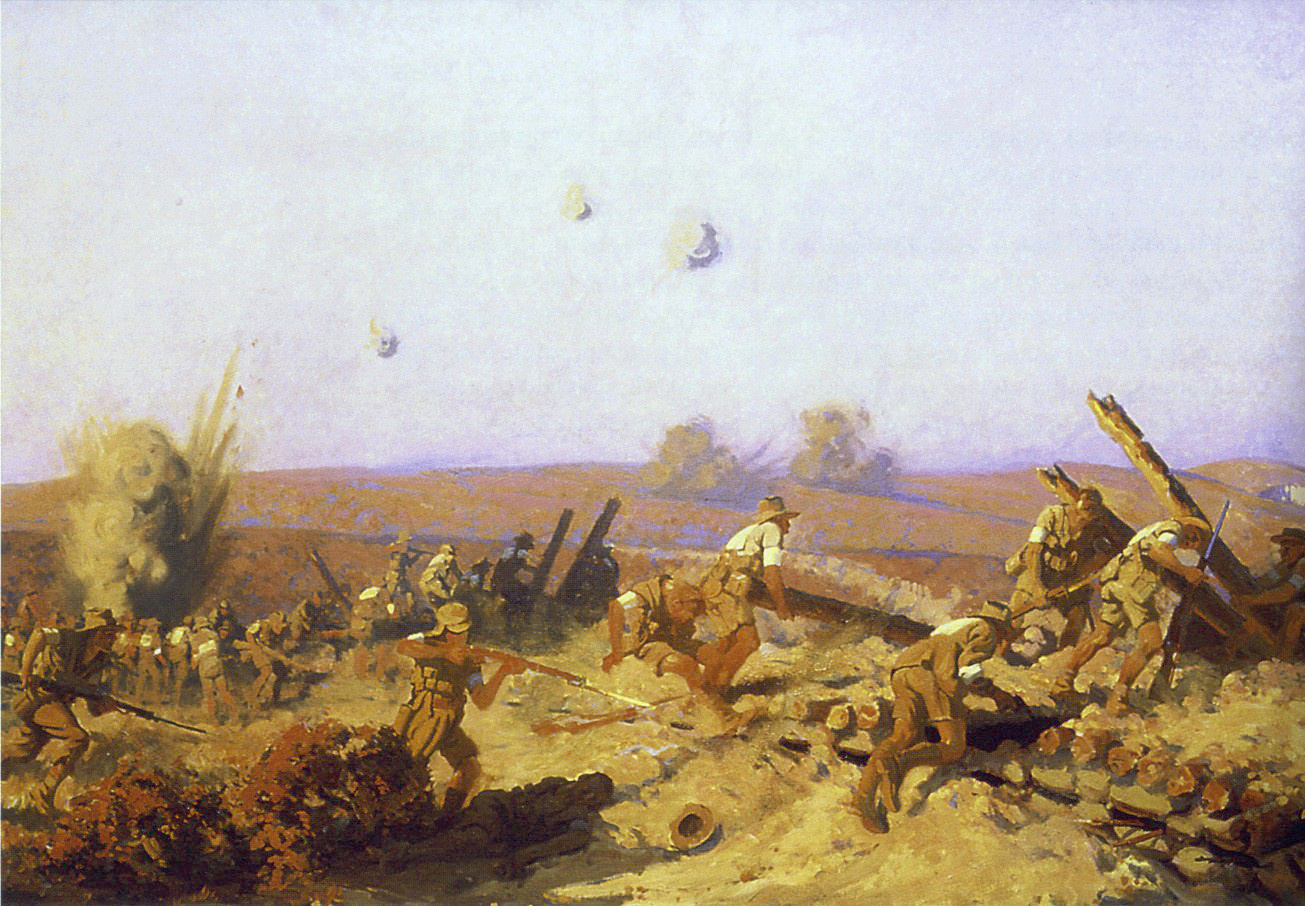
"The Taking of Lone Pine" by Fred Leist, 1921 By Gsl at English Wikipedia - Transferred from en.wikipedia to Commons., Public Domain, https://commons.wikimedia.org/w/index.php?curid=2352675
The signs turned one tree into a much bigger story... beyond the Lone Pine: the war history told on the signs in Timaru Botanic Gardens
Hill 60 and the end of Gallipoli
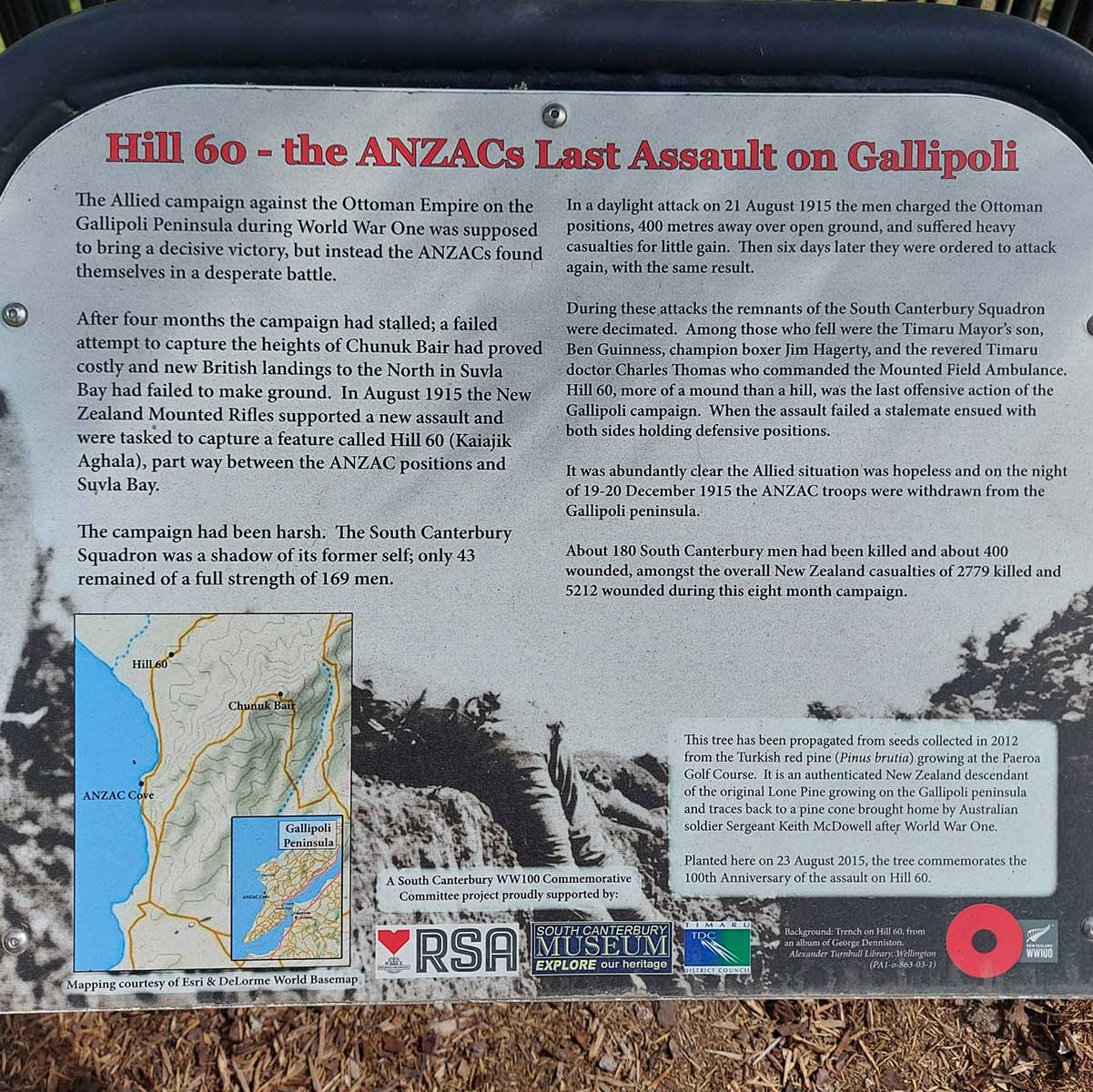
The first sign states that Hill 60 was the last offensive action of the Gallipoli campaign. It explains that after four months the Allied campaign had stalled, that the attempt to capture Chunuk Bair had been costly, and that the British landings at Suvla Bay had failed to make ground. In August 1915, the New Zealand Mounted Rifles were tasked with capturing Hill 60, between the ANZAC positions and Suvla Bay.
According to the sign, the campaign had already been harsh for the South Canterbury Squadron, which had been reduced to 43 men from a full strength of 169. It records that in a daylight attack on 21 August 1915, the men crossed 400 metres of open ground under Ottoman fire and suffered heavy casualties for little gain. Six days later they were ordered to attack again, with the same result.
The sign identifies Ben Guinness, the Timaru mayor’s son, champion boxer Jim Hagerty, and Timaru doctor Charles Thomas, who commanded the Mounted Field Ambulance, among those who were killed. It further states that when Hill 60 failed, the Gallipoli campaign ended in stalemate, and that the ANZAC troops were withdrawn from the peninsula on the night of 19 to 20 December 1915. It records that about 180 South Canterbury men were killed and about 400 wounded during the eight-month Gallipoli campaign, within overall New Zealand casualties of 2,779 killed and 5,212 wounded.
The same sign also explains the significance of the Timaru Lone Pine itself. It states that the tree was propagated from seeds collected in 2012 from a Turkish red pine at Paeroa Golf Course, and that it is an authenticated New Zealand descendant of the original Lone Pine at Gallipoli, tracing back to a pine cone brought home by Australian soldier Sergeant Keith McDowell after the First World War. It was planted on 23 August 2015 to commemorate the centenary of the assault on Hill 60.
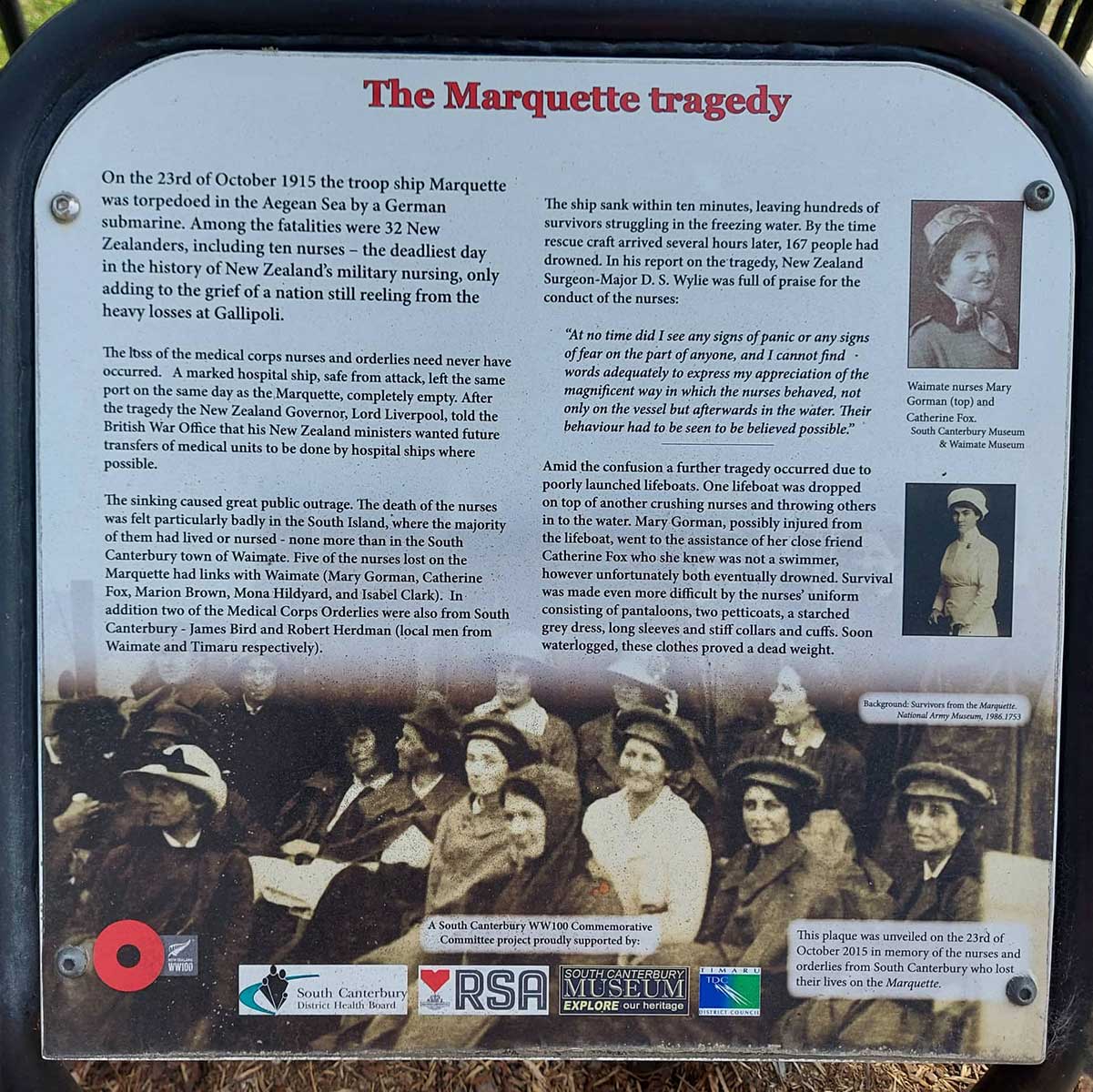
The Marquette tragedy
The second sign records that the troop ship Marquette was torpedoed in the Aegean Sea by a German submarine on 23 October 1915. It states that 32 New Zealanders died, including ten nurses, and describes this as the deadliest day in the history of New Zealand military nursing. The sign also notes that a marked hospital ship had left the same port on the same day, empty and safe from attack.
According to the sign, the loss was felt especially strongly in the South Island, and particularly in Waimate. It names five nurses with Waimate links who died: Mary Gorman, Catherine Fox, Marion Brown, Mona Hildyard, and Isabel Clark. It also names two South Canterbury medical corps orderlies who were lost: James Bird of Waimate and Robert Herdman of Timaru.
The sign states that the ship sank within ten minutes, and that 167 people drowned before rescue craft arrived. It quotes New Zealand Surgeon-Major D. S. Wylie praising the conduct of the nurses during the disaster. It also recounts that Mary Gorman went to help her close friend Catherine Fox, who could not swim, and that both drowned. The sign further notes that the nurses’ layered uniforms became dangerously heavy in the water.
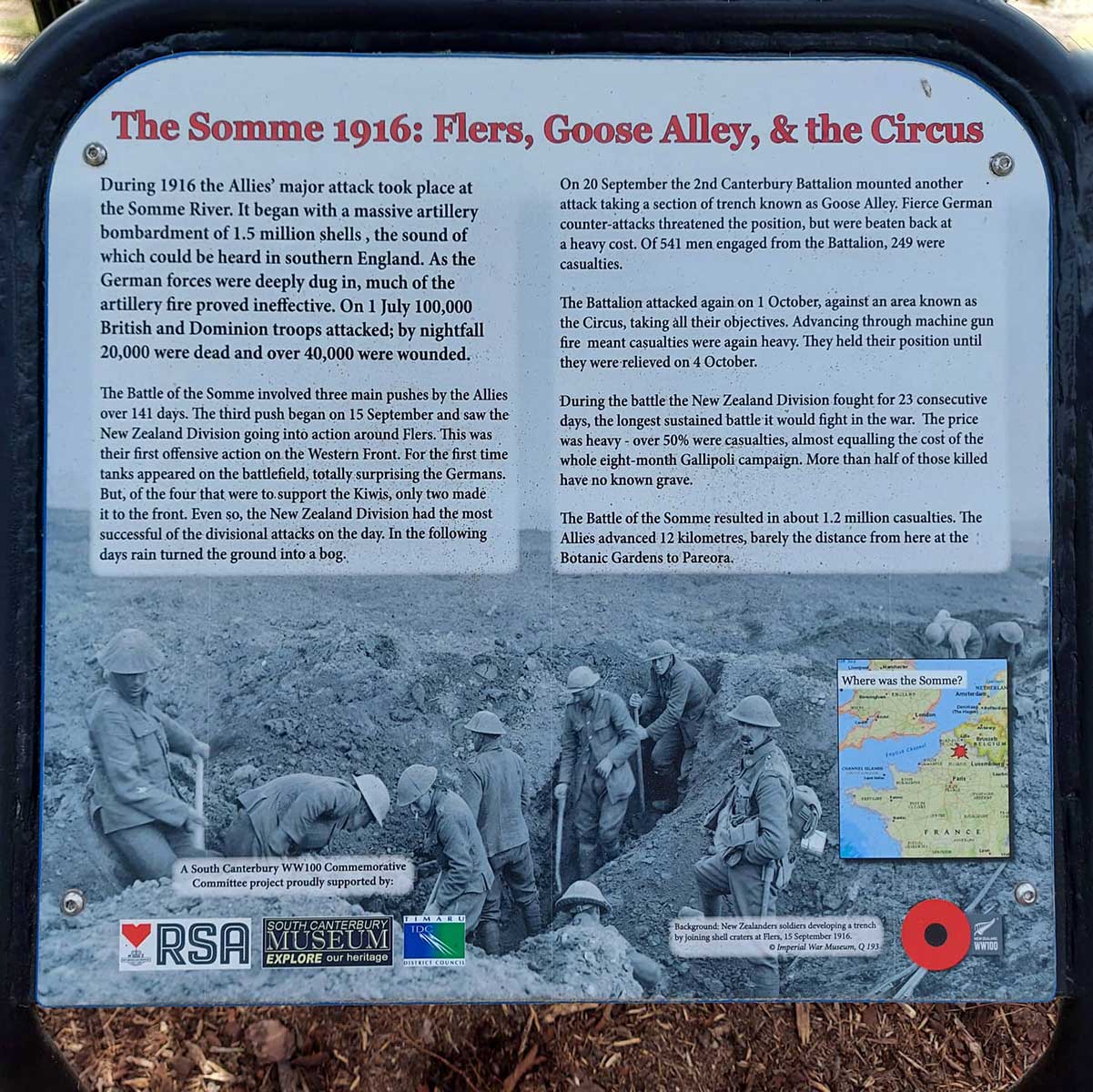
The Somme: Flers, Goose Alley, and the Circus
The third sign turns to the Battle of the Somme in 1916. It states that the battle opened with a bombardment of 1.5 million shells, but that much of the artillery proved ineffective because German forces were deeply dug in. It records that on 1 July 1916, 100,000 British and Dominion troops attacked, and that by nightfall 20,000 were dead and more than 40,000 wounded.
The sign states that the New Zealand Division entered the battle during the third major Allied push, beginning on 15 September around Flers. It describes this as the division’s first offensive action on the Western Front. It also notes that tanks were used for the first time, although only two of the four assigned to support the New Zealanders reached the front. Even so, the sign says the New Zealand Division had the most successful of the divisional attacks that day. Rain soon turned the battlefield into a bog.
The sign records that on 20 September, the 2nd Canterbury Battalion attacked and took a trench section known as Goose Alley. German counter-attacks followed, and of 541 men engaged, 249 became casualties. It further states that the battalion attacked again on 1 October at a position known as the Circus, took its objectives, and held the ground until relieved on 4 October.
According to the sign, the New Zealand Division fought for 23 consecutive days at the Somme, the longest sustained battle it would fight during the war. It states that more than half became casualties, almost equalling the cost of the eight-month Gallipoli campaign, and that more than half of those killed had no known grave. The sign gives the overall Somme casualty figure as about 1.2 million, while noting that the Allies advanced only 12 kilometres, a distance it compares to that from the Botanic Gardens to Pareora.
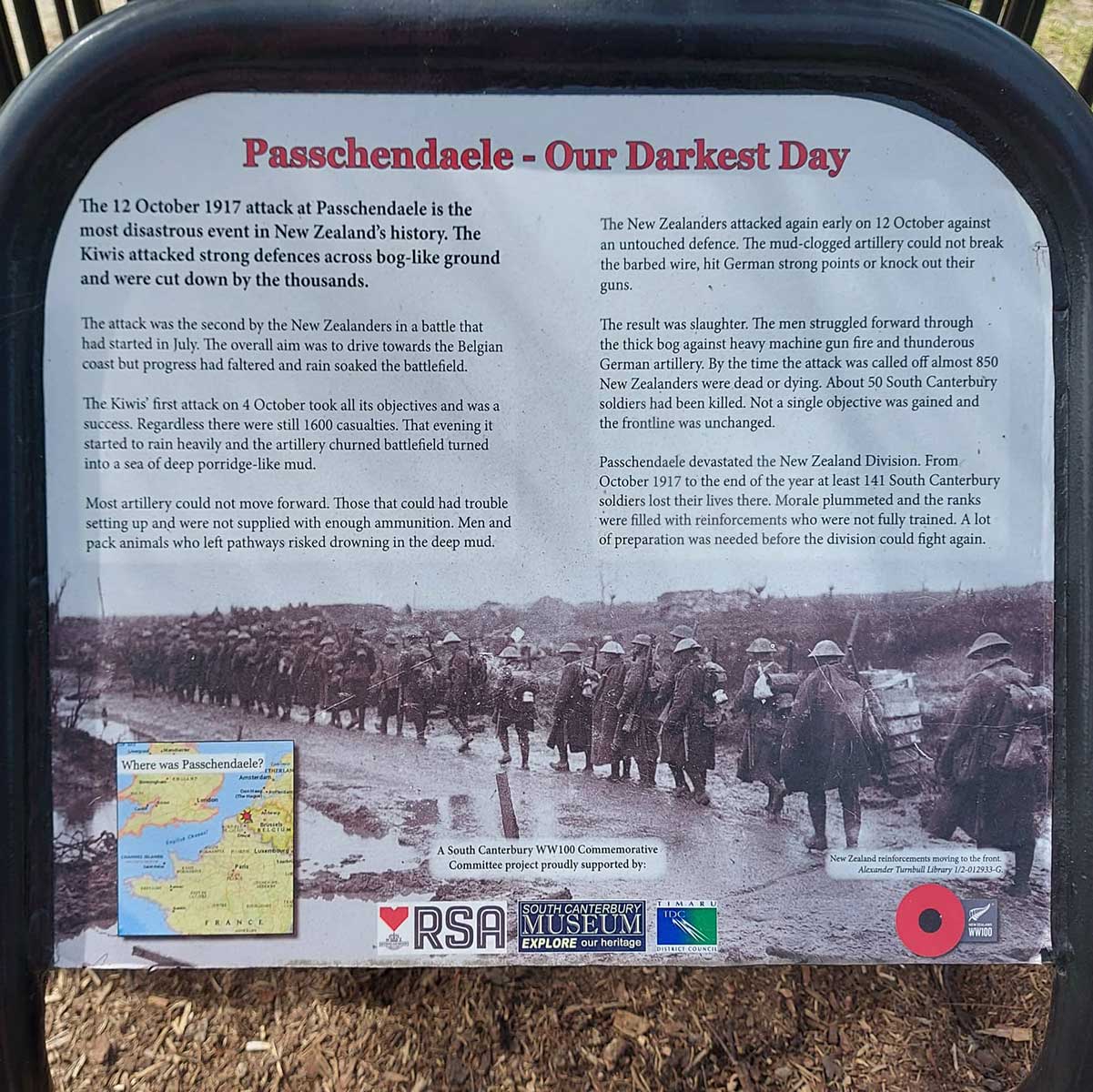
Passchendaele
The fourth sign describes the New Zealand attack at Passchendaele on 12 October 1917 as the most disastrous event in New Zealand’s history. It places the attack within the wider battle that began in July and states that the aim was to advance towards the Belgian coast, though progress had slowed and rain had soaked the battlefield.
The sign records that an earlier New Zealand attack on 4 October had succeeded in taking its objectives, although it still cost 1,600 casualties. It states that heavy rain and shellfire then turned the battlefield into deep mud, that artillery could not be moved forward effectively, and that even where guns could be moved, they were not supplied with enough ammunition. Men and pack animals who left the pathways risked drowning in the mud.
According to the sign, when the New Zealanders attacked again on 12 October, the artillery could not cut the barbed wire or destroy German strongpoints. The attack failed. The sign states that almost 850 New Zealanders were dead or dying by the time it was called off, including about 50 South Canterbury soldiers. It records that no objective was taken and that the frontline remained unchanged. It also states that at least 141 South Canterbury soldiers died there between October and the end of 1917.
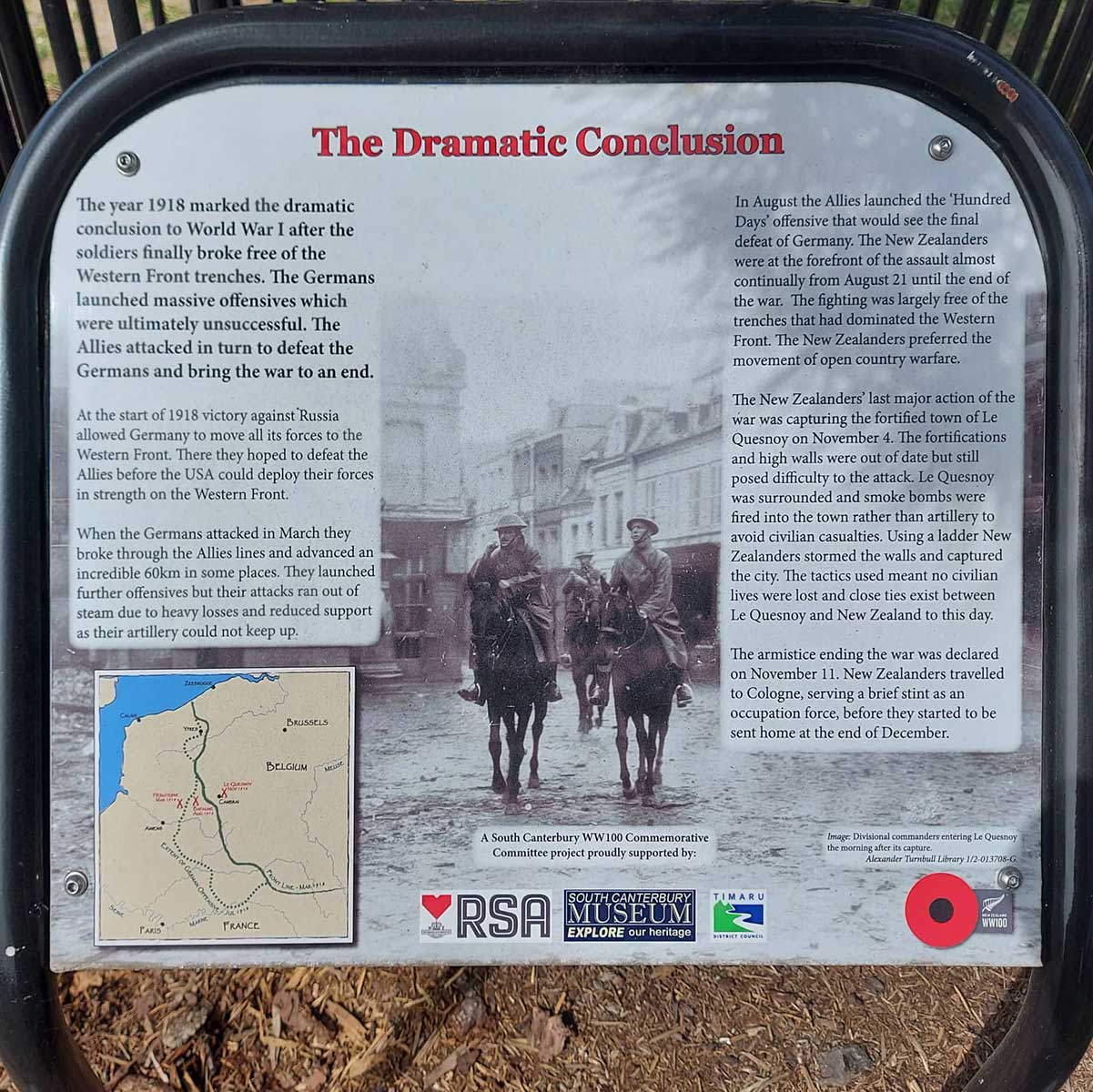
The final advance in 1918
The fifth sign turns to the final year of the war. It states that in early 1918 Germany moved all its forces to the Western Front after defeating Russia, hoping to win before the United States could fully build up its strength in Europe. According to the sign, German offensives in March broke through Allied lines and advanced as much as 60 kilometres in some places, but eventually stalled because of losses and lack of artillery support.
The sign states that in August the Allies launched the Hundred Days offensive, and that New Zealanders were heavily involved from 21 August until the end of the war. It describes this phase as more mobile than the trench warfare that had dominated the Western Front.
It identifies the capture of Le Quesnoy on 4 November 1918 as the New Zealanders’ last major action of the war. According to the sign, the town was surrounded and smoke bombs were used rather than artillery in order to avoid civilian casualties. New Zealanders then stormed the walls using a ladder. The sign notes that no civilian lives were lost and that close ties between Le Quesnoy and New Zealand continue to this day. It also records that the armistice was declared on 11 November 1918.
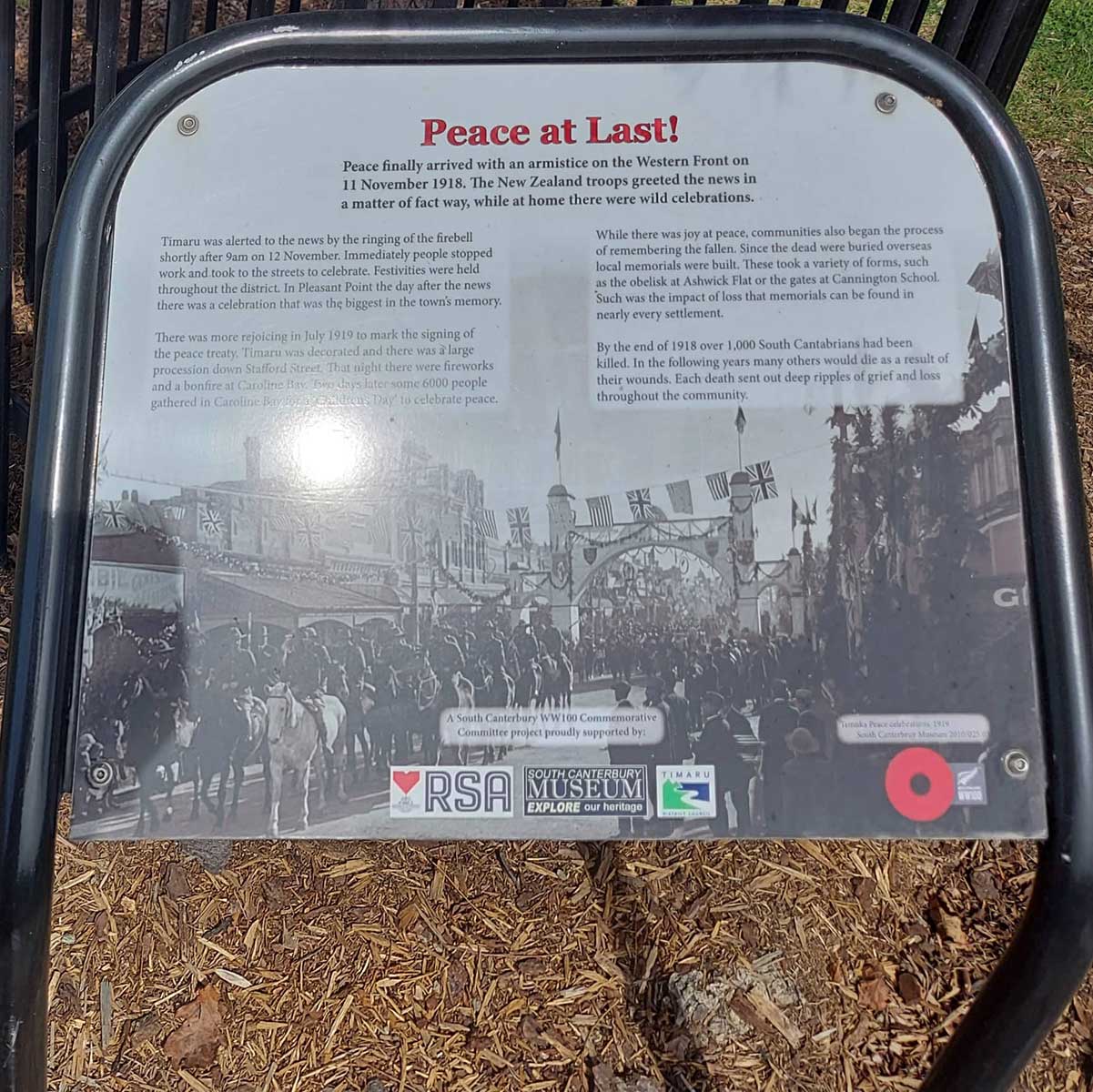
Peace and remembrance in South Canterbury
The final sign brings the story back to South Canterbury. It states that Timaru learned the news of peace shortly after 9 am on 12 November 1918 when the firebell rang. People stopped work and took to the streets, and celebrations were held throughout the district. The sign records that in Pleasant Point the following day’s celebration was said to be the biggest in the town’s memory.
It also records further celebrations in July 1919 after the peace treaty was signed. According to the sign, Timaru was decorated, a procession went down Stafford Street, there were fireworks and a bonfire at Caroline Bay, and two days later about 6,000 people gathered there for a Children’s Day celebrating peace.
At the same time, the sign makes clear that peace did not end the need for remembrance. Because the war dead were buried overseas, South Canterbury communities built memorials at home, including the obelisk at Ashwick Flat and the gates at Cannington School. The sign states that by the end of 1918 more than 1,000 South Cantabrians had been killed, and that others later died from their wounds. It concludes by noting the deep ripples of grief and loss across the community.
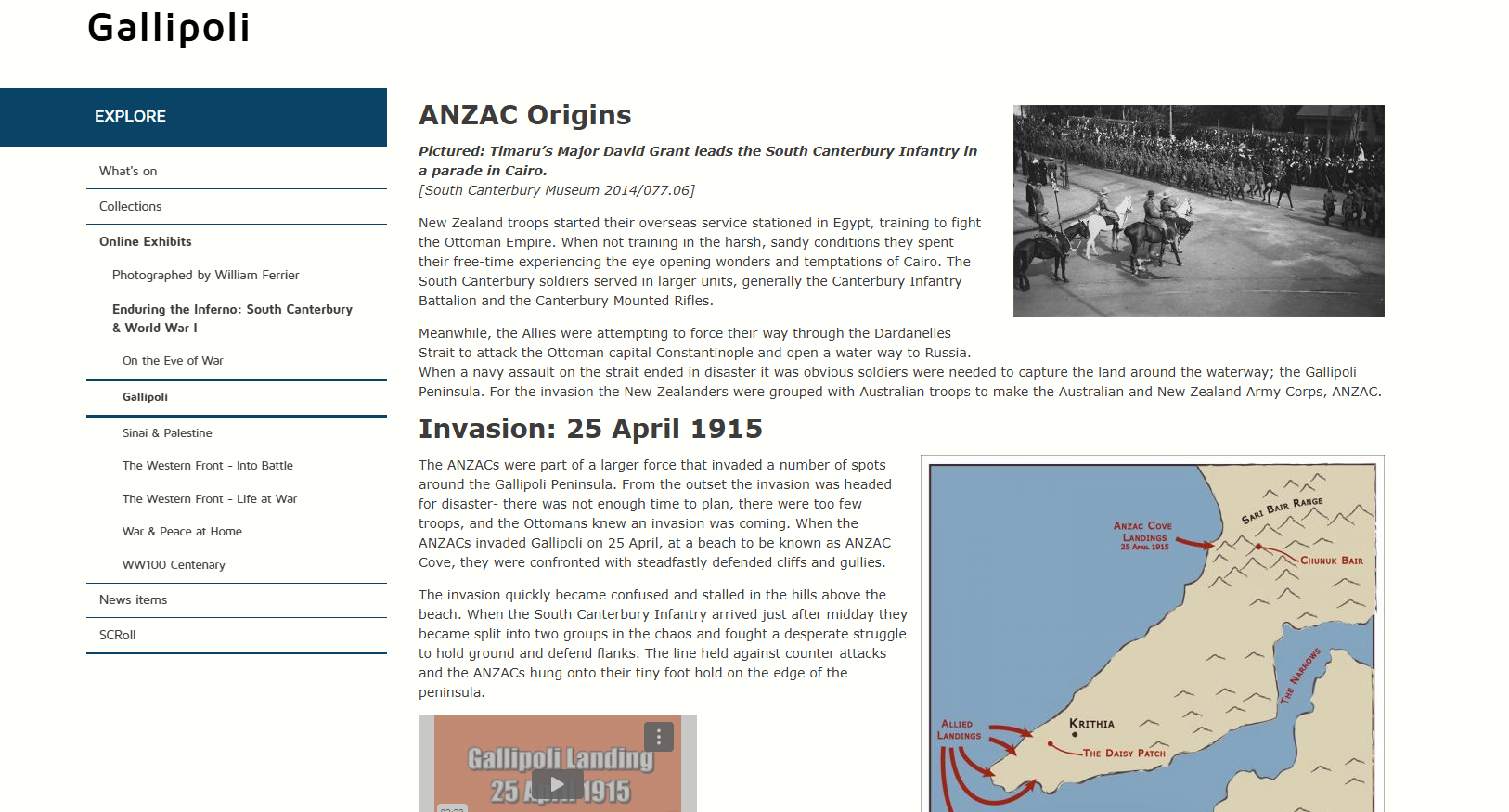
Screen shot of South Canterbury Museum website ANZAC information: https://museum.timaru.govt.nz/explore/online-exhibits/enduring-the-inferno-south-canterbury-and-the-first-world-war/gallipoli