
By Roselyn Fauth

"The White Rose of York is generally believed to have been a form of Rosa alba which grows wild all over the great Eur-Asian continent from the hedgerows of England to the roadsides of far Cathay. This old favourite can always be recognized by its pale glossy-green leafage and fragrant flowers. When Henry III of England married Eleanor of Provence in 1236 she had already adopted the white Rose as her emblem. In due course it was inherited by her son, who became Edward I, and he had it incorporated in the Great Seal of State." - The coming of the flowers https://babel.hathitrust.org/cgi/pt?id=coo.31924000404834&seq=28
Roses are a big part of Timaru District landscape. They are beautiful and smell amazing. Did you know they can also be the center of our customs and tradtions, symbolic, decorative and even theme wars.
A few years ago, my friend Kate O'Conner and I had the privilege of walking through the Timaru Botanic Gardens with the late Wayne McLay, a former gardener whose knowledge of the gardens was extraordinary. Wayne did not just know plant names. He knew why things were planted where they were, how the different areas worked together, and the stories quietly living inside them.
One of the most memorable stops on that walk was in the Species Rose Garden with the late Wayne McLay.
Wayne pointed out a rose and told us the story behind it. Of everything he shared that day, that story stayed with me. Lately, as I have been frantically saving old Facebook posts as blogs, I found myself thinking about that walk again and about Wayne, who sadly passed away a few years ago.
Read on to learn about the meaning behind the bower, the mystery of the white rose, and the Jacobite connections that give these old stories their deeper layers of romance, secrecy, and history.

rose /rəʊz/. noun. A prickly bush or shrub that typically bears red, pink, yellow, or white fragrant flowers, native to north temperate regions and widely grown as an ornamental. Red roses symbolize love and romance. Pink roses symbolize gratitude, grace, admiration, and joy. Yellow roses symbolize friendship. White roses symbolize innocence and purity. In the winter the roses are pruned and in summer they are regularly deheaded. A combination of careful hybrid selection, hygiene and nutrition ensures a magnificent display from the height of pre-Christmas early flowering to the second flush of blooms in January
“The rose doth deserve the cheefest and most principal place among all flowers whatsoever, being not only esteemed for his beauty, vertues, and his fragrant and odoriferous smell, but also because it is the honore and ornament of our English Scepter.” - JOHN GERARD 1596.
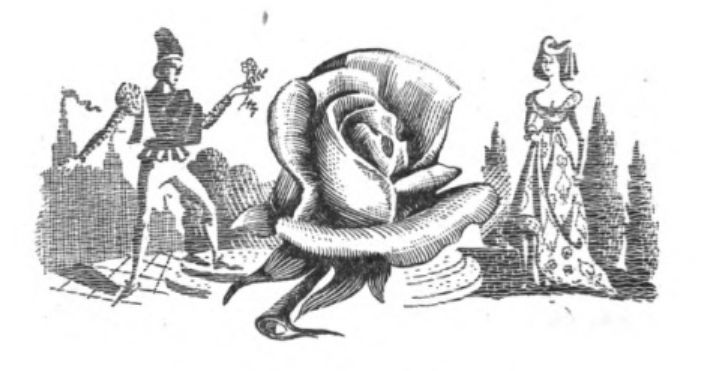
The coming of the flowers - Andersons Book - Rose Chapter
Relearning W. A. Anderson led me back to the very same rose
It also sent me back to the work of W. A. Anderson (Alexander Walter Clarke Anderson 1901-1986), a past Director of the Timaru Botanic Gardens from 1932 until his retirement in 1957, whose writing I have been relearning.
Anderson wrote many books while living in Timaru. He was married to married to Prudence Rose Collier and together they had three sons. His book "The Coming of the Flowers" has been digitised and is available to read in full online. When I came across his chapter, “The Honore of Our Scepter”, I was amazed to realise he was writing about the very kind of rose Wayne had pointed out to me in the Species Rose Garden. A Rose I have written about quite a few years ago, and forgotten a lot of the details.
Prompted by the book, I went back through my notes and read through Anderson's words, which explained that rose became the national flower of England by accident rather than by deliberate design.
Reading Anderson's book, I now realise there is so much more, deep story telling and history sharing in our Timaru Botanic Gardens.
The White Rose of York connects this garden to English history
What I learned was that this beautiful garden holds far more than colour and perfume. It also holds layers of history.
Anderson explains that the White Rose of York was generally believed to be a form of Rosa alba, and that over time it became associated with the House of York. He also traced the red rose associated with Lancaster, and described how the Tudor Rose later came to symbolise the union of the two houses.
Rosa alba grew widely across Europe and Asia, from England to “Cathay”. (Rosa mundi belongs to the Gallica group).
The Wars of the Roses changed history and shaped the Tudor rose
Reading further, I was reminded just how dramatic that history was. The Yorks and Lancasters were branches of the same Plantagenet family. The conflict we now call the Wars of the Roses grew out of dynastic rivalry and instability after the Hundred Years’ War, involved repeated shifts in power, and reached its climax at Bosworth Field in 1485, when Henry Tudor defeated Richard III and began the Tudor dynasty.
Henry VII then adopted the Tudor rose to represent the union of York and Lancaster. Historians also point out that neither side used a rose as its only symbol throughout the wars, and much of the familiar red rose and white rose imagery was strengthened later through tradition and writers such as Shakespeare.
The White Rose was associated with Eleanor of Provence before her marriage to Henry III of England in 1236. Eleanor’s son, Edward I, inherited the White Rose emblem, and it was Edward who incorporated the White Rose into the Great Seal of State.
The Red Rose of Lancaster was the emblem of Edmund, the younger brother of Edward I and the first Earl of Lancaster. Around 1277, Edmund travelled to France on behalf of his father and is said to have brought a new red rose back to England from France. This rose is said to have been brought from Damascus by the Comte de Brie after the Crusades.
The rival symbols of the white rose and red rose became associated with the houses of York and Lancaster, and supporters of these houses wore rose symbols on their arms and clothing.
The dynastic struggle between their descendants became known as the Wars of the Roses. The conflict lasted for much of the later fifteenth century and it was said to have cost nearly one 100,000 English lives. the conflict was resolved through marrage of Elizabeth of York and Henry Tudor... as a political settlement. Around that same period, a rose bearing both red and white blooms reportedly appeared in a Wiltshire monastery garden. This rose became known as the York and Lancaster Rose.
The rise of the Tudor dynasty made the Tudor Rose the badge of the new royal house and the Tudor Rose became associated with England as a national emblem - a symbol of union.
This rose was grown in grown in English gardens long before Shakespeare. And as we know there are many famous lines scribed by Shakespear inspired by his garden and particuarly his roses. Wayne told me that this York rose is said to have grown outside his window when he wrote Romeo and Juliet.
Now just when I thought the royals story and link to the roses had met its final chapter of the story, I went on to read in Anderson's book that the drama of the Tudor rose didn't stop there.
Henry II of England came to the throne in 1154, aged 21. He later married Eleanor of Aquitaine for political reasons. Henry had a mistress called Fair Rosamund. She was the daughter of Sir Walter de Clifford. According to legend, Queen Eleanor became furious at Henry’s devotion to Rosamund.
So the Queen is said to have bribed a servant at Woodstock Castle to lead her to Rosamund’s bower.
If you dont know what a bower is, imagine a private, leafy arbour or garden nook. These romantic garden retreats were often incorporated into the landscape design within the castle grounds.
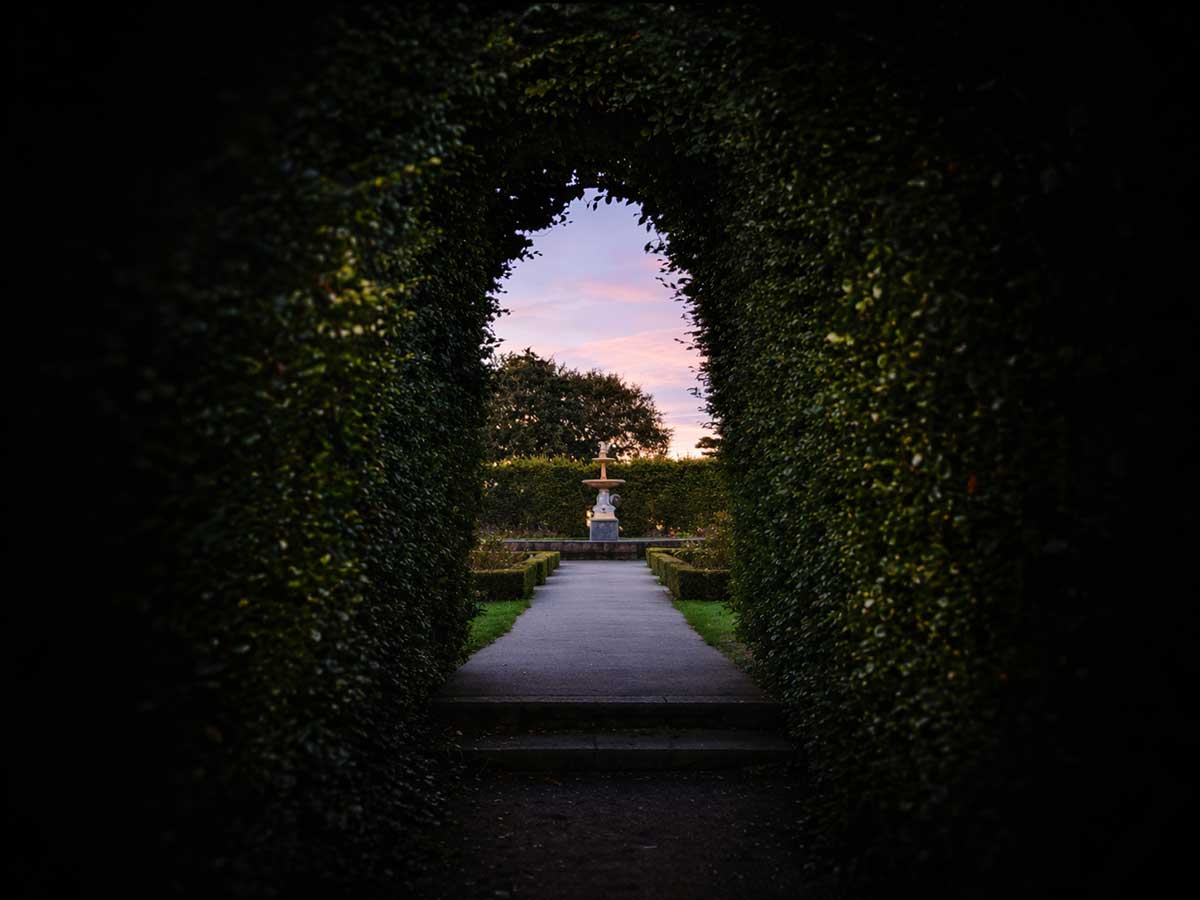
The Anderson Rose Garden from the southern arch at dusk April 2026 - Photography By Roselyn Fauth
Rosamund must have got wind of this, as she tried to hide in a maze while doing embroidery. The story goes that a thread from her needle supposedly unwound and revealed her hiding place. They say the Queen then forced Rosamund to drink poison.
Henry ordered Rosamund’s body taken to Godstow Nunnery near Oxford, and her coffin was heaped with her favourite roses before burial. It is said that Henry ordered roses to cover her grave every year on the anniversary of her death.
Anderson's book says it cannot be proved that modern Rosa mundi is identical to Rosamund’s historical rose. - But it would be pretty cool to think it was hey!
The next fun fact I learned from Anderson's writing was the link to the roses and the Jacobites
The white rose had long associations with royalty, especially the old Rosa alba with links to the Royal House of France. When Mary, Queen of Scots married the Dauphin of France, she gained the right to wear that royal white rose. Mary was a Stuart, so the white rose then became associated with the House of Stuart. She presented a silver rose to the poet who composed the best festal poem for the occasion, and it this poem that was said to be the first known association of the white rose with the House of Stuart.
Later, when the Stuarts were driven into exile, their supporters, the Jacobites, used the white rose as a badge of loyalty and recognition.
The Jacobites were supporters of the exiled Stuart royal family in Britain, especially in Scotland, Ireland, and parts of England, who wanted the Stuarts restored to the throne after James II and VII was deposed in 1688.
The white rose later became one of their symbols of loyalty to the Stuart cause.
So the rose was not important because the Jacobites discovered a special flower. It mattered because it became a political emblem.
The rose had an old meaning of secrecy, from the phrase sub rosa meaning “under the rose”.
Since Jacobite activity often had to be discreet or secret, the white rose may also have worked as a symbol of quiet allegiance among supporters.
Now recently I have been on a side quest about ceiling roses... I know... sometimes I get on a random side quest. but I have learned to embrace the history hunt twists, turns and rabbit holes, becauase that is where I can find context to the main story I am unravelling... so bare with me.
There was a Greek God linked to secrecy. the idea was if you had something to share in confidence, you could hold a rose above your head and the words you uttered would then be kept secret. - sub rosa meaning “under the rose”. The greeks then incorporated roses into their ceilings back in the ancient days. When important meetings were held under a ceiling of roses it was symbolic to remind people that they were expected to keep the information in confidence. This was adopted by royals... and then in Victorian and Edwardian times, evolved into ceiling roses... a decorative ceiling plaster detail that ususally circled a light fitting. Back in the day, lights were powered by gas, and so the ceiling roses not only lookked regal, but they helped to conceil the pipes and inner workings of the gas lights. I love this fun fact, and often find myself craining my neck to see if important rooms in historic buildings have these ceiling roses that link back to royals and ancient greeks.
Anyway back to Anderson, and his writing...
The Greeks were believed to have planned the battle secretly in a bower of roses near the Temple of Minerva. Because of this, the rose became a motif in carvings above confessionals and private rooms.
Anderson writes, A further rose legend explained the origin of pink roses when Eve was banished from Eden she was allowed to take one flower. She chose a white rosebud. The rosebud supposedly blushed from the compliment.
It is from this legend some say the pink roses came to exist. Pink roses were described as still being acclaimed the Queen of Flowers.

I took these photos to show you the Rose Window and the tudor rose symbols that are in Timaru's St Mary's church. This is an Anglican church, and links back to the colonisation days where Christchurch was planned to be an Anglican colony with close links to Oxford university and the Anglican church.
The rose window at St Mary's Church is nicknamed angels on bicycles. West Window or Rose Window is beautiful stained glass and is best viewed from the top of the church's chancel steps. Wheel shaped in design, it features a central light with Christ seated on a rainbow surrounded by angels. 1900 Bishop of the Diocese unveiled a beautiful window erected to the memory of the late Edward Elworthy, and preached a sermon appropriate to the occasion.
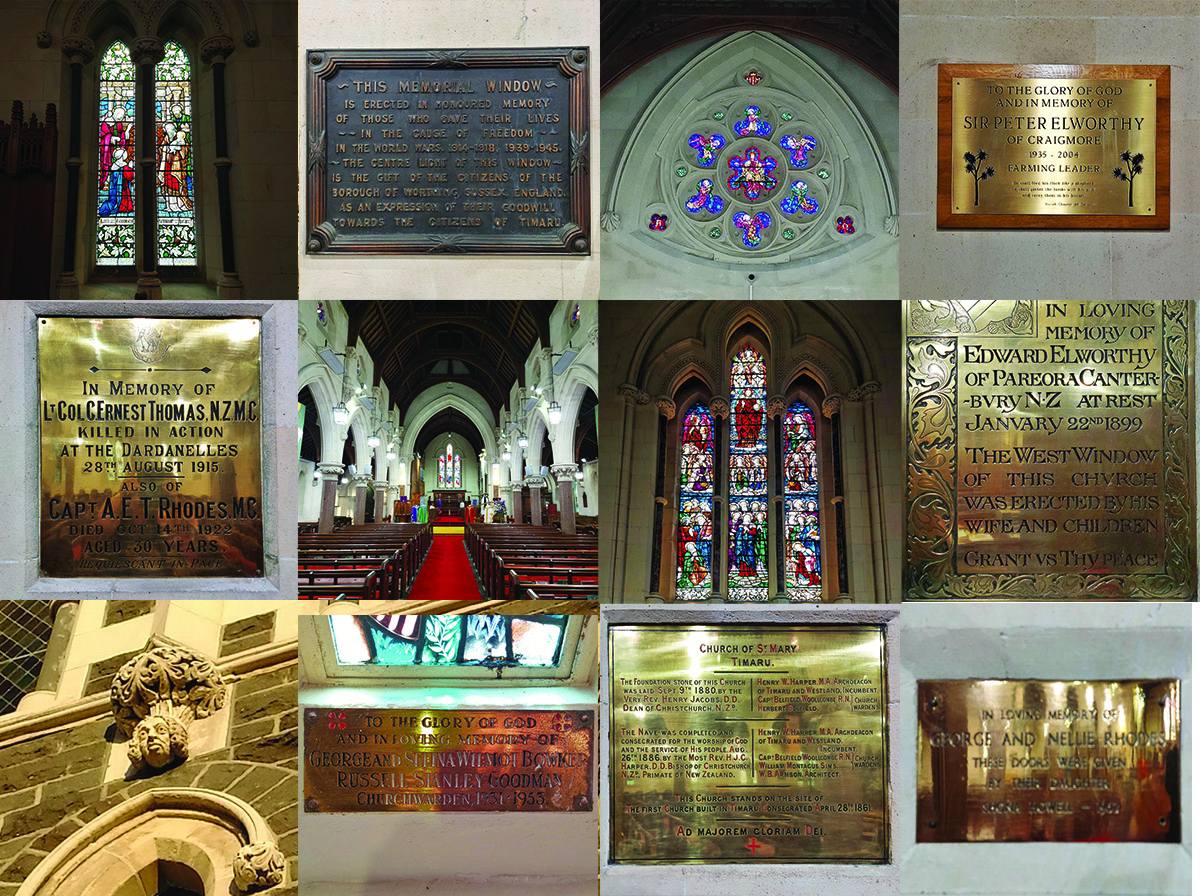
The church was designed by Christchurch architect William B Armson, and constructed in local basalt rock, Oamaru stone, and roofed with Welsh slate. The internal pillars are made from Aberdeen granite used as ballast in ships. The Benvenue Memorial uses the same Scottish stone. St Mary’s Church is one of the few English Gothic Revival buildings in the Southern Hemisphere.
I feel for William Armson, the architect who designed it. He died before the church was completed and never got to see it come together. Many say it is a stunning example of Gothic Revival architecture and Armson’s best work. The building is a Category 1 Heritage Building, so its of national significance as well as local.
The foundation stone for the current stone church was laid in 1880. The church was designed in the Gothic Revival style, incorporating local bluestone and Oamaru limestone, with Welsh slate roofing. The nave was completed in 1886, with the chancel, tower, and vestries finished later, in 1909 to 1910. The distinctive tower was inspired by Magdalen College, Oxford.
Many of the people who will have filled these pews at St Mary’s were not all university graduates or landed elites. They were part of families who were shaped by hard work rather than entitlement. They were like many Oxford-connected families who first settled in Christchurch or Lyttelton, then later moved to Timaru as the town developed.
There are many plaques that recognise families who donated to the church to enable these to be purchased.
The Tudors, the fights for the throne, and then the right to divorce… there is so much to learn through Timaru’s Anglican Church. Churches have and still are a social and cultural anchor for a particular community finding its feet in a new land. They provided something steady and recognisable from their old to their new home.
I don't have a background in faith, so I don't really connect to the spiritual side of churches. And while I know that we usually don't talk about politics, finance or faith in public for good reasons... I can see how the church was and is more than the religion. How like roses, it helps us reflect on the past, where we have come from, who we are today.
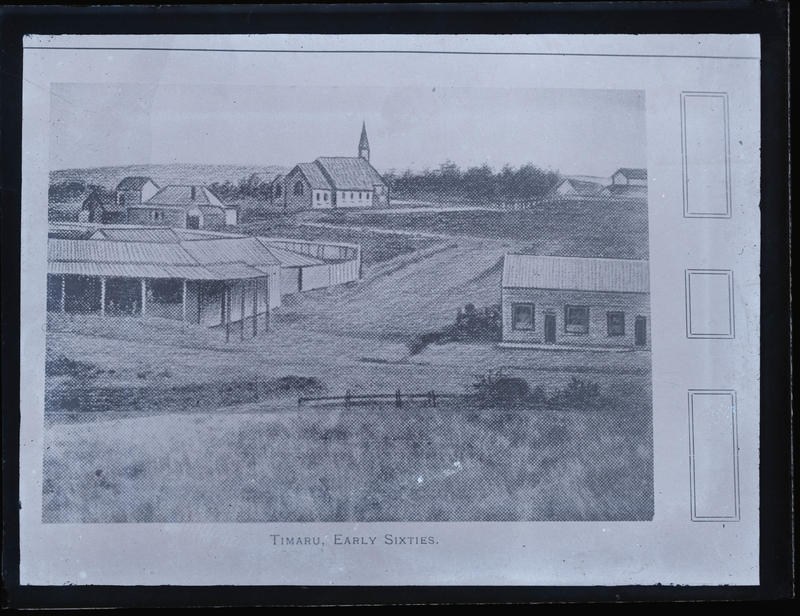
Here's a letter by Archdeacon Harper in 1881...
"We have now made a successful start in regard to our parish buildings. The vicarage is complete, a well designed structure in brick; close by it a spacious School Church, with room for five hundred, to be used as a Church until the completion of the nave of St. Mary's. Liberal subscriptions have come in, and a design for the new church accepted, but not without much opposition. I was anxious to take advantage of the general enthusiasm shown by Church people, and to get their consent to a plan of the best possible style and material, and of sufficient size to provide for an increasing population, which need not be completed at once. In Westland I came across a young English architect, W. G. Armson, who built some wooden churches for me, now in Christchurch, where he has established a good business. The Vestry agreed to my proposal to employ him and, after some time, during which I had many consultations with him, he completed a very fine design in Early English style, of which the Nave, with accommodation for seven hundred, would suffice for some time to come. In Timaru we have, close at hand, quarries of a purple grey dolerite, excellent for the main fabric, very hard, but taking a fine finish when hammered, and, at Oamaru, within fifty miles, a granular limestone, of creamy colour, easily worked, for the interior." - Archdeacon Harper December 10th, 1881
According to a newspaper article, The wooden step at the foot of the grille was the only visible piece still surviving from St Mary’s original church, which had been pulled down in 1880 to make way for the present building. That made it a rare and meaningful link with the parish’s earliest years, is a reminder that even when buildings change, parts of their story can remain, and that it is important to be thoughtful by what you change in a heritage building like this. https://aorakiheritage.recollect.co.nz/nodes/view/4138
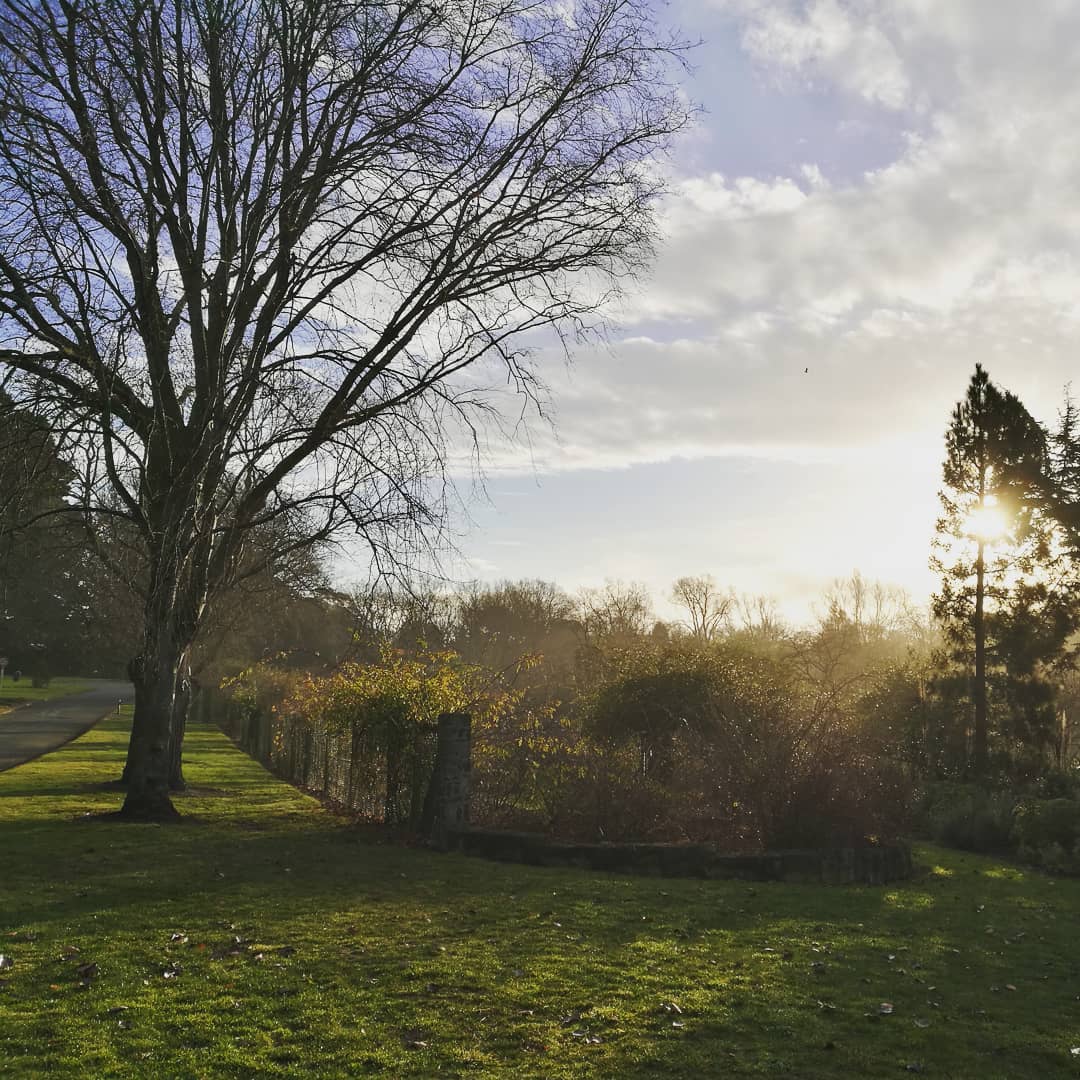
Species rose garden Timaru Botanic Garden - Roselyn Fauth
The Species Rose Garden matters because it holds stories as well as plants
That is what makes the Species Rose Garden so important. It is not just a pretty corner of the Botanic Gardens. It is a place where botany, memory, storytelling, and history meet. A rose there can connect Timaru to medieval England, to royal symbols, to old gardening books, and to the people here who cared enough to pass those stories on.
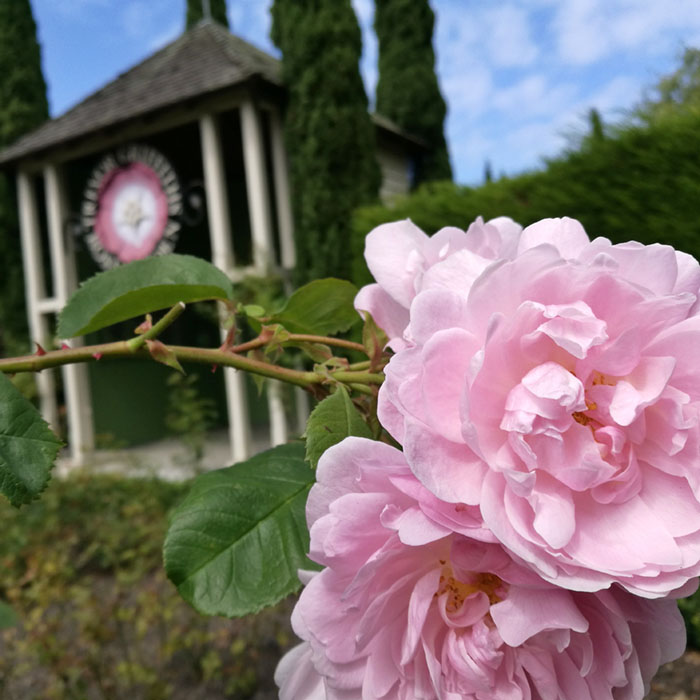
Rose Garden Caroline Bay - Roselyn Fauth
Wayne helped people look more closely and see more deeply
Wayne did that so generously. He helped us look more closely. He made the gardens feel richer, more layered, more alive. And now, thanks to Anderson’s book, I understand even more of what he was showing us that day.
Go and see if this living piece of history is still blooming in Timaru
So next time you are in the Timaru Botanic Gardens, have a look in the Species Rose Garden and see if you can find it. Is that rose still growing there?
I hope it is.
Because if it is, then a little piece of medieval history is still quietly blooming in Timaru.

https://wuhoo.nz/roses/family-fun-fact-sheet-2
Roses are special flowers all over the world, celebrated for their beauty, and symbolism across cultures and history. Their story spans millions of years, connecting the natural world with history, art, human innovation, and economics.
- There are fossils of plants related to roses dating back 35 million years. You can see the wild evolution of roses and the genetic building blocks for our modern-day roses at the Species Rose Garden in Timaru.
- 3000 BCE: Some of the first known domesticated roses were grown for rosewater, medicine, and even confetti.
- 500 BCE, Confucius noted roses in the Imperial Palace, revealing China as the original source of yellow roses with no European wild counterparts.
- 500-1500 In medieval times (500-1500), roses suspended from council chamber ceilings signaled secretive matters, the origin of the ceiling rose.
- 1096 and 1291: The Crusades brought roses to Europe from the Middle East.
- 1100s: Medieval monks grew roses for medicine, spiritual purposes, and as symbols of purity, using rose petals for remedies and rosehips for vitamin C.
- 1640-1680s: The Dutch East India Company (VOC) rose imports sparked competitive Dutch breeding, creating diverse new rose varieties for trade.
- 1799: Napoleon Bonaparte’s wife, Josephine had botanists, explorers, and diplomats collect and send rare rose varieties to her garden at Malmaison.
- 1837-1901: Victorian times, rose breeding and collecting grew in popularity across Europe. Roses were symbols of the age’s taste and elegance, with many collections appearing in the gardens of the British aristocracy.
- 1901-1910: Edwardian rose gardens were status symbols in upper-class.
- 1960s: David Austin introduced a new class of roses combining the old-fashioned fragrance and look of antique roses with the repeat flowering ability of modern roses, revolutionising rose breeding and roses popularity.
- 1960s: Trevor Griffiths was a local rose breeder, author, and international expert. Over his 50-Year career he collected and bred an internationally important rose collection. 1,200 Roses bushes were budded and grafted for a rose garden at Caroline Bay, championed by volunteers and gifted to the people of South Canterbury to be cared for by the Timaru District Council.
Full Text from Andersons "The Coming of the Flowers"
Public Domain, Google-digitized.
https://babel.hathitrust.org/cgi/pt?id=coo.31924000404834&seq=7
“The Honore of Our Scepter”
Accident rather than design lead to the adoption of the Rose as the national flower of England. The White Rose of York is generally believed to have been a form of Rosa alba which grows wild all over the great Eur-Asian continent from the hedgerows of England to the roadsides of far Cathay. This old favourite can always be recognized by its pale glossy-green leafage and fragrant flowers. When Henry III of England married Eleanor of Provence in 1236 she had already adopted the white Rose as her emblem. In due course it was inherited by her son, who became Edward I, and he had it incorporated in the Great Seal of State.
The Red Rose of Lancaster was the device of Edward’s younger brother, Edmund, who became first Earl of Lancaster. Sometimes about 1277 Edmund was sent by his father, who had acquired Champagne as a dowry, to quell a riot and avenge the death of the Mayor of Provins. Edmund spent three or four years in France and on his return to England brought home a new red Rose. This plant had been brought from Damascus by the Comte De Brie on his return from the Crusades. Edmund was so proud of this red Rose, which he thought so much better than his brother’s white one, that he adopted it as his emblem, and thus it came about that the two sons of Henry III had Roses as their devices and, as was the fashion of the day, they and their retainers had them enamelled on their arms and embroidered on their clothes.
When their descendants became rivals for the Crown of England during the latter part of the fifteenth century they carried out a long, futile conflict that became known as the Wars of the Roses. Little seems to have been recorded as to how the trouble began, and no one knows how much truth there is in Shakespeare’s story that it was caused by a quarrel between the Dukes of York and of Somerset which took place in the Temple Gardens in London in 1455. Richard, Duke of York, evidently picked a white Rose and called on those who supported him to do likewise, thereby causing Somerset, who was one of the King’s strongest supporters, to pluck a red Rose and urge his followers to do likewise. Such may have been the beginning of a civil war that rent the country for nearly a generation and is said to have cost the lives of nearly one hundred thousand Englishmen.
A compromise was finally reached by the marriage of Elizabeth, Duchess of York, to Henry Tudor, and about that time we are told that a new Rose appeared in a monastery garden in Wiltshire, bearing both red and white blooms. This was regarded as a portent of the times and became popular as the “York and Lancaster Rose,” and was described as such by Monardez in 1551. According to his description it had “irregularly shaped flowers, that may be pure red or pure white, or part red and part white. Flowers of these different colourings may, and often do, appear on the bush at the same time.”
The rise of the Tudor Dynasty brought the Tudor Rose as the badge of the new Royal House and ultimately of England. This Rose was first depicted as a sort of double Rose with a red inner row and a white outer row of petals, signifying a conventional union of the devices of York and Lancaster. Since then there have been some slight modifications, but the national flower has long been accepted as a red Rose.
The true York and Lancaster Rose is considered a variety of the old Damask and has the characteristic scent of the tribe. It should not be confused with the older and perhaps better known Rosa mundi, which is one of the Gallica clan. This variety is probably one of the very first of the “old-fashioned Roses,” having been grown in English gardens long before the days of Shakespeare, long before the brawl in the Temple Gardens, and even before the fourteenth century when Chaucer knew it and wrote of its “floures partie white and red.”
Rosa mundi differs from the York and Lancaster in having two colours present in the individual petals which may be pale pink with irregularly striped and blotched markings that flush the purest white background to pink or deep red and give the blooms their peculiarly mottled appearance. There is little doubt that this form did not originate in England, and it may have died out in English gardens for a time, but there is an excellent drawing of it in the library of the Jardin des Plantes, Paris, dated 1640, and although Parkinson does not mention it in his Paradisus his description of the York and Lancaster obviously includes Rosa mundi, and it would appear that he lumped them both together. He says, “the one half of it is sometimes of a pale whitish colour, and the other of a paler damask colour than the ordinary; this happeneth so many times and sometimes also the flower has divers stripes and marks on it, as one half white or striped with white, the other half blush or striped with blush, sometimes also all striped with blush, sometimes also all striped or spotted over, and at other times no stripes or marks at all as nature listeth to play with varieties in this as in other flowers. Yet I have observed that the longer it abideth blowne open in the sun, the paler and fewer stripes, markes, and spots will be seene in it; and the smell thereof is of a weak damask rose scent.”
Although it was described by L’Obel in 1581 as Rose gallica versicolor and is still known by that name, it has been grown in English gardens since the twelfth century as Rosa mundi because of its association with Fair Rosamund, who was the mistress of Henry II of England.
Henry Plantagenet fell in love with Rosamund Clifford, daughter of Sir Walter de Clifford, several years before the fateful battle of Wallingford, in 1154, brought him to the throne at the age of twenty-one. When he had made sure of his affairs at home he consolidated his position by a State marriage with Eleanor of Aquitaine, the greatest heiress of Europe, who had sovereignty over all of south-western France from the River Loire to the Pyrenees. This did not interrupt his devotion to Rosamund, a state of affairs that stung the Queen to a fury so that she determined to get rid of her rival. As with most of these old legends it is difficult to arrive at the truth, but it appears
that the Queen bribed one of the servants at Woodstock Castle to show her into Rosamund’s bower where the girl awaited the King. Fair Rosamund saw her coming while engaged at her embroidery and ran to hide in the maze. Apparently she thrust her ball of silk into a pocket but left the end attached to the needle, and as she ran the thread unwound and led the Queen to her hiding place. The angry Queen forced Rosamund to drink poison and when Henry found her body he was prostrated with grief. He ordered the body to be taken to the Godstow Nunnery near Oxford, where the coffin was heaped high with her favourite Roses before burial. The tradition goes on to say that the King left instructions that each year, on the anniversary of Rosamund’s death, the grave was to be covered with Roses. While it is now impossible to declare with certainty that the Rose we grow as Rosa mundi is identical with the historical variety, it is pleasant to think that it may be that same old flower, a Rose that has remained unchanged all through the eventful years since it used to bloom by Fair Rosamund’s bower, in the tiny garden she tended inside the walls of Woodstock Castle.
The White Rose of the Jacobites has never been satisfactorily explained and still remains something of a mystery. A few writers believe that it may have been any white Rose that happened to be growing in the garden, but most authorities think that it may have been the old Rosa alba which has for many centuries been associated with the Royal House of France. When Mary, Queen of Scots, married the Dauphin of France she acquired the right to wear the royal Rose and she presented a silver replica to the poet who produced the best festal poem on that occasion. So far as we know this is the first time the white Rose was associated with the House of Stuart, and when the family went into exile three or four generations later it became one of the signs used as a means of identification among those who gave their allegiance to the “King over the water.”
On the other hand the Rose has been the emblem of silence ever since the Greeks defeated the Persian king, Xerxes, in 479 B.C. The Greeks are believed to have planned the battle in the greatest secrecy, in a bower of Roses near the Temple of Minerva. As a result the Rose became one of the chief motifs in the carvings above confessionals and apartments where influential people met to transact matters of importance, as a reminder that the confidences received there should not be repeated elsewhere, but were in fact sub rosa. Thus it may be that the White Rose of the Jacobites was merely a symbol to remind the initiates that only “under the rose” could the work of the cause be brought to fruition.

Anderson Rose Garden. This rose garden at the Timaru Botanic Gardens is named after Anderson. Photography by Roselyn Fauth.
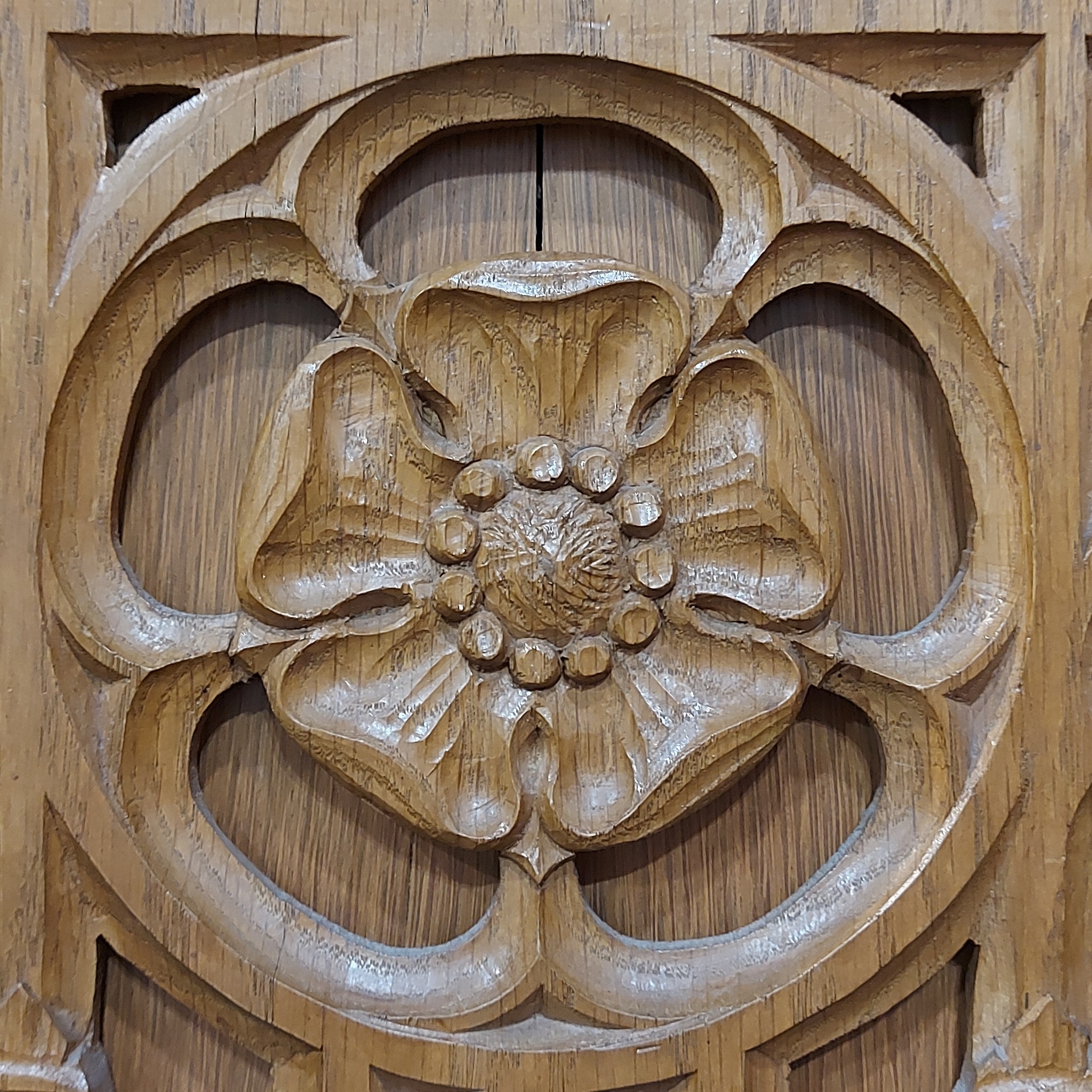
The church contains notable carved oak woodwork including: high altar, chapel altar, war memorial screen, organ case, pulpit, Elworthy memorial screen and the choir stalls. Tudor Rose at St Marys Anglican Church in Timaru - Photos Roselyn Fauth.
Most of this carved oak work was designed by Mr P. W. Rule, who was described as both an architect and a fine artist. Some of the carving was done by the late Mr F. G. Gurnsey, and after his death by his successor and former pupil, Mr J. Vivian. The Ladies’ Guild was formed in 1883 and were resported in the Timaru Herald as doing a lot to enrich and beautify the interior of the church. I wonder what their contribution was, and if it included bringing flower displays inside. I wonder when the First Four Ships arrived in Lyttelton Harbour back in the 1850s if those early pilgrims realised the impact they would make on New Zealand. - https://aorakiheritage.recollect.co.nz/nodes/view/4138
Can you find the Tudor Rose in Timaru?
The Gothic Revival St. Mary’s Anglican Church, (22A Church St, Timaru) was designed by architect William Armson. The foundation stone was laid in 1880, and consecrated in 1886. It features roses and elements of Catholic tradition to represent the Virgin Mary, reflecting purity, beauty, and devotion.
The Tudor Rose was carved into the church’s woodwork, by Welshman Frederick Gurnsey over 1925–47. His signature, the Tudor rose, alluded to his wife's name Rose.
Also look for the Rose Window, with Christ seated on a rainbow. It was unveiled in 1900 in memory of Edward Elworthy 1836–1899 of Holme Station, Pareora, one of NZ's first and largest pioneer merino and grain farms contributing to the economic and social development of NZ. The peony roses at the Trevor Griffiths rose garden were donated by his decedents.

HOW MANY ROSE GARDENS CAN YOU VISIT?
Most roses flower from November to July.
CAROLINE BAY (BELOW THE PIAZZA), TIMARU
Trevor Griffiths Rose Garden Est 2001
World Federation of Rose Societies, Garden of Excellence.
TIMARU BOTANIC GARDENS Est 1864
35 Queen St Parkside, Timaru
New Zealand Gardens Trust, Garden of National Significance
Species Rose Garden Est 1989
NZ's largest collection of species roses includes 57 of the
100-150 known species, grown from donated seeds.
Anderson Rose Garden Est 2002
Formal rose garden with fountain in memory of a
curator of Reserves for Timaru City Council.
Geraldine and Temuka Domains have rose gardens and many of the Districts towns have flower carpet roses in urban areas.
LEARN MORE: Books Authored by Trevor Griffiths (1928-2010), one of the most renowned rosarians in the world. The Book of Old Roses, The Book of Classic Old Roses, Old-Fashioned Roses: 150 Favourites, Glorious Old Roses,
Memory of Old Roses: Notes from the Life of New Zealand's Great Rosarian, The Best of Modern Roses.
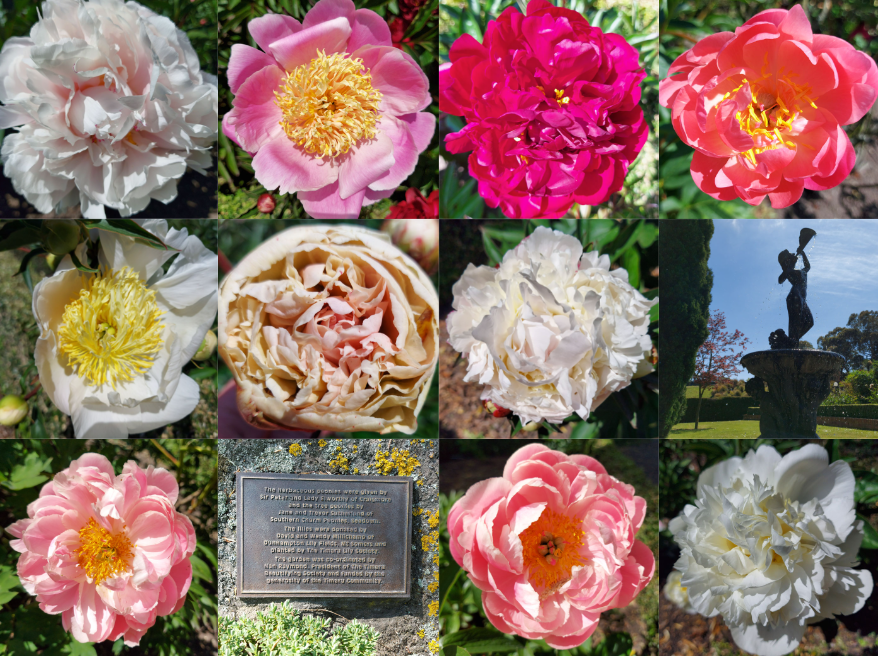
The Peony Rose is native to Asia, Europe and Western North America. There are approximately 33 species. Peonies have been grown in Eastern Asian gardens for over 4000 years. Their name in Chinese means ‘most beautiful’.
In ancient Greece and Asia, peonies were highly regarded for their medicinal properties with the root, bark, seed and flower used for a range of medical problems. an old Chinese saying goes that ‘a woman who takes Peony root daily will become as beautiful as the Peony flower itself’
The Victorians had a different attitude to peonies with the superstition that if you dug them up the fairies would curse you.
Timaru is the perfect place for peonies to grow with our cold winter which ensures the peonies flower. You can see them flowering from early Spring to later summer depending on what type they are. Each type will flower for approximately two weeks. After flowering the leaves will continue to grow storing food in the underground tubers. The leaves will die down and the plant will be dormant over winter. It is exciting to see the new shoots sprouting in the spring and then anticipating the beautiful flowers that will develop. The peony garden is in Caroline Bay, on the Port side, behind the Trevor Griffith Rose Garden.

Species Rose Garden in Timaru

Temuka Domain Roses

Heritage Rose Garden

Can you spy Rose’s on headstones
Can read a silent language carved in stone, offering insight into the lives, values, and beliefs of past generations?
Rose Bud: A child's grave, a life that never had the chance to bloom.
Full Bloom: A life lived to the fullest.
Severed Stem: A life was tragically "cut short.”
Two Joined Roses: A strong bond, often found on couples' graves.
Wreath of Roses: Beauty and virtue.
Garland of Roses Held by an Angel: Sorrow and grief.
Angel with Open Wings: A soul's ascent to heaven.
Weeping Angel: Grief and mourning, especially for sudden losses.
Trumpet-Blowing Angel: The Day of Judgment.
Anchor: Steadfastness and hope, used by early Christians as a hidden cross (anchored in Christ).
Books and Scrolls: Faith, knowledge, learning, and wisdom.
Thistle: The national flower of Scotland.
Shamrock (Clover): A symbol of Northern Ireland.
Daffodil: The national flower of Wales.
Tudor Rose: The national flower of England.
Roses to look for
Species Roses
Species roses, also known as wild roses, are natural varieties that have not been hybridised. They can be found across the Northern Hemisphere, with fossil records dating back 30–40 million years. Most species roses typically have five petals, although some exceptions exist.
English Roses
English roses, developed by David Austin, combine the best qualities of Old Roses and Modern Roses. They offer the strong, heady fragrance and intricate flower forms of Old Roses, along with the repeat-flowering ability and wider colour range of Modern Roses.
Old Garden Roses
Old Garden Roses, sometimes called heritage or historic roses, are traditional varieties bred before the introduction of the hybrid tea rose in 1867. They are known for their strong fragrance, high petal count, distinctive bloom shapes, and resistance to diseases. Many Old Garden Roses bloom once a year during the summer, although some classes, such as Bourbons and Noisettes, are repeat-flowering.
Modern Roses
Modern Roses, bred after 1867, include varieties such as hybrid teas, floribundas, and grandifloras. They are valued for their continuous blooming, larger flower size, and longer vase life. While fragrance is less common in many modern varieties, some still retain this characteristic. Modern Roses can be less hardy and disease-resistant compared to older varieties, depending on the breeding.
Peonies
Although sometimes referred to as "peony roses," peonies are not roses at all but belong to a separate genus, Paeonia. In China, they are a symbol of wealth and status and were historically grown for medicinal purposes. These perennial plants bloom for 7–10 days and are admired for their lush, multi-petalled flowers.
Rambling Roses
Rambling roses are vigorous shrubs with long, flexible stems. Typically blooming once per season, they are descendants of species roses. They grow quickly and can reach lengths of up to 20 metres (60 feet) in some cases. Ramblers are ideal for covering pergolas, arches, and walls, creating a spectacular display of flowers.

Can you find a healthy dose of vitamin C and part of the Rose life cycle... The fruit, rose hips begin to form after successful pollination of flowers in spring or early summer, and ripen in late summer through autumn.

Top Right: Arowhenua Institute Banner - Supplied by Francine Spencer
Below Left: Burnett Gate from the Burnett Homestead in Cave reads "England Expects" with Rose icon
Blow Right: Women gather at Arowhenua - Photo supplied by Francine Spencer
Roses brought women together, can you find a Women's Institute that features a rose?
The first WI meeting in the UK was 16 September 1915, and was established to educate rural women, and encourage countrywomen to grow and preserve food to help the War effort in WW1.
The CW1 sought to bring women together to support each others and share ideas world wide including New Zealand and South Canterbury.
The Rosewill Country Women's Institute Banner is on display in the South Canterbury Museum. The Rosewilll branch started in 1931 and ran until 1989. Rosewill was an Estate acquired by the Government in 1900 from Levels Estate (N.Z. & Aust. Land Co.) and opened in 7/3/1904. Named after William Hall-Jones a member of Parliament. Rose was his wife. Rosewilll school opened in 1906 and closed 1939.
The first Maori Women's Institute in the South Island was formed at the Arowhenua
Temuka Leader 21 July 1931 Page 2 AROWHENUA MAORI WOMEN'S INSTITUTE IS FORMED
The first Maori Women's Institute in the South Island was formed at the Arowhenua Maori Pa yesterday afternoon, when Miss A. M. Stops, Voluntary Dominion Organiser of the Institute, addressed a gathering of about 40 women. The meeting unanimously decided to form a branch of the Canterbury Federation, to be known as the "Arowhenua Maori Women's Institute." A unique feature of the election of officers' was, the fact, that no president was elected, although four vice-presidents were appointed, these officers each to act as president at one meeting in turn. The order of presidency is to be chosen by ballot, and the vice-presidents would comprise the committee. Lending aid by giving the benefit of their experience, the presidents of the Temuka Institute (Miss M. Fergusson), Waitohi Institute (Mrs H. Sewell), and Seadown Institute (Mrs F. Smith), and the secretary of the Winchester Institute (Mrs E. C. Crosse) attended, and with them were a number of their members. Miss Slops based, her address on the three fundamental principles of the movement — non-sectarian, nonpolitical, and democratic — and went on to outline the great benefit's accruing to members of such a vast, world-wide organisation. In this course of the afternoon the speaker mentioned that there were two purely Maori Institute's in the North Island, although I hear there are many Maori members belonging to several other Institutes. The vice-presidents elected were Mesdames Kingi Rehu, Mary Waaka, P. Paipeta. and Manning. Miss Miria Paiki was elected secretary. Sister Institutes in the district, their respective representatives, offered every possible assistance to the new Institute, and Miss Ferguson undertook to bring a lecturer on "Gardening" for the first meeting. Afternoon tea was served, and at the conclusion of the formal business the Maori women sang folk songs for the visitors. - http://sites.rootsweb.com/~nzlscant/CWI.htm
The red rose depicts the British organisation and has cultural reference to the national flower of England, the rose, and to its long tradition within English symbolism.
Top Left: Rosewill CW1 Banner in the SC Musuem display. A banner for the Rosewill, South Canterbury, Country Women's Institute. Banner is made of black cotton and is hand embroidered with "Rosewill" in red and 1931 in yellow. Embroidered under that is the oval shaped logo "CWI for Home and Country" in yellow and green with the fern leaf and red flower symbols. Under this is embroidered a large floral motif of red flowers, green leaves and yellow and green bird. The banner is backed with gold taffeta lining.