
By Roselyn Fauth
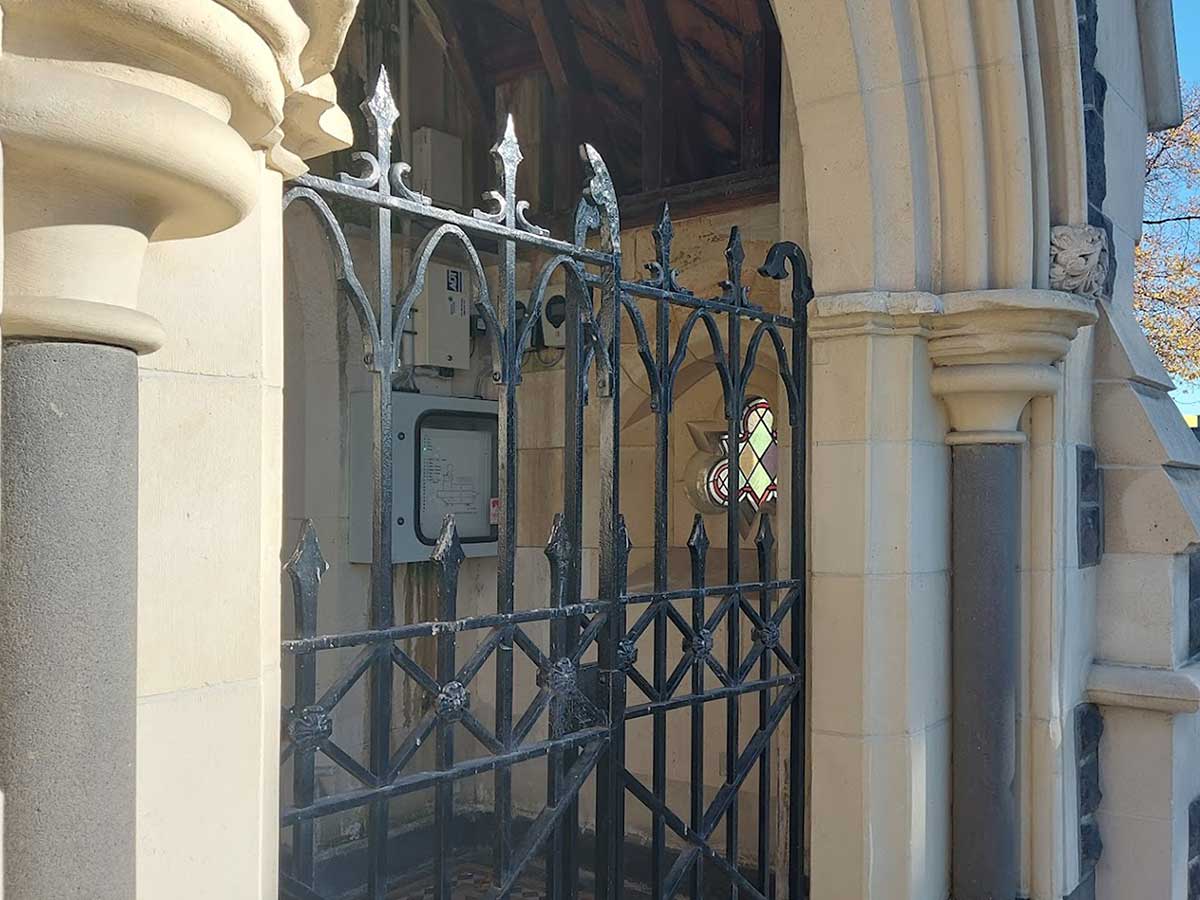
Gate at St Mary's Anglican Church in Timaru. Photography By Roselyn Fauth. Gothic architectural elements, such as pointed arches and detailed stone pillars.
A small shape on a Timaru gate can lead to a big story... I keep noticing them now. Little fleur de lis shapes on old Timaru gates.
Some sit on the tops of iron pickets. Some repeat in rows. At first they look like decoration, but then I wondered why that shape? What did it mean to the person who chose it? And what else have we all walked past without really noticing?
That is the joy of a history hunt. You do not begin with a grand monument. You begin with one small clue... The origin of the fleur de lis has been debated for centuries. Tthe design can be found in many places long before heraldic times, as far back as Mesopotamia.
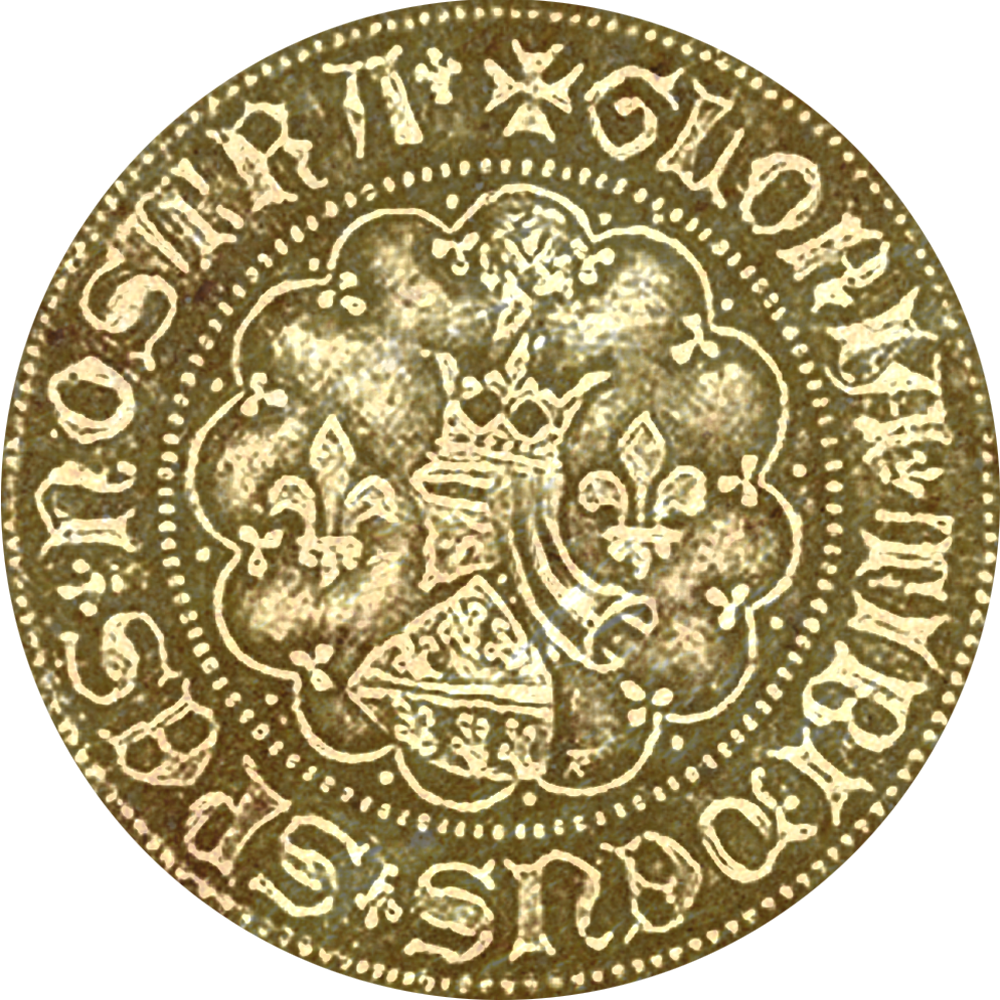
By Alenmahovic - Own work, CC BY-SA 3.0, https://commons.wikimedia.org/w/index.php?curid=24622887 Bosnian king Tvrtko I's gold coin (14th century) reverse – with the Bosnian state fleur-de-lis coat of arms. (GLORIA TIBI DEUS SPES NOSTRA)
The fleur de lis is famous, but its beginnings are not completely certain
The fleur de lis is associated with the French crown. By the 12th century it was clearly in royal use, and in 1376 Charles V simplified the French royal arms to three fleurs de lis. But its deeper origin is debated. Britannica notes the old legend that Clovis, king of the Franks, received the lily at his baptism, while the Heraldry Society warns that the familiar heraldic form is probably no older than heraldry itself. In other words, the legend is important, but it is not the same thing as proof.
I think that uncertainty makes the symbol interesting, and reminds us that an icon can survive because it is useful, memorable and powerful, even when its first beginning is blurred by time.
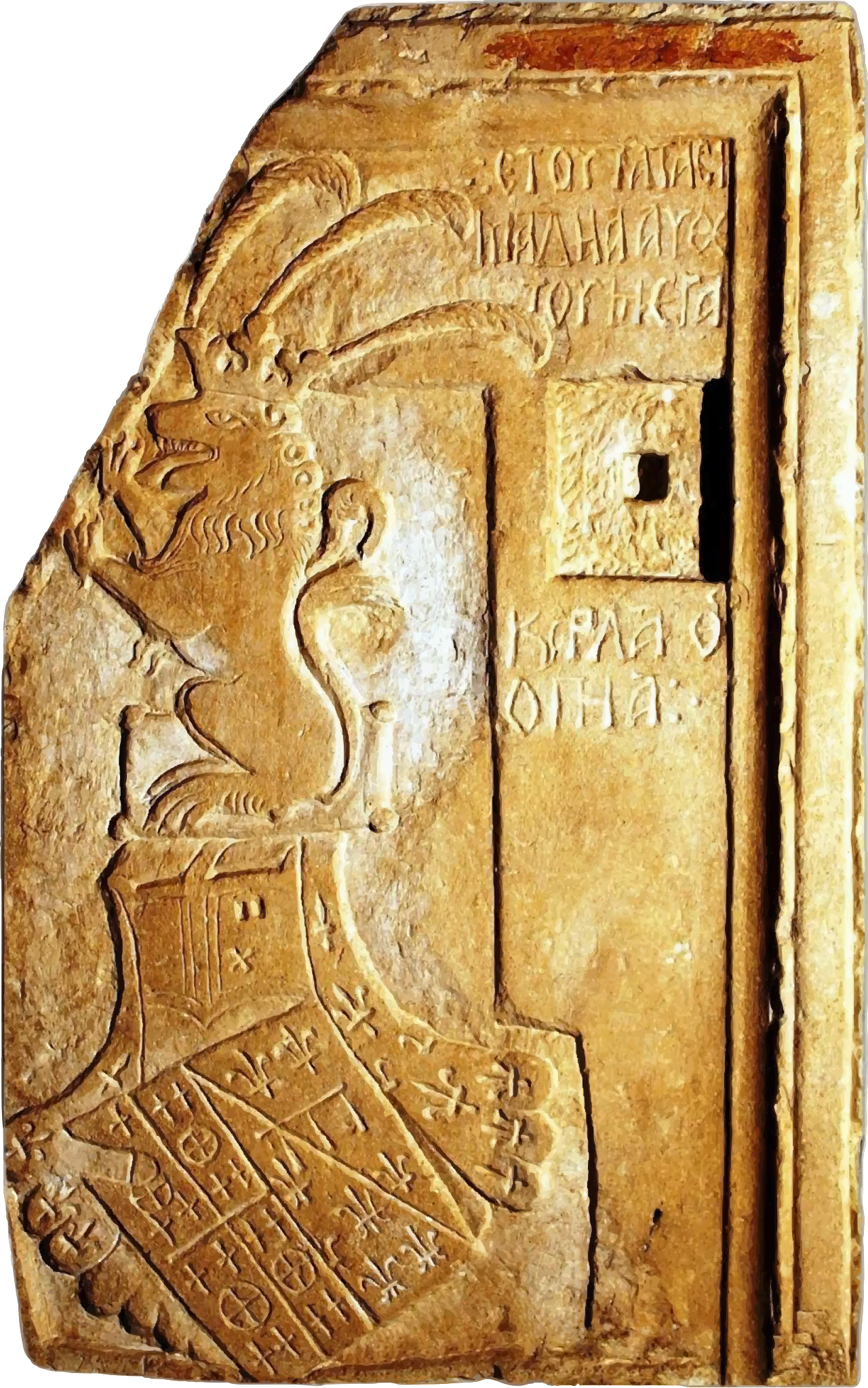
Albanian Prince Karl Thopia stone engraving of his coat of arms. (14th century). By Illustration by Kj1595 - Based on the stone engraving found inside the pavillion of antiquity at the National History Museum in Tirana., CC BY-SA 4.0, https://commons.wikimedia.org/w/index.php?curid=154532649
The design may start with a flower, but it became a symbol
The name points to a flower. In French, fleur means flower and lis means lily. Yet the fleur de lis we recognise today is not a botanical sketch. It is a stylised design. Clean. balanced. easy to repeat. easy to recognise. Over time it came to suggest royalty, ceremony, purity and prestige, while also becoming a flexible ornament used far beyond the French court.
That matters when you look at gates. A gate needs a shape that works in silhouette, a strong profile that can be seen from the street. The fleur de lis does that really well, even in a small scale.
In the Middle Ages, French builders and sculptors began looking closely at real plants for ideas. Earlier church carving often copied older Roman and Byzantine styles, but by the 1100s some artists were studying ferns, leaves, buds, flowers, and shoots from the woods and fields around them. They were not trying to be scientists. They were using nature to find fresh shapes for stone carving.
The best artists did not copy plants exactly. they looked for the strongest parts of a plant, such as the curve of a stem, the shape of a leaf, or the way a bud opens. Then they turned those features into clear, bold decoration for buildings. They often used small plants because their shapes were strong and simple. This helped them create carving that felt alive, natural, and full of energy.
Later on, artists copied plants more literally, and the carving became fussier and less powerful. After the Renaissance, many artists stopped looking at real plants and went back to copying older styles.
 -
- Many churches that are Anglican today were originally built in the medieval Catholic period, before the English Reformation. So when you walk into an Anglican cathedral such as St Mary's in Timaru, or a church in the UK such as Southwell Minster, Norwich Cathedral, Salisbury Cathedral or Ely Cathedral, you are often seeing genuine medieval Gothic carving still in place.
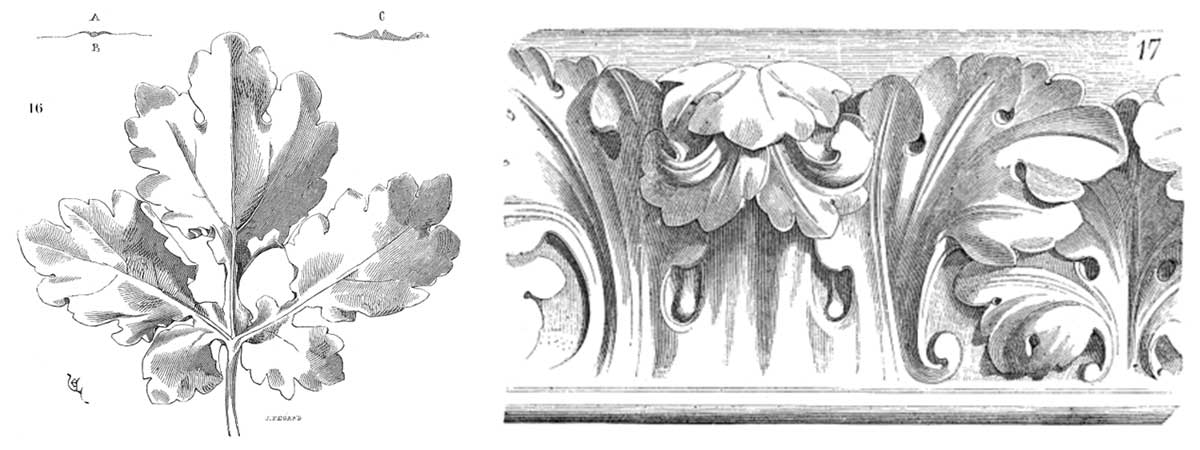
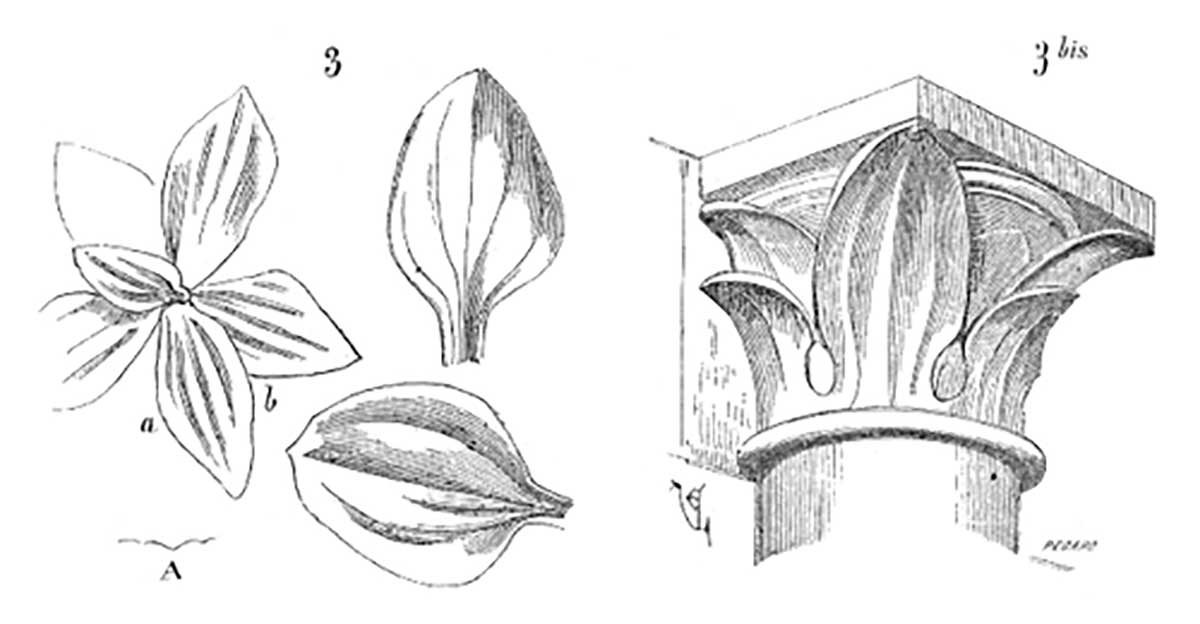
Natural Form (Left): Figure 16 shows a sketch of a leaf, possibly a celandine or similar flora, used as the biological basis for the design.
Architectural Ornament (Right): Figure 17 demonstrates the stylized version of this leaf, sculpted into a repeating decorative pattern suitable for a frieze or cornice. Design Process: The drawings illustrate how sculptors would stylize natural forms, doubling leaves and altering their posture to create decorative architectural elements.
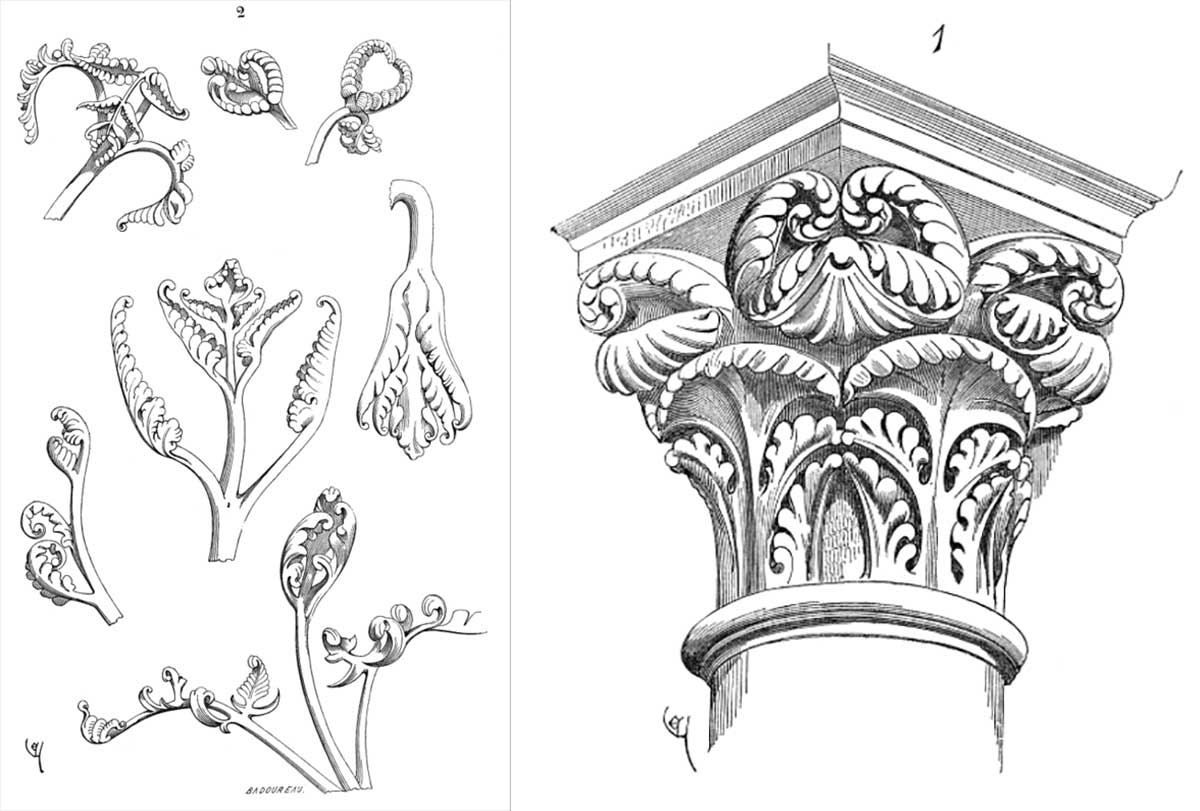
Southwell’s famous “Leaves of Southwell” are a particularly strong example. The Minster describes them as exceptionally fine 13th-century naturalistic carvings of plants, which is very close to the kind of close observation of nature described in your French passage. Norwich Cathedral also preserves hundreds of medieval roof bosses, many carved with foliage.
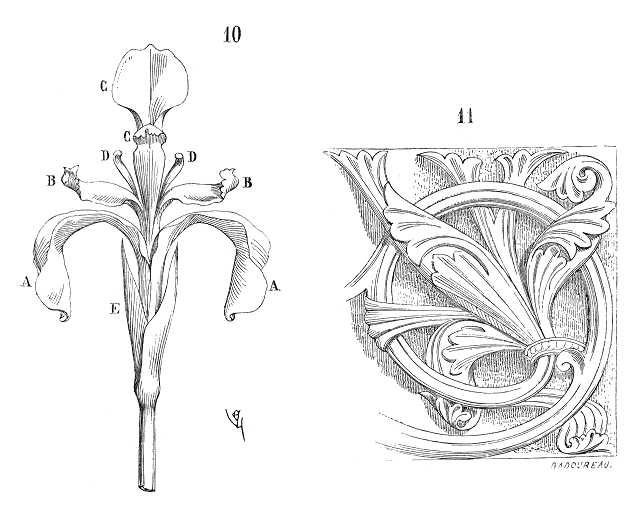
Many will say, that the finest medieval French ornament was created when artists studied living plants directly, understood their structure, and then transformed them into original architectural sculpture. In this image an Iris is compared with fleur-de-lis ornament. Public Domain, https://fr.wikisource.org/wiki/Dictionnaire_raisonn%C3%A9_de_l%E2%80%99architecture_fran%C3%A7aise_du_XIe_au_XVIe_si%C3%A8cle_-_Tome_5,_Flore "“The six divisions of the corolla are visible at A A, B B, C C. Two of the petaloid segments are visible at D, the third being situated on the axis of the flower. The spathe is at E. From this figure to the ornament known as the fleur-de-lis, there is not far to go. In the Romanesque ornaments of the twelfth century (11[1], 12 and 13[2]),”
This image illustrates the relationship between nature and art, specifically how the anatomy of an Iris flower (Figure 10) translates into architectural ornamentation (Figure 11).:
A — Falls: The three lower, drooping petals (technically sepals). In many species, these feature a "beard" or a "signal" patch to attract pollinators.
B — Standards: The three upright petals that form the crown of the flower.
C — Style Arms: Specialized, petal-like branches of the pistil that arch over the stamens.
D — Anthers: The pollen-bearing parts of the stamens, typically tucked beneath the style arms.
E — Spathe: The protective, leaf-like bracts from which the flower bud emerges.
This type of design is common in Art Nouveau and classical architectural styles, where organic botanical forms are adapted into symmetrical, flowing patterns for stone carvings, ironwork, or tiles.
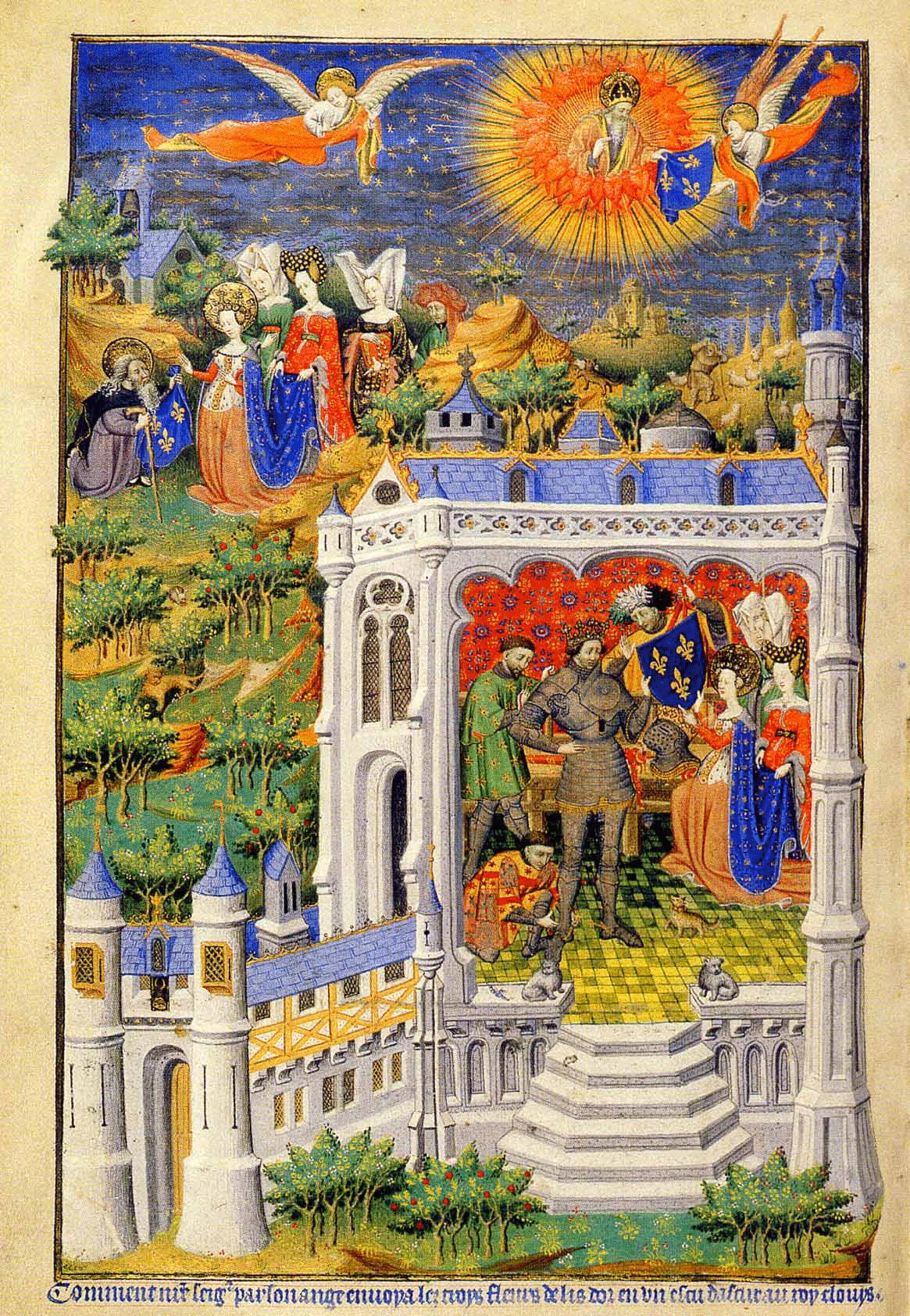
15th-century manuscript depicting an angel sending the fleurs-de-lis to Clovis. From the Bedford Hours in the British Library, London. https://en.wikipedia.org/wiki/Fleur-de-lis By Bedford Master - This file has been provided by the British Library from its digital collections. Links to the British Library's website may be broken as the library recovers from a October 2023 cyber attack, and will be updated once material becomes accessible online. For more information on the attack see: https://www.bl.uk/about/cyber-attack It is also made available on a British Library website. Catalogue entry: Add MS 18850, Public Domain, https://commons.wikimedia.org/w/index.php?curid=10099222
Symbols travel, and design carries them further than politics ever could
Once the symbol entered heraldry and ornaments, the fleur de lis spread across Europe and turned up in many different visual settings. It was royal, religious, civic and simply decorative, depending on the context. That is why a symbol once linked with kings can later appear on textiles, furniture, architecture and ironwork in Timaru. This old European motif travelled through wider design traditions and became part of the visual language people used to make everyday things look dignified and beautiful.
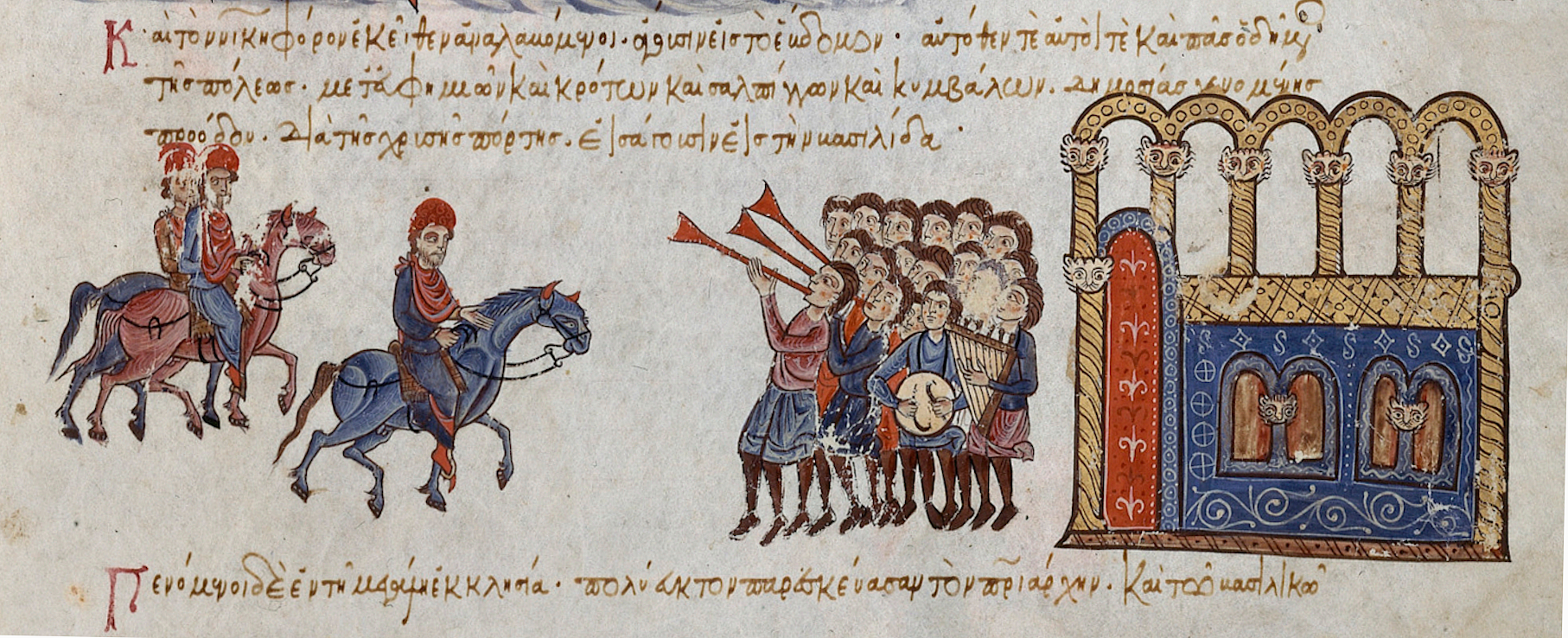
Five gold fleur-de-lis on red, in Synopsis Istorion illustration. Public Domain, https://commons.wikimedia.org/w/index.php?curid=754410
Victorian New Zealand brought overseas design ideas into local streets
Te Ara notes that New Zealand domestic architecture often followed international trends. In the 19th century, that usually meant strong British influence, with styles and details adapted to local conditions. So when we see a fleur de lis on a Timaru gate, we are probably seeing a local version of a design idea that had already travelled through British and European taste before it arrived here.
That is one of the loveliest things about built history. A gate in South Canterbury can echo a much older design world. Not because Timaru was pretending to be Europe, but because style, pattern books, imported ideas and skilled makers all moved through the colonial world.
Gates tell us about craft, repetition and changing technology
Old gates are not only about meaning. They are also about making. Westminster’s conservation guidance explains that in British practice, cast iron was commonly used for railings, while gates were often made of wrought iron with richer decorative compositions. This shows how beauty and manufacture worked together. Repeated shapes could be made more easily, and ornamental details such as finials and cresting became part of the visual appeal.
So when you stand in front of an old gate, you may be looking at more than symbolism. You may be seeing the trace of a foundry pattern, a smith’s hand, a client’s taste, or a style that had become fashionable enough to be repeated again and again.
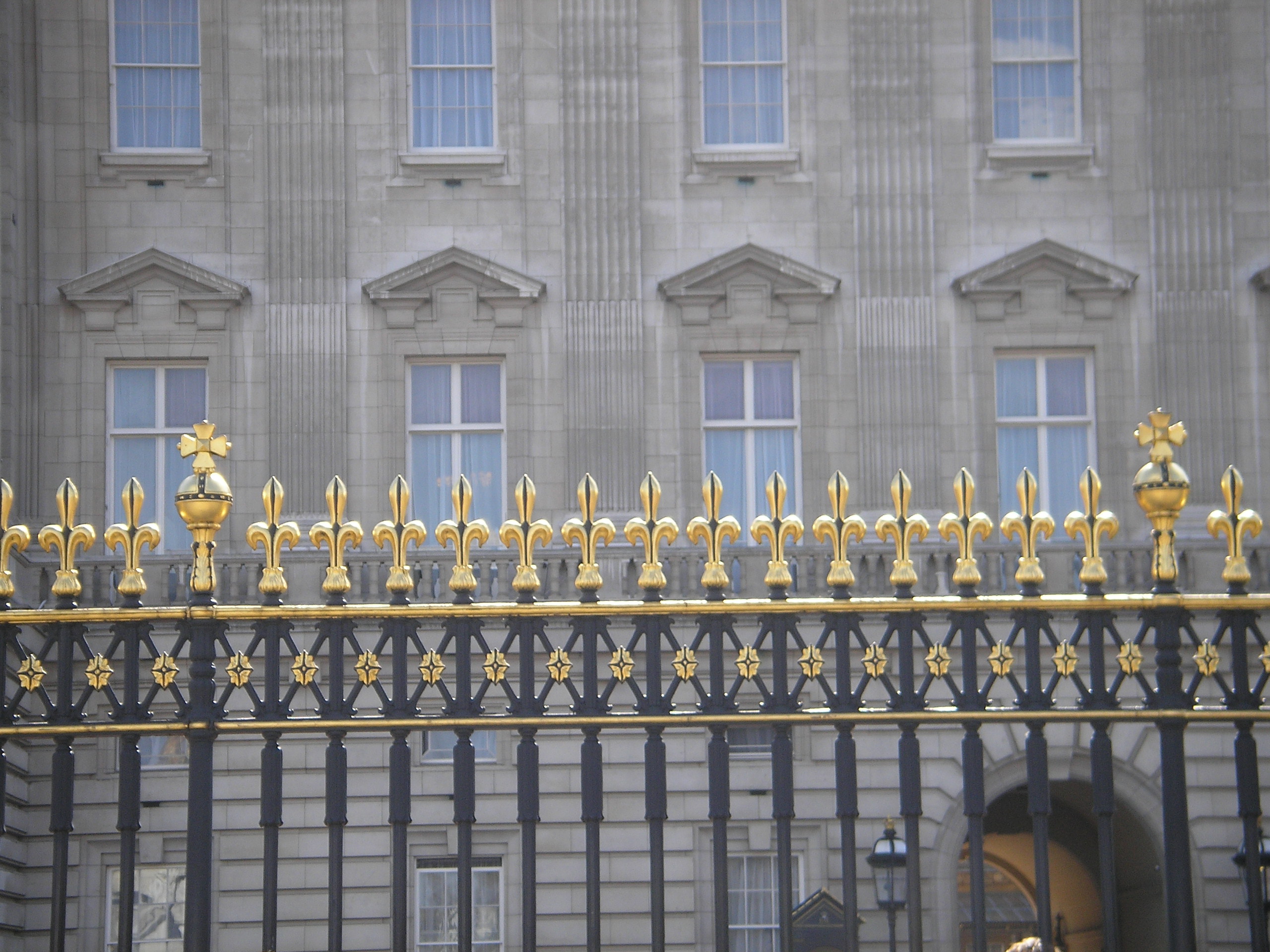
Fleurs-de-lis on railings at Buckingham Palace. By Gryffindor, Public Domain, https://commons.wikimedia.org/w/index.php?curid=766591
Even Buckingham Palace shows how metalwork can turn symbol into theatre
Buckingham Palace offers a grand version of the same idea. Historic England records the forecourt gate piers, gates, railings and lamps as part of Sir Aston Webb’s 1901 to 1911 memorial scheme, and Royal Collection Trust records that the iron gates for the scheme were made by the Bromsgrove Guild. At that scale, gate design becomes public theatre. The ornament is not casual. It is meant to create rhythm, ceremony and authority.
That helps us read smaller gates too. Even on a modest property, a repeated fleur de lis can add a note of order, pride and formality. It is a way of saying that a boundary can also be beautiful.
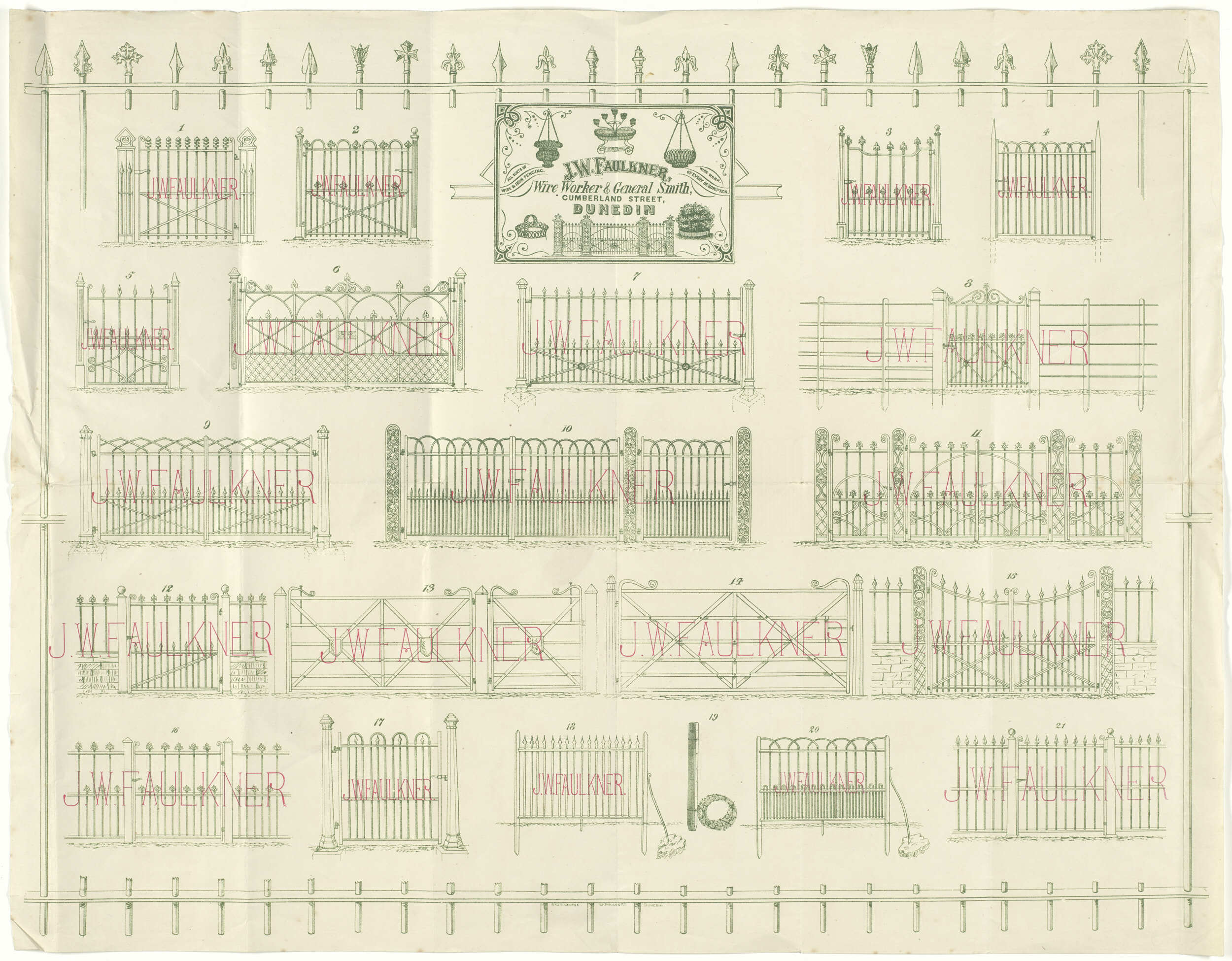 https://hocken.recollect.co.nz/nodes/view/68169. J. & W. Faulkner Limited, J.W. Faulkner illustrated gates and railings (c.1888). Hocken Digital Collections, accessed 04/04/2026, https://hocken.recollect.co.nz/nodes/view/68168
Gates at the Aigantighe Art Gallery - used to be the Grant home on Wai-iti Road, architecture is attributed to James Turnbull - R Fauth
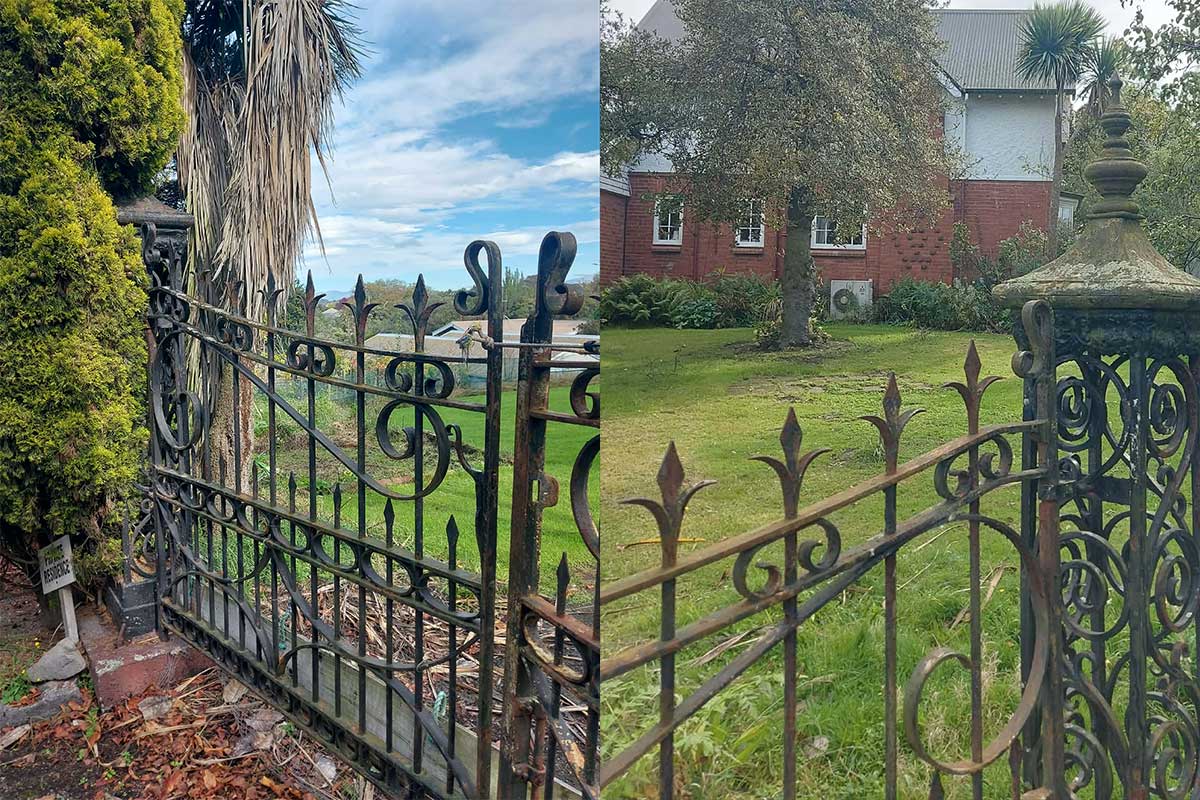
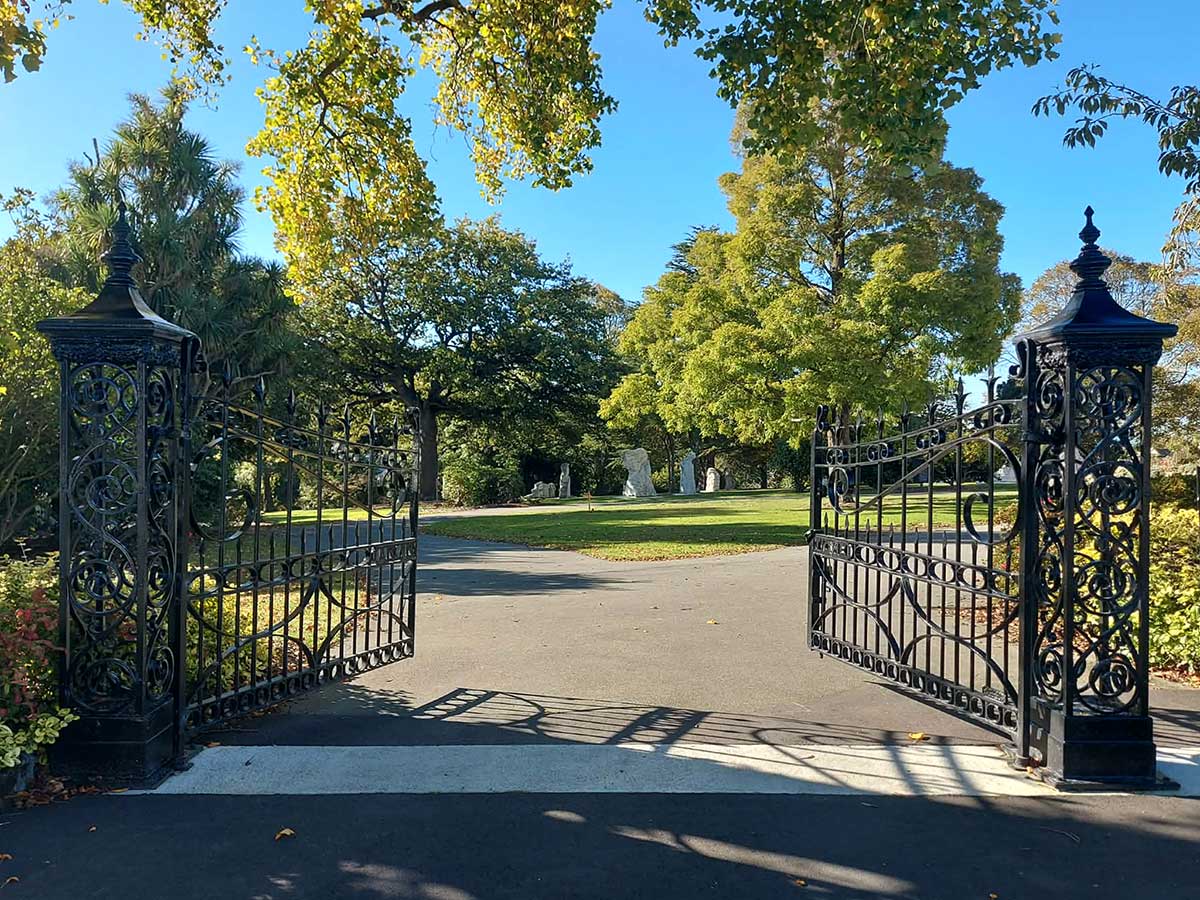
Left and Right sides of the gates at the Timaru Botanic Gardens. These are off to the side, as the boundary to the caretakers house, and are not usually noticed by the public.
In Timaru, the sea adds another chapter to the story
There is a local twist here as well. BRANZ notes that sea salt in coastal atmospheres can significantly increase corrosion of metals used in construction. In a town like Timaru, an old iron gate has had to survive more than fashion. It has had to survive weather, salt, neglect, repainting, repair and time.
That makes these gates more than decorative leftovers. They are survivors. Their very condition can tell us something about place, maintenance and endurance.
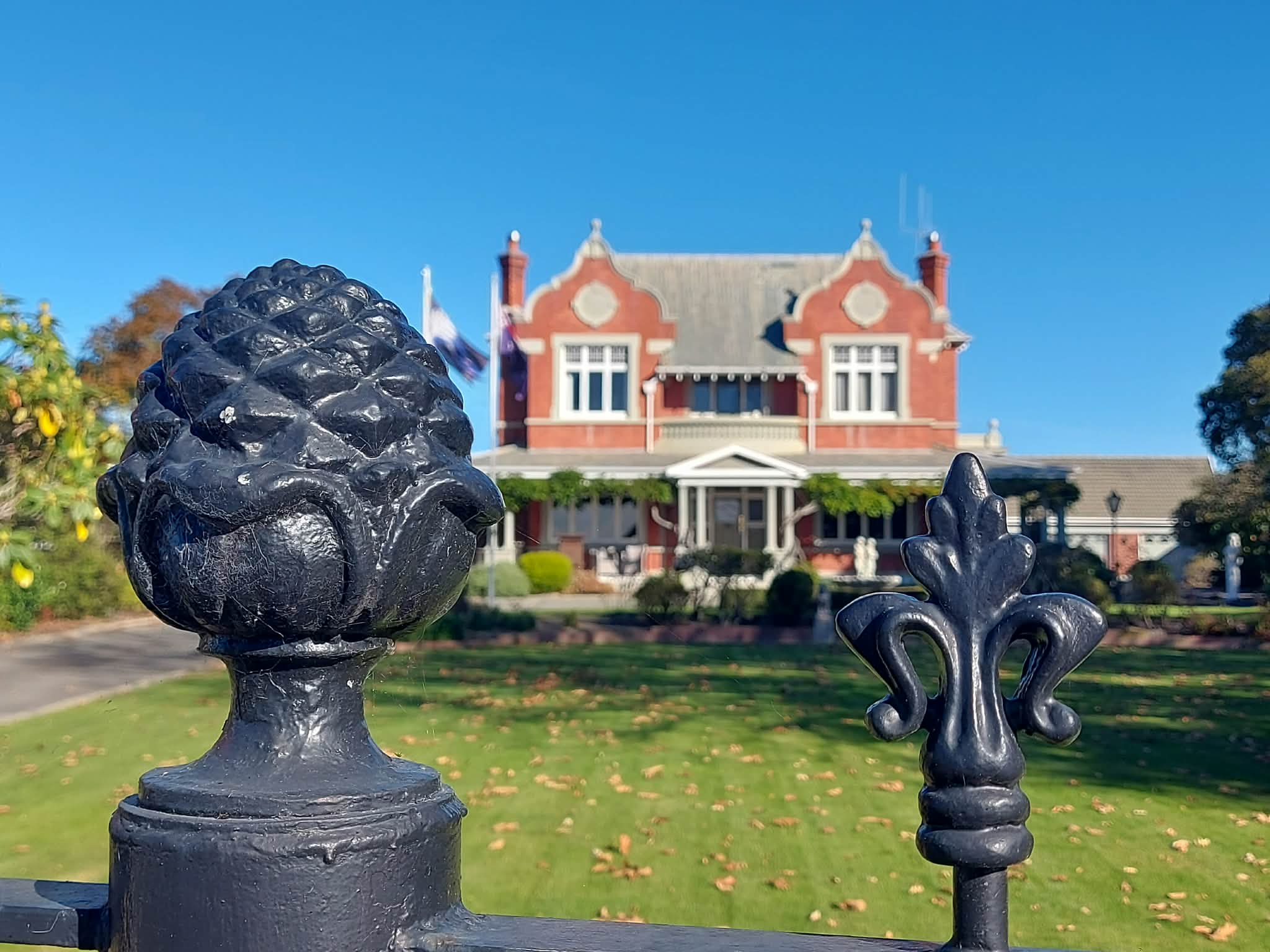
Tighnafeile House Fence Detail - Roselyn Fauth 2026
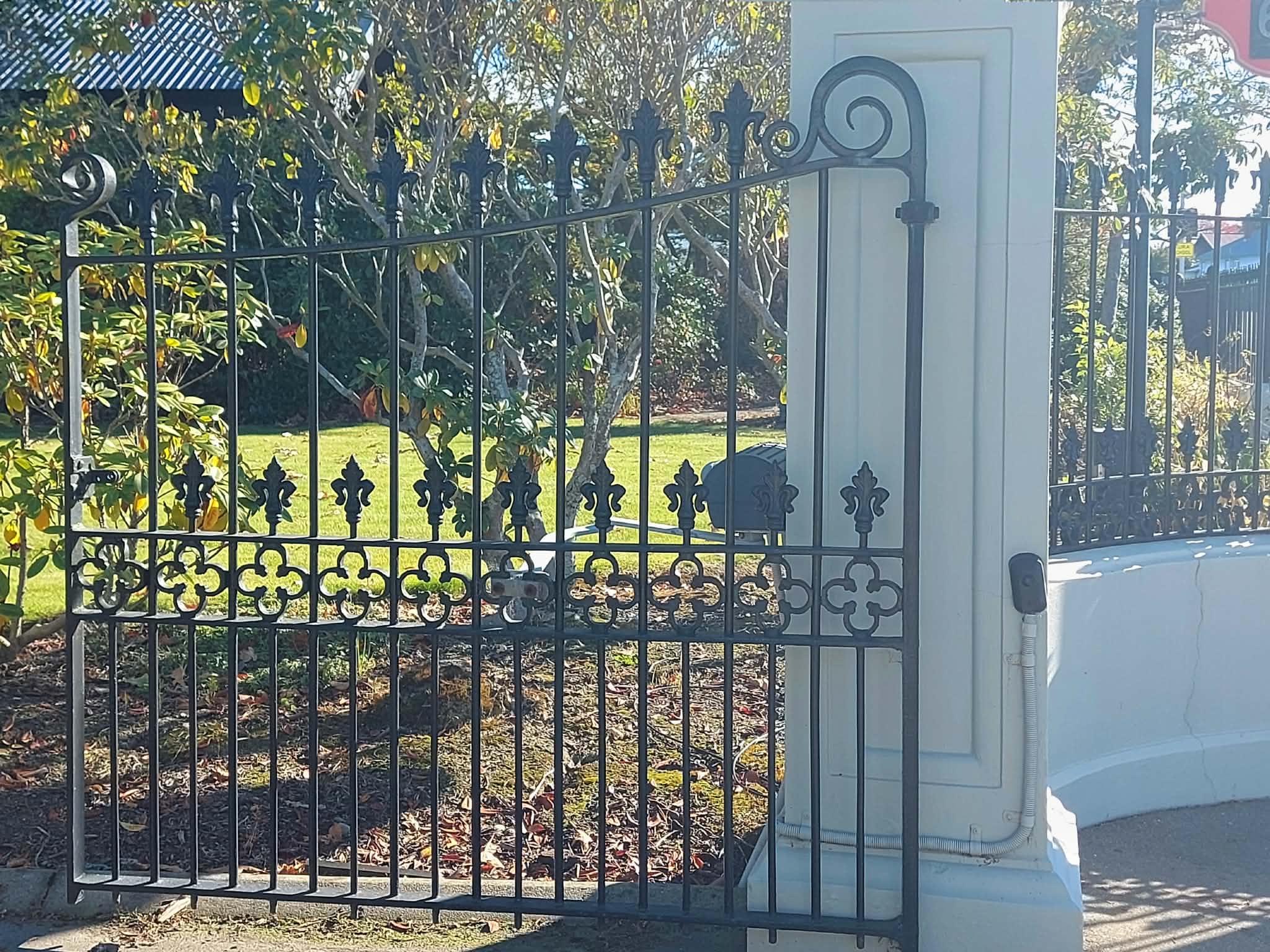
Tighnafeile House Gate - Roselyn Fauth 2026. Architects and designers use it alone and as a repeated motif in a wide range of contexts, from ironwork to bookbinding.
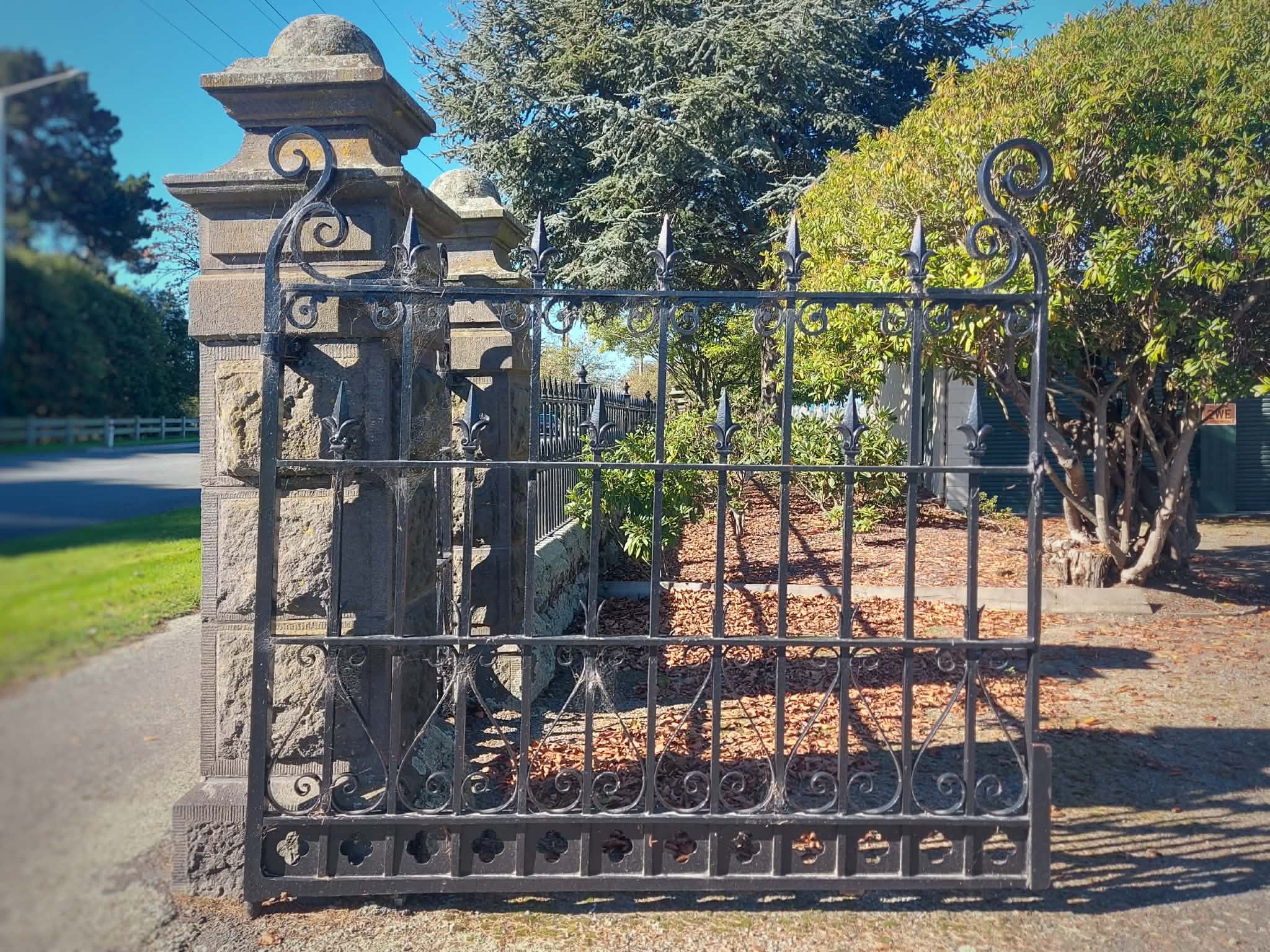
Timaru Cemetery Left Hand Gate - Roselyn Fauth 2026. Detail showing the anatomy of the design: a substantial basalt stone pier with moulded cornices and domed cap anchors the entrance. The wrought iron gate combines vertical bars, fleur de lis finials, sweeping corner scrolls, a braced lower section, and a pierced base rail to create a balance of strength, rhythm, and ornament. The contrast between solid masonry and delicate ironwork gives the gateway its formal and dignified character. I think the little flowers that run along the bottom rail of the gate are called pierced quatrefoil panels. The details have a Gothic style often seen in churches and cemeteries.
The fleur-de-lis, translates from French as "flower of the lily," carries a wide range of historical meanings. Royal Power: Most famously, it was the official emblem of the French monarchy. French kings used it to represent their divine right to rule, and it appeared on everything from royal seals to flags.
In Christianity, the symbol often represents the Virgin Mary, signifying purity and chastity. The three petals are also widely interpreted as a symbol for the Holy Trinity (Father, Son, and Holy Spirit).
The three petals are frequently associated with faith, wisdom, and chivalry.
Beyond aesthetics, these pointed finials were often placed atop iron fence posts to act as a deterrent against intruders.
While its name refers to a lily, many historians believe the design is actually a stylized version of a yellow iris. It has been used since antiquity, appearing in relics from ancient Mesopotamia, Egypt, and the Scythians.
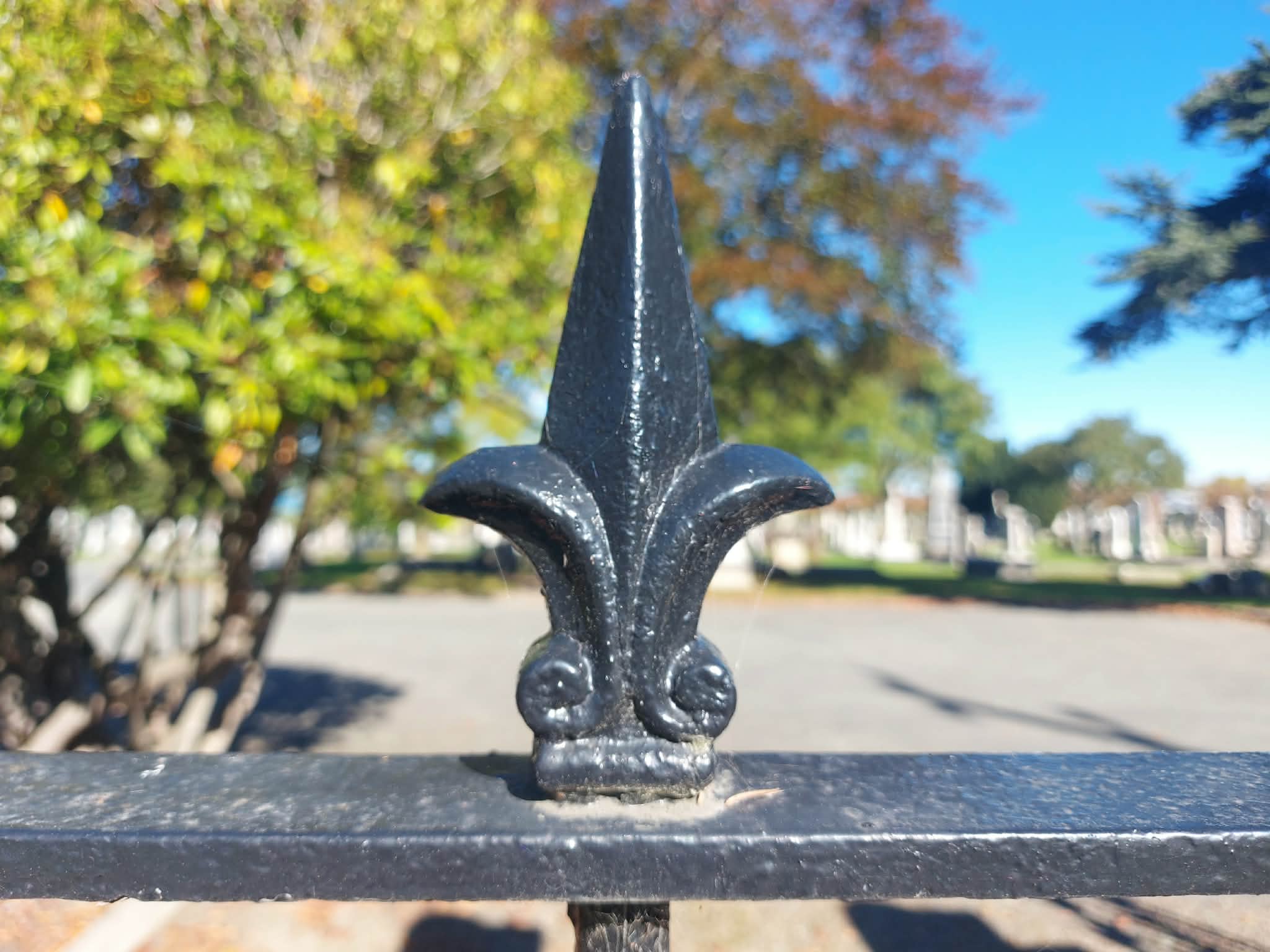
cast or wrought iron Fleur-de-lis pattern finial used as a decorative topper for iron gates or fencing. - Photography by Roselyn Fauth
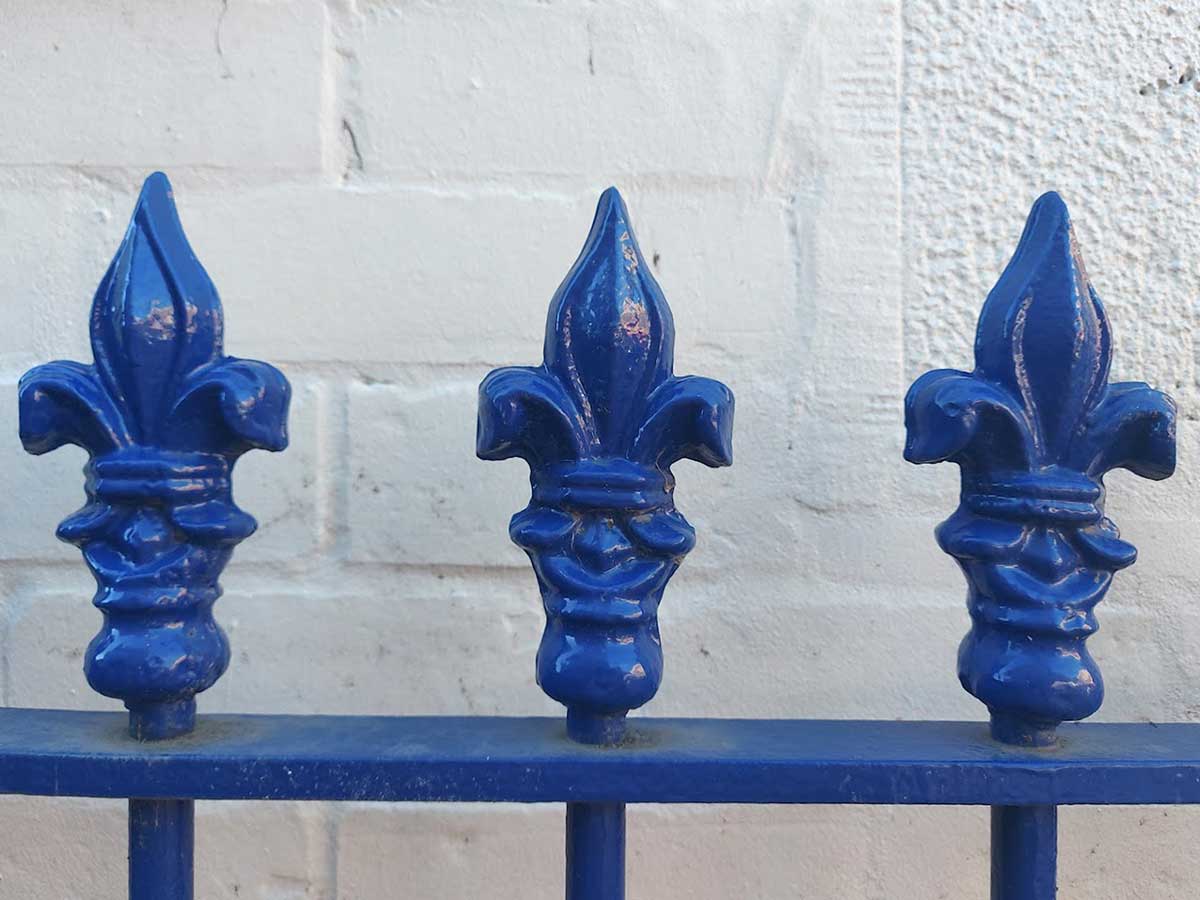
Stafford Street lane, blue fleur-de-lis items are decorative fence post caps often made of wrought iron. - Photography by Roselyn Fauth
Timeline
Ancient world
Fleur-like floral motifs appeared in older decorative traditions, but the Heraldry Society says the familiar heraldic fleur de lis is probably no older than heraldry itself.
5th to 6th century legend
Later legend linked the emblem to the baptism of Clovis, king of the Franks. This is an important tradition, but not settled proof of origin.3
12th century
The fleur de lis is clearly associated with the French monarchy. It is established in royal use by this period.
1376
Charles V reduces the French royal arms to three fleurs de lis. This becomes the better-known simplified form.
18th to 19th centuries
Ornamental ironwork becomes more widespread in Britain. Railings and gates use repeated decorative motifs, with cast iron commonly used for railings and wrought iron often used for gates.
19th century New Zealand
Domestic architecture in New Zealand follows international, especially British, trends. Imported design language begins appearing in local streets and houses.
1901 to 1911
Buckingham Palace forecourt gates, railings and lamps are created as part of Sir Aston Webb’s scheme; Royal Collection Trust links the iron gates in the scheme to the Bromsgrove Guild.
1932 to 1956
A. W. Anderson serves as Curator of Reserves in Timaru, leaving a legacy of close observation, naming and care for the local landscape.
1938
Anderson speaks publicly about plant names and the long history of botanical research, a useful local reminder that forms and names can carry deep stories.
Today
Old Timaru gates invite a new kind of history hunt: one that begins with a small design detail and opens into larger questions of meaning, craft, style and place.
Sources
Britannica, “Fleur-de-lis”
https://www.britannica.com/topic/fleur-de-lis
The Heraldry Society, “The Fleur de Lys”
https://www.theheraldrysociety.com/articles/the-fleur-de-lys/
Te Ara Encyclopedia of New Zealand, “Domestic architecture”
https://teara.govt.nz/en/domestic-architecture
Westminster City Council, “Railings in Westminster”
https://www.westminster.gov.uk/media/document/railings-spd
BRANZ, “Metal corrosion #1: Corrosion in coastal buildings”
https://www.branz.co.nz/pubs/branz-facts/metal-corrosion/1-coastal-buildings/
Aoraki Heritage Collection, “Walter Anderson”
https://aorakiheritage.recollect.co.nz/nodes/view/3960
Papers Past, Timaru Herald, 10 May 1938, “Plant Names”
https://paperspast.natlib.govt.nz/newspapers/THD19380510.2.19
Historic England, “Buckingham Palace”
https://historicengland.org.uk/listing/the-list/list-entry/1239087?section=official-list-entry
Royal Collection Trust, “The new façade of Buckingham Palace and Australia Gate”
https://www.rct.uk/collection/2303719-b
Image credits you mentioned
Wikipedia overview page used to locate the history images:
https://en.wikipedia.org/wiki/Fleur-de-lis
Clovis recevant la fleur de lys, XVe siècle
https://commons.wikimedia.org/w/index.php?curid=10099222
Fleur iris diagram and design
https://commons.wikimedia.org/w/index.php?curid=596482
Stema e Karl Topise
https://commons.wikimedia.org/w/index.php?curid=154532649
TvrtkoIRevers
https://commons.wikimedia.org/w/index.php?curid=24622887
Entrance of the emperor Nikephoros Phocas 963–969 into Constantinople in 963 from the Chronicle of John Skylitzes
https://commons.wikimedia.org/w/index.php?curid=754410
Fence Buckingham Palace London April 2006 077
https://commons.wikimedia.org/w/index.php?curid=766591
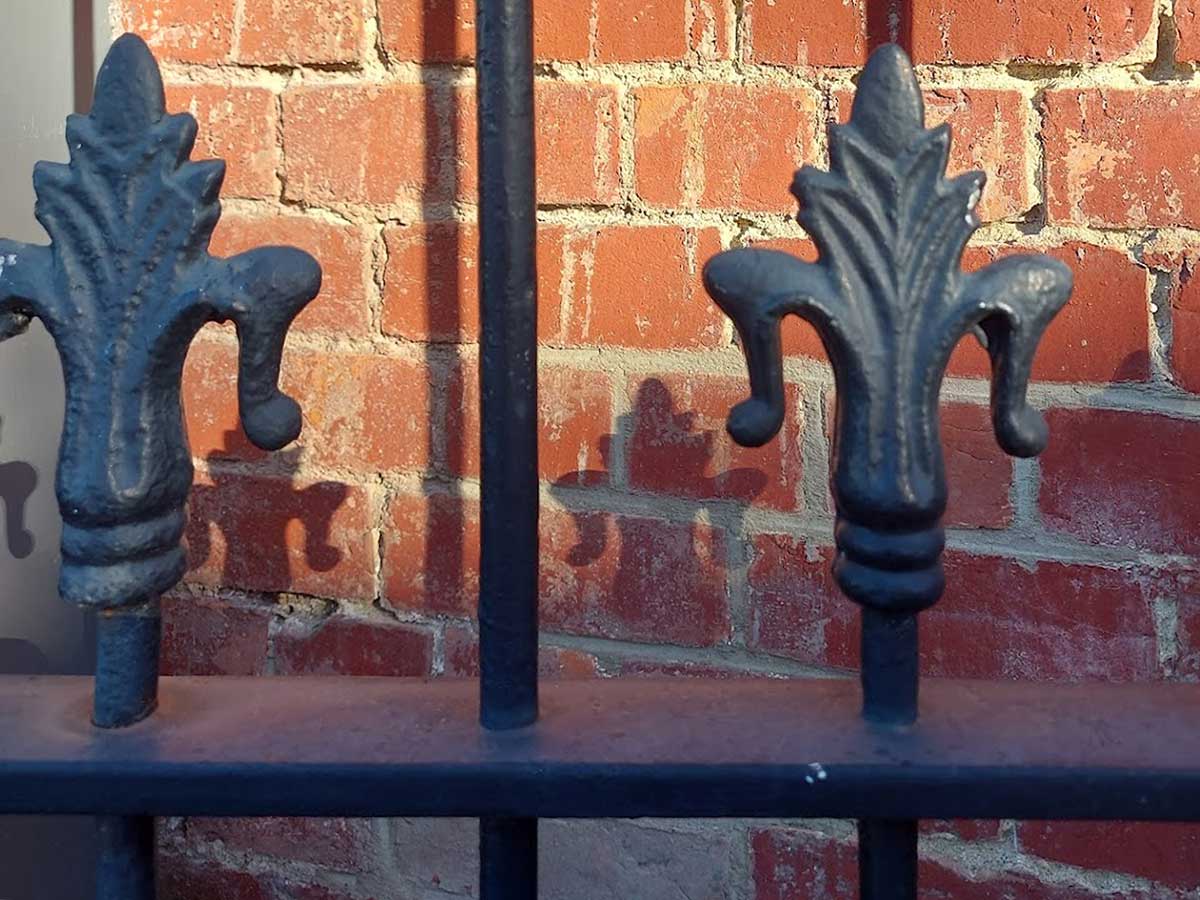
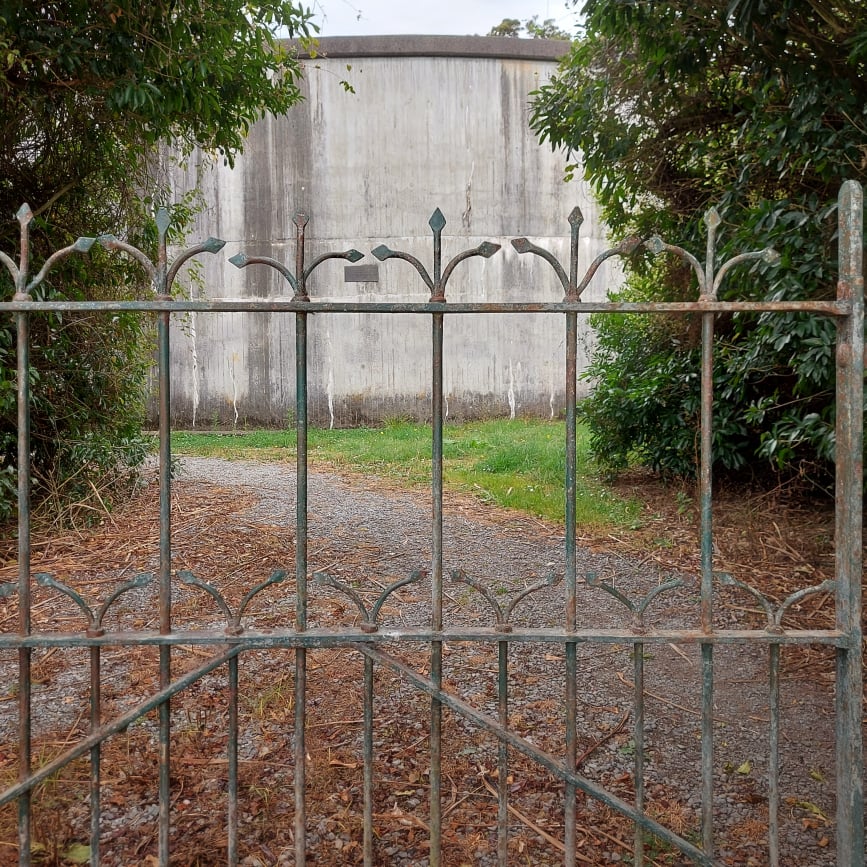
A Gate in Geraldine's Talbot Forest. - Photography By Roselyn Fauth
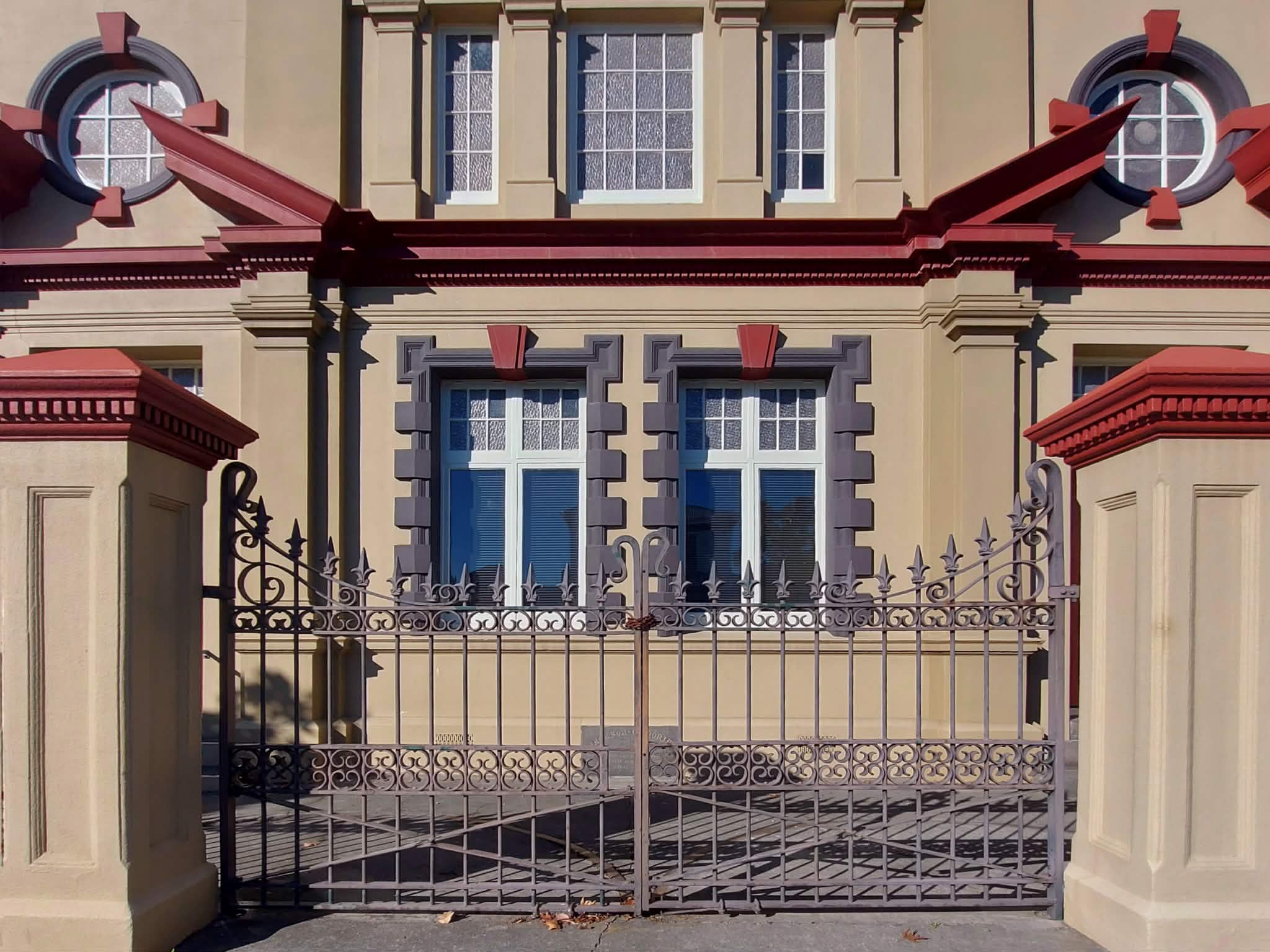
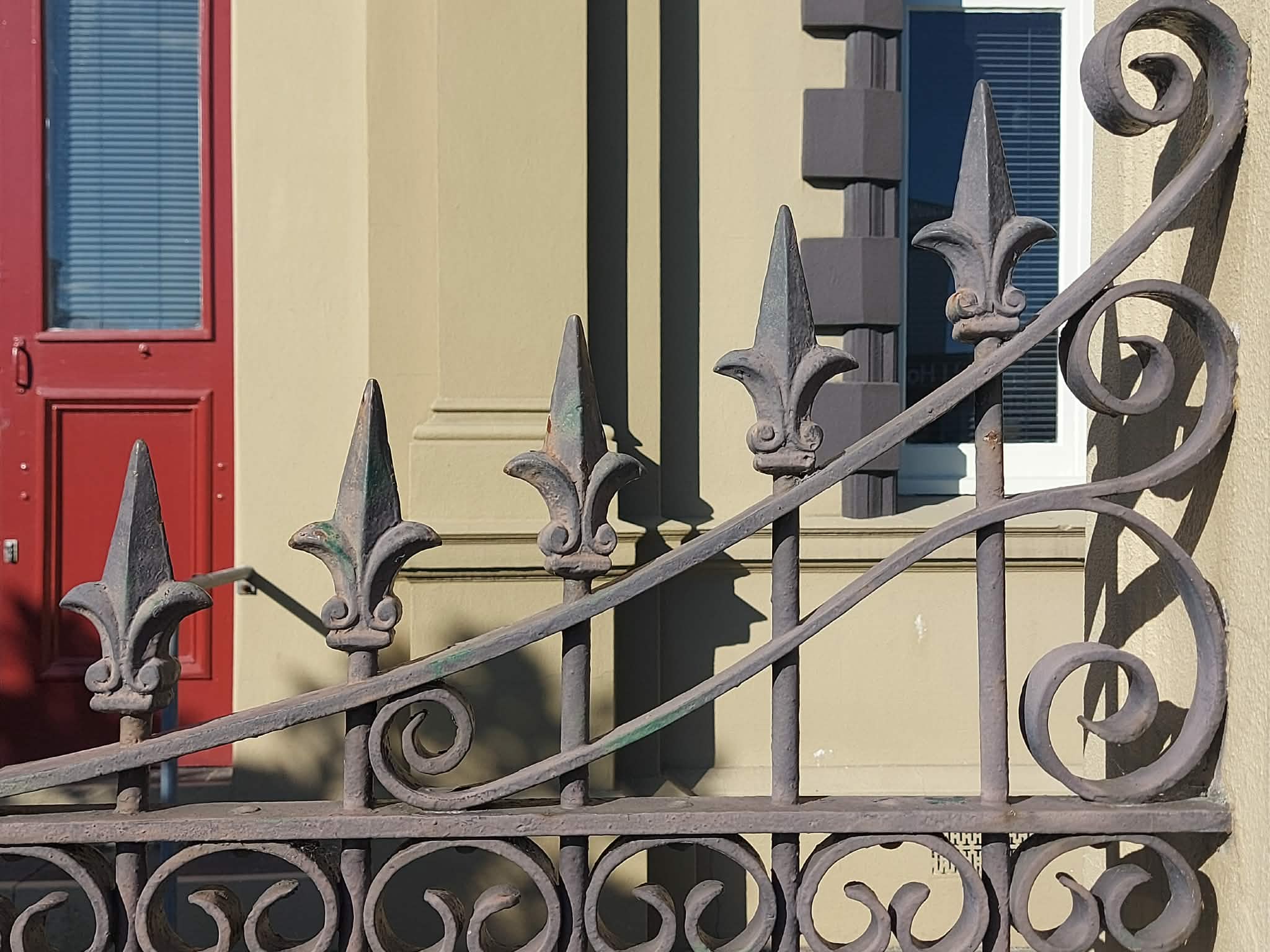
Jackson Memorial Methodist Sunday School 34 Church St RFauth
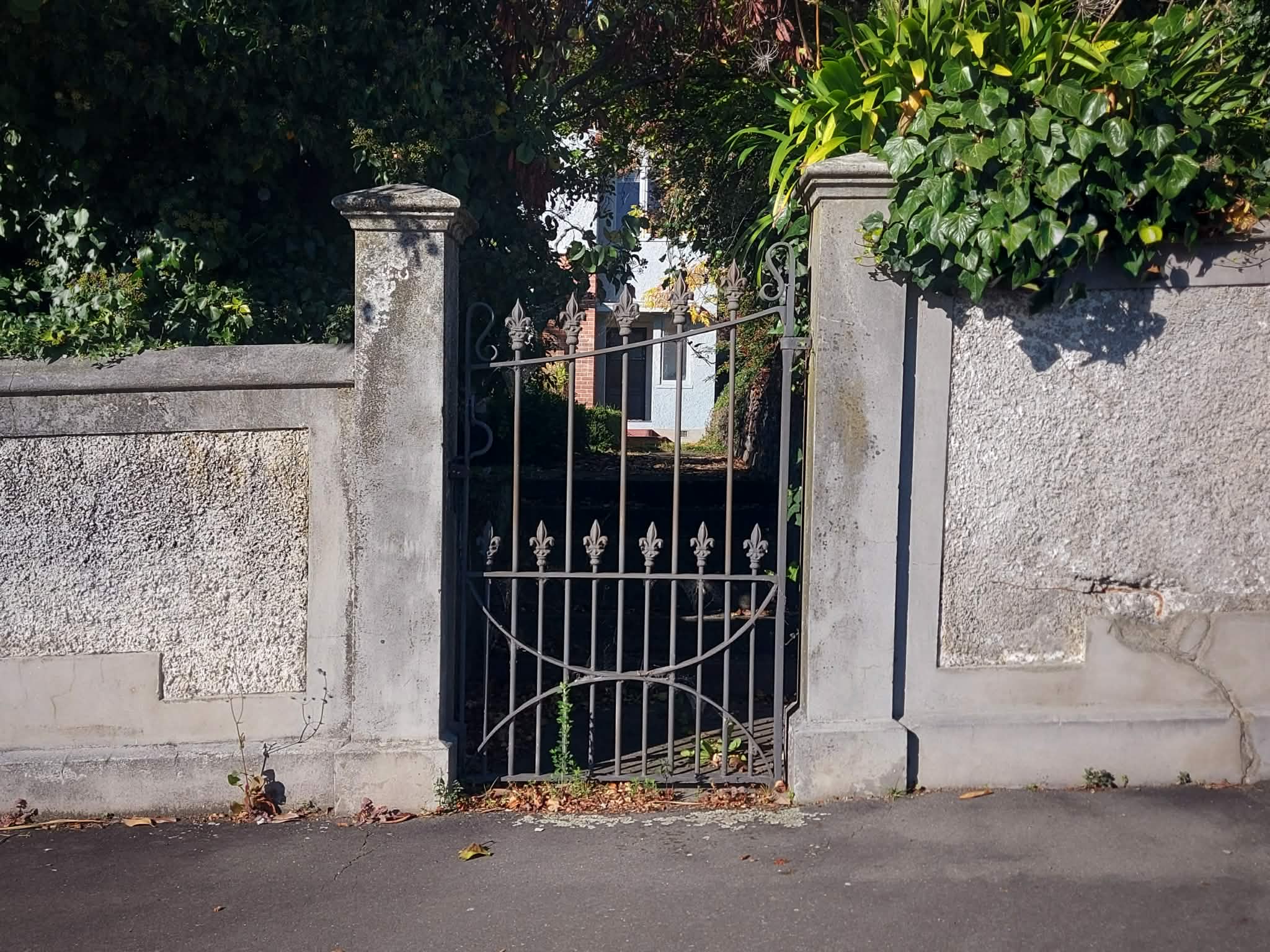
Sefton Street, Timaru. Pedestrian Gate 2026 - RFauth
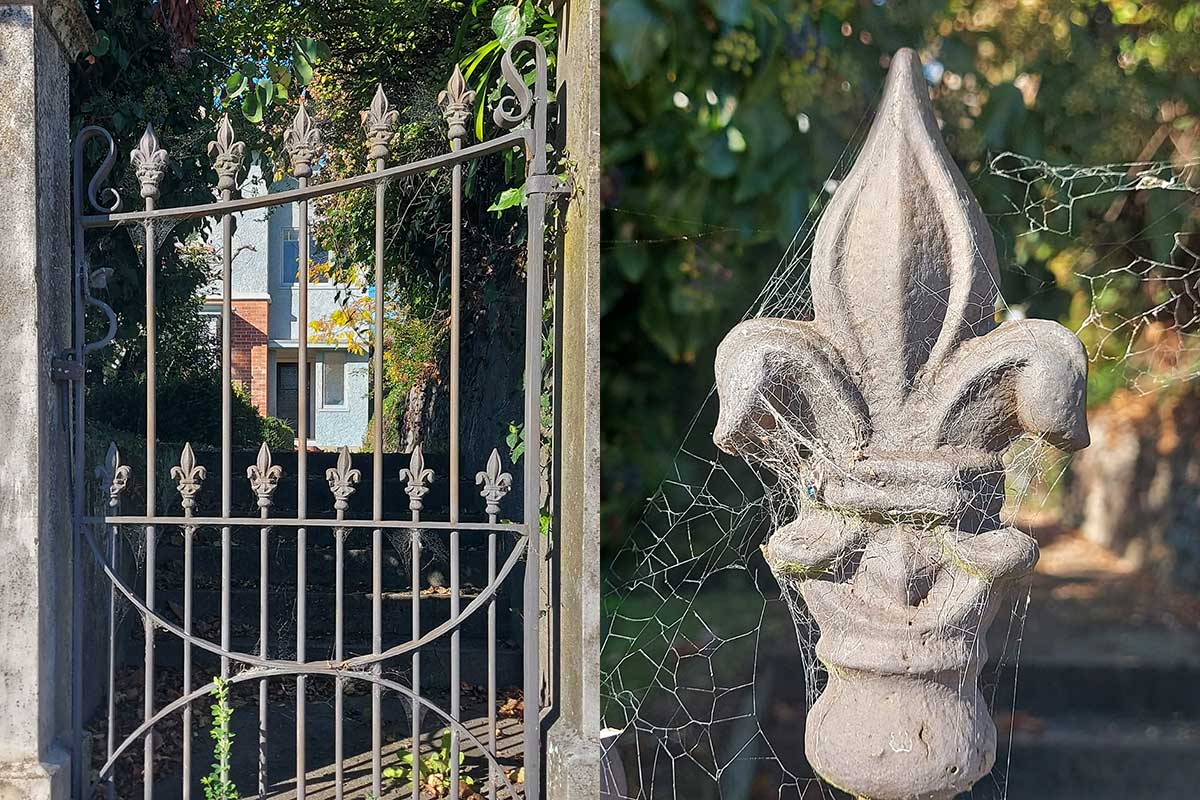
Sefton Street, Timaru. Pedestrian Gate 2026 - RFauth - Detail
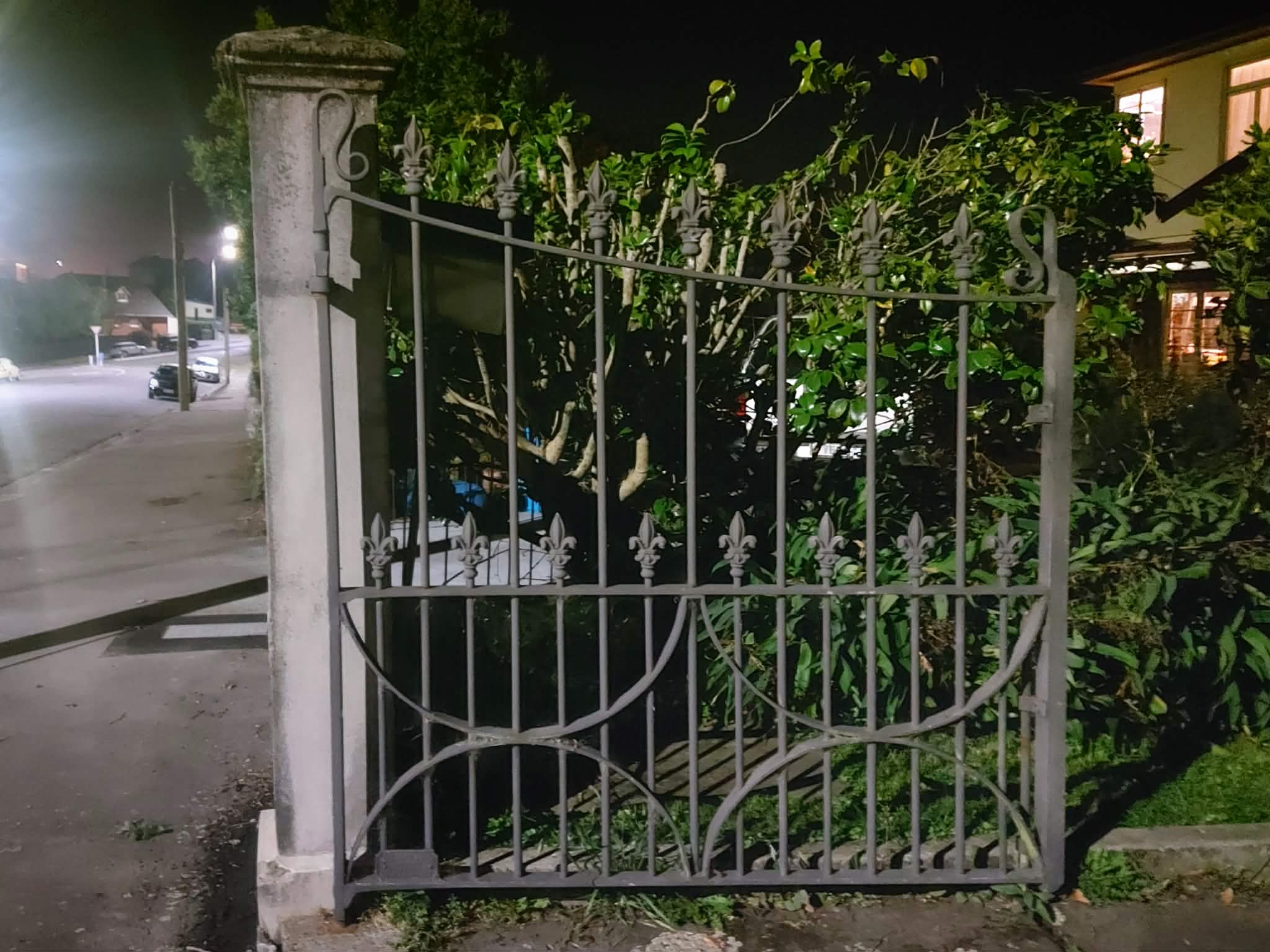
I wonder if the design includes a Fleur-de-lis.

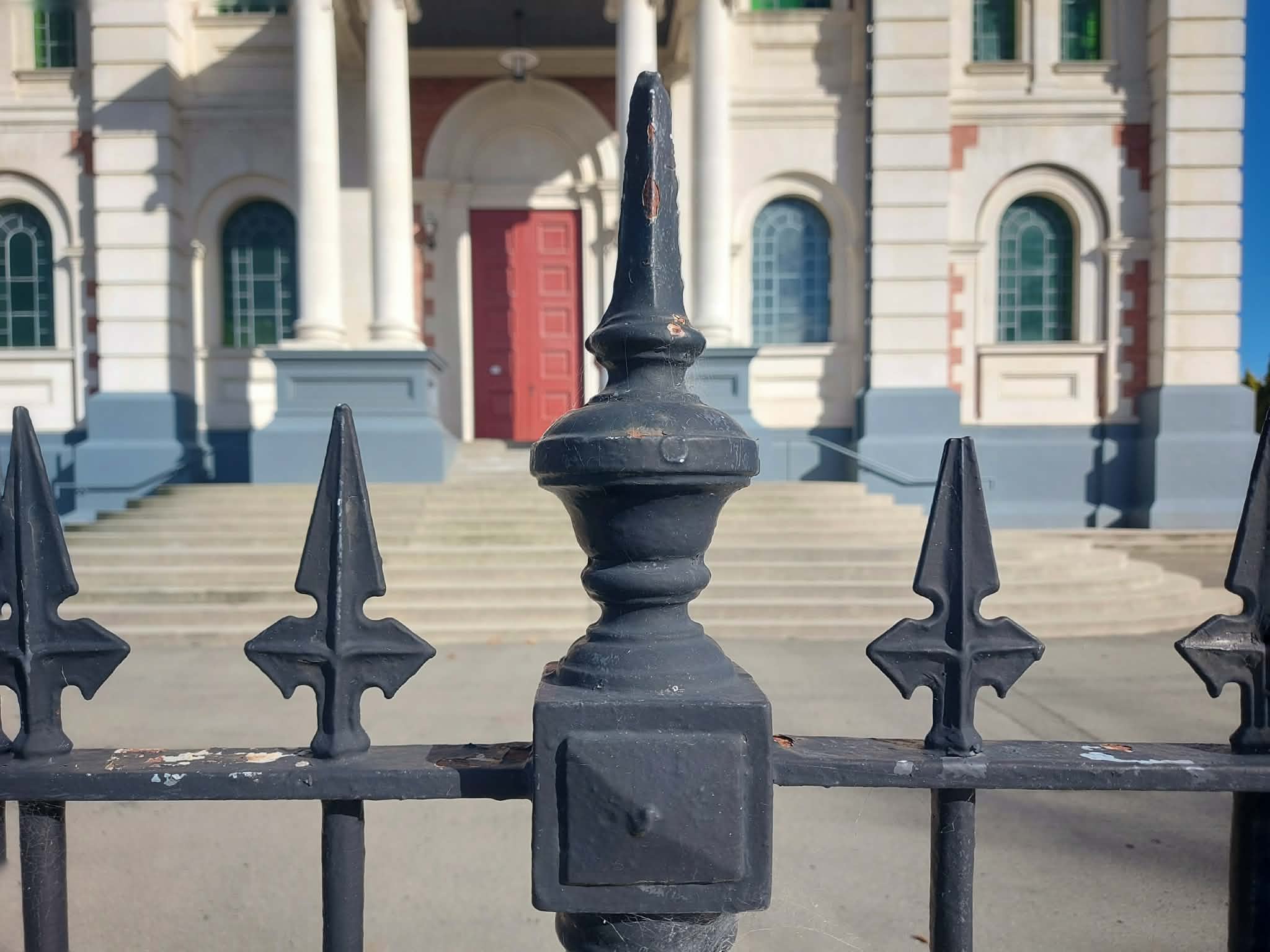
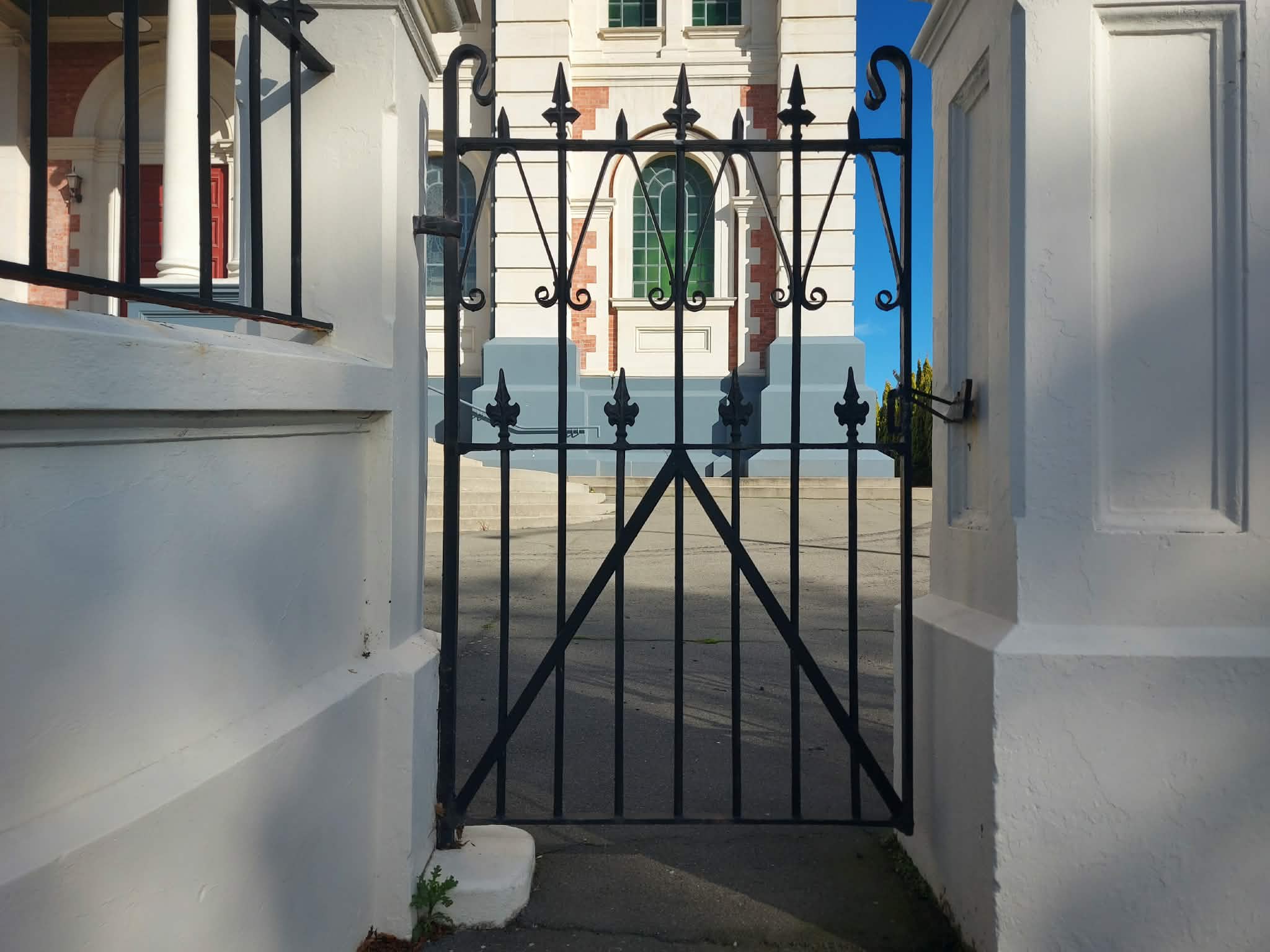
Sacred Heart Basilica Timaru - Gate 2026 R Fauth
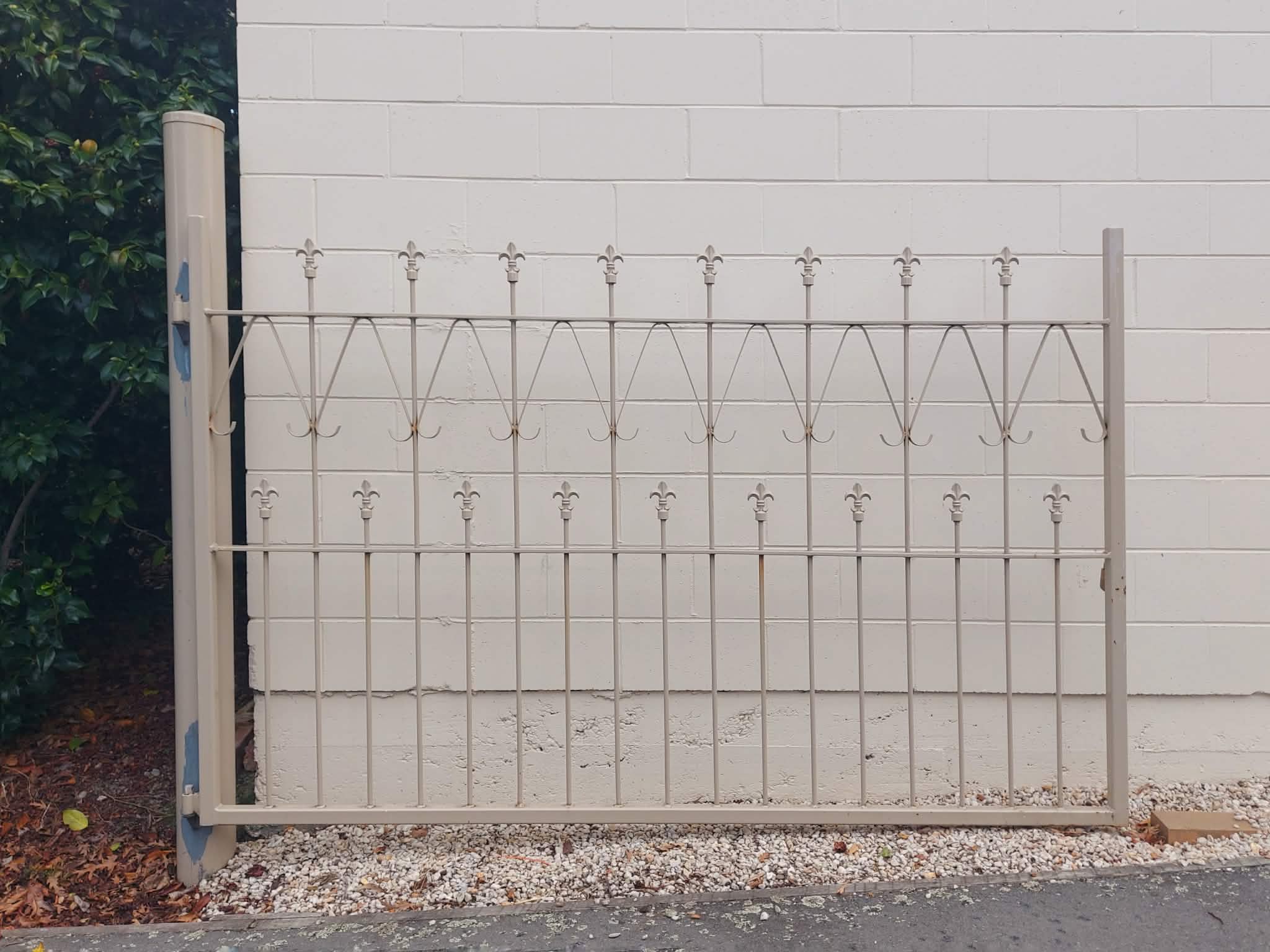
Gate at the Timaru Botanic Gardens 2026 R Fauth

A neighbourhood leaves its mark. Ashbury Park Gates erected by the North End Ratepayers and Improvements Association in 1926 - R Fauth

Glouster Gates - R Fauth 2026
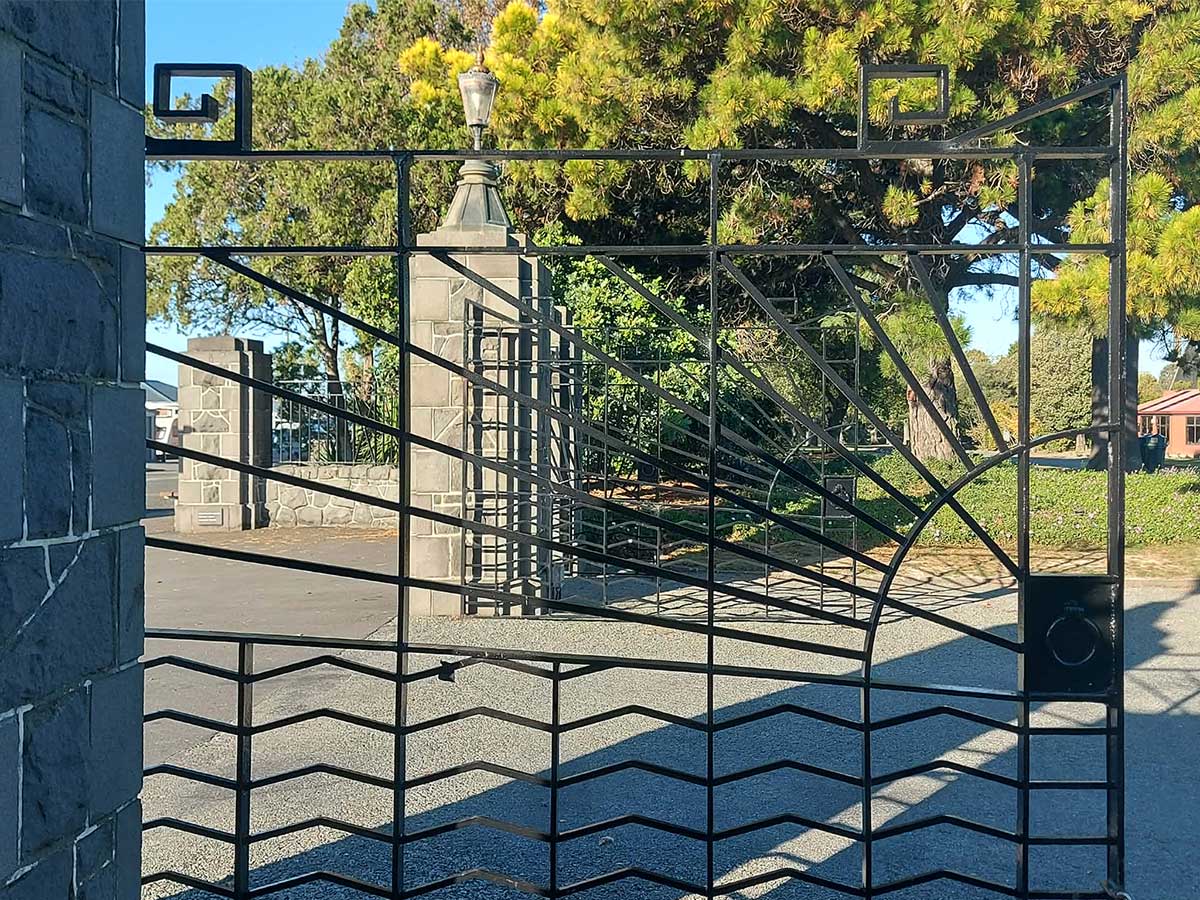
Glouster Gates - R Fauth 2026

Wai-iti Rd Gate - Photo Roselyn Fauth 2026
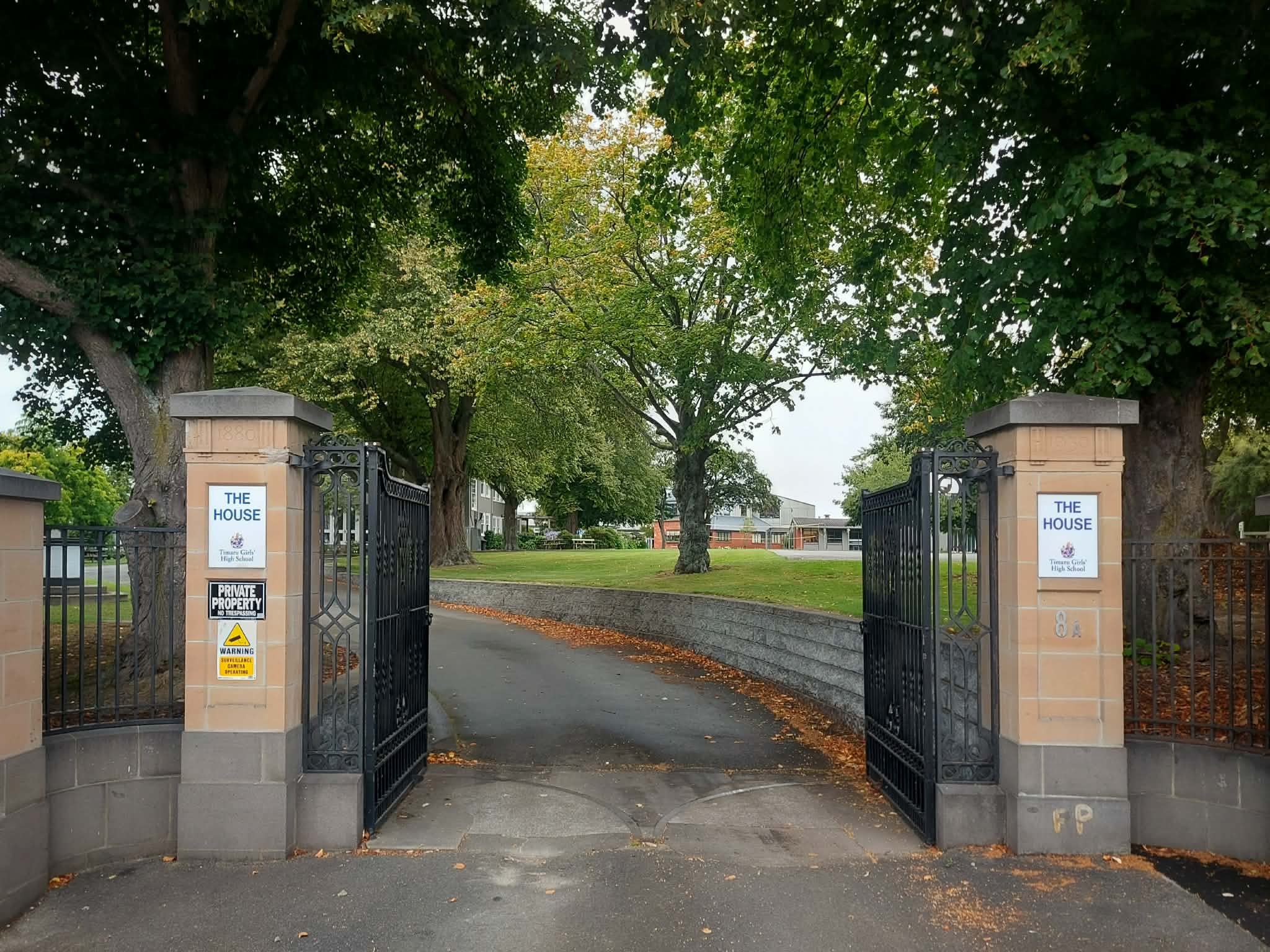
The Gates of Learning of Timaru Girls High School - Photography By Roselyn Fauth 2026
A. W. Anderson reminds us that details are worth taking notice of
This kind of noticing and looking closer makes me think of A. W. Anderson. Aoraki Heritage describes him as a well known local botanist, conservationist and author, and records that he served as Curator of Reserves for Timaru from 1932 to 1956. In 1938 the Timaru Herald reported him speaking about plant names and pointing out that the earliest records of botanical research went back to the Greeks. He understood that names, forms and details can carry long histories.
That is why he feels like such a good companion for a local history hunt. Anderson looked closely at the natural world around him. We can do something similar with the built world. A gate finial, a fence pattern, an old hinge or a repeated motif can all open a trail of questions.
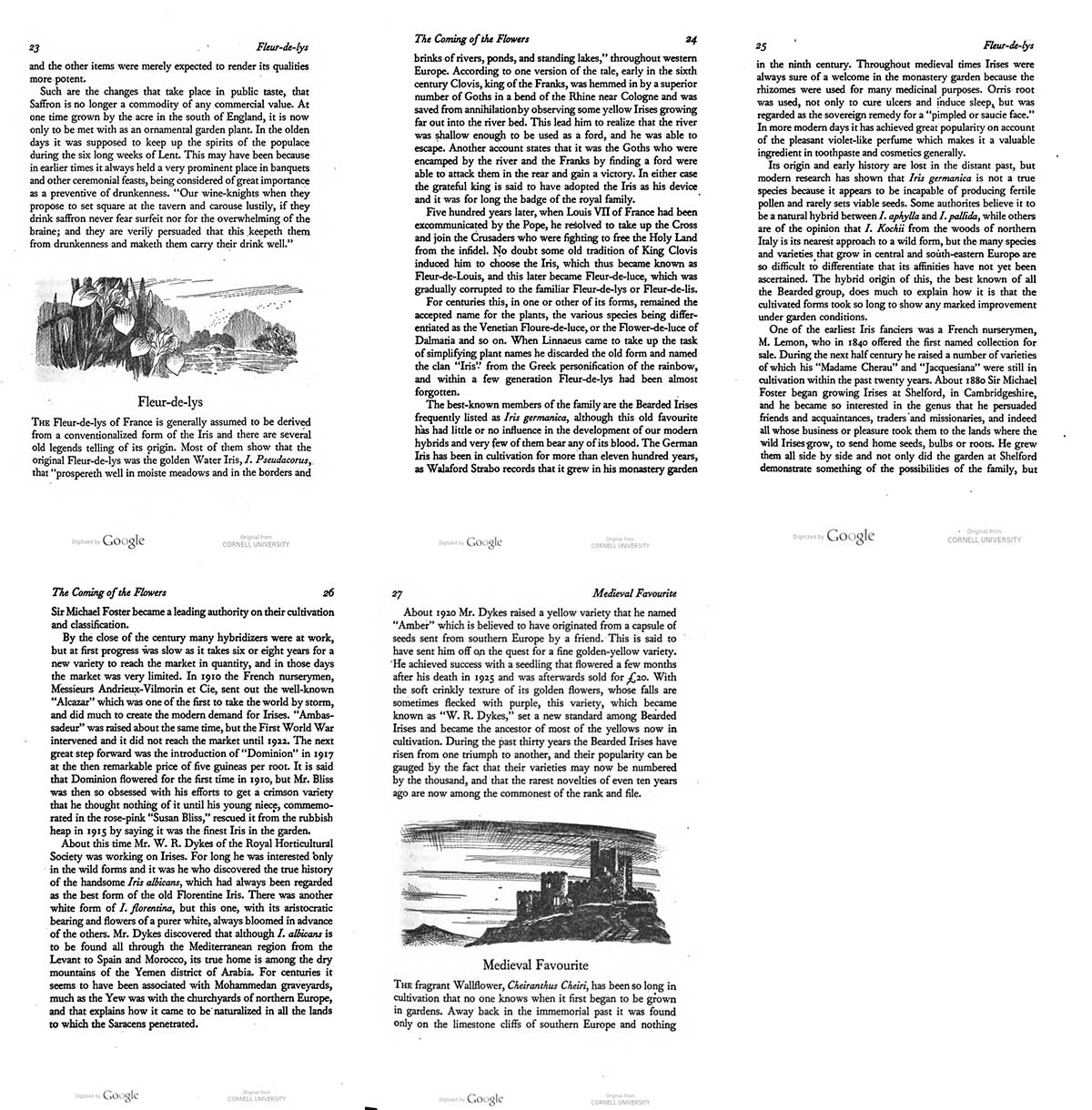
The Coming of the Flowers, 23–27 - W. A Anderson
Fleur-de-lys
The Fleur-de-lys of France is generally assumed to be derived from a conventionalized form of the Iris and there are several old legends telling of its origin. Most of them show that the original Fleur-de-lys was the golden Water Iris, I. Pseudacorus, that “prospereth well in moiste meadows and in the borders and brinks of rivers, ponds, and standing lakes,” throughout western Europe. According to one version of the tale, early in the sixth century Clovis, king of the Franks, was hemmed in by a superior number of Goths in a bend of the Rhine near Cologne and was saved from annihilation by observing some yellow Irises growing far out into the river bed. This lead him to realize that the river was shallow enough to be used as a ford, and he was able to escape. Another account states that it was the Goths who were encamped by the river and the Franks by finding a ford were able to attack them in the rear and gain a victory. In either case the grateful king is said to have adopted the Iris as his device and it was for long the badge of the royal family.
Five hundred years later, when Louis VII of France had been excommunicated by the Pope, he resolved to take up the Cross and join the Crusaders who were fighting to free the Holy Land from the infidel. No doubt some old tradition of King Clovis induced him to choose the Iris, which thus became known as Fleur-de-Louis, and this later became Fleur-de-luce, which was gradually corrupted to the familiar Fleur-de-lys or Fleur-de-lis.
For centuries this, in one or other of its forms, remained the accepted name for the plants, the various species being differentiated as the Venetian Floure-de-luce, or the Flower-de-luce of Dalmatia and so on. When Linnaeus came to take up the task of simplifying plant names he discarded the old form and named the clan “Iris” from the Greek personification of the rainbow, and within a few generations Fleur-de-lys had been almost forgotten.
The best-known members of the family are the Bearded Irises frequently listed as Iris germanica, although this old favourite has had little or no influence in the development of our modern hybrids and very few of them bear any of its blood. The German Iris has been in cultivation for more than eleven hundred years, as Walaford Strabo records that it grew in his monastery garden in the ninth century. Throughout medieval times Irises were always sure of a welcome in the monastery garden because the rhizomes were used for many medicinal purposes. Orris root was used, not only to cure ulcers and induce sleep, but was regarded as the sovereign remedy for a “pimpled or saucie face.” In more modern days it has achieved great popularity on account of the pleasant violet-like perfume which makes it a valuable ingredient in toothpaste and cosmetics generally.
Its origin and early history are lost in the distant past, but modern research has shown that Iris germanica is not a true species because it appears to be incapable of producing fertile pollen and rarely sets viable seeds. Some authorities believe it to be a natural hybrid between I. aphylla and I. pallida, while others are of the opinion that I. Kochii from the woods of northern Italy is its nearest approach to a wild form, but the many species and varieties that grow in central and south-eastern Europe are so difficult to differentiate that its affinities have not yet been ascertained. The hybrid origin of this, the best known of all the Bearded group, does much to explain how it is that the cultivated forms took so long to show any marked improvement under garden conditions.
One of the earliest Iris fanciers was a French nurserymen, M. Lemon, who in 1840 offered the first named collection for sale. During the next half century he raised a number of varieties of which his “Madame Cherau” and “Jacquesiana” were still in cultivation within the past twenty years. About 1880 Sir Michael Foster began growing Irises at Shelford, in Cambridgeshire, and he became so interested in the genus that he persuaded friends and acquaintances, traders and missionaries, and indeed all whose business or pleasure took them to the lands where the wild Irises grow, to send home seeds, bulbs or roots. He grew them all side by side and not only did the garden at Shelford demonstrate something of the possibilities of the family, but Sir Michael Foster became a leading authority on their cultivation and classification.
By the close of the century many hybridizers were at work, but at first progress was slow as it takes six or eight years for a new variety to reach the market in quantity, and in those days the market was very limited. In 1910 the French nurserymen, Messieurs Andrieux-Vilmorin et Cie, sent out the well-known “Alcazar” which was one of the first to take the world by storm, and did much to create the modern demand for Irises. “Ambassadeur” was raised about the same time, but the First World War intervened and it did not reach the market until 1922. The next great step forward was the introduction of “Dominion” in 1917 at the then remarkable price of five guineas per root. It is said that Dominion flowered for the first time in 1910, but Mr. Bliss was then so obsessed with his efforts to get a crimson variety that he thought nothing of it until his young niece, commemorated in the rose-pink “Susan Bliss,” rescued it from the rubbish heap in 1915 by saying it was the finest Iris in the garden.
About this time Mr. W. R. Dykes of the Royal Horticultural Society was working on Irises. For long he was interested only in the wild forms and it was he who discovered the true history of the handsome Iris albicans, which had always been regarded as the best form of the old Florentine Iris. There was another white form of I. florentina, but this one, with its aristocratic bearing and flowers of a purer white, always bloomed in advance of the others. Mr. Dykes discovered that although I. albicans is to be found all through the Mediterranean region from the Levant to Spain and Morocco, its true home is among the dry mountains of the Yemen district of Arabia. For centuries it seems to have been associated with Mohammedan graveyards, much as the Yew was with the churchyards of northern Europe, and that explains how it came to be naturalized in all the lands to which the Saracens penetrated.
About 1920 Mr. Dykes raised a yellow variety that he named “Amber” which is believed to have originated from a capsule of seeds sent from southern Europe by a friend. This is said to have sent him off on the quest for a fine golden-yellow variety. He achieved success with a seedling that flowered a few months after his death in 1925 and was afterwards sold for £20. With the soft crinkly texture of its golden flowers, whose falls are sometimes flecked with purple, this variety, which became known as “W. R. Dykes,” set a new standard among Bearded Irises and became the ancestor of most of the yellows now in cultivation. During the past thirty years the Bearded Irises have risen from one triumph to another, and their popularity can be gauged by the fact that their varieties may now be numbered by the thousand, and that the rarest novelties of even ten years ago are now among the commonest of the rank and file.