
By Roselyn Fauth

How eight small trees helped Timaru imagine itself as a seaside resort, because Timaru is not tropical. This will not surprise anyone who has tried to eat hot chips at Caroline Bay while a southerly rearranges their hair, clothing and general sense of wellbeing. Yet walk through the Bay gardens and look up. Great crowns of feathered leaves spread across the sky. Thick patterned trunks rise beside the lawns, paths and tea rooms. From the right angle, Timaru begins to resemble somewhere much warmer.
Those palms did not arrive by accident. They were planted because people wanted Caroline Bay to feel different from the town beyond it.
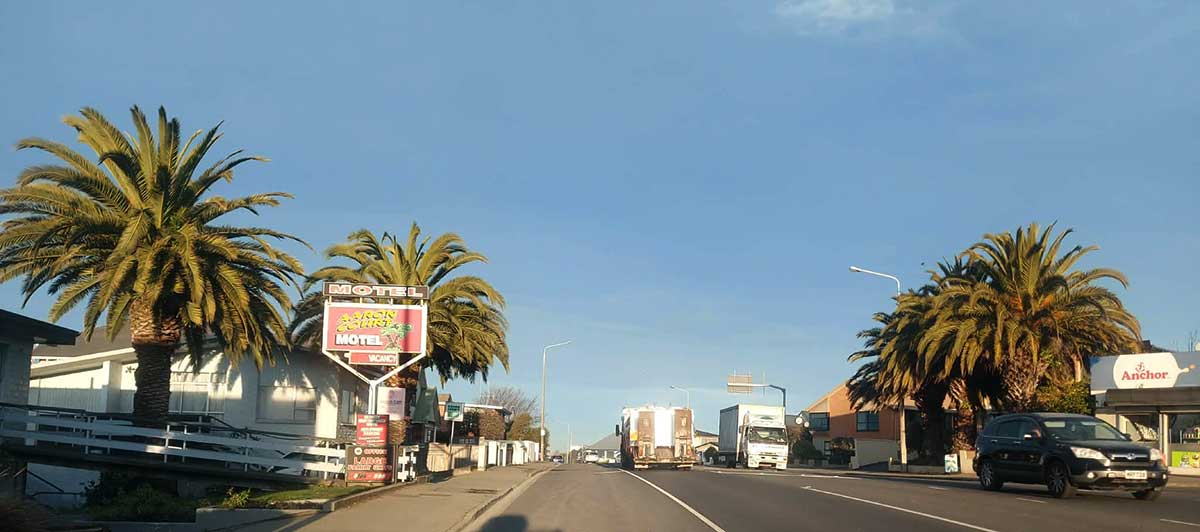
A traveller from the Canary Islands
The trees are Phoenix canariensis, commonly called Canary Island date palms or Phoenix palms.
The species belongs naturally in the Canary Islands, an Atlantic archipelago off the north-west coast of Africa. Although related to the true date palm grown for its edible fruit, it is a separate species.
In its island home, the palm was never just something attractive to look at. Its fruit, fronds and trunk had practical uses. Parts of the plant could become animal feed, fencing, building material, rope, baskets, mats and brooms. It belonged to everyday life as well as the landscape.
During the nineteenth century, European gardeners began moving the species far beyond the Canary Islands.
Phoenix palms appeared in private collections and ornamental gardens around the Mediterranean. As coastal towns in southern France and Italy developed into fashionable holiday destinations, the palms became part of the experience being offered to visitors. They were planted beside public walks, along roads and in carefully arranged groups.
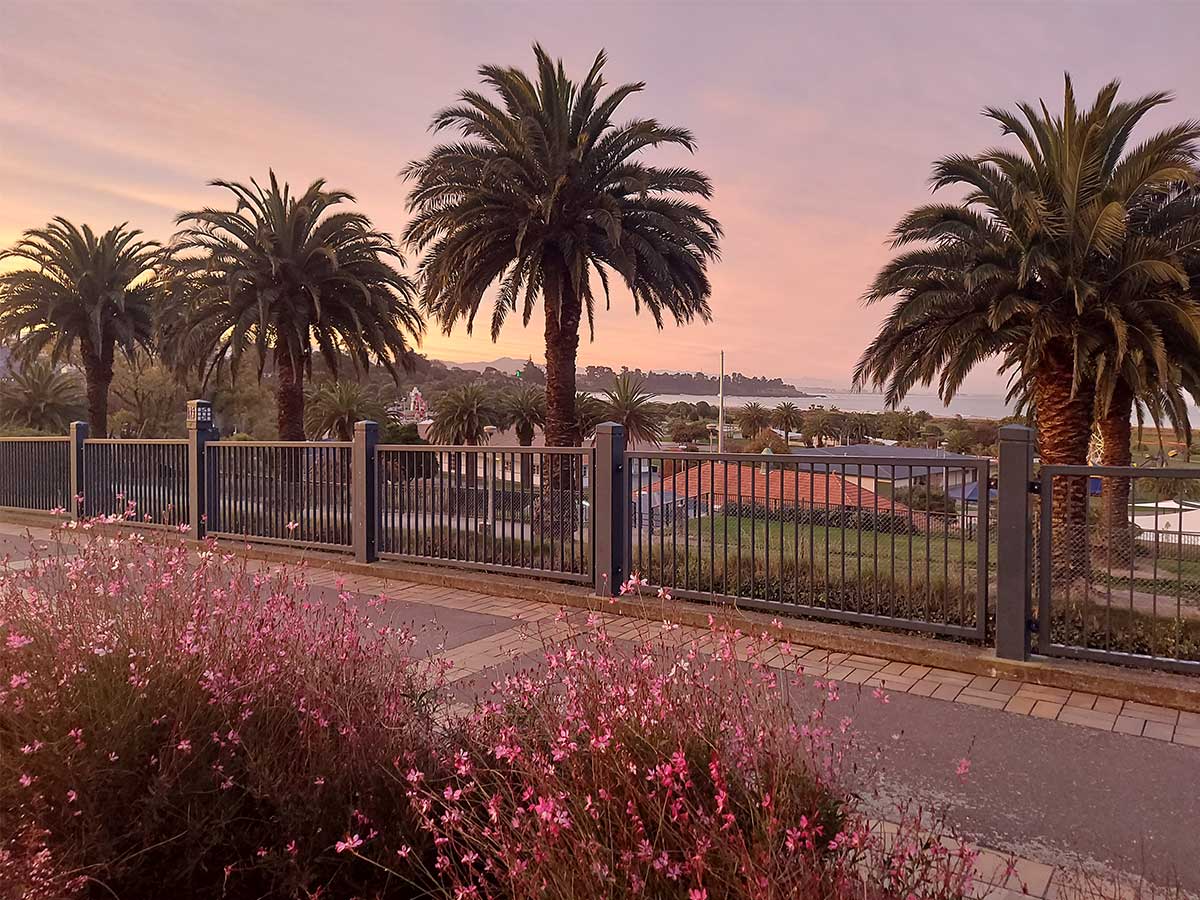
The palm had become more than a plant.
It had become part of the performance of a place.
One tree could make a garden feel unusual. A repeated line of trees could define a route, frame an entrance and give an entire waterfront its own identity.
Could the tropical look survive New Zealand?
When Phoenix palms first appeared in New Zealand nursery catalogues, growers were unsure how well they would cope outside. An Auckland nursery promoted them in 1891 mainly as indoor plants, although it suggested they might survive outdoors in a sheltered position. By 1899, the same firm was confident enough to describe them as suitable for open-air planting.
New Zealand gardeners had discovered something rather useful. They could create part of the tropical effect without providing the tropical climate.
The palms began appearing in private gardens, parks, public entrances and racecourses.
Environmental historian Mike Lloyd has identified the planting at Ellerslie Racecourse as an important influence. About 42 Phoenix palms were established there around 1913 or 1914. Ellerslie attracted large crowds and was already known for its gardens, so visitors from throughout the country encountered the palms arranged as a dramatic avenue.
The idea travelled.
When Palmerston North planned its own Phoenix avenue in 1934, the city curator referred to the plantings at Ellerslie and Myers Park. Beautification advocates in Whanganui also looked north when discussing new palm groves. One successful landscape had become the model for another. This was the early twentieth-century version of seeing an appealing place, taking a photograph and deciding to recreate some of its magic at home.
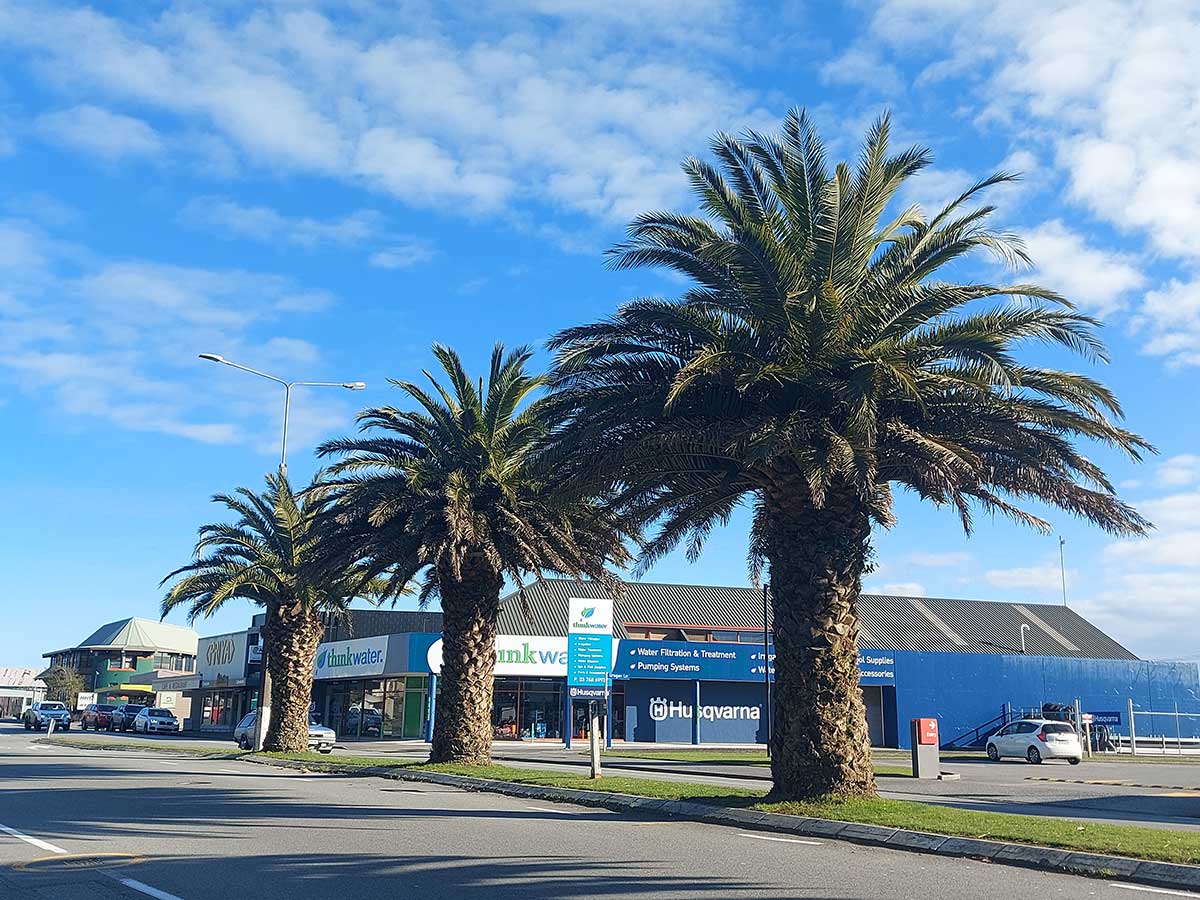
Phoenix Palms in Greymouth 20260711 Roselyn Fauth 2026
Eventually, the idea travelled south, and Caroline Bay was developed as a designed landscape.
Timaru’s artificial harbour impacted the movement of sediment, stone and along the coast, helping a sheltered beach develop beneath the cliffs. The town then transformed that new foreshore into a place for swimming, entertainment, gardens and public gatherings.
Over time, Caroline Bay became Timaru’s seaside playground. Its lawns, paths, buildings and planting were part of a deliberate effort to make the town more attractive to residents and visitors. That distinction helps explain the palms. They formed part of a much larger effort to create a destination that felt generous, memorable and slightly removed from ordinary life.
The people improving Caroline Bay understood that attractive public spaces were not frivolous. A good place could bring people together, draw visitors, support local businesses and give a town something to feel proud of, the palms fit neatly into that ambition.
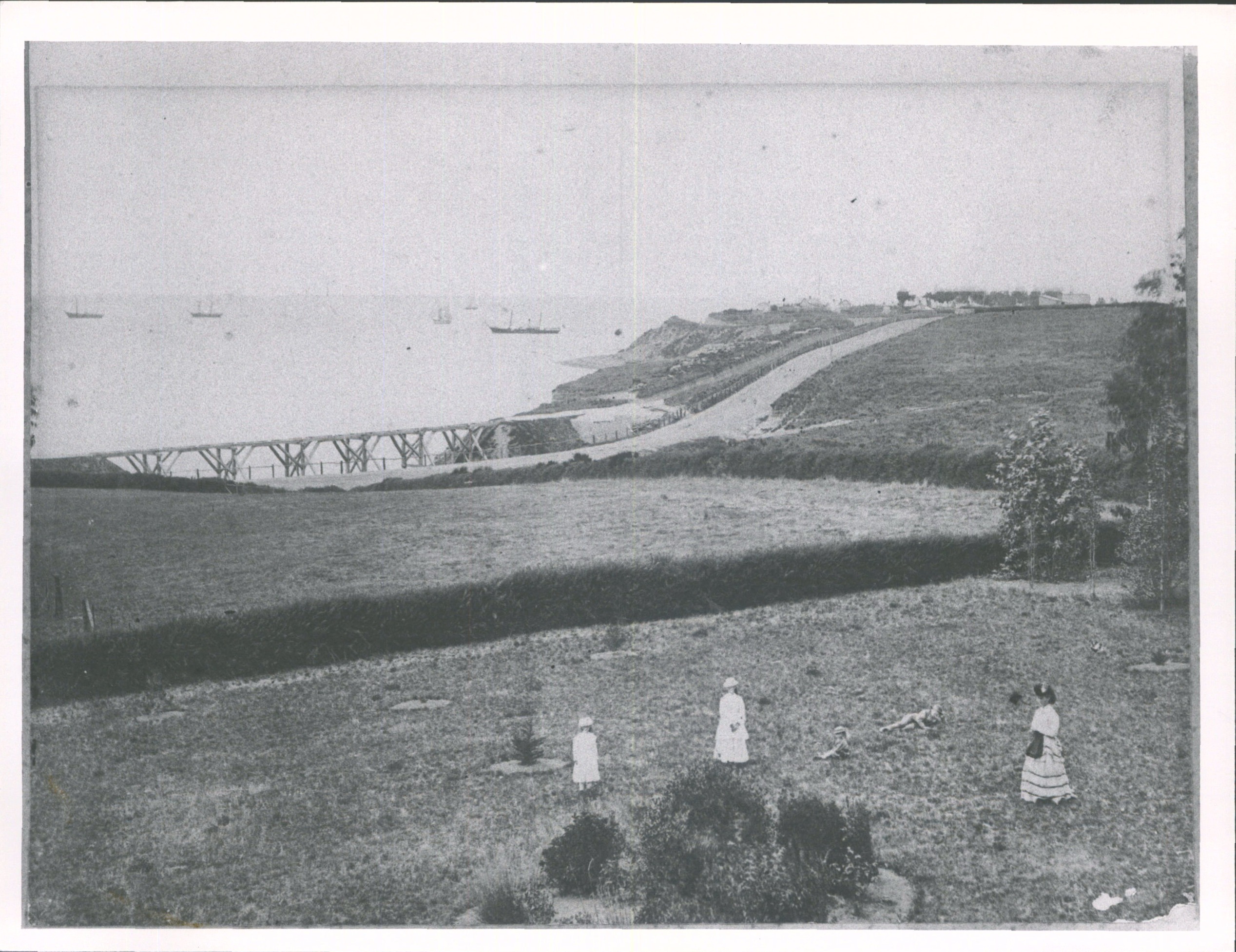
Looking towards the sea near Timaru (1871-1875). Hocken Digital Collections, accessed 17/04/2025, https://hocken.recollect.co.nz/nodes/view/23692 Low quality image. For further information on use of low quality scans and on how to order a high quality image please see conditions of use.
Were there palms at the Bay before 1945?
A newspaper report from 1939 referred to hardy palms planted on a bank near the Caroline Bay pavilion. The report did not identify the species... They may have been Phoenix palms, but the surviving description is not enough to prove it. It would be easy to look at the trees standing there today and project them backwards into every earlier mention of a palm.
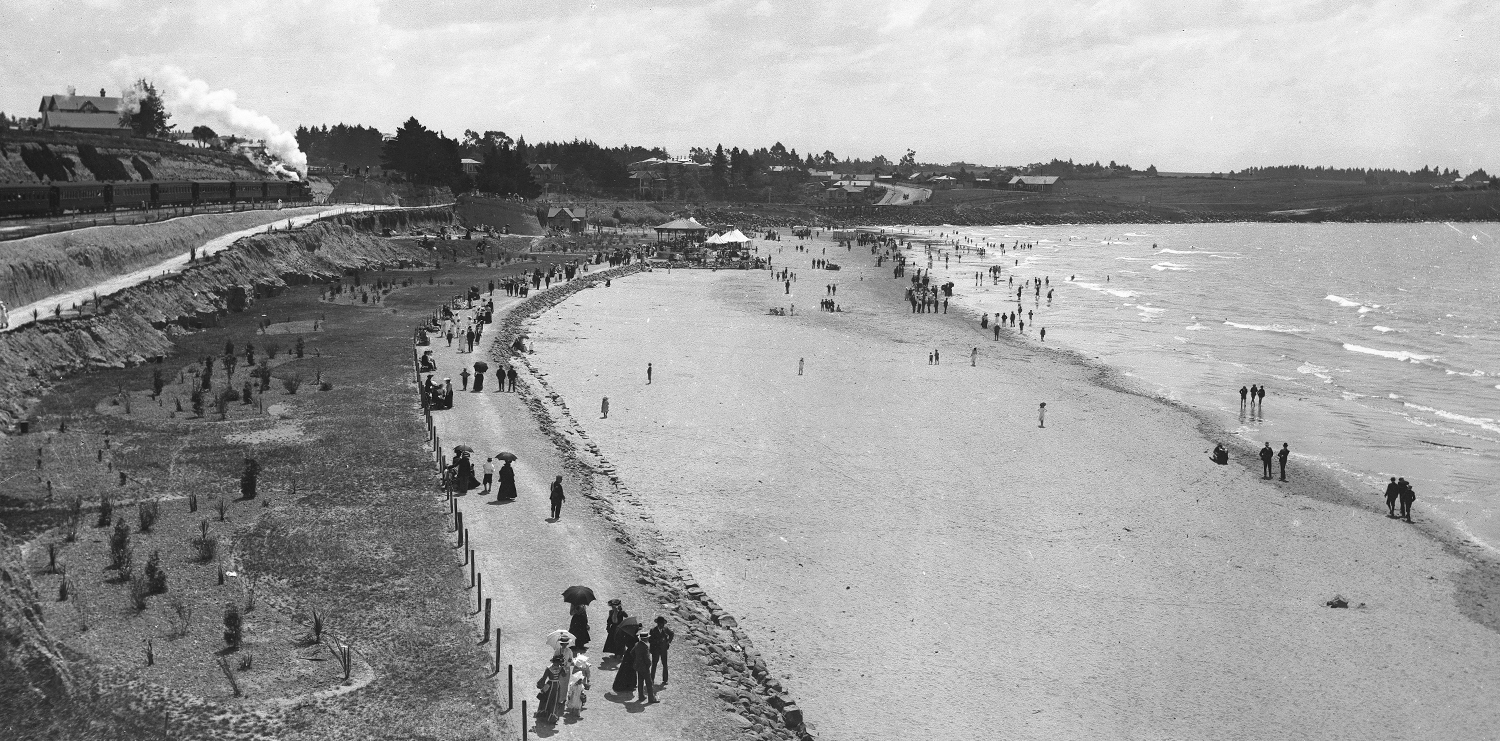
Caroline Bay, Timaru, 1900s, Dunedin, by Muir & Moodie. Te Papa (C.014386)
Eight small palms and a very large idea
In 1945, the Timaru Beautifying Society purchased 50 Canary Island date palms. Eight were selected for Caroline Bay. They were meant to be planted during the Arbor Day programme on 1 August, but heavy rain left the ground too wet. The planting finally went ahead on 12 September 1945. The Society hoped the palms would give the Bay what it called a “tropical appearance”.
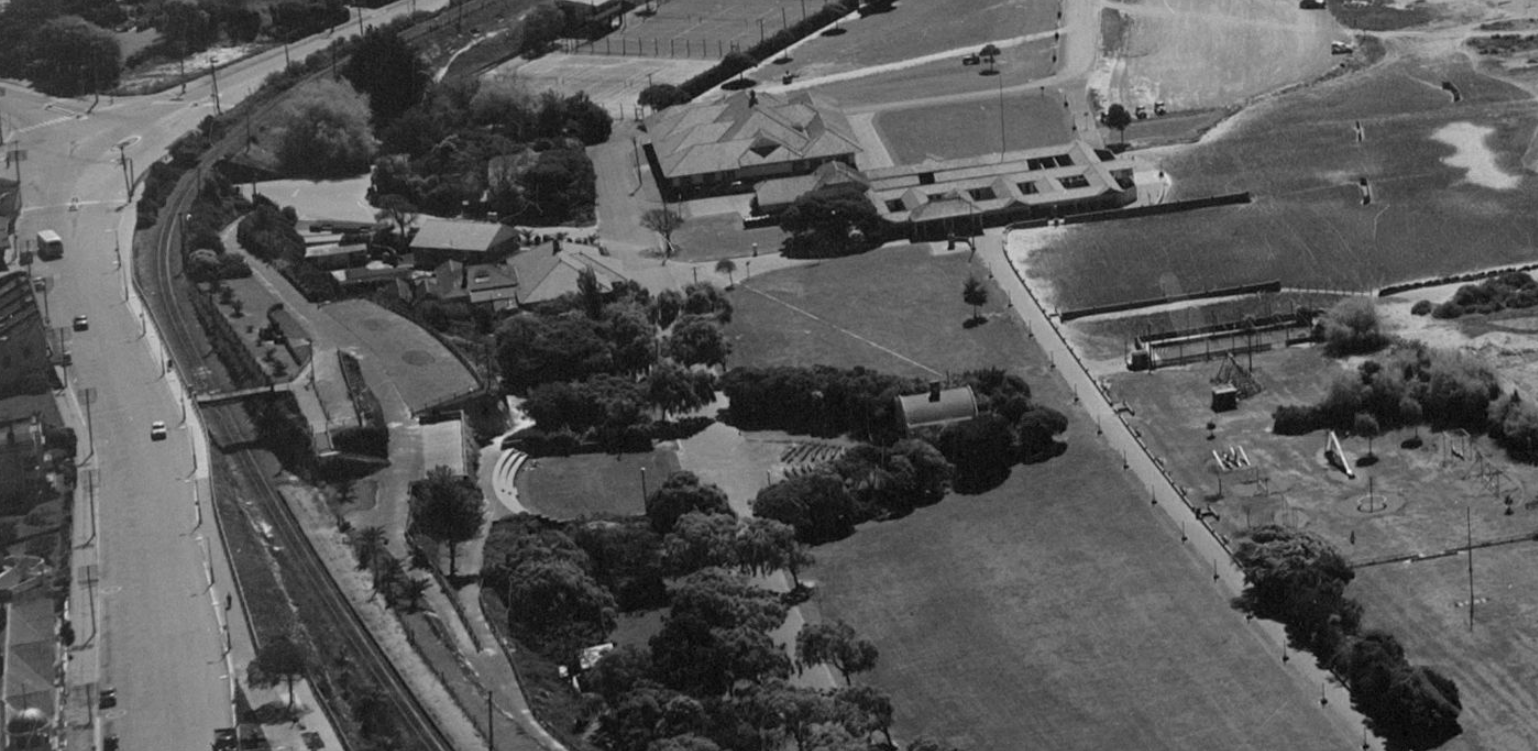
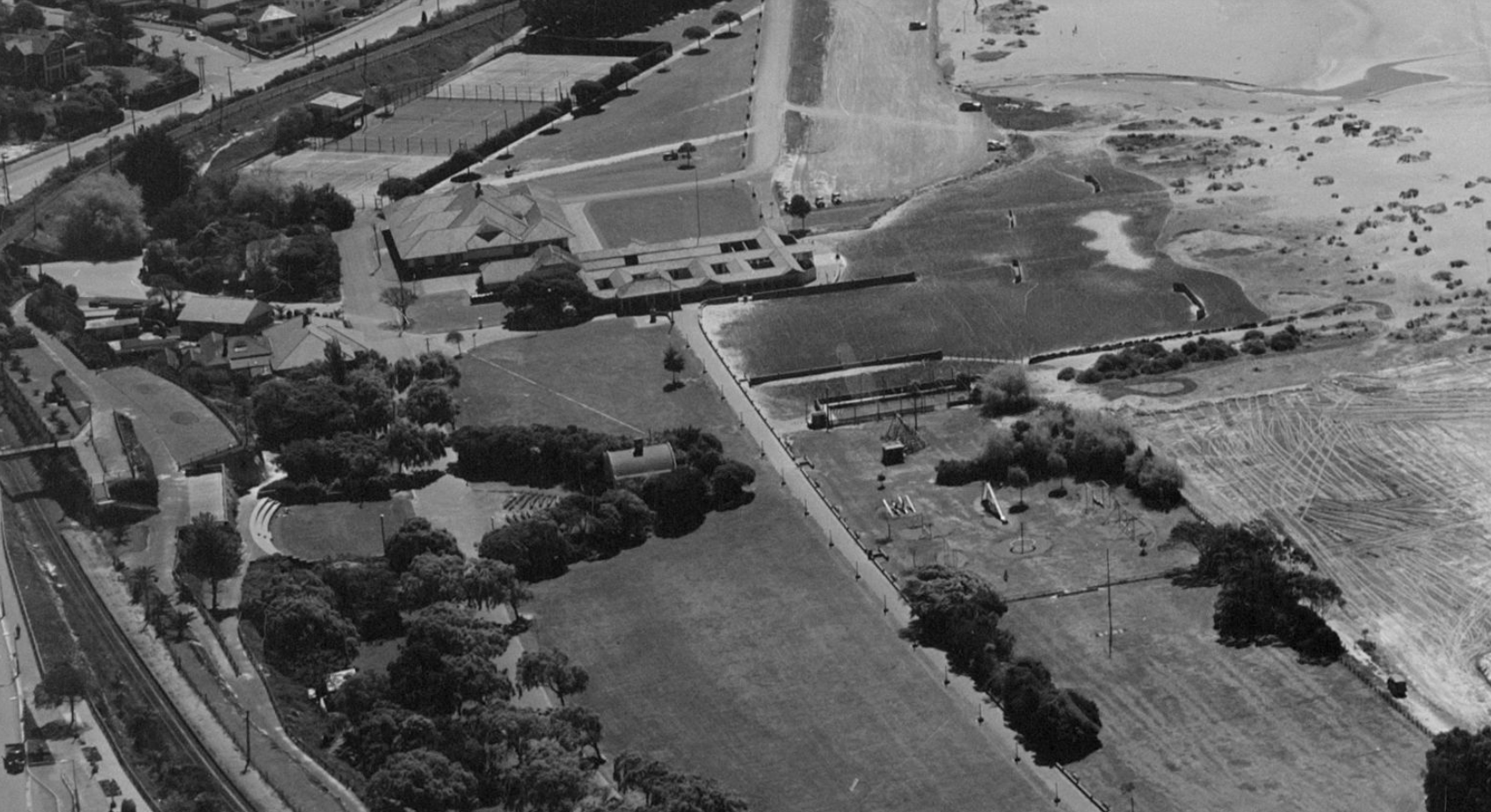
1956 Timaru, includes township, housing and harbour. Whites Aviation Ltd: Photographs. Ref: WA-42349-F. Alexander Turnbull Library, Wellington, New Zealand. /records/30628233
There it is. The mystery solved in three words.
So, the palms were not intended to reproduce a natural Canary Islands ecosystem. They were being used as visual architecture. Their broad crowns, heavy trunks and repeated form could make a path feel grander. They could frame a view, mark an entrance and tell people they had arrived somewhere intended for pleasure. The palms were part of a vision.
Timaru was a working port surrounded by one of New Zealand’s most productive agricultural districts. Caroline Bay offered something different: music, swimming, gardens, carnival rides, picnics and a temporary escape from ordinary life.
The palms helped signal that change of mood.
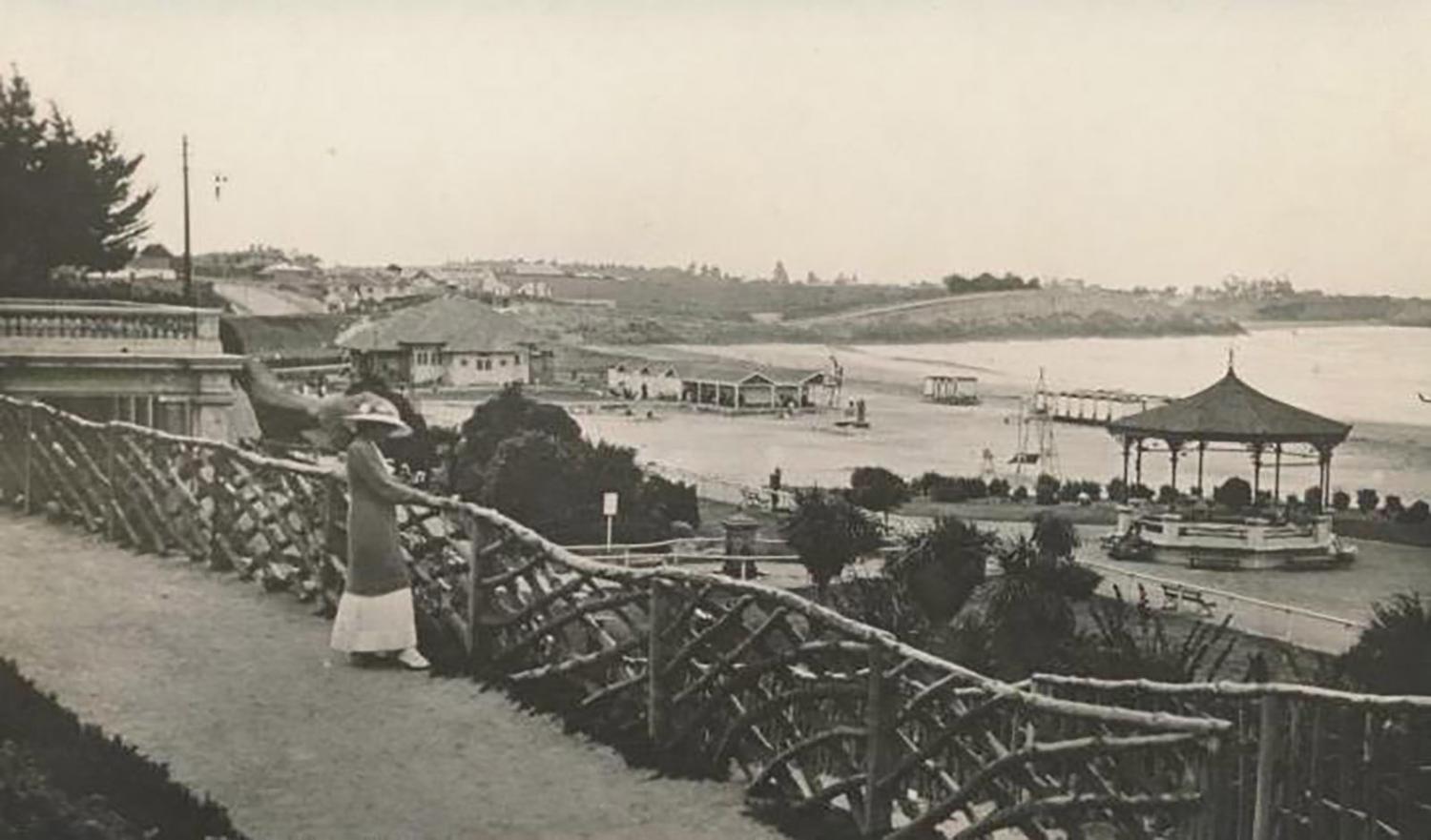
New Zealand - Timaru - Caroline Bay - 1940’s - Fyfe photo - Photo Postcard Format #t443
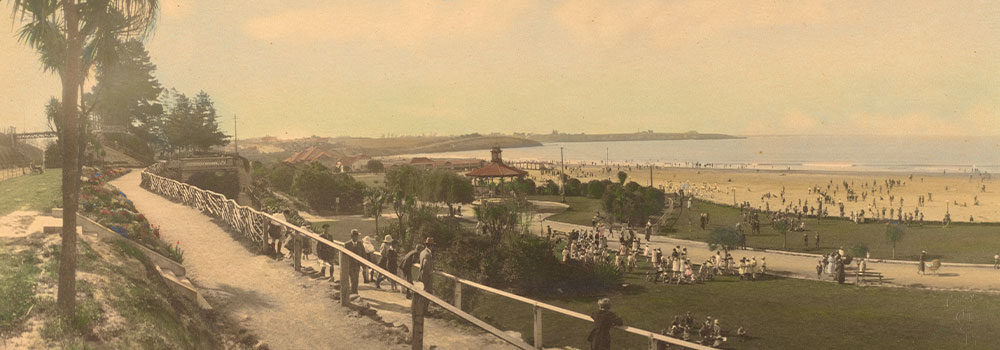
Caroline Bay, Timaru, 1920s, Timaru, by Havelock Williams. Image purchased 1999 with New Zealand Lottery Grants Board funds. Te Papa (O.020793)
When trees become architecture
Those first eight trees were only the beginning... The New Zealand Tree Register now records 75 Phoenix palms at Caroline Bay. It describes them as the largest planting of the species at one site in the South Island and considers them likely to be the most southerly cluster of their kind in the world. That second claim is best treated as a well-informed assessment rather than a formally verified world record.
More palms were planted during the redevelopment of the Bay in 2005. They were arranged in intersecting double rows, with one running roughly north to south and another crossing from west to east.
The younger palms are still growing into the idea behind them.
The people who planted those first eight palms could not stand beneath the great crowns we see now.
They were making a place for people they would never meet, we are those people.
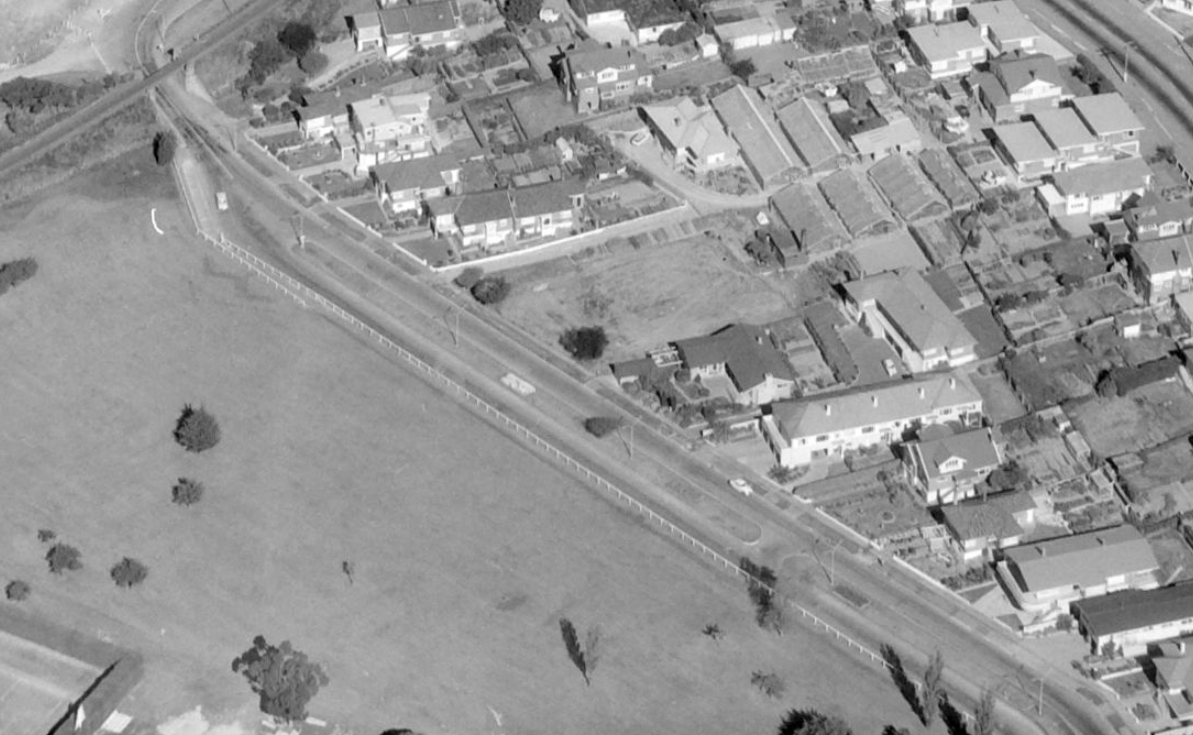
Virtue Ave before the palm trees were planted. Timaru. Whites Aviation Ltd: Photographs. Ref: WA-68501-F. Alexander Turnbull Library, Wellington, New Zealand. /records/22302249
Heritage tree or pest plant?
The story is not simply one of attractive trees and civic foresight. In parts of northern New Zealand, Phoenix palms have escaped cultivation. Birds, water and fallen fruit can carry their seed beyond gardens and formal plantings. Young palms may then establish in dunes, beside streams and among other vegetation.
Their success as tough landscape plants is part of what can make them troublesome.
In the Bay of Plenty, self-propagated Phoenix palms are managed as pest plants. The regional council says they can alter dune form, spread into a wide range of habitats and form a dense layer beneath other vegetation. The sharp spines at the base of their fronds can also injure people and animals.
Does that make the Caroline Bay palms heritage treasures or environmental villains?
Well, they can be both valuable and problematic, depending on where they are growing and what they are doing.
In the Canary Islands, Phoenix canariensis is native, where as at Caroline Bay, mature palms form part of a deliberately created cultural landscape.
In a sensitive habitat where seedlings spread without control, the same species can become an environmental problem.
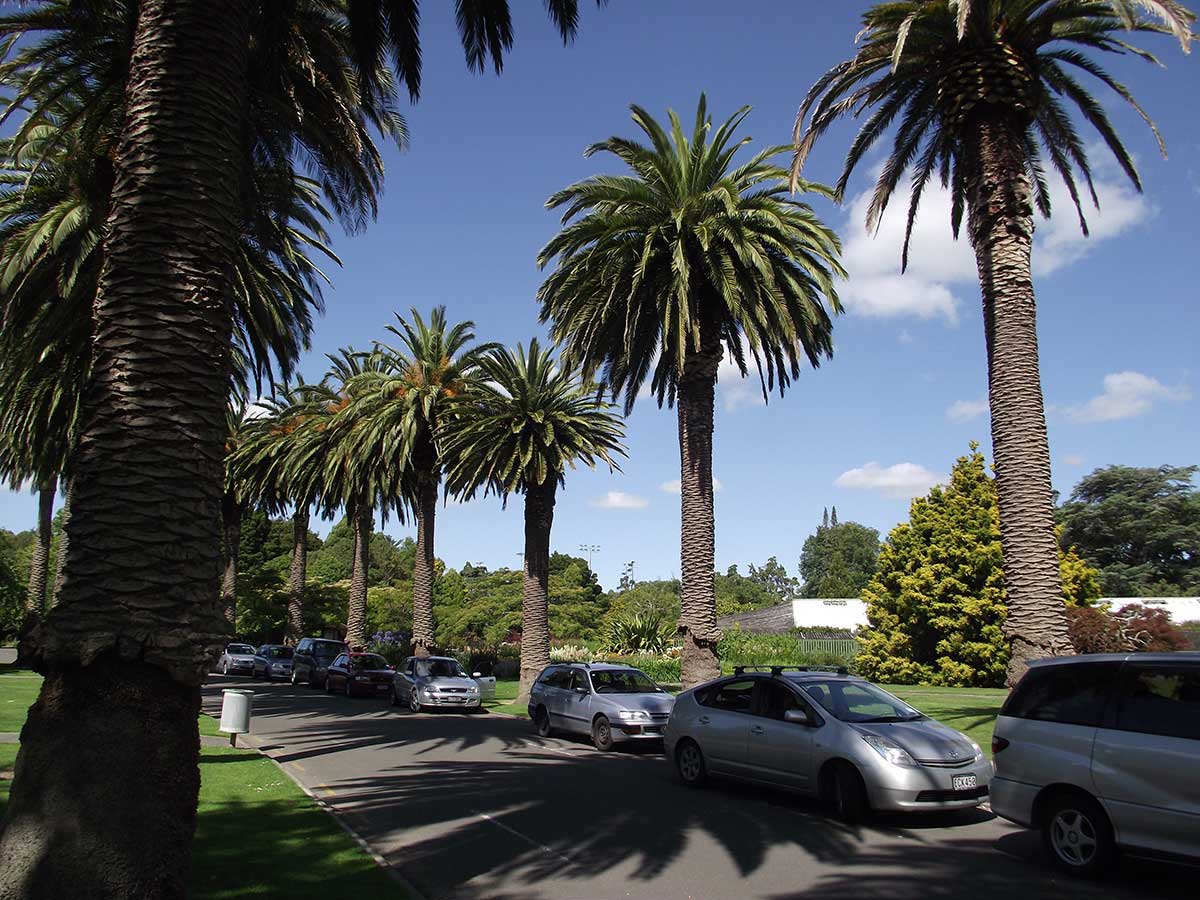
Phoenix palms, Palmerston North park (C.Lewis)
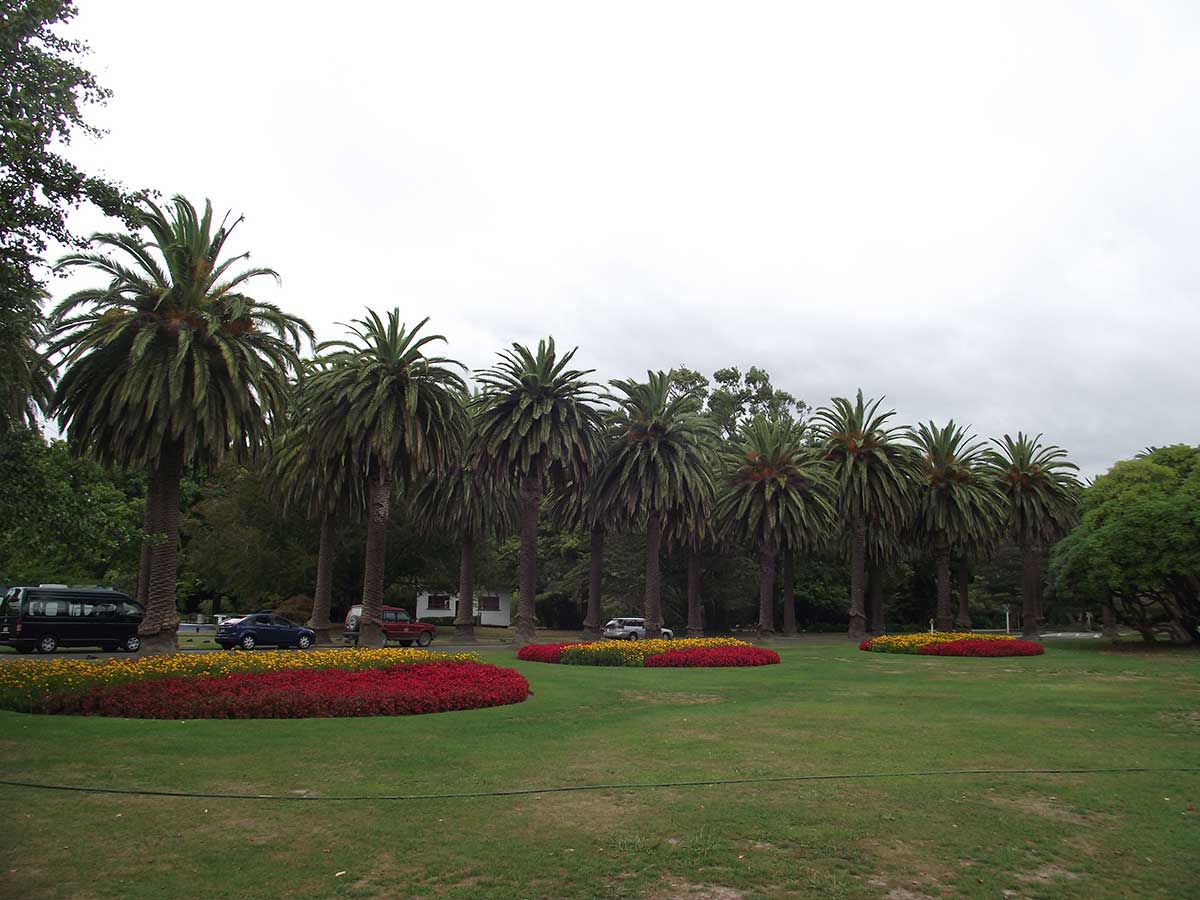
Phoenix palms, Palmerston North park (C.Lewis)
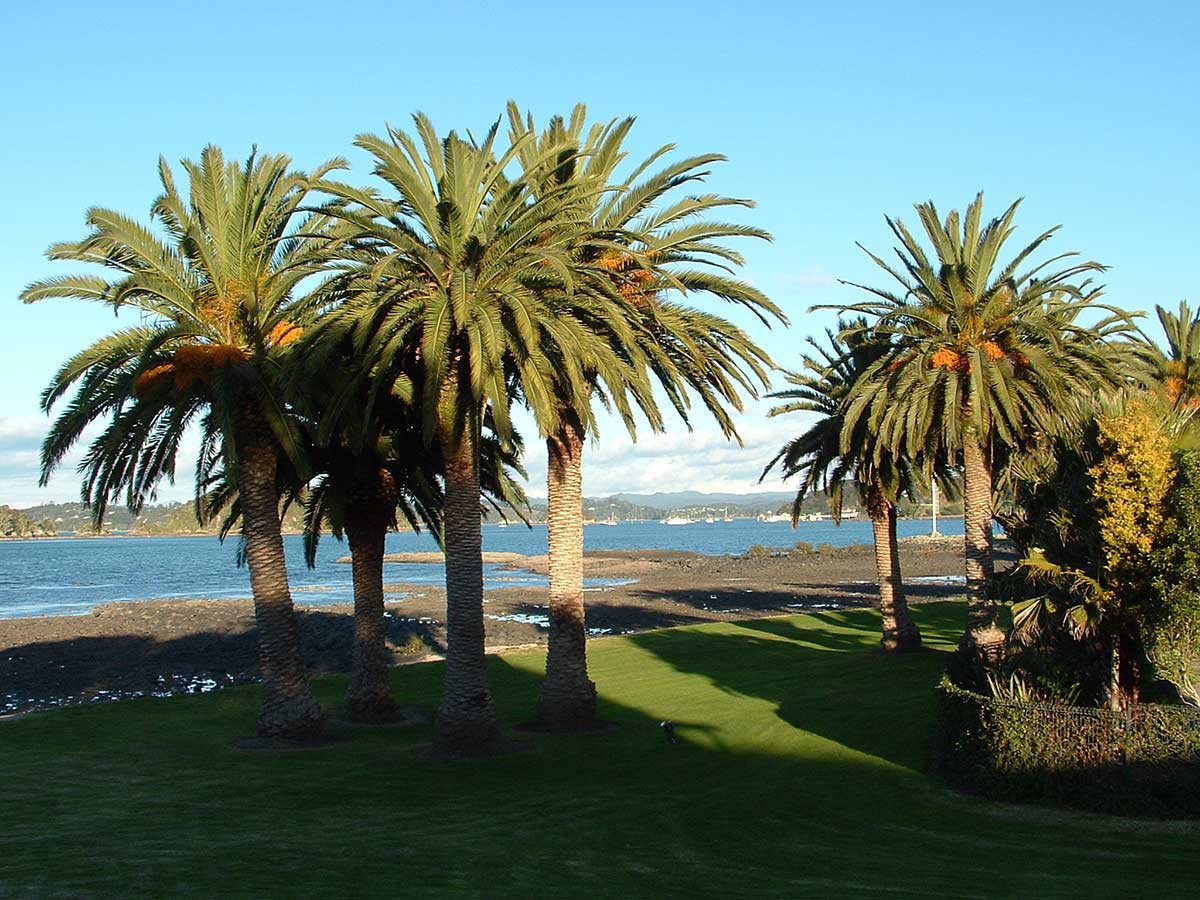
Phoenix palms, waterfront at Paihia (C. Lewis)
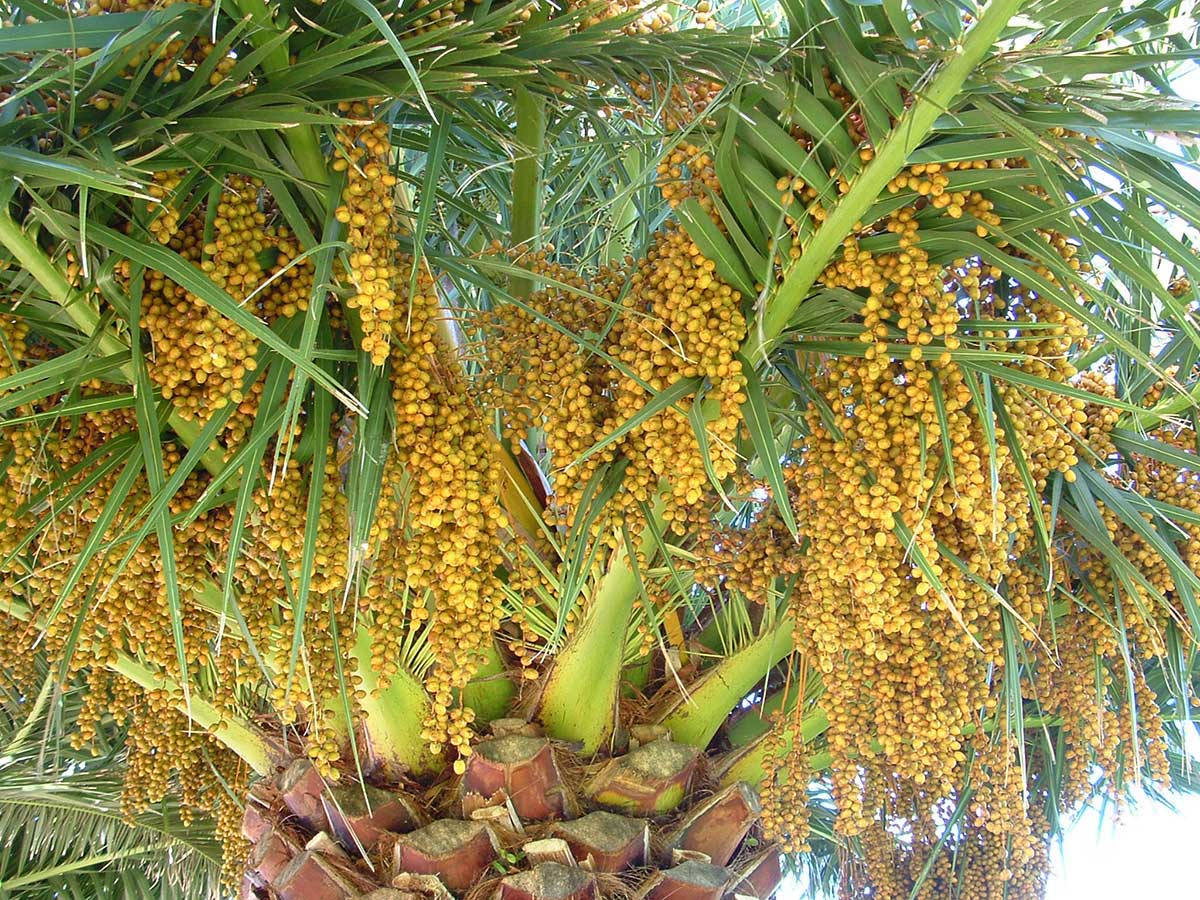
Phoenix palms, fruit, waterfront at Paihia (C.Lewis)
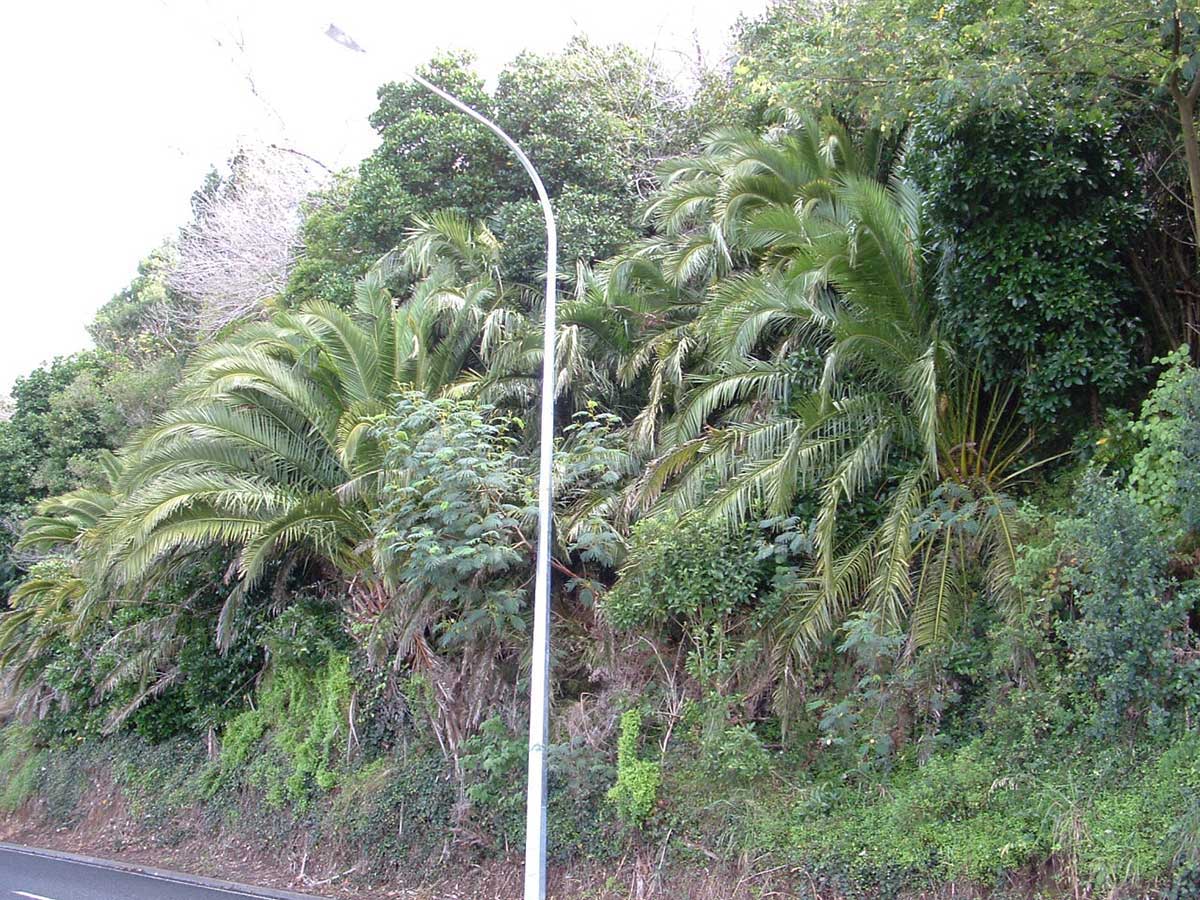
Phoenix palms, spreading into natural areas, Kawhia (C.Lewis)
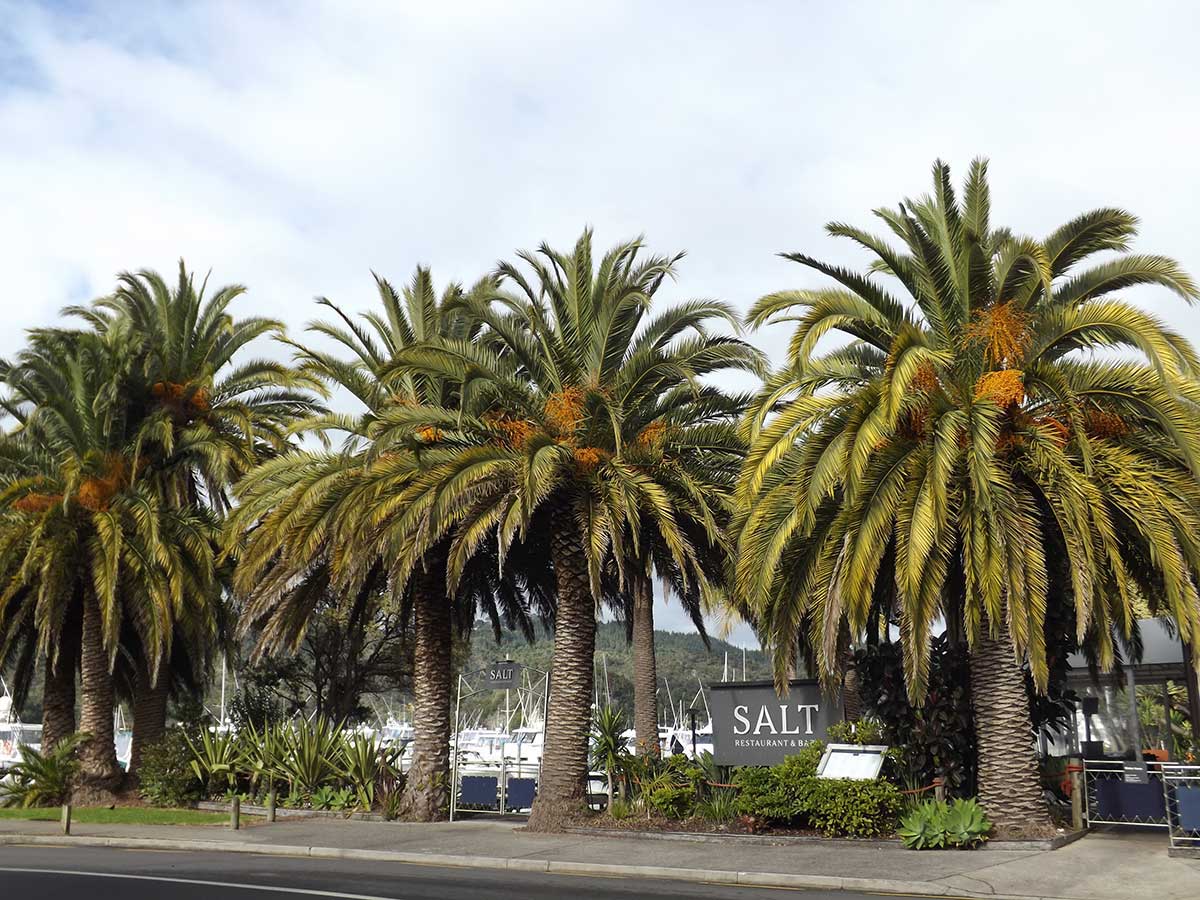
Phoenix palms, Whitianga waterfront (C.Lewis)
Caroline Bay has never stopped changing
The Bay we know contains many layers.
Its beach developed after harbour construction altered coastal processes. Its paths, lawns, buildings and gardens were deliberately created. The palms introduced an exotic resort character.
More recently, parts of the dunes have been restored with native sand-binding plants. That work received the Best Dune Re-vegetation Project trophy in 2010, and little penguins have established a colony in and around Caroline Bay.
The landscape now includes a beach shaped by harbour development, an historic seaside resort, carnival and recreation grounds, memorial spaces, mature exotic trees, recovering native dunes and wildlife habitat.
No single layer tells the whole story.
Perhaps that is what makes Caroline Bay so interesting. It records changing ideas about recreation, beauty, civic pride, nature and what public places should provide.
Heritage does not require us to freeze the landscape at one chosen date.
It asks us to understand how the place developed before deciding what should happen next.
Look up next time you visit
The palms are easy to pass, as they have stood at Caroline Bay for so long that they can feel almost inevitable. But every one of them began with a choice. Someone selected the species, decided where it should go and imagined the effect it might create. Look up and the Bay connects Timaru with the Canary Islands, Mediterranean holiday towns, New Zealand nurseries, Auckland racecourses and generations of local people who believed their town deserved beautiful public spaces.
The palms also offer a warning.
The things we introduce into a landscape can outlive us. They may become landmarks. They may create problems. Sometimes they do both.
Being grateful for what we have inherited does not mean pretending every past decision was perfect. It means looking closely enough to understand what earlier generations attempted, what they achieved and what they could not have predicted.
That knowledge gives us something more useful than nostalgia, it also gives us experience.
In September 1945, eight small palms were placed in the ground for a future Timaru. More than 80 years later, that future has arrived. The next decision belongs to us.
What should we plant, protect and restore today so that people walking through Caroline Bay in another 80 years will be grateful that we thought of them?
The article was dated 30/9/1939 and titled ‘Work At Bay.’ The only reference to palms being planted was in the following sentence. ‘ Further along on the north side of the pavilion there are other recessed seats, and hardy palms have been planted on the bank above’. That gives us the year 1939, when they were first recorded as having been planted here aging the biggest ones at around 70-80yrs old.
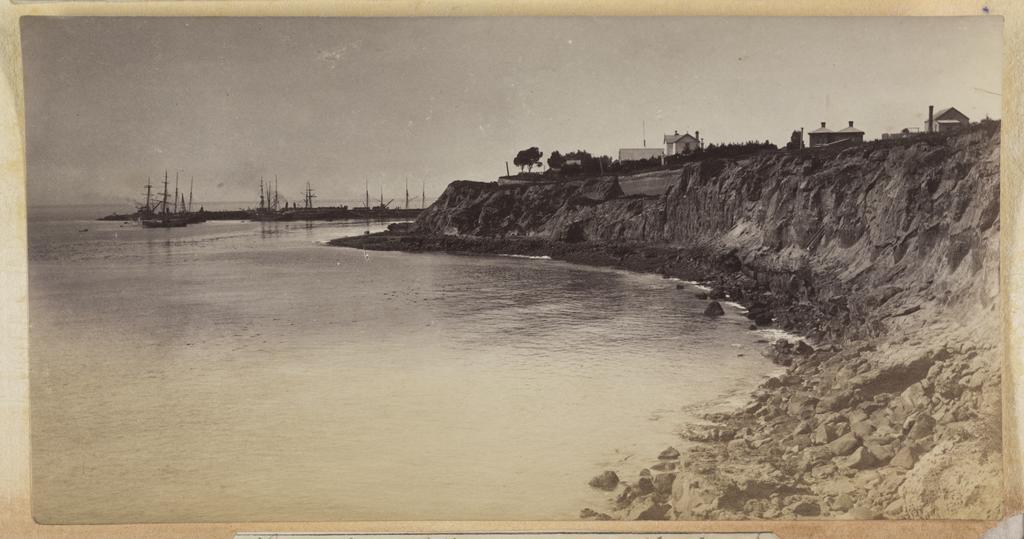
This photograph shows a rocky cliff area of coastline with the harbour and sailing ships in the distance. Unknown, Timaru coast (c.1880s). Hocken Digital Collections, accessed 23/07/2026, https://hocken.recollect.co.nz/nodes/view/58441

The species originates from The Canary Islands and its correct name is Phoenix Canariensis, the Canary Island Date Palm, they are often referred to as Pineapple palms or Phoenix palms. The palm is easily recognized through its crown of leaves and trunk characteristics. When pruned, the bottom of the crown, also called the nut, appears to have a pineapple shape. It grows as a large solitary palm reaching between 10–20m in height. Photography By Roselyn Fauth

Photography By Roselyn Fauth

Photography By Roselyn Fauth

Photography By Roselyn Fauth

Photography By Roselyn Fauth

Photography By Roselyn Fauth
Research acknowledgement
This blog was informed by Mike Lloyd’s paper, “‘As seen at Ellerslie’: The spread of Phoenix palm sets in New Zealand”, published in the International Review of Environmental History in 2025. His research establishes much of the wider context for the use and spread of grouped Phoenix plantings in New Zealand.