
A second rabbit hole after my bumblebee story led to Isaac Hopkins, a gin-case beehive, a growing export trade and an unexpected connection to my grandfather at Fairview.
I love watching the bees in our garden. While researching bumblebees I went looking for old records and discovered a 1914 government report by Isaac Hopkins. I wrote about it in my first humble-bee story. Then I noticed how much else Hopkins had written.
I followed the trail from his illustrated bee manual of 1886 to the 1907 government bulletin, the larger 1909 Bee-Culture guide, and his 1916 reminiscences. I began with the pictures. The people behind them, and the questions they were trying to solve, kept me reading.
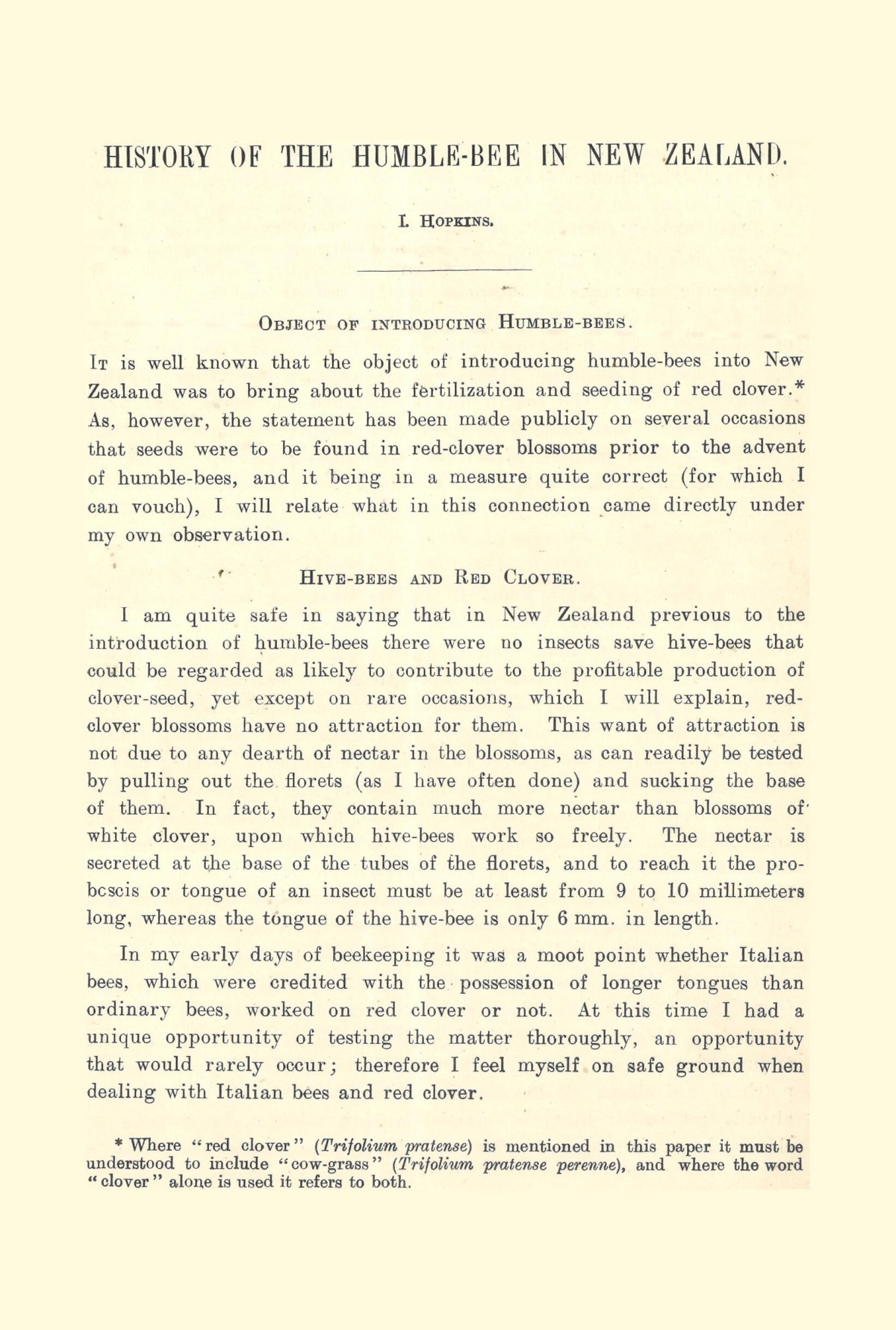 Where my search started. The cover of Hopkins’ 1914 bulletin names him as formerly Chief Government Apiarist. This is a direct scan of the original, not a recreation. Credit: Department of Agriculture, Bulletin No. 46, March 1914. View original source.
A face behind the words
The 1909 edition of Bee-Culture gave me something I had been looking for: a photograph of Isaac Hopkins himself. It is printed as the book's frontispiece, identifying him as an apiculturist. I like seeing the person whose experiments and arguments I have been following through these old pages.
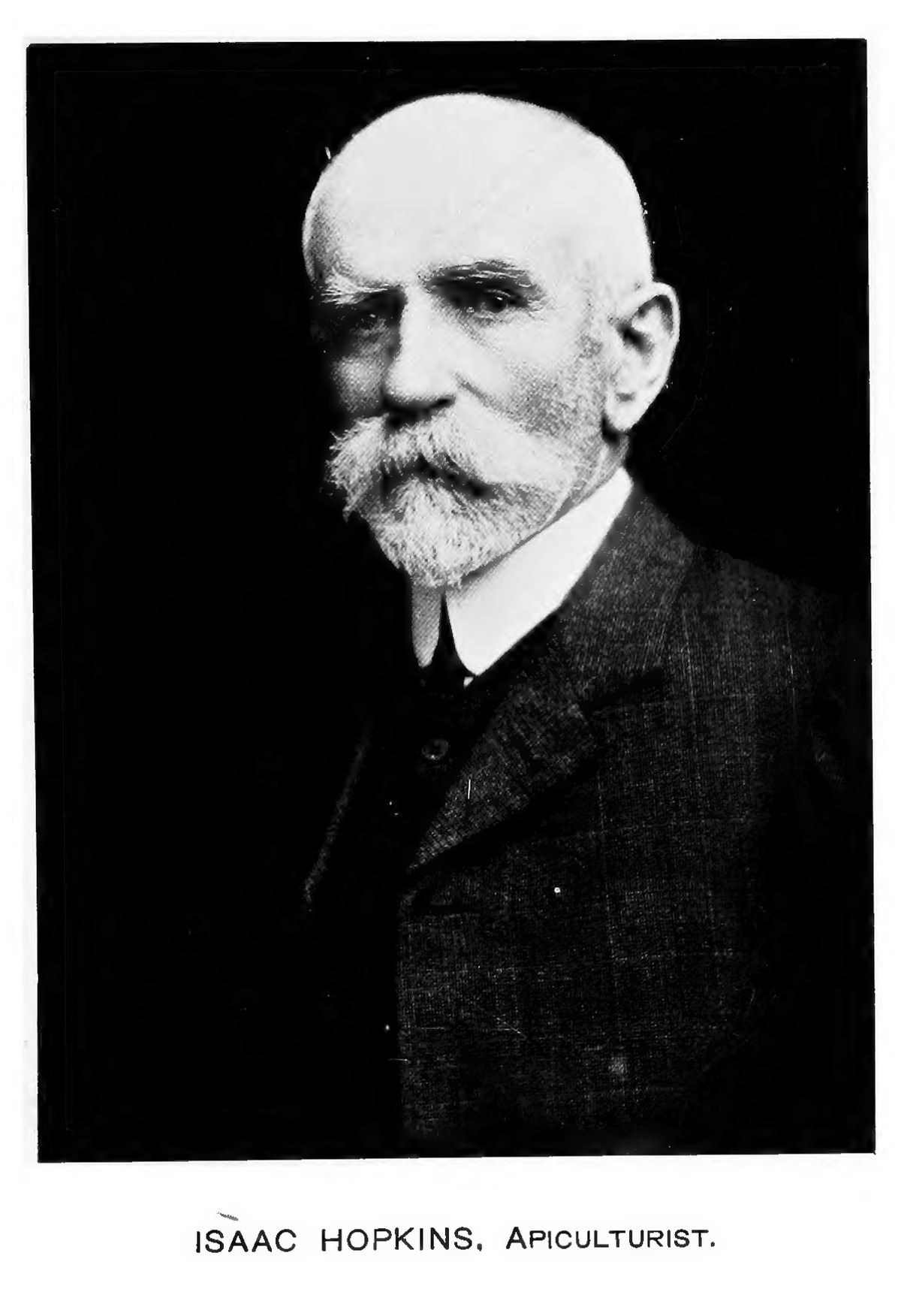
Isaac Hopkins, photographed for the 1909 edition of his government beekeeping manual. The original printed caption reads “Isaac Hopkins, Apiculturist”. Source: Isaac Hopkins, Bee-Culture, New Zealand Department of Agriculture, Bulletin No. 18 (1909). Cornell University Library digitised copy. View the original scanned page. Read the complete bulletin.
A gin case on the Thames goldfield
According to Hopkins’ own recollections, he began keeping bees at Thames in 1874, using an old gin case as a hive. I love this detail. The man who later advised the government on an entire industry started with a recycled wooden box.
Thames was then a bustling goldfield settlement, where miners and tradespeople were trying to make their fortunes. Meanwhile, Canterbury farms were spreading across the plains, Timaru was developing its harbour and railway connections, and New Zealand producers were increasingly looking towards distant customers. By 1882, the successful first shipment of frozen meat to Britain had begun changing the possibilities for farming.
Books and correspondence were precious sources of practical knowledge. Hopkins borrowed and bought what he could, then tested the advice in his own apiary. The Dictionary of New Zealand Biography records that in 1879 he obtained a copy of Lorenzo Langstroth’s writing and used it to build his first moveable-frame hives.
WuHoo! A gin case became a beehive. I would love to have seen his first attempt. He was learning to observe an insect’s behaviour, adapt a design, make mistakes and try again. That investigative habit runs through his books.
Look what he made from a kerosene case
Here is another delightful find in the 1909 bulletin. Hopkins included Plate II, a frame hive constructed from a recycled kerosene case. It is illustrated open, revealing the frames, and closed. The design helped a settler make a practical hive without buying an expensive ready-made box.
WuHoo! A second recycled box, with removable frames this time. The plate isn't a picture of the gin-case hive he first used at Thames in 1874. It is a later design demonstrating how he adapted established beekeeping principles for people with limited resources.
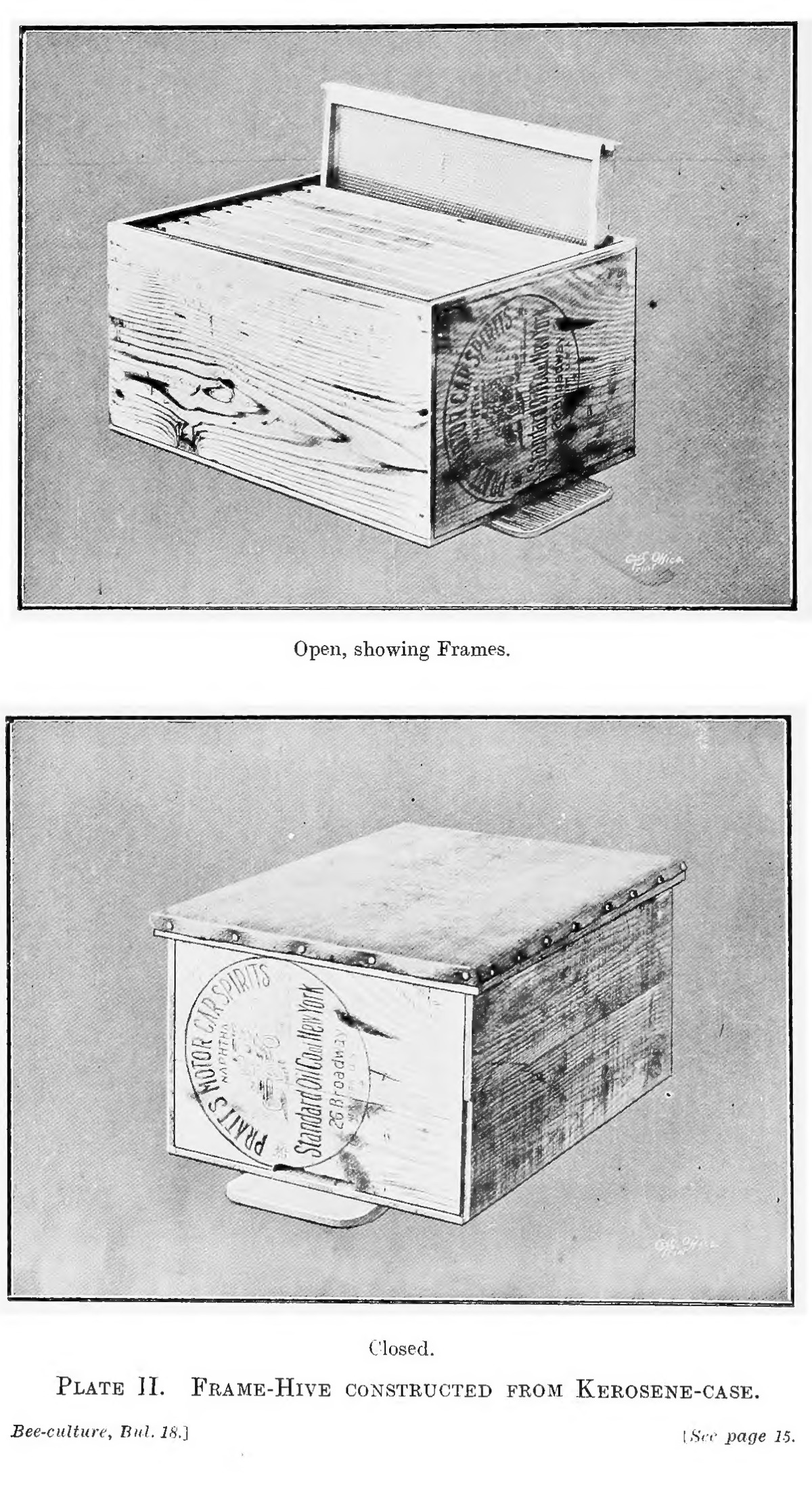
WuHoo! A recycled kerosene case made into a practical frame hive. Plate II shows it open, with the frames visible, and closed. This was not Hopkins’ first gin-case hive from 1874. Source: Isaac Hopkins, Bee-Culture, New Zealand Department of Agriculture, Bulletin No. 18 (1909). Cornell University Library digitised copy. View the original scanned page. Read the complete bulletin.
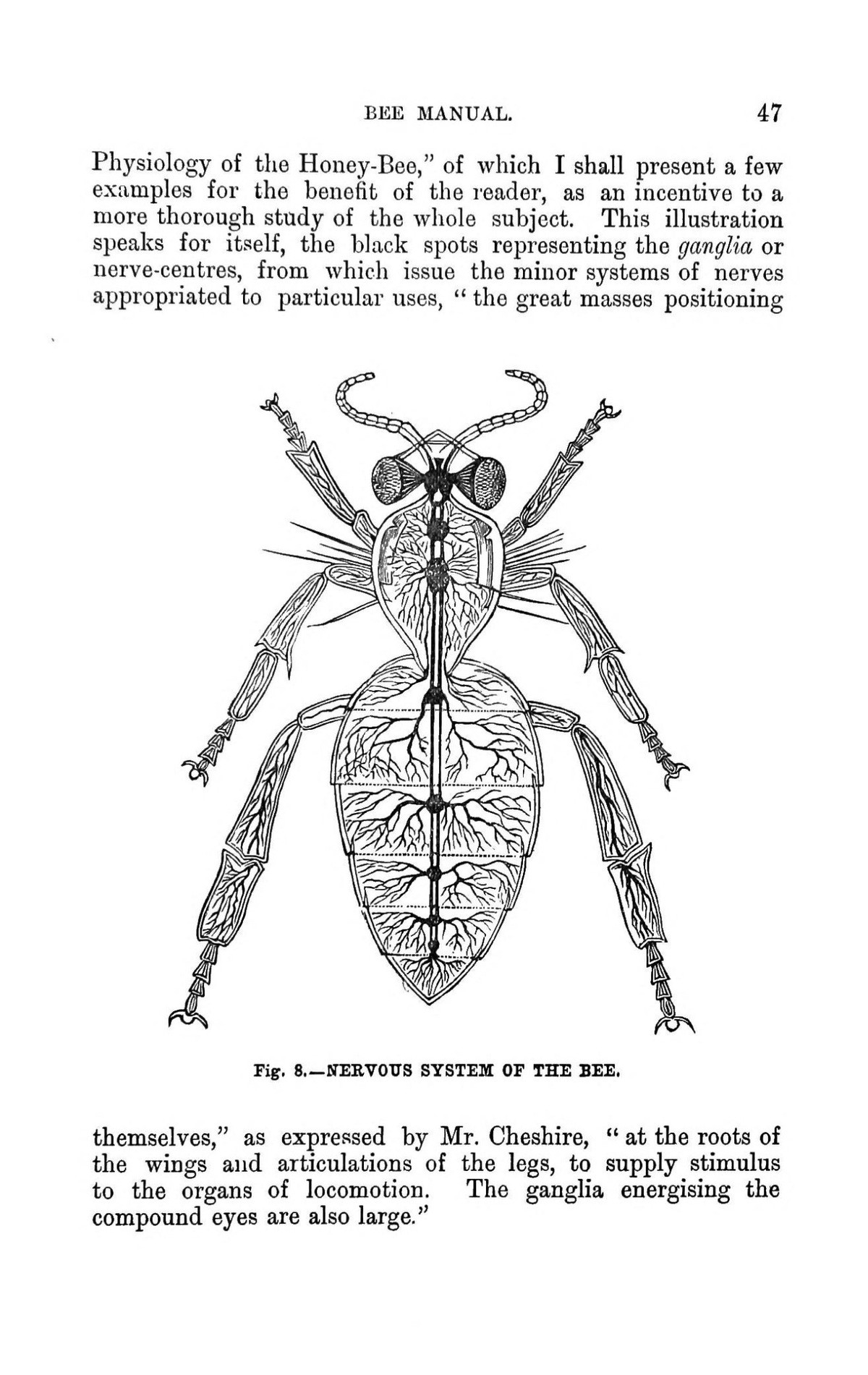
This remarkable diagram appears in Hopkins’ Illustrated Australasian Bee Manual (1886), Fig. 8, printed p. 47. It shows how closely beekeepers were studying bee anatomy, although the underlying illustration may draw on other researchers’ work. Credit: Cornell University Library / Biodiversity Heritage Library. View original source.
There were already pollinators in Aotearoa
Before European honeybees arrived, native bees, flies, moths, beetles and birds were already carrying pollen between native flowers. Some plants relied on the wind. Introducing honeybees did not introduce pollination to New Zealand.
And this isn't only about the past. The Department of Conservation's review of honeybees on public conservation land cautions against assuming introduced honeybees are the best pollinators of native plants. Indigenous insects can also visit and pollinate introduced agricultural crops. A honeybee, a native bee and a fly may all visit the same flower, but they need not perform the same job equally well. Read the DOC review.

Native Bee Polinators From South Canterbury Museum - Roselyn Fauth
Who else visits our flowers? Native bee specimens photographed at South Canterbury Museum. These are preserved specimens, not live garden photographs. Photo: Roselyn Fauth / WuHoo Timaru. See the original photograph and related story.
The government history website NZHistory says Mary Bumby probably brought the first successfully established European honeybees here in 1839, taking two hives to the Hokianga. The same account records Hopkins’ observation that Māori were collecting and selling honey from wild colonies by the 1860s.
Huh, I never knew that! According to NZHistory, Māori were gathering and selling honey from wild colonies by the 1860s, before Hopkins began keeping bees. William Charles Cotton had also written a New Zealand beekeeping manual in 1848. Hopkins didn't begin beekeeping here; he became one of the people who helped transform its methods and scale.
Why a frame made such a difference
With an old box or straw skep, bees built wax comb wherever they pleased. Harvesting honey could mean cutting apart the comb and sometimes killing the bees. Moveable-frame hives allowed a beekeeper to lift out separate frames, examine the brood (young developing bees), look for disease and return the comb to the colony.
Langstroth’s system used bee space, the small gaps bees will usually leave as passageways rather than filling them with extra comb or sticky propolis. Hopkins adopted and explained these methods for New Zealand conditions. His manual helped other people make the same transition.
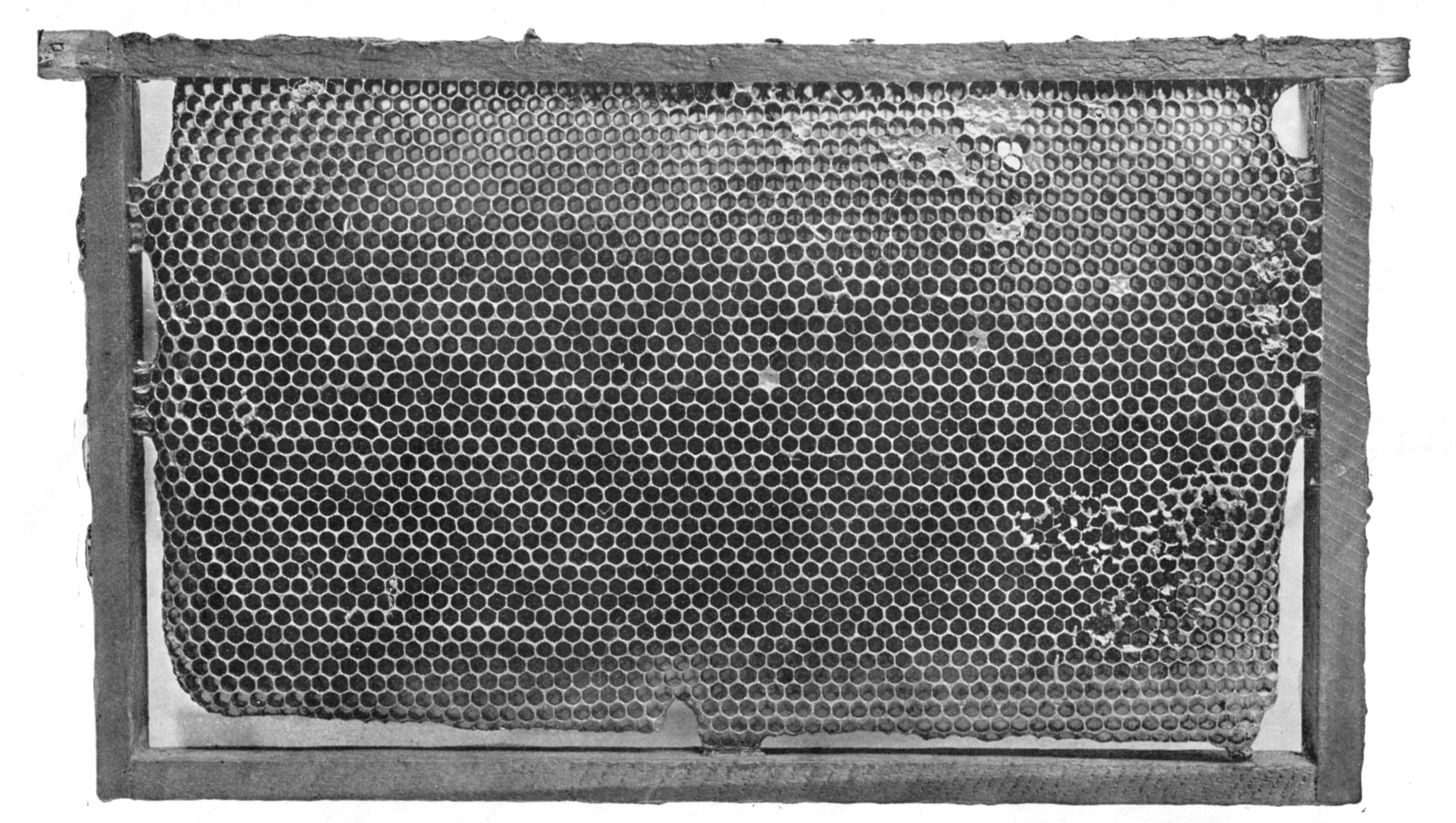
A wooden frame of worker comb, illustrated in Hopkins’ revised Bee-Culture bulletin (1907), Plate I. The original plate helps explain why moveable frames made inspection and honey harvesting less destructive. Credit: New Zealand Department of Agriculture. View original source.
His 1907 government bulletin went well beyond hive design. According to its preface, the first edition in 1905 had a print run of 10,000; the revised second edition was also issued in 10,000 copies. That is a considerable investment in practical agricultural education for the time. Open the complete 1907 bulletin.
And the demand for advice kept growing. Hopkins' 1909 Bee-Culture expanded the material into a larger, illustrated guide, with a stated third-edition print run of 25,000 copies. It contains an actual portrait of Hopkins, photographs of government apiaries and a frame hive built from a recycled kerosene case. That is not a photograph of his first gin-case hive, but it shows exactly the kind of improvisation he championed. Explore the original illustrated 1909 guide.
From nectar to something you can sell
It’s easy to take a jar of honey for granted. For the bees, honey is food. A worker collects sugary nectar from flowers, carries it in her crop (sometimes called the honey stomach) and returns it to the hive. Enzymes act on the sugars; workers reduce the moisture and store the concentrated honey in wax cells.
Nectar is different from pollen. Nectar supplies sugar-rich energy. Pollen contains the reproductive cells of flowering plants and provides bees with protein and other nutrients, especially for feeding their developing young. When bees move from flower to flower, they can also transfer pollen and help plants make seed.
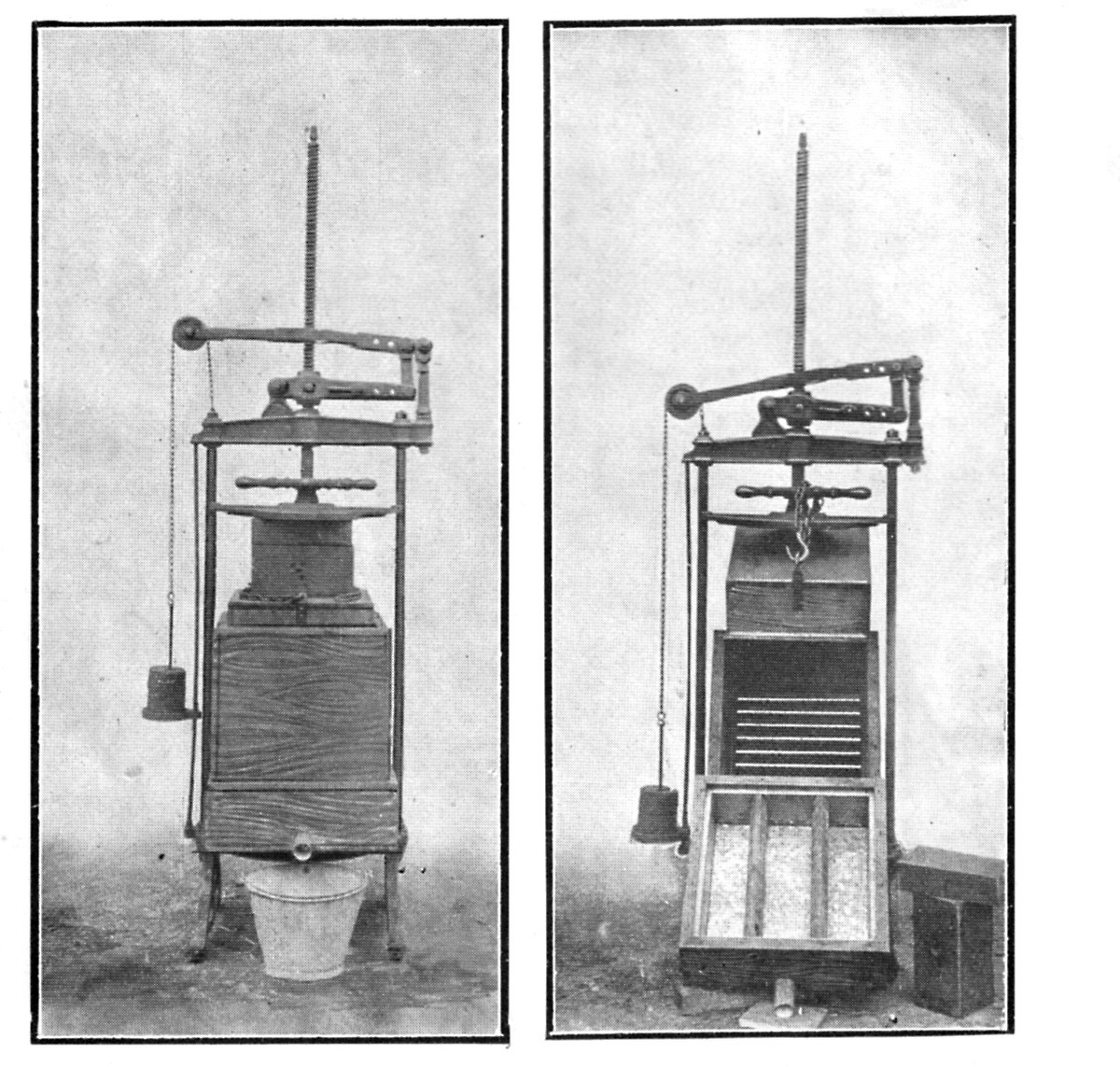
Hopkins recognised that producing honey was only half the job. A beekeeper had to sell a consistent product. In his 1907 bulletin he devoted an entire section to the moisture content and ripening of honey. Honey with too much water could ferment before the customer ever opened the tin.
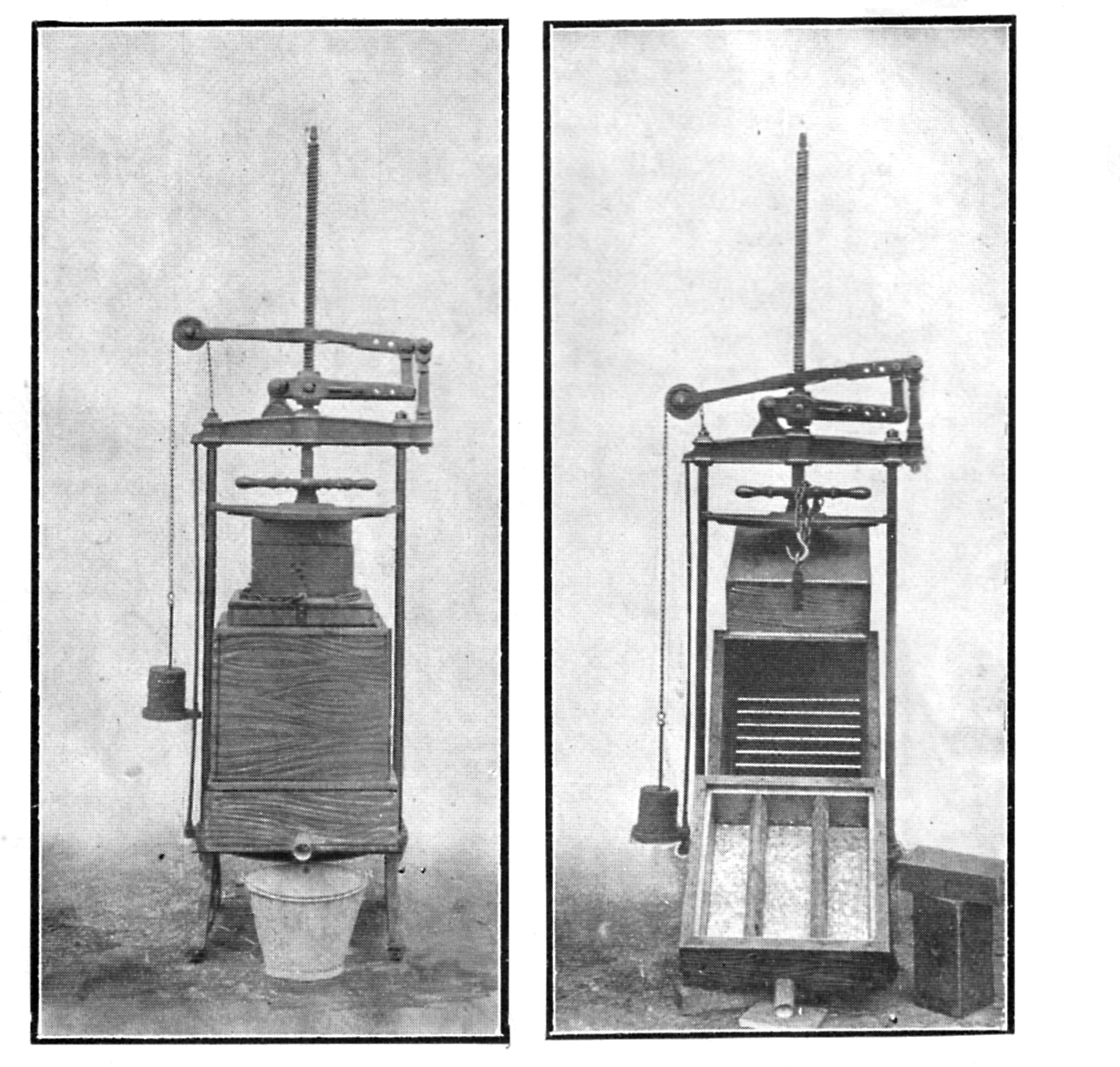
A cheese press adapted to squeeze honey from comb. The two original photographs were reproduced as Plate VI in Hopkins’ Bee-Culture (1907). I love the practicality of this: use what you have and adapt it. Credit: New Zealand Department of Agriculture. View original source.
A Government Apiarist, and a growing industry
In January 1905 Hopkins became Government Apiarist. According to a report of his address in the New Zealand Mail, 5 July 1905, he was travelling through both islands, explaining modern techniques and demonstrating hive equipment. He was trying to help beekeepers increase production and improve the quality of their work.
Bee diseases were a serious obstacle. Poorly managed or infected colonies could put neighbouring hives at risk. Hopkins’ 1907 publication discussed foulbrood, a bacterial disease of developing bees, and separately described damage caused by wax-moth larvae. Old treatments in these pages are historical evidence, not advice to follow today.
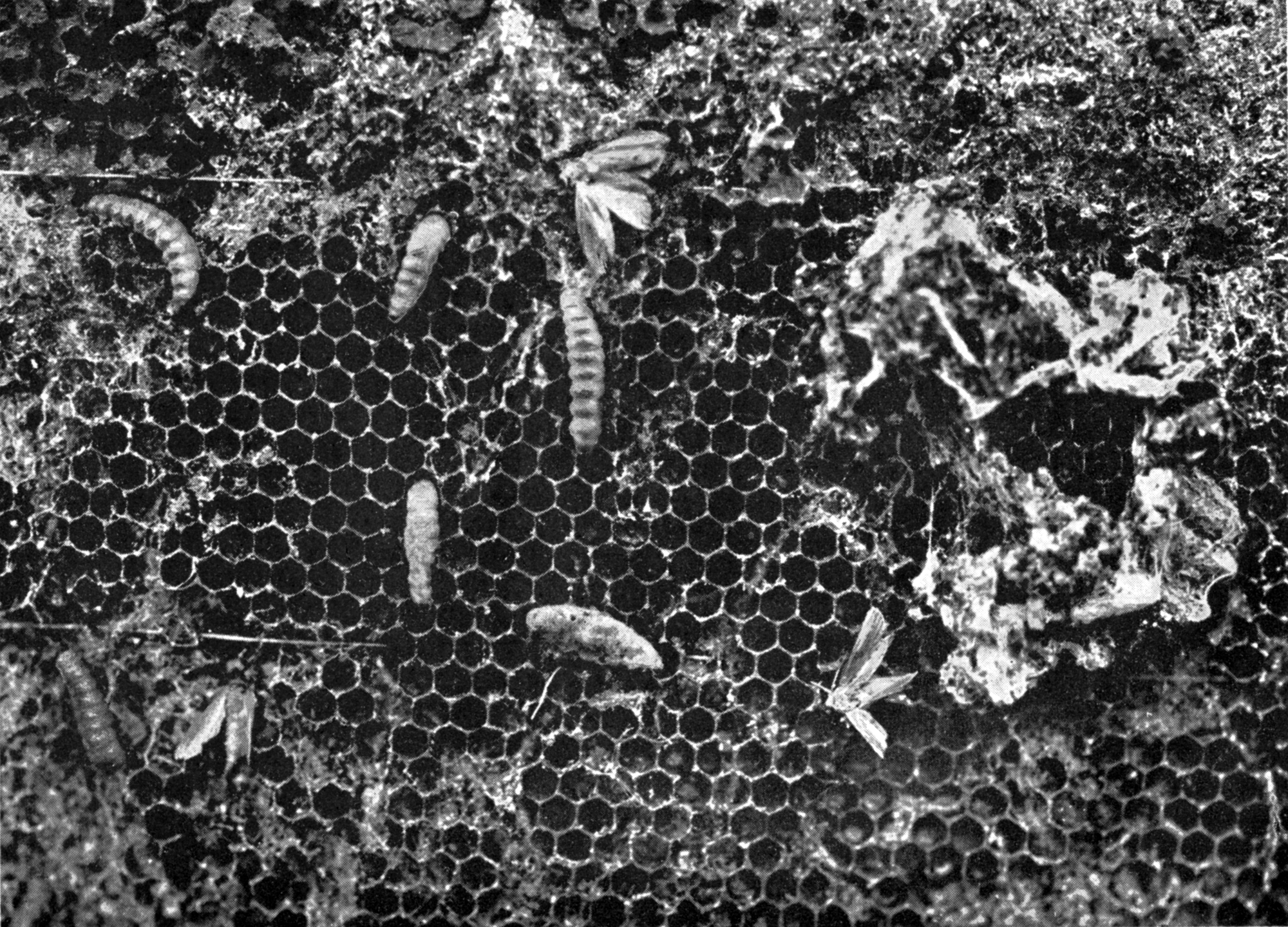
One of the problems early beekeepers had to recognise: wax-moth damage. Original Plate V in Hopkins’ Bee-Culture (1907). This is a historical photograph, not an image of foulbrood. Credit: New Zealand Department of Agriculture. View original source.
At the 1906–07 New Zealand International Exhibition in Christchurch, beekeeping even had a model apiary. According to the Lyttelton Times of 16 November 1906, assistant apiarist Miss L. Livesay demonstrated Langstroth hives to about thirty visitors. She had arrived from Britain with practical beekeeping and horticultural experience and was working at the Ruakura state apiary. The Star reported that Hopkins later gave demonstrations of queen rearing, while Livesay had been managing the Exhibition apiary in his absence. Women were among those teaching the new methods, not just learning them.
WuHoo! Ten tons of honey left Timaru in 1914
Then I searched the local newspapers, and this was the discovery that really brought the books home.
On 14 May 1914, the Timaru Herald reported on a shipment of honey from Geraldine. About a dozen South Canterbury beekeepers had assembled approximately ten tons of honey for export on the steamer Ruahine, due to leave Timaru that week. Each case held two half-hundredweight tins, and the packaging recorded the producer's initials. Government expert L. Bowman and assistants supervised grading at the Canterbury Farmers’ Co-operative Association (C.F.C.A.) stores in Geraldine.
Those producer marks mattered. Buyers could trace individual supplies, while the government grading gave overseas customers a basis for comparison. The newspaper described marks for colour, flavour and granulation, with some Geraldine honey scoring 96 out of 100.
WuHoo! Here's the surprise. White-clover honey received especially favourable attention in the 1914 report. Honey gathered from mānuka was judged less attractive because of its strong flavour and darker appearance. Today mānuka honey can command premium prices. The flowers haven't suddenly changed; the market, scientific interest and public taste have. Read how the Timaru Herald described the grading in 1914.
I found an equally good account in the Temuka Leader, also dated 14 May 1914. It names honey-producing localities including Peel Forest, Rangitata, Cooper’s Creek, Kakahu, Hilton, Fairlie and Geraldine. These are places we know. Suddenly the national story of honey exporting has a South Canterbury map.
Read the original newspaper scans: Timaru Herald, “Export of Honey”, p. 5 and Temuka Leader, “The Honey Market”. The originals on Papers Past include the historical newspaper image and transcript.
Here is an even better example of people helping one another. The Timaru Herald reported on 6 December 1913 that the South Canterbury Beekeepers’ Association had agreed to buy a honey extractor and let members use it for a small charge. There were discussions about export arrangements and the purchase of regulation tins too.
Who made this co-operation happen? A Press report of 18 October 1913 records a Geraldine meeting chaired by Mayor J. Kennedy. J. Gresham was elected president, with Peel Forest beekeeper W. E. Barker among the vice-presidents. Government instructor L. Bowman explained the advantages of organising. These names remind us that Hopkins' knowledge only mattered commercially when local people took it up and worked together.
It wasn’t only about a keen individual owning a hive. Shared equipment, skills, honest grading and access to markets helped small producers participate in a commercial industry. For South Canterbury, the ports, railway, farmers’ co-operative stores and overseas shipping were part of the same story.
From a local association to a honey co-operative
The national New Zealand Co-operative Honey Producers’ Association was formed in Taranaki in December 1913, with marketing operations developing from 1914. Contemporary reports show Canterbury beekeepers considering how to participate. On 14 September 1914, The Press reported on a meeting to organise a Canterbury branch.
Exporting was difficult for an individual beekeeper: honey had to be collected, packed, graded, insured, shipped and sold, often on uncertain overseas markets. A co-operative offered a way of pooling effort. The organisation later marketed honey under the Imperial Bee brand, though it also faced disagreements and financial problems. The New Zealand Beekeeping History archive traces what happened next.
The industry was never as large as wool, grain or frozen meat. But honey created additional income, and the bees themselves contributed to pollination of crops and pasture plants. That agricultural service is not captured by the price of a tin of honey.
We should also distinguish the organisations. The South Canterbury Beekeepers’ Association was a local group arranging equipment and shipments. The later New Zealand Co-operative Honey Producers’ Association was a separate national marketing enterprise. Their aims overlapped, but they were not the same organisation.
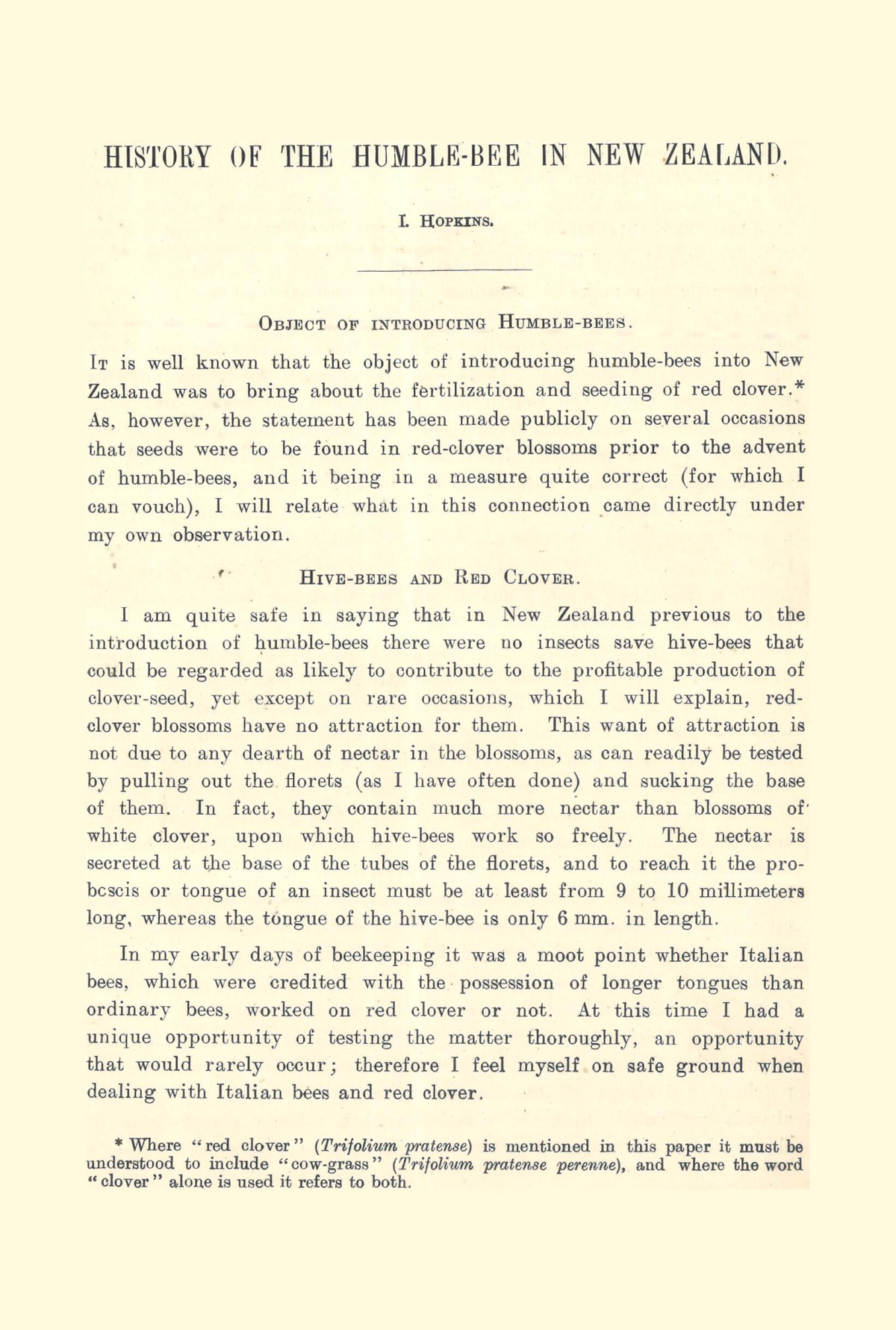
In his 1914 bulletin Hopkins returned to the question of bees and clover. This original printed page discusses the limits of honeybee pollination of red clover; it is a historical opinion to compare with later research, not proof that no other insects visited the plants. Credit: Isaac Hopkins, Department of Agriculture Bulletin No. 46 (1914), printed p. 5. View original source.
Then I found Grandad in a beekeeping magazine
Following these publications forward, I came across an article by Chris Dawson in the April 1996 issue of The New Zealand Beekeeper. It described the work involved in establishing the National Beekeepers’ Technical Library, and among its Foundation Life Members was a familiar name: Harry Cloake, Fairview, Timaru. My grandfather.
According to Dawson’s account, Harry had served with Lon Lyttle and Chris Dawson on a South Canterbury committee formed in 1962 to investigate a technical library. Here was another kind of co-operation: preserving books and practical research for the next generation. You can read the April 1996 magazine online.
My family’s connection to Cloake’s Honey at Fairview makes this especially interesting to me. I remember the creamed clover honey in the pantry and visits to family at Fairview. I’ve written more about the Cloake family beekeeping business and the Cloake Board elsewhere.
There is another thread I don't want to lose. In our family archive, an older photograph shows Bertie and Sarah Cloake with Harry and his sister Myra at Springbrook. Their lives belonged to the generations that saw bee-keeping move from small family apiaries towards organised commercial production. They were not contemporaries of Hopkins' 1874 gin-case experiment, but they inherited the changing world his work helped shape.

A family in a changing New Zealand. Harry and Myra Cloake with Bertie and Sarah Cloake at Springbrook. An original family photograph published on WuHoo Timaru, not a photograph of Hopkins or of his 1874 apiary. Credit: Cloake family archive. Read the Cloake family history and view the original.
Family photographs and the Fairview homestead, reproduced from my earlier WuHoo Cloake’s Honey history. The pictures are modern family-archive material rather than photographs from Hopkins’ lifetime. Credit: Cloake family / WuHoo Timaru. View original source.
And the story didn’t stop with Harry. This newspaper clipping from 4 September 1979 reports queen bees bred at Fairview being selected for trials in England. It names Mervyn Cloake and Ministry of Agriculture and Fisheries adviser Vince Cook. Beekeeping had become an international exchange of knowledge and breeding stock, not just a local honey trade.
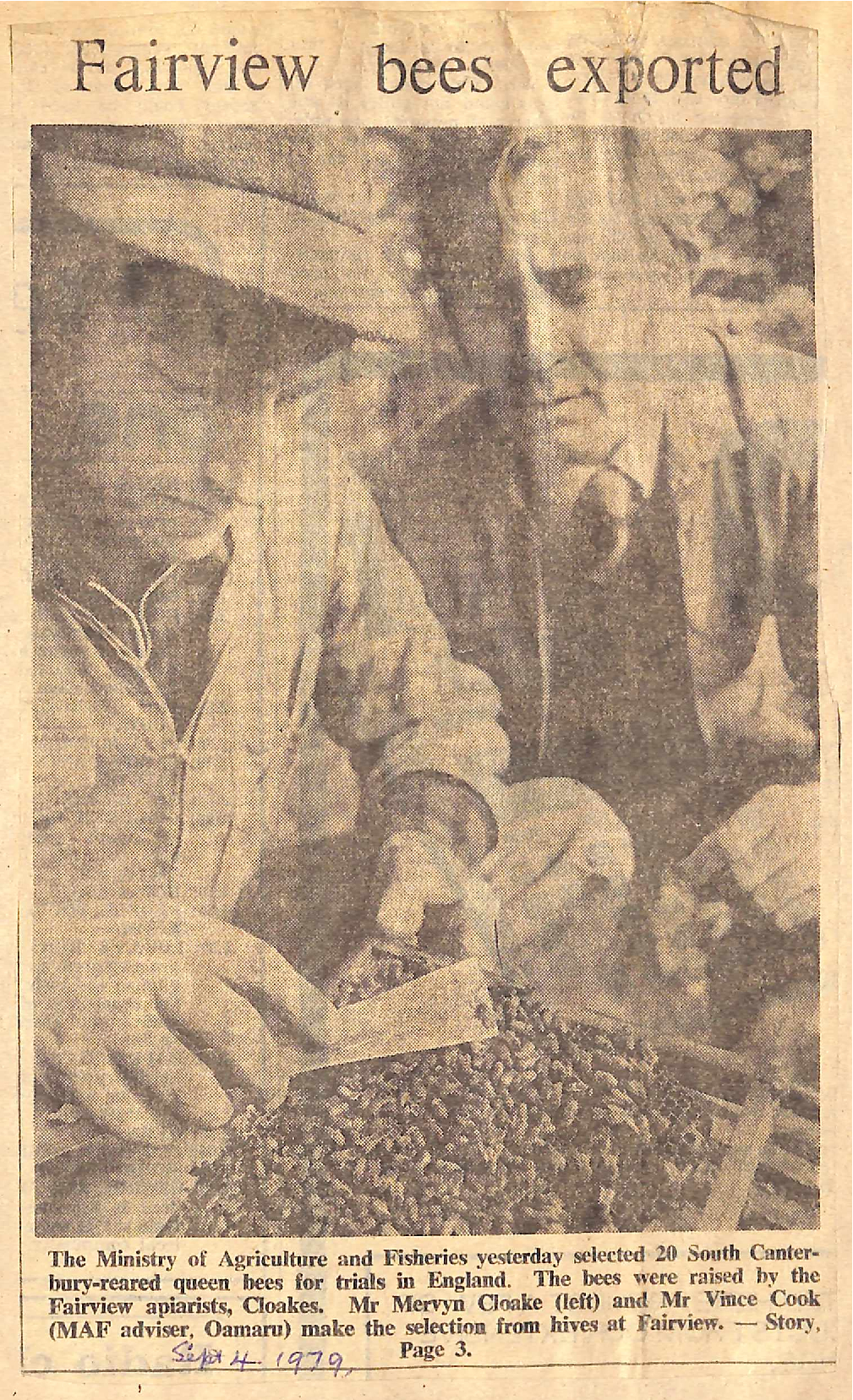
“Fairview bees exported”, newspaper clipping dated 4 September 1979, showing Mervyn Cloake and MAF adviser Vince Cook selecting queen bees bred at Fairview for trials in England. Credit: Aoraki Heritage Collection; reproduced previously on WuHoo Timaru. The archive’s reuse conditions should be respected. View original source.
The family connection continues in another original publication. My aunty Margaret Cloake appears in the checked shirt on the cover of the May 1994 issue of The New Zealand BeeKeeper, taking part in a honey-tasting demonstration. It's a lovely reminder that the industry's history includes people communicating with the public, not just working in the hives.

My Aunty, Margaret Cloake on the Cover of the National Beekeepers Association of New Zealand in the check shirt at a tasting demonstration.
Honey, and the people who shared it. May 1994 cover of The New Zealand BeeKeeper, showing a public demonstration. Family identification: Margaret Cloake in checked shirt. Original historical magazine cover, previously reproduced on WuHoo Timaru. See the source and family explanation.
WuHoo! I began with a man who kept bees in a gin case, and ended up finding Grandad in a library history and a later generation of Cloakes exporting queens. In between were more than a hundred years of people experimenting, writing, teaching, sharing equipment and learning from one another.
The WuHoo: free fun for honey detectives
There's free fun in this without going anywhere special. Start with a jar of honey in the kitchen. Who packed it? Is the plant named on the label? How does its colour and texture compare with another jar? Try smelling the honey before tasting it, and ask what the bees might have been visiting. You can compare clover, mānuka or bush honey if you already have them, but there's no need to buy anything.
Then take a ten-minute flower safari in your garden or a public reserve. Watch from a comfortable distance. Can you distinguish a honeybee from a bumblebee? Are there tiny native bees or hovering flies too? Record one flower using your phone's slow-motion mode, and look again for pollen on legs, tongues reaching into blossoms and insects rubbing against the flower's reproductive parts. What did you expect to see? What surprised you? What question would you investigate next?
For children: make a little explorer's page with one sketch, one observation and one question. Return on a different day and see what has changed. Don't pick up bees or open a hive. Honey must not be given to babies under 12 months.

A familiar Cloake’s Honey tin. Photograph by Geoff Cloake, originally published in my WuHoo family-history article.
Side quest: choose a book, then check a newspaper
Open the 1886 illustrated bee manual and look at its hive diagrams. Or explore the 1907 revised Bee-Culture bulletin and find Hopkins’ advice on honey ripening. Then choose a 1914 newspaper report and compare how a journalist described the industry with how Hopkins described it in a handbook.
Ask yourself who wrote each source, for whom and why. Hopkins wanted to teach and promote better beekeeping. Newspapers wanted to report local developments. Both contain useful evidence, and both have perspectives and omissions. That is part of the fun of historical detective work.
The next time I open a tin of honey, I will probably think about the gin case at Thames, the shared extractor at Geraldine, the honey leaving Timaru in 1914 and Grandad’s contribution to preserving beekeeping knowledge. All that history in something we put on our toast.
Do you have an old honey tin, photograph, beekeeping book or family story from South Canterbury? I would love to hear about it.
Original sources and further reading
- Isaac Hopkins, The Illustrated Australasian Bee Manual (1886). https://www.beekeeping.nz/NZBDA/Hopkins/1886_Australasian_Bee_Manual_ver_3.pdf
- Isaac Hopkins, Bee-Culture, Government Bulletin No. 5 (revised 1907). https://www.beekeeping.nz/NZBDA/Hopkins/1905_Dept_Ag_Bulletin_edition_2.pdf
- Isaac Hopkins, Forty-two Years of Bee-keeping in New Zealand (1916). https://field.biodiversitylibrary.org/item/115909
- Isaac Hopkins, History of the Humble-Bee in New Zealand (1914). https://www.beekeeping.nz/NZBDA/timeline/1914_03_Humble_bees.pdf
- Dictionary of New Zealand Biography, Isaac Hopkins. https://dict-bio.howison.co.nz/person/isaac-hopkins
- NZHistory, Honeybees brought to New Zealand. https://nzhistory.govt.nz/mary-bumby-brings-the-first-honey-bees-in-new-zealand
- New Zealand Mail, 5 July 1905, Beekeeping address by Hopkins. https://paperspast.natlib.govt.nz/newspapers/NZMAIL19050705.2.136
- Star (Christchurch), 25 March 1907, Exhibition model apiary. https://paperspast.natlib.govt.nz/newspapers/TS19070325.2.57
- Timaru Herald, 6 December 1913, South Canterbury Beekeepers’ Association. https://paperspast.natlib.govt.nz/newspapers/THD19131206.2.41
- Timaru Herald, 14 May 1914, Export of Honey, p. 5. https://paperspast.natlib.govt.nz/newspapers/THD19140514.2.14
- Temuka Leader, 14 May 1914, The Honey Market. https://paperspast.natlib.govt.nz/newspapers/TEML19140514.2.21
- The Press, 14 September 1914, Marketing of Honey. https://paperspast.natlib.govt.nz/newspapers/CHP19140914.2.15
- New Zealand Beekeeping History, Honey Marketing Bodies in NZ. https://www.beekeeping.nz/honey-marketing-bodies-in-nz/
- Chris Dawson, The New Zealand Beekeeper, April 1996, technical library. https://www.beekeeping.nz/NZBDA/NZBkpr/1996_04_NZBkpr.pdf
- Aoraki Heritage Collection, Fairview bees exported, 4 September 1979. https://aorakiheritage.recollect.co.nz/nodes/view/4452
- WuHoo Timaru, Cloake’s Honey family history. https://wuhootimaru.co.nz/blog/932-for-the-good-of-the-hive-a-sweet-legacy-from-cloake-s-honey-tin
- WuHoo Timaru, Humble Bumble Bees, earlier instalment. https://www.wuhootimaru.co.nz/blog/1659-humble-bumble-bees-what-i-learned-from-a-document-published-1914
- Isaac Hopkins, Bee-Culture, Department of Agriculture Bulletin No. 18 (1909), portrait and original hive photographs.
- Lyttelton Times, 16 November 1906, Miss Livesay demonstrates beekeeping at Christchurch Exhibition.
- The Press, 18 October 1913, founding of the Geraldine beekeepers association.
- Department of Conservation, Honeybees on public conservation lands: a risk analysis.
- New Zealand BeeKeeper, May 1994 cover, on WuHoo family archive.
About the pictures: Every JPG placed in this article is a faithful reproduction of a historical page, photograph or existing family clipping. The 1913–14 Papers Past reports are linked to their original newspaper scans; those newspaper page images could not be exported here, so I have not replaced them with mock screenshots. Historical text and interpretations are attributed to their original authors wherever practicable. Family and archive photographs may carry different reuse conditions from public-domain nineteenth- and early-twentieth-year books.