
An ancient sea, a childhood adventure and twelve little WuHoos that changed the way I look at this remarkable town.
I reckon I was about nine when Dad took me exploring some of Ōamaru's old limestone warehouses. One room has stayed with me: enormous wooden floors, stone walls, pigeons flapping around the rafters... and pigeon poo. Everywhere!
Dad was there with other Timaru Civic Trust members, being shown buildings that the locals were trying to save. I remember him crouching down and explaining the stone was about 35 million years old. The blocks I was staring at were once an ancient seabed... now we were standing inside a warehouse made from it.
The adults were talking about conservation. I was watching the pigeons. More than 30 years later, I returned with Mum, Dad and my own children. The warehouses were still there, but the streets had changed beyond recognition...
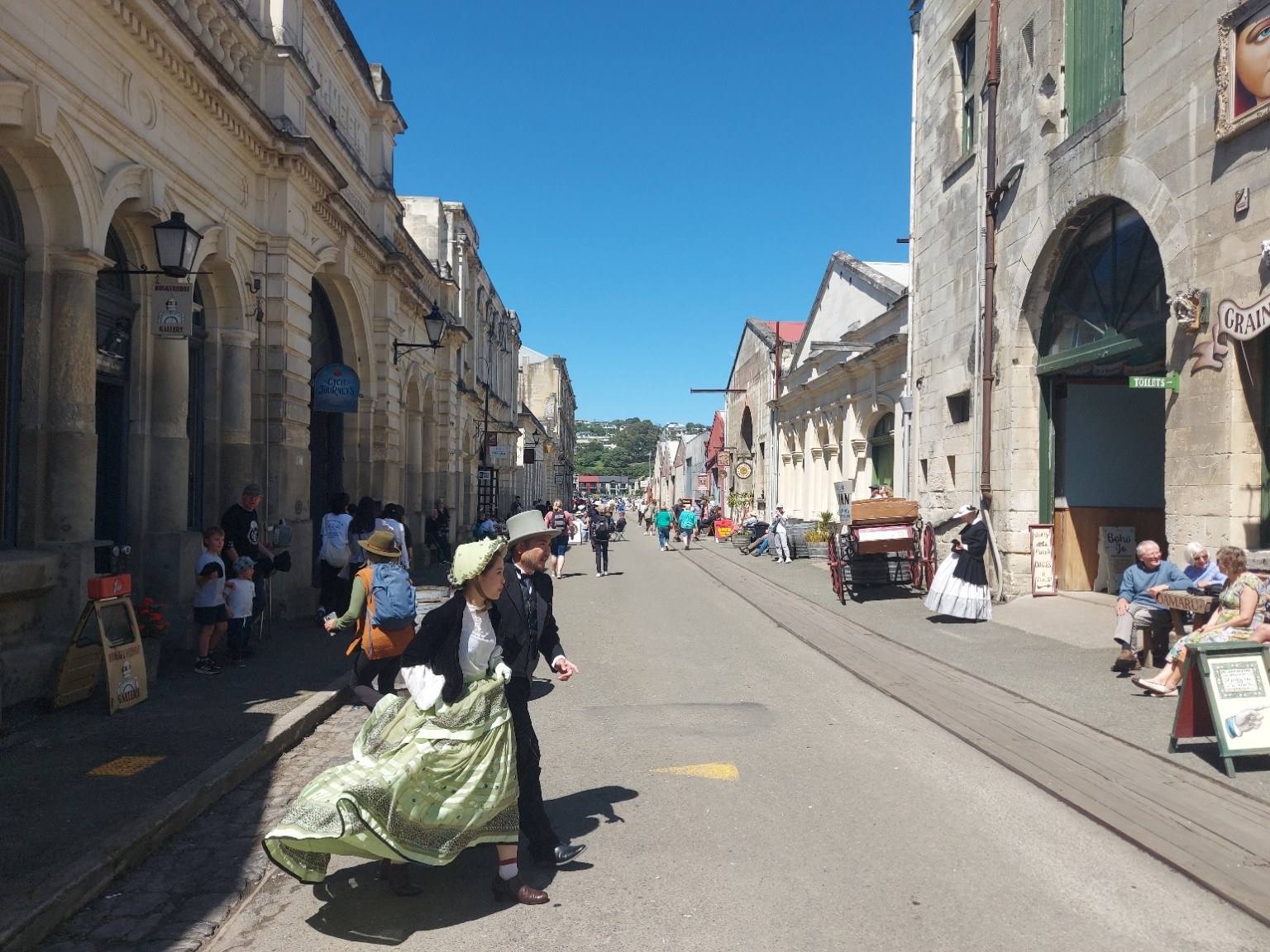 Harbour Street during the Victorian Heritage Celebrations, Ōamaru. Photograph: Roselyn Fauth, 2026.
WuHoo 1: The warehouses once full of pigeons are bustling again
Harbour Street was alive with magnificent frocks, waistcoats, top hats, dancers, bagpipes and penny-farthings. The music bounced between the limestone buildings. Where I remembered dust and pigeons, there were now people enjoying the streets.
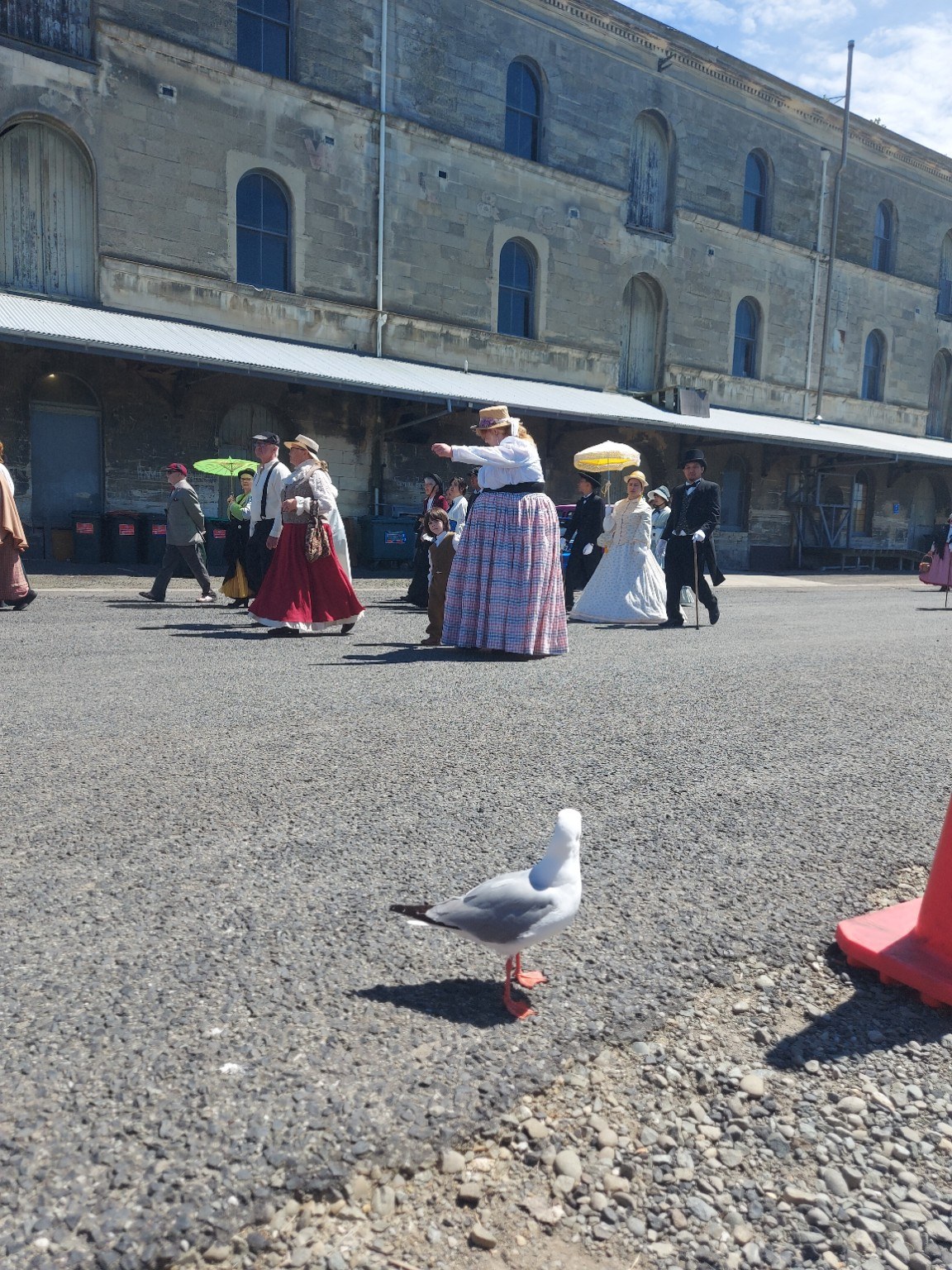 Costumed participants enjoying the Victorian Heritage Celebrations. Photograph: Roselyn Fauth, 2026.
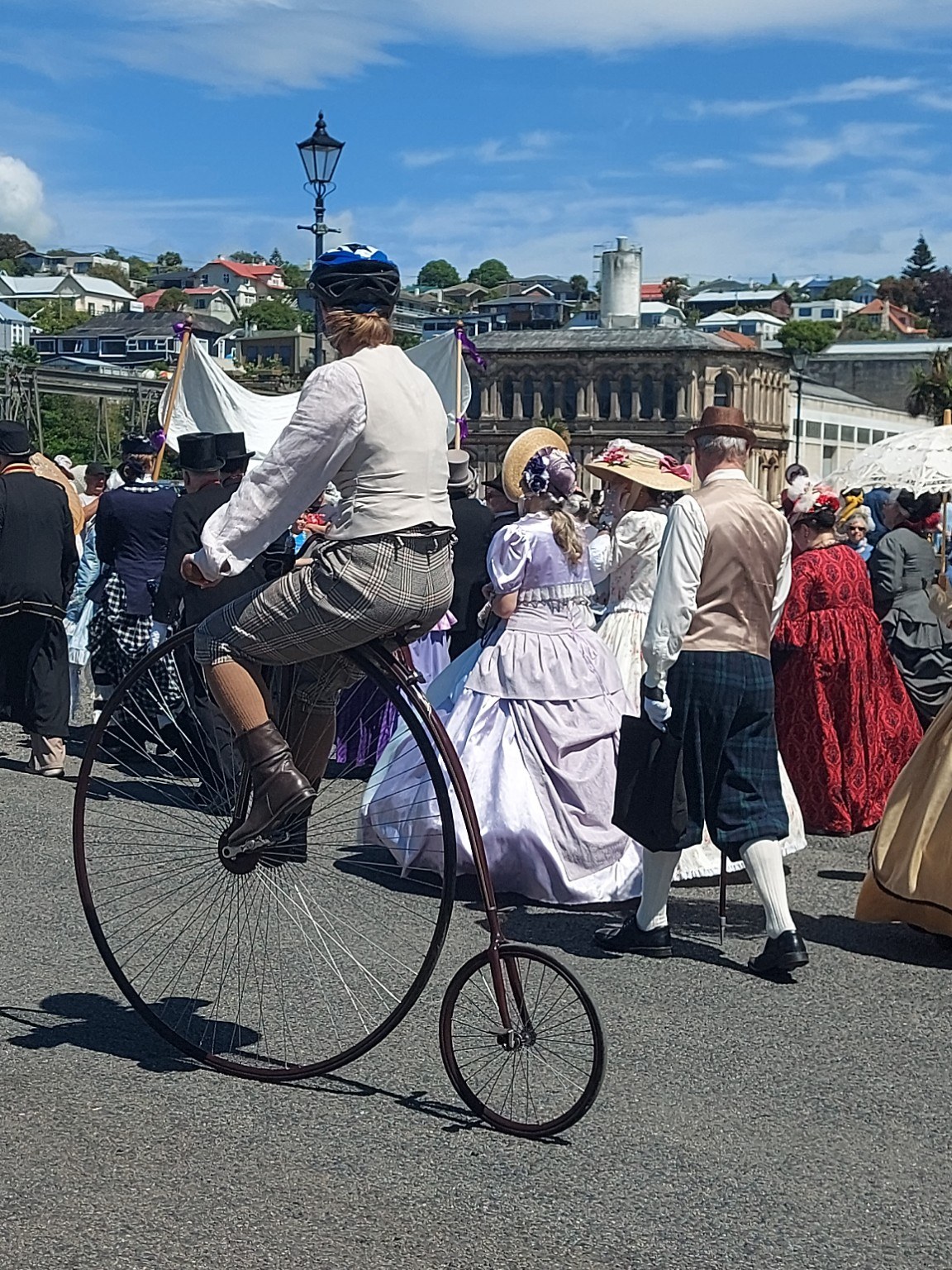 A penny-farthing adds to the spectacle of the Victorian Heritage Celebrations. Photograph: Roselyn Fauth, 2026.
Then an old truck came rumbling along. Hang on a minute. I knew that truck! Or at least, it looked remarkably like one Dad and I had ridden in when I was little. I still have a photograph to compare, so I'm not calling it a definite match yet.
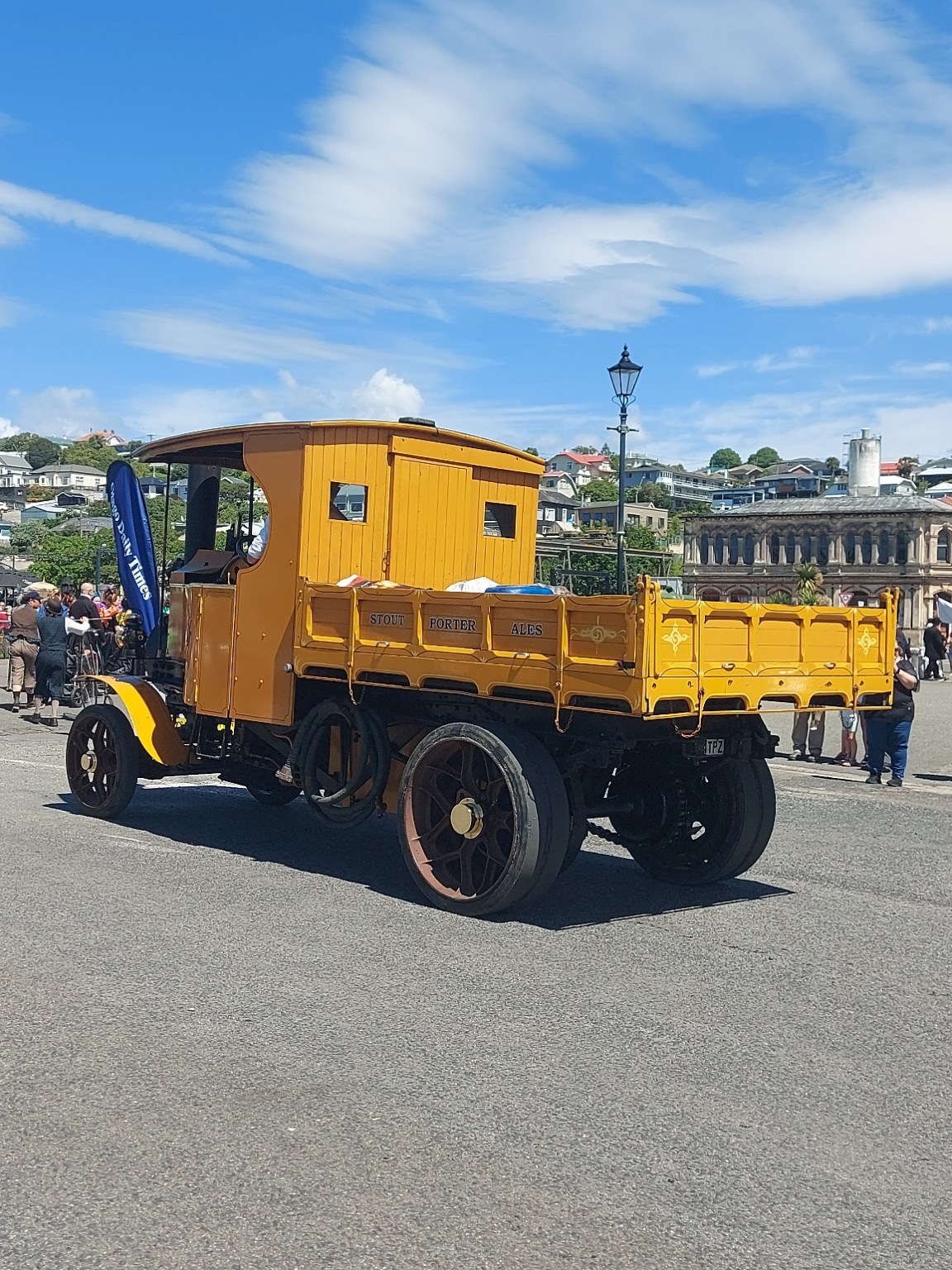 An old truck in the parade, remarkably like one I remember riding in as a child. Photograph: Roselyn Fauth, 2026.
Three generations of us stood watching a possible piece of my childhood drive past. How extraordinary is that?
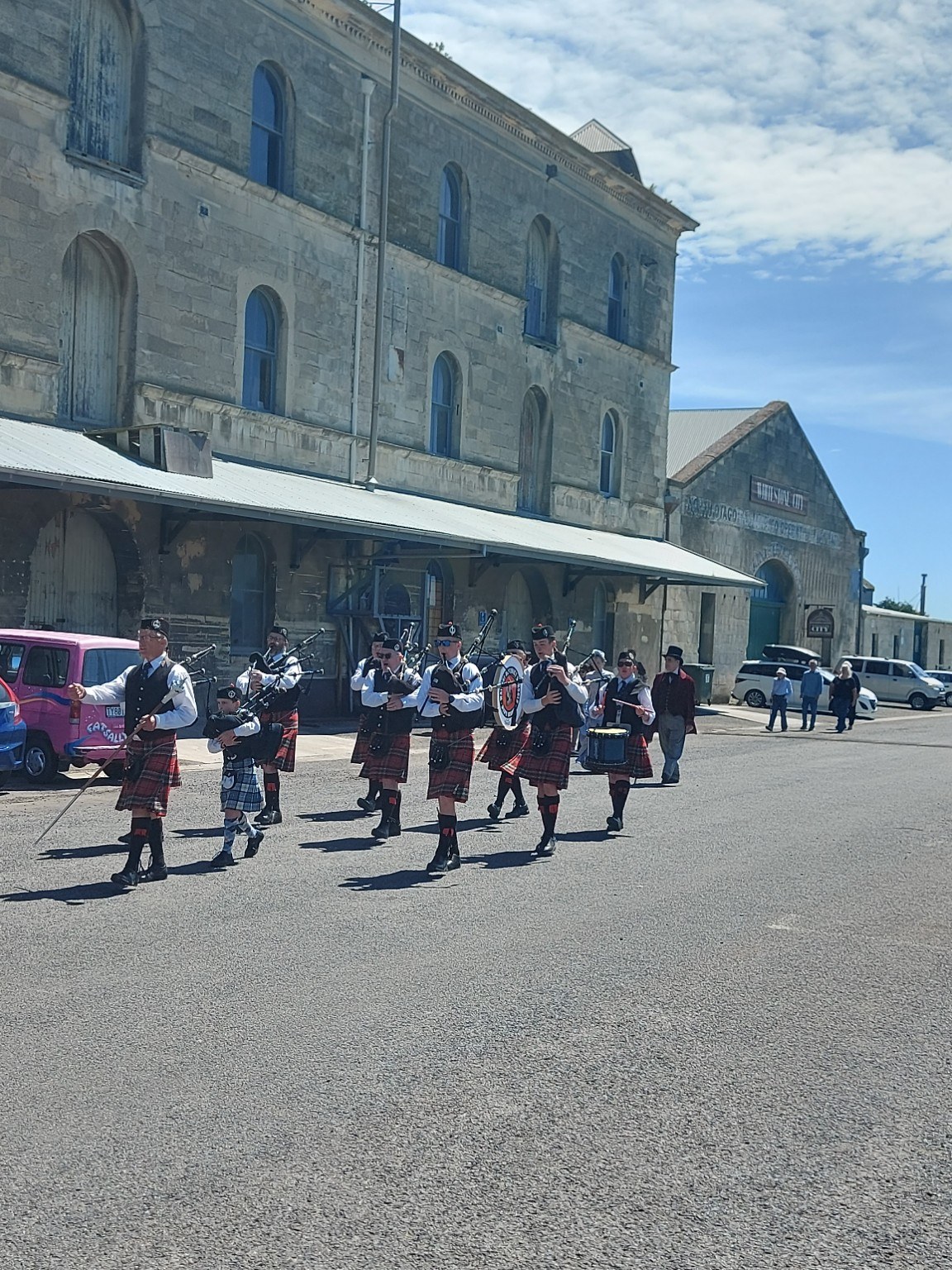 People bringing another chapter of life to Ōamaru's historic streets. Photograph: Roselyn Fauth, 2026.
WuHoo 2: Ōamaru's character began with the land and an ancient sea
Dad's story about the stone has stayed with me. Long before the warehouses, the harbour works or even the town, marine sediments accumulated here. Over millions of years, material including the remains of sea creatures became limestone. Different formations have different ages, but around 35 million years is a useful way to picture the age of the stone Dad was describing.
That local limestone was workable enough for stonemasons to carve into arches, columns, window surrounds and elaborate ornament. The grand façades tell us something about the aspirations of the people who commissioned them. The stone itself tells a story millions of years older.
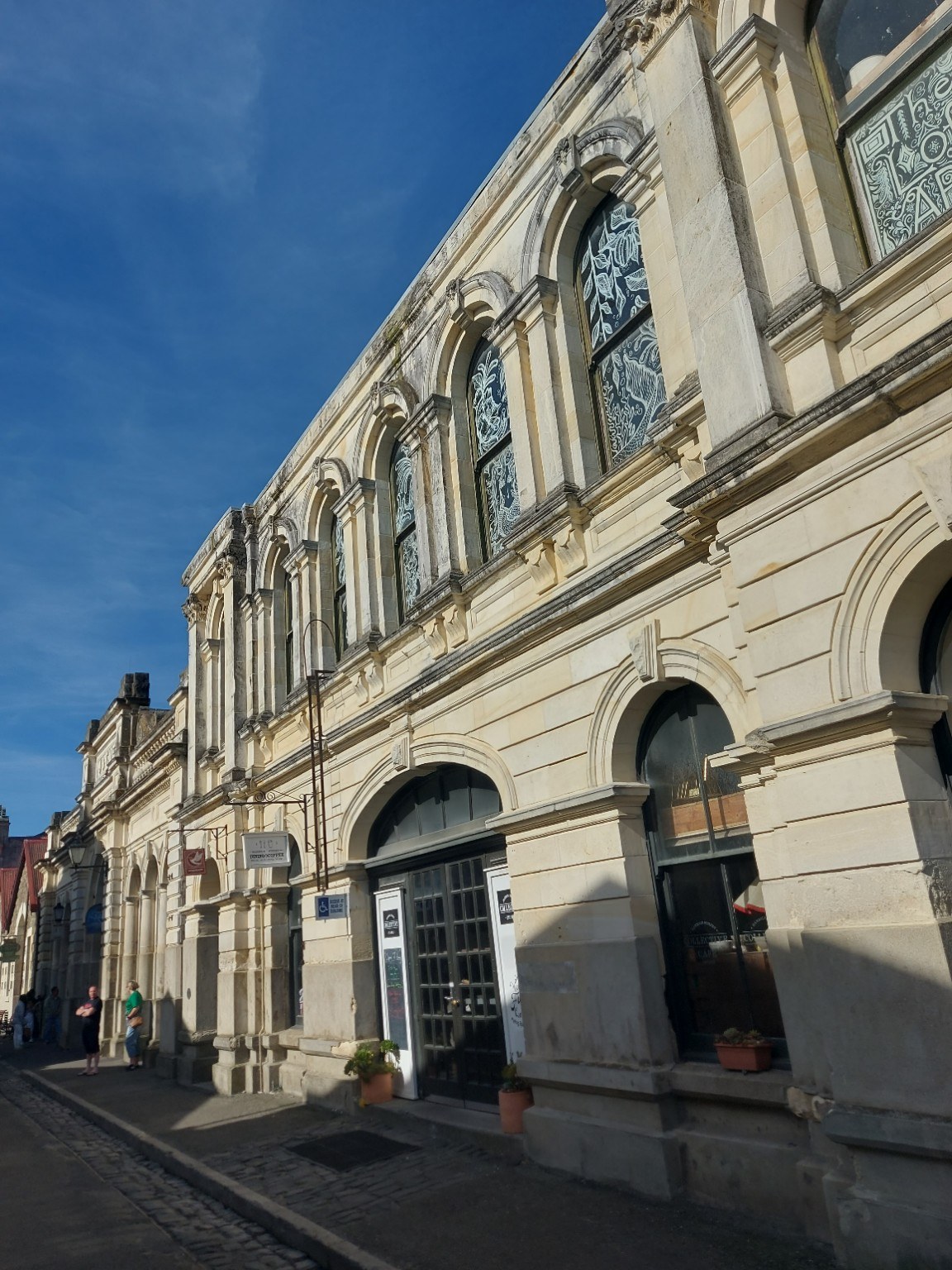 Elaborately carved Ōamaru limestone: a building material with origins in an ancient marine environment. Photograph: Roselyn Fauth, 2026.
But the land and sea shaped more than the architecture. They influenced travel, food gathering, settlement and trade. Long before the Victorian commercial town, this coastline was part of the rohe of Kāi Tahu, with settlements and traditional food-gathering places. Te Rūnanga o Moeraki continues to hold mana whenua here. The Victorian streetscape is an important chapter, not the beginning of Ōamaru's history.
WuHoo 3: The backs of the buildings tell a different story
It is easy to admire the grand frontages and forget to look around the back. On an earlier WuHoo visit I photographed scratches and inscriptions in the limestone, the sort of small marks that invite a dozen questions. Who made them? When? What was happening here at the time?
Some marks relate to working buildings; others may be informal inscriptions. Without evidence, I wouldn't assign them a particular age or maker. But they remind me that a place has a public face and an everyday working life.
 Scratches and inscriptions on Ōamaru limestone, from my earlier WuHoo exploration. Photograph: Roselyn Fauth, January 2026.
Read The Carvers and the Scratchers for the full side quest.
WuHoo 4: Why build grain warehouses that look like palaces?
Those imposing buildings weren't just for show. Wool and grain from the surrounding countryside needed to be handled, stored and shipped. Ōamaru's exposed coast made loading vessels hazardous, so construction of a harbour breakwater began in 1871. The harbour, railway and warehouses became part of the same commercial story.
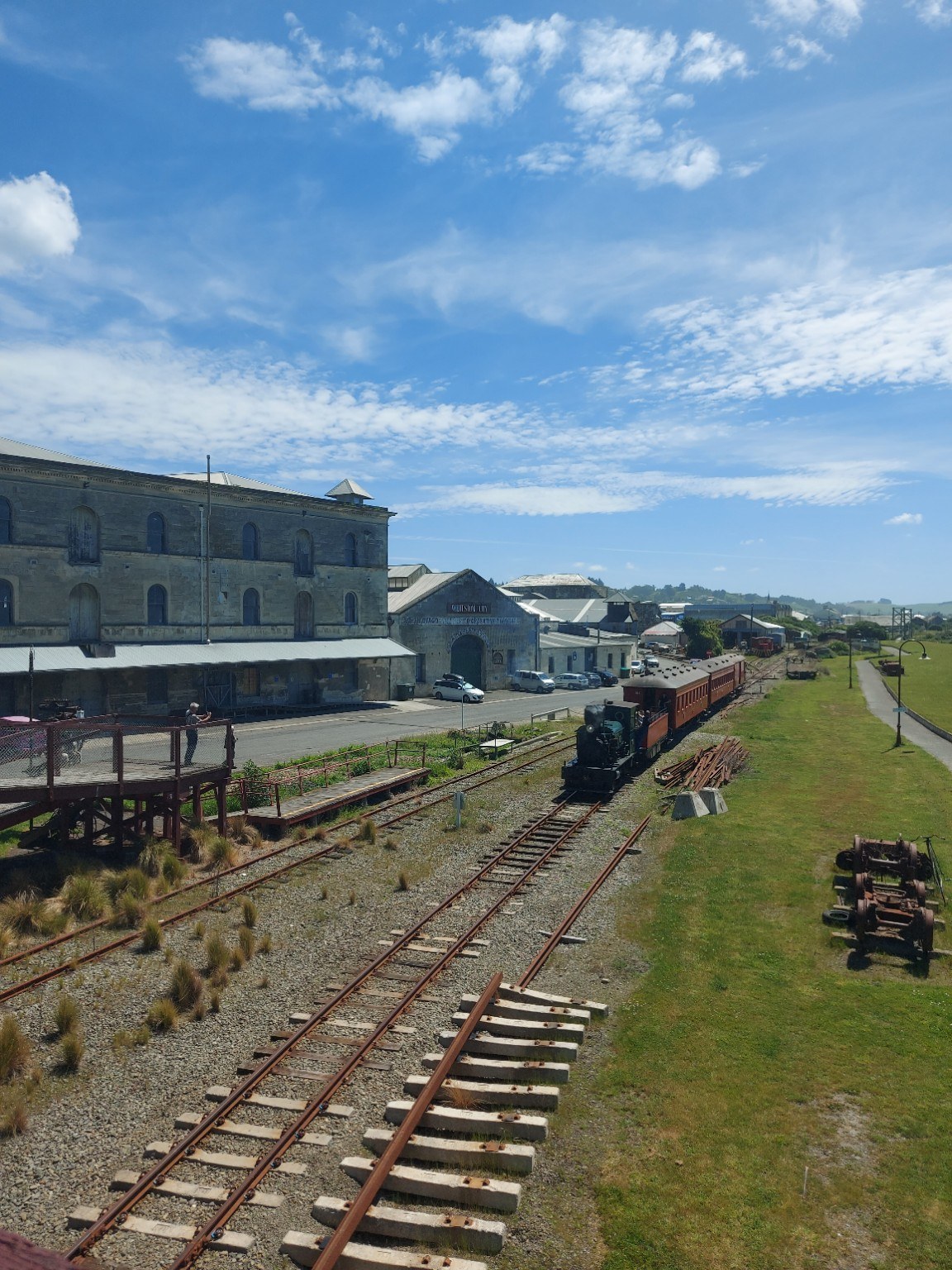 Railway and warehouse buildings, clues to how goods moved between farms, stores and the harbour. Photograph: Roselyn Fauth, 2026.
Look past the merchants' names on the façades and imagine the people doing the work: quarrymen, stonemasons, builders, carters, railway workers, wharf workers, storekeepers and the families who depended on the town's fortunes. The buildings tell us about ambition, certainly, but also labour.
WuHoo 5: Where are the women in the picture?
The parade's splendid hats and dresses got me wondering about something less theatrical: what did an ordinary day look like for women in nineteenth-century Ōamaru? Women worked in businesses and homes, taught, nursed, made clothing, raised families and helped organise community life. Their names are not always carved above the doors.
The Ōamaru Whitestone Civic Trust has also helped keep historic dress visible through its Victorian Wardrobe in Harbour Street. It is a terrific invitation to ask about clothing and social customs, provided we remember that a costume parade is not the whole story of women's lives.
WuHoo 6: Ōamaru's economic setback helped preserve its Victorian streets
Here's the twist. Ōamaru's grand limestone buildings grew out of commercial confidence, but that prosperity faltered. Falling wool prices, the depression of the 1880s and changing transport networks reduced the pace of development. Heritage New Zealand records that by 1885 virtually all new construction had stopped.
As trade patterns changed and other ports gained importance, parts of the old commercial area escaped the sweeping redevelopment that transformed many towns. That is one reason so many buildings survived together.
An economic disappointment had inadvertently helped preserve an architectural treasure. Not that it would have felt like a treasure to people struggling to make a living at the time. And Ōamaru was never literally frozen: buildings changed, some were lost, and life carried on.
Survival, though, was only half the story. Those buildings still needed people willing to repair them and imagine new uses.
WuHoo 7: The conservationists saw possibility where I saw pigeons
During the 1980s, the work of conserving and revitalising the precinct gathered momentum. In 1989 the Ōamaru Whitestone Civic Trust acquired eight buildings with support from the Alexander McMillan Trust. Eight! Imagine the roofs, stone repairs, fundraising and committee meetings.
The wider transformation has involved property owners, craftspeople, volunteers, businesses, funders and visitors. It wasn't a single rescue by a single organisation. And it certainly wasn't inevitable.
When Dad and I walked through those neglected rooms, people were trying to work out what their future might be. I had no idea I was watching an important part of the town's next chapter take shape.
WuHoo 8: Before the Opera House, a woolshed?
On our tour of the Ōamaru Opera House, a plaque outside stopped me in my tracks. It referred to a woolshed on the Ōamaru Run and a sermon delivered there in February 1860. A woolshed! I had come to look at a theatre and found a clue to a much earlier landscape.
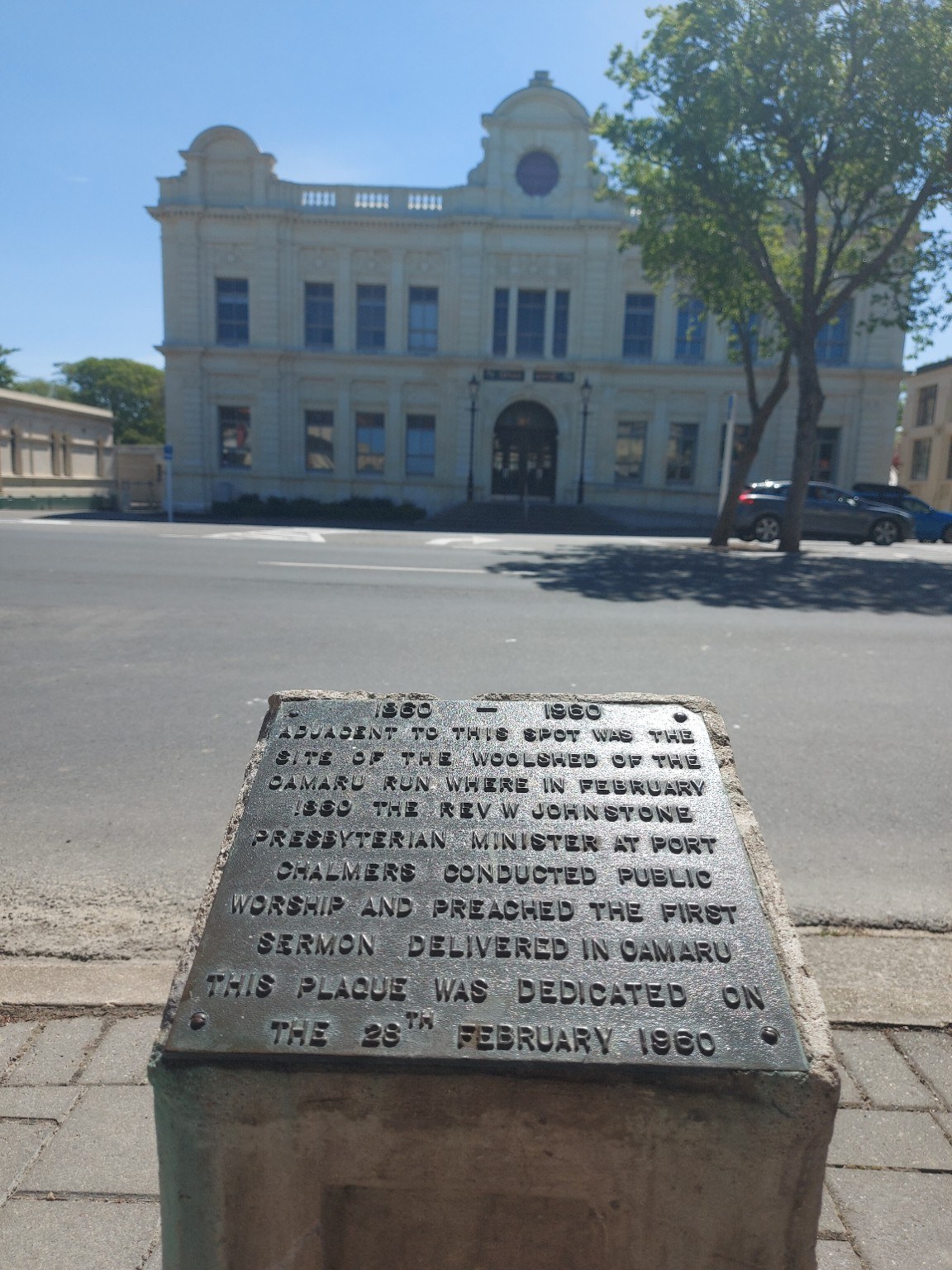 Plaque recording the Ōamaru Run woolshed and an early sermon in February 1860. Photograph: Roselyn Fauth, 2026.
Inside, another plaque recorded the Opera House opening in 1907 and named architect J. M. Forrester. There I was to deliver the Forrester & Lemon Lecture, and his name was right there on the building. What a connection.
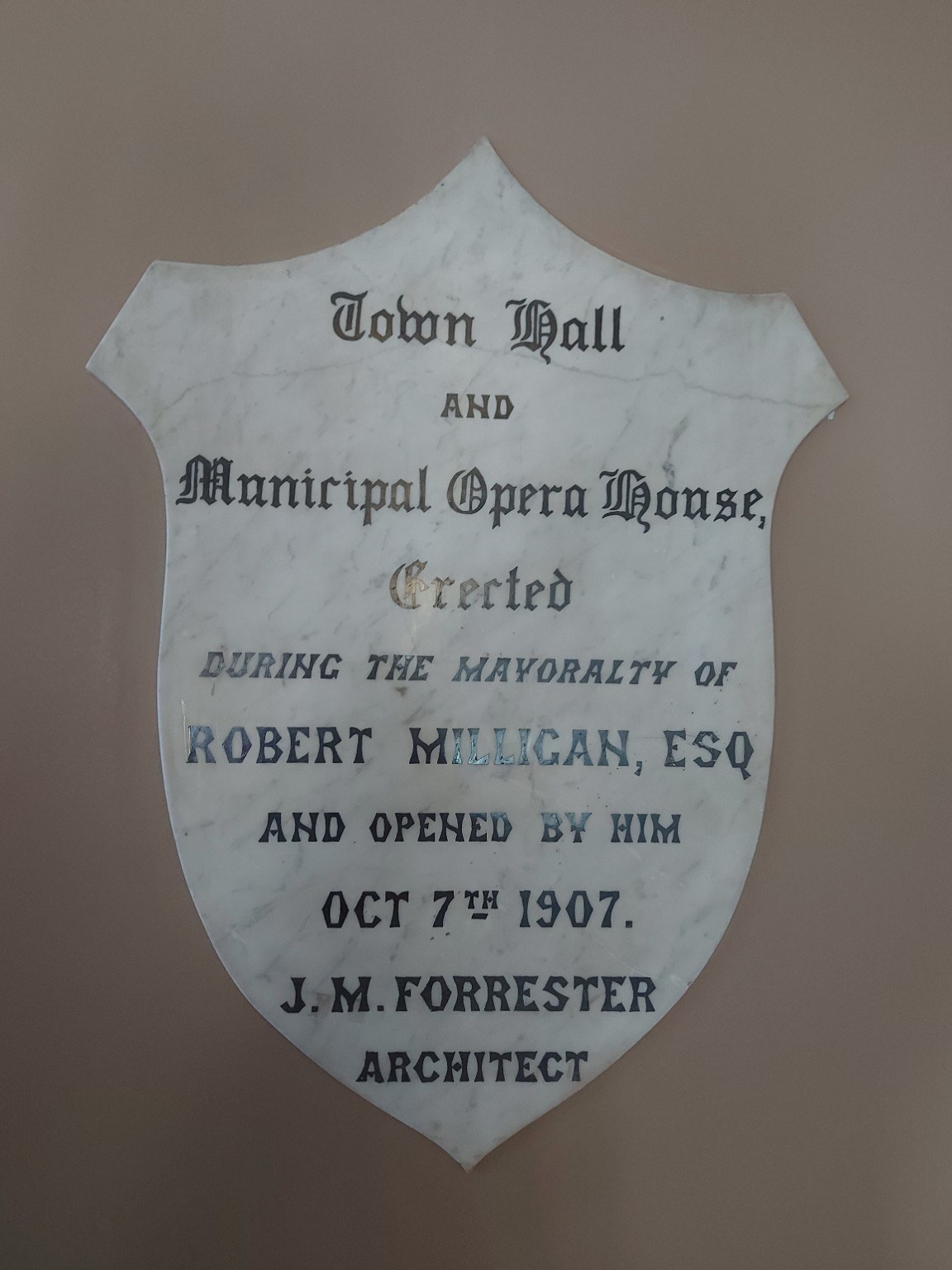 Opera House commemorative plaque naming architect J. M. Forrester and the 1907 opening. Photograph: Roselyn Fauth, 2026.
WuHoo 9: The Opera House hid a place for your hat
The auditorium was magnificent. But a curious little fitting beneath a seat caught my attention. Any guesses?
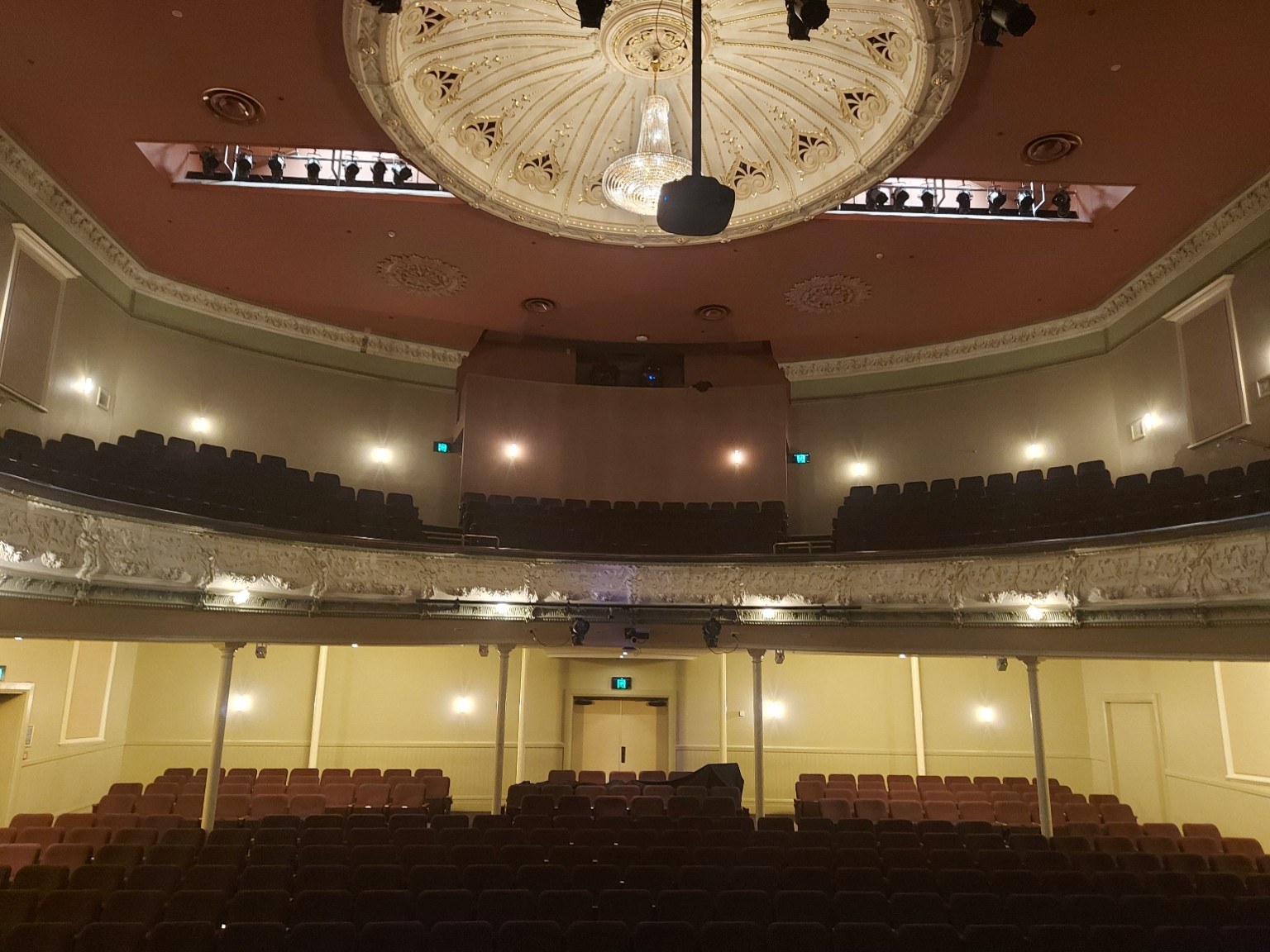 The Ōamaru Opera House auditorium, where even the seating has a story. Photograph: Roselyn Fauth, 2026.
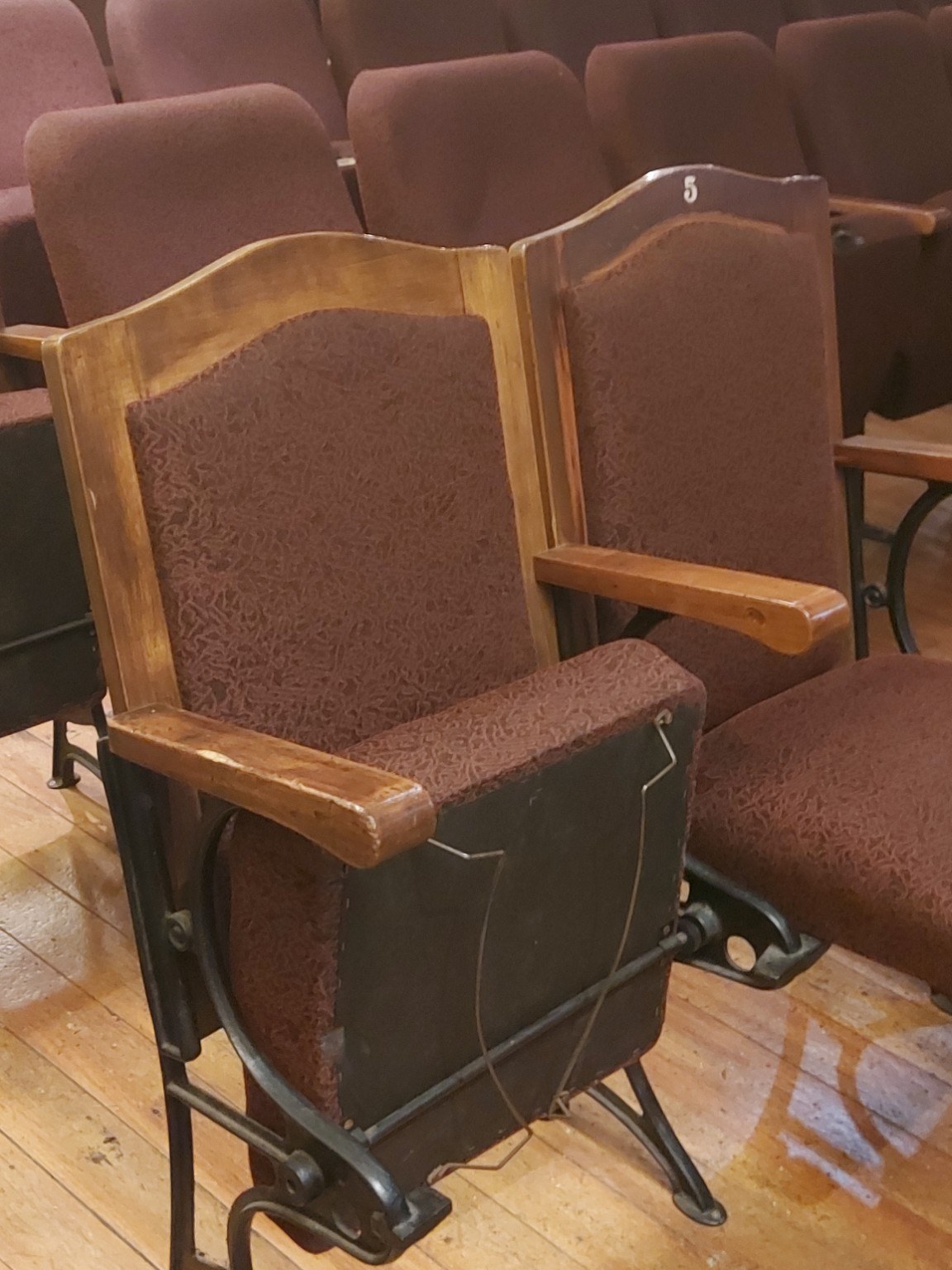 A fitting beneath an Opera House seat. Can you guess its original purpose? Photograph: Roselyn Fauth, 2026.
A place for your hat! A small, practical solution for an audience arriving in their finery. It tells us something about the people who used the theatre without needing a lengthy explanation.
Backstage we saw ropes, counterweights and working theatre equipment. Our guide pointed out marks linked to an earlier stage arrangement and discussed the challenges of a sloping stage for performers. The precise history of those marks is a side quest I still want to verify.
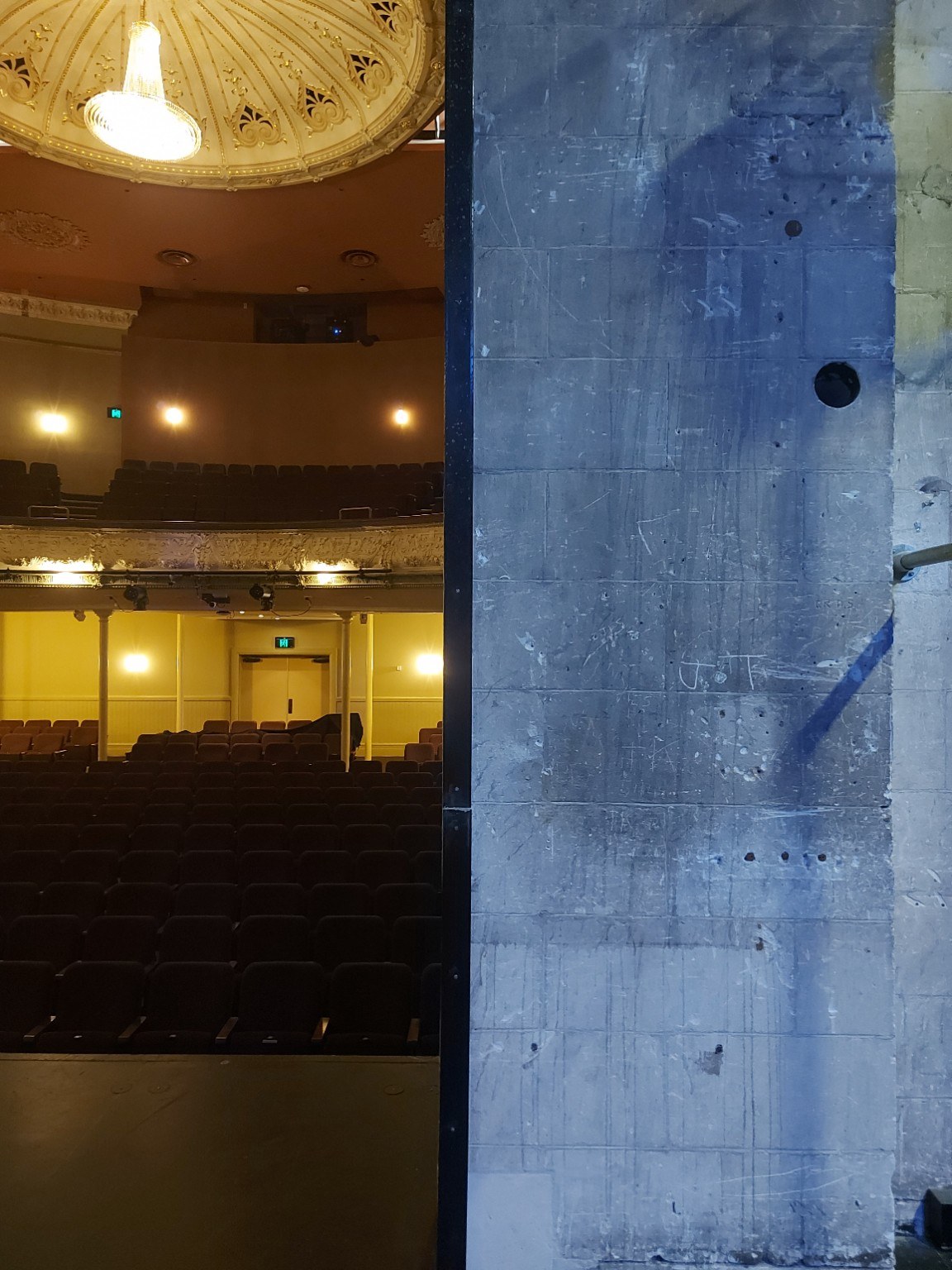 Marks backstage that our guide associated with an earlier stage arrangement; interpretation awaiting confirmation. Photograph: Roselyn Fauth, 2026.
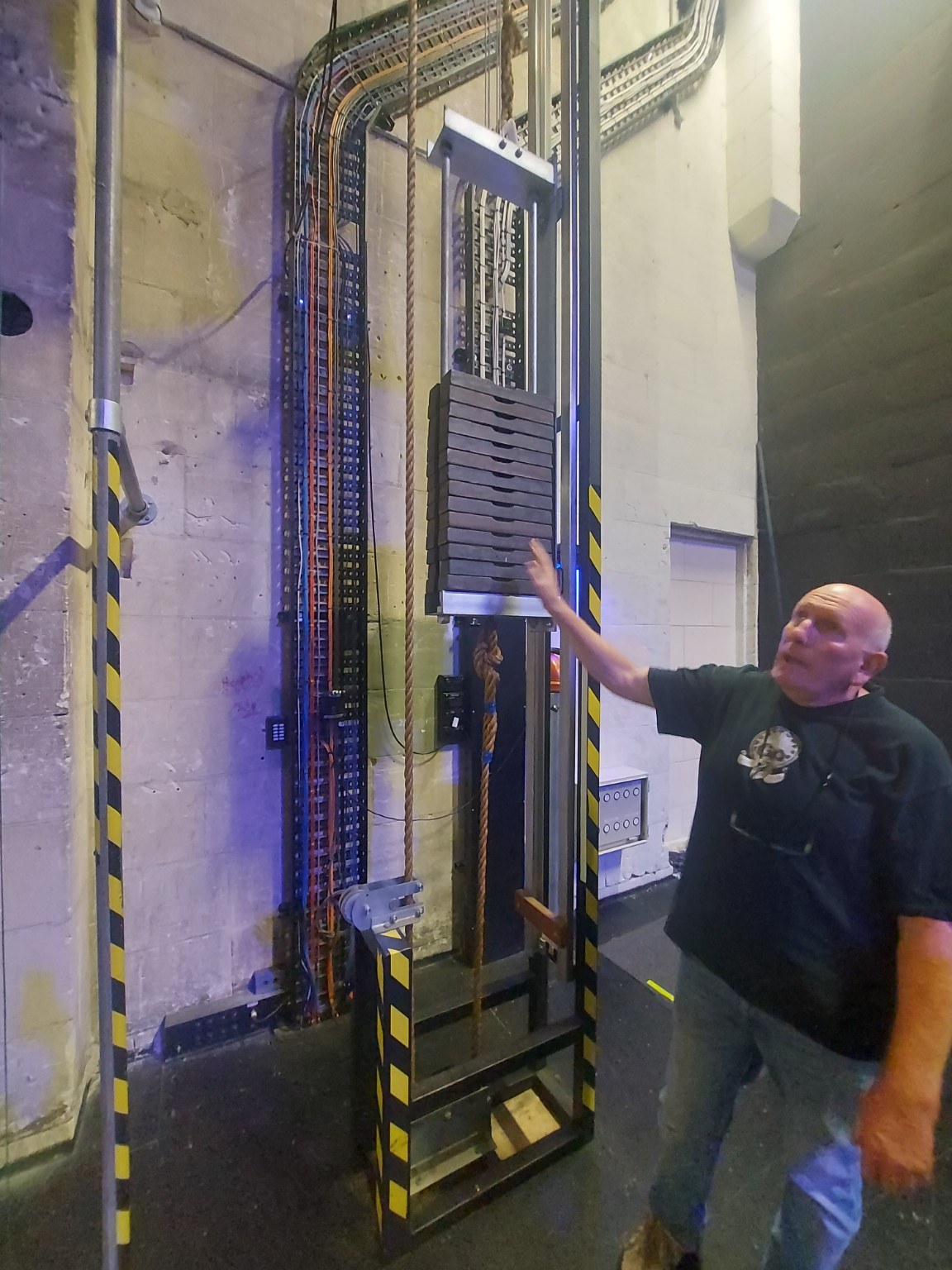 Backstage ropes and theatre machinery at the Ōamaru Opera House. Photograph: Roselyn Fauth, 2026.
WuHoo 10: A wizard turned up to hear about curiosity
I had come to Ōamaru for the Forrester & Lemon Lecture, hosted by the Ōamaru Whitestone Civic Trust and Waitaki Whitestone UNESCO Global Geopark. I spoke about the way an ordinary observation can lead to an extraordinary story, and how sharing those discoveries can encourage people to look again at their own communities.
So it seemed perfectly appropriate that a wizard-like visitor should turn up.
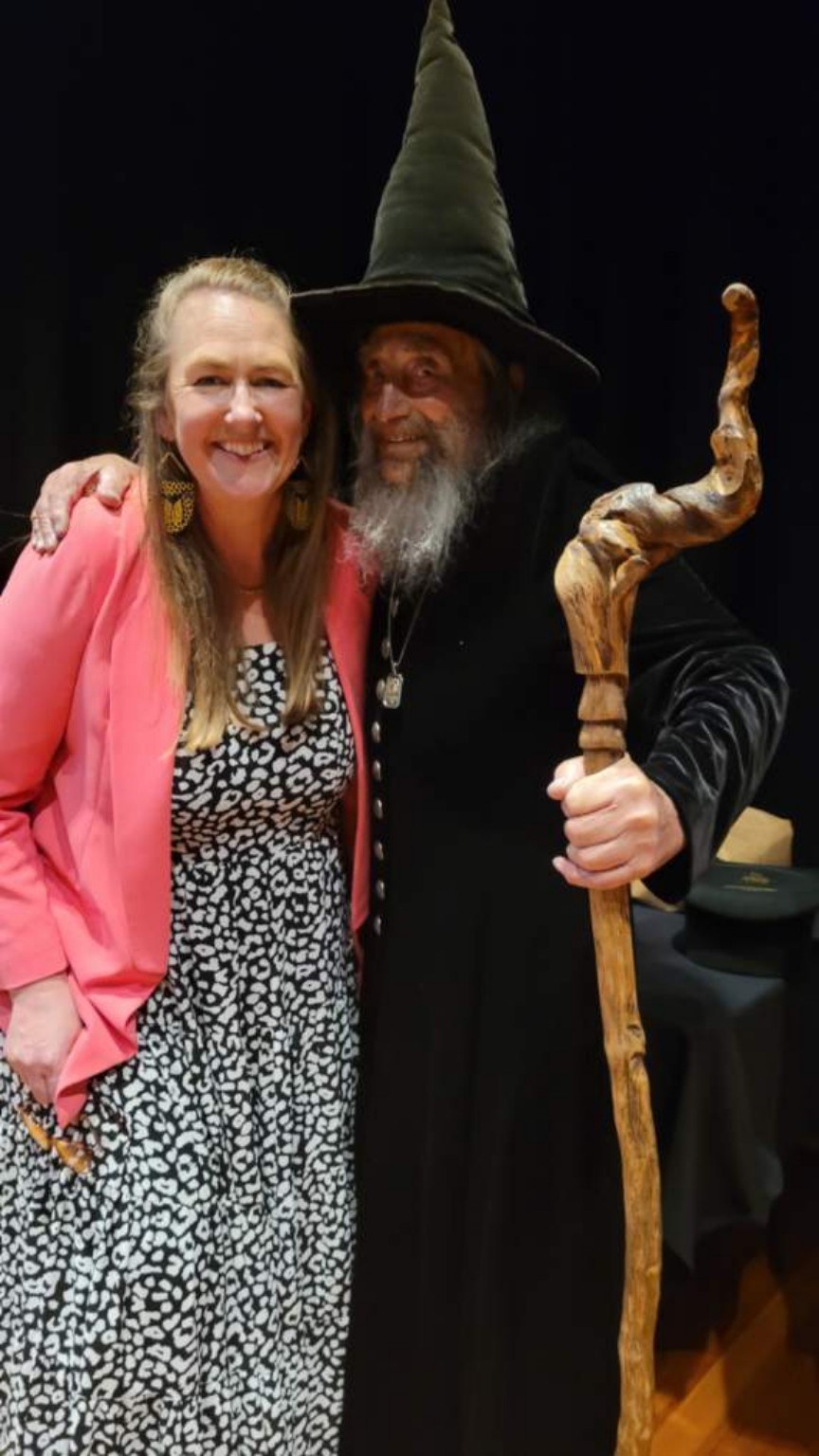 A wonderfully theatrical visitor at the Forrester & Lemon Lecture. Photograph: Roselyn Fauth, 2026.
I enjoyed the conversations afterwards as much as the lecture. Someone recognises a photograph, someone remembers a family connection, someone else produces a newspaper clipping. And sometimes someone corrects you. That's useful too. Stories improve when people contribute what they know.
WuHoo 11: After dinner, the beach offered another geological mystery
After dinner at Del Mar, we walked along the beach. I noticed what appeared to be tilted layers in the cliffs and an assortment of tiny fragments on the shore. What was I looking at? Why did those layers seem to run at such peculiar angles?
I don't know yet, and I'm not going to invent an answer. The Waitaki Whitestone UNESCO Global Geopark is a good place to start investigating. I haven't yet matched a photograph to this particular discovery, so this is one WuHoo still waiting for its picture.
WuHoo 12: I think I've become one of the adults
I keep thinking about that huge room with its wooden floors, stone walls and pigeons flying through the rafters. Dad and the other adults were discussing how to save the buildings. I was having the time of my life.
Now I'm involved in heritage work myself, encouraging people to look closer at familiar places. And here I was, back in Ōamaru with my parents and my own children, watching an old truck roll past.
I wonder what my children will remember in another 35 years. The bagpipes? The costumes? The truck? Some little detail I barely noticed?
Nobody could have predicted that a room full of pigeon poo would make such an impression on me.
And goodness knows where their curiosity might take them.
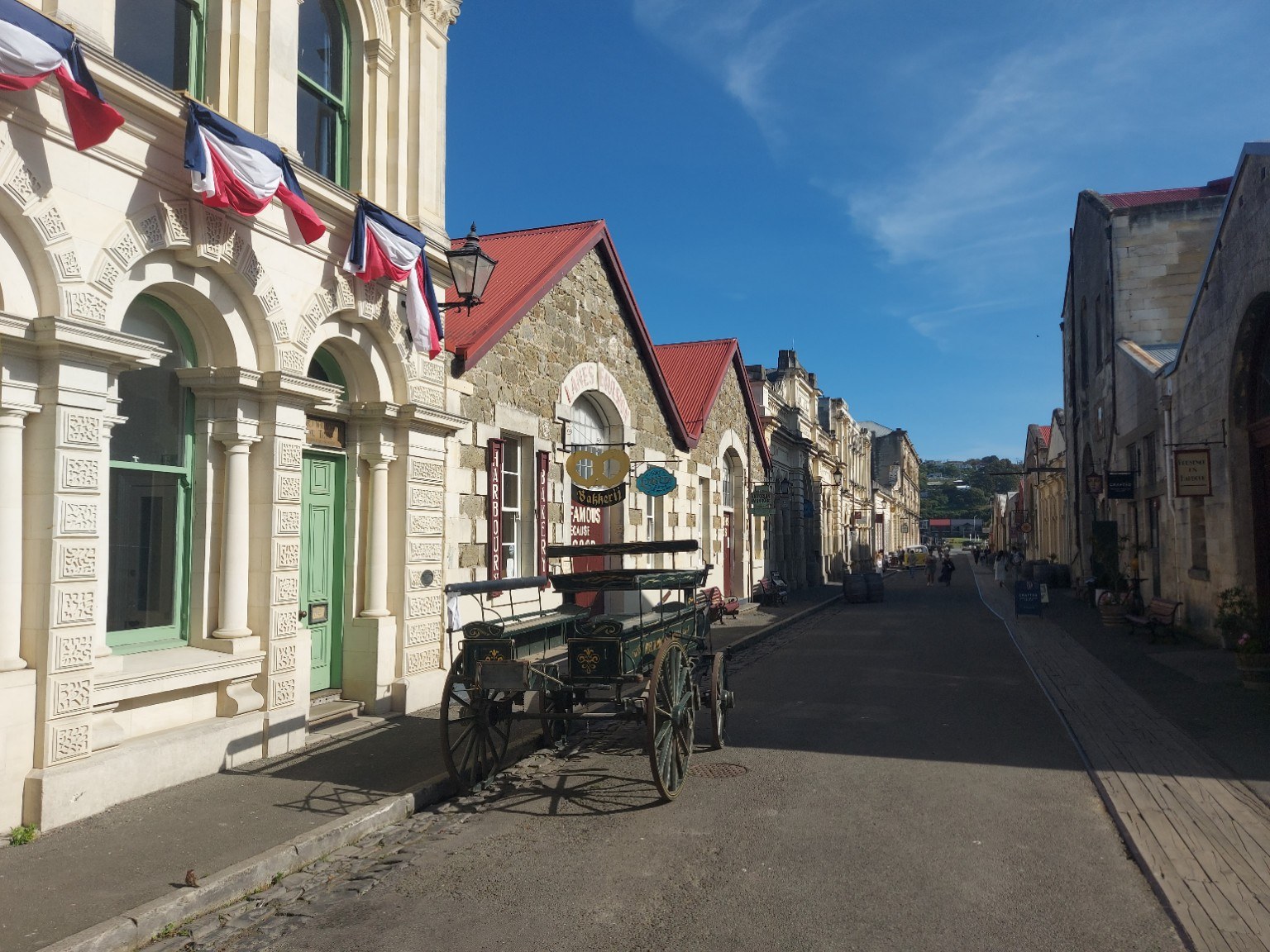 Harbour Street today, still gathering new stories within its historic limestone buildings. Photograph: Roselyn Fauth, 2026.
What a WuHoo!
More WuHoo side quests to follow
- The Carvers and the Scratchers of Ōamaru: the marks left on working buildings.
- Grain Giants, Part One: the grain economy and Ōamaru's changing fortunes.
- Stone, Brick and Grain, Part Two: what Ōamaru can teach us about Timaru.
- You Don't Have to Be Interested in History to Become Interested in a Story: the lecture behind this visit.
- Ōamaru Whitestone Civic Trust: conservation and the Victorian precinct.
- Ōamaru Opera House history: the theatre and its changing uses.
- Waitaki Whitestone UNESCO Global Geopark: the ancient landscape beneath the town.
Questions still on my list
Was it the same truck I rode in as a child? What exactly do the backstage marks record? And what were those intriguing rocks and layers on the beach? Those mysteries deserve proper checking rather than a confident guess.
With thanks to the Ōamaru Whitestone Civic Trust and Waitaki Whitestone UNESCO Global Geopark for inviting me to deliver the Forrester & Lemon Lecture, and to everyone who shared their knowledge and enthusiasm during our visit.